Playable
Inspiration
I wanted to make game creation feel as fast and conversational as sketching an idea with a creative partner. Instead of opening a game engine, wiring assets, and fighting boilerplate before anything is fun, I wanted Playable to turn a rough idea into something visible and playable in minutes.
What it does
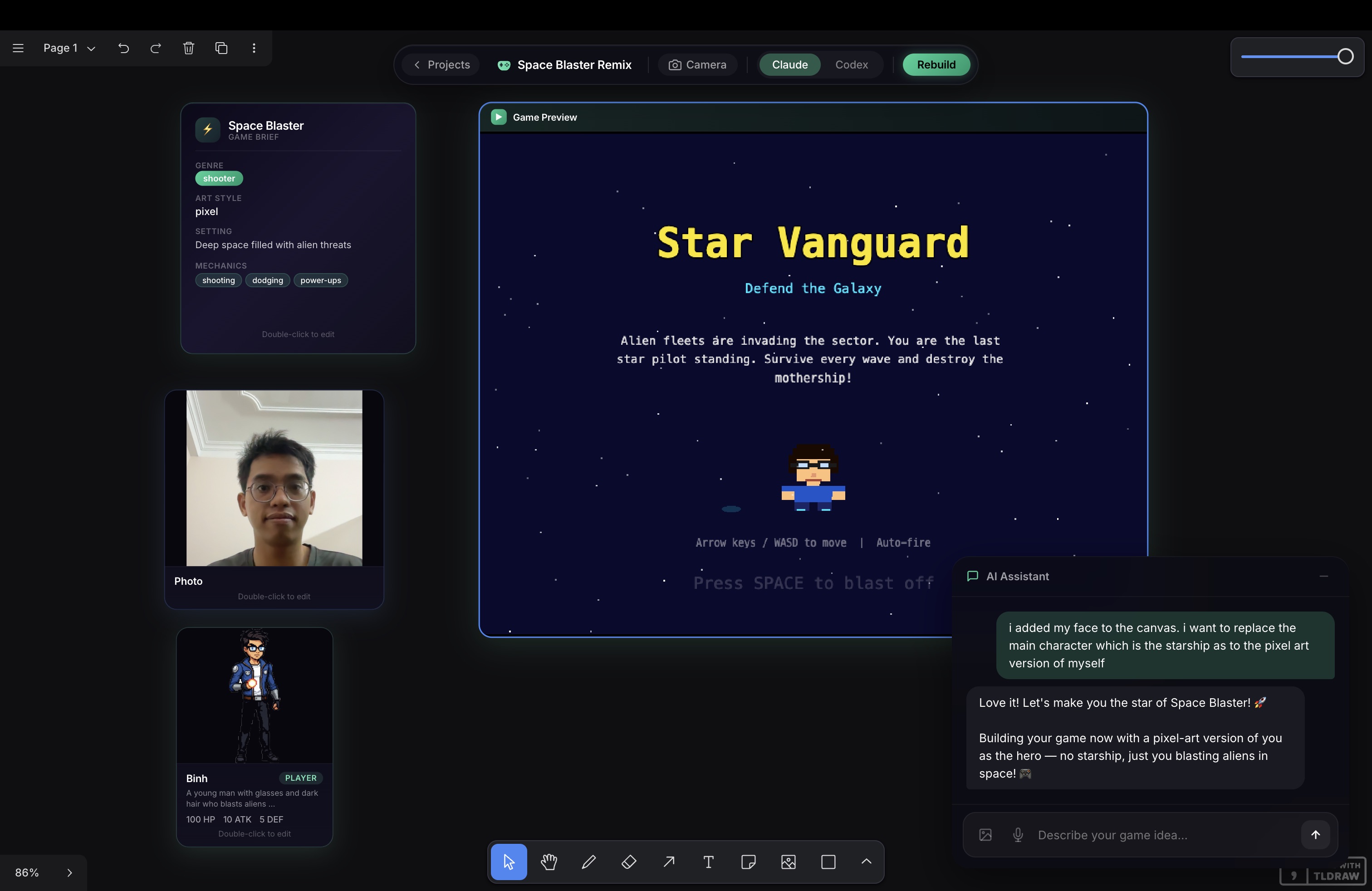
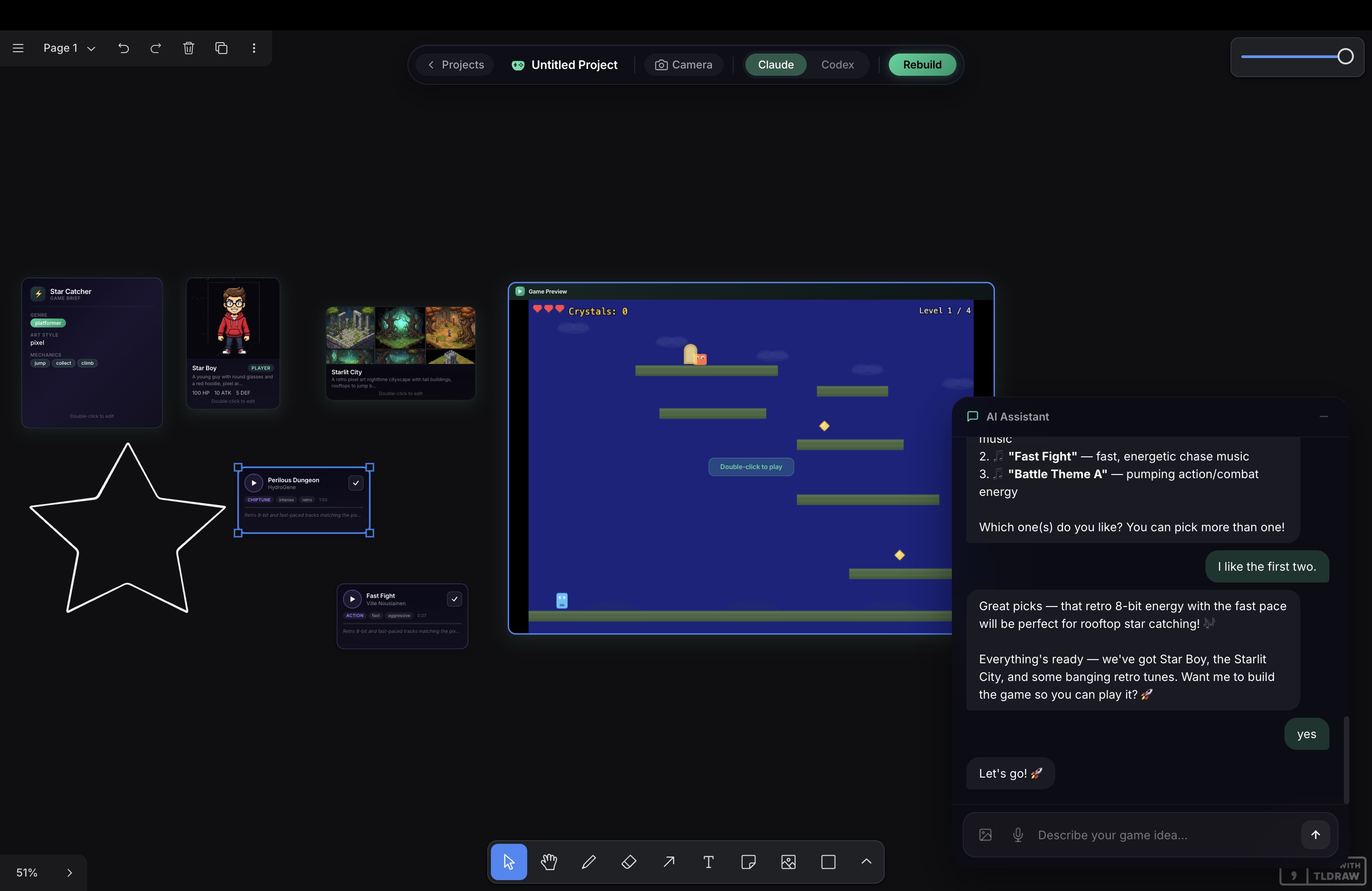
Playable is an AI-powered game design and prototyping tool. I can brainstorm a game idea in chat, turn that idea into a visual canvas with characters, environments, music, and a structured game brief, choose a template like RPG, platformer, shooter, puzzle, or Flappy Bird, and instantly generate a playable browser game. From there, I can keep iterating with natural-language edits like changing the theme, tuning difficulty, or fixing gameplay issues.
How I built it
I built Playable with a React frontend, a tldraw canvas for the design surface, and a Node/Express backend with SQLite for project and build persistence. The games themselves run on Phaser templates that can either render instantly from structured config or be modified further by AI. I also wired in real-time chat, WebSocket build logs, asset generation and editing, template remixing, and in-canvas game previews so the whole workflow feels like one continuous creative session. I used Codex and Claude Code extensively to build this in a short amount of time, especially for scaffolding systems quickly, iterating on game templates, and tightening the build loop.
Challenges I ran into
The biggest challenge was reliability. Pure AI code generation is exciting, but it is still not dependable enough on its own for a smooth product experience, so I had to design around that with working templates, structured configs, and controlled edit flows. Another challenge was keeping the UX coherent while chat, canvas actions, asset generation, game previews, and AI-driven rebuilds were all happening in the same loop.
Accomplishments that I’m proud of
I’m proud that Playable already feels like a real end-to-end product instead of a disconnected demo. It can go from idea, to design artifacts, to playable game, to iterative refinement in one workflow. I’m also proud that AI is not just layered on top as a gimmick, but used as a practical part of how games are brainstormed, assembled, and improved.
What I learned
I learned that the best way to use AI for creative software is not to let it generate everything from scratch, but to combine it with strong structure, reusable templates, and fast feedback loops. I also learned how much speed a solo builder can unlock by using coding agents well; Codex and Claude Code let me compress a lot of experimentation and implementation into a very short timeframe.
What’s next for Playable
Next, I want to improve the quality and consistency of generated games, expand the template library, and make asset generation feel more native to the design flow. I also want to push Playable further toward a true AI game studio experience, with better voice-first ideation, richer editing controls, stronger sharing and export workflows, and faster iteration from "make this better" to instantly playable results.
Built With
- claude
- codex
- elevenlabs
- typescript


Log in or sign up for Devpost to join the conversation.