-
-
Project logo
-
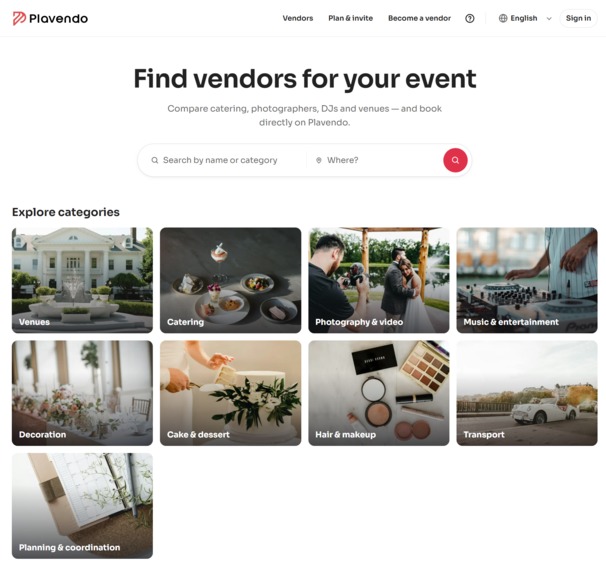
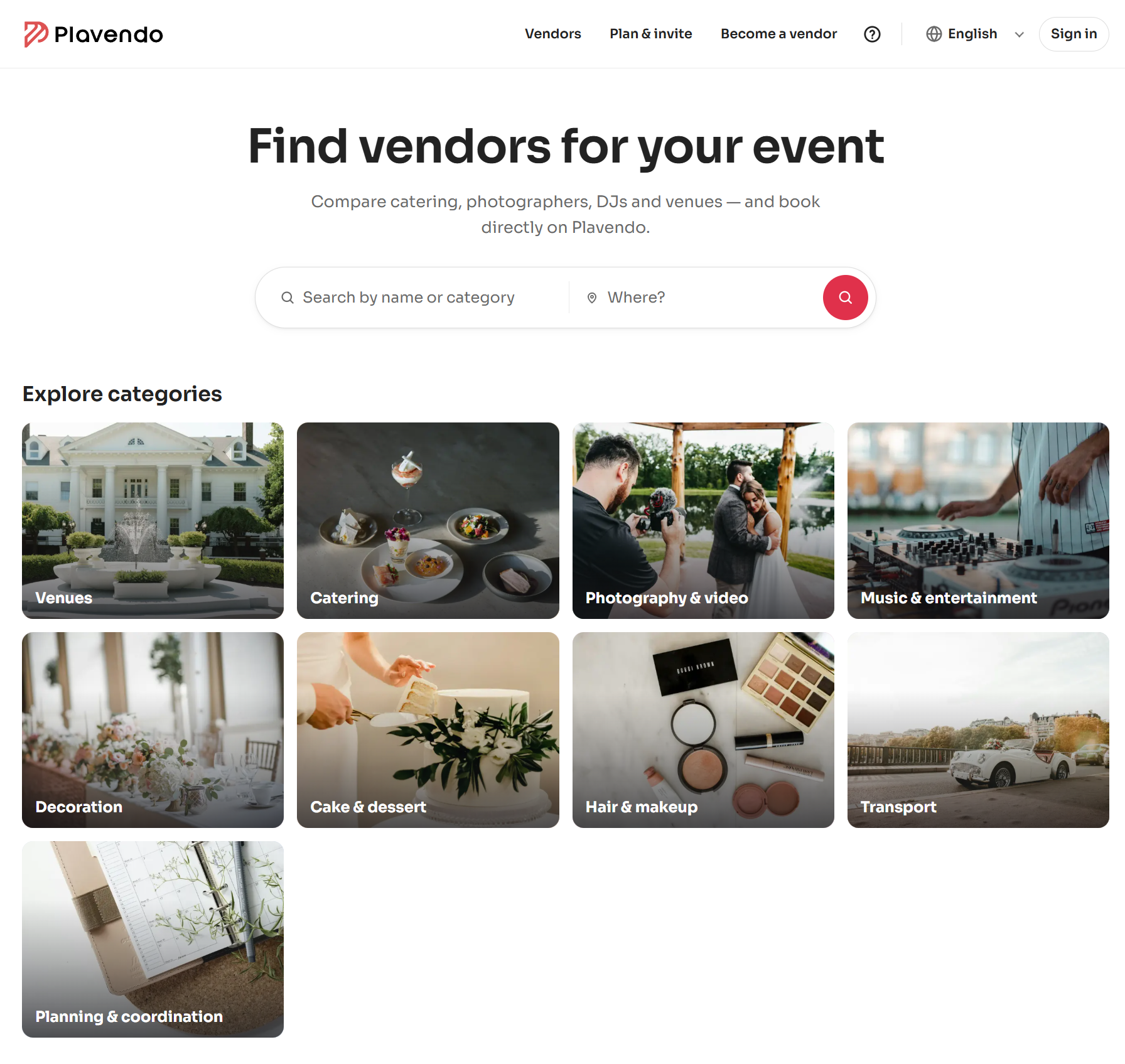
Plavendo homepage
-
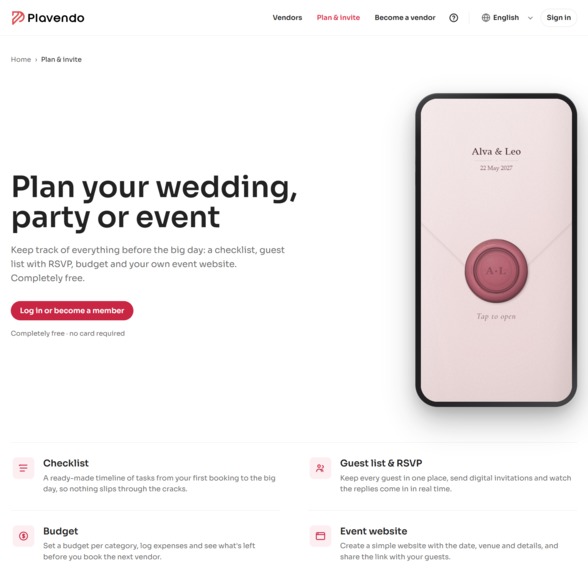
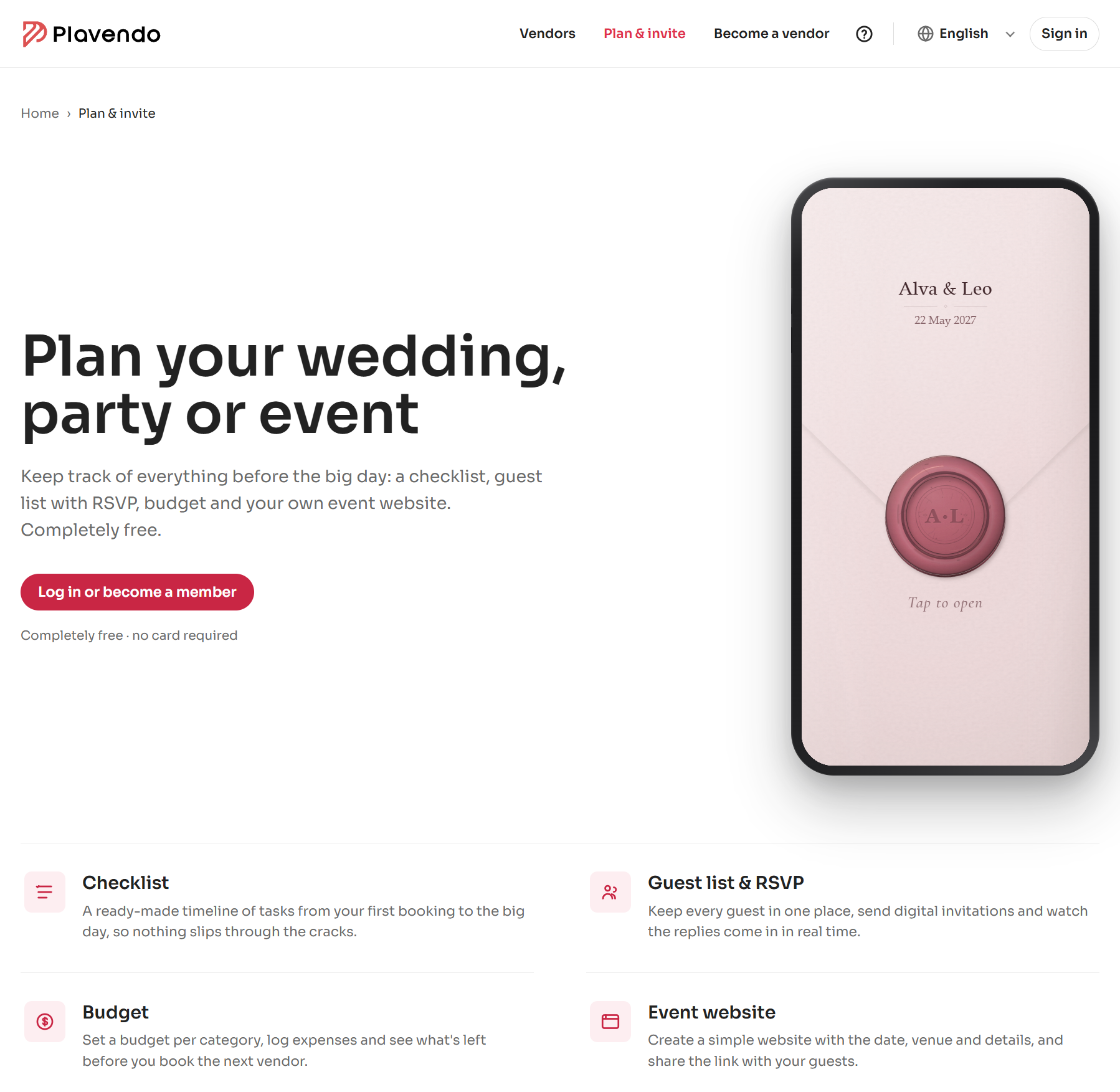
Plan your events
-
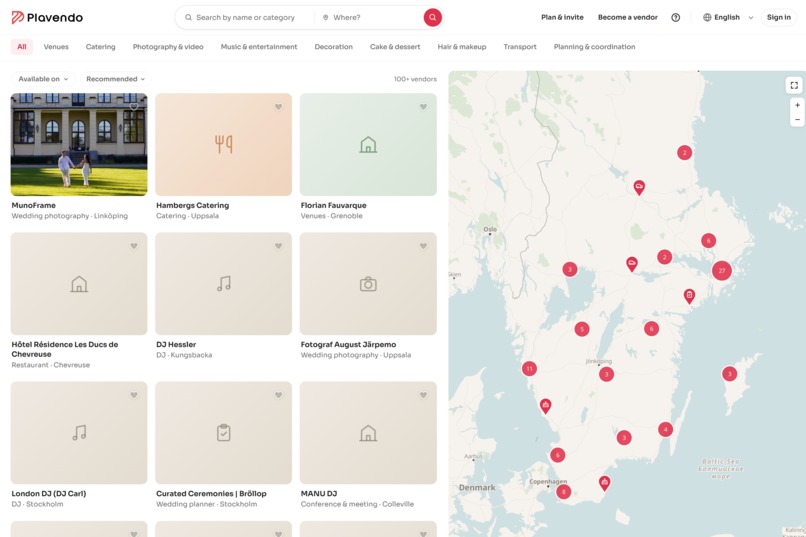
Find vendors
Inspiration
Planning an event usually means chasing down a dozen different vendors across scattered social media accounts, email threads, and word-of-mouth recommendations. We noticed how exhausting it is for organizers to manage separate parallel searches for venues, catering, photography, and entertainment. At the same time, incredibly talented small vendors often get lost in the noise because they lack massive advertising budgets. We built Plavendo to bridge this gap, transforming a chaotic, recommendation-driven industry into a streamlined, searchable ecosystem where the best match wins, not just the loudest budget.
What it does
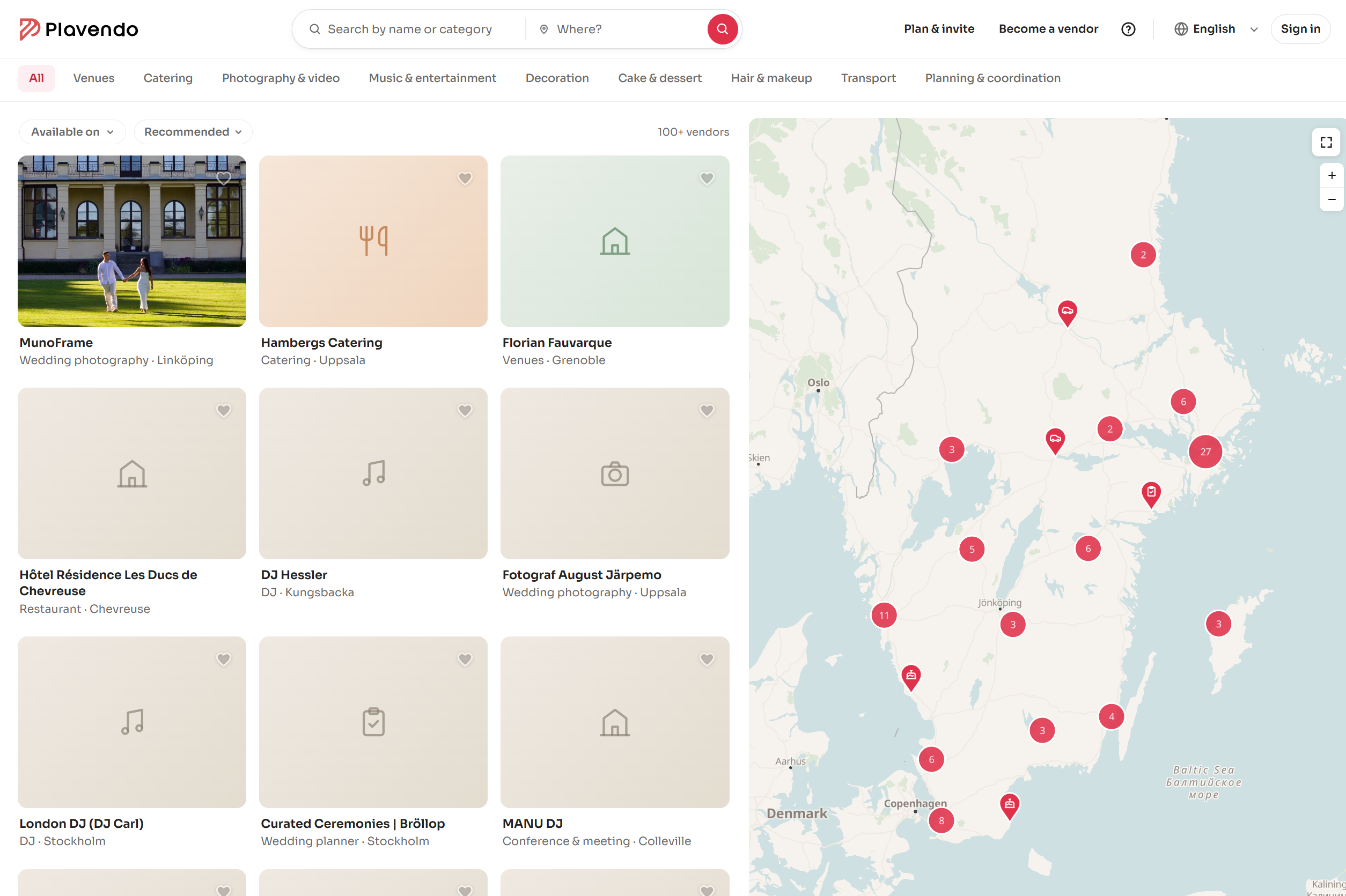
Plavendo reimagines event planning by shifting the focus from individual categories to the event as a whole. Instead of jumping between disconnected platforms, users can search, compare, and book venues, food, photography, and music all in one place. The platform prioritizes discovery based on true relevance—like location, availability, and active engagement—ensuring that smaller creators get a fair spotlight. By keeping everything from the initial discovery to final booking within a single interface, Plavendo stops details from slipping through the cracks between text messages and emails.
How we built it
To make the platform fast, intuitive, and accessible across desktops, tablets, and mobile devices, we carefully structured our modern web stack. The frontend delivers a highly responsive, fluid user interface that lets organizers filter and view vendor profiles dynamically. On the backend, we engineered robust search algorithms designed to surface service providers based on localized relevance rather than paid ad placements. We also integrated a secure communication and reservation pipeline directly into the database structure, enabling seamless messaging and booking actions without leaving the platform.
Challenges we ran into
One of our biggest hurdles was organizing a historically fragmented industry into a unified database. Because event vendors describe their services, pricing, and availability in drastically different formats, designing a standardized matching system that treats everyone fairly was incredibly complex. We also had to build an intuitive multi-vendor search engine that could handle multiple criteria simultaneously without lagging. Ensuring that real-time messages and booking statuses remained perfectly synchronized between vendors and clients required careful architectural planning to prevent lost threads.
Accomplishments that we're proud of
We are incredibly proud of creating a search experience that values small businesses. Building an algorithm that successfully ranks vendors by proximity, category, and organic activity—rather than who paid the most—feels like a massive win for the community. We also succeeded in creating a truly frictionless user journey, meaning an organizer can realistically take an entire event from a rough idea to fully booked without ever having to open a separate email tab or social media app.
What we learned
This project taught us a great deal about the balance between complexity and simplicity in marketplace design. We learned that aggregating data from a word-of-mouth industry requires highly flexible data structures that accommodate unique vendor needs without overwhelming the person searching. Most importantly, we realized that the best user experience comes from eliminating friction; minimizing the steps between discovering a vendor and securing a booking is far more valuable than adding complex, unnecessary features.
What's next for Plavendo
The immediate priority for Plavendo is expanding our vendor network to offer an even richer variety of choices for organizers. We plan to introduce smarter, automated itinerary suggestions that help users instantly pair matching venues with complementary catering options based on historical booking success. Additionally, we are looking to deepen our native mobile features, allowing vendors to manage incoming bookings, update their calendars, and reply to client inquiries seamlessly on the go.
Built With
- amazon-web-services
- chatgpt
- claude
- next.js
- stripe

Log in or sign up for Devpost to join the conversation.