-
-
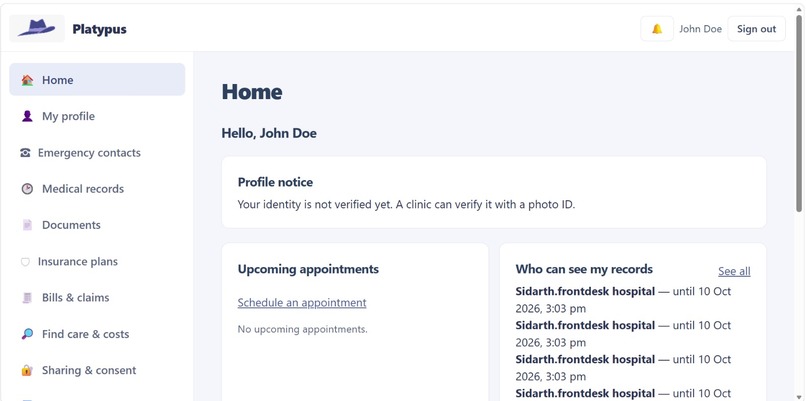
Patient View
-
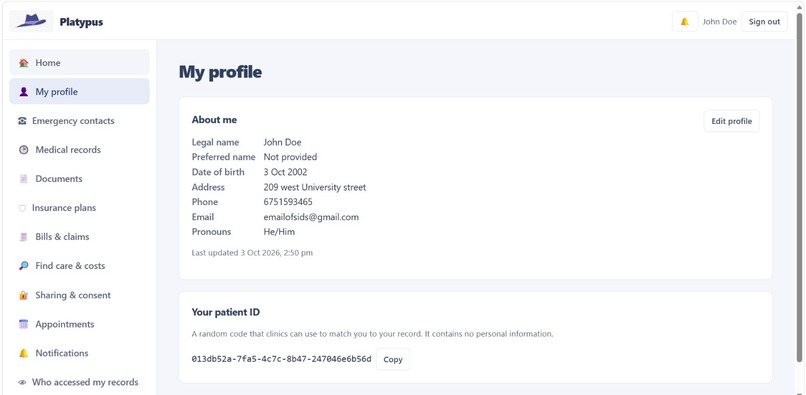
Patient View Profile
-
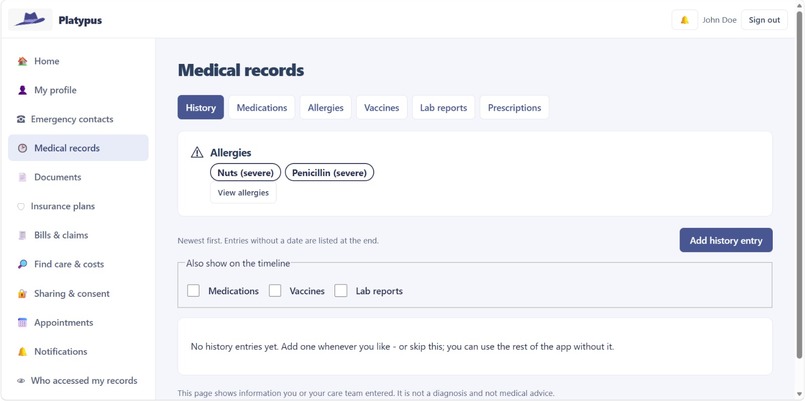
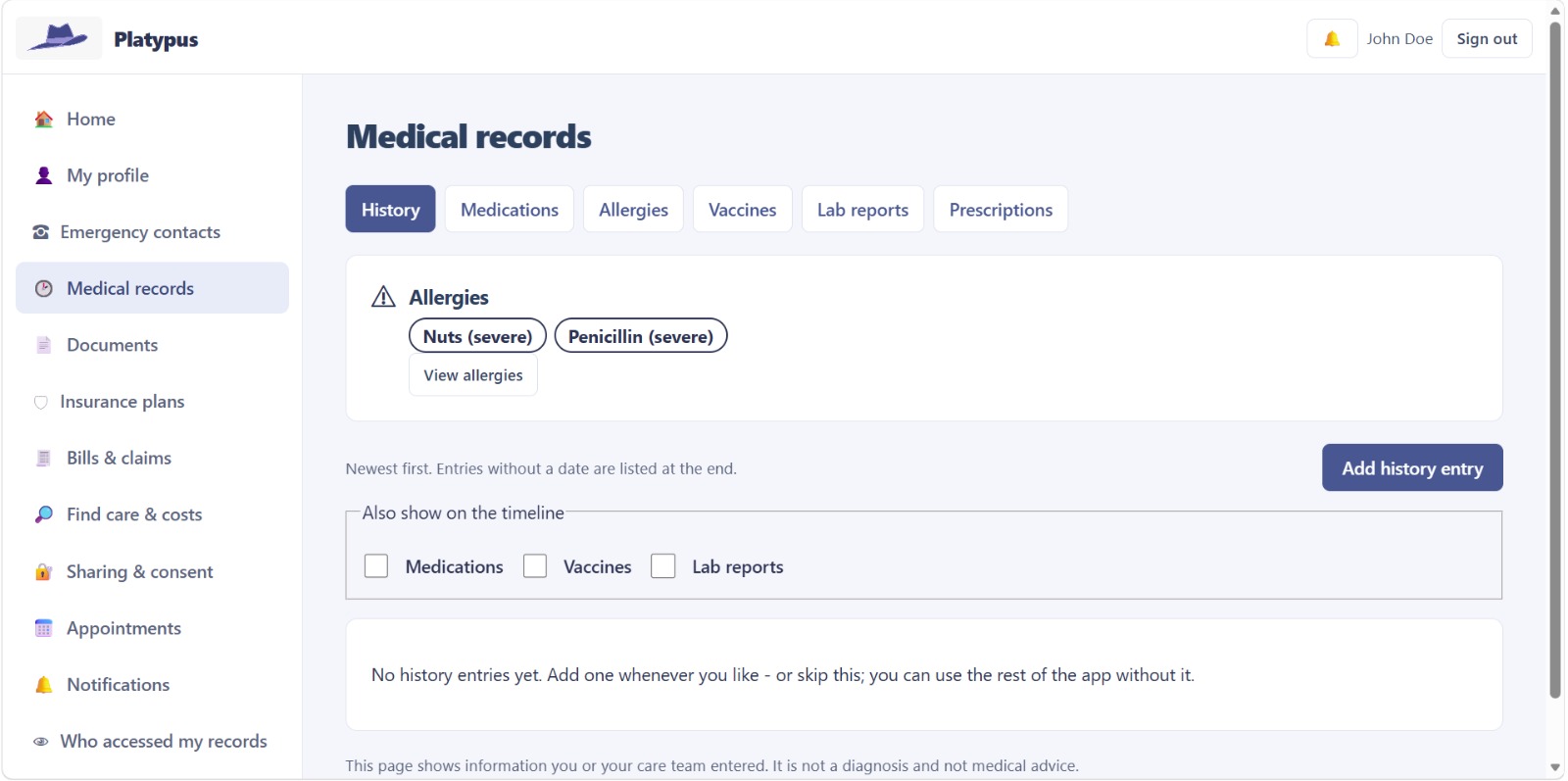
Patient View Medical Record
-
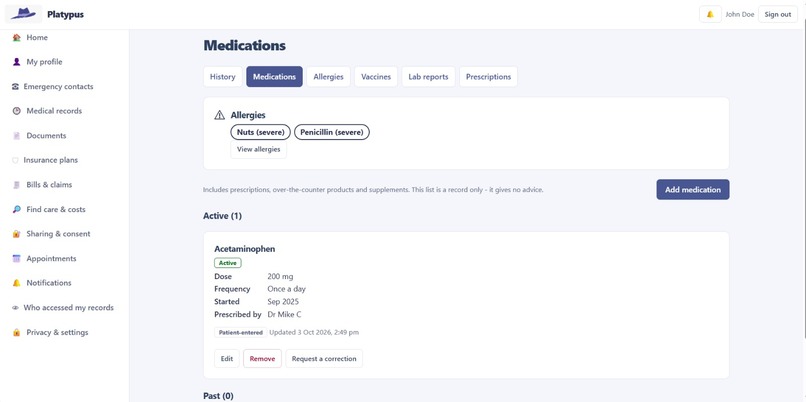
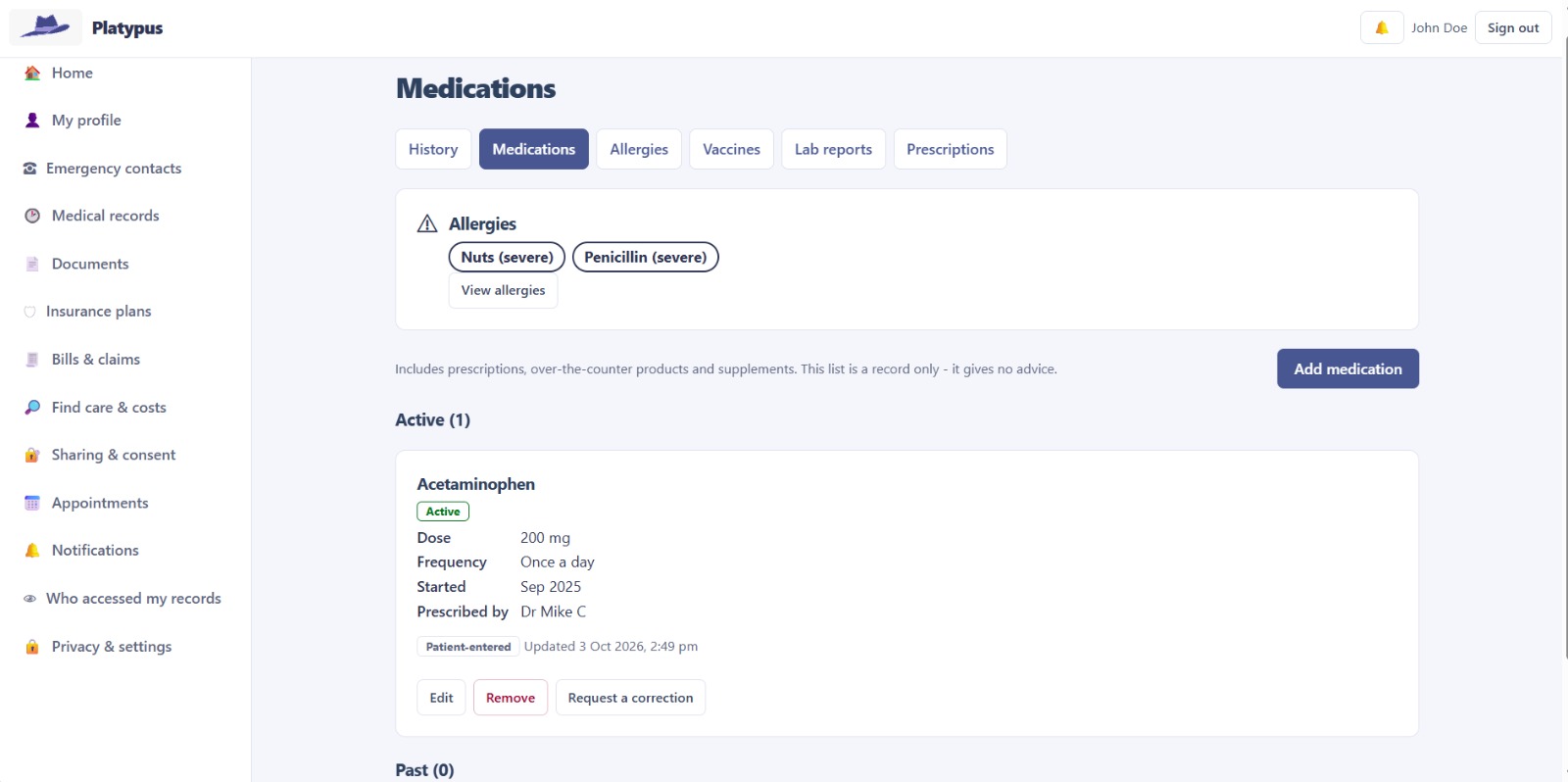
Patient View Medications
-
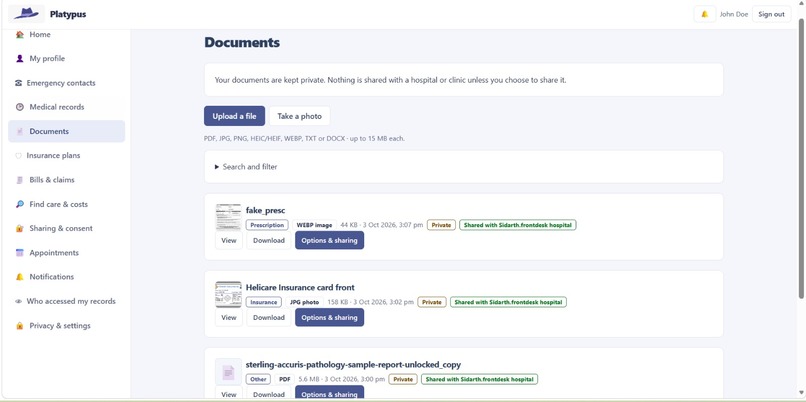
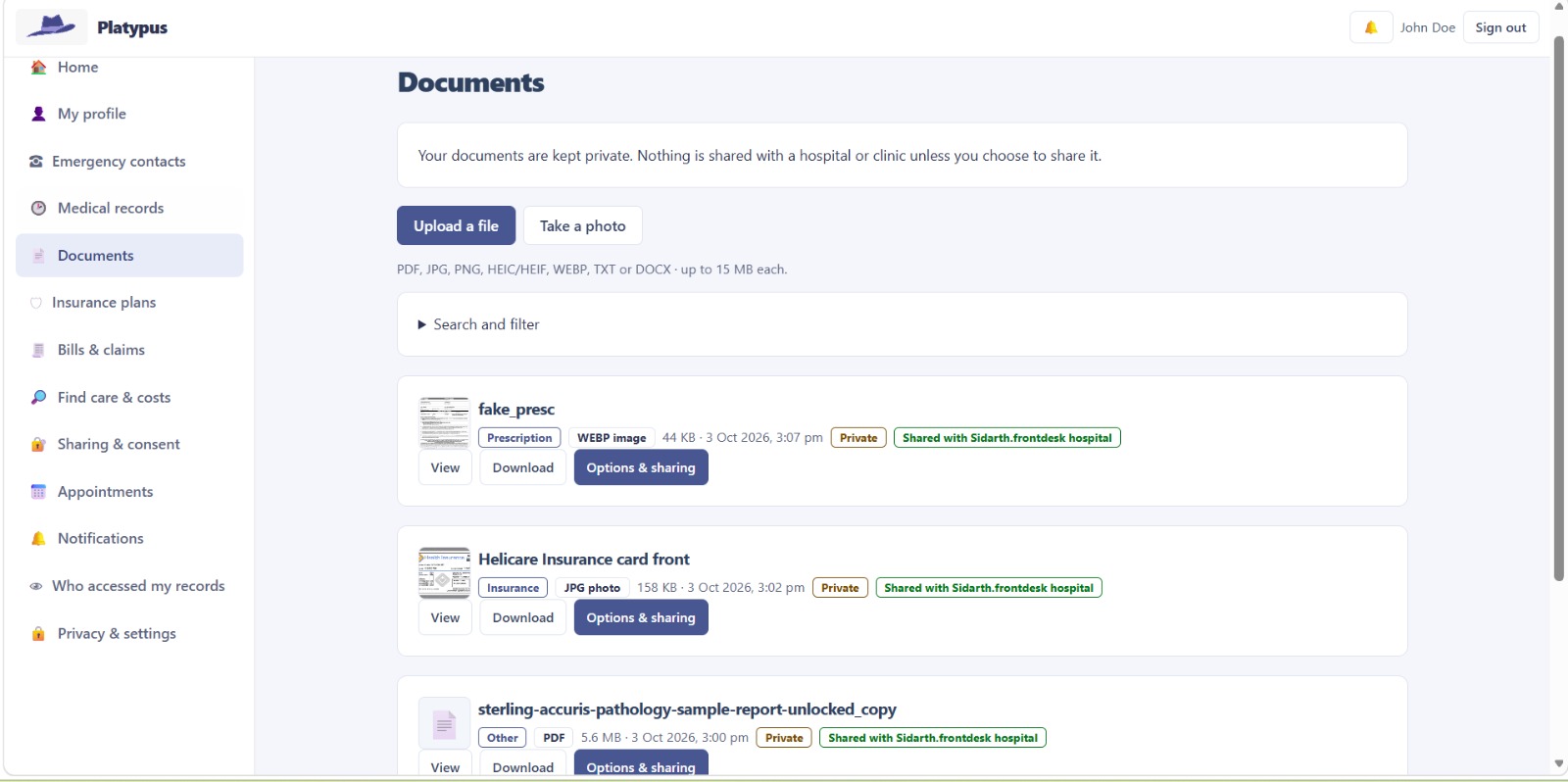
Patient View Documents
-
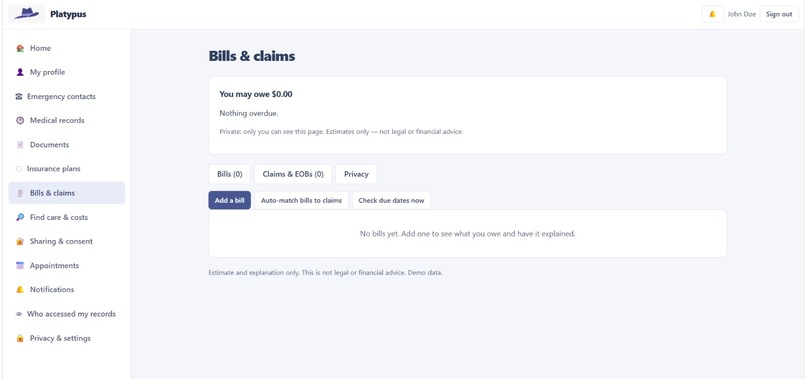
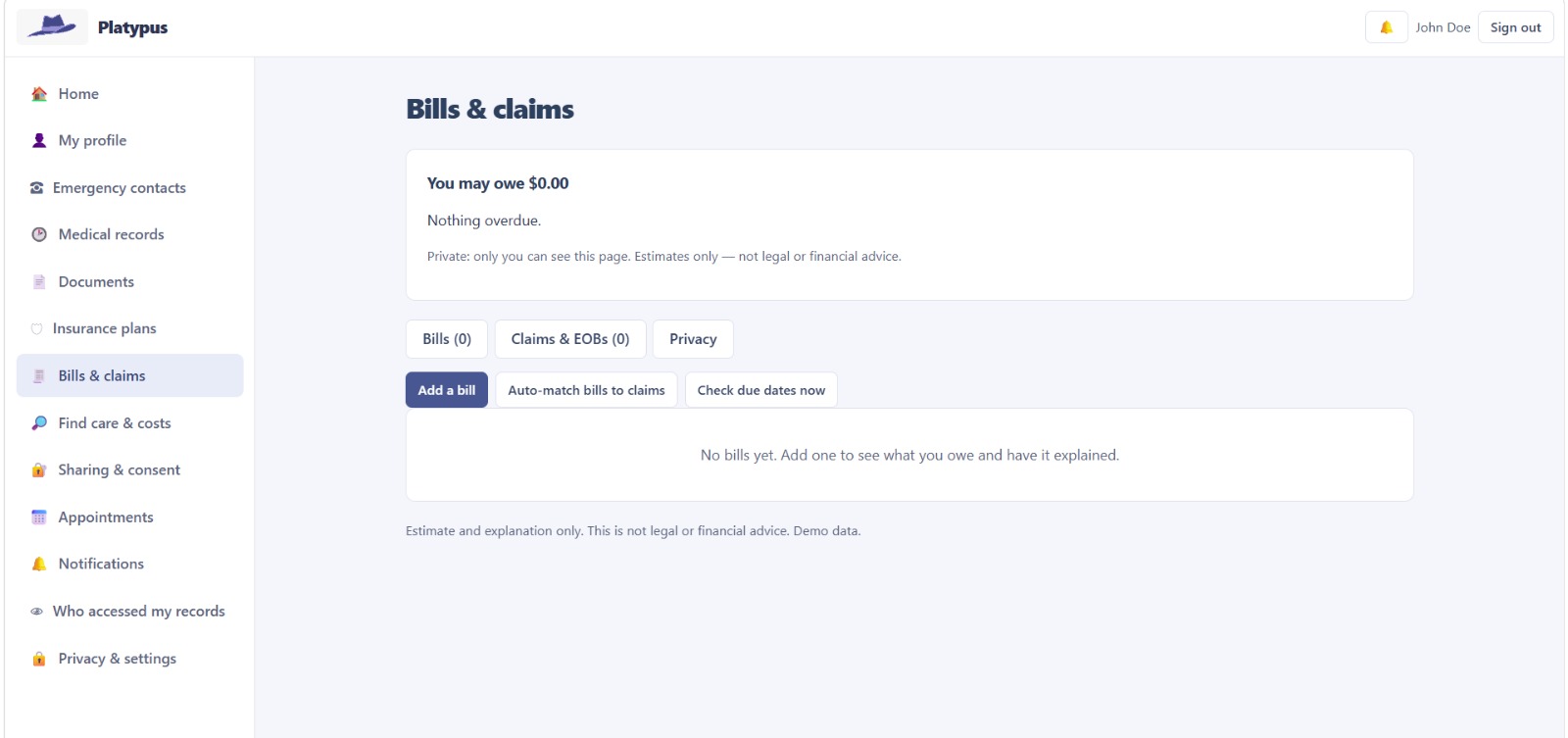
Patient View Bills
-
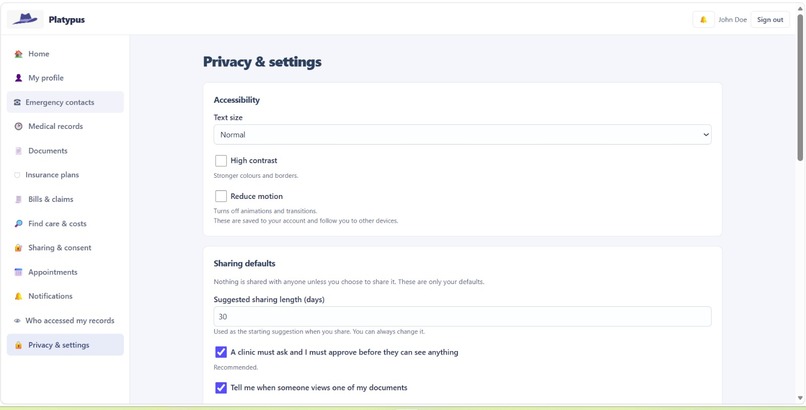
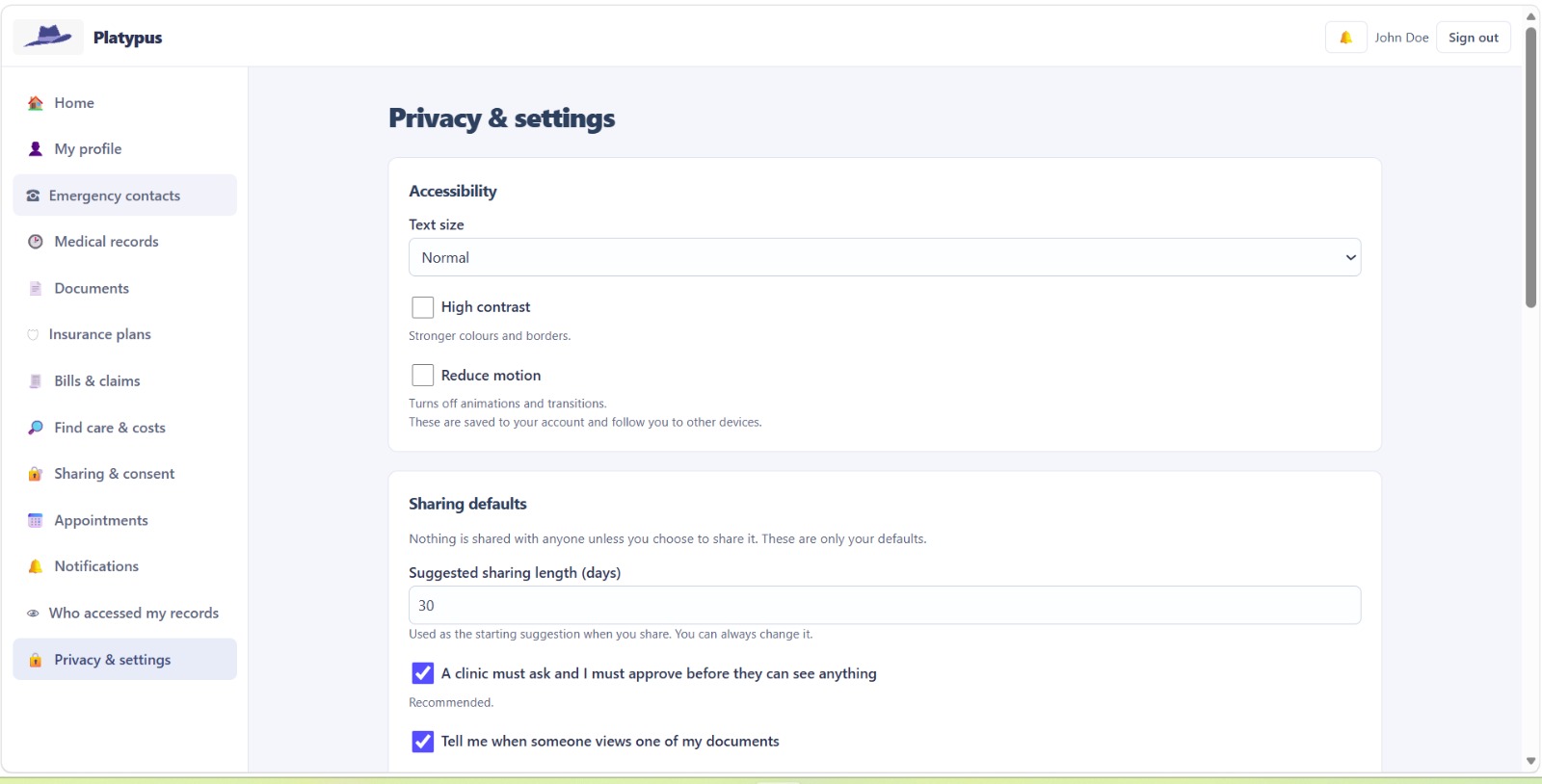
Patient View Privacy
-
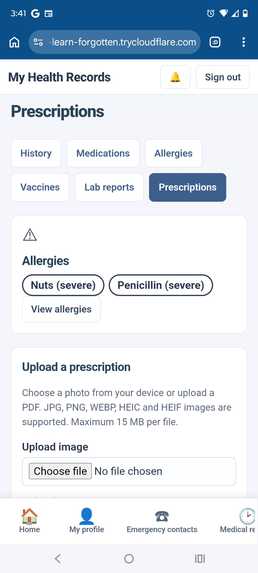
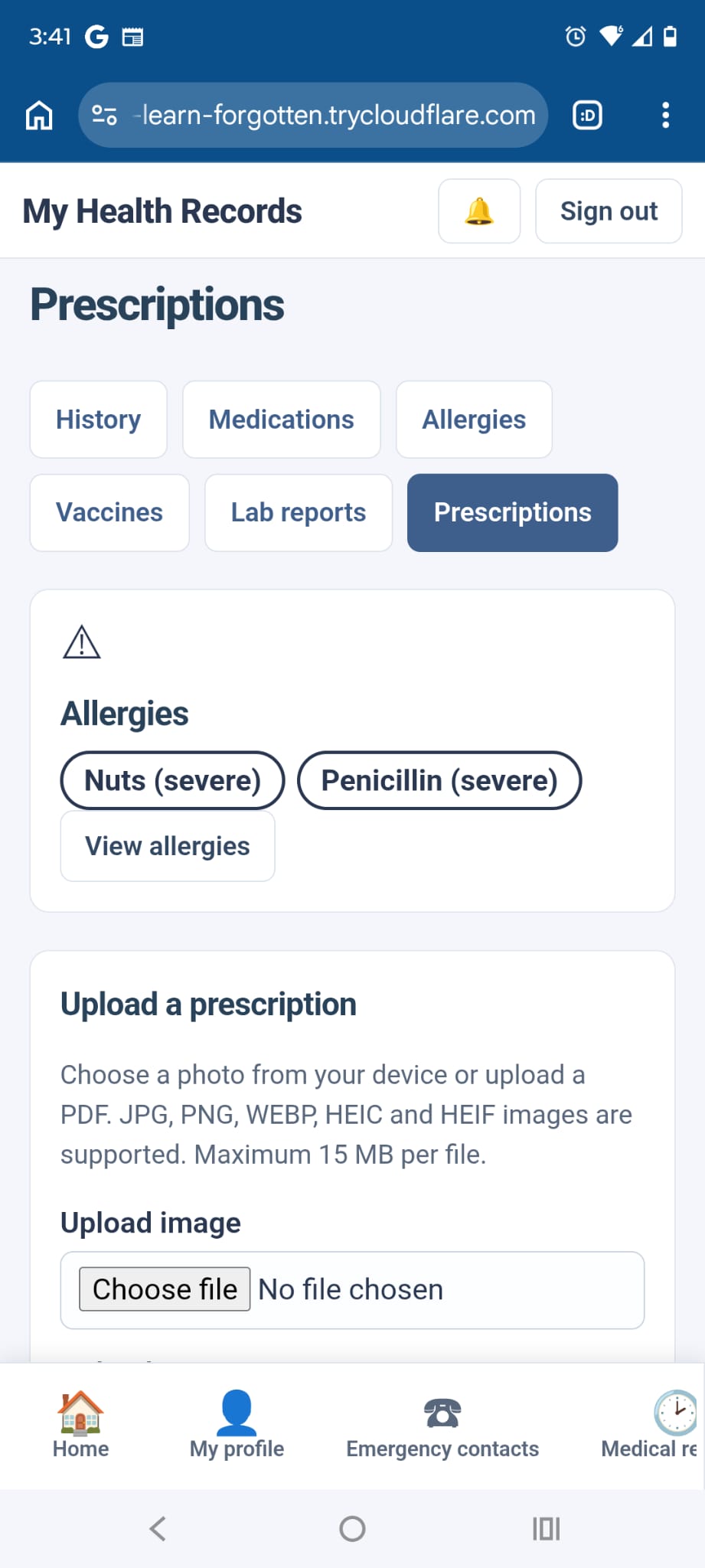
Patient View on Phone
-
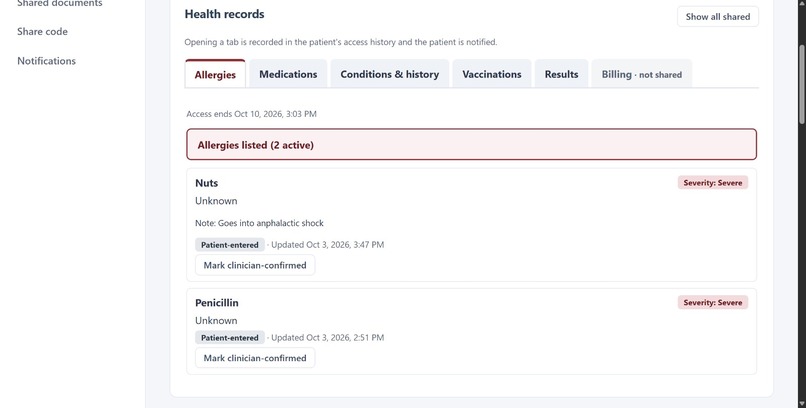
Doctor/Provider View
-
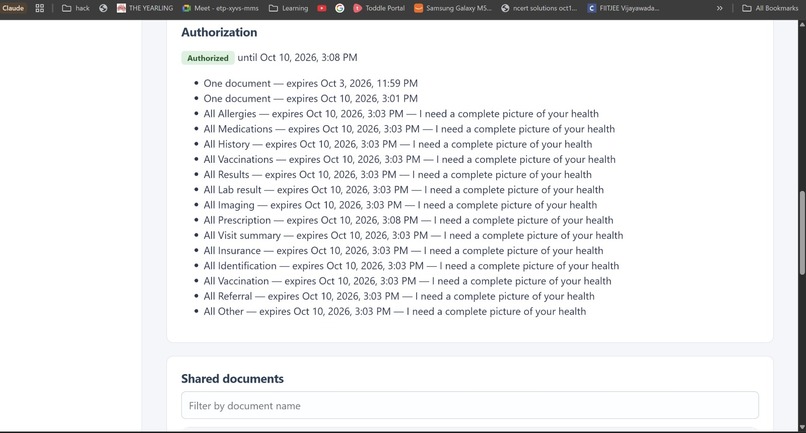
Doctor/Provider View
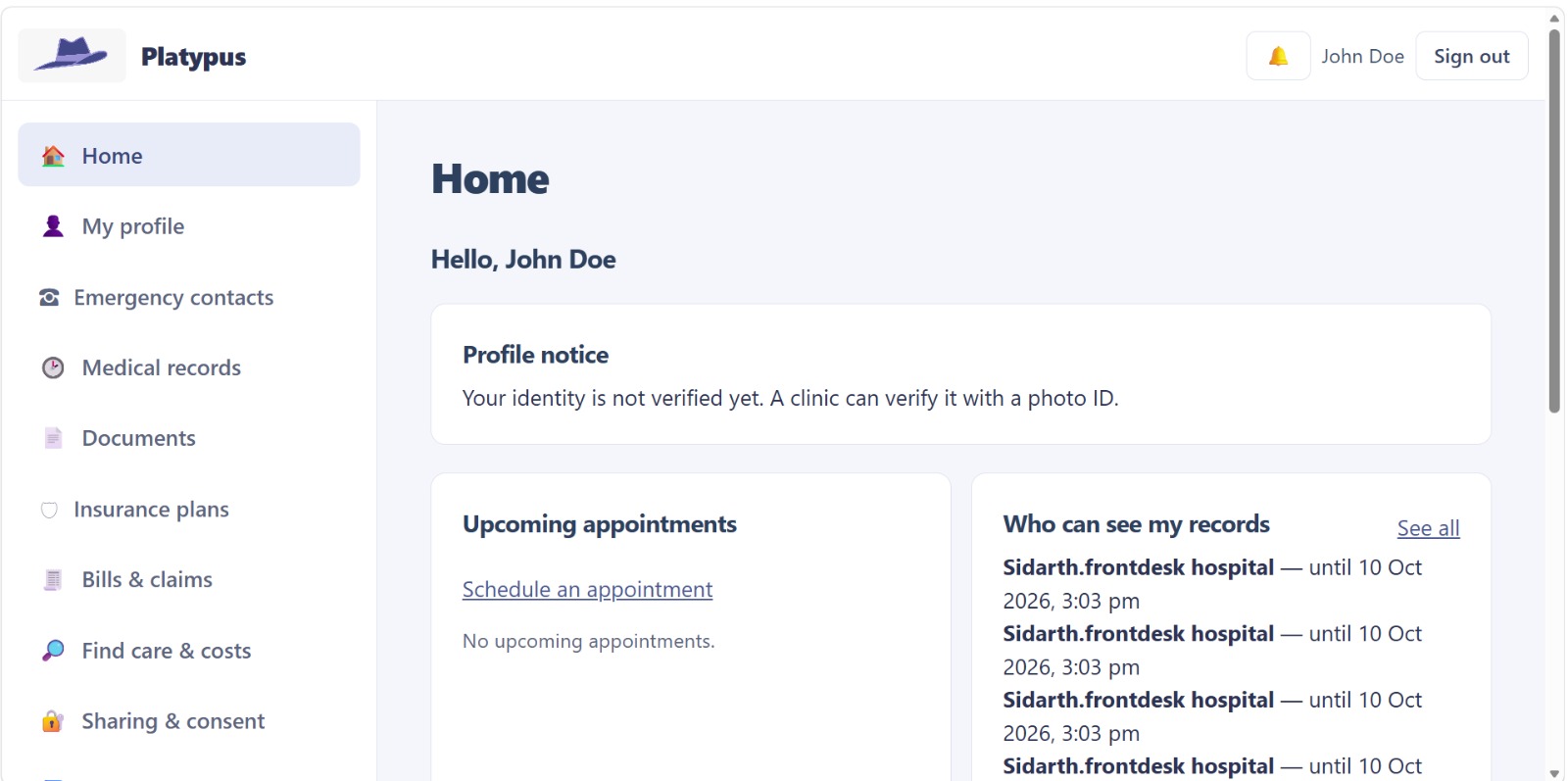
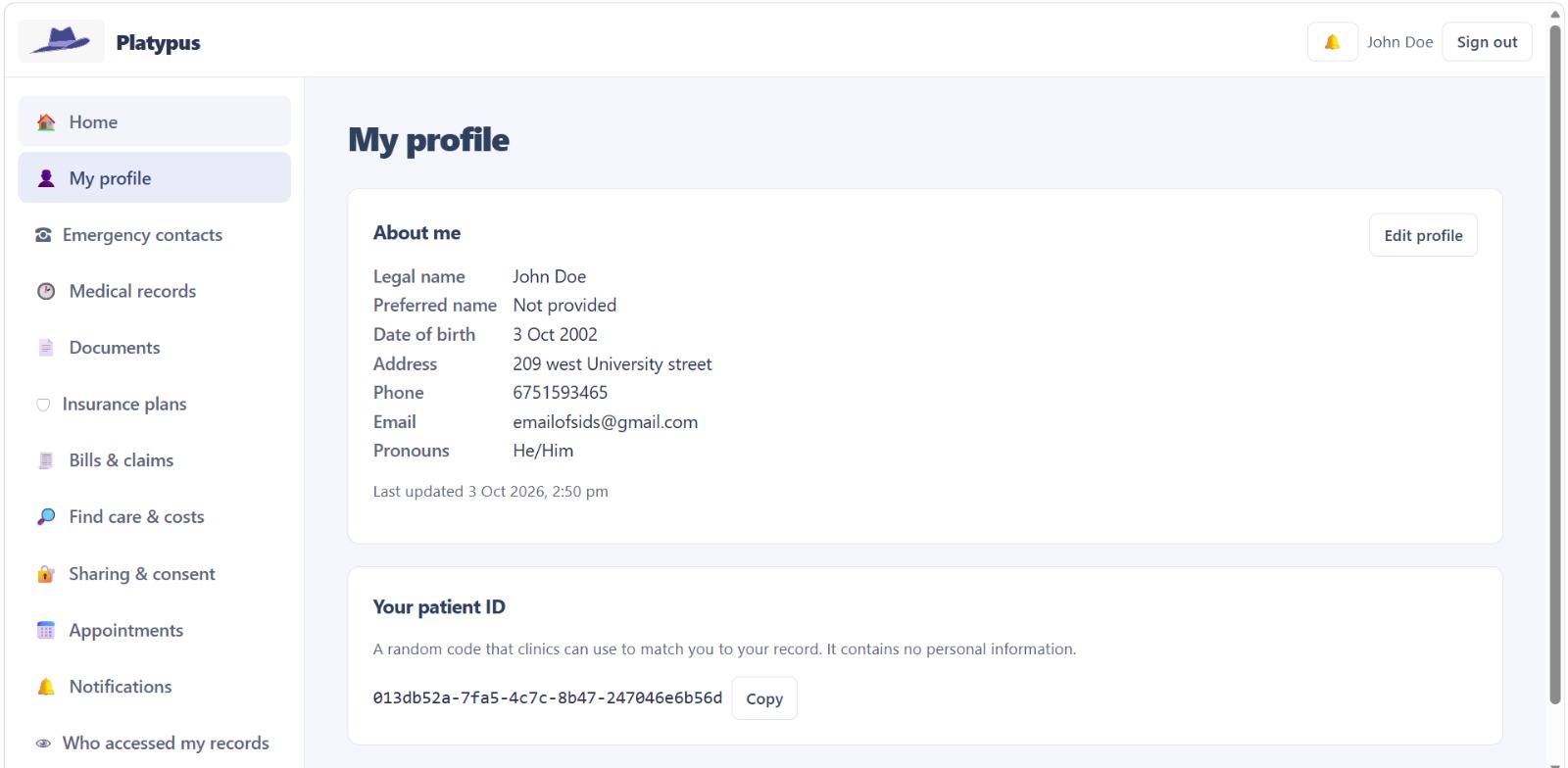
Platypus Health
What we built
Platypus Health is a patient-controlled health portal with two connected views that sync across devices: a patient view on the phone and a hospital and provider portal on the laptop. Patients send information and requests and approve what each hospital can see. The hospital works only with what the patient has shared.
The provider portal has four sections:
- Visits: a work queue of upcoming visits. Staff read the patient's intake in the patient's own words, see how each answer maps to the facility's forms, request clarification, mark intake reviewed, start the visit and write a visit summary.
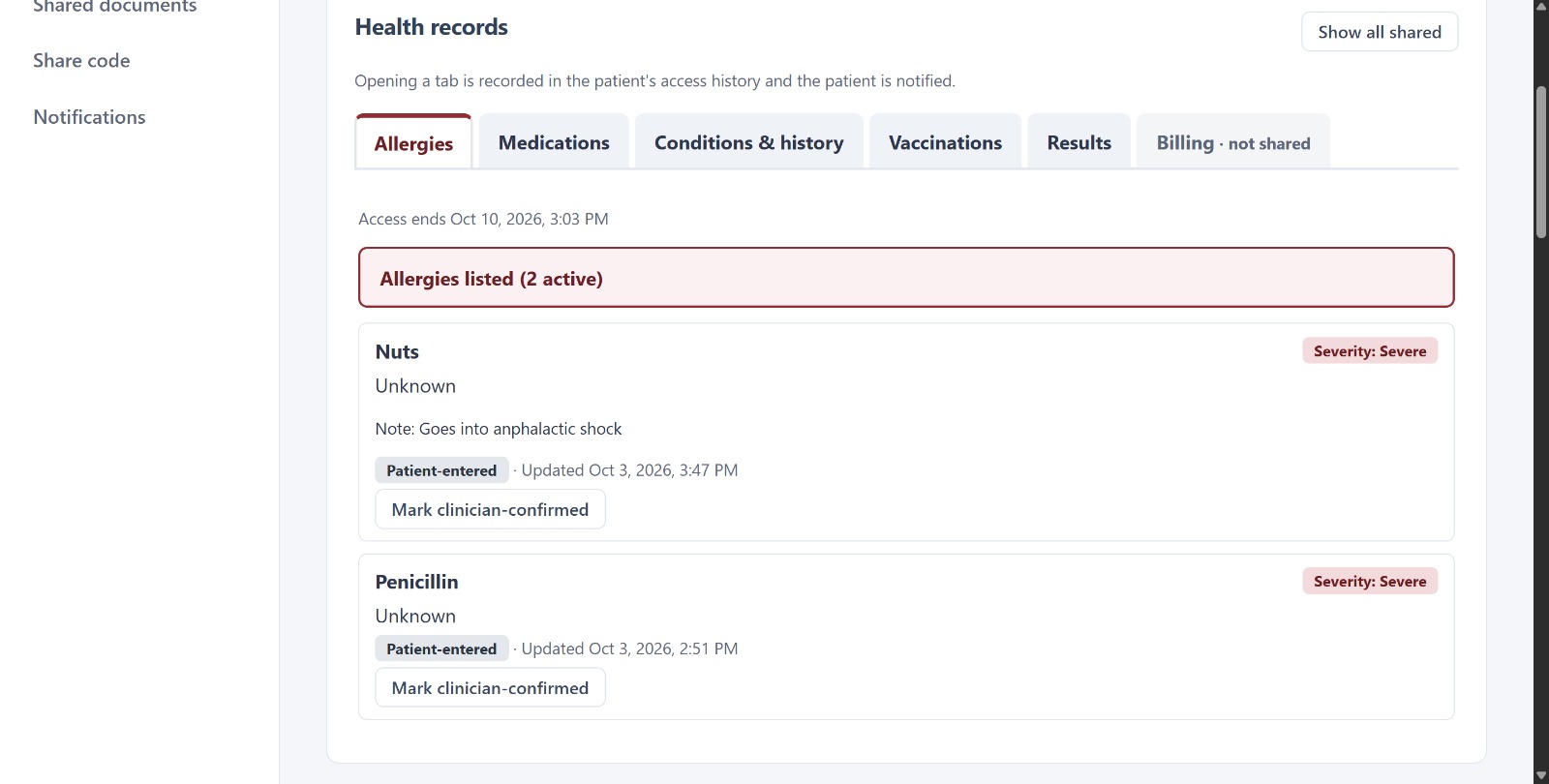
- Patients: find a patient by name or portal ID, confirm their identity, and view the shared summary (allergies, conditions, medications, insurance). Each item is labeled with its source and whether it still needs confirmation.
- Appointments: confirm booking requests, reschedule, cancel or move a patient to the waitlist.
- Billing: access depends on the staff member's role. Clinical staff can't see balances, and the patient's financial history stays private by default.
Target users and their pain points
Patients who see more than one provider, especially people with limited English, low health literacy or chronic conditions, and the caregivers who help them. Also the front-desk and clinical staff who receive those patients.
- Repeated paperwork: patients fill out the same forms at every visit. 59% of patients juggle several portals, and only 7% use an app to combine them (ONC, 2024).
- No control over records: patients can't easily see or limit who has their information.
- Unclear data for staff: clinicians re-enter intake by hand and can't tell what's verified from what the patient reported.
- Confusing costs: 58% of insured adults had a problem using their coverage in the past year (KFF, 2023).
How Platypus Health addresses them
- Intake once, reused everywhere: patients describe their visit in their own words, and the hospital maps it to its own forms.
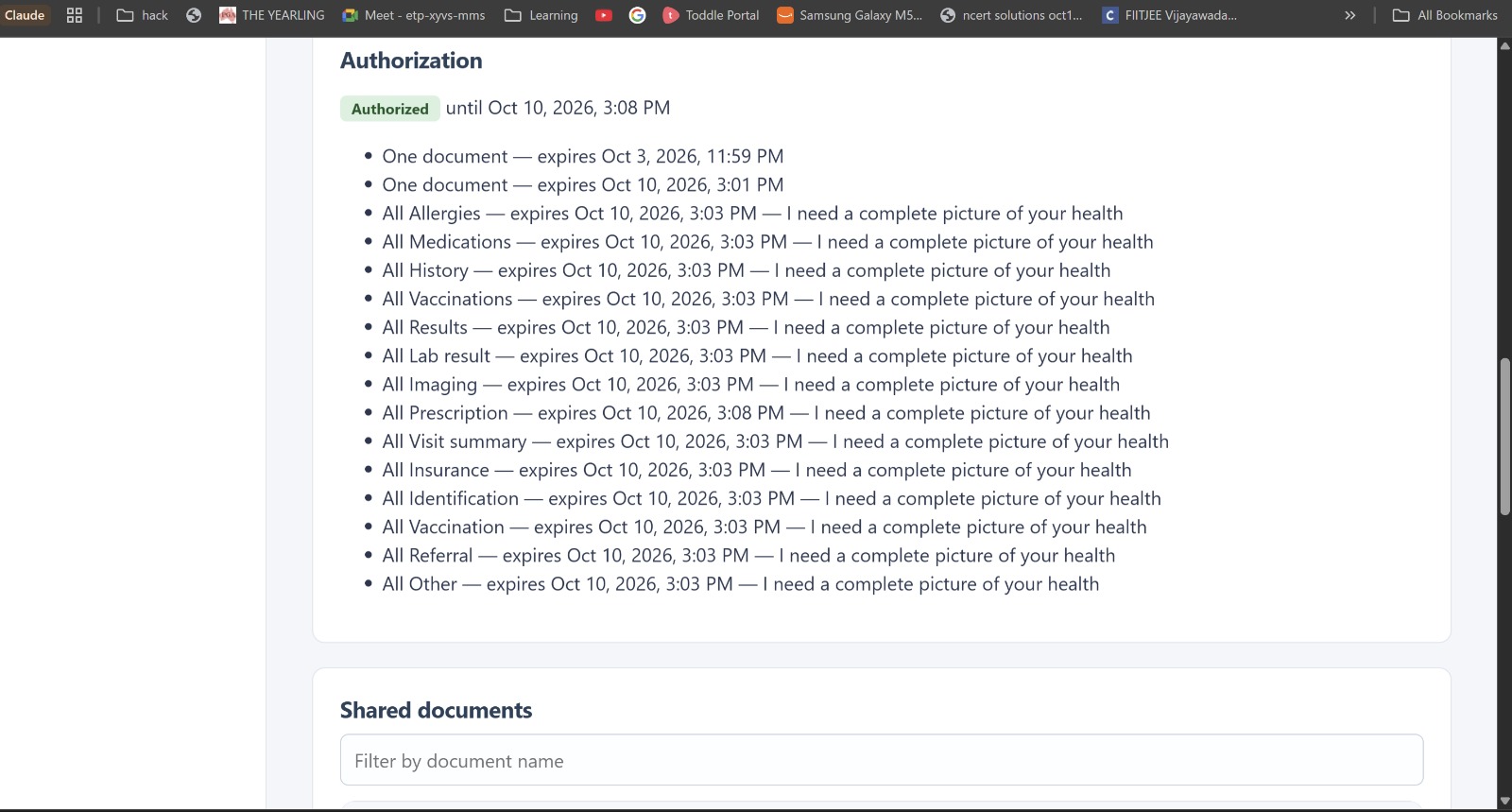
- Patient-approved access: sharing is scoped by record category. Knowing a portal ID never grants access; identity is confirmed first.
- Source labels on every record: clinicians see what's patient-reported and still needs checking, such as a reported penicillin allergy.
- Financial privacy by role: billing data stays separate from clinical staff.
How we built it
Tools: Codex to design the initial site, cursor to build the site, Claude to assist with for market research and a prototype of our AI bill explainer.
Problems we hit and how we solved them:
- Too much scope. Our first idea combined a universal medical ID, a records hub, bill explanations, booking and price comparison. We narrowed it to the visit workflow and patient-controlled sharing.
- A "medical SSN" was a security risk. If knowing a number grants access, a leaked number exposes someone's records. We made the portal ID a lookup tool only; access requires patient permission and identity confirmation.
- Intake and appointments overlapped. Feedback showed the two were confusing. We split them: Appointments handles dates and availability, and Visits handles intake, the encounter and documentation. "Prepare visit" links the two.
- No access to real hospital systems. We simulated external integrations and labeled them clearly in the interface so we don't overstate what works.
- Billing privacy. We gated billing by staff role so clinicians never see what patients owe.
How we can take it further
- Add the AI bill explainer to the patient view. Our research found the patient side of medical bills is the least-served part of this market. 40% of people with a problem bill never contact the billing office (JAMA Health Forum, 2024). Our working prototype reads a bill, the insurer's EOB and the plan summary. Then it flags overcharges, and explains the result, citing the exact document line behind every number.
- Connect real data through existing standards: FHIR and SMART on FHIR for records, SMART Health Links for QR-code sharing, and insurer Patient Access APIs (required for many plans by January 2027).
- Make it safe for real patient data: multifactor sign-in, an access log the patient can see, and HIPAA-compliant hosting.
- Test with real users: 10-15 patients and clinic staff.
- Business model: free for patients. Clinics pay for less intake work, employers and health plans pay for the bill explainer.
Built With
- claude
- codex
- cursor
- photoshop
- premier-pro

Log in or sign up for Devpost to join the conversation.