Inspiration
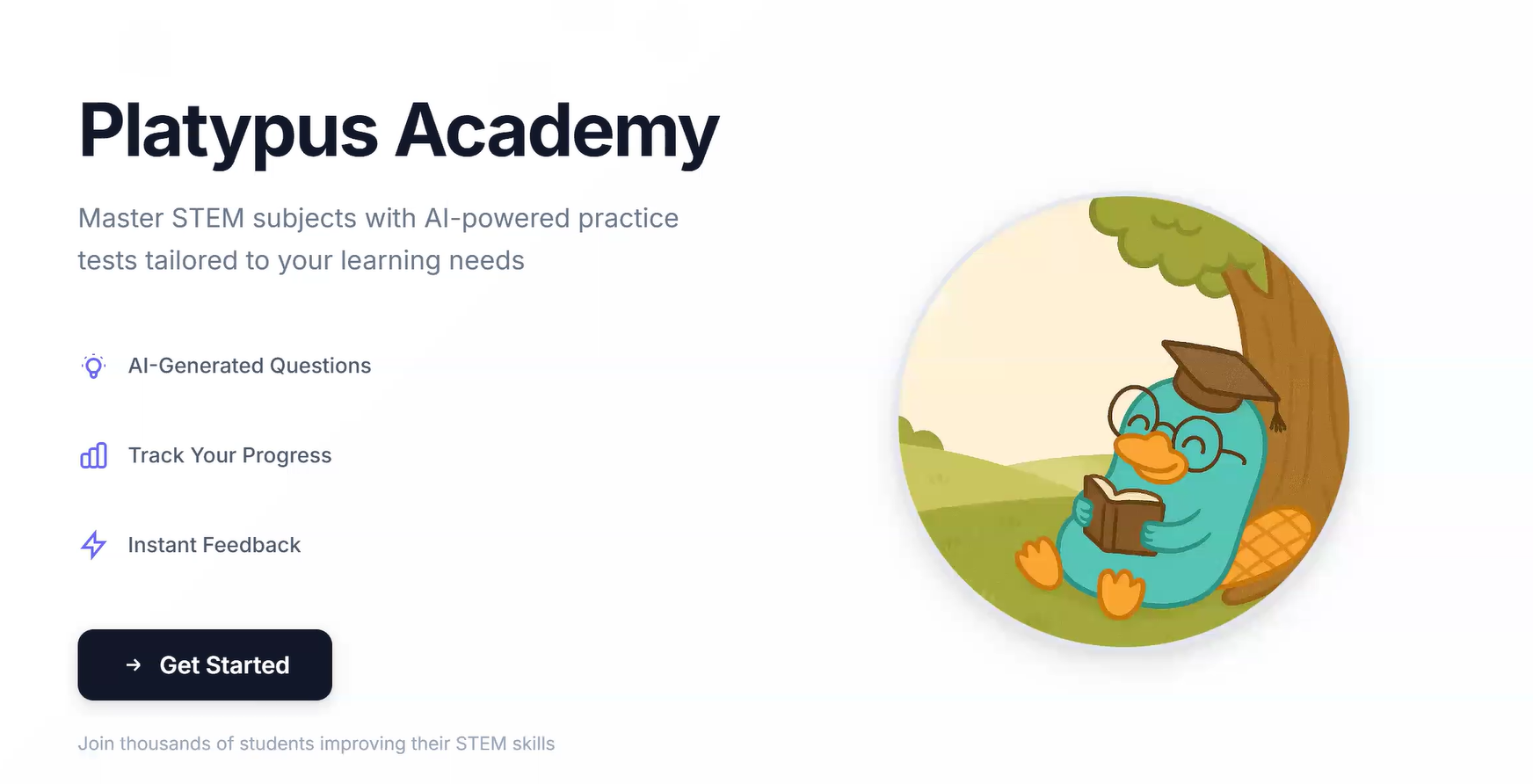
Studying for tests can be stressful, and finding the right practice questions takes too much time. Students often waste hours searching for reliable problems or guessing what to study next. In recent years, AI has become an incredibly useful tool for learning—helping students summarize material, quiz themselves, and explore new concepts. But these tools often struggle with accuracy: one study found that about 27% of AI-generated feedback on student work contained hallucinated or incorrect information (EDM 2024). We wanted to create a platform that keeps AI’s benefits while eliminating its biggest weakness—making studying more focused, efficient, and trustworthy.
What it does
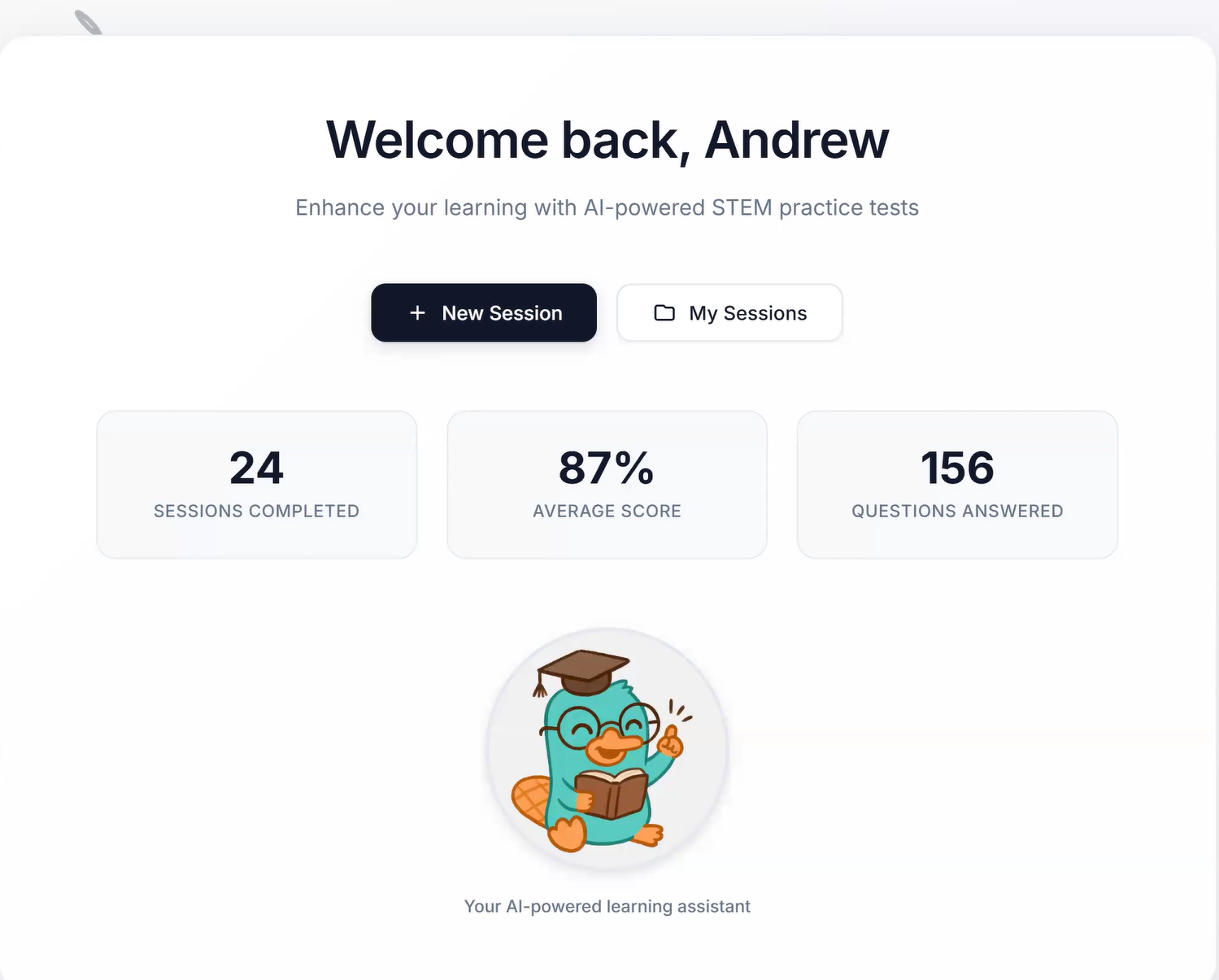
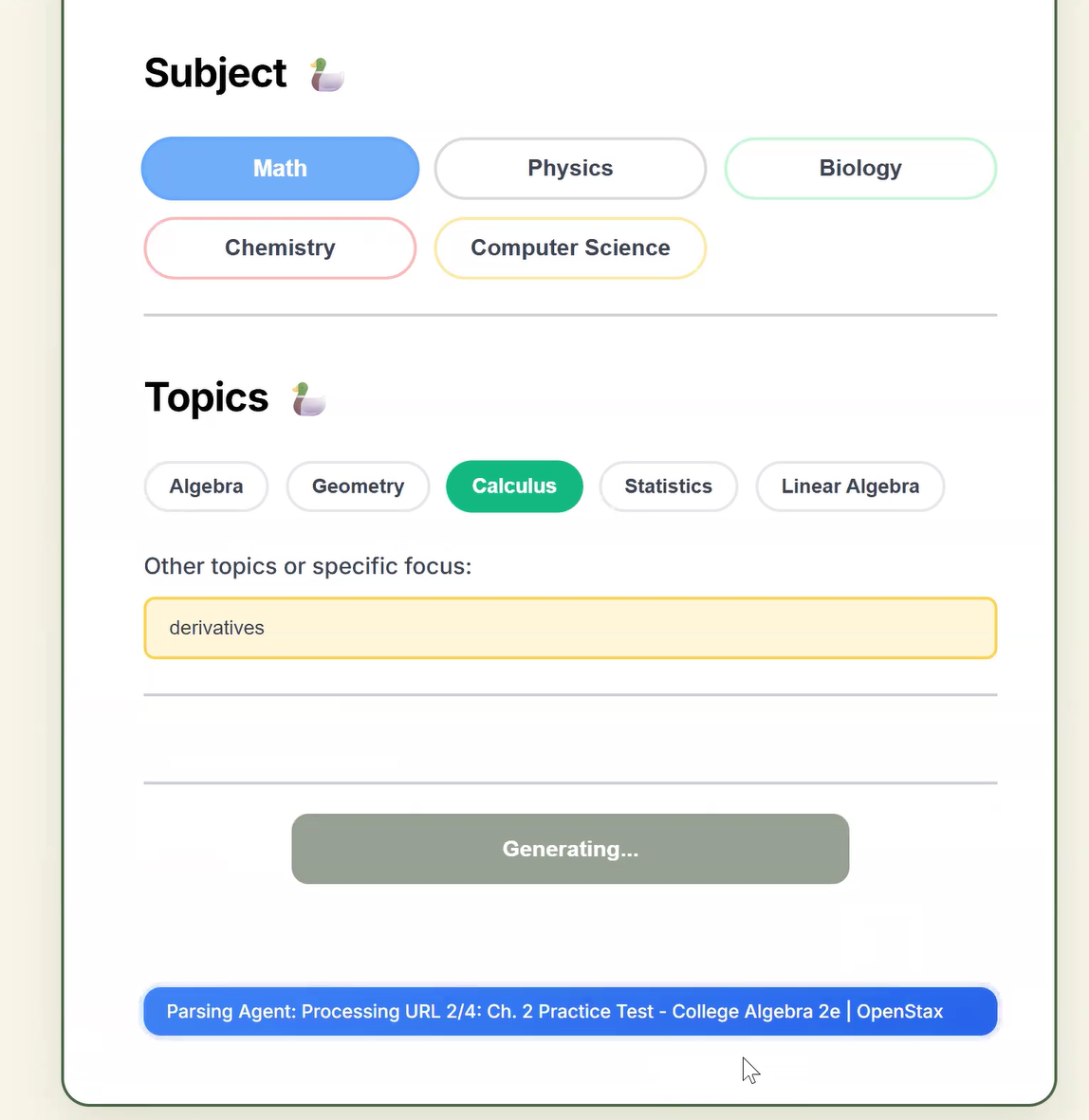
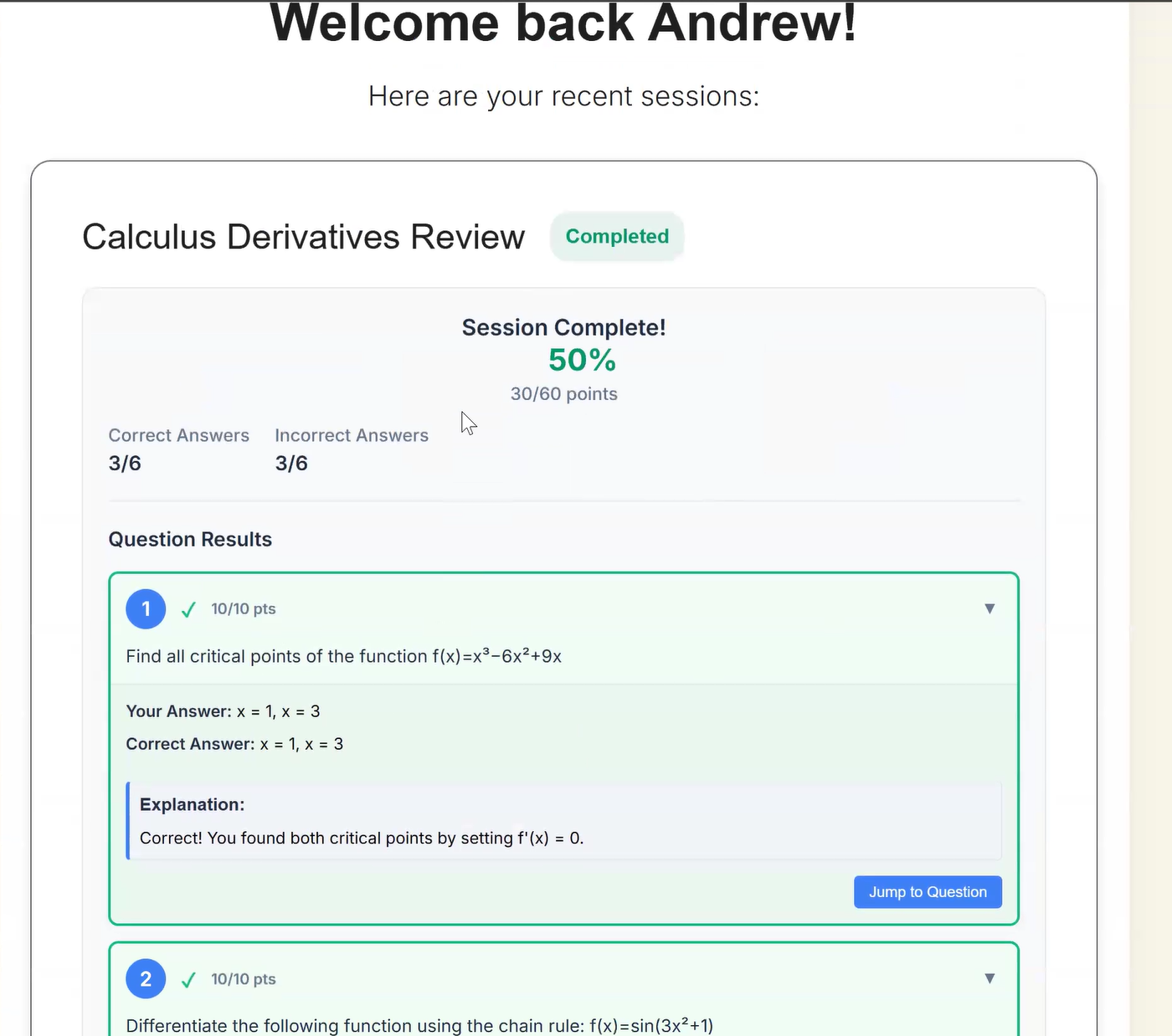
Our platform uses agentic AI to find and curate high-quality practice problems from trusted open educational resources. It verifies the accuracy of retrieved questions, filters out unreliable content, and generates personalized practice tests aligned with each learner’s goals. By grounding every problem in real educational material, it minimizes AI hallucinations and ensures that students practice with content they can trust.
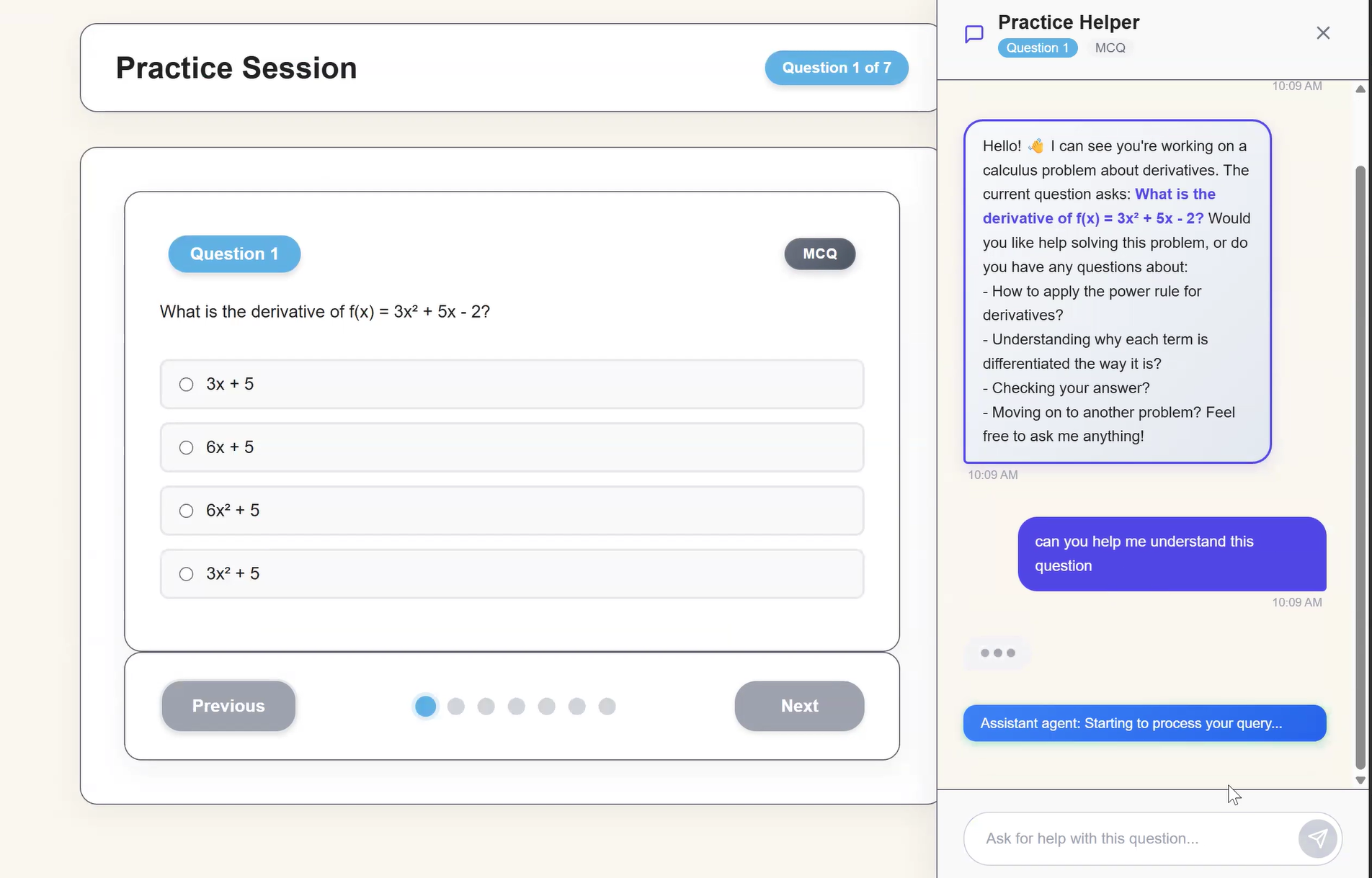
We also include an integrated AI assistant agent that provides guidance and explanations for each problem, or problem sessions.
How we built it
We built our project using LangChain as the core framework to coordinate multiple specialized agents within an agentic retrieval and reasoning pipeline. The system’s goal is to search, extract, and validate high-quality practice problems from open educational resources (OERs) while maintaining trust and accuracy.
Problem Retrieval Pipeline
Our pipeline consists of three key agents:
- SearchAgent – Finds relevant online OER sources (URLs) that match the user’s desired topic and subject. It identifies reliable educational repositories and passes the links downstream.
- ParsingAgent – Takes in each URL, processes the webpage using the Unstructured library to partition the text, then chunks and indexes it into Elasticsearch. A custom Elastic Builder Agent queries these indexed documents to extract potential question–answer pairs.
- ValidatorAgent – Evaluates the extracted question–answer data for both correctness and relevance to the user’s original topic. It uses Claude, the Wolfram Alpha API, and the Elasticsearch MCP (Model Context Protocol) to cross-check against the original source and verify factual accuracy.
Assistant Agent
We also built an Assistant Agent that helps students explore and understand the retrieved problems. It has access to both the Wolfram Alpha API for precise computational reasoning and the Elasticsearch MCP for grounded context retrieval, allowing it to explain answers, show relevant source material, and guide learners through detailed reasoning steps.
Tech Stack
- Agent Framework: LangChain
- Frontend: Next.js
- Backend: FastAPI
- Database: Chroma
- APIs & Tools: Wolfram Alpha API, Claude, Unstructured, Elasticsearch
Challenges we ran into
The most challenging part was figuring out how to use agentic AI to find the question and answers within a document, especially through websites that would be hard to navigate the html.
Accomplishments that we're proud of
We successfully built an end-to-end agentic retrieval system that can find and validate real practice problems from trusted educational sources. Our biggest achievement was getting multiple specialized agents—search, parsing, validation, and tutoring—to collaborate smoothly through LangChain and the MCP protocol. We’re also proud that our approach significantly reduces AI hallucinations by grounding every question and explanation in verifiable source material. Seeing the system generate accurate, personalized practice tests felt like a big step toward trustworthy AI-assisted learning.
What we learned
We learned how challenging it is to make AI educational tools not only smart but also reliable. Integrating retrieval and validation into the generative pipeline taught us how to reduce hallucinations and improve transparency in LLM outputs. We also deepened our understanding of how LangChain, Elasticsearch, and MCP can work together to enable grounded, context-aware reasoning. On the frontend, we refined how to make complex AI workflows feel simple and intuitive for learners.
What's next for Platypus Academy
Next, we plan to expand our pool of educational sources, including OpenStax and CK-12, and train specialized retrievers for different subjects. We also want to improve the tutor agent’s adaptive learning capabilities—so it can guide students based on their performance and knowledge gaps.
Built With
- chroma
- claude
- elasticsearch
- fastapi
- langchain
- next
- python
- typescript


Log in or sign up for Devpost to join the conversation.