-
-

Logo App
-
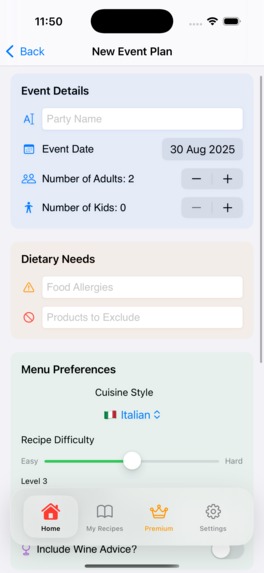
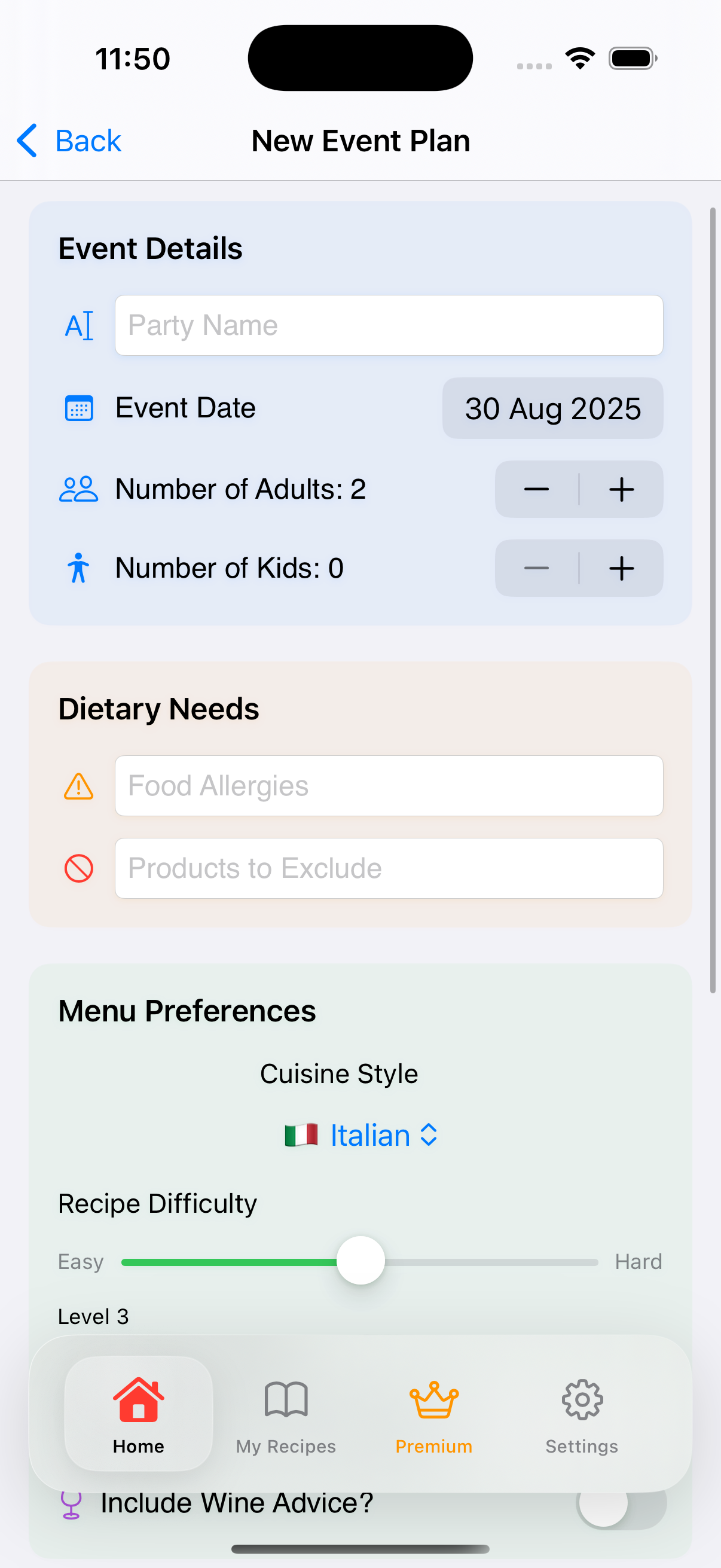
Input generation of the menu by user choices.
-
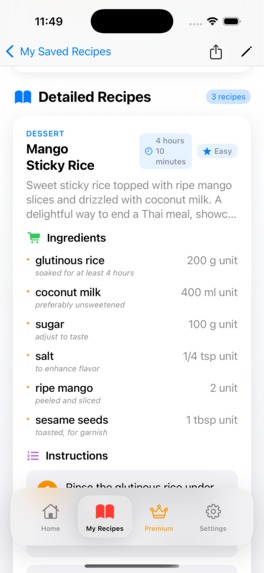
-
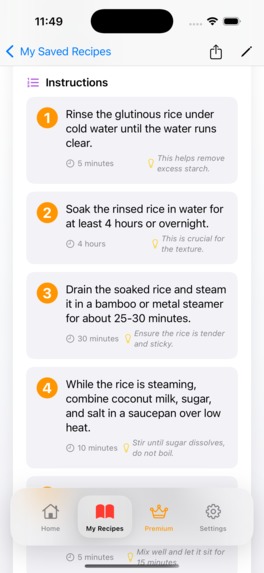
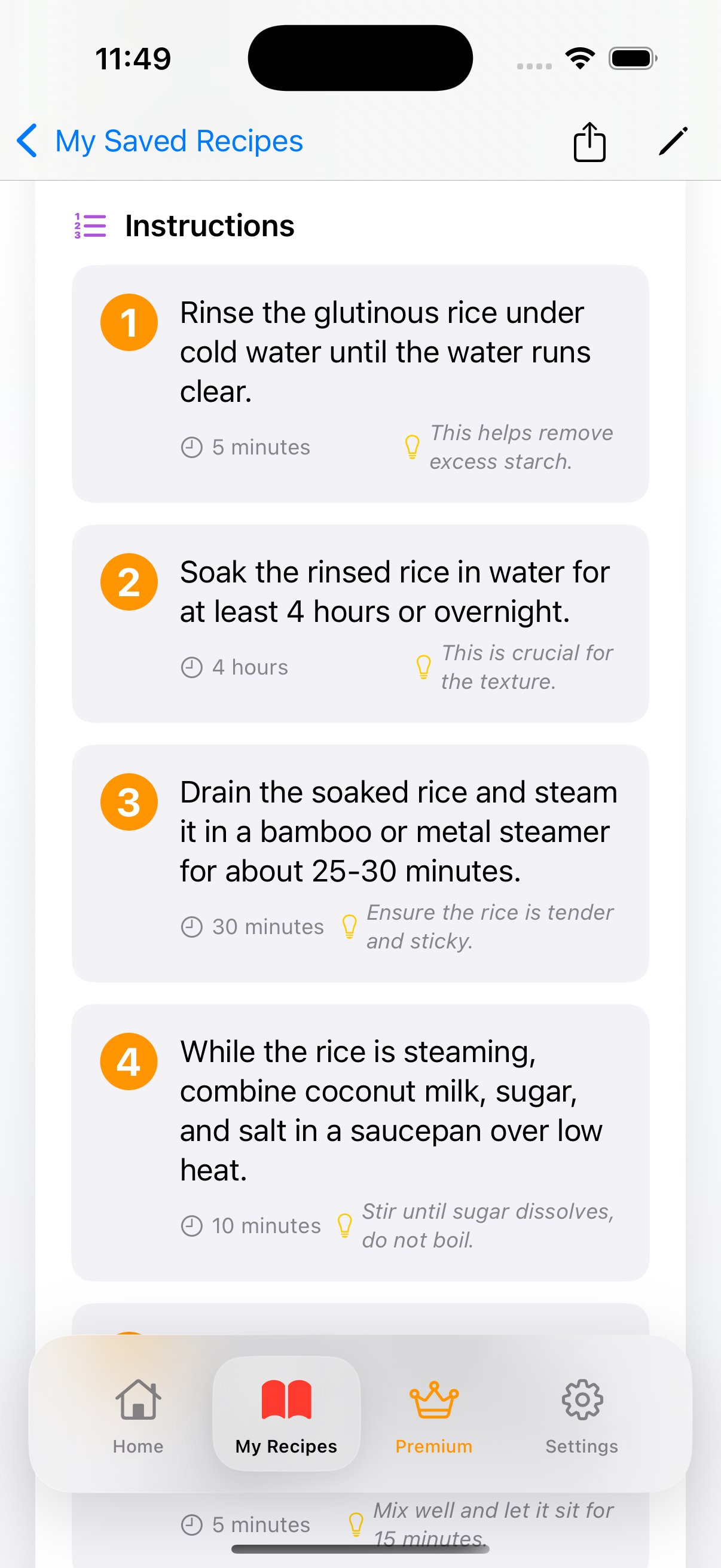
Detalied Instructions on how to prepear the dishes.
-
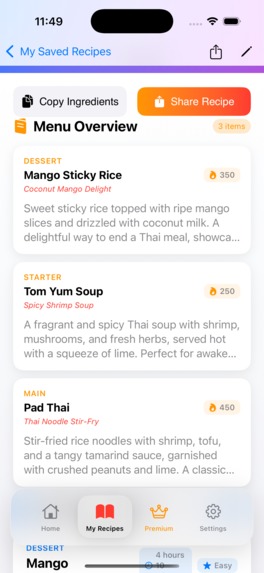
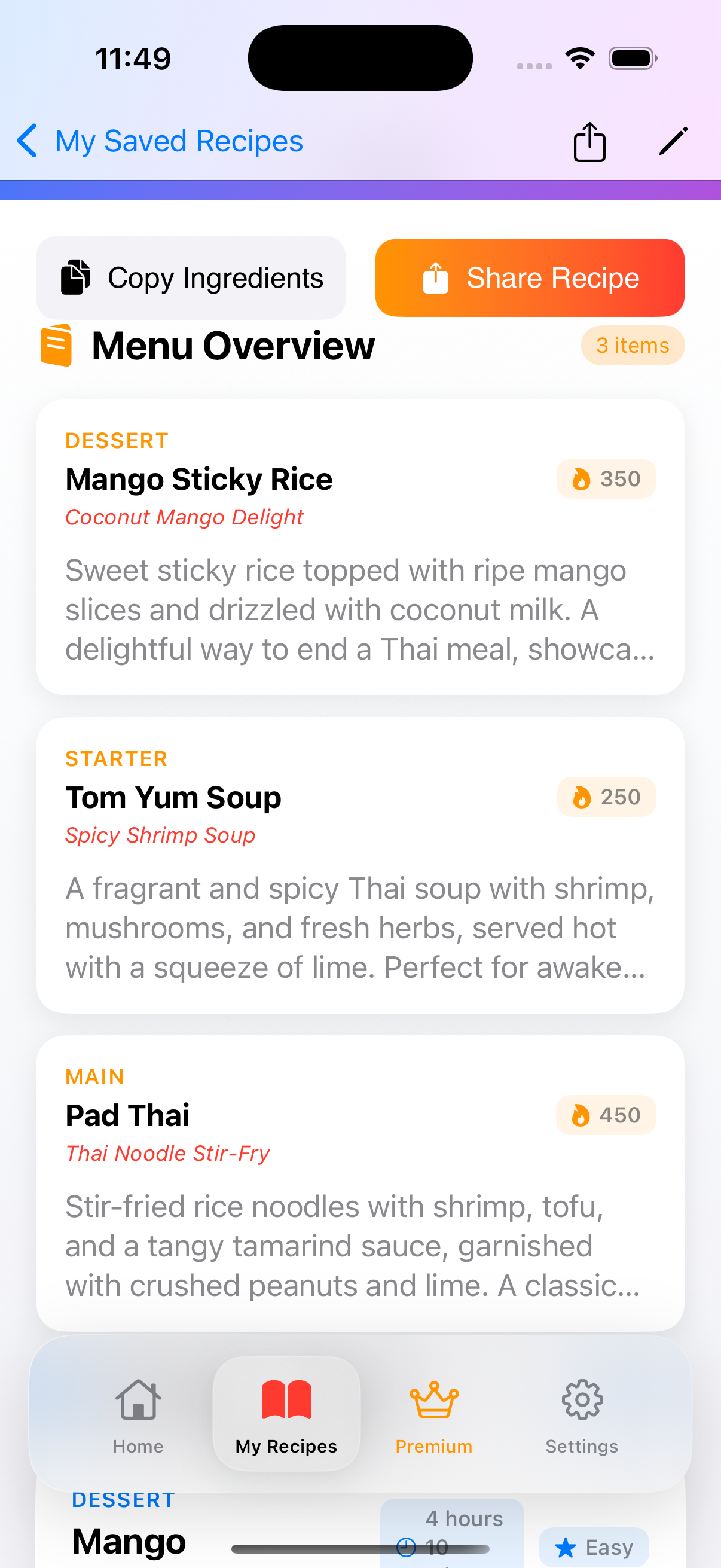
Recipes generated
-
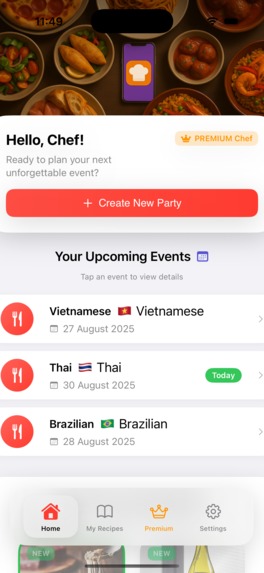
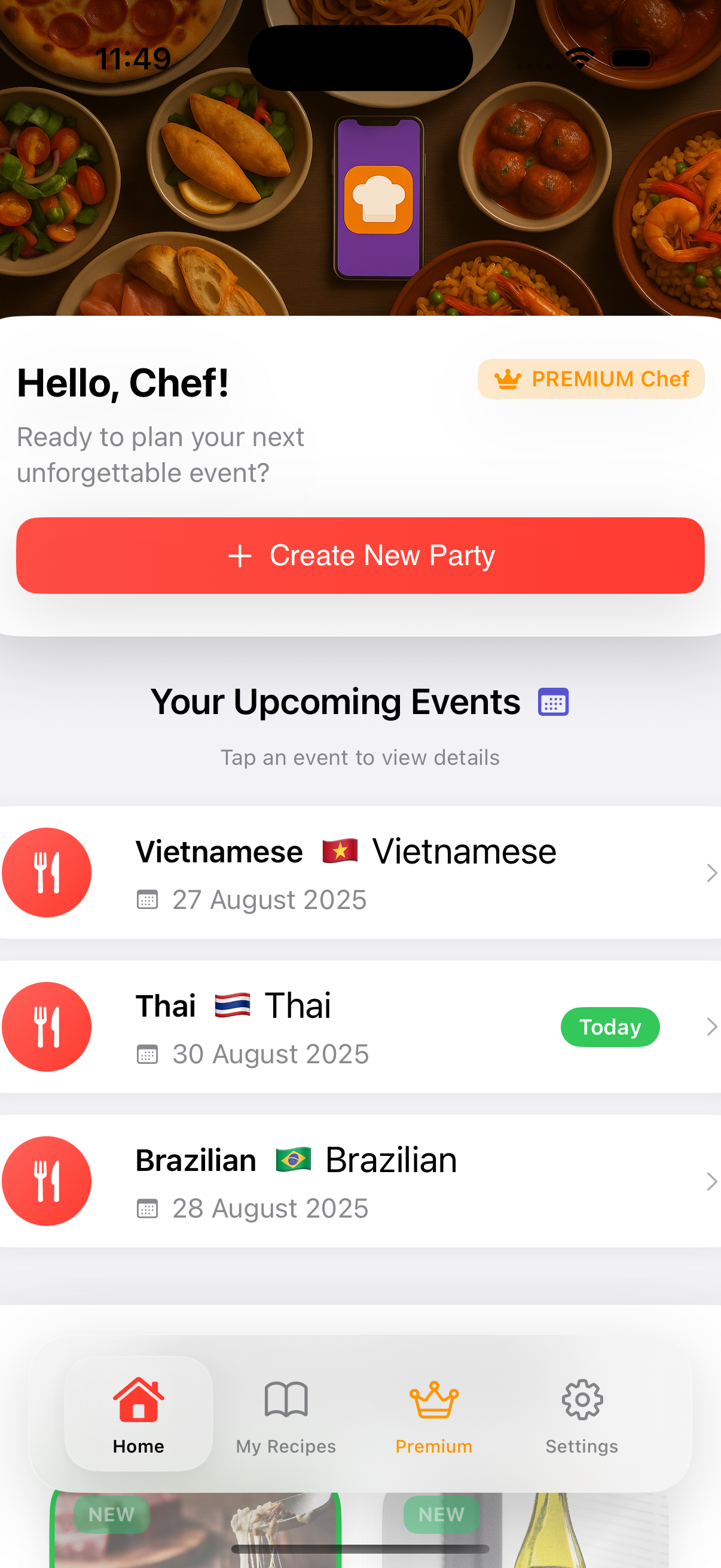
Home screen
-
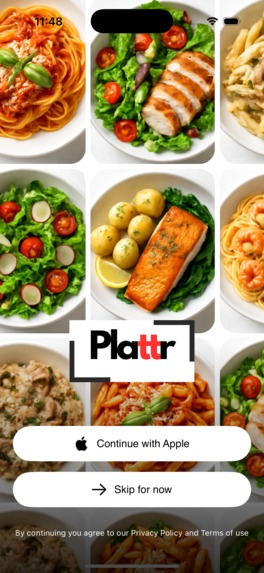
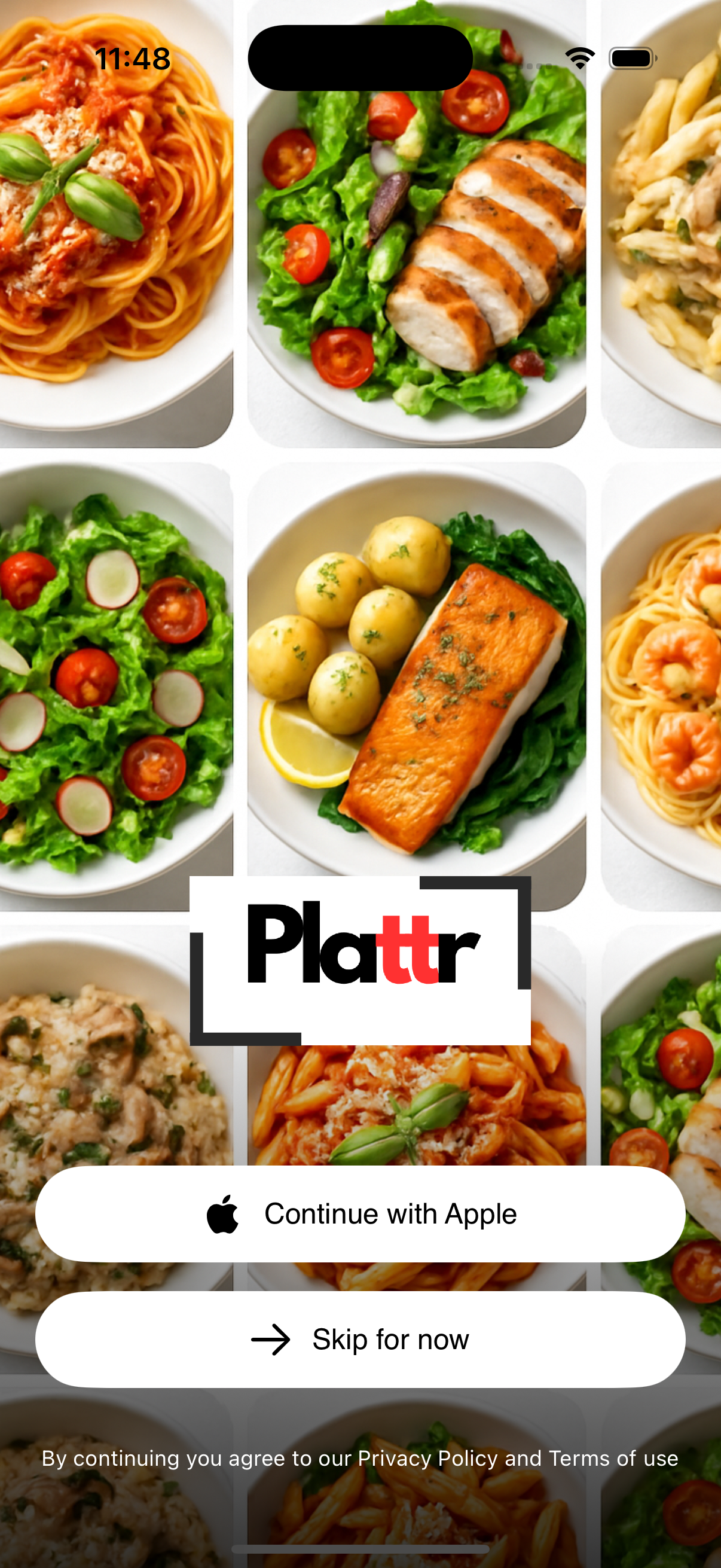
Login Screen
-
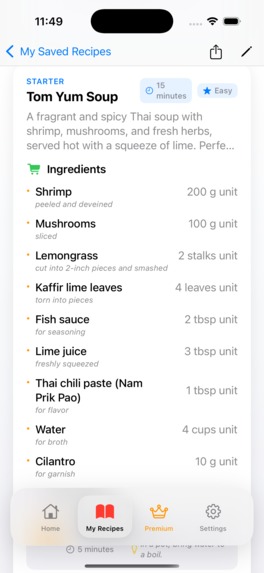
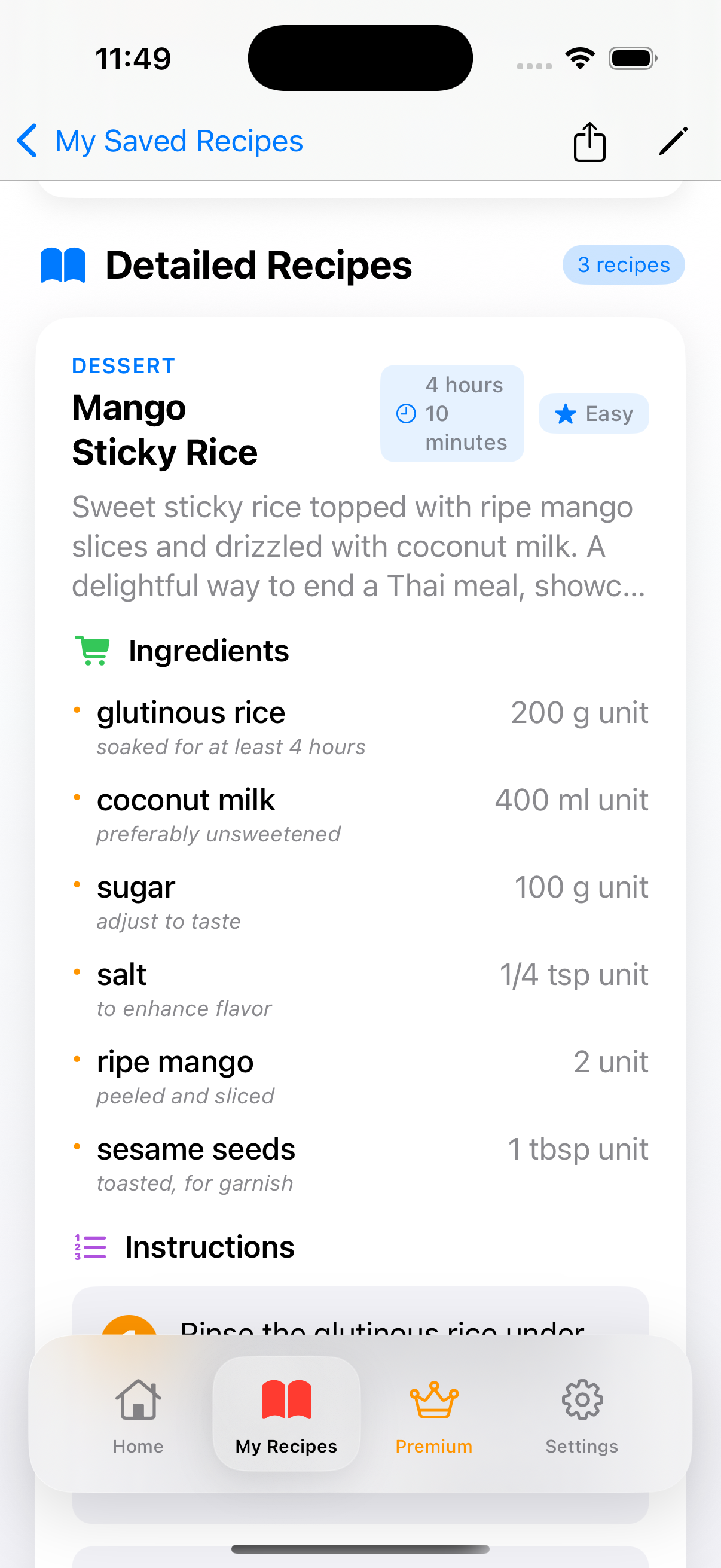
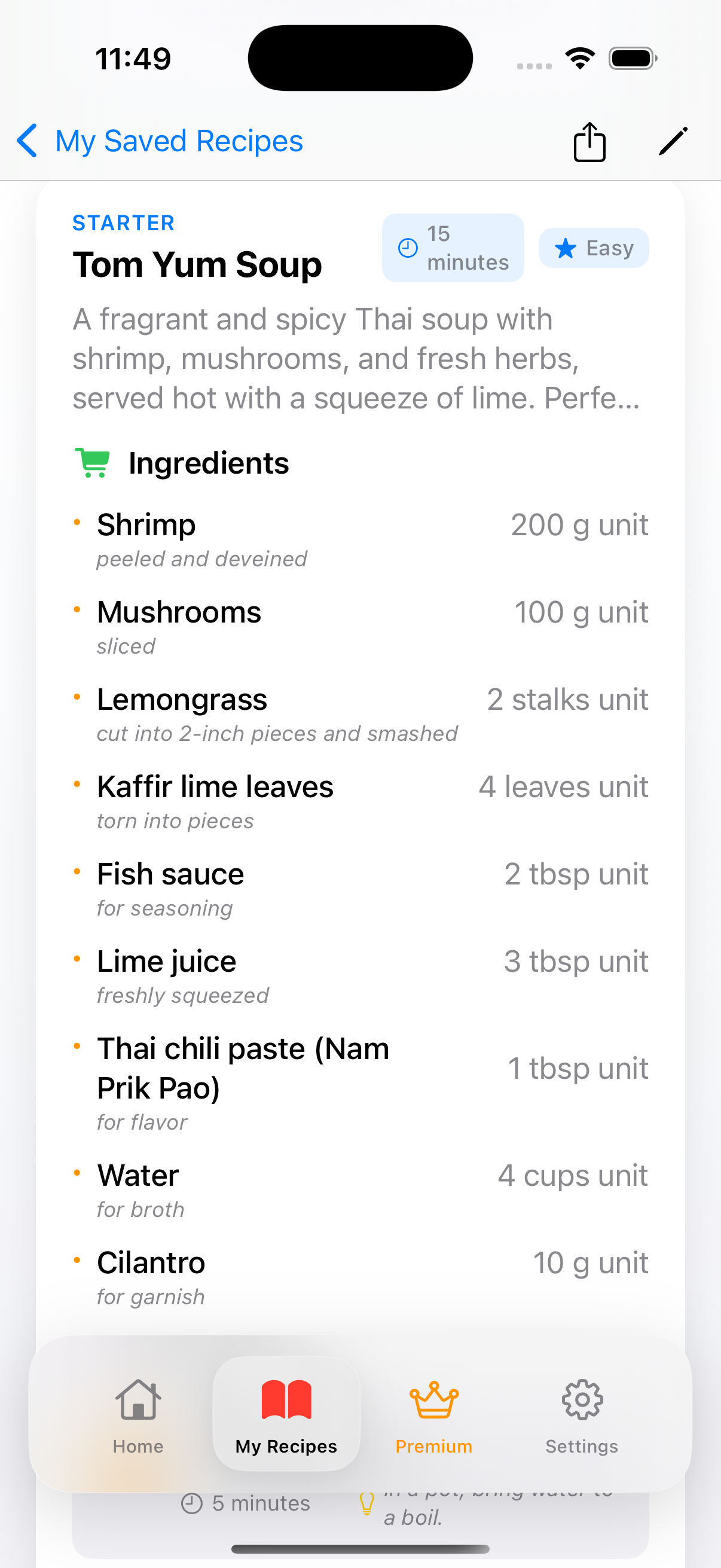
Information about the recipes.
-
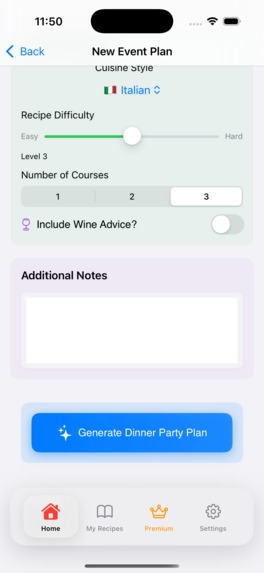
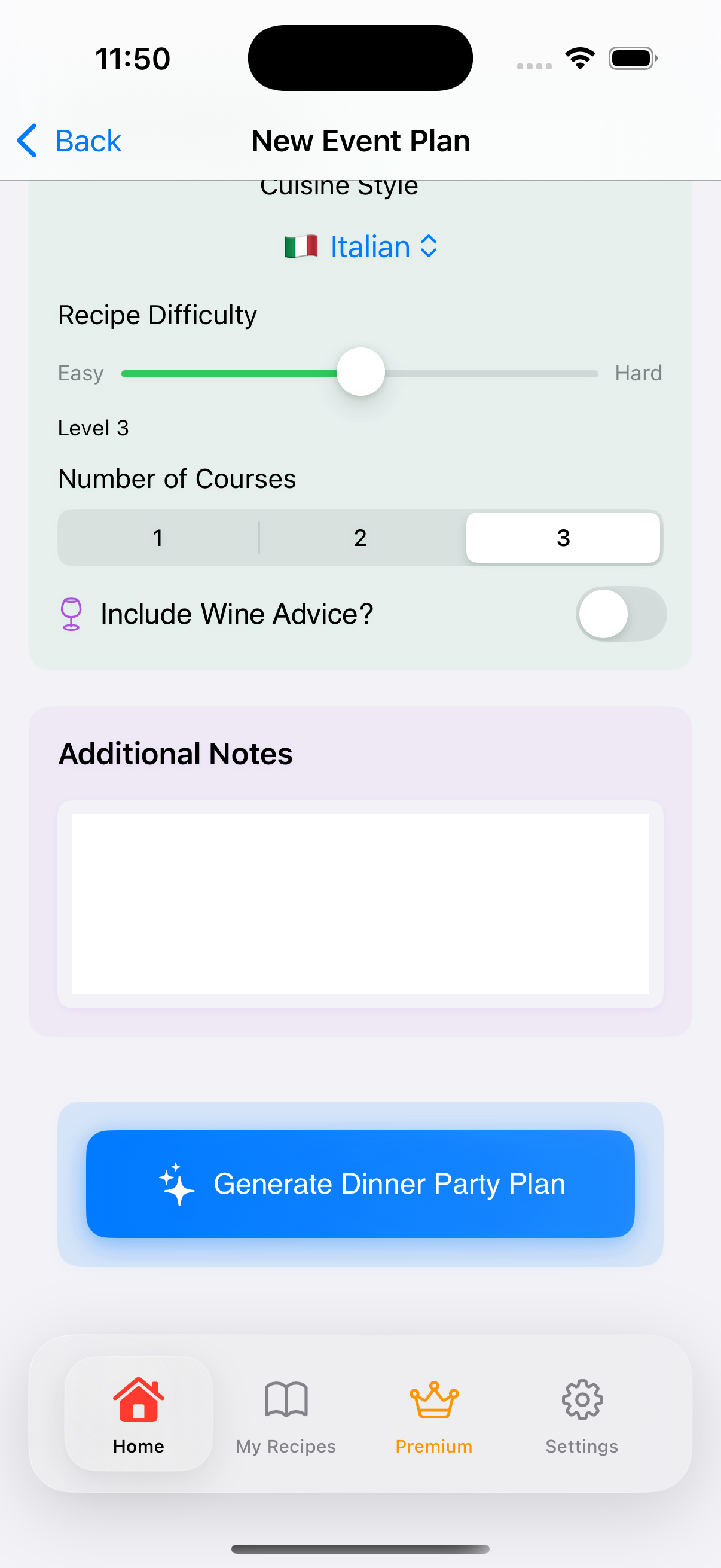
Instruction on how to generated the party plan.
-

Paywall


The Story of Plattr: From Party Panic to AI Planner The Inspiration
It all started with a pineapple. I was standing in my kitchen, trying to plan a dinner party for the upcoming weekend. On my counter was a random assortment of things I’d bought on a whim: a pineapple, a single chicken breast, some pasta. I was scrolling through endless recipe blogs, my browser a chaotic mess of tabs, trying to figure out how to turn this culinary chaos into a cohesive, impressive meal. I felt that familiar pre-party panic setting in—the stress of planning, shopping, and worrying about my friends' dietary needs was overshadowing the actual fun of hosting.
I remember thinking, "This is the hardest part. What if a professional chef could just look at my idea and give me a perfect plan?" That was the lightbulb moment. I didn't just want another recipe app; I wanted a co-pilot, an AI-powered chef that could handle the stressful parts so I could enjoy the creative ones. That's how Plattr was born.
The Building Process
I decided to build the app with a modern, native-first approach. The front end is built entirely in SwiftUI, which allowed me to create a clean, responsive, and elegant interface that feels right at home on iOS. For user accounts, I integrated Firebase Authentication. It’s secure, reliable, and handles all the complexities of user management, letting me focus on the core app experience.
The real heart of the app, of course, is the AI. The app takes all the user's party details—cuisine, allergies, number of guests—and sends them to a large language model. The magic is in the prompt. I spent a lot of time engineering a highly detailed system prompt that instructs the AI to act as a world-class chef and, most importantly, to return its response in a strictly formatted JSON object. This ensures the data is always structured correctly, so the app can parse the menu, shopping list, and recipes without errors.
The Challenges I Faced
he biggest technical challenge wasn't getting the AI to generate a recipe—it was getting it to do so reliably, every single time. My initial prompts were simple, and the AI's responses were wild and unpredictable. One time it would return a shopping list as an array of strings; the next, it would be an array of objects. Sometimes keys would be missing, or a value I expected to be a number would be a string.
For a native iOS app that relies on strict Codable data models, this inconsistency was a disaster. An unexpected JSON structure would cause the app to crash, creating a terrible user experience. I quickly realized that a simple instruction like "respond with JSON" wasn't enough.
The solution was a deep dive into prompt engineering. I had to create a "contract" with the AI by defining a rigid JSON schema directly within the system prompt itself. This meant specifying every key, the data type for every value (string, integer, array), and the structure of every object. It took dozens of iterations, testing each change to see how the AI would respond, until I found the perfect formula that made the output 99.9% predictable. This process was the key to transforming the AI from a creative but unreliable novelty into a stable, production-ready feature.
What I Learned
This project taught me that a great app isn't just about a cool idea; it's about thoughtful execution. I learned that user trust is paramount, which is why I invested so much time in building a secure backend instead of taking a shortcut. I also learned the art of "talking" to an AI—how to craft prompts that are both creative and technically precise. Most of all, I learned that technology is at its best when it solves a real, human problem. Plattr started as a solution to my own party-planning stress, and I hope it brings that same sense of relief and joy to everyone who uses it.

Log in or sign up for Devpost to join the conversation.