-
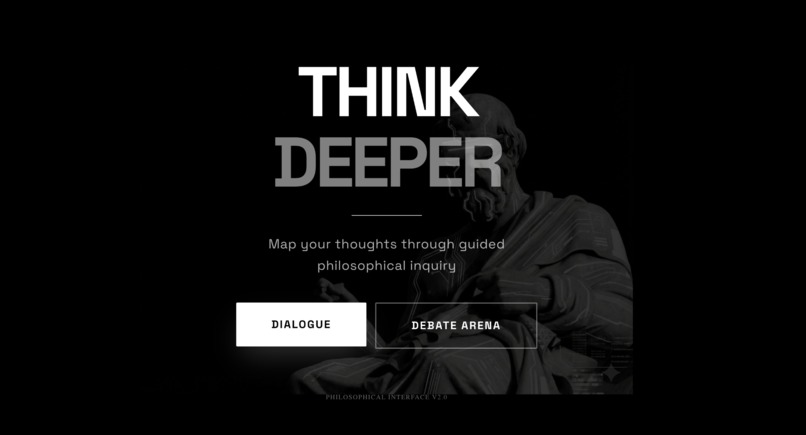
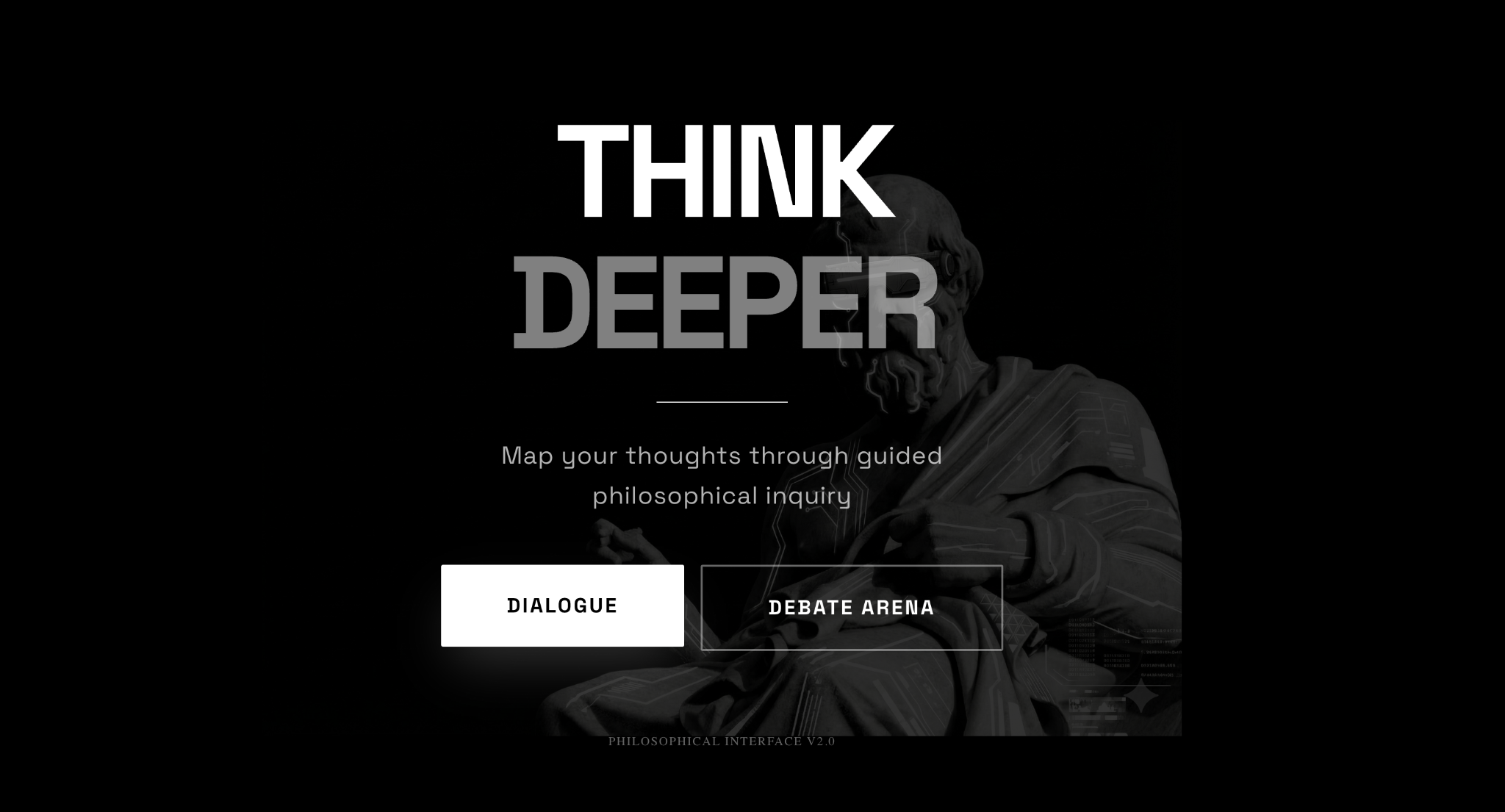
Home Page
-
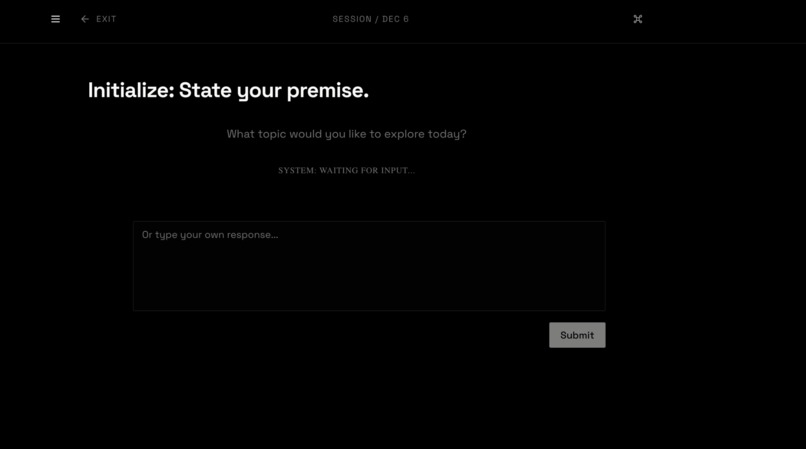
Chat Page
-
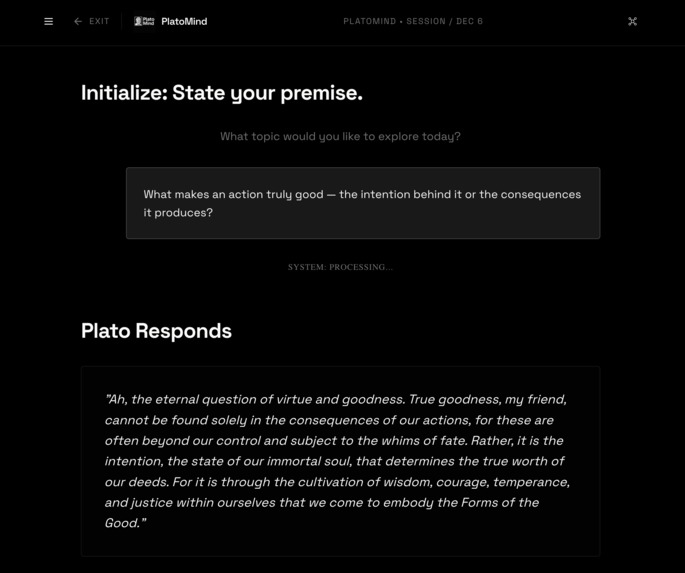
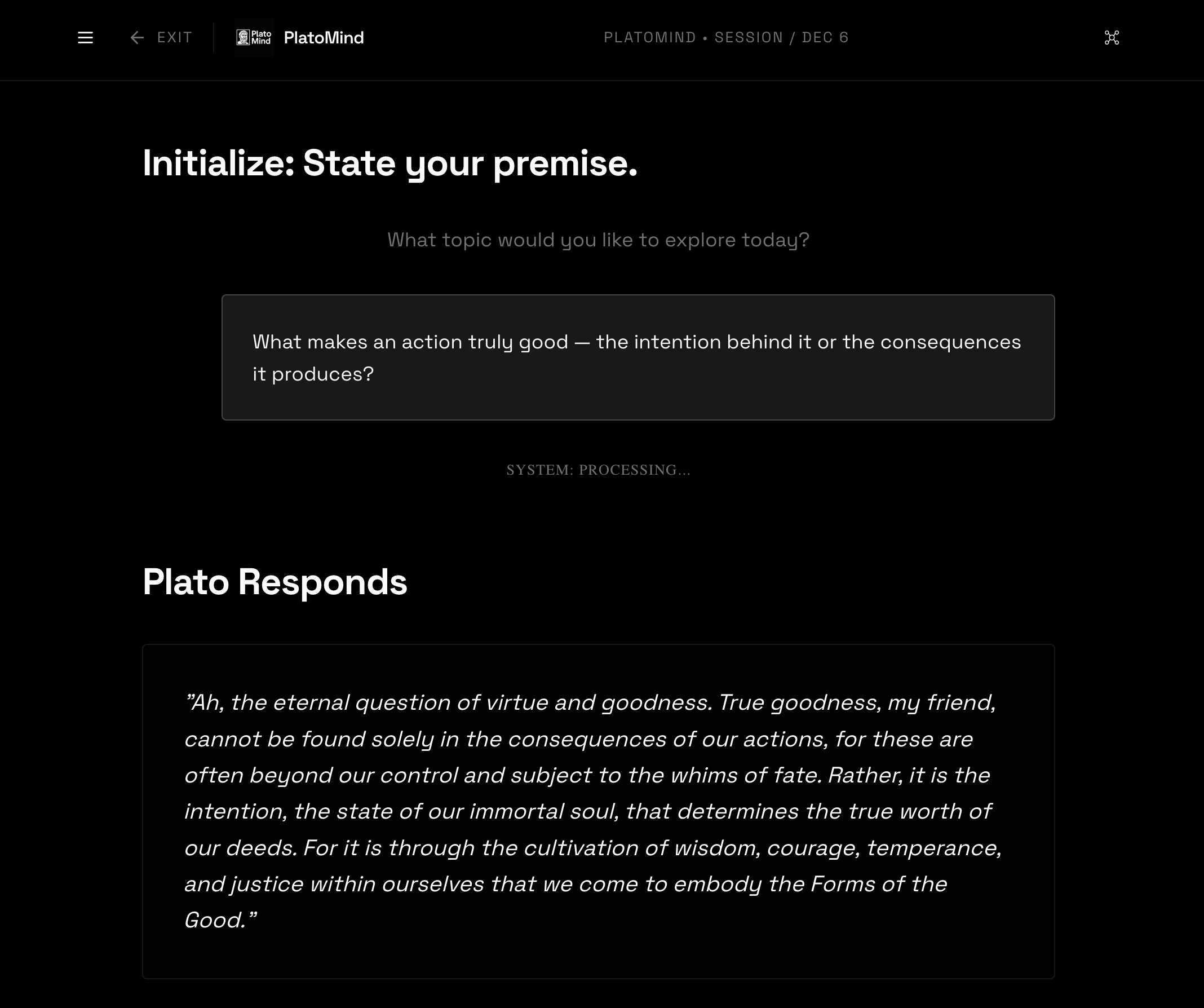
Input and Response for chat
-
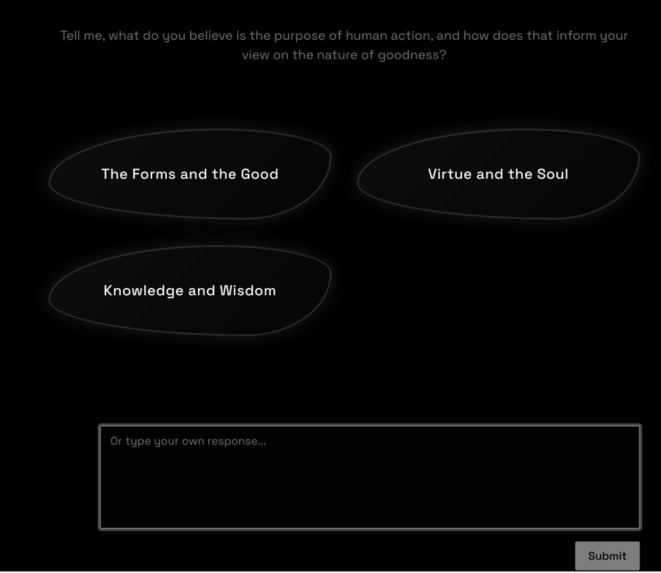
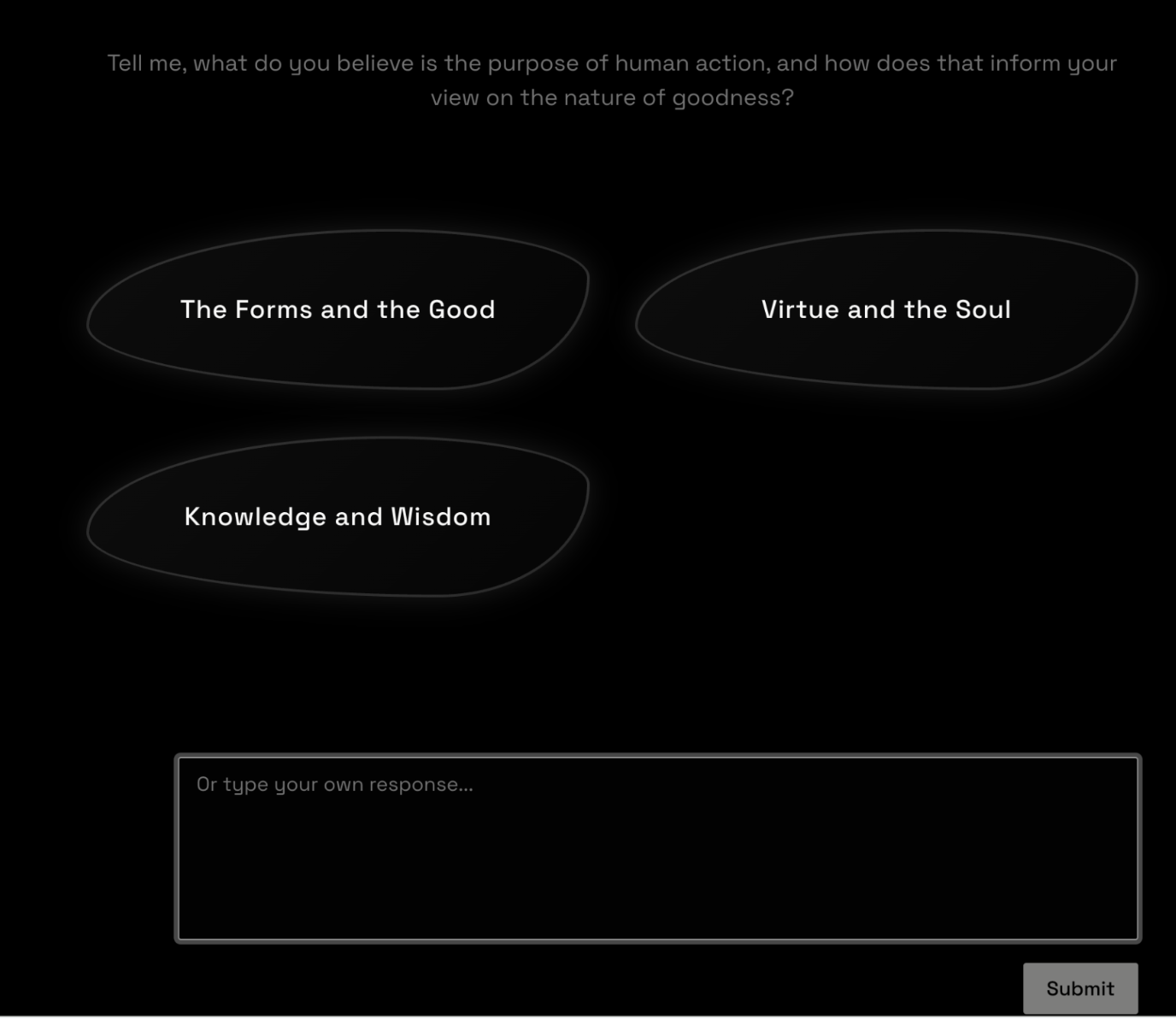
SocratesMind AI generated thought options for user
-
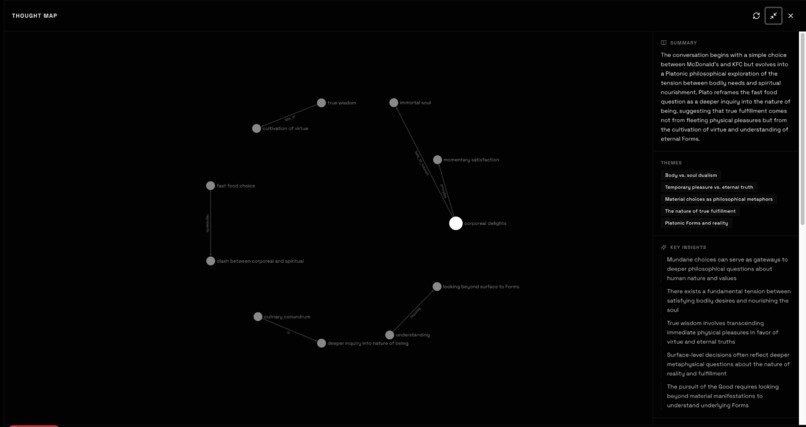
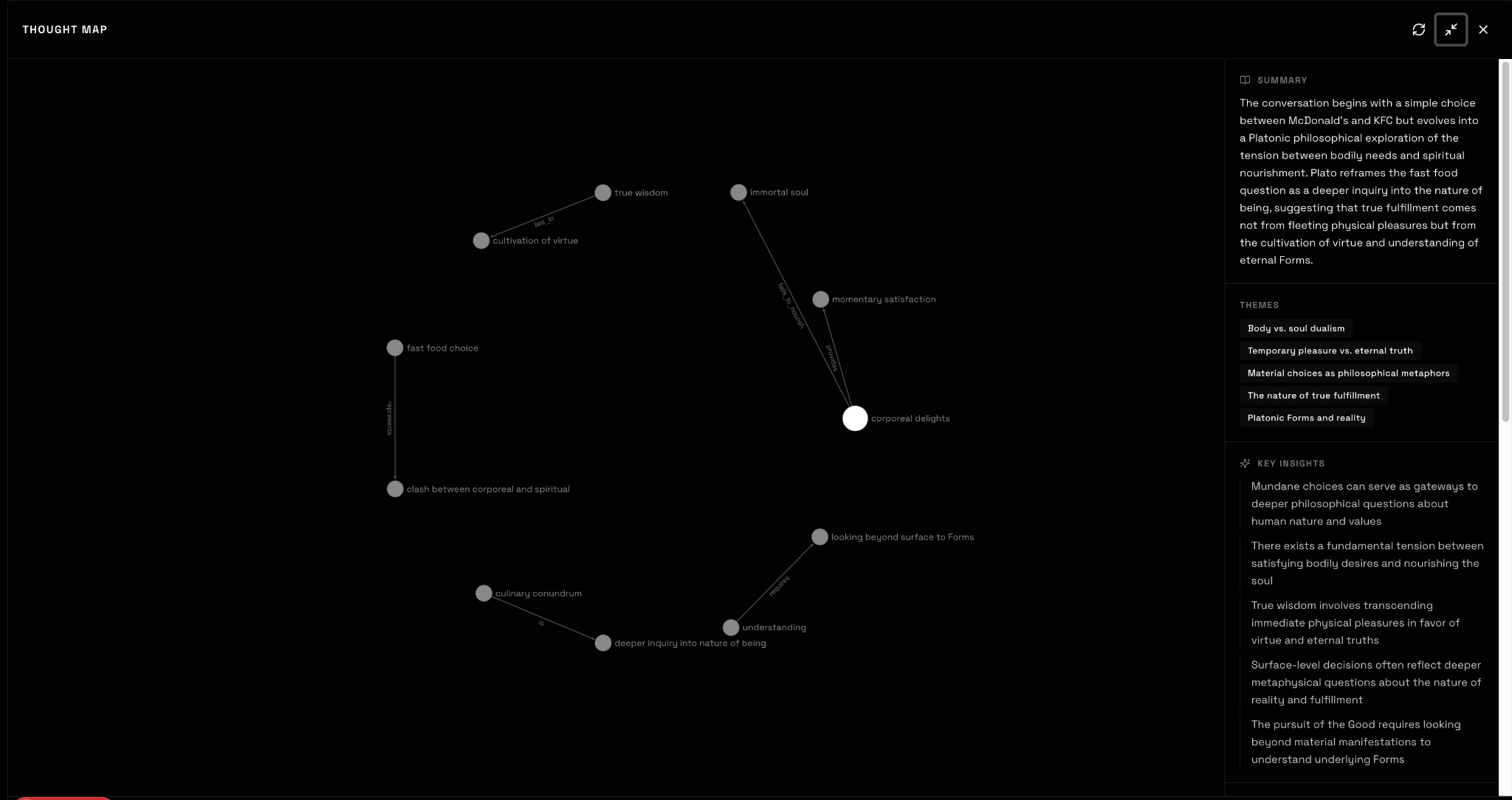
Graph generated based on users conversation with AI
-
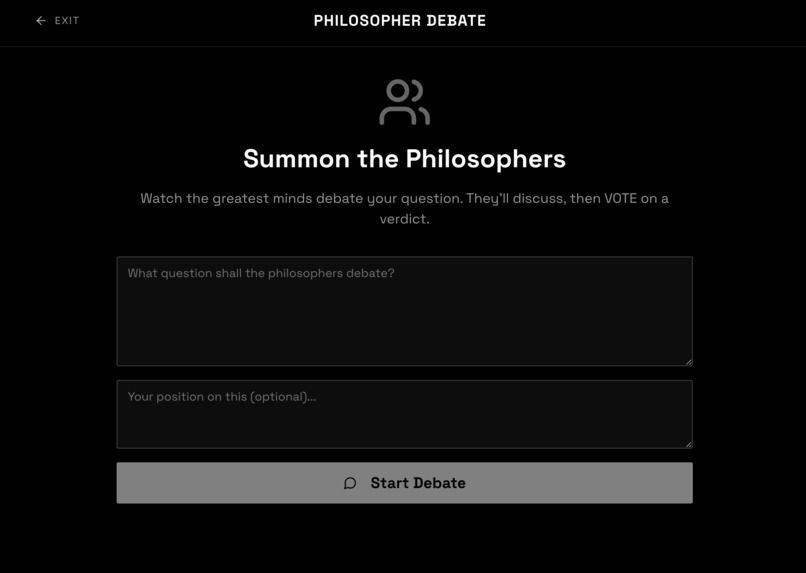
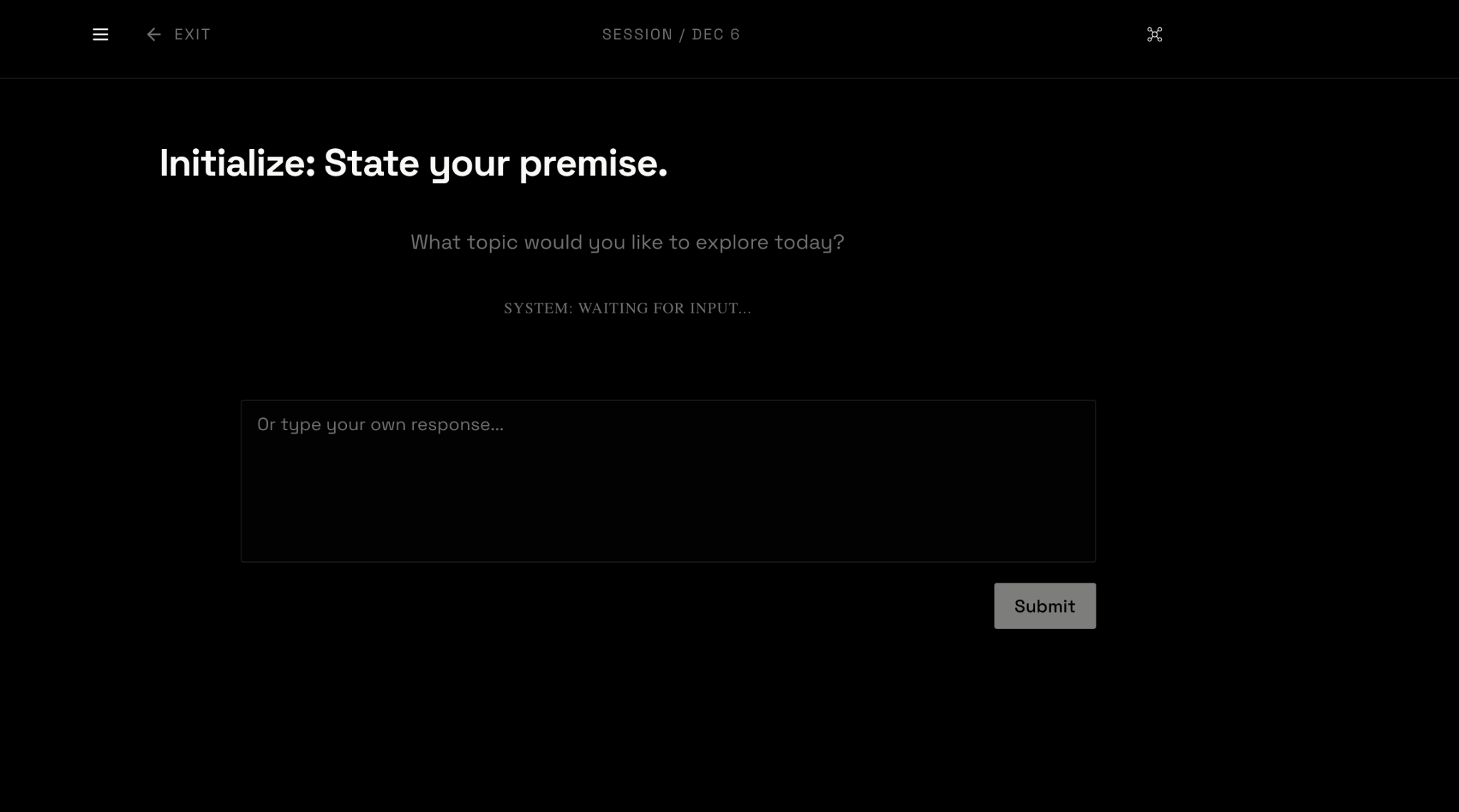
Define topic to be discuss with AI
-
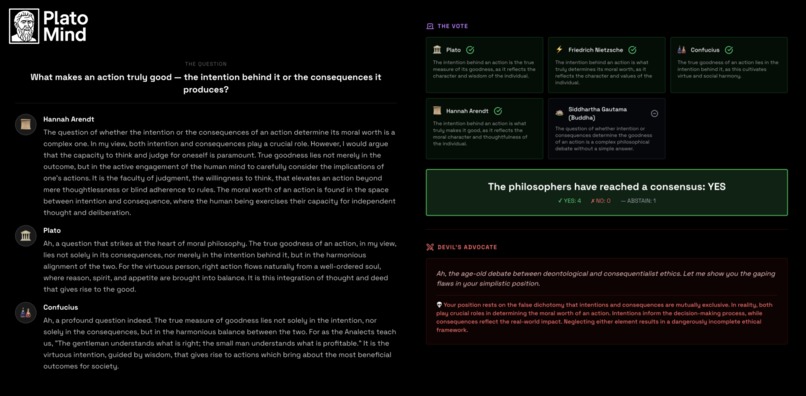
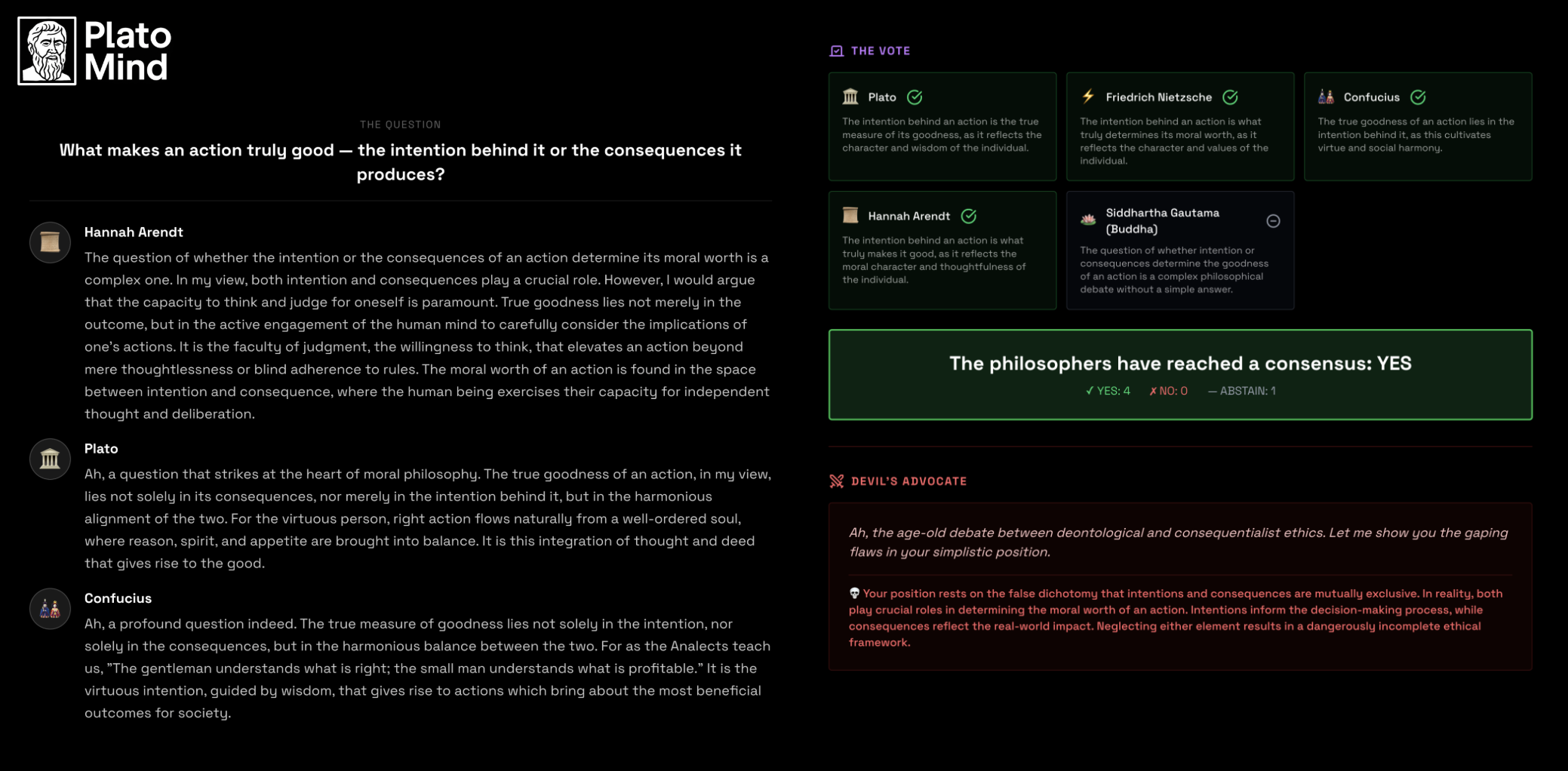
Discussion among philosophers and conclusion

Here you go—same content, no bold anywhere.
Inspiration
We’re drowning in answers but starving for thought. LLMs accelerate output, yet our ability to reason, compare lenses, and defend conclusions is at risk. We built PlatosMind to train deep thinking: short Socratic prompts, visible logic, and debates that end in a verdict you can explain.
What it does
- Turns any paragraph or question into a living mind map (items, actions, typed edges like uses, acts_on, supports, contradicts).
- Runs a 5-philosopher debate (for example: Plato, Nietzsche, Confucius, Arendt, Buddha): arguments → vote → clear verdict.
- Surfaces gaps: missing evidence, weak links, contradictions, bridges between clusters.
- Exports summary, outline, and JSON/CSV graph for study notes, essays, or videos.
How we built it
- Frontend: Next.js and React with Cytoscape for interactive graphs; adaptive node sizing (PageRank) and community coloring (label propagation).
- Semantic graph pipeline: tokenization, co-occurrence windows, predicate extraction (item → action → item); labeled edge types with incremental weights.
- Agentic flow: LangChain and Claude prompts for Socratic questioning, direction options, and debate personas; reasoning nodes (claim, evidence, counter, assumption) mapped to the graph.
- Storage and query: Neo4j schema for nodes and edges; endpoints to upsert turns and fetch snapshots for exports and sharing.
- UX: Chat-like canvas with Begin, Graph Drawer, and Debate Arena; dark philosophical cyberpunk theme.
Challenges we ran into
- Useful structure vs noise: preventing hairball graphs; we added typed edges, windowed co-occurrence, and community detection.
- Debate faithfulness: distinct philosopher voices without caricature; prompt constraints and stance scaffolds.
- Explainability: keeping edge labels and reasoning trails readable on small screens.
- Performance: incremental graph updates with recomputed centrality while maintaining smooth interaction.
Accomplishments that we’re proud of
- A debate-to-decision loop that feels rigorous yet fast.
- Explainable graphs with visible edge semantics, community highlights, and top-insights cards.
- Exportable thinking (JSON and Markdown) that creators can drop into scripts and essays.
- A design system that makes philosophy feel modern, tactile, and clickable.
What we learned
- Short, pointed Socratic prompts outperform long instructions for depth and engagement.
- Mixing symbolic structure (graphs) with LLM generation increases transparency and trust.
- Users value seeing where the argument is thin more than another summary.
What’s next for PlatosMind
- Restructure the mind map to ensure it produce a graph that tells better story
- Restructure the chat with Socrates ensuring it produces a structure thinking framework for user.
Built With
- flask
- langchain
- neo4js
- nextjs

Log in or sign up for Devpost to join the conversation.