-
-
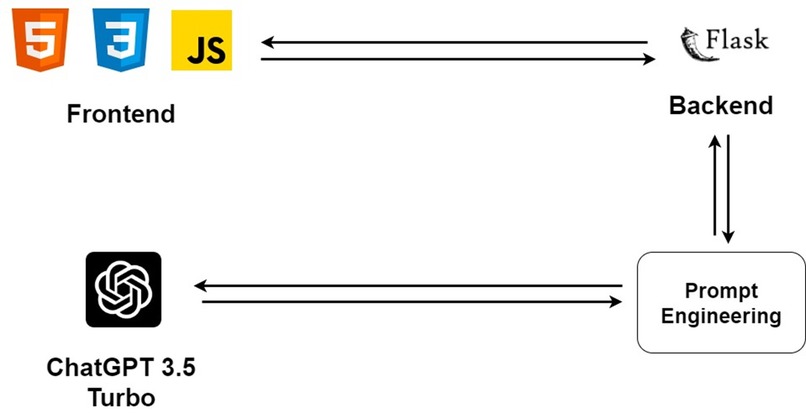
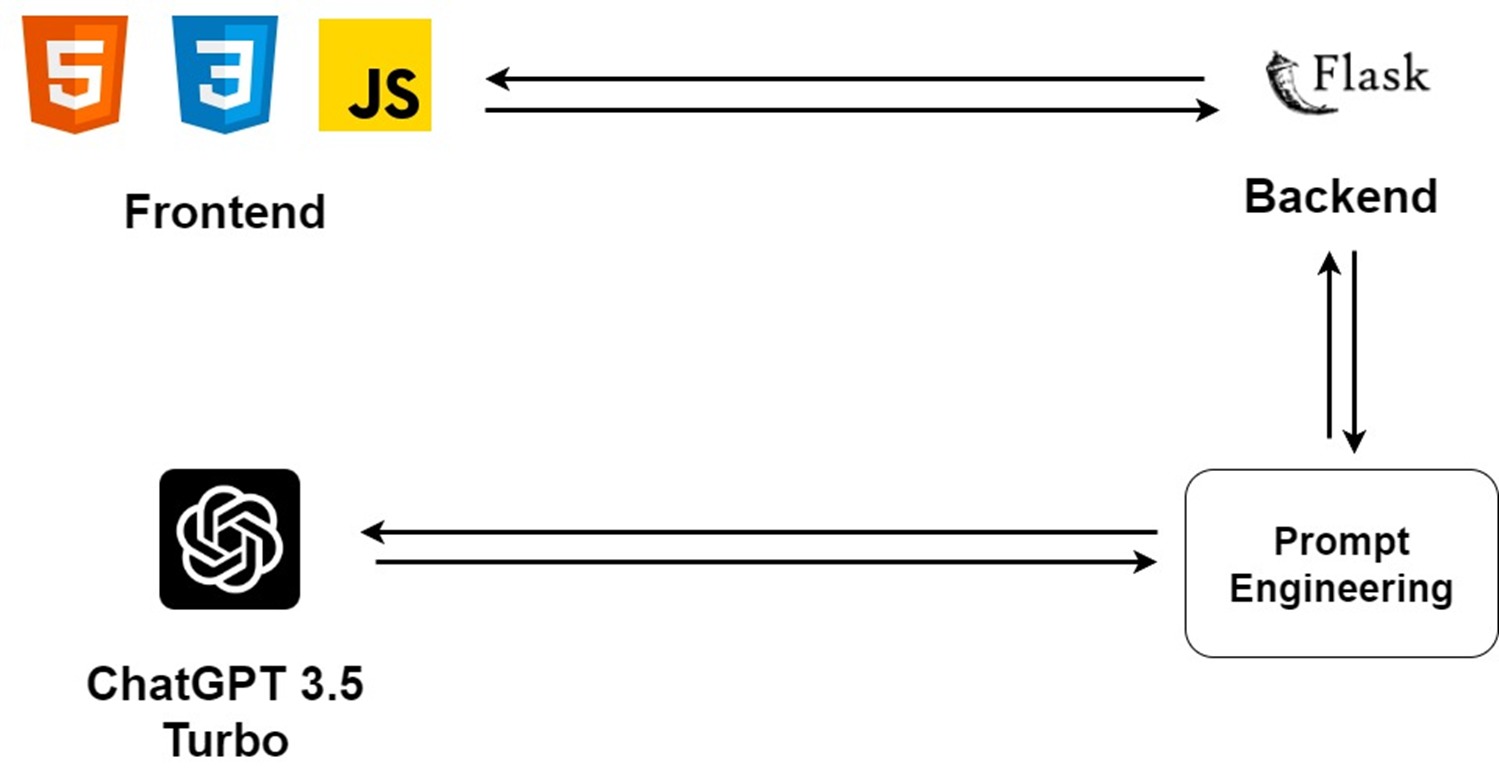
techstack
-
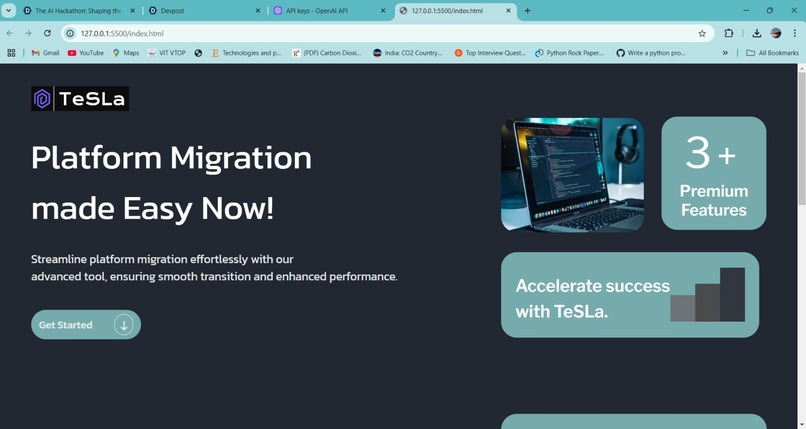
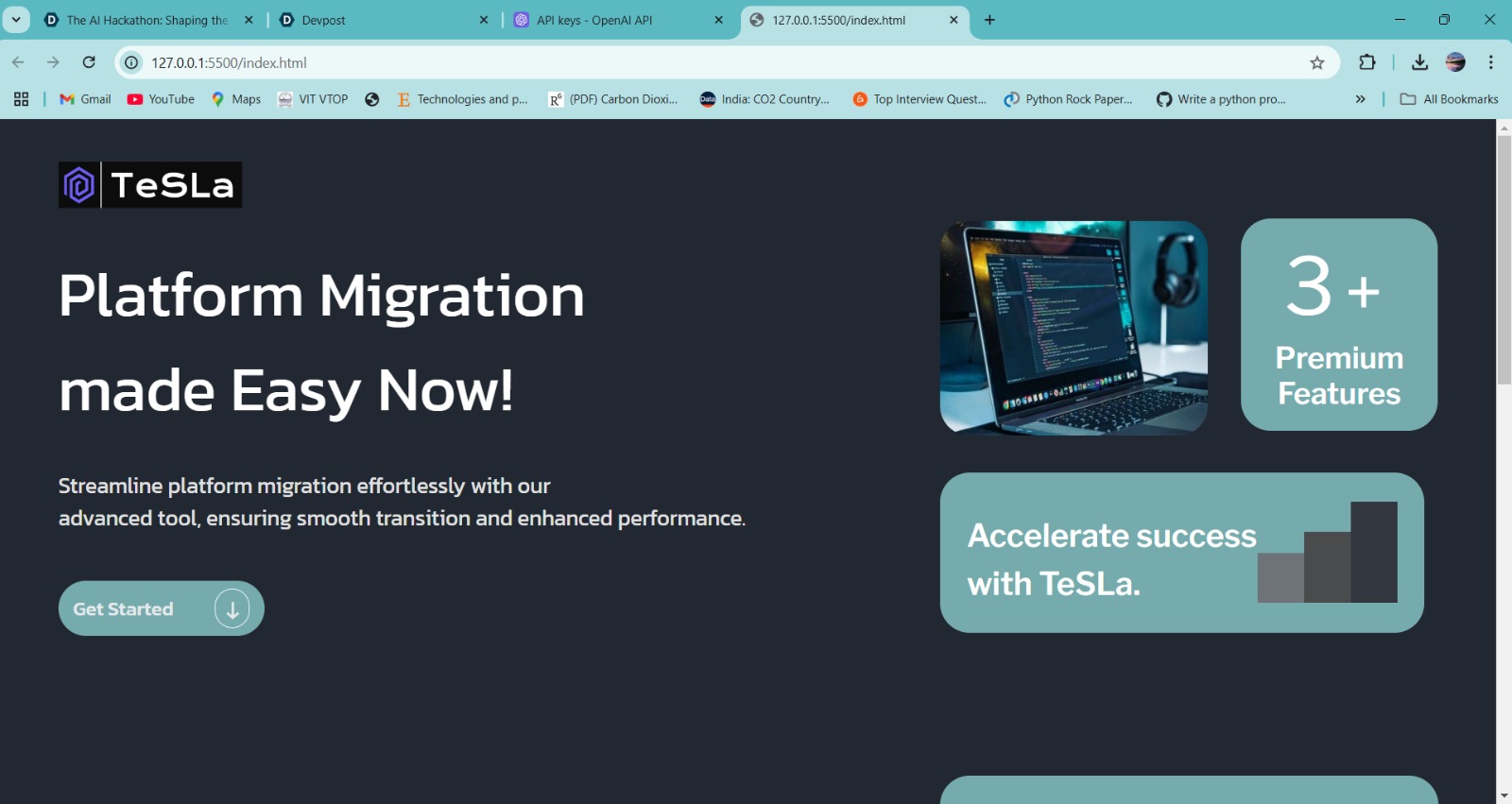
homescreen
-
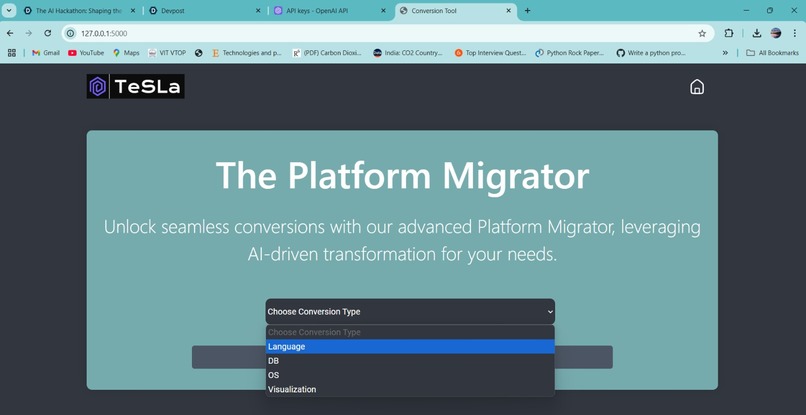
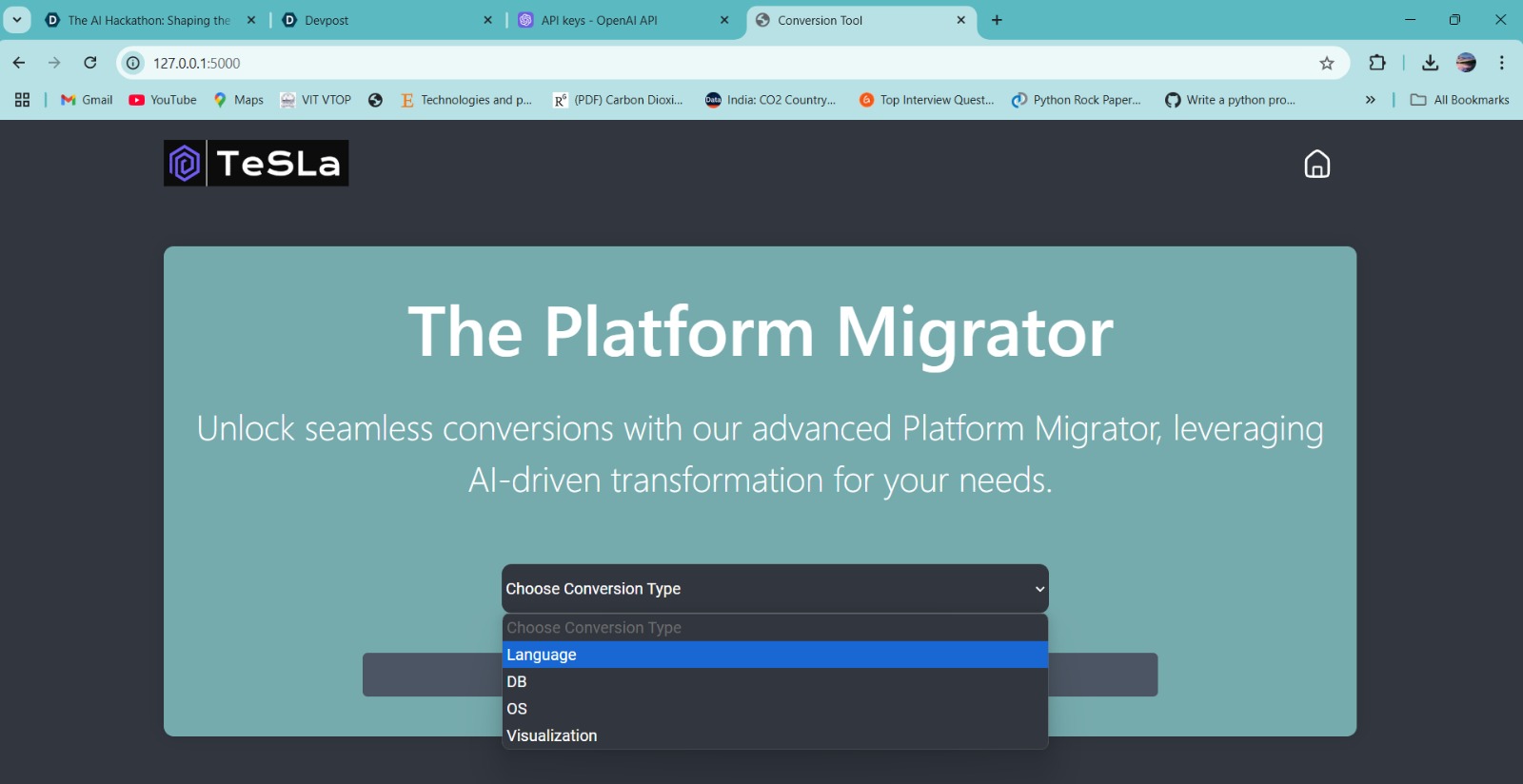
functionalities
-
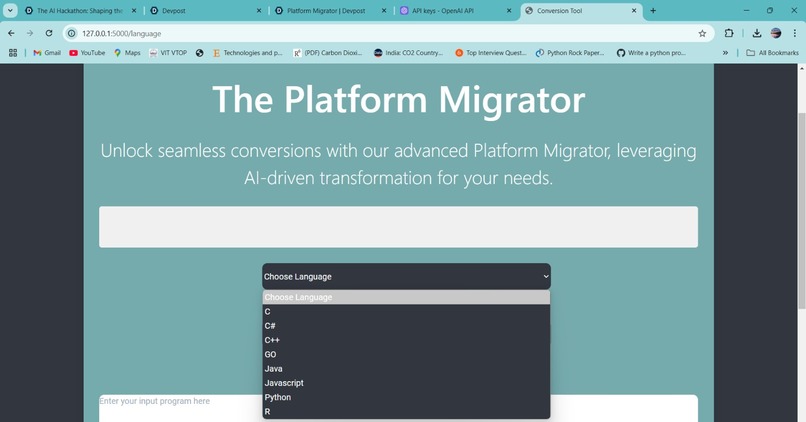
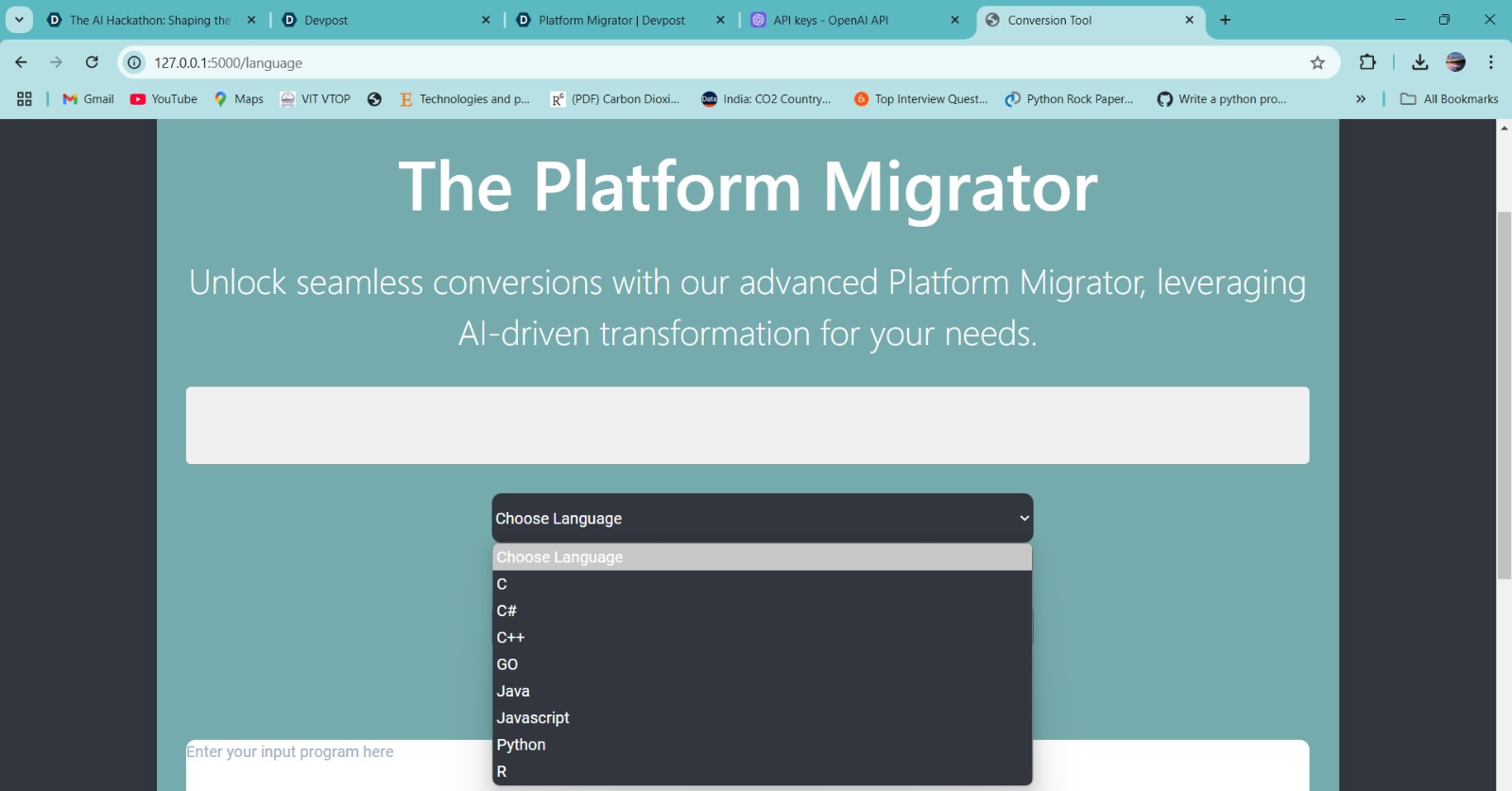
language conversion options
-
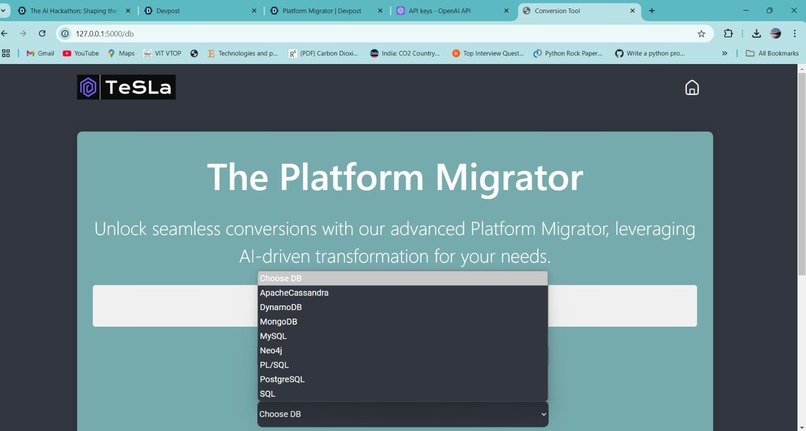
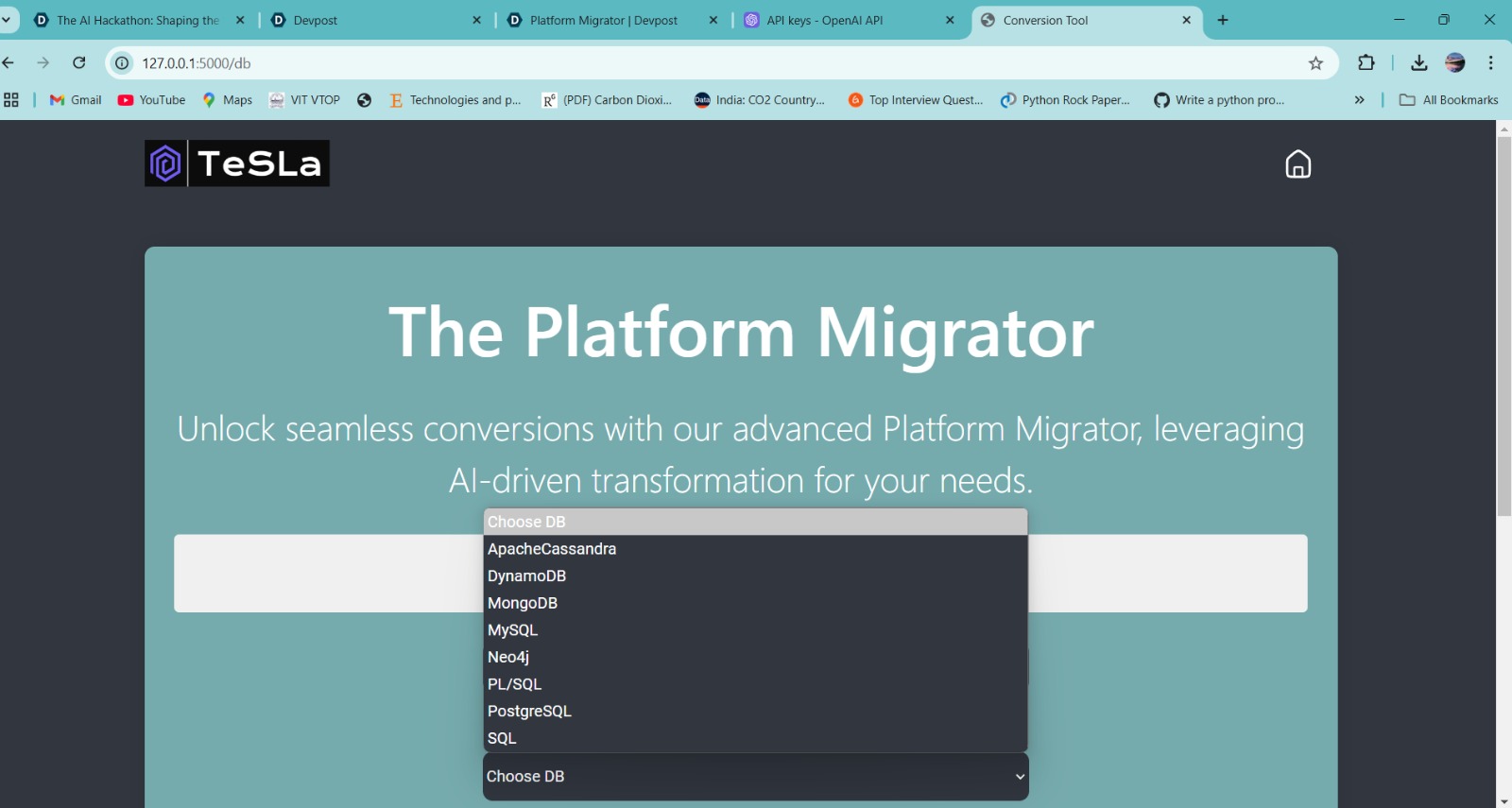
database options
-
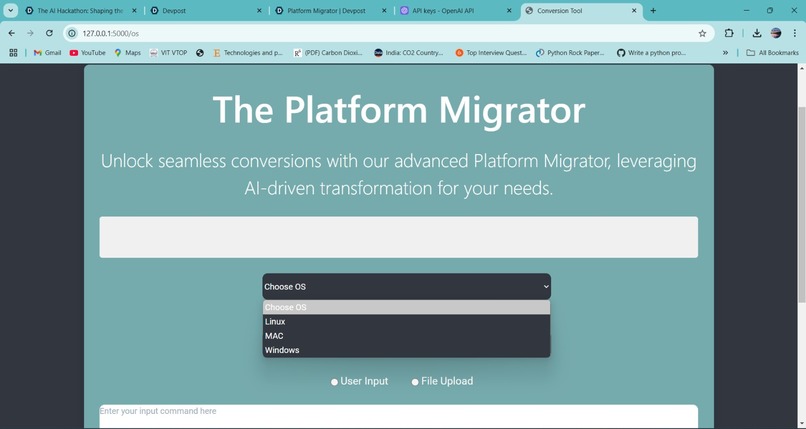
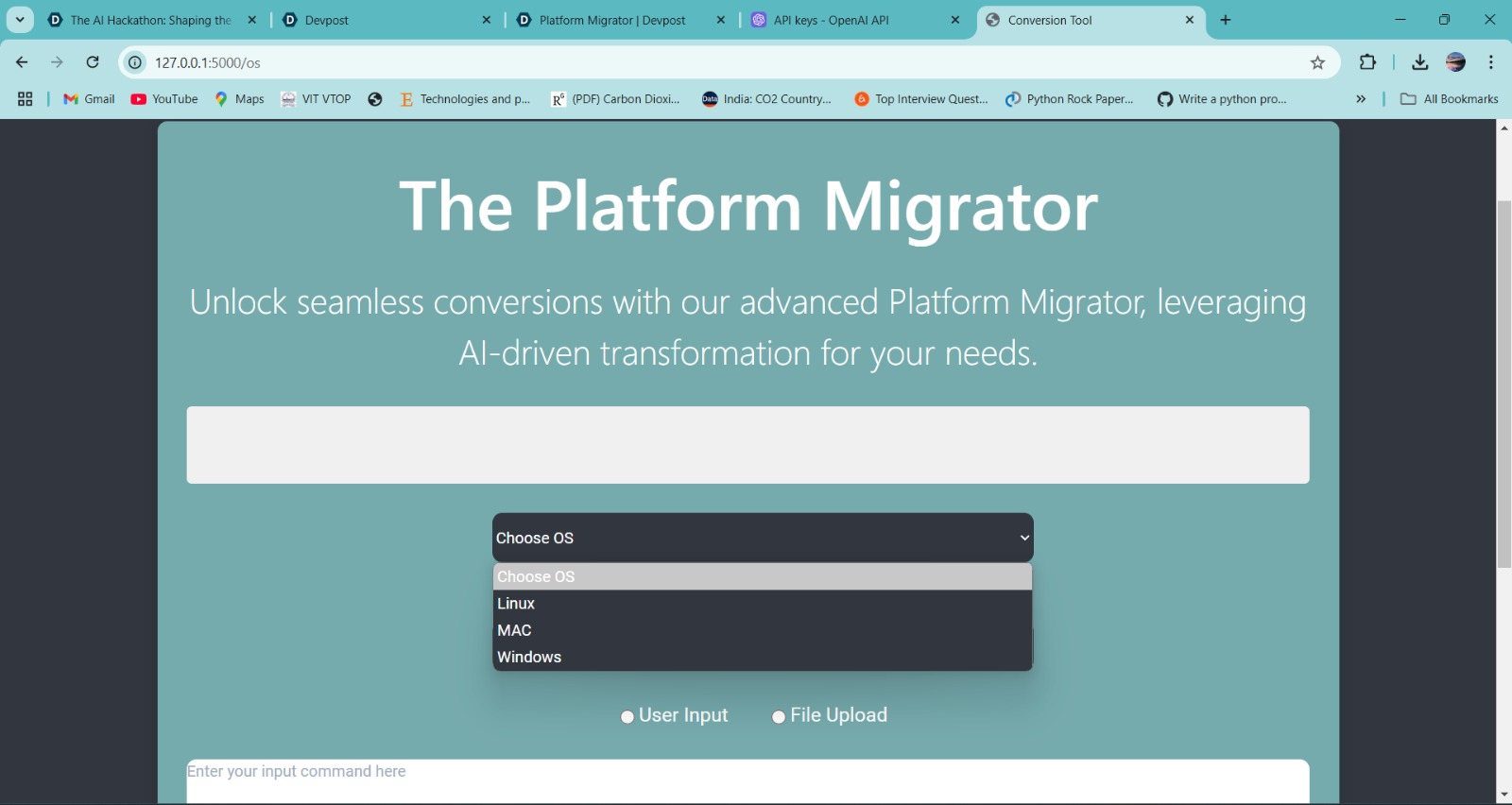
os options
-
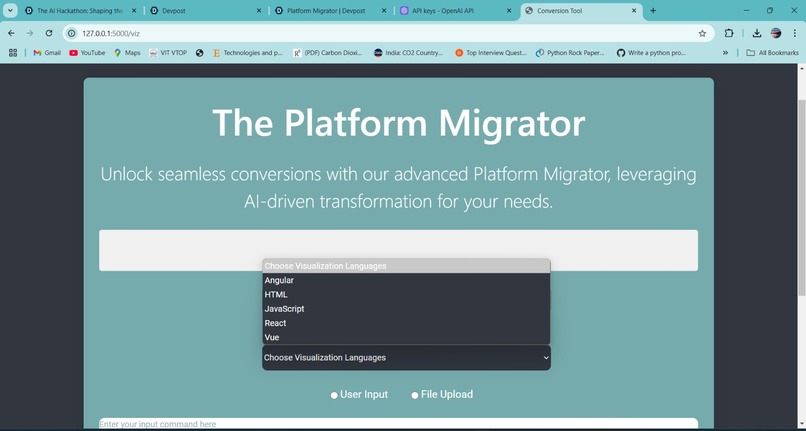
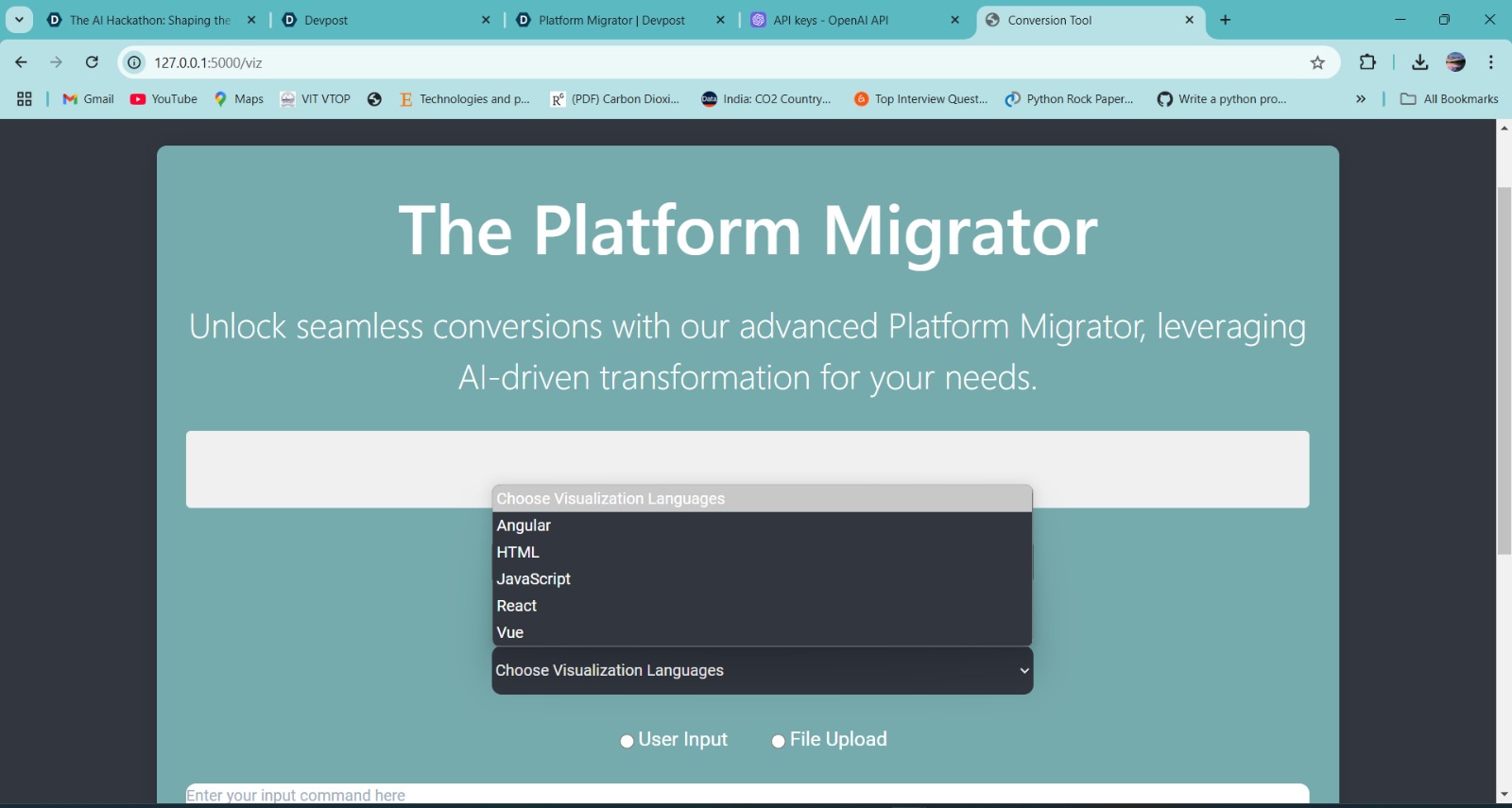
visualization framework options
Inspiration
Platform migrations are essential for organizations looking to expand, improve security, and create better user experiences. However, traditional migration processes can be complex, time-intensive, and error-prone. Inspired by the need for a streamlined, automated solution, we set out to create a tool that could leverage Generative AI to simplify code and environment transformations, allowing organizations to migrate seamlessly across different platforms and technologies.
What it does
Platform Migrator is a Generative AI-powered tool that automates the transformation of code, scripts, and queries between different environments. Whether it’s converting code from one programming language to another, adapting database queries, changing OS-specific commands, or shifting between front-end frameworks, Platform Migrator enables smooth cross-platform migration. This tool helps organizations maintain functionality, improve scalability, and ensure compatibility as they evolve their technical stack.
How we built it
We built Platform Migrator using a combination of cutting-edge technology and a robust architecture:
- Backend: The core of our tool is the OpenAI GPT-3.5 Turbo API, which processes and converts natural language input into desired target formats. This model allows us to handle code and command transformations with high accuracy.
- Input Processing: Users provide code or database queries either by text input or by uploading files. They can specify the target language, OS, database, or visualization framework for transformation.
- Conversion Engine: GPT-3.5 Turbo powers the main conversion engine, which generates code, query, and command conversions based on the user-specified target environment.
- Operating System Compatibility: The tool supports cross-OS conversions, handling commands specific to Windows, macOS, and Linux environments.
- Visualization Framework Conversion: Users can convert frontend frameworks like Vue.js, Angular, and React, ensuring consistency across different UI environments.
Our tech stack includes HTML, CSS, and JavaScript for the frontend and Flask for the backend along with GPT-3.5 Turbo API , creating a responsive and user-friendly interface.
Challenges we ran into
Throughout the development process, we encountered several challenges:
- Ensuring Accuracy in Conversion: Maintaining reliable and accurate code and command conversions, particularly for complex database queries and OS-specific commands, required fine-tuning and extensive testing.
- Prompt Engineering for Accurate Results: Crafting effective prompts to guide GPT-3.5 Turbo in generating accurate conversions posed a challenge, as slight changes in prompt structure could significantly affect the quality of the output. Developing prompts that consistently yielded precise results was a key focus area.
- Cross-Platform Compatibility: Adapting backend functionalities to handle OS-specific commands while maintaining compatibility across platforms was challenging.
- Handling Diverse Input Types: Designing a flexible input processing pipeline to accommodate various types of inputs—code snippets, queries, and commands—added complexity to the development process.
Accomplishments that we're proud of
We’re proud to have created a tool that automates migration across multiple environments with reliability and precision. Successfully integrating GPT-3.5 Turbo for multi-environment compatibility and designing an intuitive user interface that makes the complex process of migration feel straightforward are significant achievements. Additionally, we’re excited that Platform Migrator can handle comprehensive testing, ensuring reliability across diverse environments.
What we learned
Building Platform Migrator gave us a valuable understanding of how to utilize Generative AI for practical applications in code transformation. We learned about the technical challenges involved in automating code migration, as well as the importance of scalability, robust error-handling, and flexibility when designing a multi-functional tool. Working with the OpenAI API also deepened our knowledge of AI’s capabilities and limitations in code conversion tasks.
What's next for Platform Migrator
Looking ahead, we plan to expand Platform Migrator by:
- Supporting Additional Frameworks and Languages: We aim to broaden our compatibility to include more programming languages, databases, and visualization tools. Refactor and Optimization Capabilities: To enhance our platform, we plan to incorporate automated code optimization, technical debt reduction, and cross-platform performance improvements, reducing the need for manual intervention and further boosting code efficiency.
- Enhancing Error Detection and Correction: We intend to implement additional checks and validation layers to improve accuracy and reduce errors in conversions.
- Implementing User Feedback for Customization: Future updates will include customization options based on user feedback, allowing greater control over conversion specifications.
With these enhancements, we hope to make Platform Migrator an even more powerful tool for organizations looking to streamline their platform migration process.


Log in or sign up for Devpost to join the conversation.