-
-
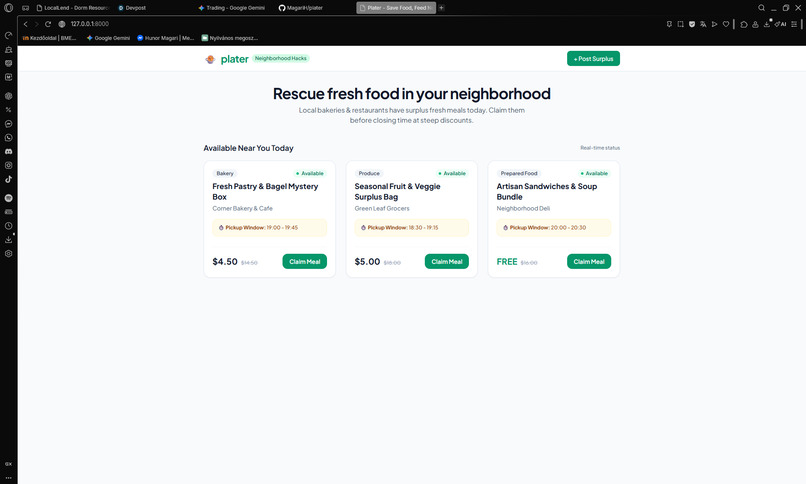
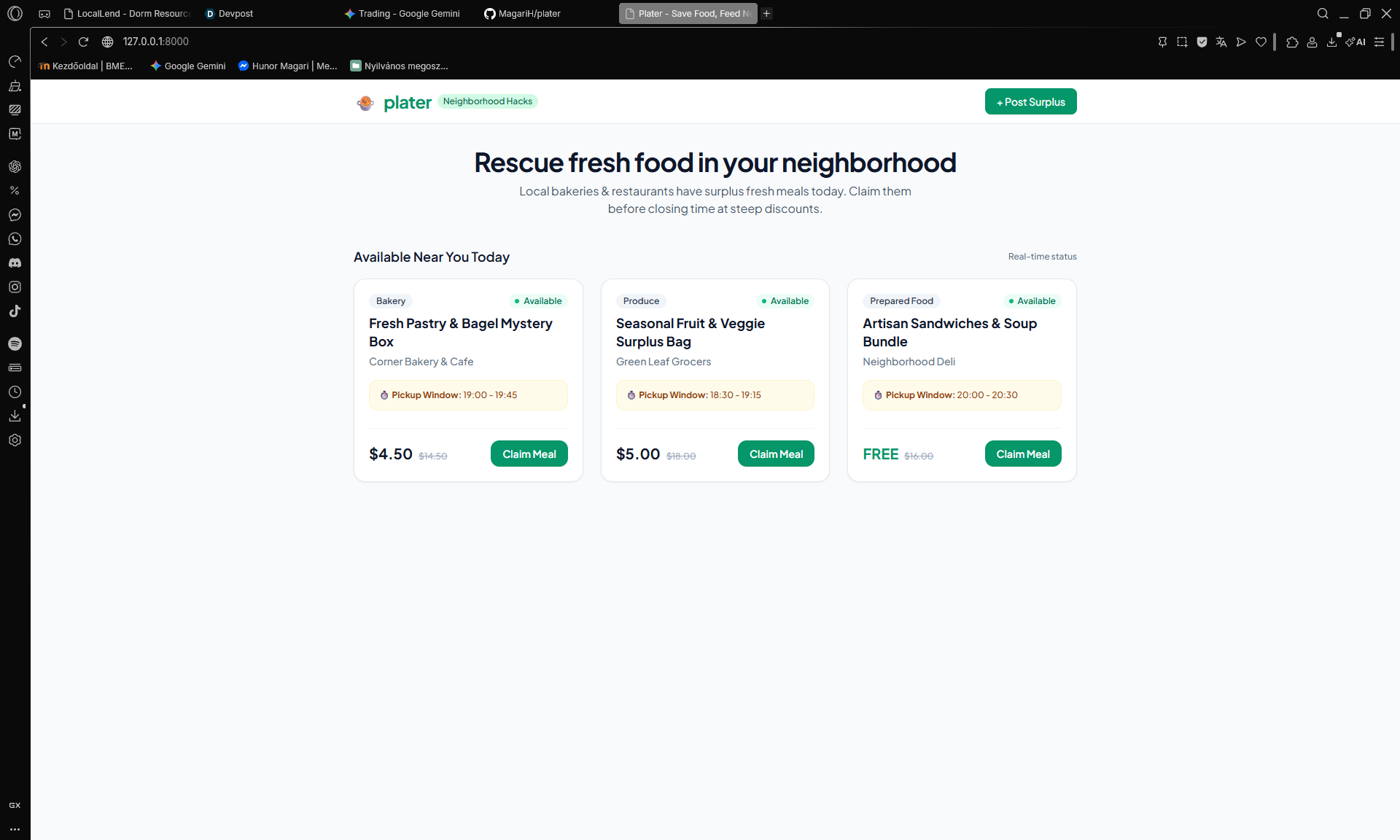
Plater Home Feed: Real-time view of available surplus meals, prices, and pickup time windows from local neighborhood stores.
-
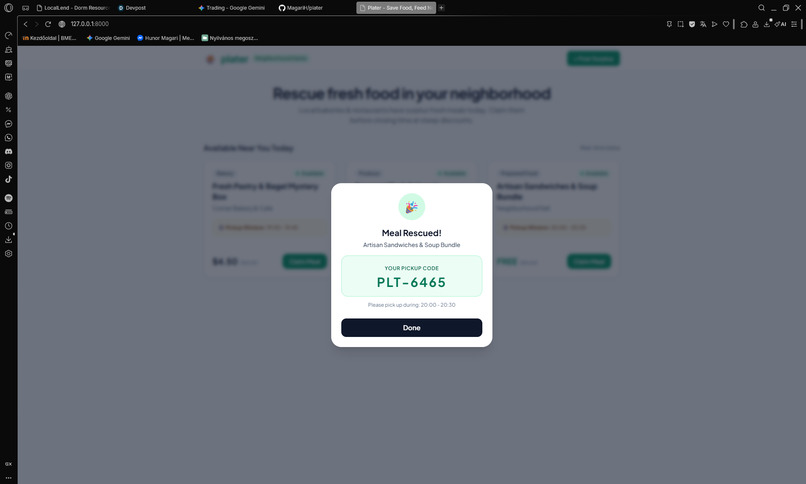
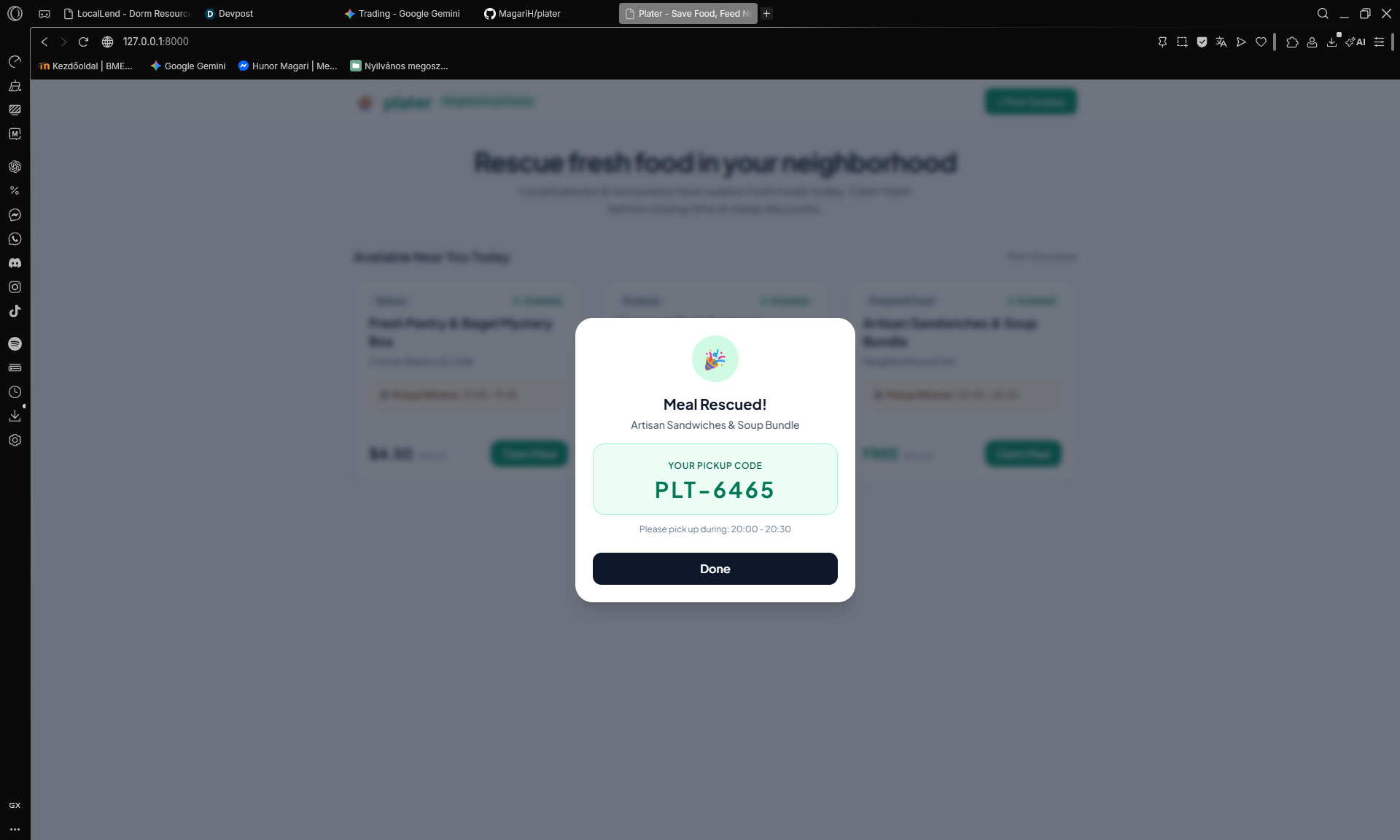
Meal Claim Confirmation: Instant generation of a unique pickup code (PLT-XXXX) and scheduled pickup time window.
-
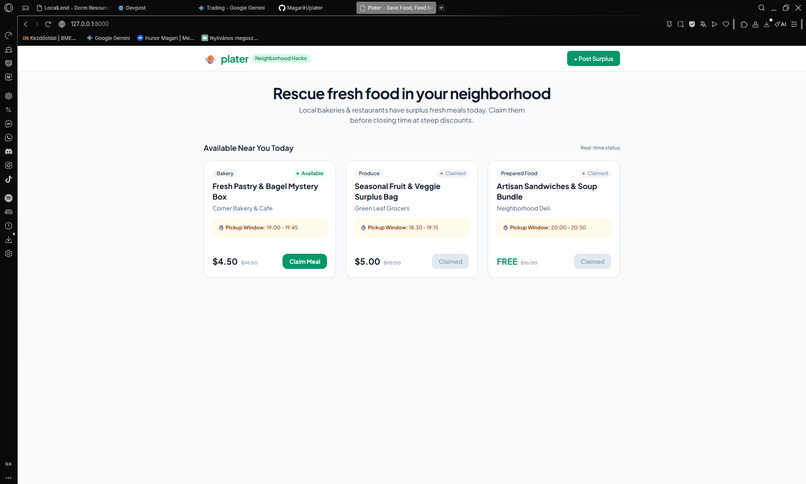
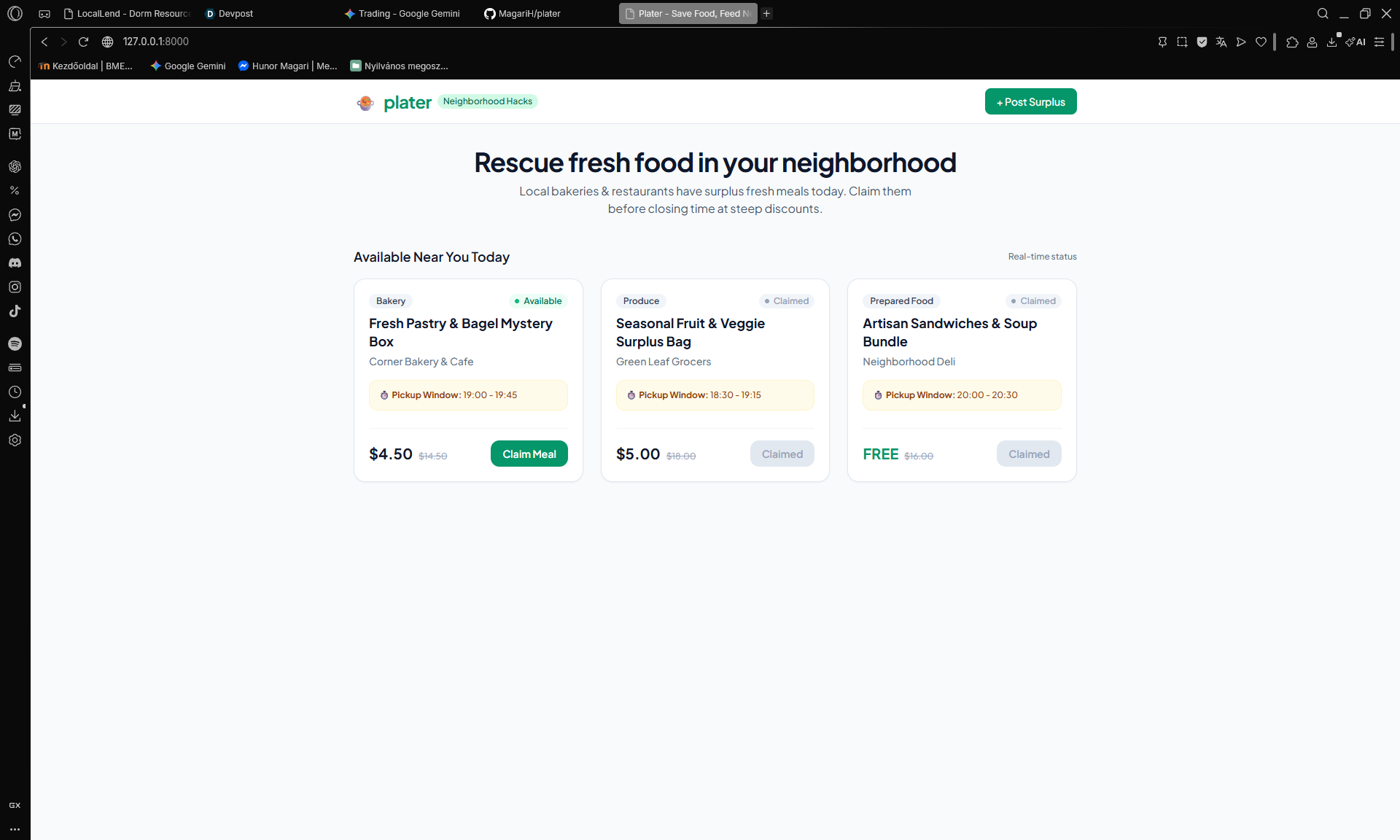
Dynamic Claim Updates: The feed automatically reflects real-time item availability and locks already claimed packages.
-
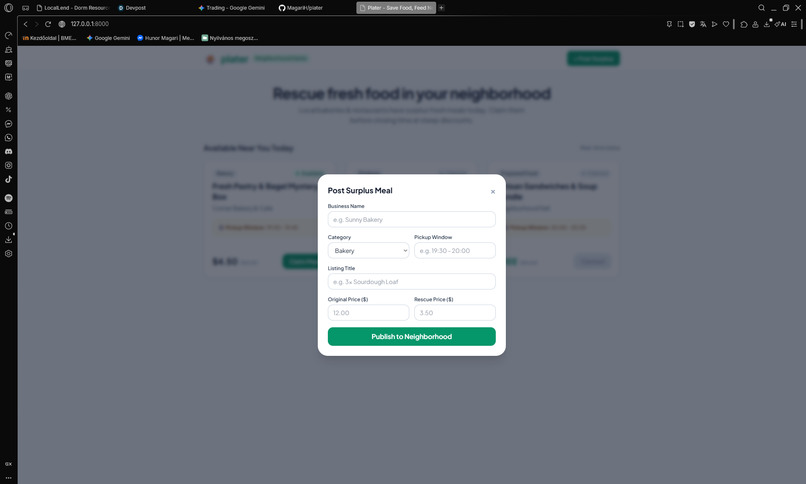
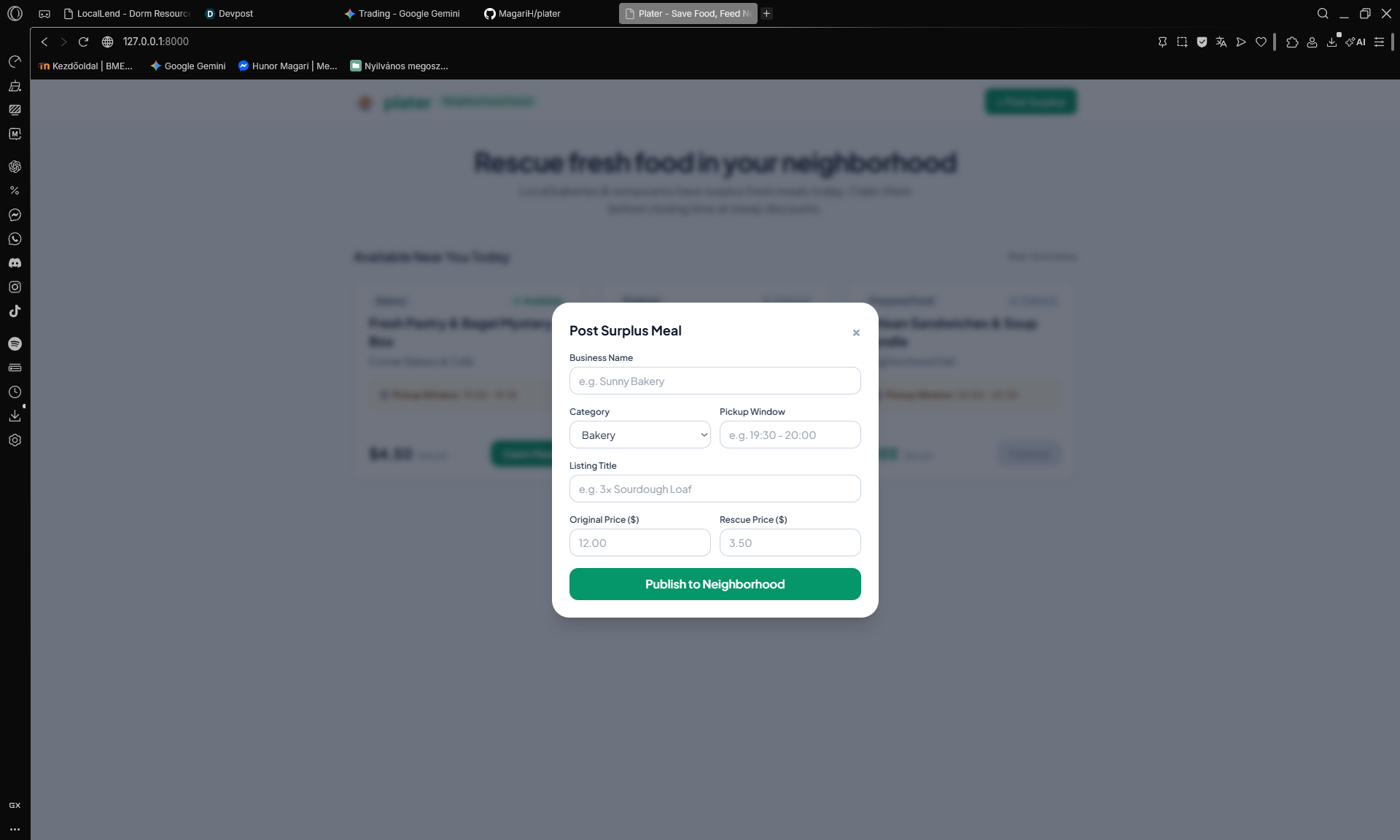
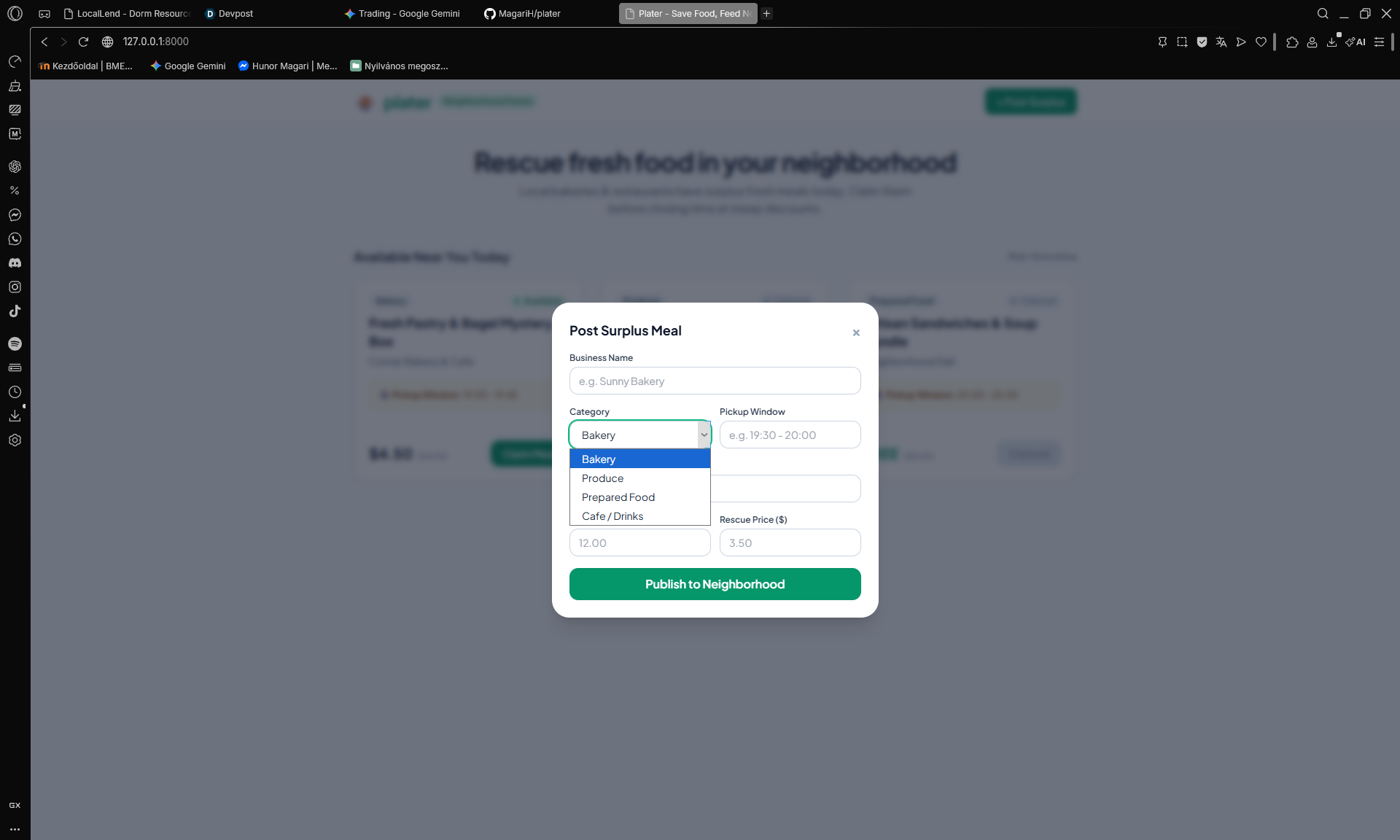
Post Surplus Modal: Fast, straightforward interface for local stores to list excess food and schedule collection times before closing.
-
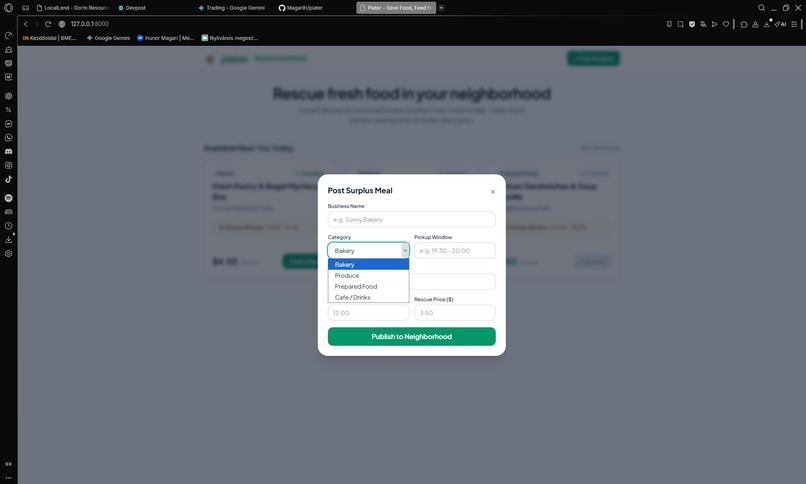
Category Tagging: Flexible categories including Bakery, Produce, Prepared Food, and Cafe/Drinks for streamlined community filtering.
Inspiration
Every evening, countless neighborhood bakeries, local grocery shops, and family-owned restaurants throw away perfectly fresh, edible food simply because it didn't sell before closing time. At the same time, college students and local residents living right around the corner are constantly looking for affordable meal options amidst rising living costs.
We realized that this disconnect isn't due to a lack of willingness to share, but rather a lack of immediate, friction-free neighborhood communication. We wanted to build a hyper-local solution that turns imminent food waste into an opportunity for neighbors to connect, save money, and support local community businesses. That is how Plater was born.
What it does
Plater is a real-time, neighborhood-centric food rescue platform that connects local businesses with nearby residents:
- Shopkeeper Hub: In less than 30 seconds, a bakery or grocer can list surplus items (e.g., "Artisan Pastry Box" or "Fresh Veggie Bag") with a steep discount or for free, designating a quick pickup window (e.g., 7:30 PM - 8:00 PM).
- Interactive Community Feed: Neighbors can browse an active feed and map of nearby surplus deals, claim an item with a single tap, and receive an instant 4-digit verification code for seamless in-store pickup.
- Instant Notification Dispatcher: Whenever a new surplus package is listed in a specific neighborhood or dormitory radius, the system instantly triggers push notifications via automated messaging bots, ensuring food is claimed before closing time.
How we built it
We focused on delivering a lightweight, responsive, and robust prototype:
- Backend & REST API: Built with Python and FastAPI, handling listing creation, real-time availability checks, and secure claim generation.
- Database: Structured using SQLite with relational schemas for businesses, surplus packages, and reservation PINs to ensure fast, reliable local querying.
- Frontend & Interface: Prototyped a clean, mobile-first dashboard focused on high contrast, ease of use for busy store owners, and zero-friction claiming for neighbors.
- Notification Engine: Integrated automated webhook notifications that dispatch real-time alerts to community channels (like Telegram/Discord) the second a listing goes live.
Challenges we ran into
- Time Window Sensitivity: Unlike standard e-commerce, surplus food has an extremely tight expiration and pickup window. Designing an intuitive status lifecycle (
active$\rightarrow$claimed$\rightarrow$completed) that automatically expires uncollected claims was critical. - Zero Friction for Shop Owners: Store managers are busy during closing hours. We had to strip away all unnecessary forms and authentication barriers to ensure that posting a bag takes fewer than three taps.
Accomplishments that we're proud of
- Designing and implementing a complete end-to-end flow from merchant creation to neighbor claim and notification dispatch within a hackathon timeframe.
- Building a modular architecture where local neighborhood communities can self-host or configure their own local food rescue hubs without complex cloud overhead.
- Keeping the user experience empathetic, welcoming, and directly aligned with social good.
What we learned
- How to structure fast, asynchronous endpoints in FastAPI to support concurrent reservations without race conditions on limited inventory items.
- The power of automated alerts in community engagement: push notifications dramatically decrease the time-to-claim for perishable goods.
What's next for Plater
- Smart Neighborhood Radius: Introducing GPS-based dynamic zoning so users only receive pings for shops within a 5-to-10-minute walk or bike ride.
- Direct POS / Inventory Sync: Exploring lightweight integrations or barcode scanning so shops don't even have to type item names manually.
- Community Impact Metrics: Adding personal and community dashboards showing exact kilograms of food rescued and estimated $CO_2$ emissions prevented.
Built With
- css3
- fastapi
- html5
- javascript
- push-notifications
- pydantic
- python
- rest-api
- sqlite
- tailwind-css
- uvicorn
- webhooks

Log in or sign up for Devpost to join the conversation.