-
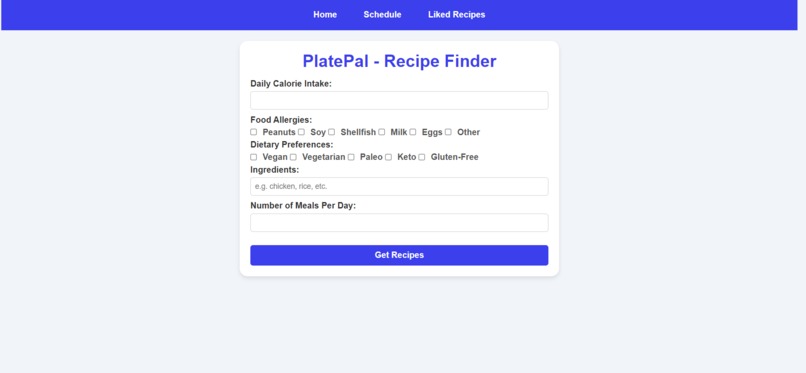
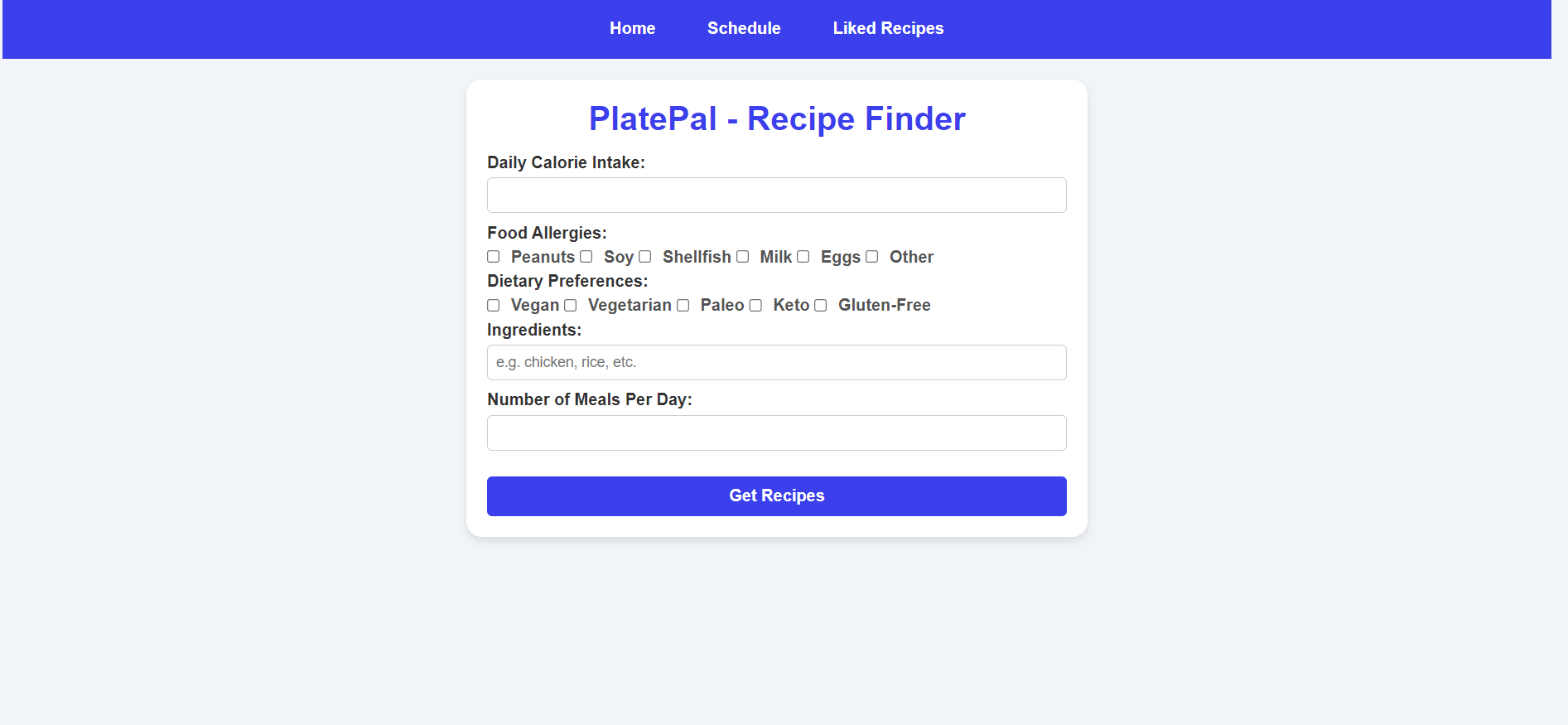
Homepage UI
Inspiration
PlatePal was inspired by the need for a personalized and efficient meal-planning tool that caters to diverse dietary needs, restrictions, and preferences. We wanted to simplify healthy eating for everyone.
What it does
PlatePal helps users find recipes based on their dietary preferences, calorie goals, and meal preferences. It offers customized meal suggestions for breakfast, lunch, and dinner, while allowing users to save their favorite recipes for easy access later.
How we built it
We built PlatePal using Flask as the backend framework, integrating the Spoonacular API to fetch recipe data. MongoDB was used to store user preferences and liked recipes, and the front end was created with HTML, CSS, and JavaScript for a responsive user experience.
Challenges we ran into
One of the main challenges was implementing session management to ensure that liked recipes are saved across multiple searches without overlapping data from different users. Integrating multiple APIs while managing data flow was also complex.
Accomplishments that we're proud of
We successfully implemented a system that personalizes meal recommendations based on calorie intake and dietary restrictions, providing a seamless and intuitive user experience. We're proud of the app's scalability and flexibility in catering to diverse user needs.
What we learned
We learned how to efficiently handle user sessions and data persistence in MongoDB, while gaining deeper insights into API integration and managing dynamic web applications.
What's next for PlatePal
Next, we plan to implement restaurant recommendations based on user location and dietary preferences, enhance user personalization, and introduce a meal scheduling feature for better meal planning.

Log in or sign up for Devpost to join the conversation.