-
-
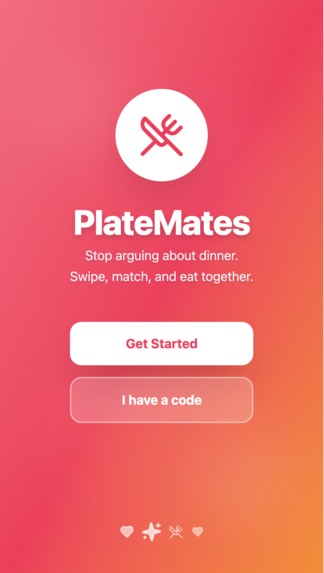
Open the App
-
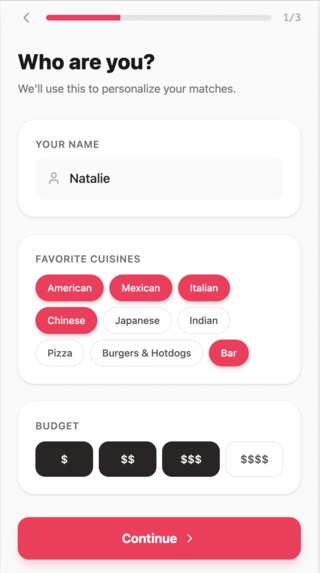
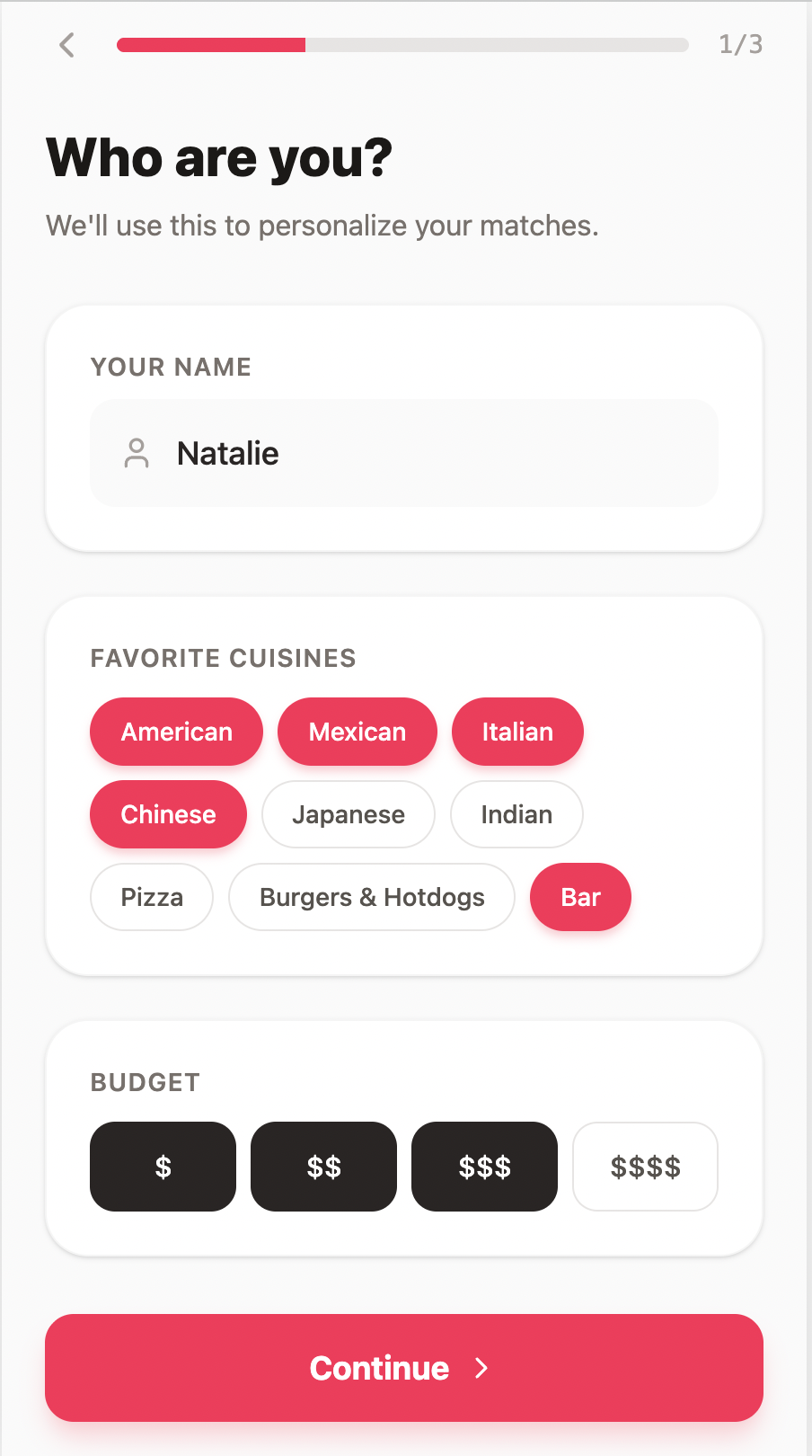
Create Your Profile
-
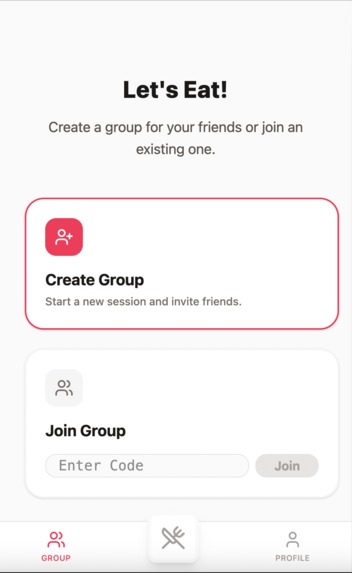
Create or Join a Group Session
-
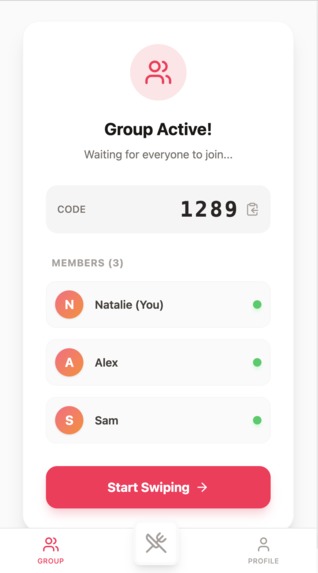
Create a Group and Wait for Friends to Join with Code
-
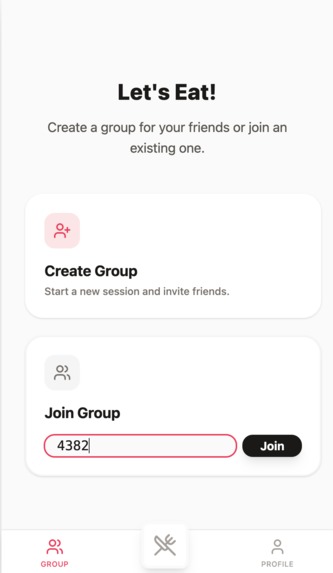
Add Your Friend's Code
-
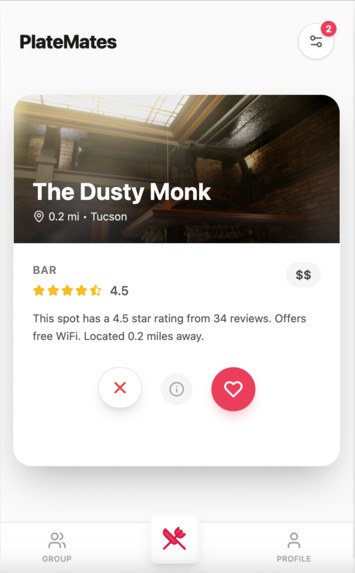
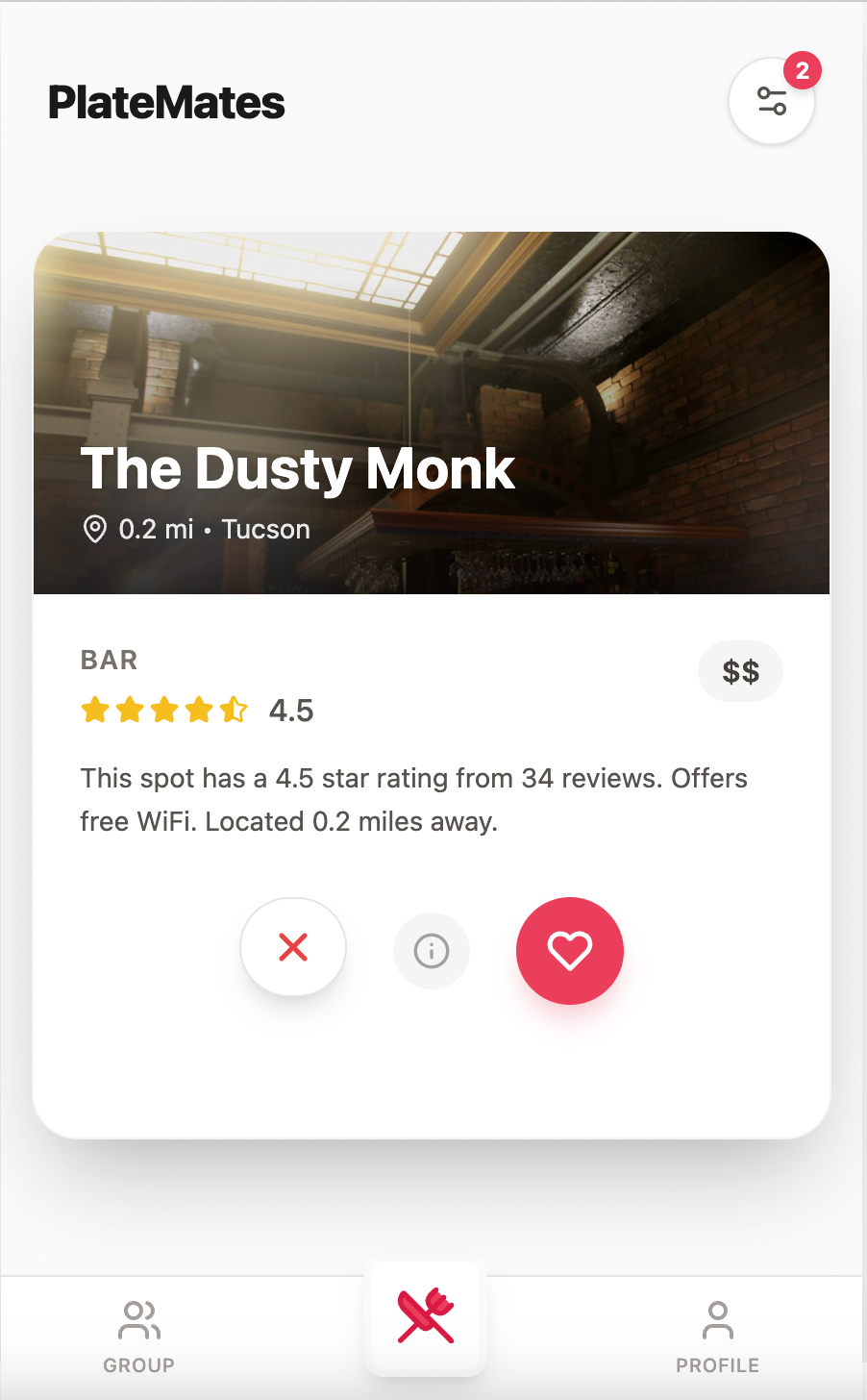
Start Swiping
-
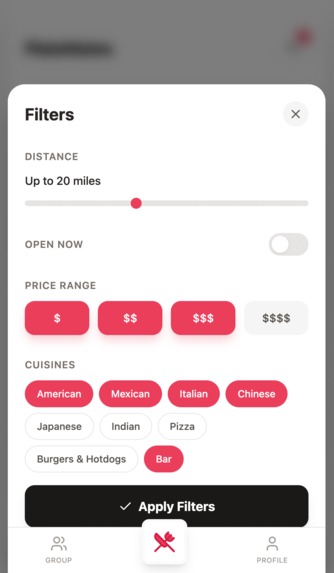
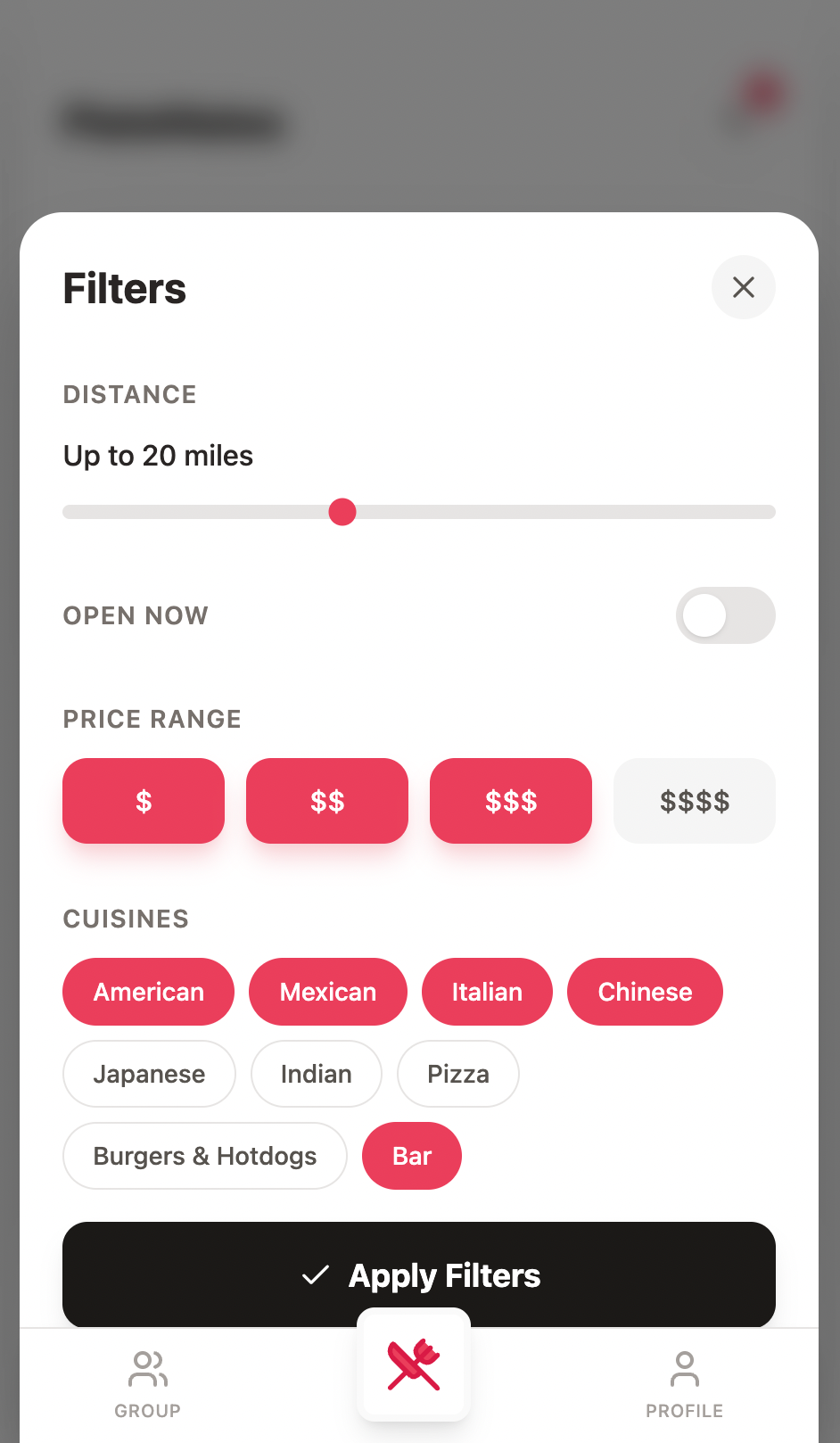
Modify Your Filters Within the Swipe Page
-
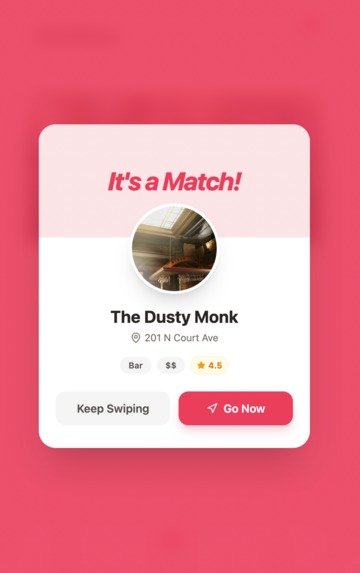
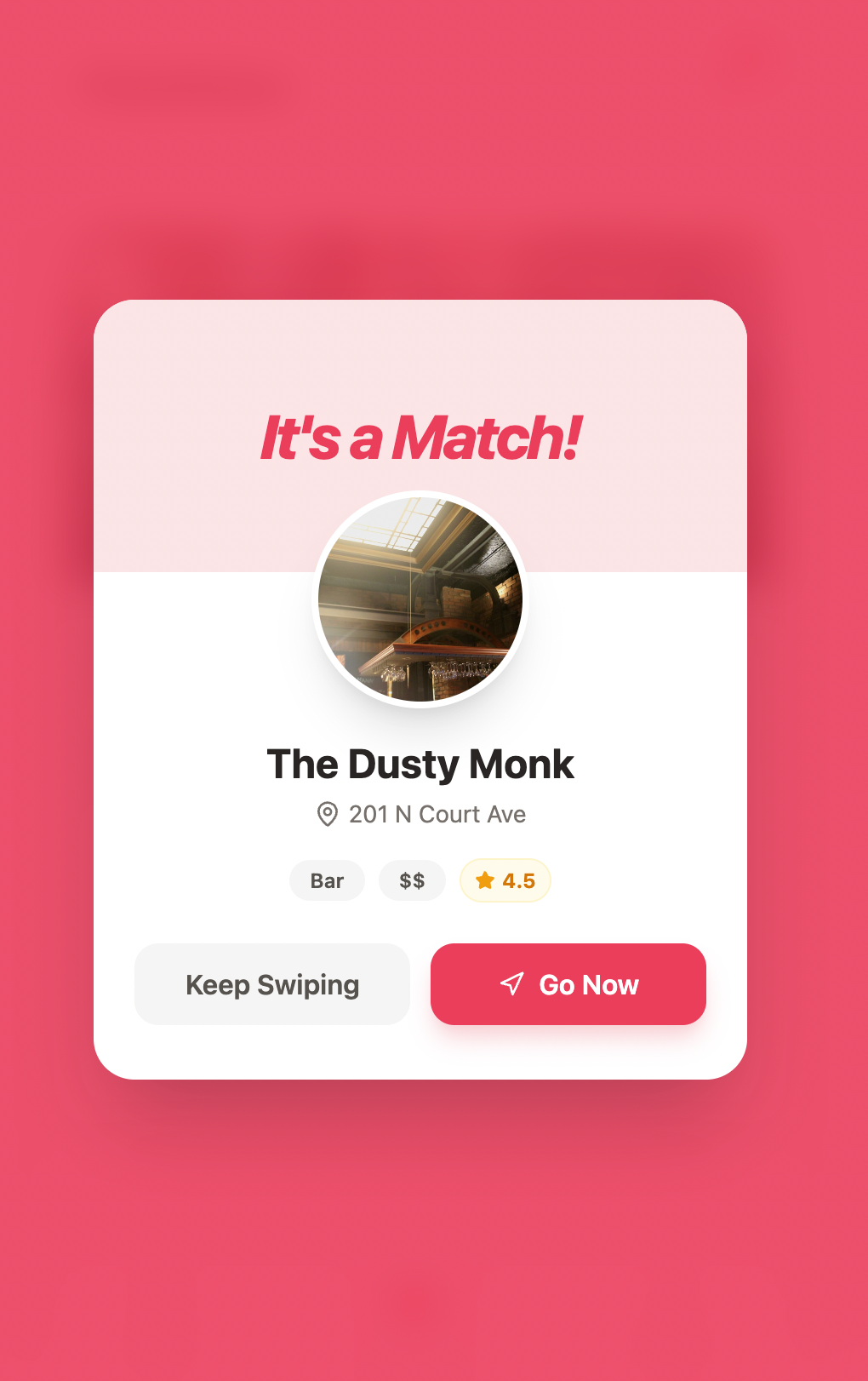
Match!
-
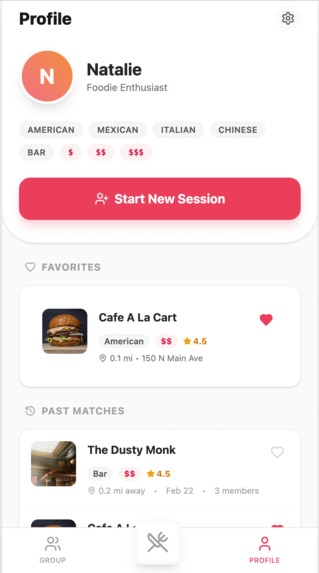
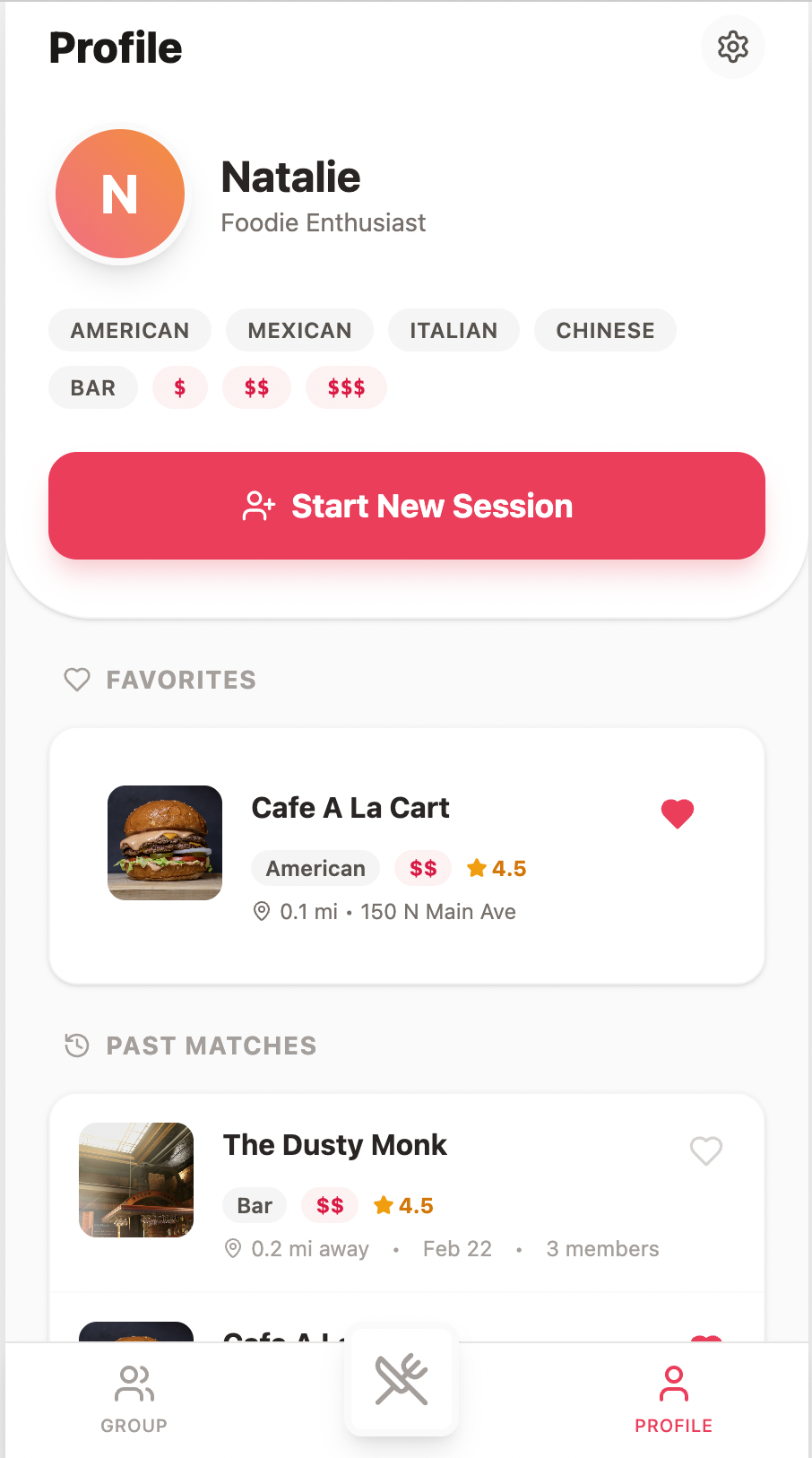
Profile Page Saves Your Favorite Places
-
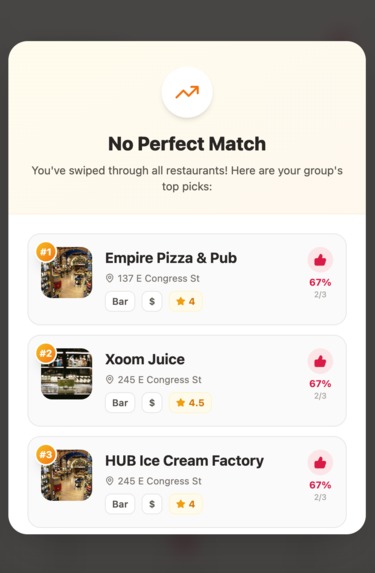
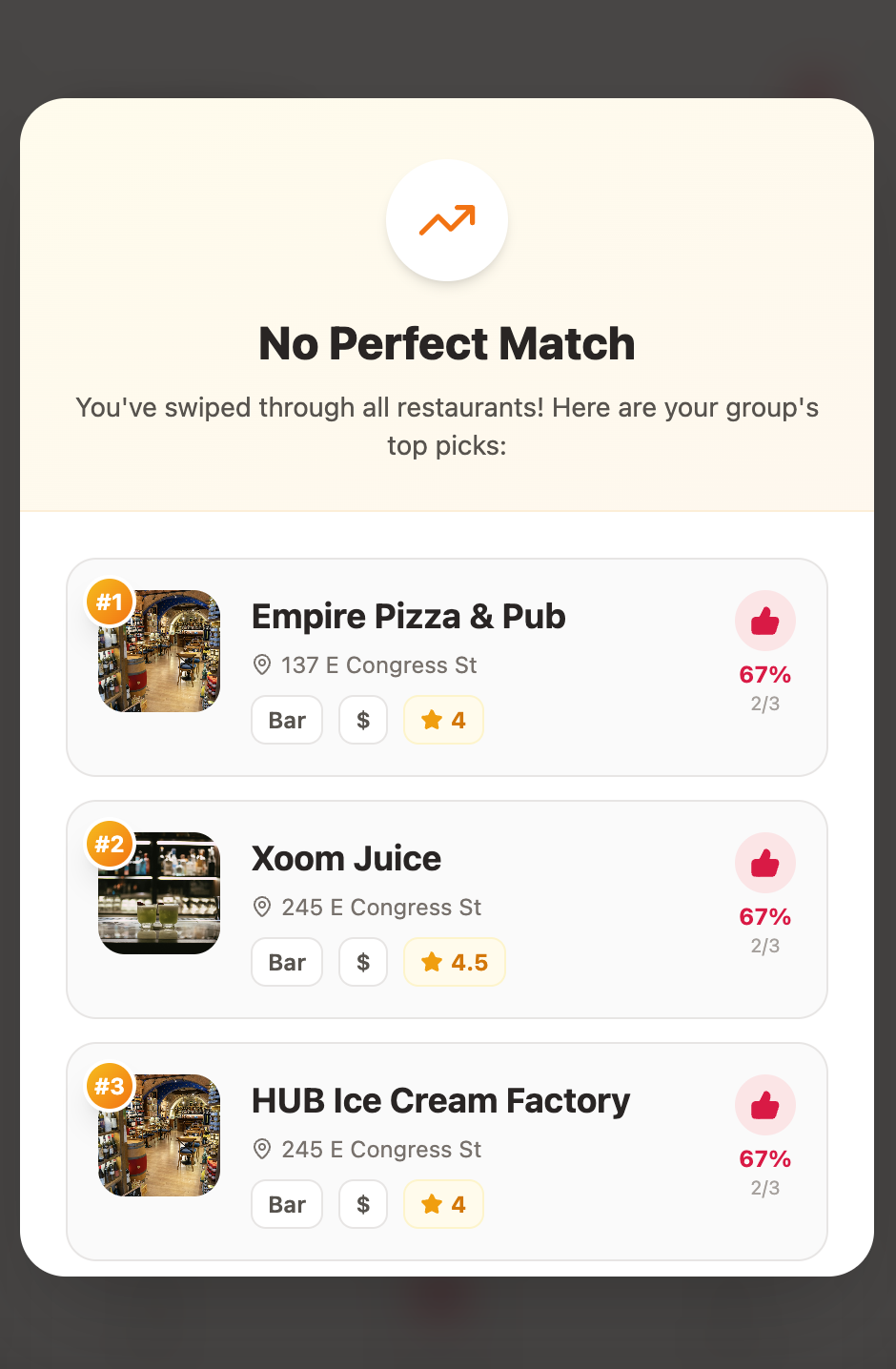
Disagree with Your Friends on Everything? Ranking of Top Picks if Match Fails
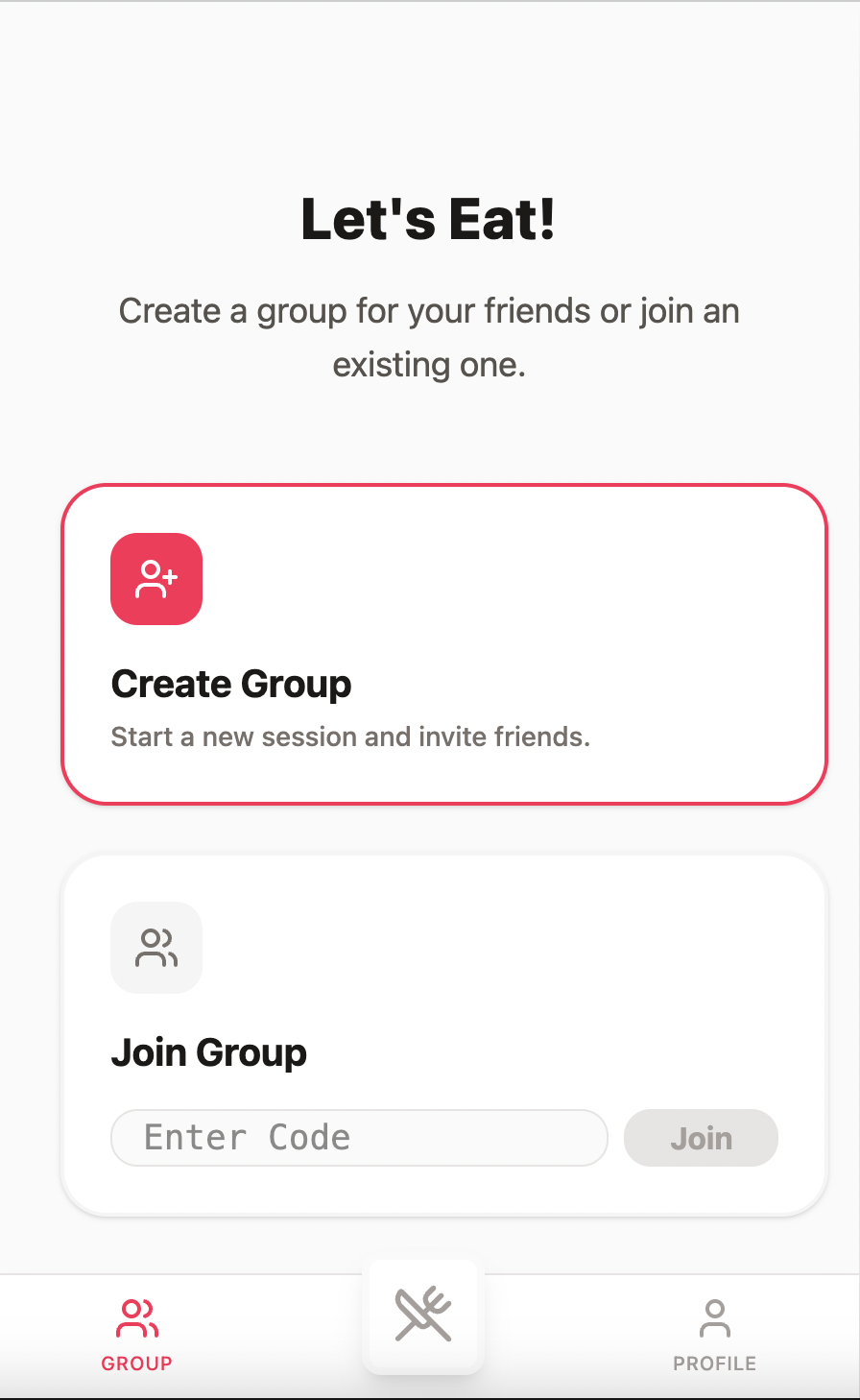
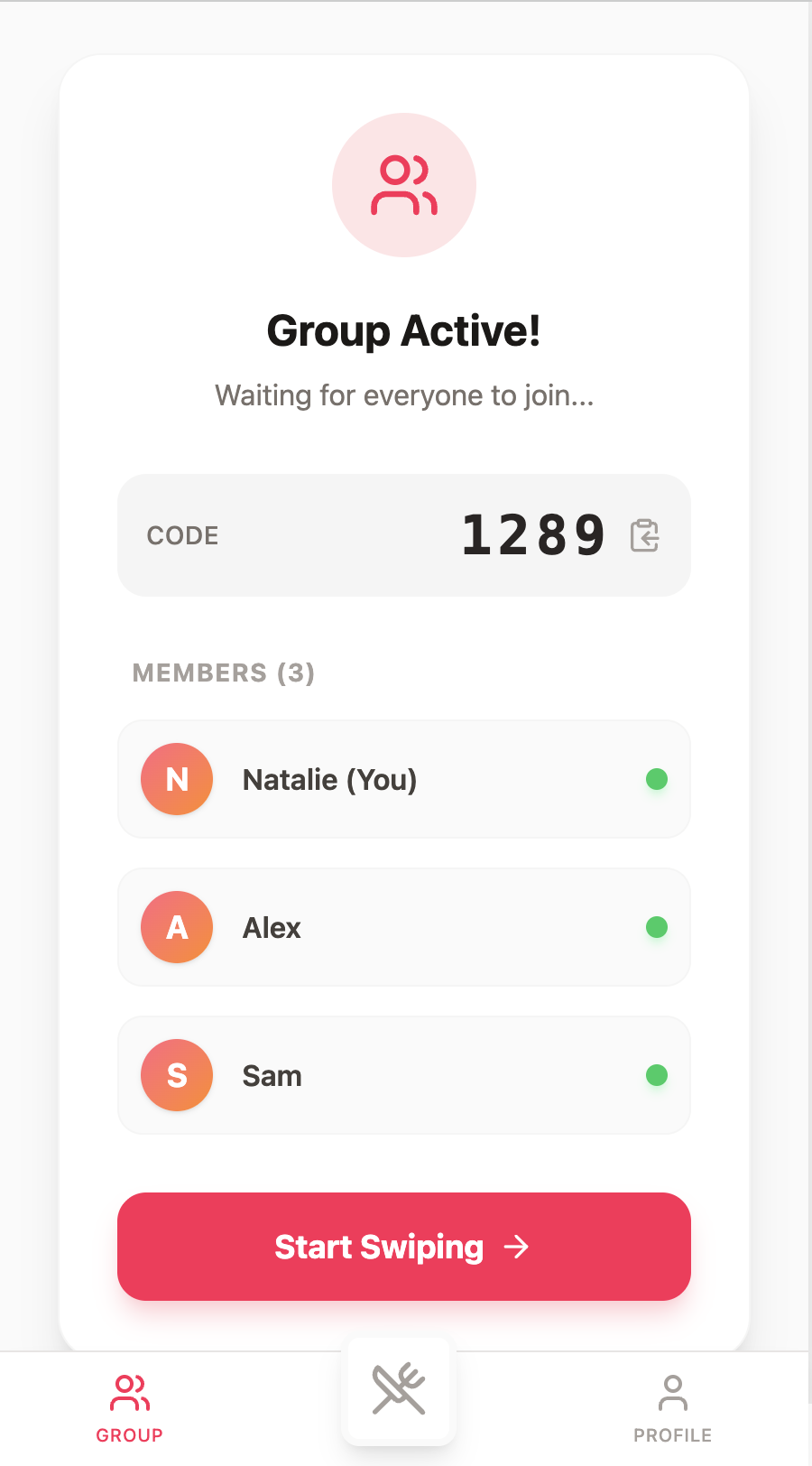
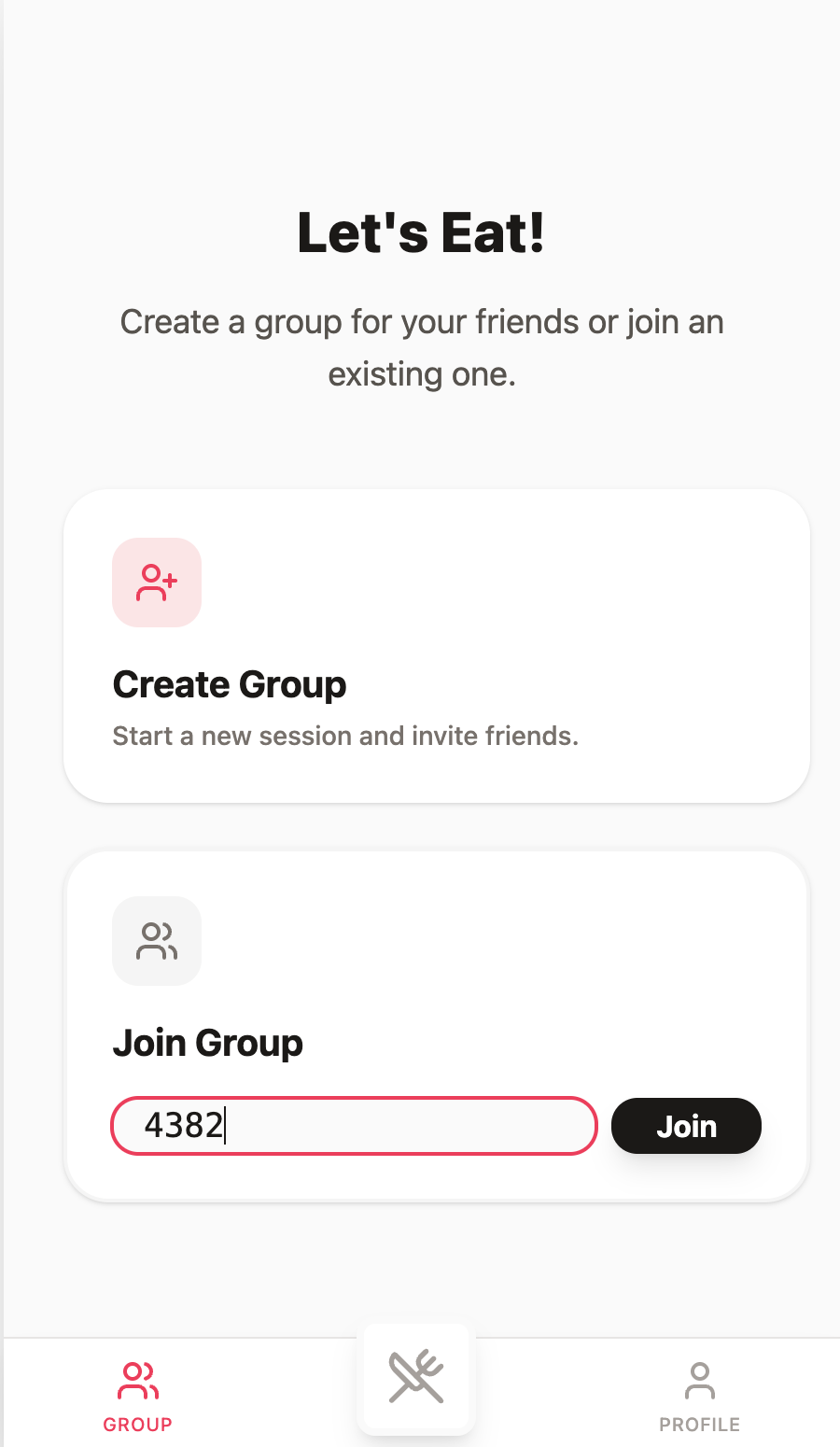
Inspiration
PlateMates was inspired by a very real and very frustrating problem: my friends cannot decide where to eat. Every time we travel or visit someone, we lose 20 to 30 minutes debating food. Someone wants Mexican, someone wants sushi, someone says they are “fine with anything,” and no one is actually fine with anything.
We chose Tucson, Arizona because one of our group members works there and the rest of us have never been. It made the problem feel real. We also selected the location based on publicly available free datasets that Figma Make could realistically handle. The insight we wanted to explore was simple but powerful: decision paralysis increases when choice increases. If we could visualize nearby restaurants in a way that felt interactive and collaborative instead of overwhelming, we could turn too many options into a quick group decision.
What it does
PlateMates is an interactive group-based restaurant matching experience. It visualizes nearby restaurants sorted by proximity and allows users to swipe through options together. Each restaurant card includes key decision-making data like cuisine type, price range, rating, and distance.
The core insight is that filtering and visual prioritization reduce decision fatigue. Instead of staring at hundreds of map pins, users interact with structured, simplified restaurant cards. When everyone in the group swipes right on the same restaurant, it becomes a match. If everyone in the group somehow manages to dislike every restaurant within the agreed upon radius, PlateMate lets them know their top matches, ranked by number of agreers.
This matters because it turns a chaotic group debate into a fast, data-driven decision. It impacts friend groups, travelers, and anyone visiting a new area who wants to make a confident choice quickly.
How we built it
Our dataset of over 100,000 businesses was cleaned in Excel and Power Query, where we improved formatting, removed incomplete records, unnecessary cities, empty cells, and non-restaurant businesses, keeping only the fields that support decision-making: name, cuisine, rating, price range, and location.
Figma Make helped us transform this data into a usable app experience. Its AI assistant drafted the app layout, suggested interactive components, and implemented swipe and match logic. We used it heavily for debugging, refining transitions, and iterating quickly.
Challenges we ran into
The biggest challenge was the sheer amount of data. Working with over 100,000 businesses meant we had to be intentional about cleaning and filtering without losing meaningful insights.
Another challenge was designing something interactive while staying within Figma Make’s technical limits. We had to think carefully about how much data the platform could realistically support and how to present it in a way that felt seamless rather than overwhelming.
Since this was my first time using Figma, there was also a learning curve in understanding components, prototyping logic, and layout systems.
Accomplishments that we're proud of
I am especially proud of this project because I had never used Figma before. We were able to go from a raw dataset to a polished, interactive prototype that feels like a real product. We successfully transformed a massive dataset into a focused, insight-driven experience. Instead of just displaying restaurant data, we created a system that solves a real problem using thoughtful filtering and interaction design. Most importantly, the app feels usable. It does not feel like a chart. It feels like something you would actually download before visiting a new city.
What's next for PlateMates
In the future, we would love to expand PlateMates to more cities beyond Tucson. The concept is especially valuable for travel and unfamiliar locations.
We would also like to integrate live menu links, operating hours, and real-time availability as additional data layers. Adding user preference learning over time could further improve match accuracy.

Log in or sign up for Devpost to join the conversation.