Inspiration
Food waste is a huge environmental problem, yet many of us throw away perfectly good ingredients simply because we forget about them or don't know what to cook with them. I wanted to build something that makes reducing food waste effortless, while also helping people eat healthier, save money, and reduce the amount of food waste they produce.
What it does
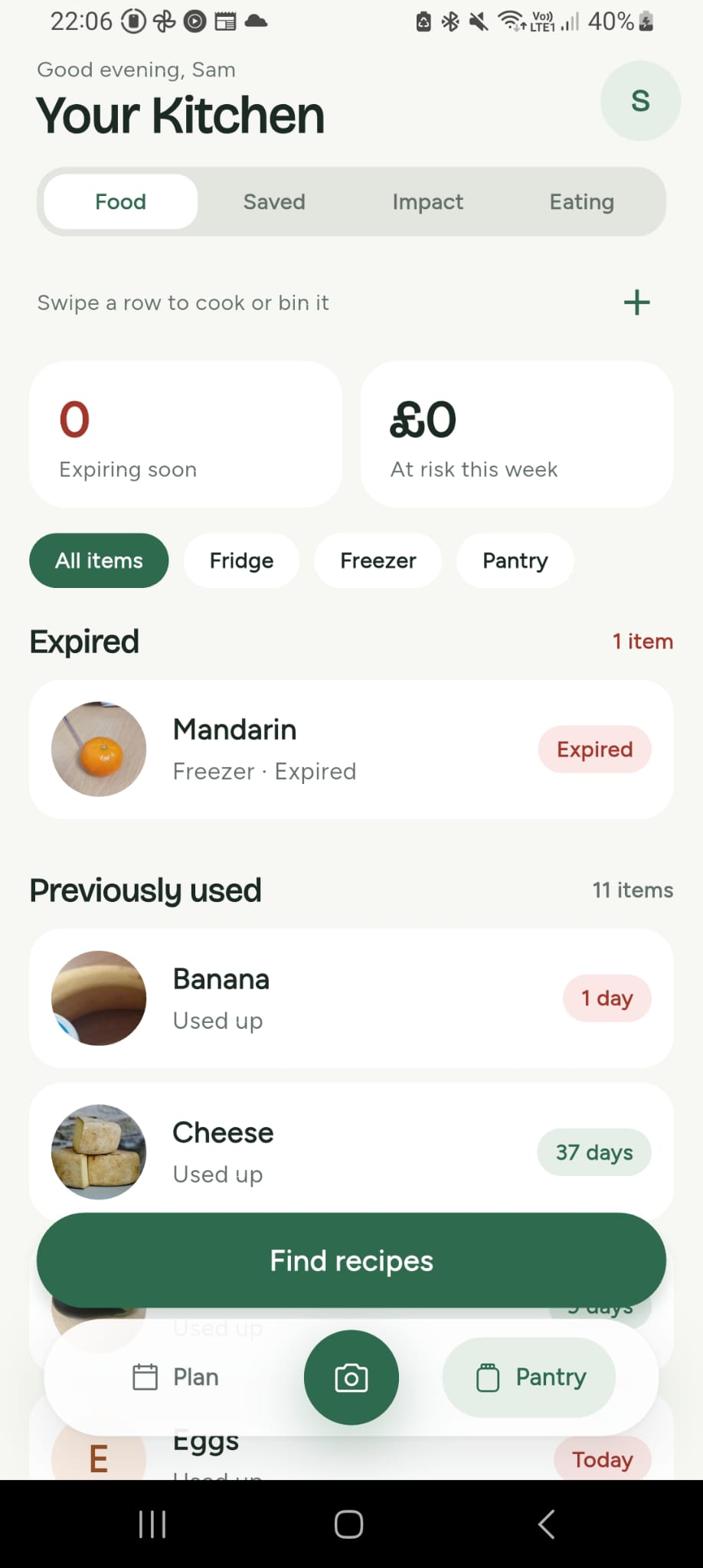
Plateful is an AI-powered mobile app that helps users manage their kitchen ingredients, discover new recipes using the ingredients available, and reduce food waste.
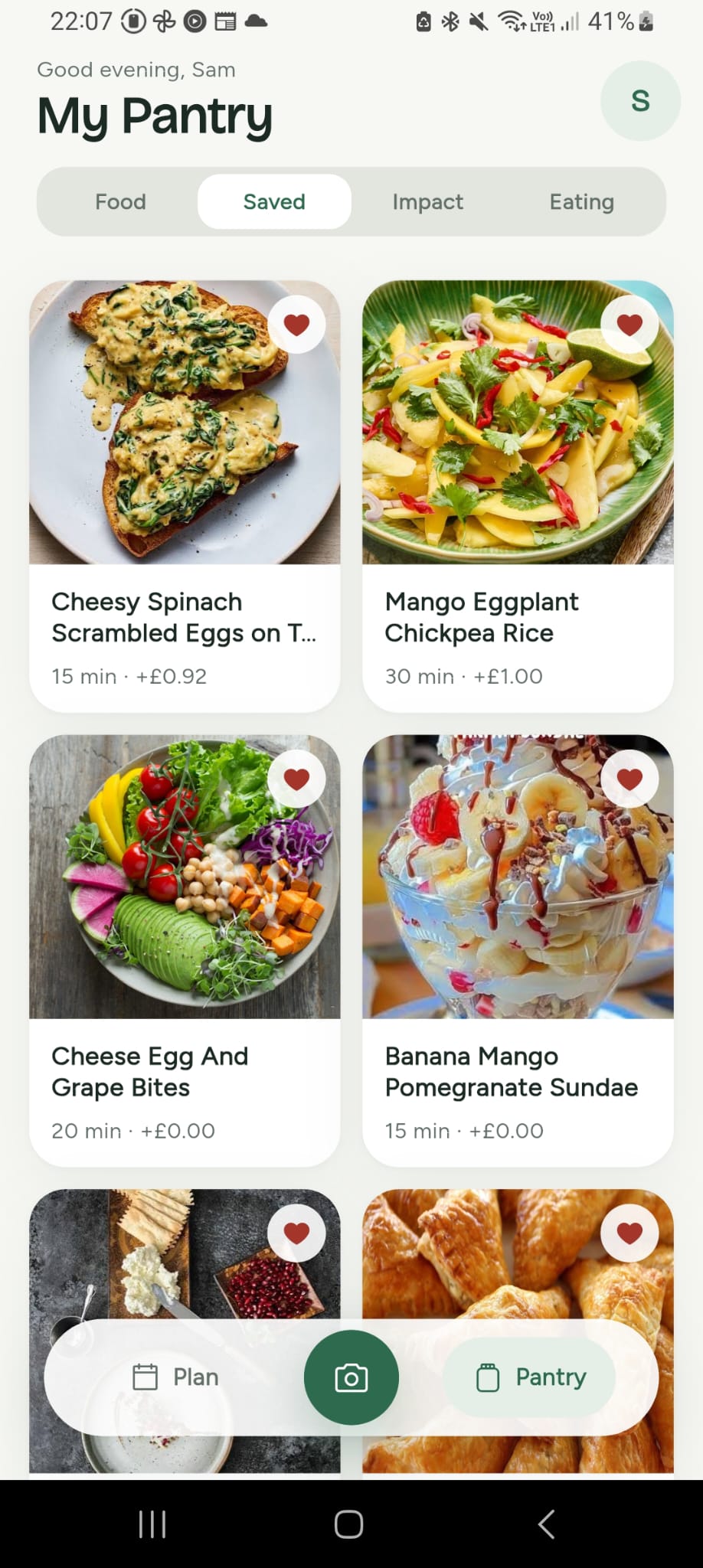
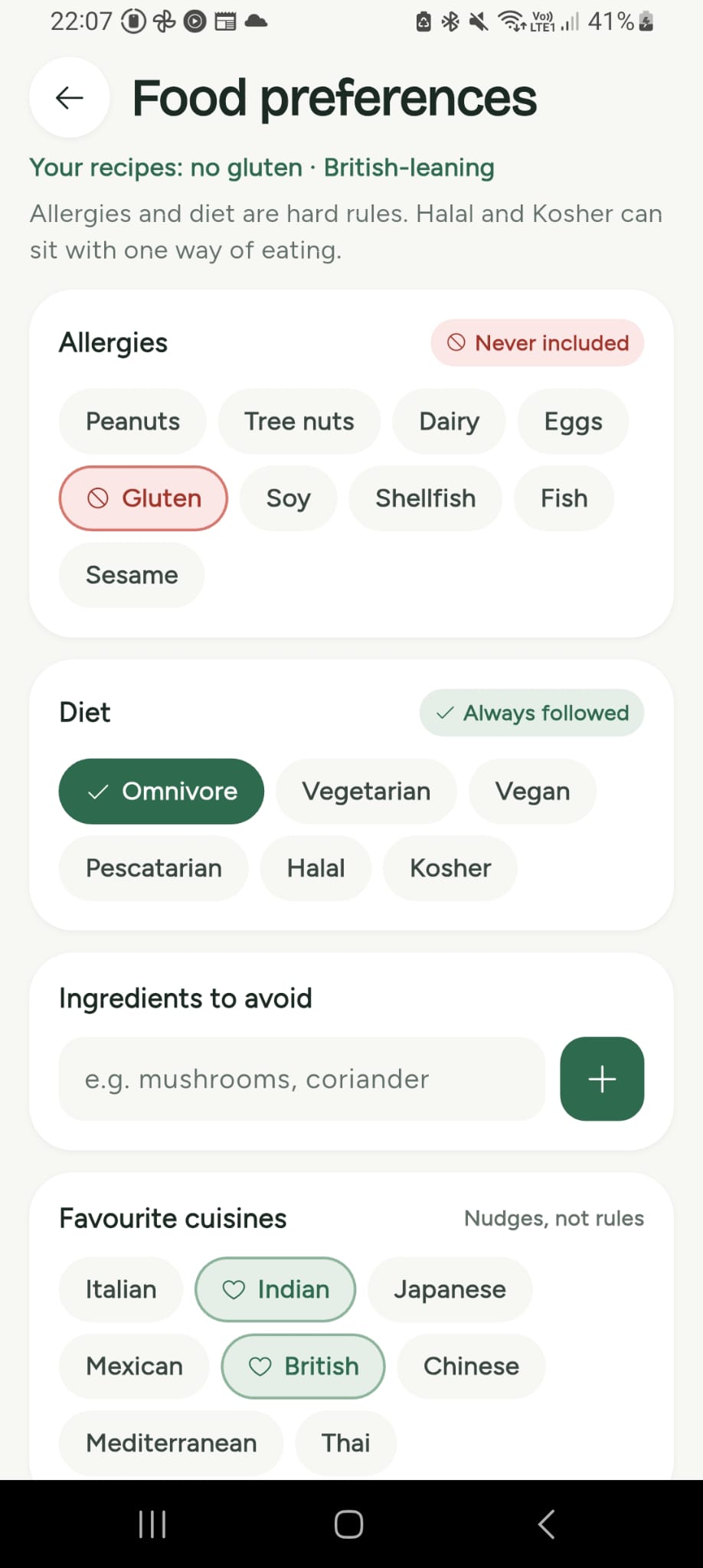
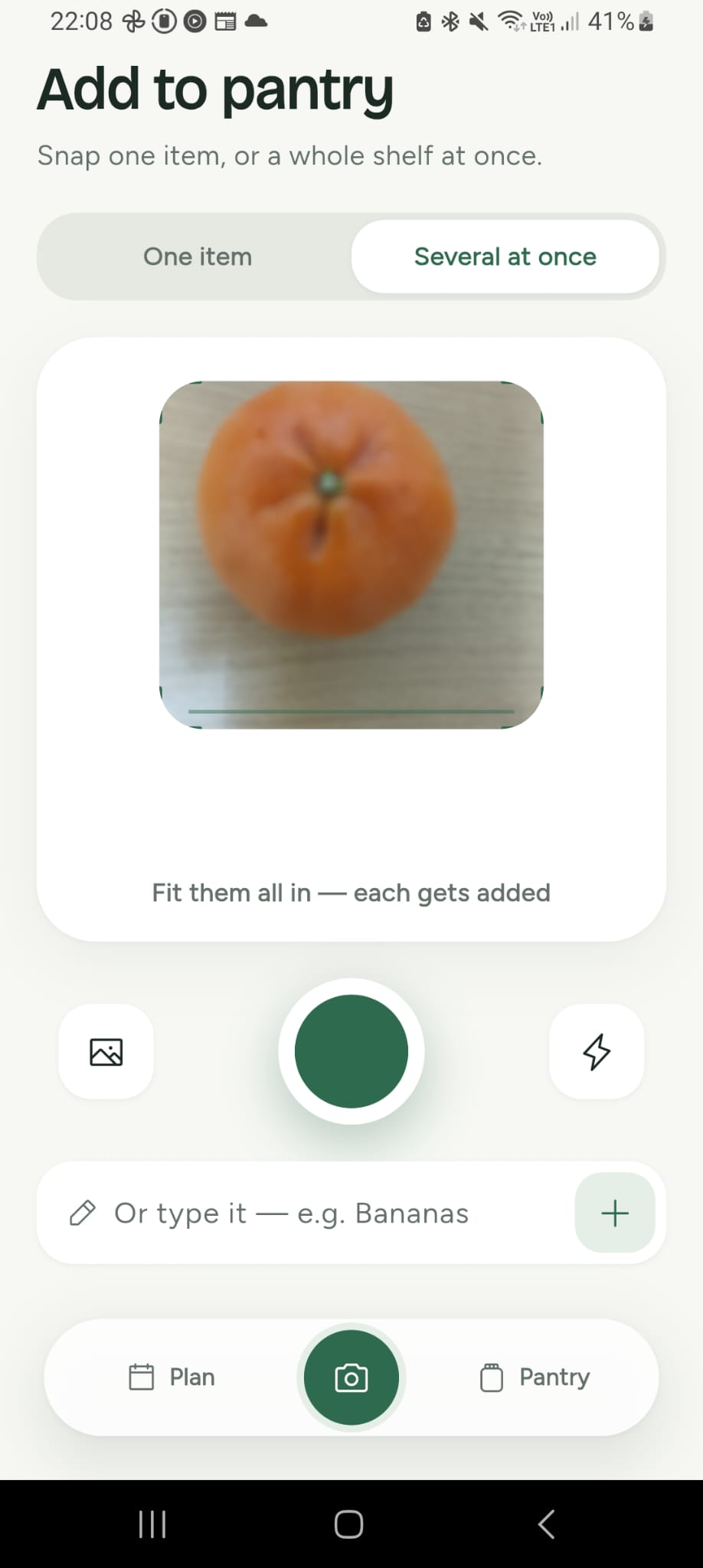
Users can photograph their ingredients to add them to a digital pantry, which tracks quantities and expiry dates set by the users, alerting them when food is about to expire. Plateful can also generate meal options based on ingredients selected by the user, dietary preferences, and nutritional goals.
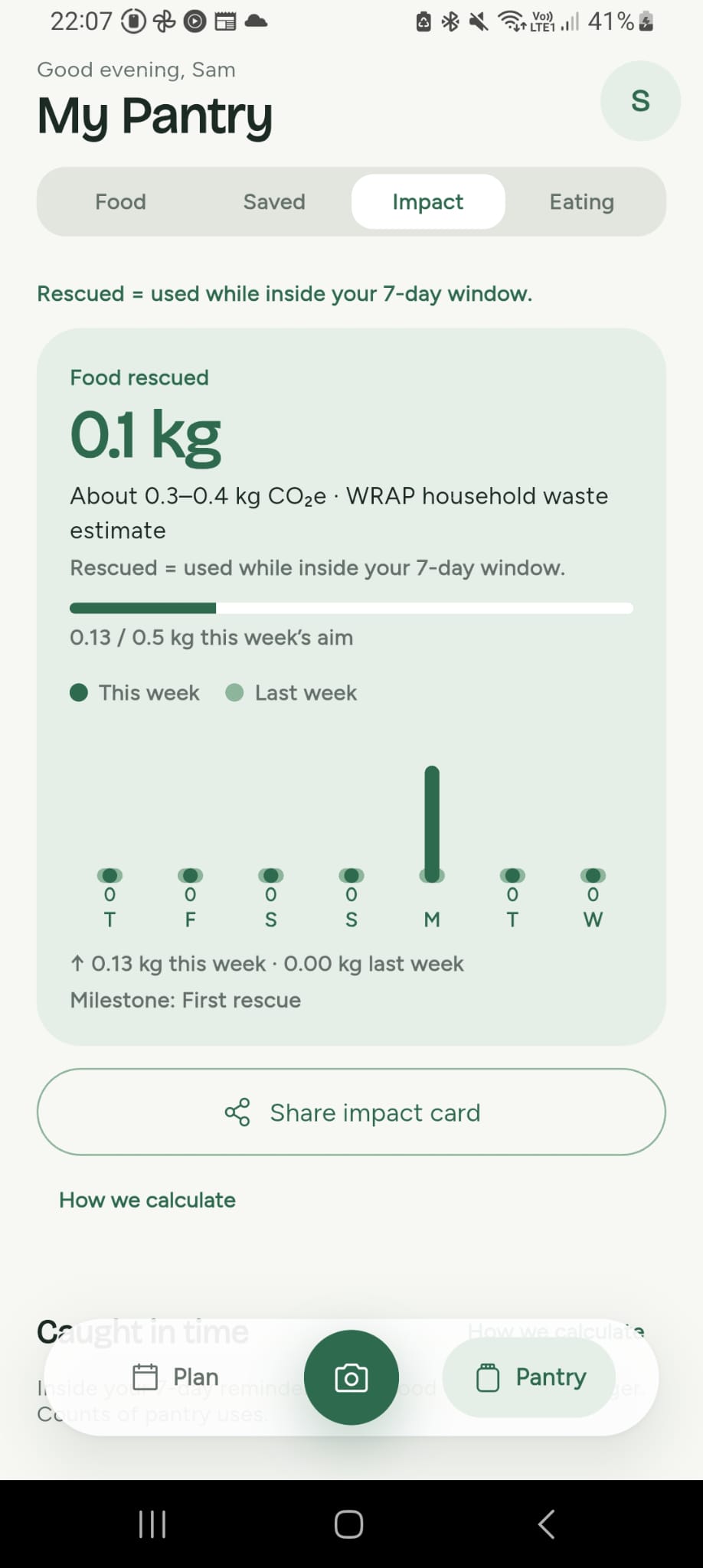
When users cook a meal, their pantry automatically updates. Ingredients used close to their expiry dates are recorded as rescued food, which is used to show users how much food waste they have saved.
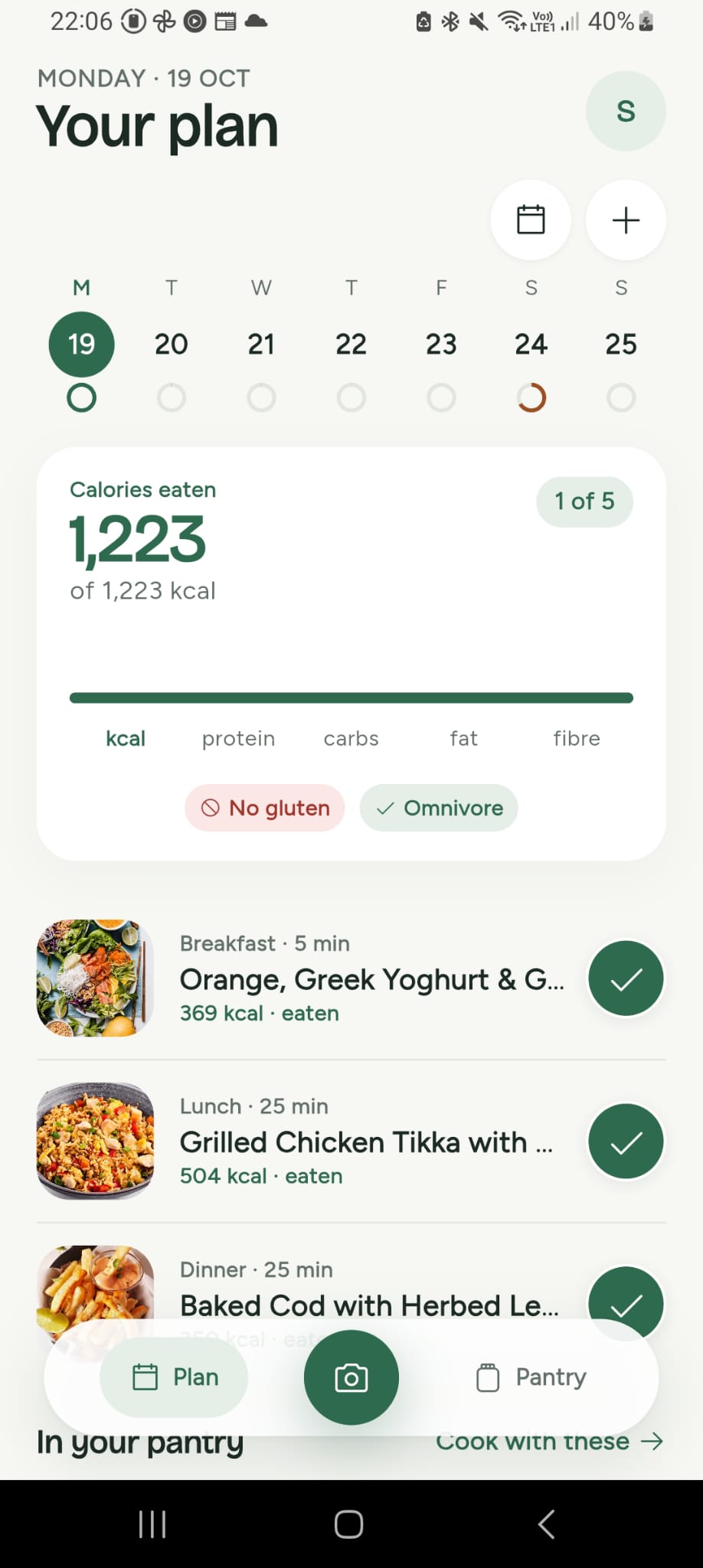
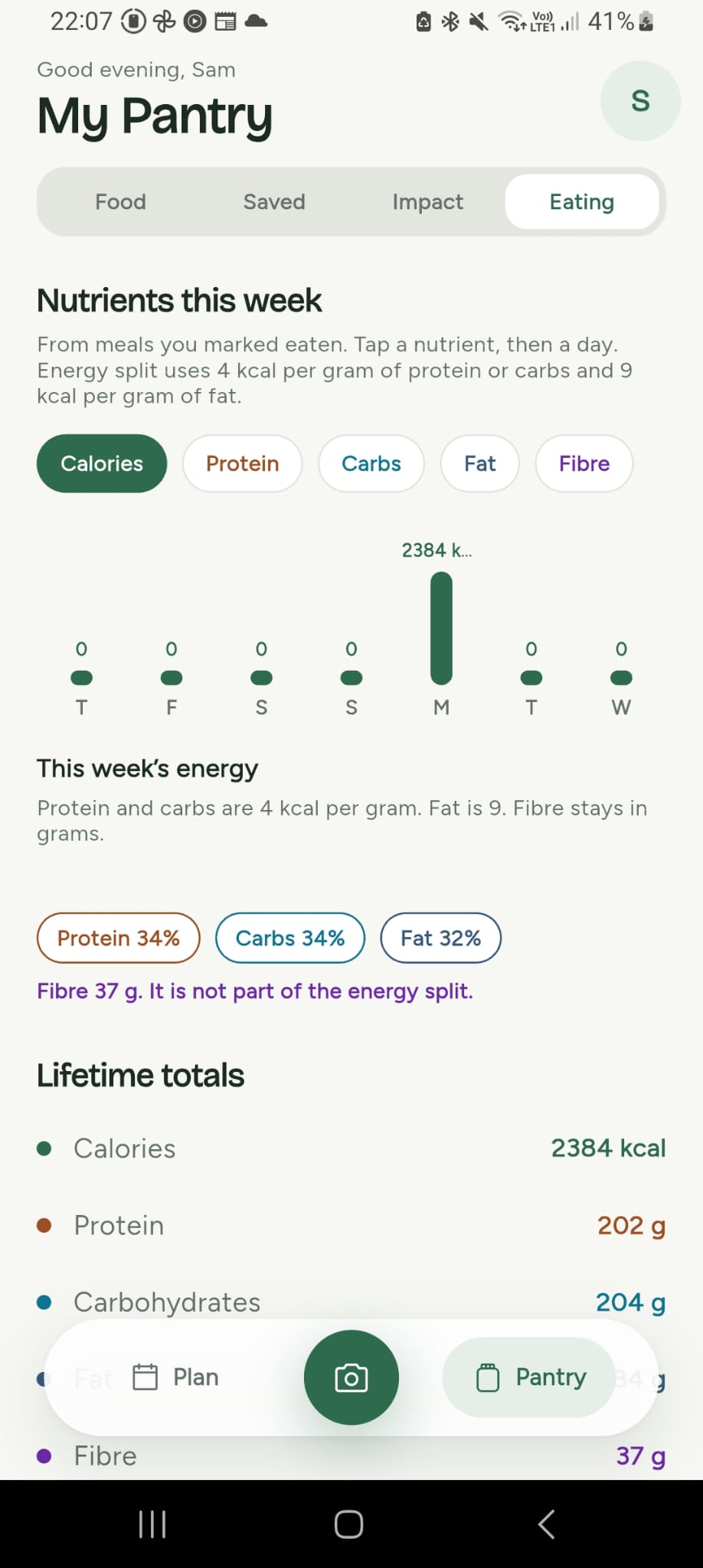
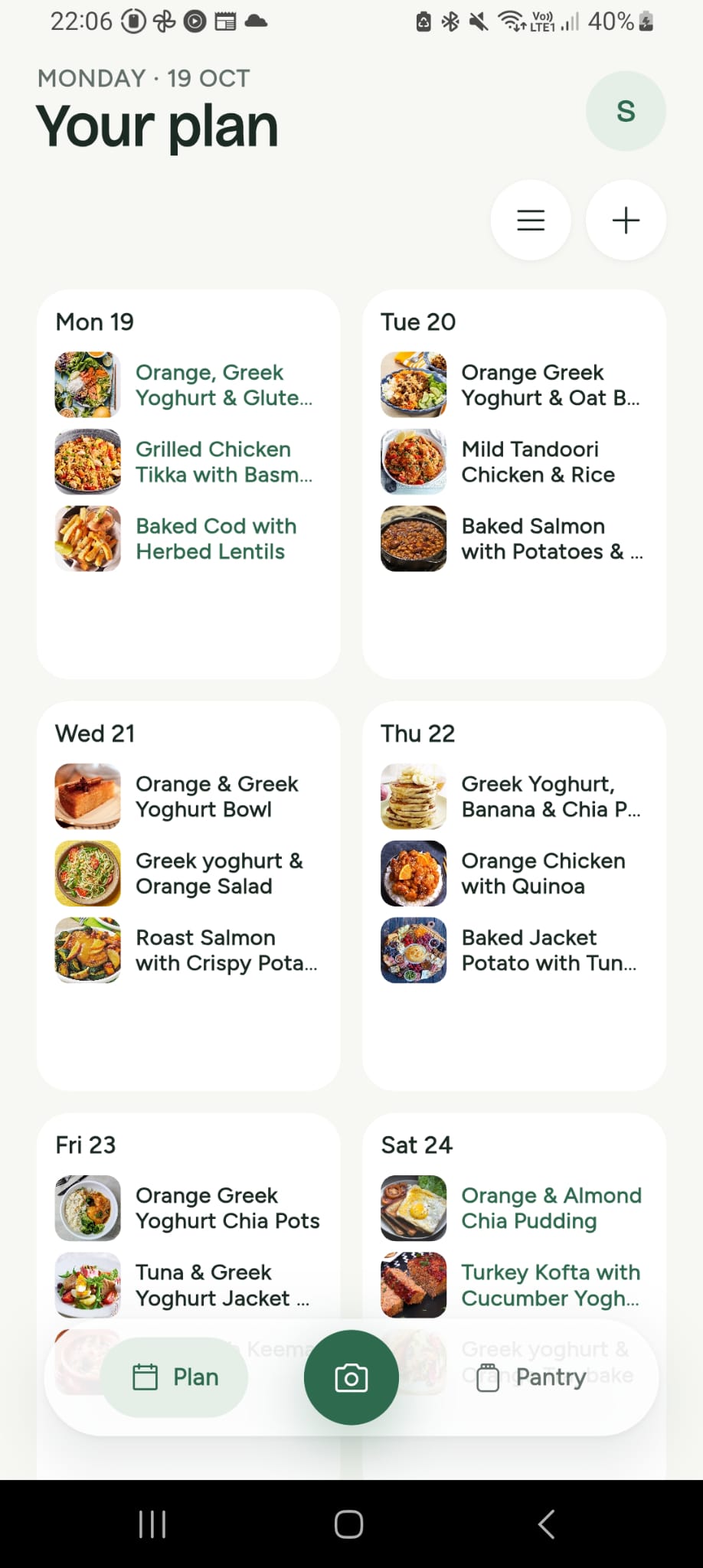
Furthermore, meal plans can be generated based on user preferences (dietary requirements, high protein, low calorie, etc.). The app can generate 3 meals a day for an entire week. Calories and nutrients can be tracked by users marking their meals as eaten, giving them the details needed to see whether they are reaching their goals.
Our Impact dashboard visualises how much food users have rescued, alongside estimated carbon emission savings. A separate nutrition dashboard tracks calories and macronutrients from meals eaten.
How we built it
I built Plateful using Flutter and Dart, with Cursor AI and the Devpost Learn Skill Pack guiding the development process.
I followed the skill pack's structured workflow, starting with defining the project's scope (scope.md), creating a product requirements document (prd.md), and developing a technical specification (spec.md) before implementation.
Challenges we ran into
One of my biggest challenges was making all the different features work together smoothly. When a user cooks a meal, Plateful needs to automatically update pantry quantities, track nutrition, and calculate how much food was rescued without making mistakes.
I also had to figure out how to measure environmental impact accurately. Rather than showing exaggerated numbers, I used clear expiry rules and published research to provide realistic estimates of food rescued and CO₂ emissions avoided.
Finally, balancing all these features while keeping the app simple, intuitive, and easy to use was challenging, especially within the limited time of a hackathon.
Accomplishments that we're proud of
I am proud that I was able to build an app using Flutter for the first time and make all the features work together efficiently, including personalised meal planning, pantry management, nutrition tracking, and measurable food waste reduction in one application.
I was also able to create an interactive Impact dashboard that makes sustainable cooking feel rewarding and encourages users to develop better habits. Helping people improve themselves is something I believe is an amazing accomplishment.
What we learned
- How to run and use the Devpost Learn Skill Pack.
- How to use Flutter to develop a mobile application.
What's next for Plateful
- Make the app feel more like a game by introducing leaderboards where users can compete to see who reaches their goals first.
- Make Plateful even more personalised to each user's needs and preferences.
Built With
- api
- cached-network-image
- dart
- dotenv
- express.js
- flutter
- fonts
- http
- icons
- material
- multer
- node.js
- openai
- phosphor
- provider
- rest
- serpapi
- sqflite
- sqlite
- typescript
- zod

Log in or sign up for Devpost to join the conversation.