-
-
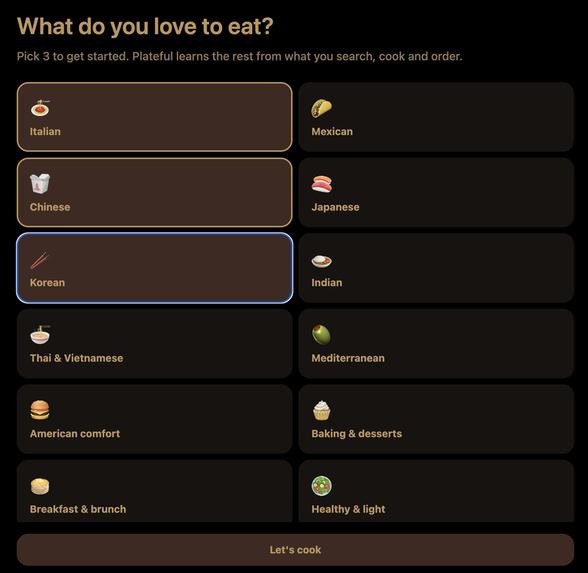
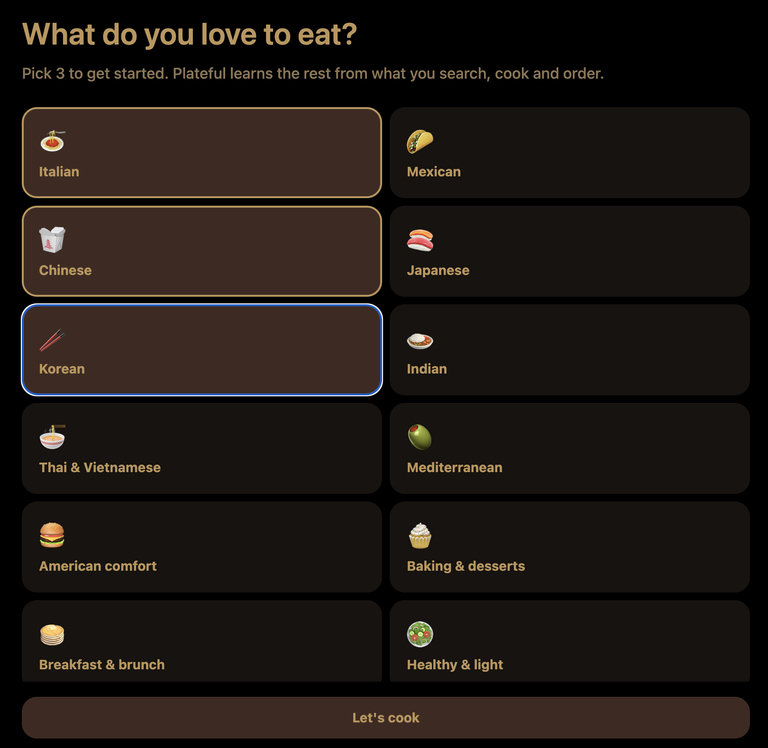
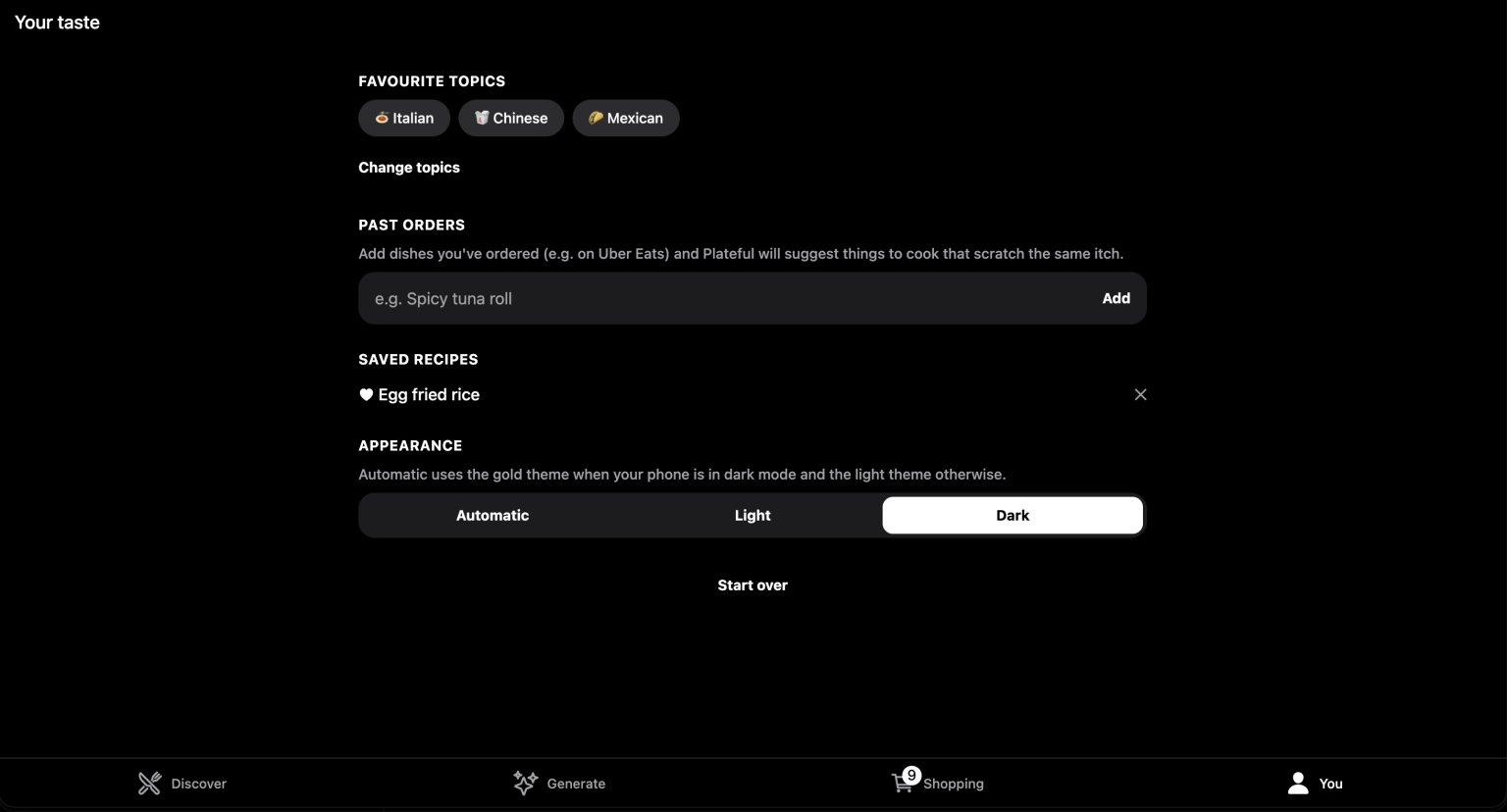
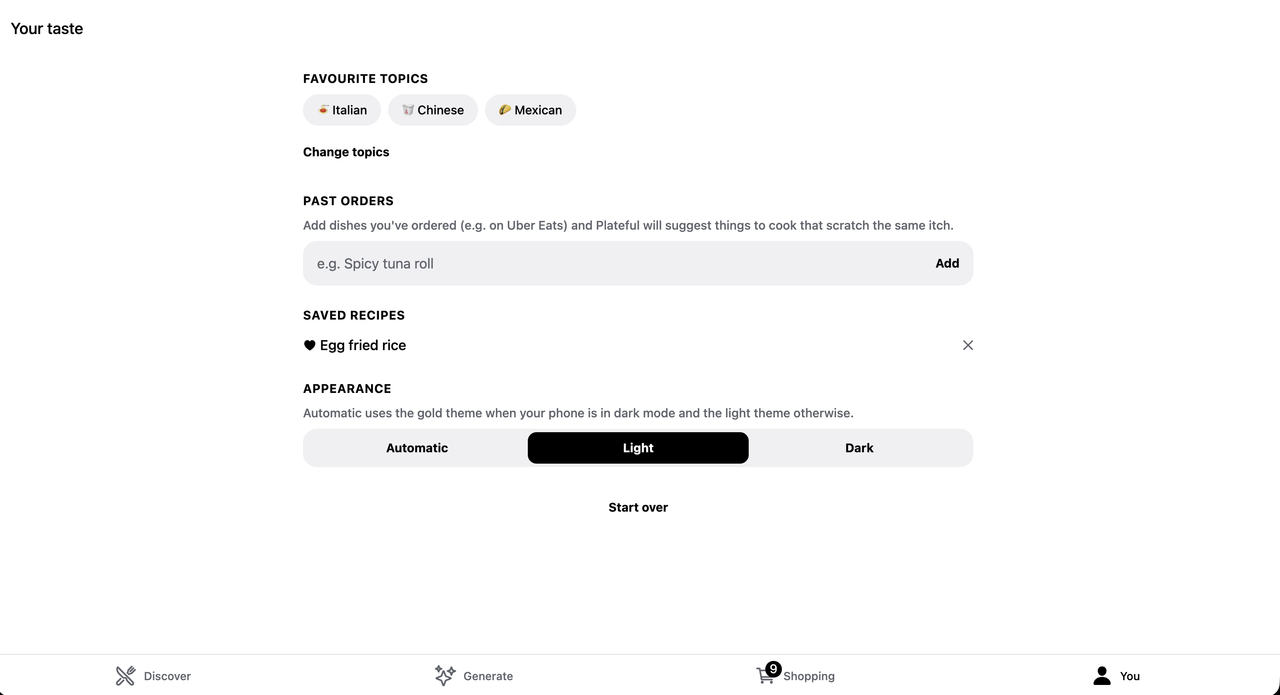
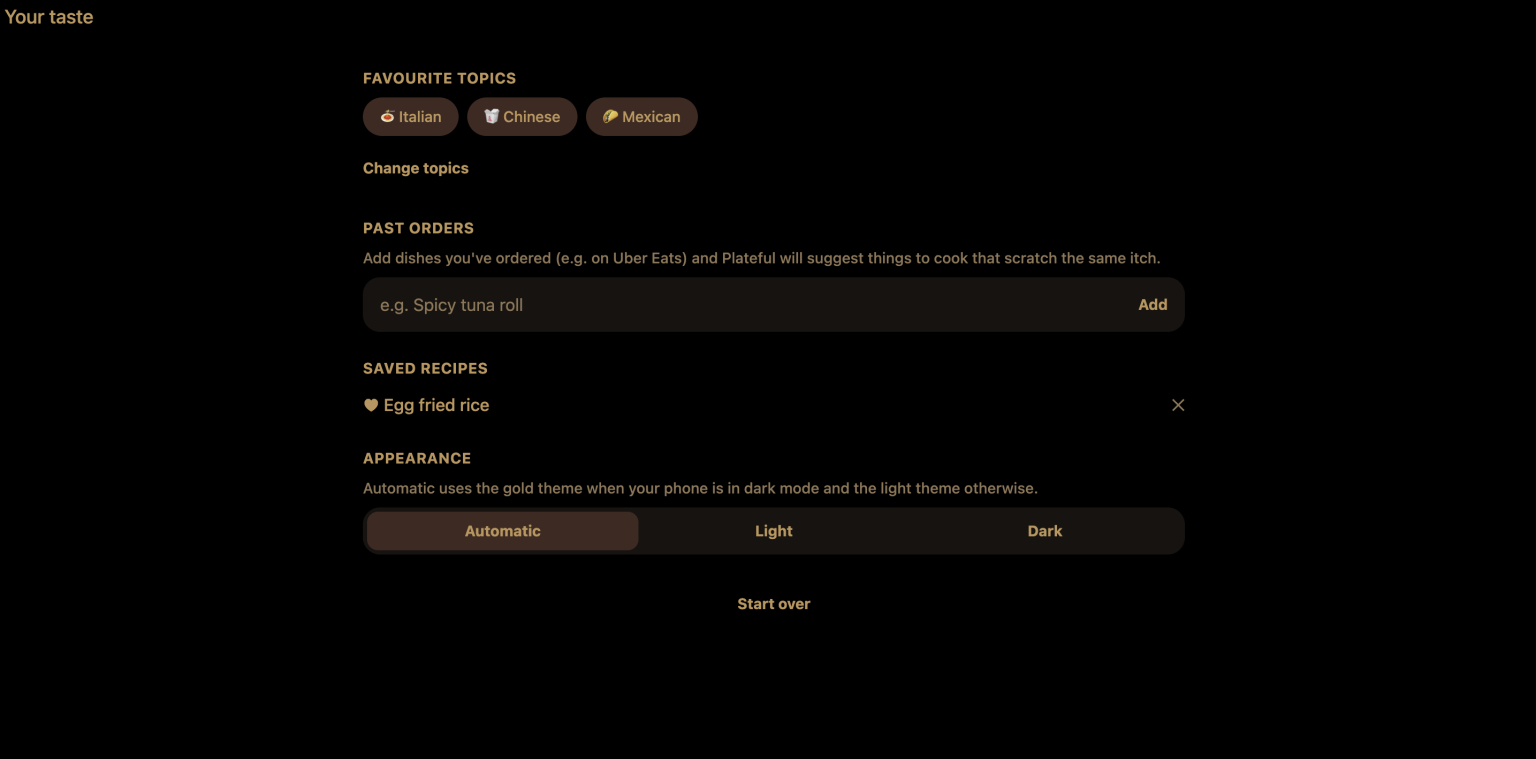
The food preference menu
-
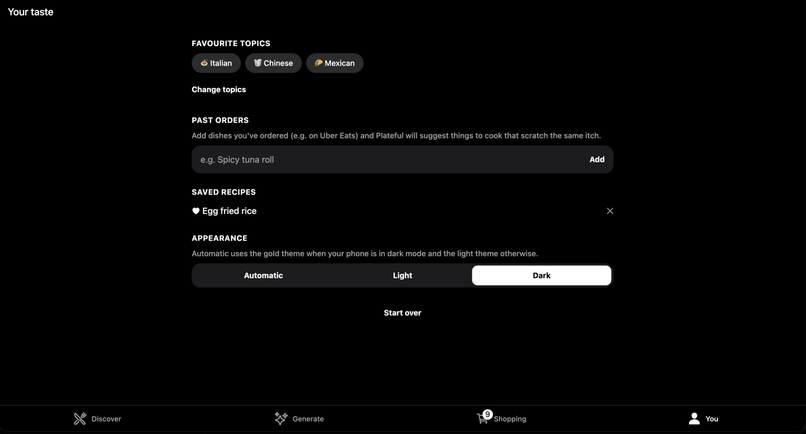
dark mode
-
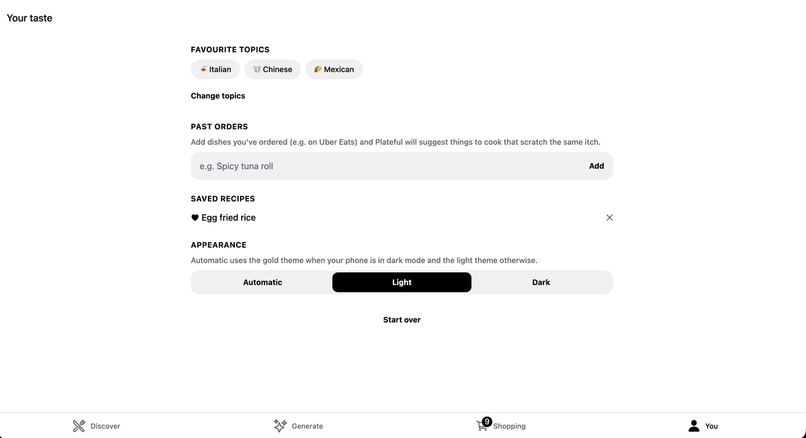
light mode
-
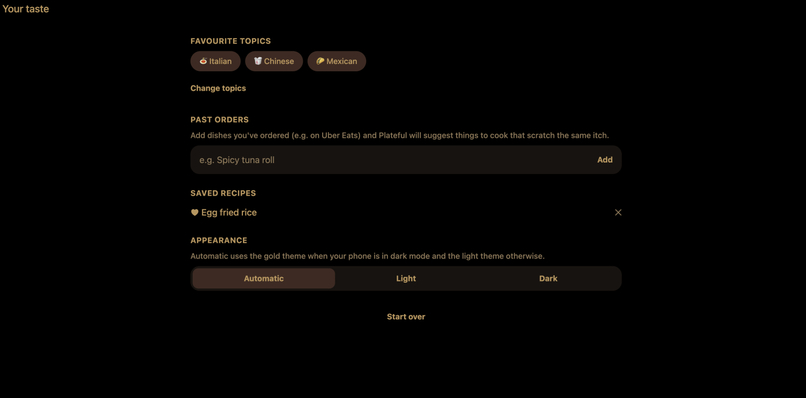
automatic mode and favourite foods alongside past and saved orders
-
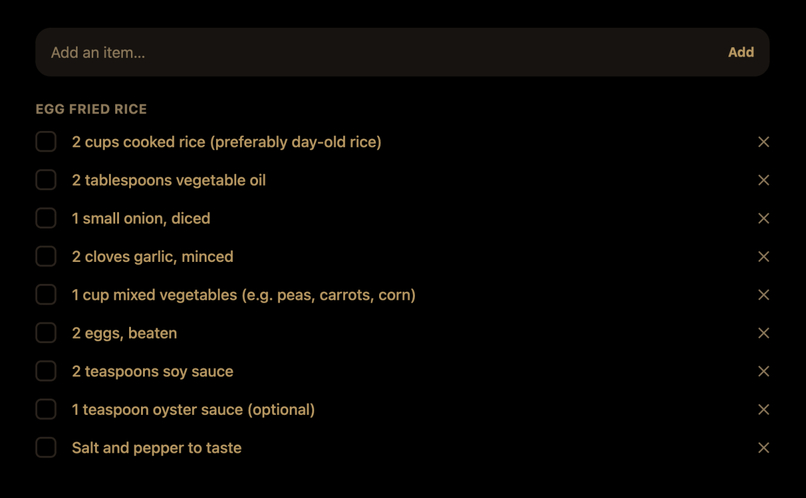
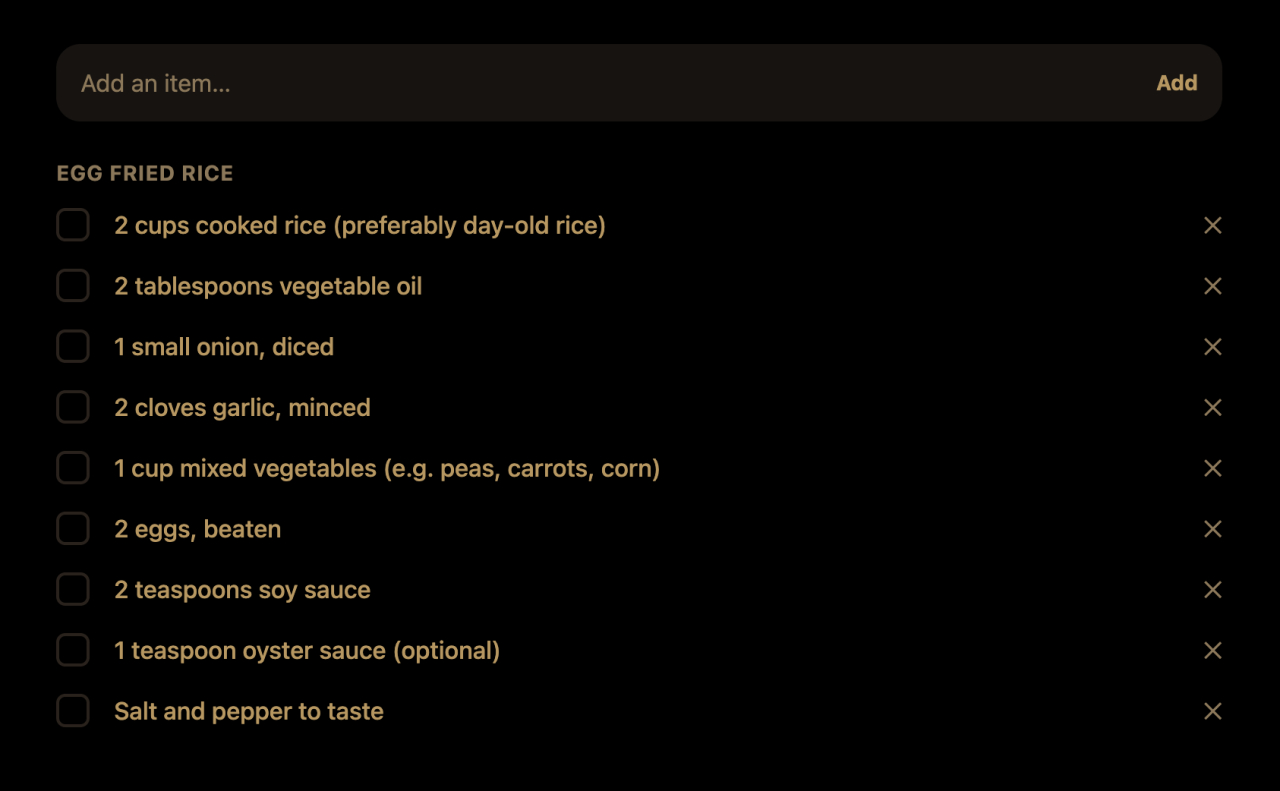
shopping list
-
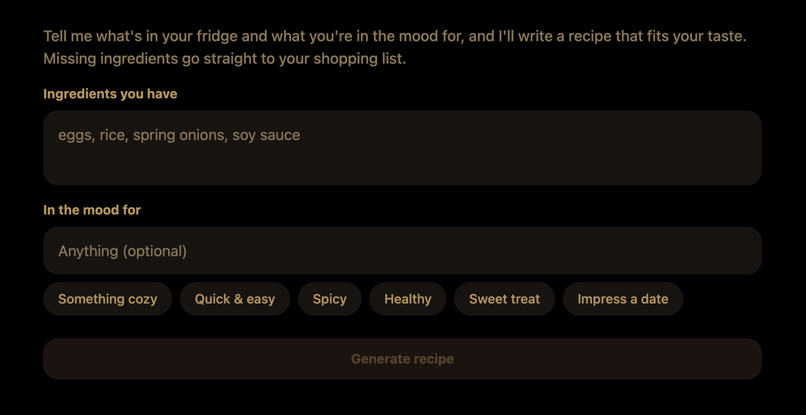
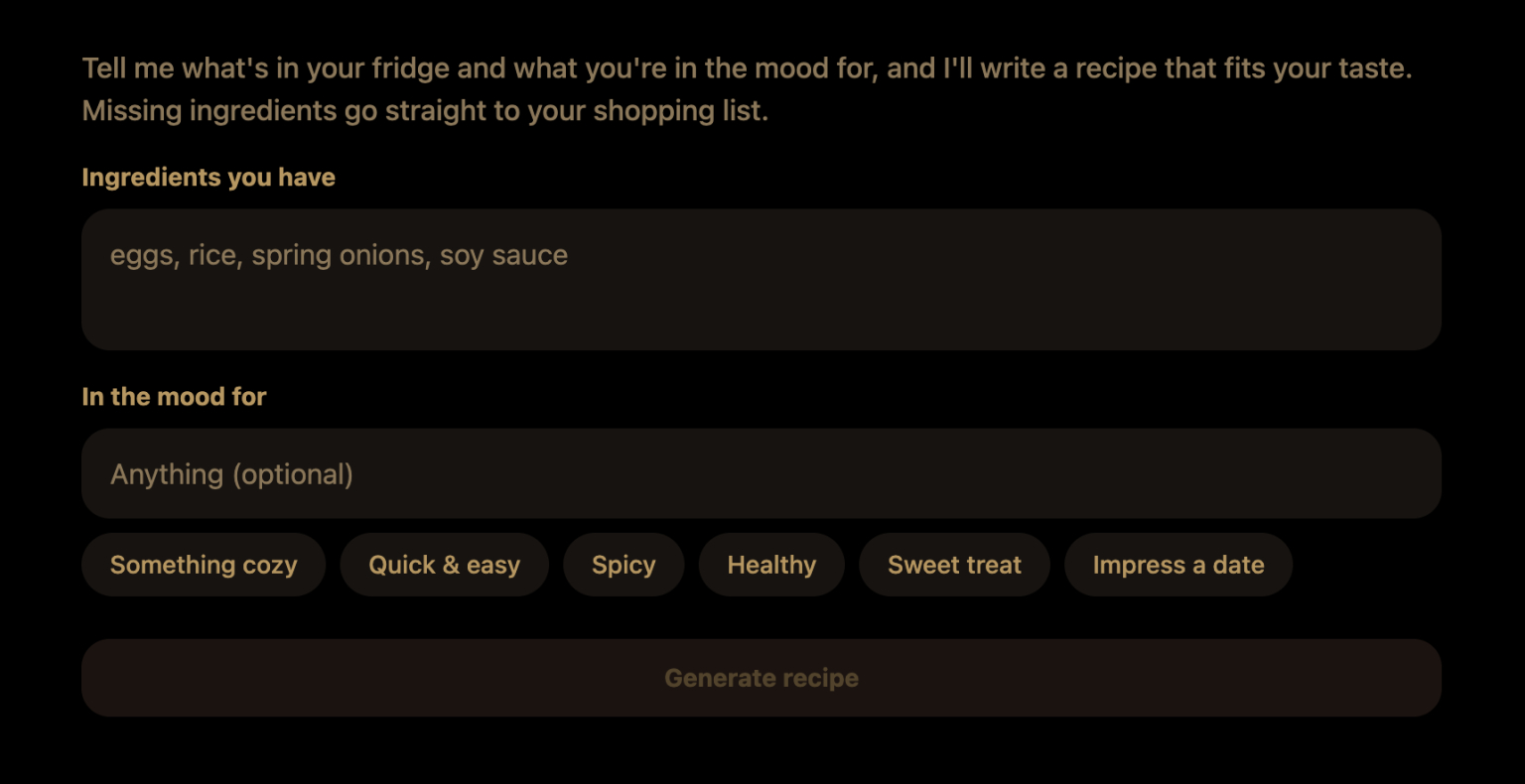
Generate random food recipe based on ingredients inputted
-
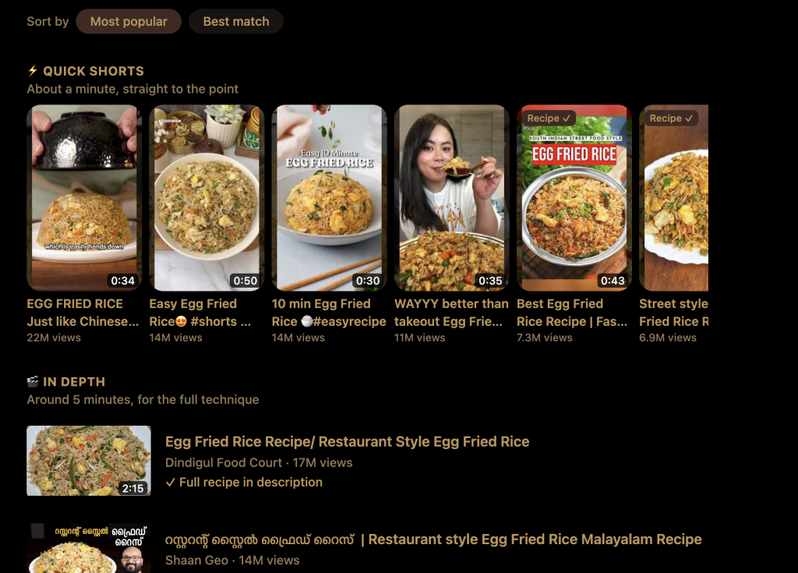
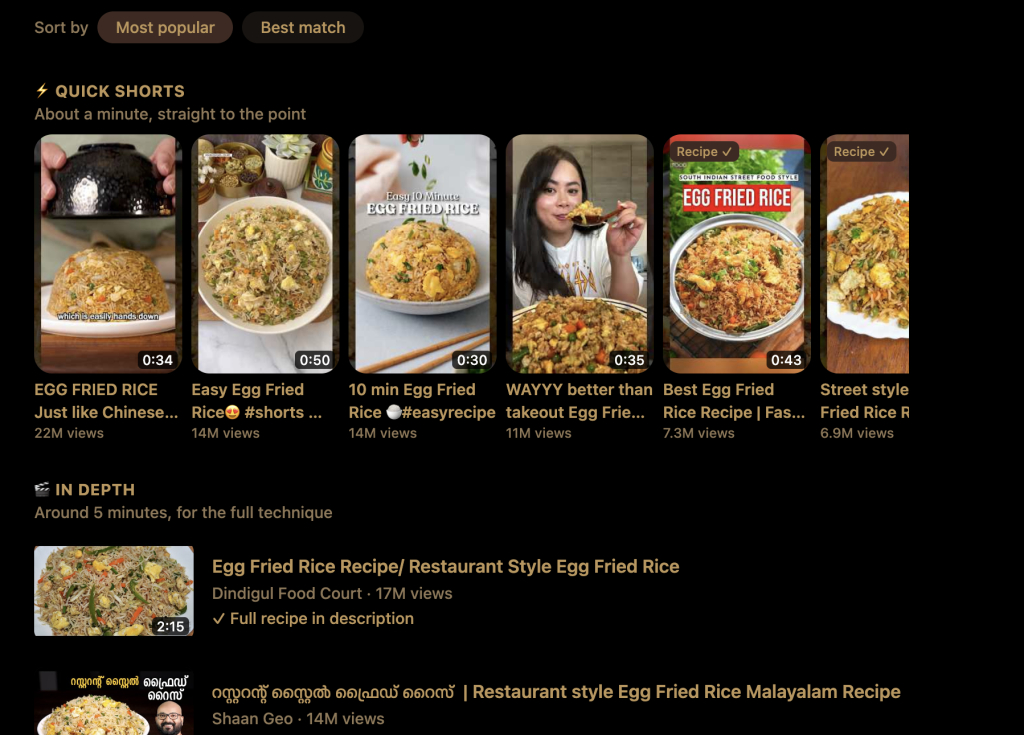
The search function
Inspiration
We thought about what people do in everyday life, figuring out what to eat, shopping for groceries, and cooking, and wanted to make the entire routine faster and more convenient. Between school, work, and daily stress, deciding what to make can feel overwhelming, traditional recipe videos are often too long to follow, and manually writing out grocery lists is tedious. We wanted to build a single app that learns what you like and handles the prep for you.
What it does
Plateful is a smart recipe discovery and meal-prep web app that personalizes cooking around your taste, mood, and pantry: Personalized Taste Onboarding & Profile: Users start by picking three favorite cuisines (like Italian, Chinese, or Korean) and can log past takeout orders (such as Uber Eats dishes) so Plateful learns what cravings to recreate. Verified Short & In-Depth Video Feed: Users can search for any dish, sort by popularity or best match, and watch 1-minute Quick Shorts or 5-minute in-depth tutorials that have been verified to include real recipes in their descriptions. Fridge & Mood AI Generator: Users enter the ingredients they already have on hand and select their current mood such as Quick & easy, Something cozy, Spicy, or Impress a date to generate a custom recipe on the spot. One-Tap Shopping Lists: Users simply check off the ingredients they already own, and Plateful automatically adds the missing items to an organized grocery list. Adaptive Theme Modes: Features an Automatic mode that switches between a warm black-and-gold dark theme and a clean light theme based on device settings.
How we built it
Plateful's frontend is a TypeScript app built with React Native and Expo, so one codebase runs on iOS, Android and the web. Its screens are set up with Expo Router's file-based navigation. New users first pick three food topics that seed their taste profile. After that, a bottom tab bar offers Discover (video search and suggestions), Generate (AI recipes from the local Llama model), Shopping (a checklist) and You (your taste profile). Recipe pages embed the YouTube videos, light, dark and signature black-and-gold colour schemes keeps every screen consistent. The user's data is saved on the device with AsyncStorage.
Challenges we ran into
Filtering Noisy Video Results: Searching for food keywords on YouTube often returns taste-test vlogs or meme clips without actual cooking instructions. Writing logic to scan video descriptions and verify real recipes before displaying them took careful tuning. Balancing Speed with Personalization: We wanted discovery to feel effortless without overwhelming users with long forms, which pushed us to design quick three-tap onboarding and one-tap mood pills. Syncing Ingredients Across Tabs: Making sure checked-off pantry items seamlessly synced with the shopping list tab while keeping the interface clean under hackathon time constraints was a great technical puzzle.
Accomplishments that we're proud of
End-to-End Working Product: We went from a rough brainstorm doc to a cohesive, functional web app covering onboarding, video discovery, AI recipe generation, automated shopping lists, and user taste profiles. Thoughtful UX Details: Building features like description-verified recipe badges, mood-based cooking prompts, and our custom black-and-gold Automatic theme made the app feel genuinely fun and practical to use. Brand & Pitch Cohesion: Aligning our app's visual identity directly with our Galactus Bytes presentation deck.
What we learned
We learned that raw API data needs guardrails, since YouTube food searches often return vlogs and memes, so we filtered for videos whose descriptions contain real recipes. Running Llama 3.2 on an 8 GB Mac taught us to keep prompts small and cache results. Small UX choices like three-tap onboarding and one-tap mood buttons made Plateful feel effortless, and time pressure taught us to polish one core flow: find a recipe, tick off what you have, get a shopping list.
What's next for Plateful
Delivery Service Integrations: Connecting directly with platforms like Uber Eats to automatically import past order history for deeper taste curation and letting users order missing shopping list items straight to their door. Local Grocery Store Inventory: Partnering with retailers like Costco and local supermarkets to show real-time stock availability and flag understocked items before users head out to shop. Smart Fridge & Computer Vision Scanning: Expanding our hardware/software vision prototype using Google's computer vision APIs so users can simply scan their fridge or pantry with their camera to log ingredients automatically.
