-
-
-
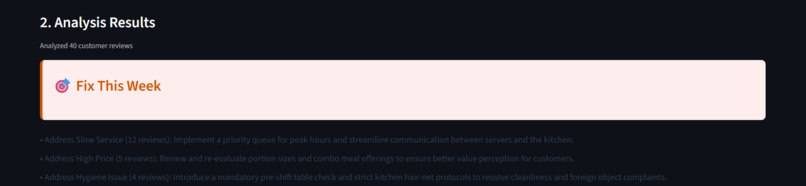
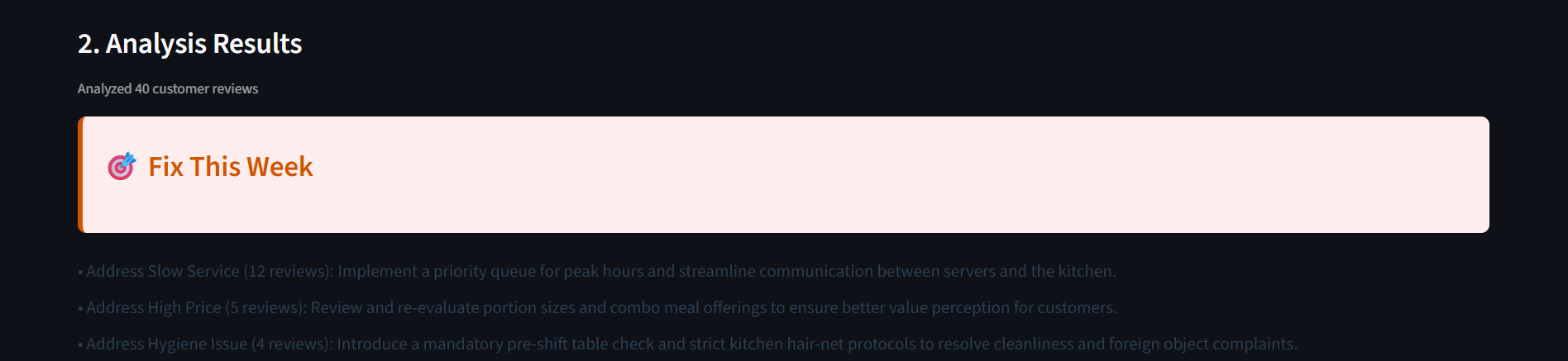
Fix this week: “These are concrete actions, each tied to a problem and how many reviews mention it.”
-
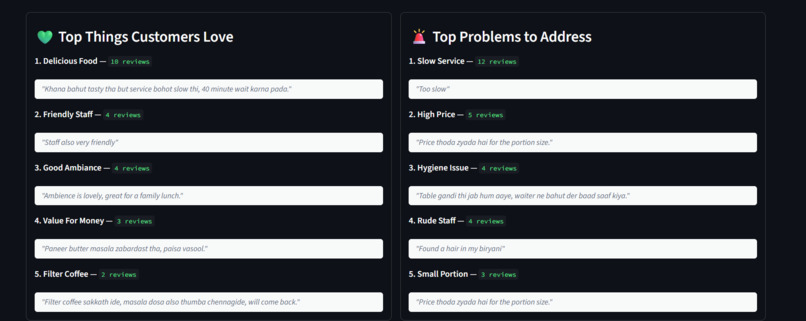
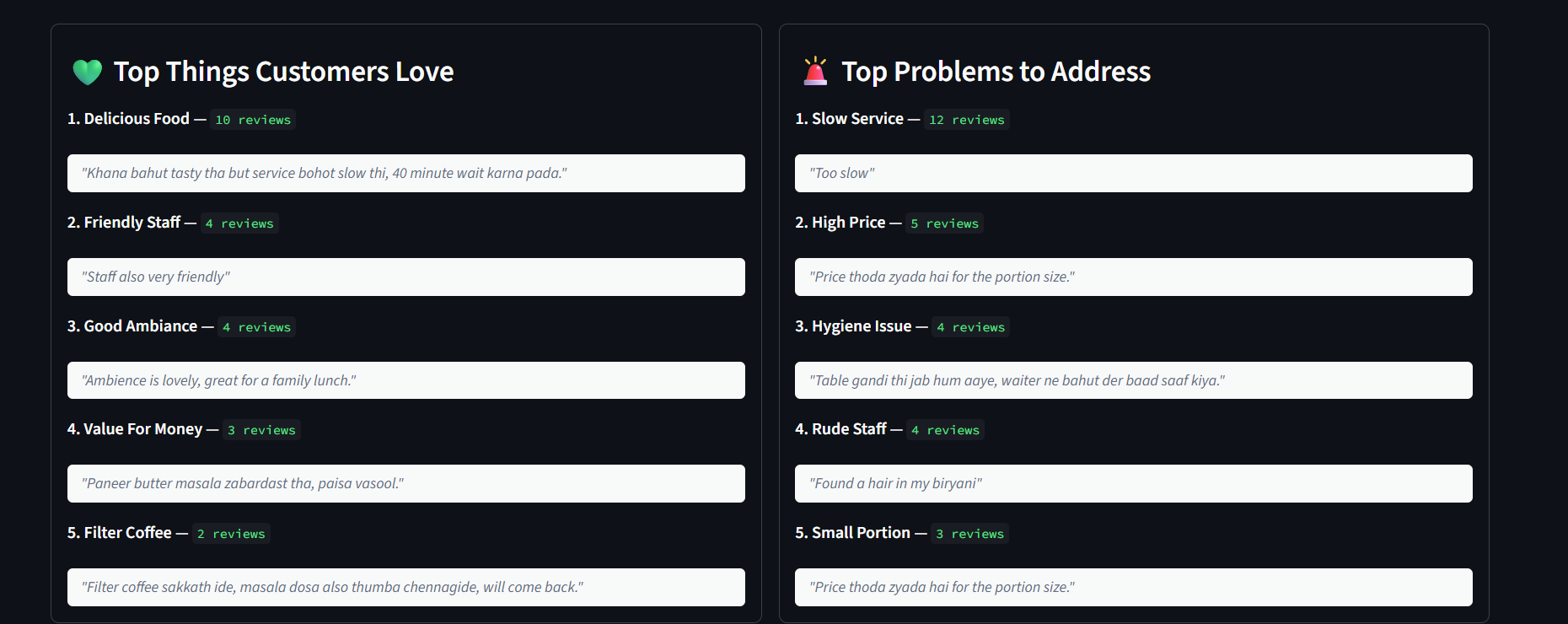
Top 5 problems and loves: “Each has a count and a real quote from the reviews.”
-
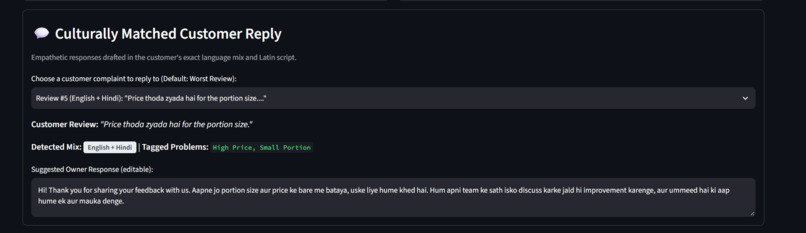
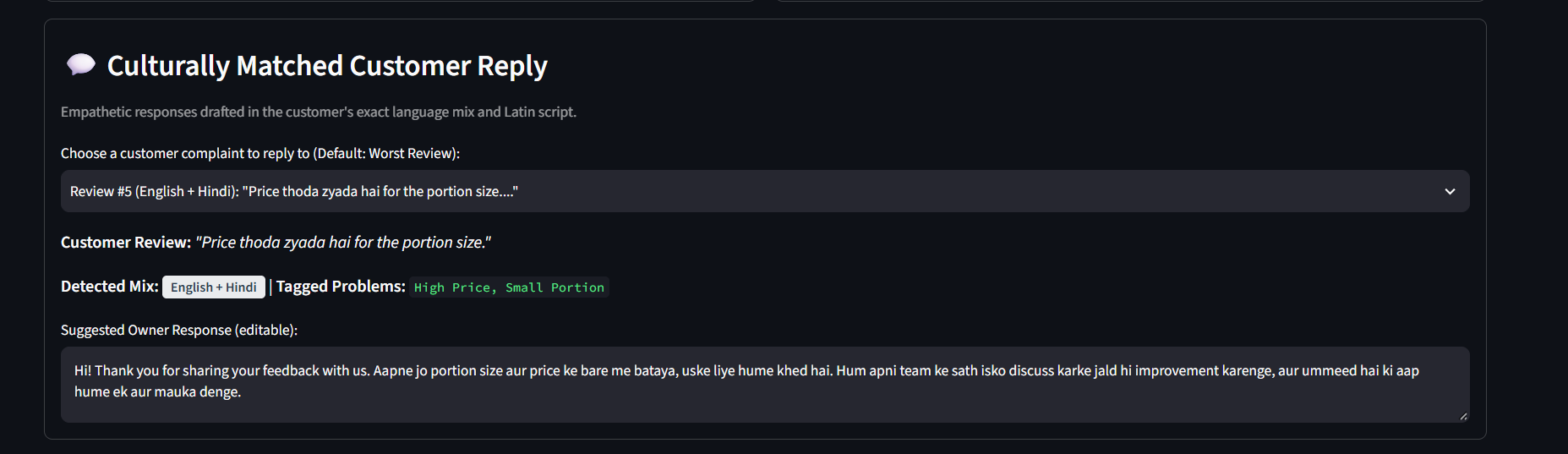
Suggested reply: “This is a reply to the worst review, in the reviewer’s language.”
-
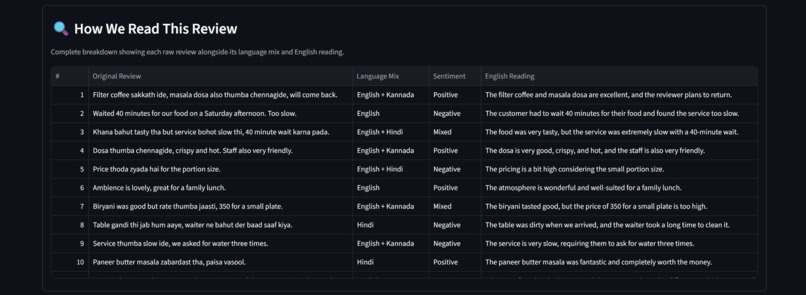
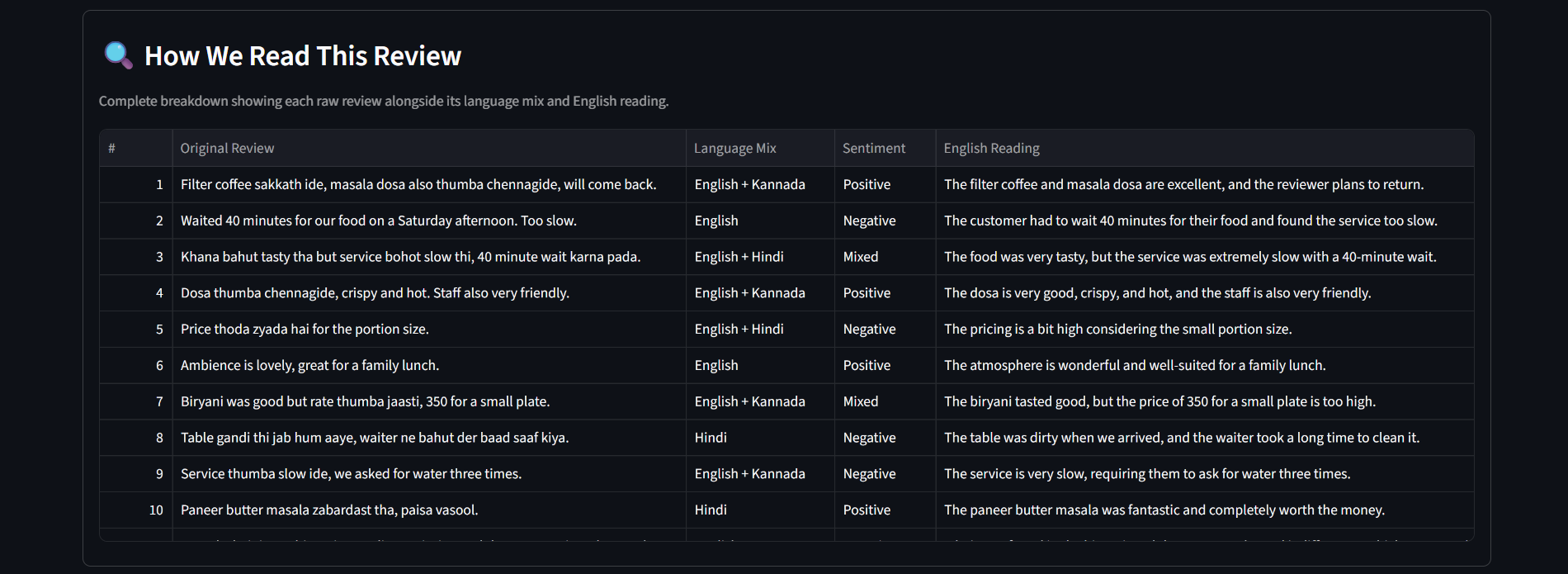
How we read this review: “This shows each original review next to its English reading, so the owner can check it.”
-

Unclear: “Reviews with no usable feedback go here, so nothing is lost.”

Inspiration
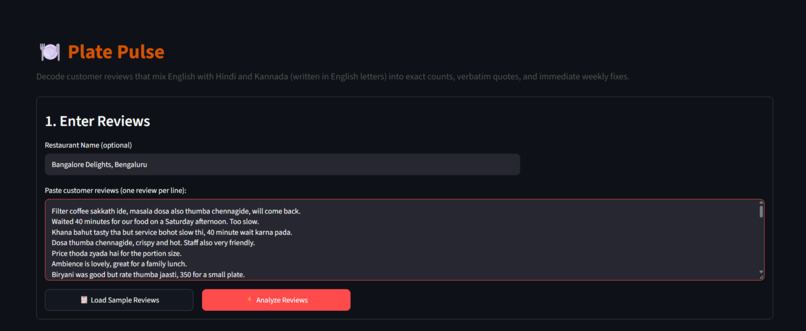
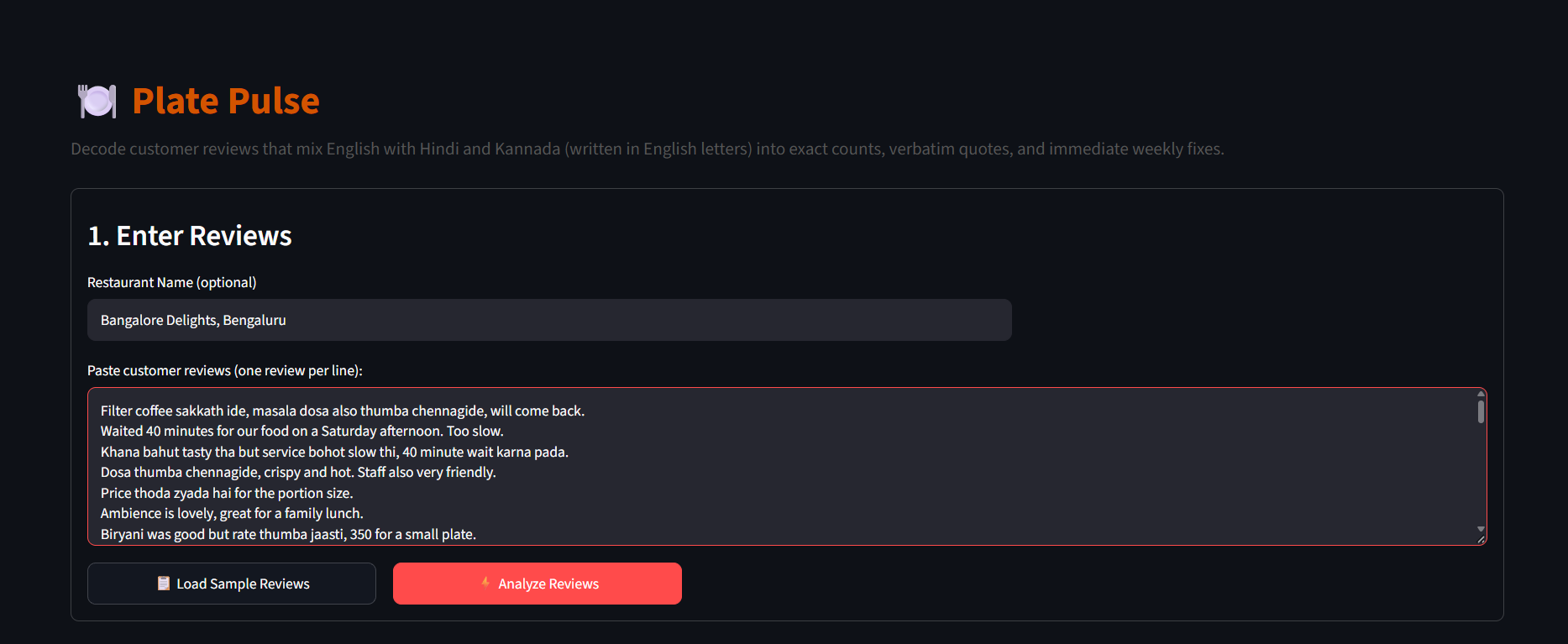
Restaurant reviews in India are often written in a mix of English, Hindi and Kannada, typed in English letters ("service thumba slow", "khana accha tha"). A busy owner can't read hundreds of them, and standard summaries can miss what's actually being said. I wanted a tool that reads them the way a local reader would and says what to fix.
What it does
Plate Pulse takes pasted reviews and shows:
- Fix this week: a short list of concrete actions, each tied to a problem and how many reviews mention it
- Top 5 problems and top 5 things customers love, each with a count and a real quote from the reviews
- A suggested reply to a negative review
- How we read this review: each original review next to a short English reading, so the owner can check what the AI understood
- Unclear: reviews with no usable feedback, so nothing gets lost
How I built it
- Python and Streamlit for the page, and the free Gemini API for reading the reviews
- The AI tags, Python counts. Gemini tags each review (language mix, sentiment, problems, praise) and writes the English reading. A separate Python module does the counting, ranking and quote matching, so the totals come from code and every quote is taken word for word from the pasted reviews.
- A second Gemini call uses those counts to write the weekly actions and the reply.
- Planned with the Devpost Learn skills (start, scope, PRD, spec): the plan is in
devpost/scope.md,prd.mdandspec.md. Demo data is 40 fabricated sample reviews.
Challenges
- Google's models were overloaded at times (503 errors), and one call hung because it had no time limit. I added a 60-second timeout, a limited retry, and a lighter fallback model.
- Old model names were retired, so I had to test which model my free key could actually use.
- My coding agent's free quota ran out near the end, so I finished running and testing the app by hand.
What I learned
- Plan before you build: writing the scope, PRD and spec first kept the project small enough to finish.
- Keep the AI's job narrow. It reads and writes; code does the counting.
- Test the external service first. Most of my time went on the Gemini connection, not the interface.
What's next
Importing reviews directly from review sites, CSV upload, more languages, and saved history. These are out of scope for this proof of concept.
