Inspiration
We were inspired to build Plate Pass after learning that 1 in 6 children in Delaware are food insecure. We are all from the area and are passionate about giving back to the community that we grew up in.
What it does
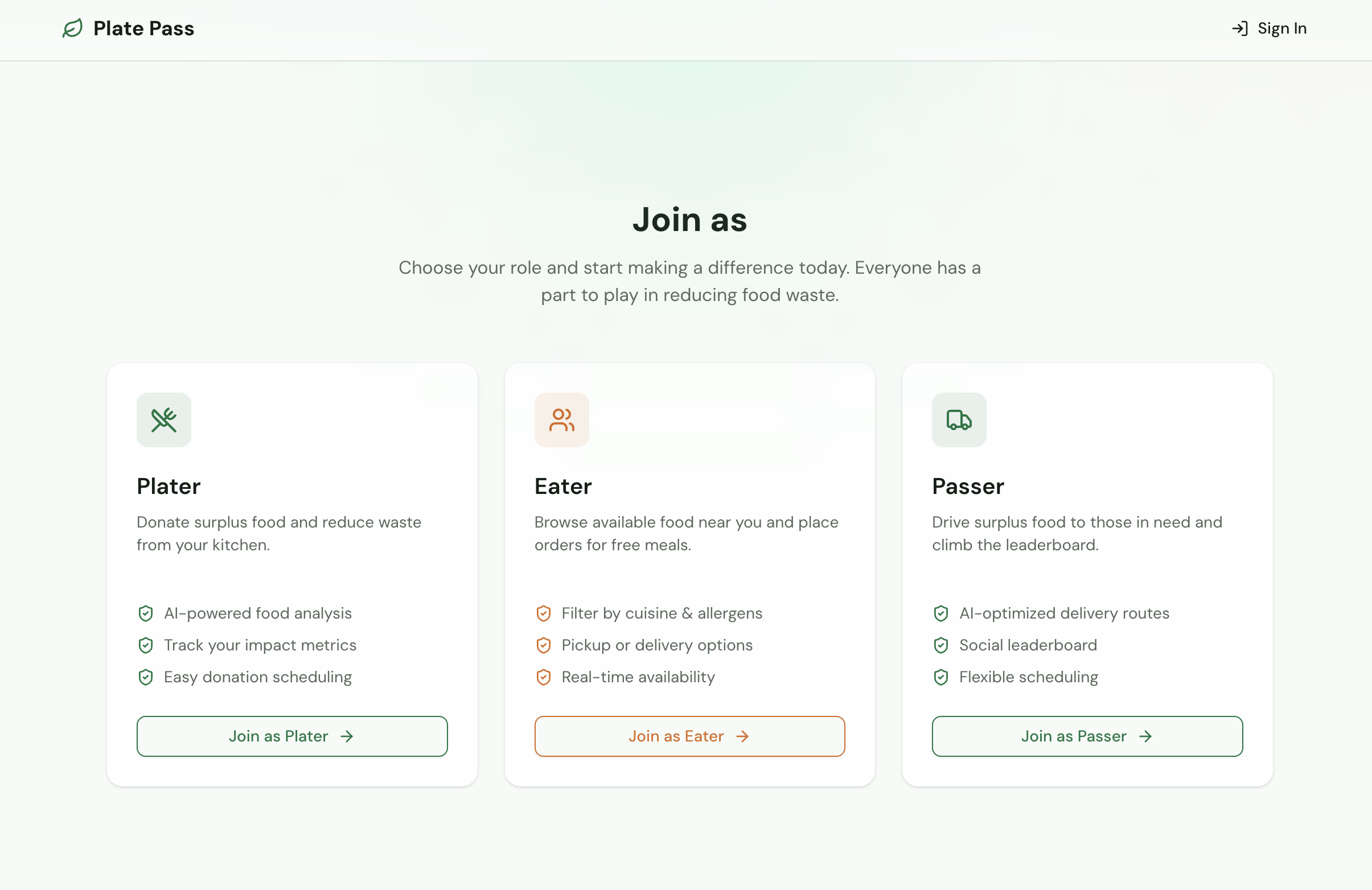
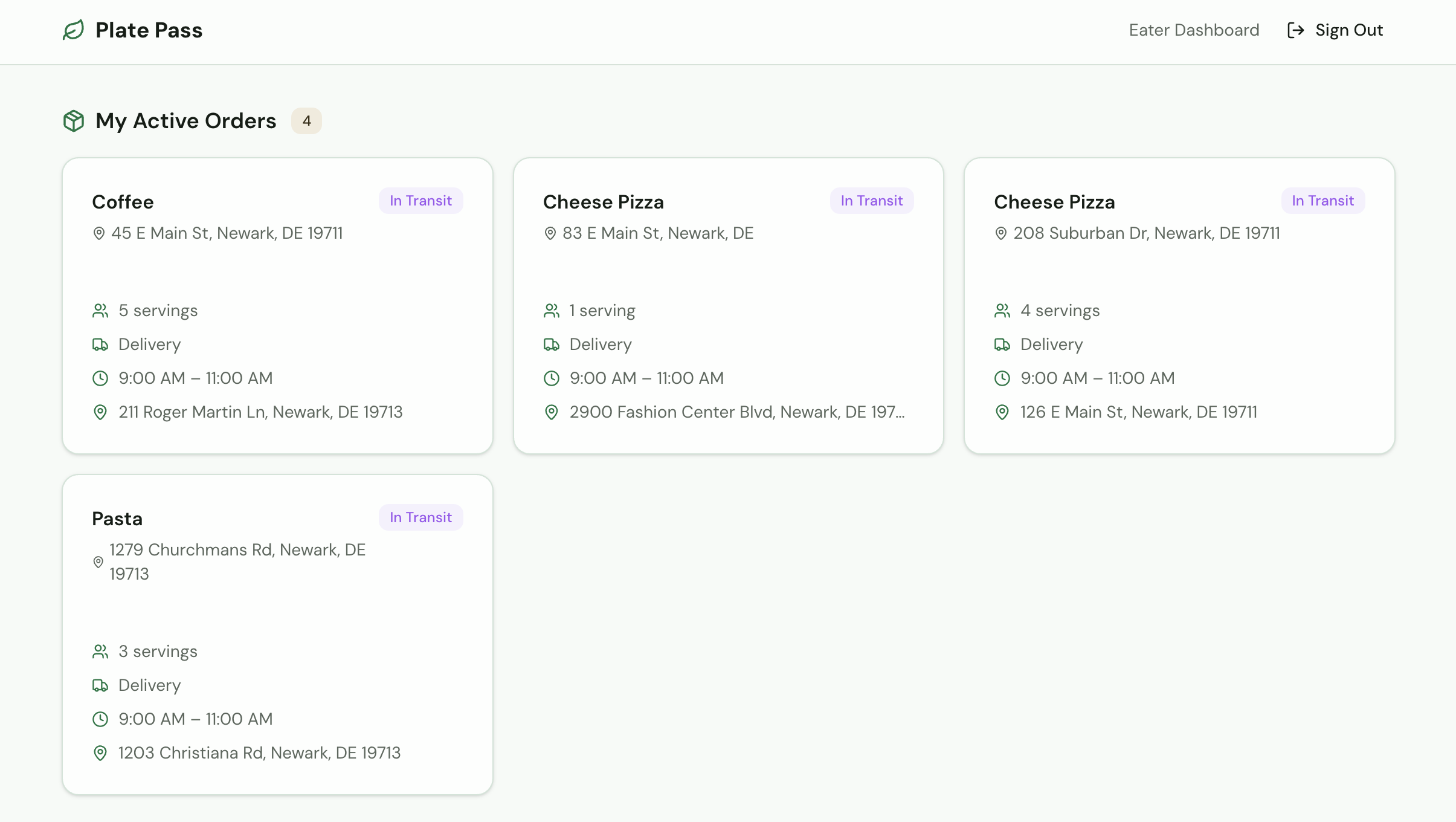
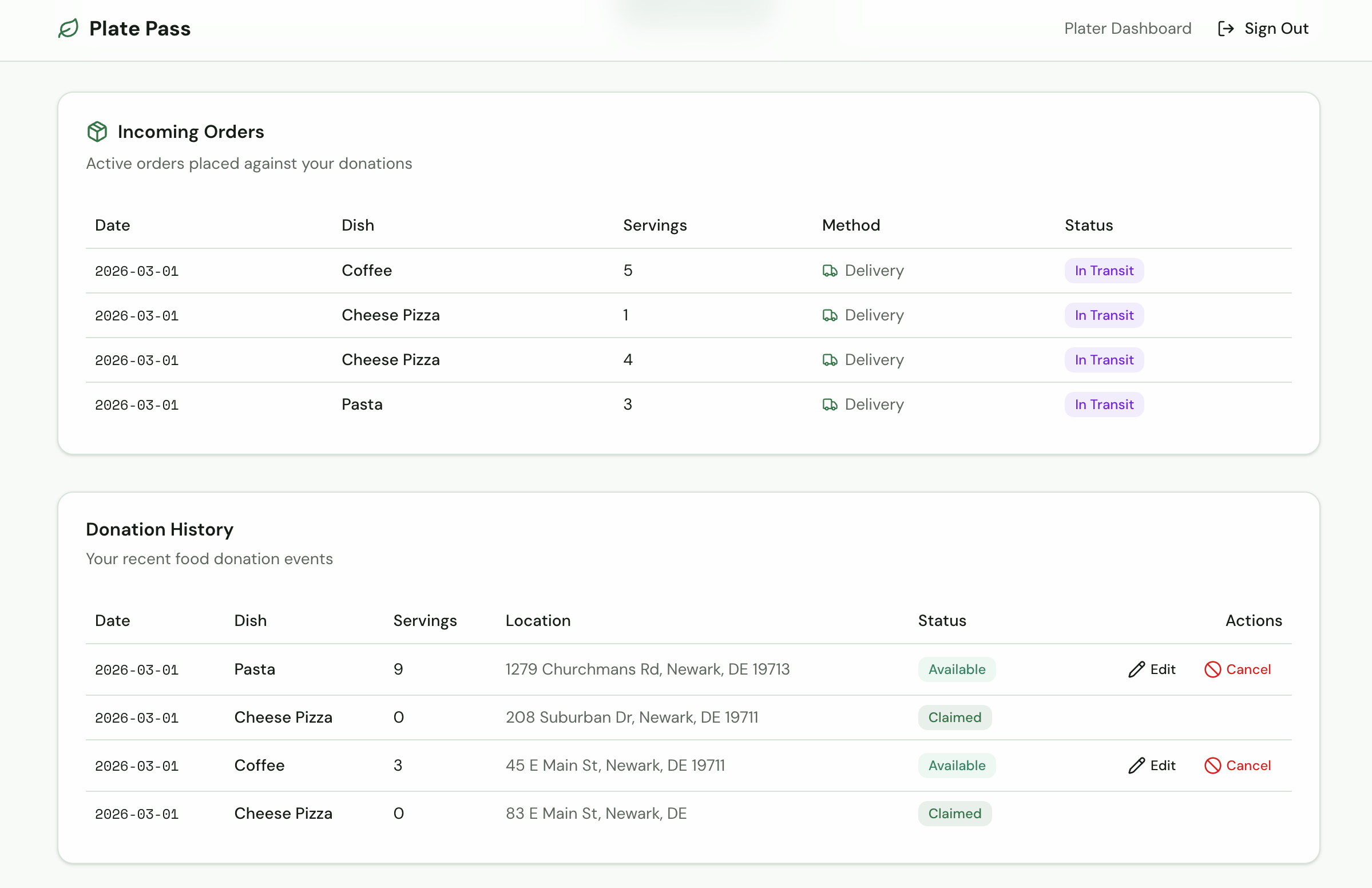
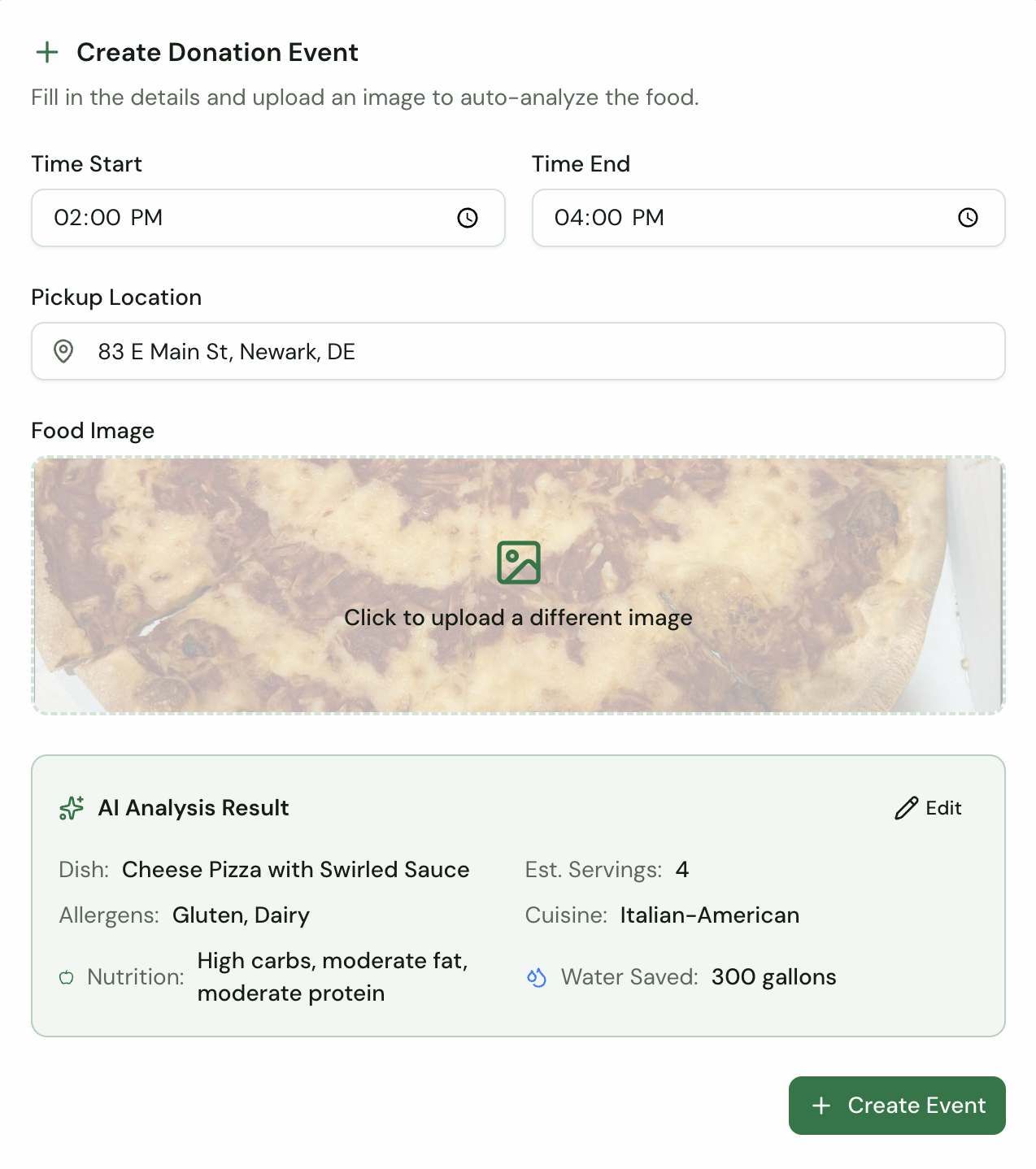
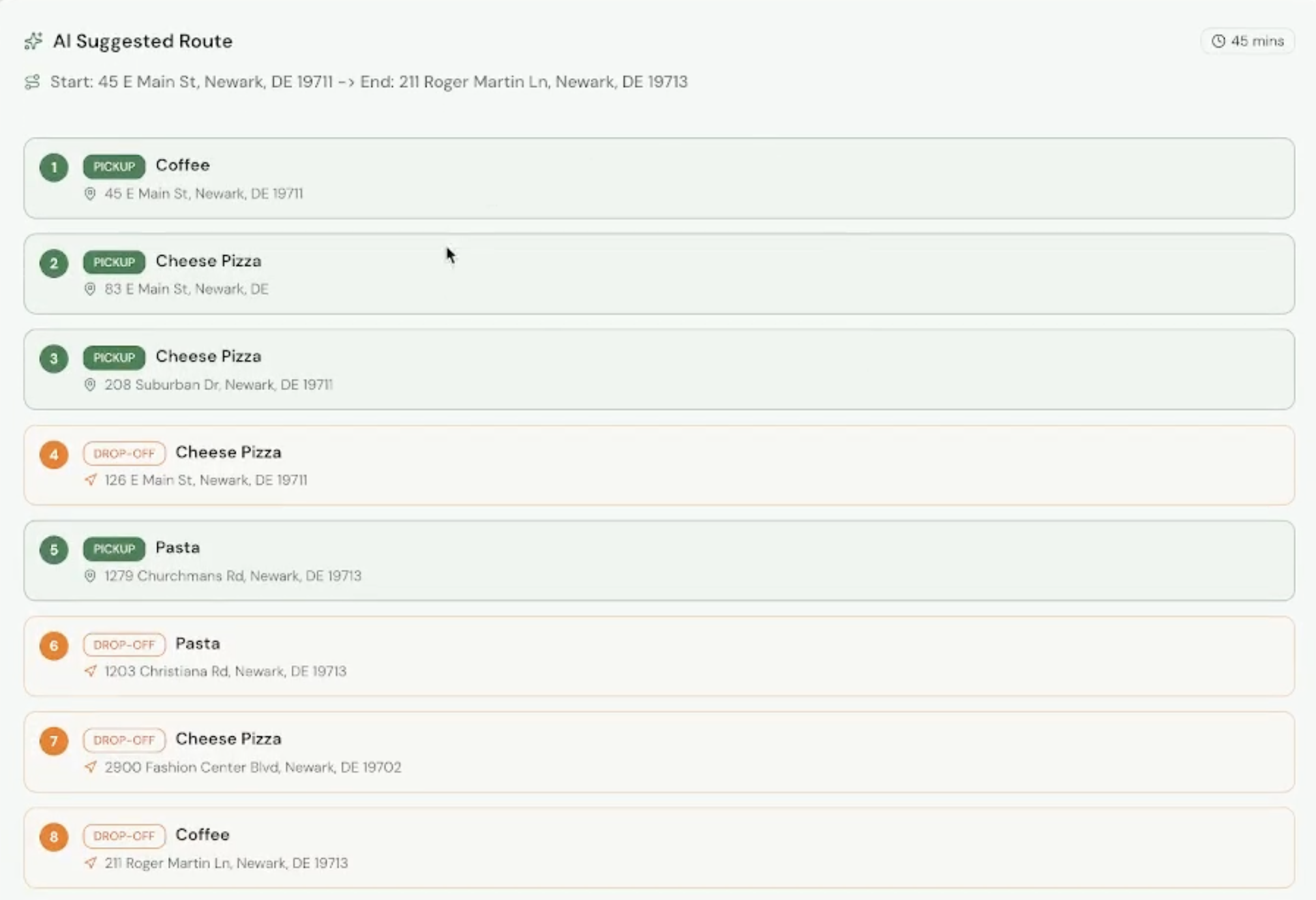
Plate Pass works by connecting three user types: Platers, Eaters, and Passers. Platers are restaurants that deal with leftover foods and are willing to donate this food at the end of their working days. Platers can use the integrated Gemini API to upload images of leftovers. Then, the AI will scan the food and provide an analysis of how many servings it can provide, possible allergens it may contain, and the amount of water conserved from the donation. Once the Platers upload the food, the Eaters can view the posts and filter available postings based on their preferences and choose to pick up the food or have it delivered. Should they choose to have it delivered, the Passers can select the delivery route they choose or one recommended by the A.I. and make the delivery. Passers can accumulate points for each delivery and compete with their friends on the leaderboard to earn more points.
How we built it
PlatePass is a modern full-stack application built with Next.js 16 (App Router) and hosted on Vercel.
Frontend & Design: We used Tailwind CSS for utility-first styling and Shadcn UI for accessible, pre-built components. This allowed us to rapidly prototype our three distinct user dashboards: Plater (Donor), Eater (Recipient), and Passer (Volunteer).
Backend & Database: Instead of relying solely on serverless functions for data, we integrated Supabase as our backend-as-a-service.
Authentication: managed securely through Supabase Auth.
Database: We used a PostgreSQL database with Row Level Security (RLS) to protect user data.
Logic: We implemented Supabase RPCs (Remote Procedure Calls) to handle complex atomic transactions, such as instantly decrementing serving counts when an order is placed and updating the social leaderboards.
Artificial Intelligence: We leveraged the Google Gemini 2.5 Flash API via secure Next.js server-side API routes to power our core innovations:
Computer Vision: Analyzing uploaded food images to automatically extract dish names, allergens, and nutritional estimates.
Logistics Optimization: Generating efficient multi-stop delivery routes and trip summaries for our volunteers.
Development Workflow: The project was accelerated using v0 for generative UI prototyping and Cursor’s AI Agents for writing backend logic and performing end-to-end browser testing.
Challenges we ran into
We spent more time than we'd anticipated coming up with an idea. During the coding process, we had to learn how to properly integrate the Gemini API and effectively connect the various UIs (Plater, Eater, and Passer) to each other through the backend.
Accomplishments that we're proud of
This is our first hackathon, so we're proud to have designed something that is as robust and functional as Plate Pass in such a limited time frame.
What we learned
We learned how to take a project from ideation stages to design and creation. We enjoyed figuring out how to turn our ideas into real implementation.
What's next for Plate Pass
We think it'd be possible to reach out to local restaurants to become testers for the app and reach out to our communities to sign up. Once we test with local restaurants, we could identify potential issues and eventually scale.
Team Members: Lorenzo Santos [email protected], Zaden Lockwood [email protected], Jon Dong [email protected], Haasini Potluri [email protected]
Built With
- css
- cursor
- gemini
- next.js
- node.js
- react
- typescript
- vercel

Log in or sign up for Devpost to join the conversation.