
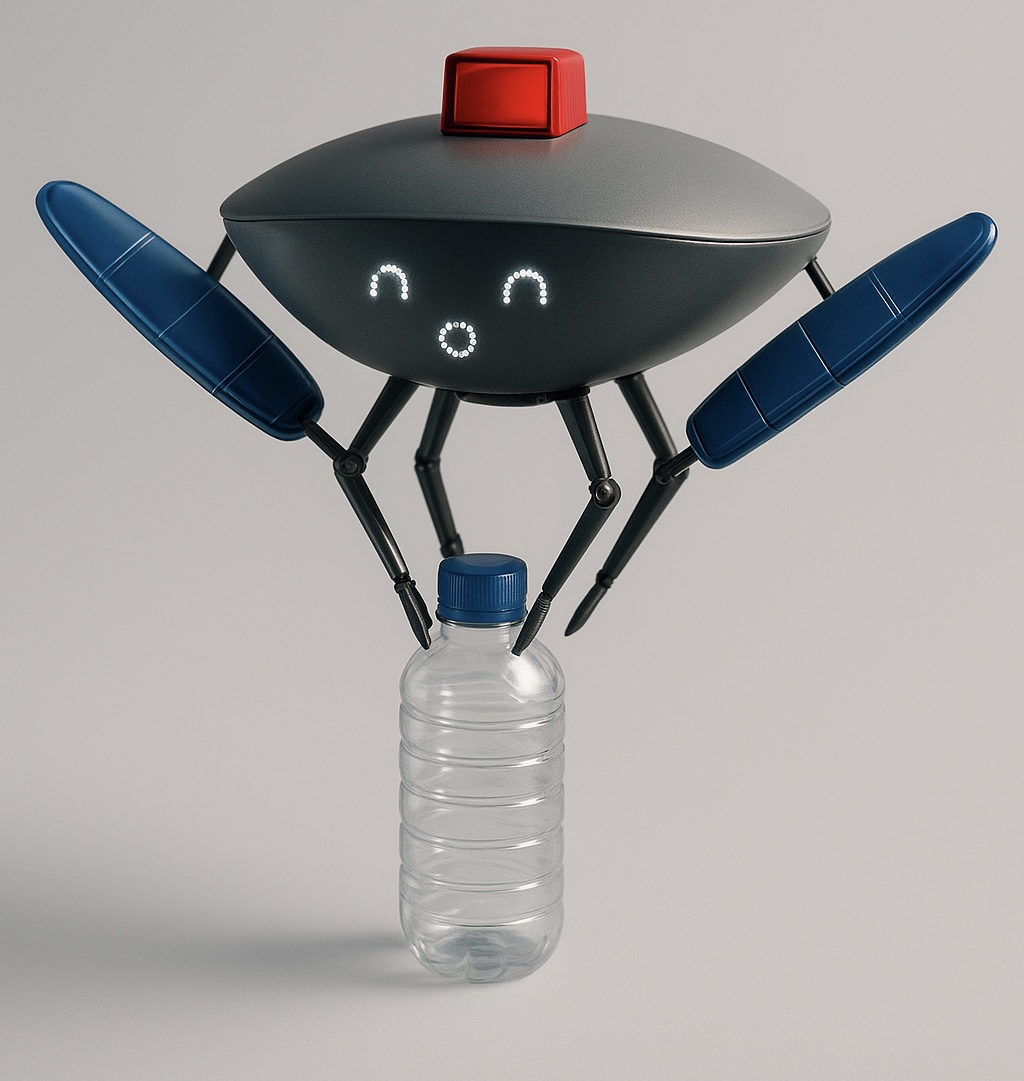
Inspiration: I was inspired by the growing problem of plastic pollution in our oceans. Seeing videos of fish trapped in plastic and coastlines covered with waste made me want to design a solution that not only protects marine life but also helps people. I imagined a robot that could act like a “guardian” of the sea, cleaning up trash while keeping humans safe.
What I Learned: Through this project, I learned how to connect human progress with protecting the planet. I explored ideas about renewable energy, AI, and even futuristic concepts like anti-gravity fields and quantum sensors. I also learned how important it is to balance creativity with practicality — creating something that’s both imaginative and meaningful.
How I Built It: I started by sketching ideas of a robot that could float in the ocean and collect plastic. Then, I designed a more detailed concept with features like solar panels for power, gripper legs to pick up trash, an emergency alarm system, and a friendly “micro face.” I turned my sketches into digital designs and created a pitch deck and video to show how the robot would work.
Challenges: One of the biggest challenges I faced was making my idea both futuristic and believable. At first, I wasn’t sure how to explain advanced features like anti-gravity hovering or quantum sensors, but I learned to present them as part of a visionary solution for the future. Another challenge was turning rough sketches into something professional-looking, but I overcame that by using design tools like Canva and AI.
Plastronix is more than just a robot — it’s a vision of how innovation can protect our oceans, safeguard human life, and create a cleaner, brighter future for our planet.
Built With
- ai
- canva


Log in or sign up for Devpost to join the conversation.