-
-
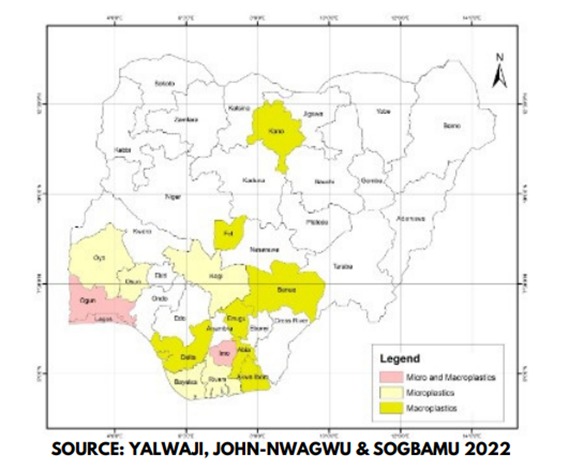
MAP OFMICRO ANDMACRO PLASTIC DISTRIBUTION IN NIGERIA
-
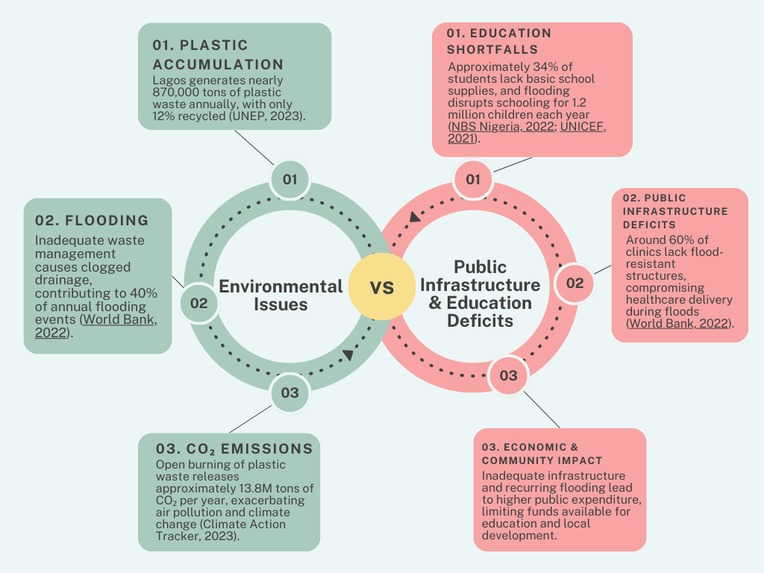
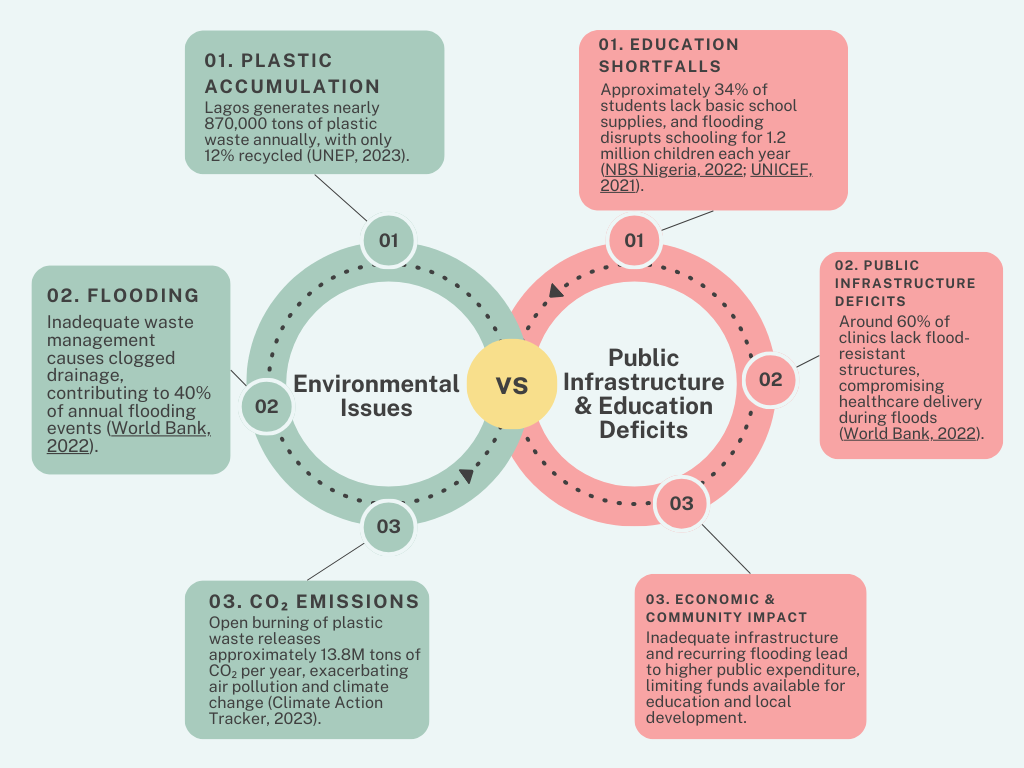
Circle Comparison Chart Environmental Issues and Public Infrastructure & Education Deficits Graph
-
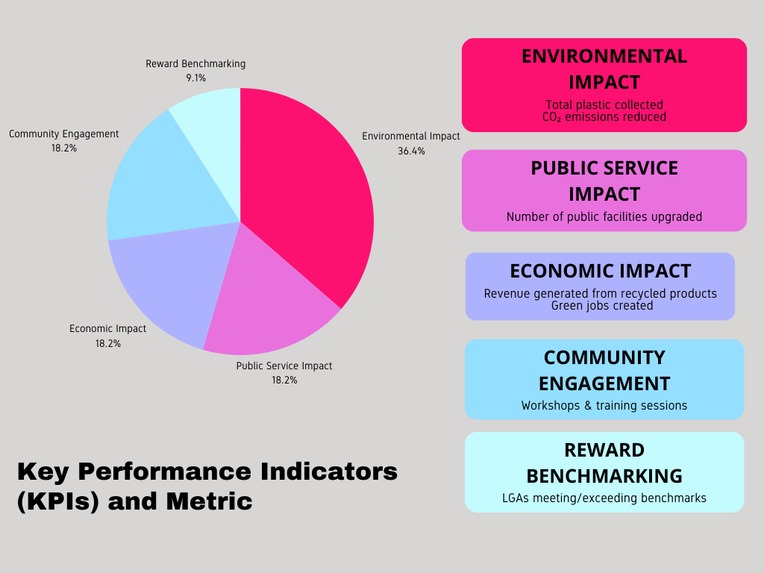
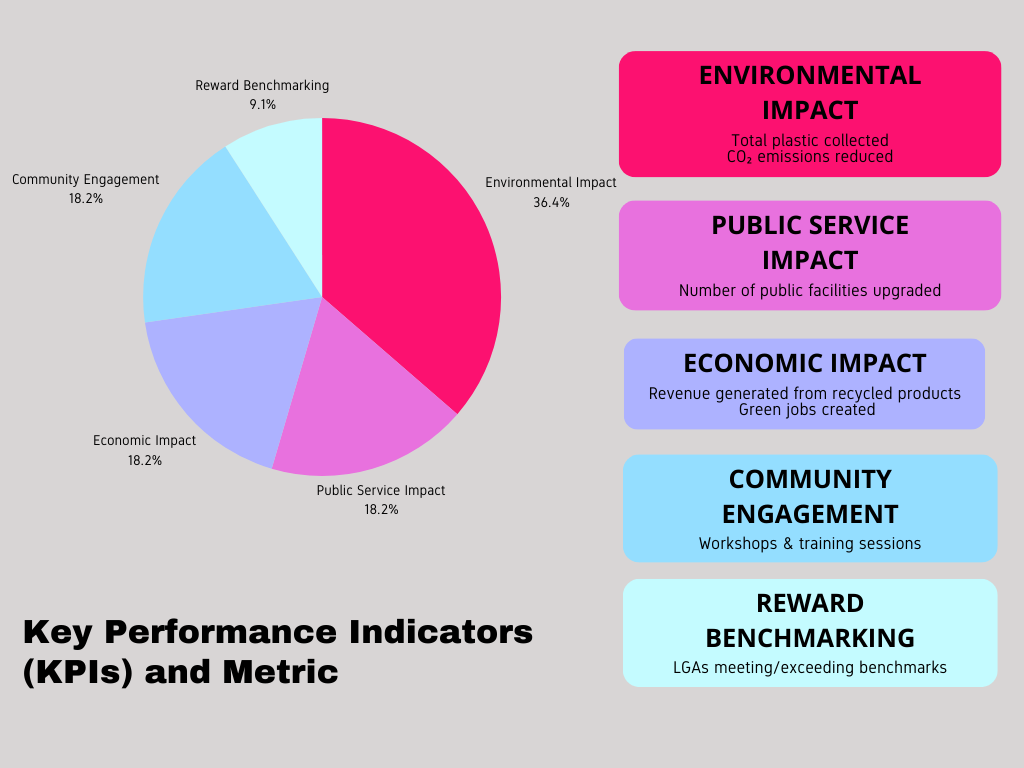
KPI break down
About the Project
Plastic to Progress is a solo project I developed to transform Lagos’ plastic waste crisis into a catalyst for public service improvements. My vision was to turn the environmental challenge of plastic accumulation into an opportunity for sustainable development by converting plastic waste into revenue that can be reinvested in upgrading public facilities such as schools, clinics, and sanitation systems. This project combines environmental cleanup, data-driven accountability, and community empowerment to make a tangible impact on urban resilience and quality of life.
Inspiration
I was deeply moved by the reality in Lagos: the city is overwhelmed by plastic waste with nearly 870,000 tons generated annually and only 12% recycled and flooding frequently disrupts daily life. At the same time, I saw how inadequate public infrastructure (with 60% of clinics lacking flood-resistant designs and 34% of students missing basic supplies) significantly affects community well-being and educational outcomes. Motivated by reports from UNEP, the World Bank, UNICEF, and NBS Nigeria, I set out to design a project that would address these intertwined issues by transforming plastic waste into a resource for community progress.
What It Does
The Plastic toProgress Initiative works by:
- Collecting Plastic Waste: Establishing collection hubs in selected Lagos LGAs to gather plastic waste from public areas and schools.
- Recycling & Revenue Generation: Processing the collected plastic into marketable products (such as recycled pellets and plastic bricks) using local recycling methods. This revenue is then reinvested in public infrastructure improvements.
- Public Service Improvement: Upgrading key public facilities such as building flood-resistant classrooms and health clinics using funds generated from recycling, thereby enhancing both educational and healthcare services.
- Data Transparency: Implementing a dual data-tracking system that uses blockchain for secure, transparent data logging and simple community reporting (via paper logs or SMS) to ensure accountability and reliable performance measurement.
How I Built It
As a solo researcher and project designer, I took the following steps:
- Extensive Research: I reviewed data from reputable sources such as UNEP, World Bank, UNICEF, and NBS Nigeria to understand the scale of plastic waste, its environmental impact, and the public infrastructure deficits in Lagos.
- Concept Development: I designed a model where plastic waste is collected at local hubs, processed into valuable products, and the revenue generated is reinvested into public services. I mapped out the entire process from collection and recycling to data tracking and revenue allocation.
- Data-Tracking System: I developed a conceptual framework for a dual tracking system combining blockchain for secure data verification with traditional methods for community-level reporting. This ensures transparency and builds trust in the process.
- Partnership Planning: Although the project is a solo initiative, I identified potential partnerships with local recyclers (such as Wecyclers) and government bodies (like Lagos SUBEB) as part of the scalability plan.
- Visual Aids and Metrics: I created detailed charts, flowcharts, and Gantt charts to visually represent the project timeline, funding breakdown, and data flow tools that would be essential for presenting this concept to stakeholders.
Challenges I Ran Into
Throughout the process, I encountered several challenges:
- Recycling Infrastructure Limitations: Ensuring that local recycling partners could handle the volume of collected plastic required careful planning and the exploration of multiple partnership options.
- Data Integration: Balancing advanced technology (blockchain) with low-tech reporting methods to maintain data accuracy was complex and demanded iterative refinement.
- Funding Uncertainties: Mapping out a sustainable funding model that combined corporate CSR, government grants, and crowdfunding was challenging but crucial for the project's viability.
Accomplishments That I’m Proud Of
Even as a solo endeavor, I achieved several key milestones:
- Robust Project Design: Developed a comprehensive model with clear KPIs and a scalable roadmap that integrates environmental, economic, and public service improvements.
- Innovative Data-Tracking Framework: Designed a dual tracking system that ensures transparency and accountability, combining cutting-edge blockchain technology with community reporting.
- Strategic Vision: Articulated a competitive reward branch for LGAs, creating a performance-based incentive model that aligns with Nigeria’s sustainable development goals.
- Visual Storytelling: Created detailed flowcharts, Gantt charts, and infographics that make the concept accessible and compelling to potential stakeholders.
What I Learned
Working on this project taught me that:
- Integration is Key: Addressing environmental challenges can have a multiplier effect when combined with improvements in public infrastructure and community engagement.
- Transparency Builds Trust: A dual data-tracking system is essential for ensuring accountability and gaining community support.
- Local Context Matters: Tailoring solutions to the specific challenges of Lagos such as frequent flooding and educational resource deficits makes the project more relevant and impactful.
- Sustainability is Multifaceted: Success requires a holistic approach that encompasses environmental cleanup, economic empowerment, and public service enhancement.
What’s Next for Plastic-to-Progress Initiative
Moving forward, I plan to:
- Pilot in Lagos: Launch the pilot project across selected LGAs in Lagos, using the developed model and data systems to prove its impact.
- Scale Up: Based on pilot success, expand the initiative to additional LGAs and eventually to other Nigerian states.
- Strengthen Partnerships: Actively engage with local recyclers, government bodies, and academic institutions to secure resources, technical support, and further funding.
- Enhance Impact Monitoring: Continuously refine the data-tracking system and performance dashboard to monitor KPIs and adjust strategies as needed.
- Share Best Practices: Document and disseminate lessons learned and successful models for broader application, contributing to Nigeria’s overall sustainable development agenda.
References:
- UNEP. (2023). Plastic Waste in Nigeria: A Ticking Time Bomb. UNEP Plastic Pollution
- World Bank. (2022). Urban Flooding in Coastal Megacities. World Bank Data
- Climate Action Tracker. (2023). CO₂ Emissions Data. Climate Action Tracker
- UNICEF. (2021). School Disruption Report. UNICEF
- NBS Nigeria. (2022). Education Gap Statistics. NBS Nigeria
This project represents my commitment to transforming a significant urban challenge into a sustainable solution that benefits the entire community. By integrating environmental cleanup, public service improvements, and transparent data management, I aim to make a lasting impact on Lagos’ future and ultimately, inspire change across Nigeria.
Built With
- canvas
- communication
- data
- documentcloud
- excel
- google-research-search
- visualization
- word


Log in or sign up for Devpost to join the conversation.