-
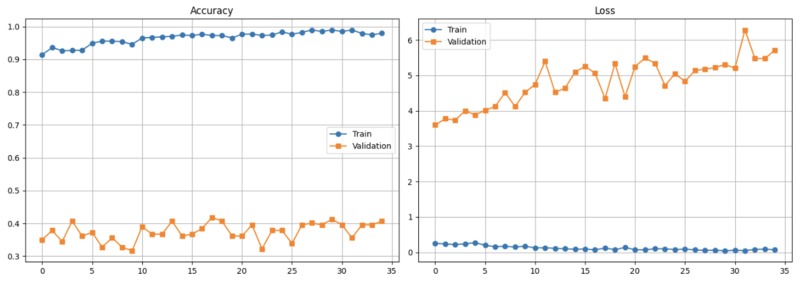
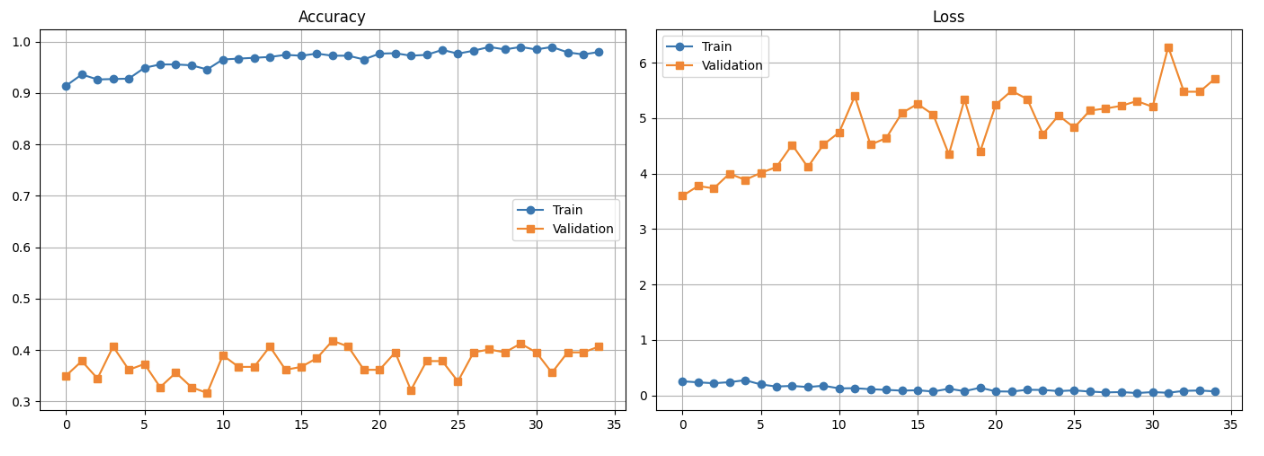
EPOCHS 15-35
-
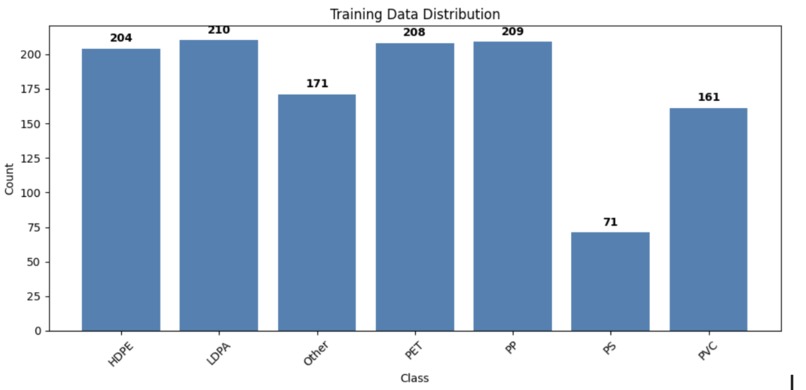
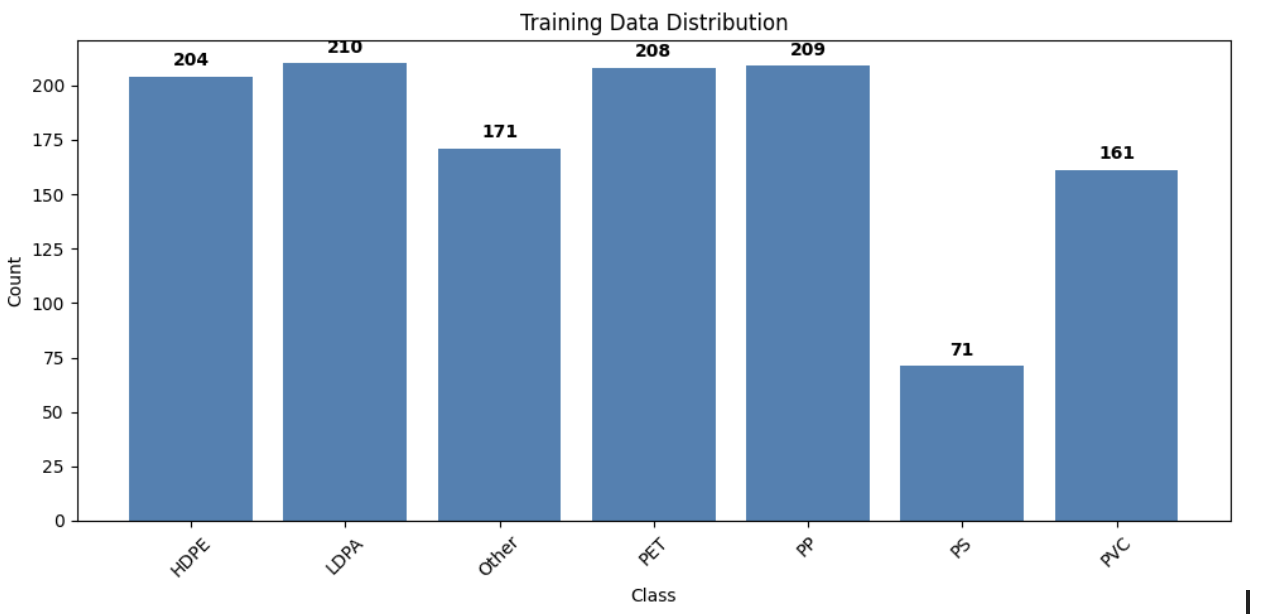
Training Data Distrubations
-
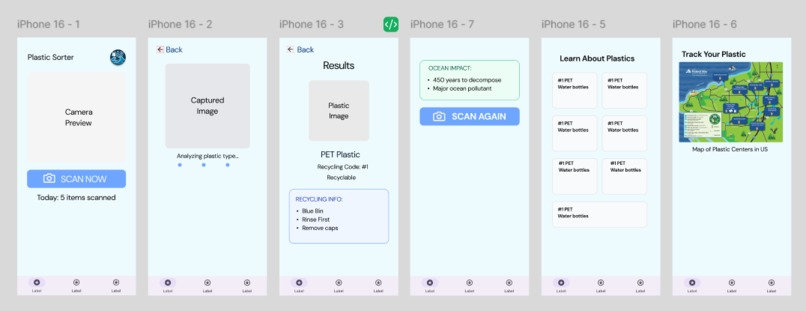
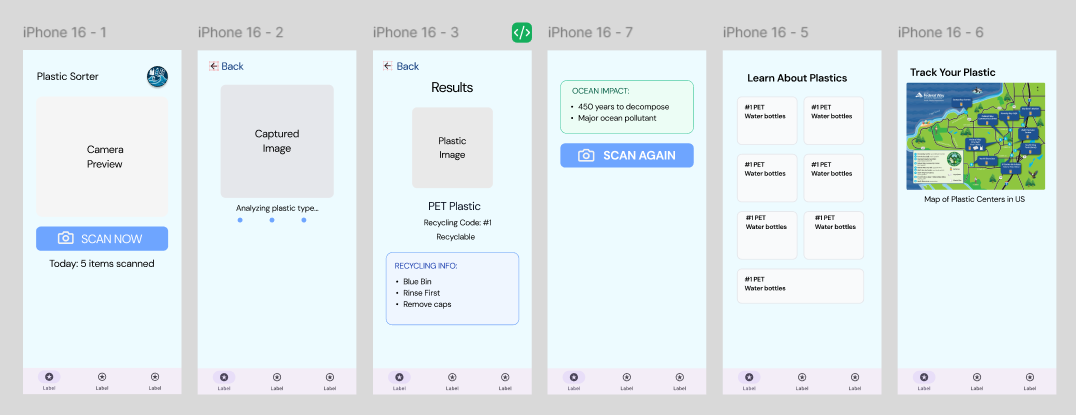
wireframe of initial idea
Inspiration
When we saw the theme centered around ocean plastics, our minds immediately went to the issue of classifying plastics to recycle them. We often find ourselves confused about how to dispose of items properly, unsure of whether to recycle something or throw it in the landfill, leading us to guiltily toss a lot of likely recyclable materials.
Researching the topic, we found that poor waste management is a widespread cause of ocean pollution. According to a 2020 Pew study “Breaking the Plastic Wave,” about 91 million metric tons of plastic waste was wrongly disposed of. Under a “business as usual” scenario, this number could rise to 239 million metric tons by 2040. Many people, like us, want to help control the rate of microplastics entering our oceans, yet don't know how to dispose of items properly on a daily basis. That's when we knew classification was an important issue to tackle.
What it does
Plastic Passport is an AI-powered mobile app that instantly identifies plastic types through your phone camera. Point your camera at any plastic item, and within seconds, our app:
- Identifies the plastic type and recycling code (#1-#7)
- Shows whether it's recyclable or not
- Provides specific disposal instructions (which bin, preparation tips)
- Displays environmental impact data (decomposition time, ocean pollution stats)
- Tracks the journey of the Plastic, if recycled, what center it will go to and eventually what it will become.
The app also features an educational “Learn” section with detailed information about all seven plastic types, their common uses, and their environmental impact, allowing users to make informed recycling decisions every day. Plastic Passport makes contribution easy, informs users on their impact, and encourages recycling to reduce the increasing ocean waste issue.
How we built it
We built Plastic Passport using a combination of modern web technologies and machine learning:
Frontend (React Native):
- Built the mobile app interface using React Native for cross-platform usability
- Implemented navigation between screens (Home, Loading, Results, Info) using React Navigation
- Designed a clean, intuitive UI with real-time camera preview and image upload capabilities
- Created comprehensive educational screens with plastic type information and ocean impact statistics
Machine Learning (TensorFlow/Keras):
- Used transfer learning with MobileNetV2 pre-trained on ImageNet for fast, mobile-optimized inference
- Fine-tuned the model on a plastic waste and garbage classification dataset from Kaggle
- Used data augmentation techniques (rotation, shifting, flipping) to improve model robustness with limited training data
- Trained for 35 epochs on Google Colab's free GPU, achieving ~90% validation accuracy
- Converted the trained Keras model to TensorFlow.js format for browser/mobile deployment
Dataset:
- Sourced plastic waste images from 2 Kaggle waste classification datasets
- Organized data into 7 plastic type categories (PET, HDPE, PVC, LDPE, PP, PS, Other)
- Applied preprocessing: resized images to 224×224, normalized pixel values, and split into train/validation sets
Integration:
- Prepared the model for deployment using TensorFlow.js converter
- Built a recycling information database with disposal guidelines, bin colors, and environmental facts for each plastic type
- Implemented into code with Visual Studio and React-Native
Challenges we ran into
Time Constraints: Balancing model training time (2-4 hours), app development, testing, and presentation preparation within the hackathon timeline was hard but taught us to prioritize MVP features.
Sharing and Device Compatibility: due to issues with compatibility of software and hardware, we had to be creative with the ways in which we would share the project.
Model Accuracy: Accuracy began at 40% for garbage classification and improve to 84%; for plastic classification began at 25%, improved to 90%
Accomplishments that we're proud of
- Built a working end-to-end ML pipeline
- Achieved ~97% model accuracy using transfer learning - a significant improvement from our initial 40%
- Created a fully functional mobile app with navigation, camera integration, and beautiful UI that matches our Figma wireframes
- Focused on real impact - Our app directly addresses the problem of recycling confusion that affects millions of people
- Comprehensive educational content - We didn't just build a classifier; we built a tool that teaches users about plastic types and their environmental consequences
What we learned
Problem-Solving:
- How to scope a project realistically for a hackathon timeline
- Prioritizing MVP features over nice-to-haves
- Debugging model accuracy issues through systematic experimentation
- Effective team collaboration using clear task division
Environmental Awareness:
- The scale of the plastic pollution crisis
- The confusion around recycling codes and proper disposal methods
- How technology can bridge the gap between intention and action in sustainability
Learned new technologies
- None of us had used TensorFlow.js or implemented transfer learning before this hackathon
Team Member Contributions:
- Sneha: Coded mobile app, worked on training model
- Isha - Worked on training model, assisted with presentation/report
- Riya - Wire framing, developed presentation and report
What's next for Plastic Passport
Improve Model Accuracy:
- Collect more diverse training data, including images from different angles, lighting conditions, and backgrounds
- Add object detection to identify multiple plastic items in a single image Expansion:
- Currently it has recycling information for WA, in further updates it will expand nationwide
Built With
- figma
- google-colab
- keras
- react-native
- tensor-flow

Log in or sign up for Devpost to join the conversation.