-
-
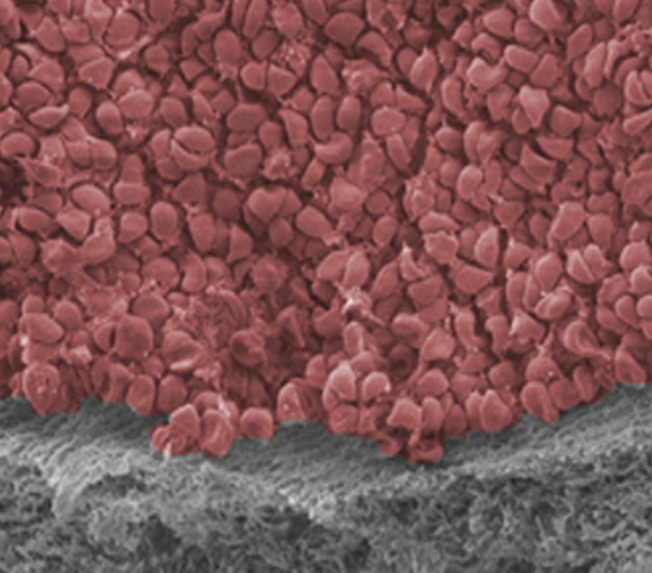
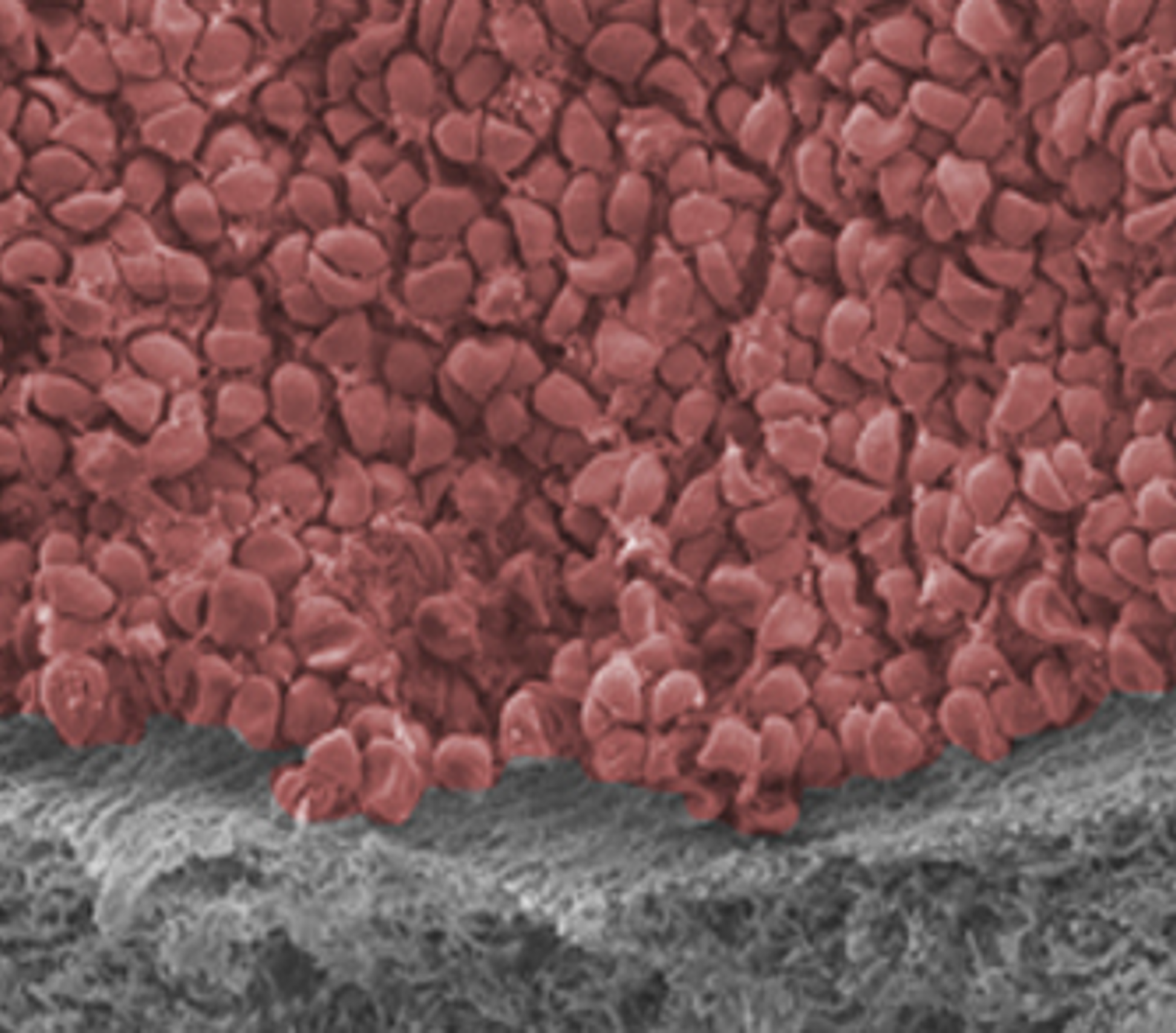
Plasma seeps through the fibre pores, but red cells remain inside.
-
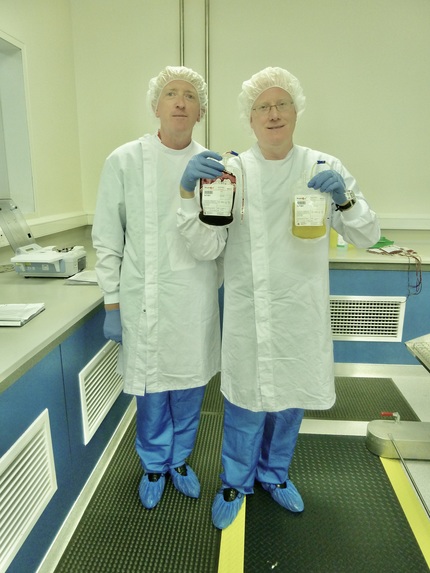
Gravity Separation in less that 60 minutes
-
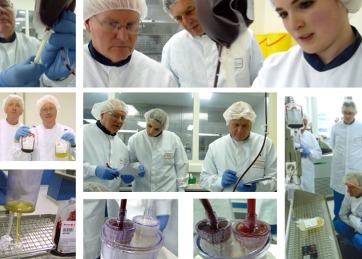
Testing Prototypes of Convalescent Plasma gravity-driven plasmapheresis system
-
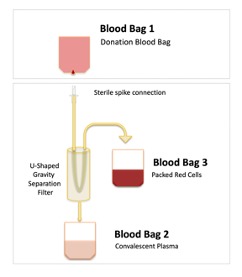
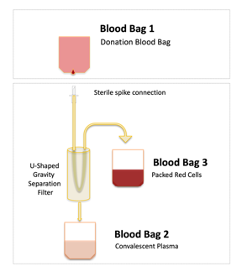
Design Schematic for the PlasmaNua - gravity-driven Plasmapheresis system
-
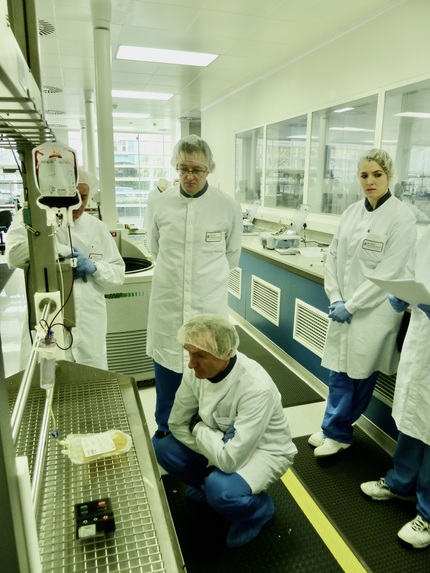
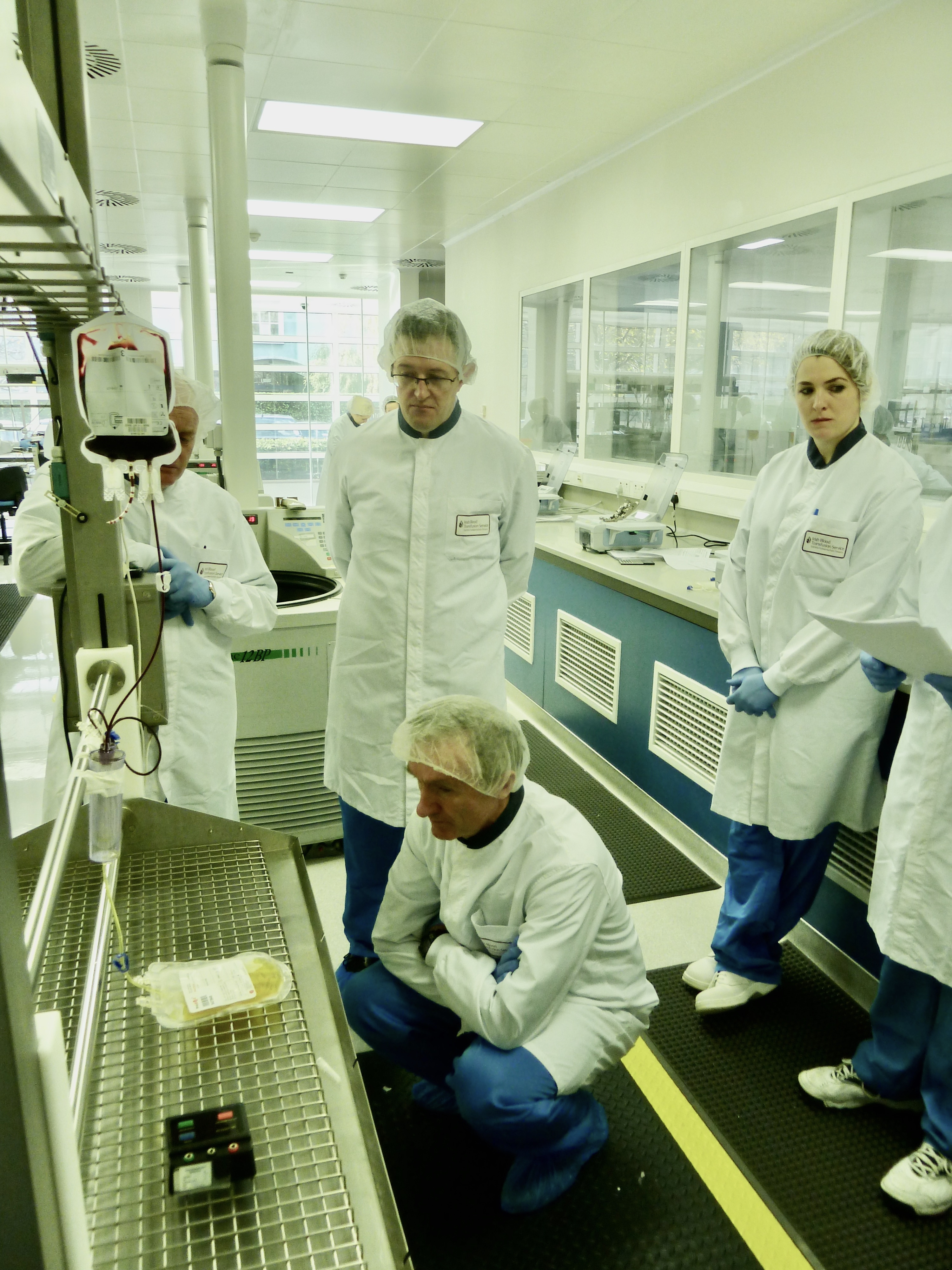
Checking prototype performance
-
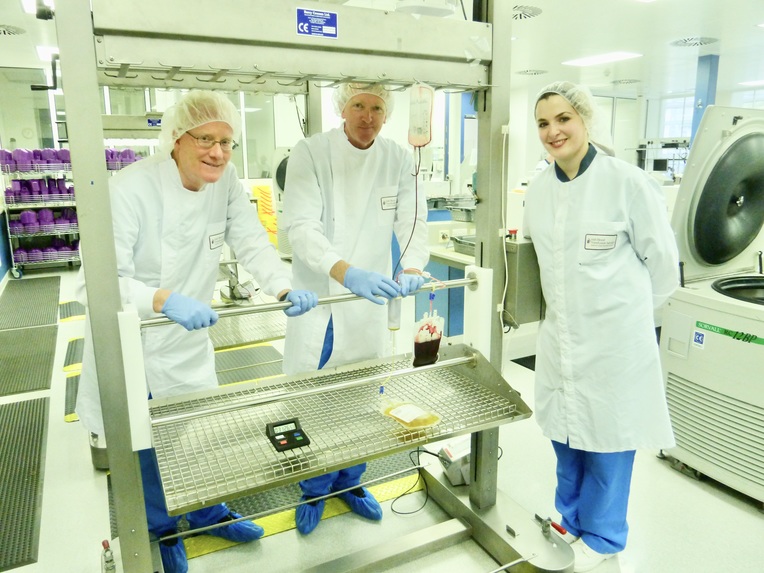
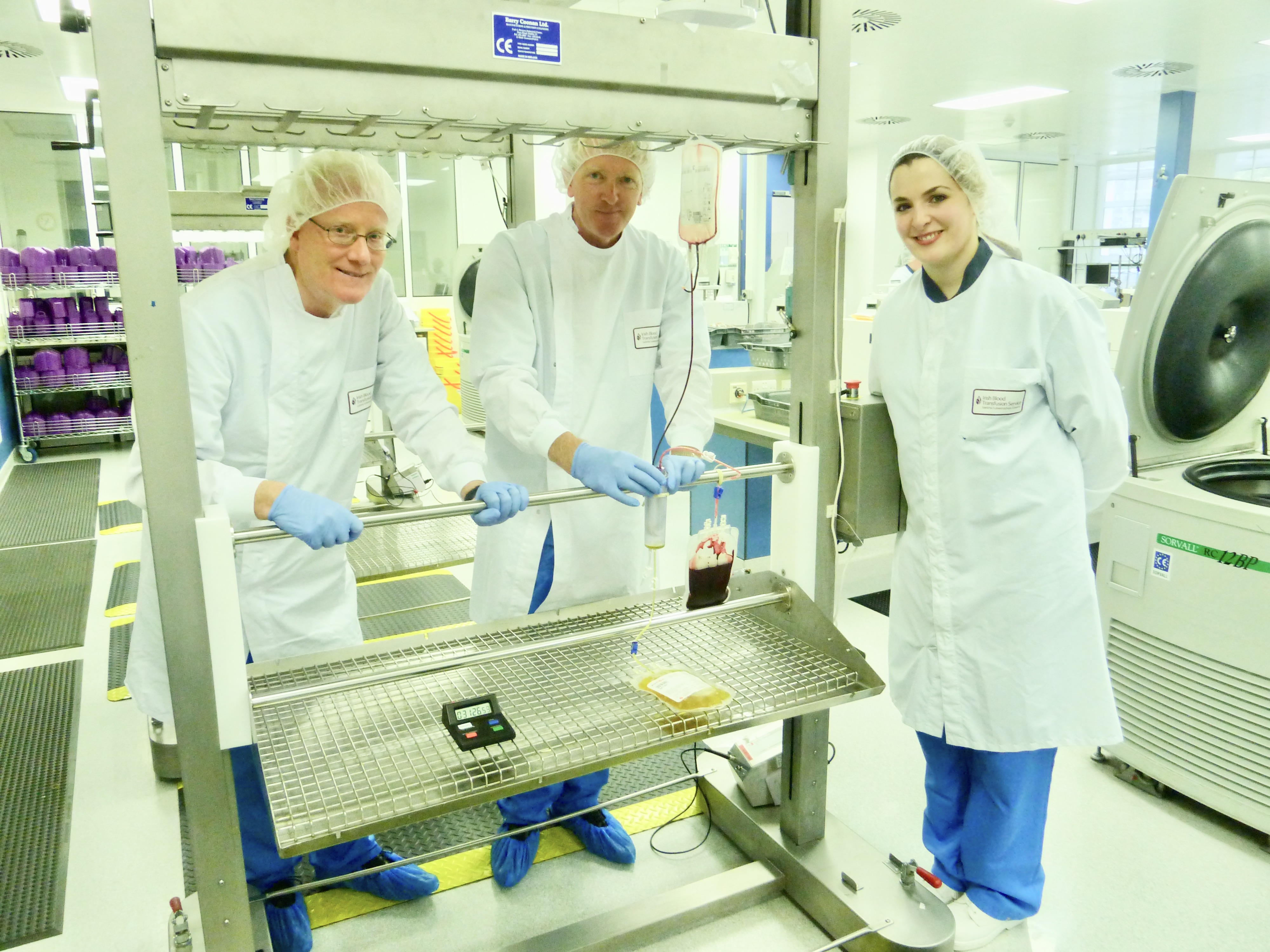
Testing complete.
Inspiration
With no vaccine or approved drugs for treatment, researchers globally are focused on the potential of convalescent plasma to treat seriously ill patients. Convalescent plasma collected from individuals who have recovered from COVID-19 may contain high antibody titers to SARS-CoV-2. Initial results are showing improved outcomes and no adverse events. In the EU we have the COVID-19 convalescent plasma collection and transfusion programme. The FDA is facilitating access to COVID-19 convalescent plasma for use in patients with serious or immediately life-threatening COVID-19 infections through the process of a single patient emergency IND (eIND).
So if convalescent plasma proves to be therapeutically significant, how can we can we make convalescent plasma globally available, most importantly - in the developing world? The challenge will be collection, testing, and administration of convalescent plasma in remote field hospitals when all our logistics in the developed world is optimised for centrality. We have seen in Italy, that even in the most modern of healthcare systems, overload can stress a system beyond any of its planned scenarios. Like any emergency situation the ability to be equipped locally is crucial to a rapid response in a life threatening situation. This proposal is about collecting and deploying convalescent plasma locally!
What it does
To collect and deliver convalescent plasma in remote locations, this project proposes a single-use disposable gravity-driven blood processing system delivering convalescent plasma ready for immediate deployment within a time-frame of 90 minutes or less. The system acts as a donor collection, a blood separation system and a donor return system all in a disposable single unit.
What is unique about this system is that it will allows a remote medical team to select a donor from their local registry of convalescent patients, and to deliver timely therapeutic benefit to a seriously ill local patient. When available, emergency doctors will be able to think on a one-to-one basis for convalescent therapy, whereas today’s reality is that they are distanced from the centralised blood bank, which is managed on a volume basis, dependent on the logistics of blood drives, and limited in its geographic reach.
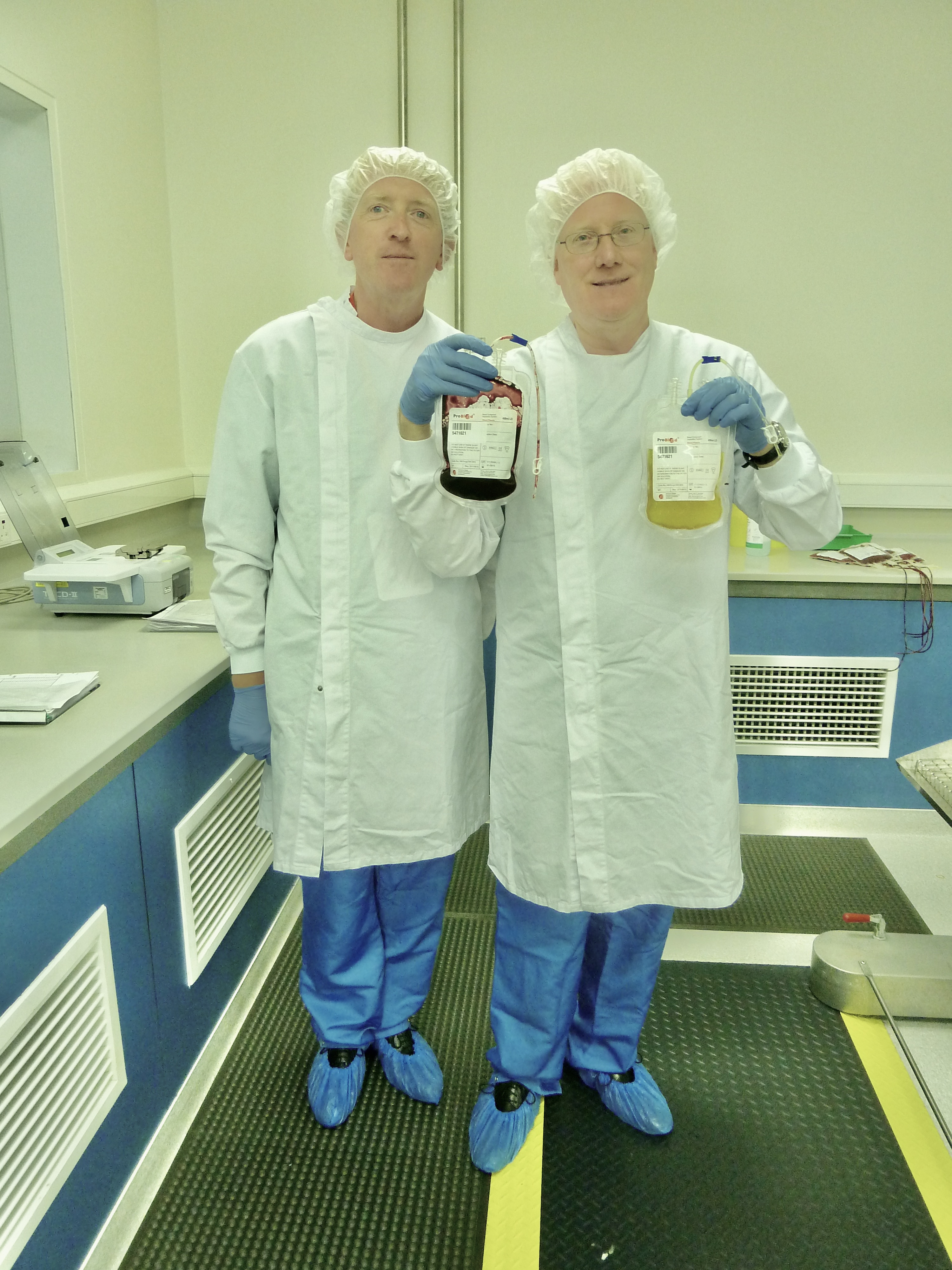
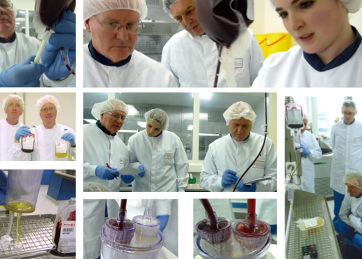
Our proposed PlasmaNua system ( Nua is the Irish word for new), consists of a gravity-driven blood separation membrane filter connected with a spike connector to access the donor blood, and has two attached blood bags, one to collect the convalescent plasma, and the second to collected the packed red blood cells for immediate re-transfusion to the donor. (see images of both prototype and actual experiments proving the concept in 2014.)
How we built it
This proposal is a humanitarian project standing on our team’s collective experience in the development of blood separation technology. The original gravity-driven loop filter was developed 20 years ago in Germany, and subsequently developed through a range of initiatives where the lead promoter of this project held key responsibilities.
The arrival of COVID-19 has triggered our team's insight that an ebola variant we prototyped with the Irish Blood Transfusion Service in 2014 can now be adapted as a solution to deliver convalescent plasma into the most remote corners of the developed and developing world.
Our team consists of respiratory and transfusion medicine experts in both Ireland and Germany, as well as medical engineers familiar with membrane technology. We designed and tested prototypes in 2014 for convalescent plasma collection for ebola with Ireland National Blood Transfusion Service (see video). In parallel, we did significant testing of the gravity filter technology with the Institute for Clinical Transfusion Medicine in Braunschweig, Germany, and also in the Netherlands.
Challenges we ran into
The key challenge for our team pivots on whether convalescent plasma will prove to be therapeutic for COVID-19. If it is , then we have the capability of delivering a unique solution of impact and significant potential, in the developing world. So our key questions to ourselves are as follows :
A) Is convalescent plasma effective ? (Wide range of global studies underway) B) If so, in what dosage ? C) Who is the ideal donor ? Seems to depend on how long after recovery? D) Is there any local herd immunity that would suggest that a local donor is best for a local patient ? E) Should there be a post-processing of plasma to concentrate antibodies ? If so, then our solution may need extra steps.
However, if the answers to the above questions suggest that one unit of plasma from one unit of donor blood contains sufficient dosage to be administered, then our team can propose a very innovative and inexpensive GRAVITY-DRIVEN PLASMAPHERESIS SYSYEM.
Accomplishments that I'm proud of
Although we did not get chance to advance our ebola solution in 2014, I am very proud of our team and the collective effort and ambition of our company Hemanua, now dissolved, whose core mission was to bring life-saving red blood to the developing world addressing maternal mortality. It is the outcome of that dedicated effort and research over many years, which allows our team to propose a unique humanitarian solution, PlasmaNua, to deliver convalescent plasma to remote and emergency settings in both the developed and developing world.
What I learned
That no effort focused on a global humanitarian challenge is ever wasted !!!
What's next for PlasmaNua
We are pulling together a team to create, build and test a set of 10 prototypes of the PlasmaNua system. We are negotiating with the medical membrane manufacturer to partner with us on this journey, albeit commercially. We are not waiting for a vaccine - we need to progress the availability of convalescent plasma regardless. The developing world may have no options should COVID-19 turn rampant.
Built With
- passion
- persistence
- pragmatism
- team


Log in or sign up for Devpost to join the conversation.