-
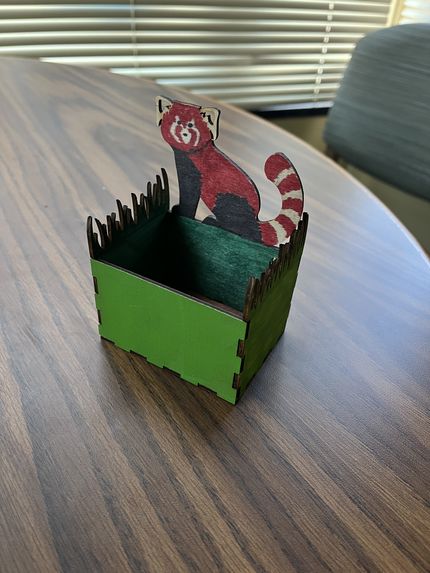
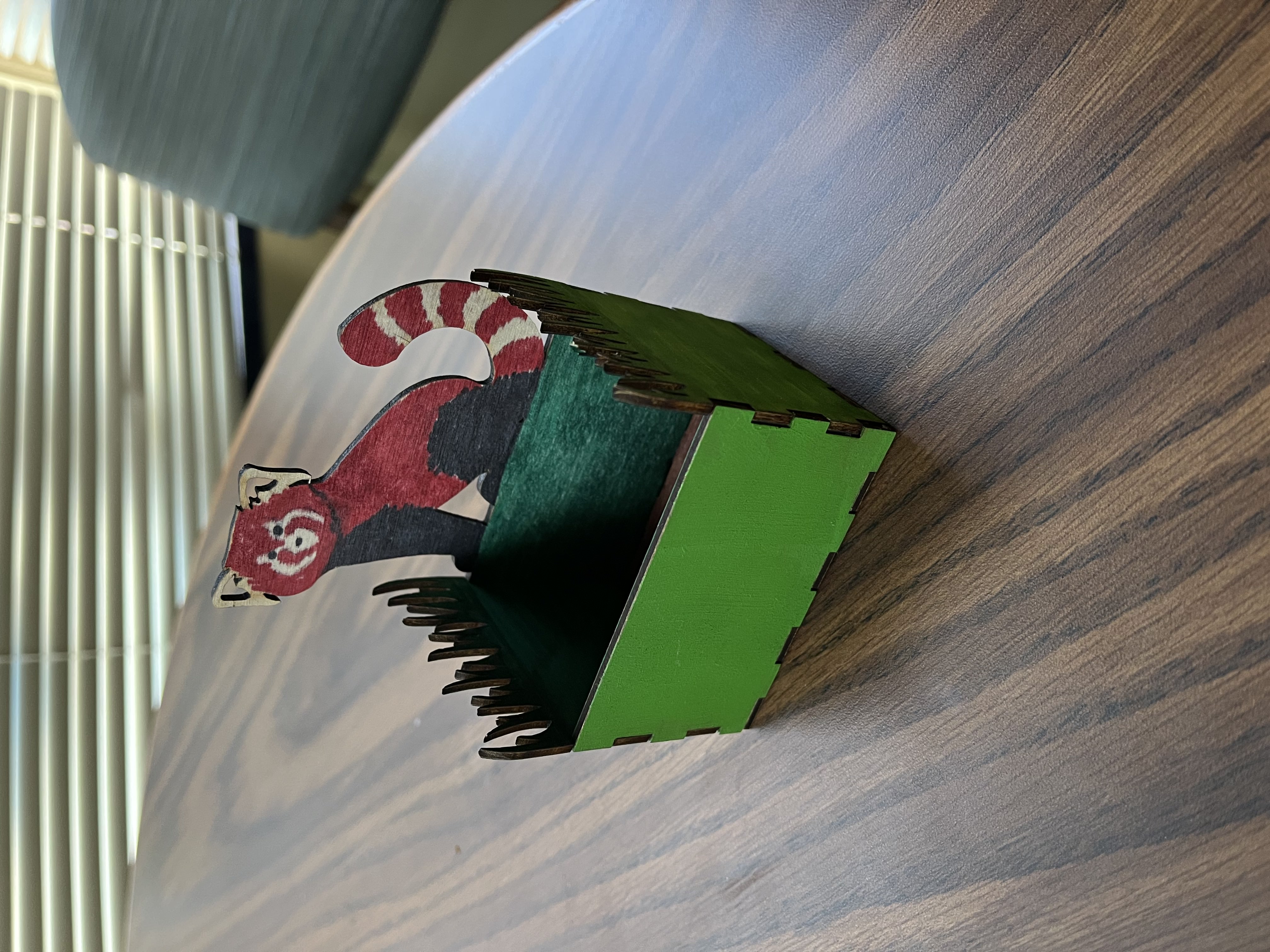
The finished red panda box
Inspiration
All three of us are avid animal lovers, with one of our favorites being the red panda. I (Jeffrey Pan) love Red Pandas so much that my phone lock screen is an image of two red pandas high fiving (or possibly fighting) each other. Because of our love for this animal and environment, we wanted to combine the two fields into a singular product. We decided to create something sustainable, biodegradable, and cute enough for others to purchase, and this originally started out with the idea of red panda pendants or buttons. However, we eventually settled on creating an adorable red panda plant box for anyone from avid green thumbs to regular office workers with a desk fern.
What it does
The plant box in its current form contains any soil and fertilizer necessary for the plants, and it provides a way to leak any excess water out of the bottom to avoid drowning plants. Beyond containment, an automatic watering system and adjustable shading are top priorities for future improvements for the Plant for Pandas Box functionality.
How we built it
The first step in building the plant box was finding suitable images to base the outline of the red panda and grass on. After finding images, these were converted into .dxf files using InkScape, then SolidWorks parts to add on the walls, and finally into .dxf files again to be laser cut. The sides were carefully designed into an interlocking pattern, with a SolidWorks assembly verifying the lack on any collisions between walls and designs.
To physically create the box, the generated dxf files were laser cut into thin plywood. After a quick check to ensure the pieces fit, all the pieces were colored in and glued together using traditional superglue.
Challenges we ran into
When building a physical product rather than a software based project, the main issue we ran into was sourcing materials for what we wanted to do. The materials and equipment necessary to easily create buttons and pendants were not available, making this one of the reasons for the pivot. Furthermore, the large sheets of wood required to create the desired box size were also unavailable. We had to make use of the given materials while scrapping together our own supplies to create a respectable project.
Accomplishments that we're proud of
We're proud of the speed in which we were able to put together a project. We went into this hackathon without any idea of what we would be building. However, we were able to ideate, design, and construct a physical product within a timespan of less than ten hours. This fast development timeline is something that we're definitely proud of.
What we learned
We learned that planning for physical projects is key, as sourcing materials will always be the most challenging portion. If all the materials and equipment is present, actually designing, prototyping, and constructing becomes far easier.
What's next for Plants for Pandas
More options! We want to add different sizes, background animals/designs, and anything else sustainability related to help pass the word with these pots. Even in public, do not be afraid to show off the panda box to get more orders and possibly fund a self-regulated water feed system.
Built With
- inkscape
- laser
- solidworks
- trotec

Log in or sign up for Devpost to join the conversation.