-
-
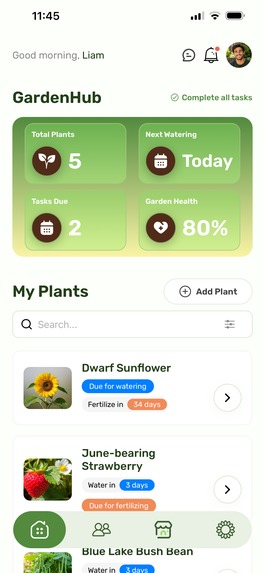
Your entire garden. One place
-
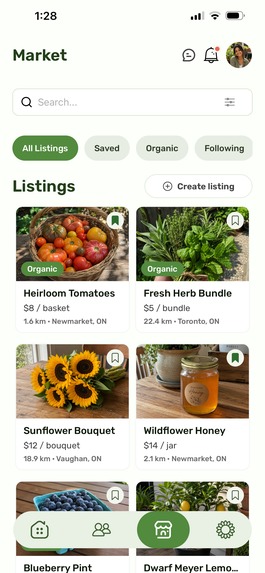
Buy and sell locally
-
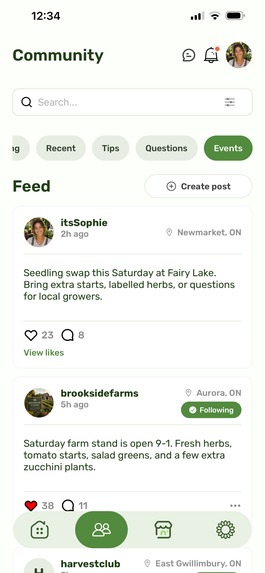
Grow with your community
-
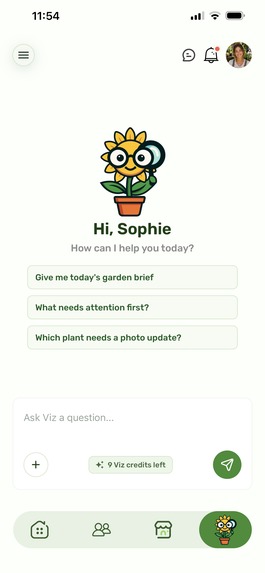
Ask Viz about your garden
-
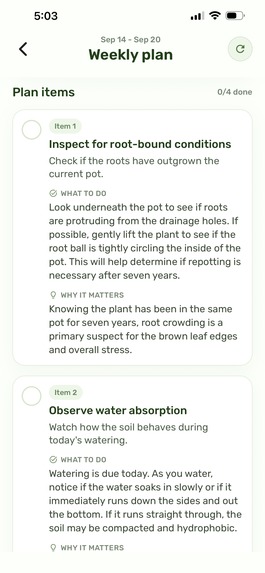
Get personalized weekly plans
-
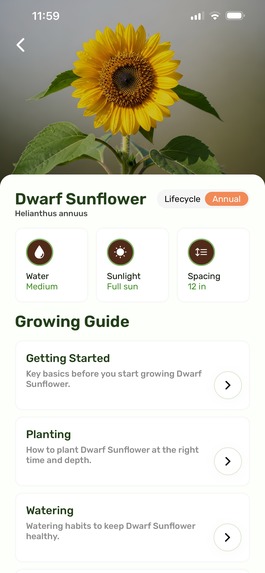
Follow step-by-step grow guides
Inspiration
Plantivision began with a simple belief: growing food should feel accessible, even if all you have is a windowsill, a balcony, or a small backyard.
Over the past two years, that idea became deeply personal. I built Plantivision while working full-time, navigating major changes in my life, and learning what it means to keep showing up for something before there is any guarantee it will succeed. There were late nights, financial sacrifices, technical setbacks, and—if I am being honest—a little hair loss along the way.
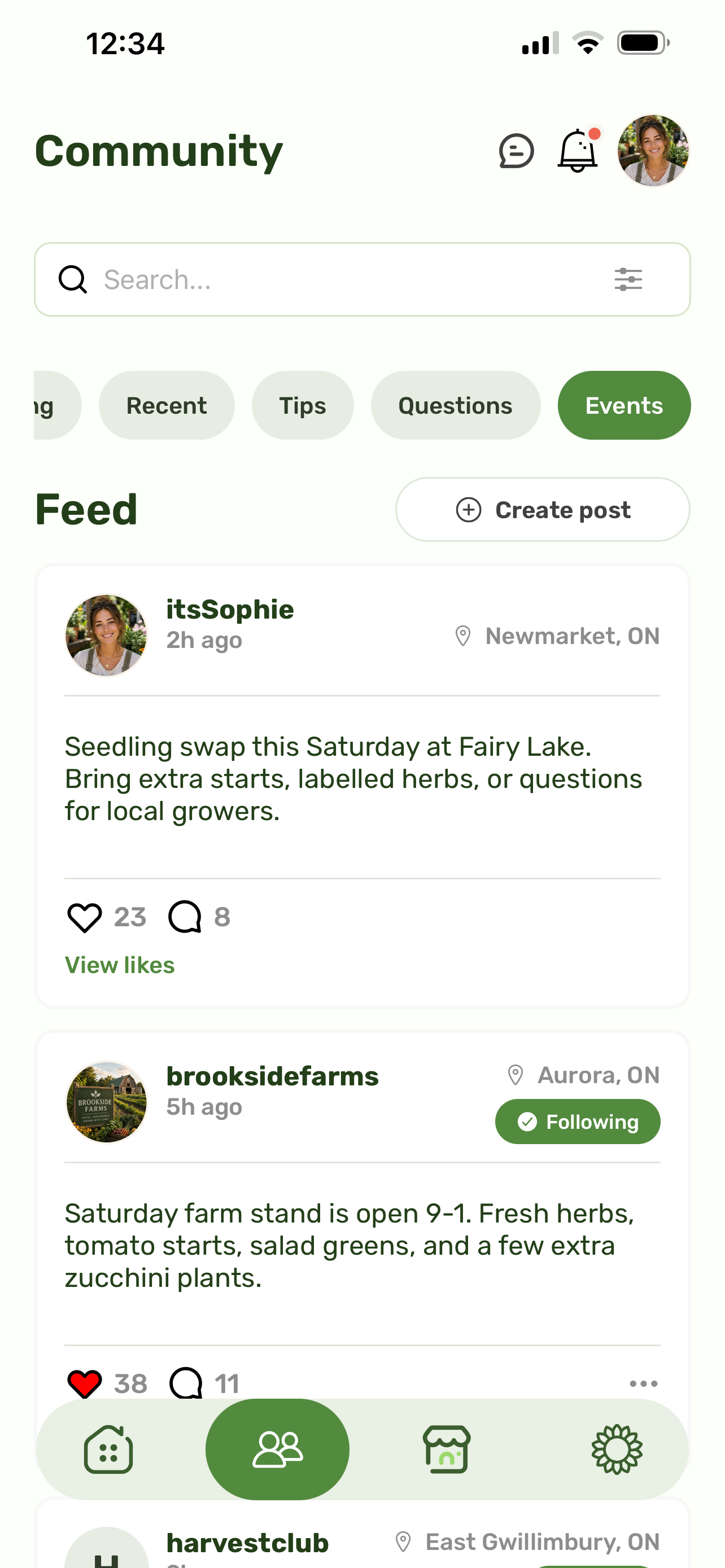
At the same time, food prices continued to rise and people seemed increasingly disconnected from where their food came from—and from one another. I began imagining a platform where new gardeners could confidently grow their first tomato, experienced growers could share what they know, farms could connect directly with their communities, and neighbours could buy, sell, trade, and share what they grow.
That vision became Plantivision: technology designed not only to help people grow plants, but to help communities grow closer together.
What it does
Plantivision brings plant care, local discovery, and community into one app.
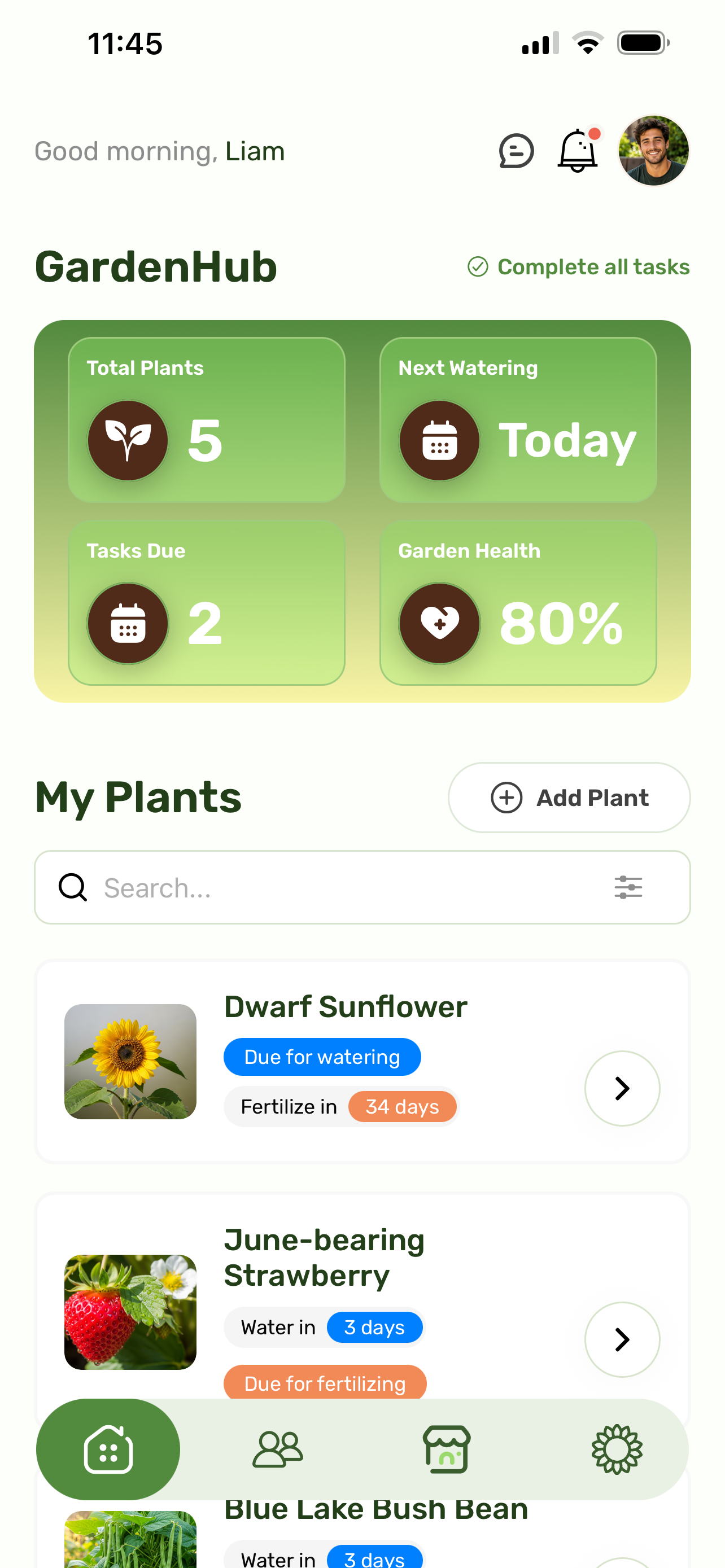
Users can create a digital garden, track their plants, record progress through photos and journal updates, manage care tasks, and receive personalized guidance based on what they are growing.
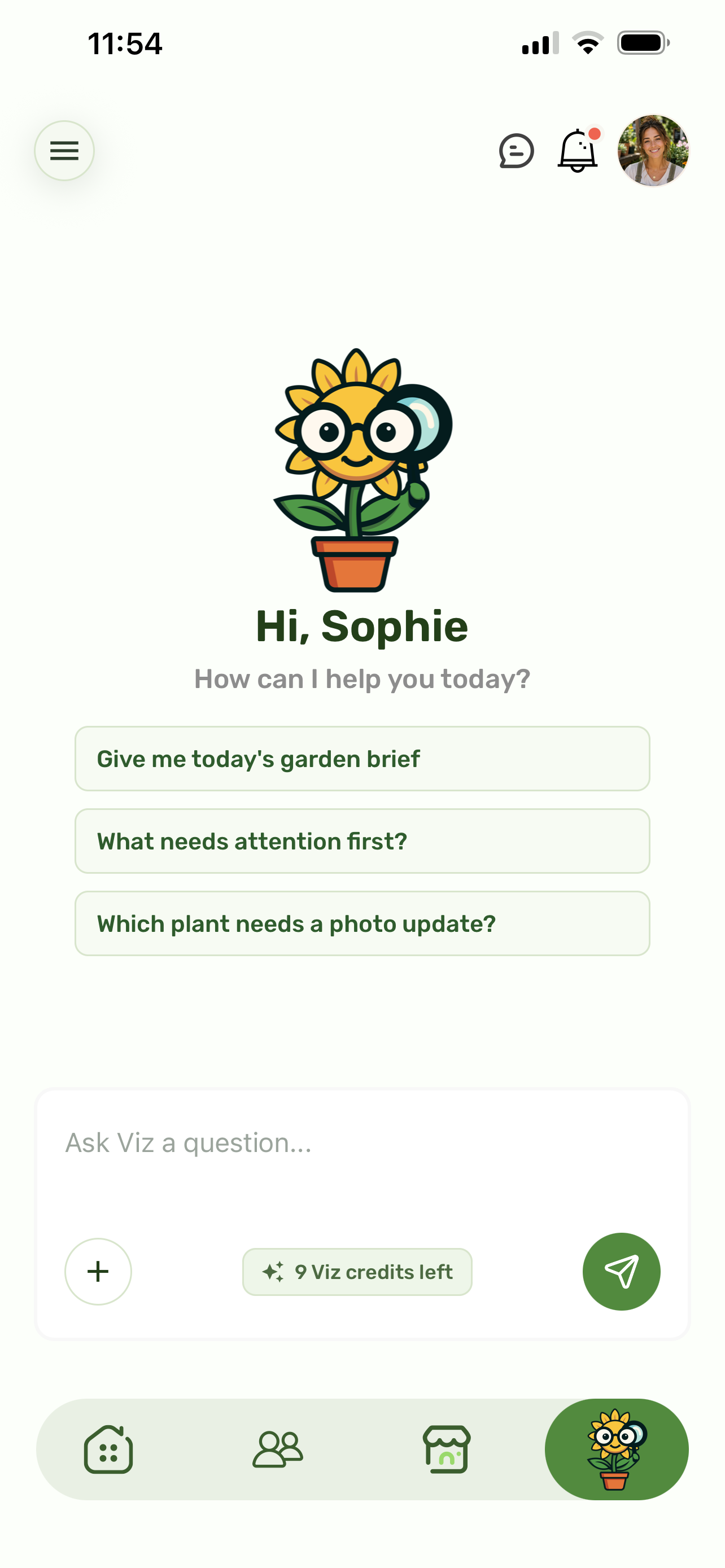
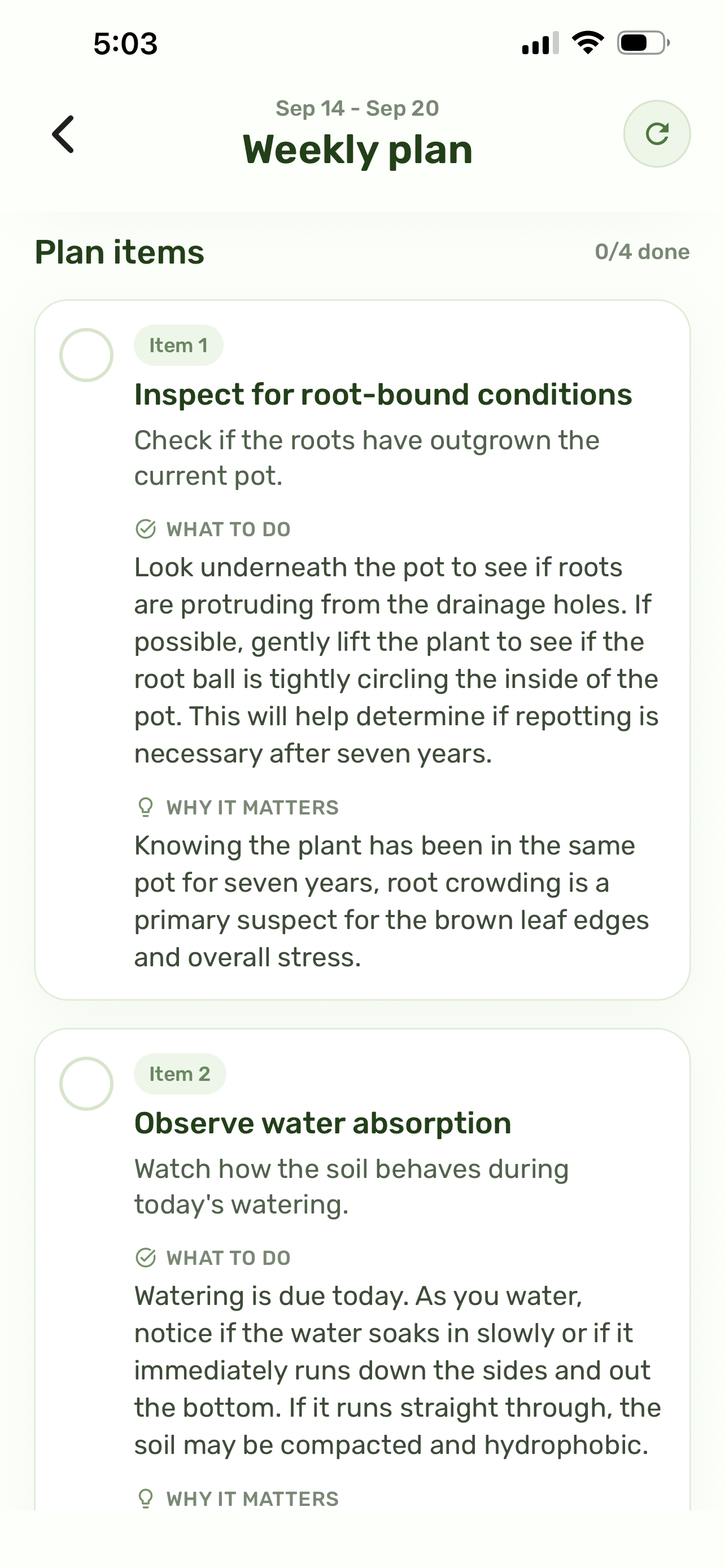
At the centre of the experience is Viz, Plantivision’s AI garden companion. Viz can use information about a user’s plants, growing stage, location, tasks, previous updates, and photos to provide relevant guidance rather than generic gardening advice. Viz can also create personalized weekly plans, assess how a garden is progressing, identify what may need attention, and turn its recommendations into actionable tasks.
Beyond plant care, Plantivision allows people to:
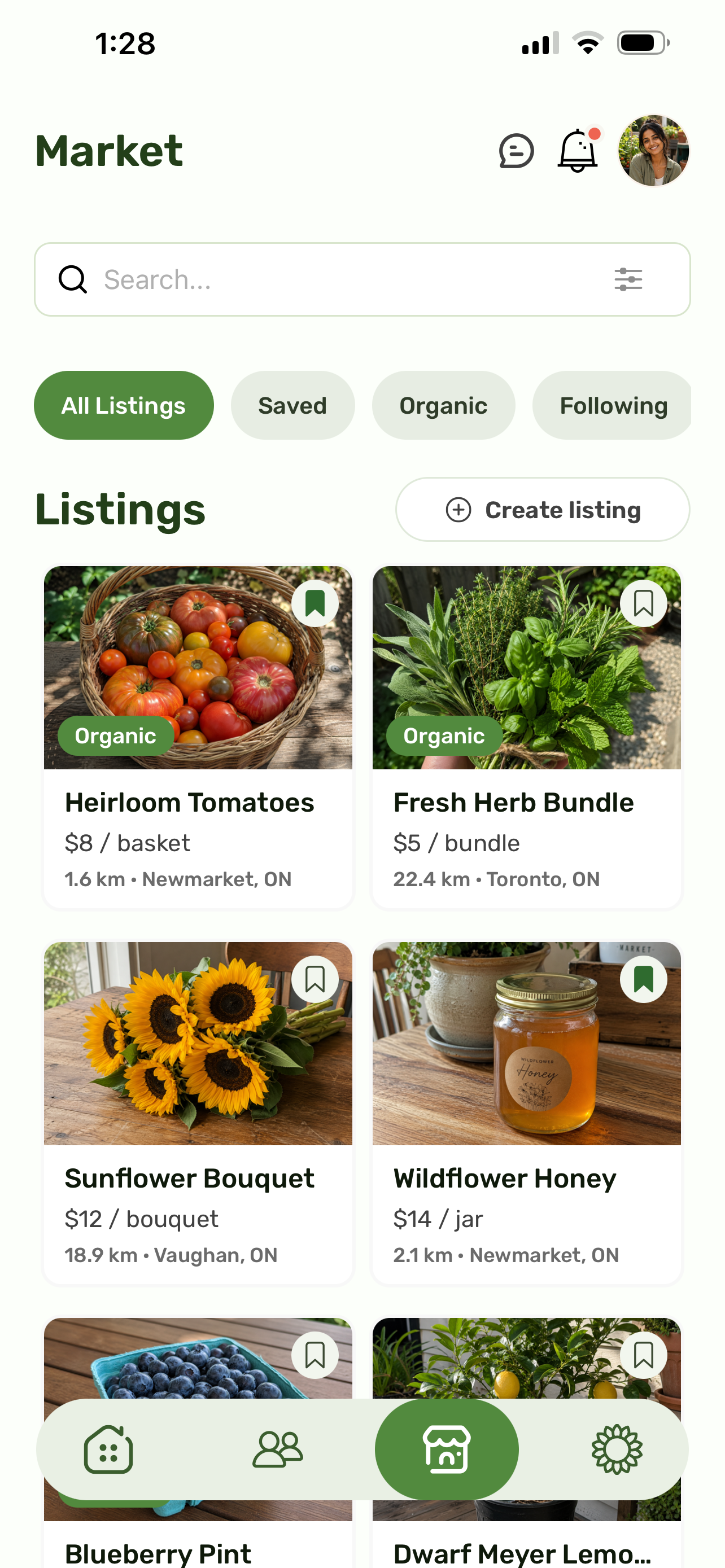
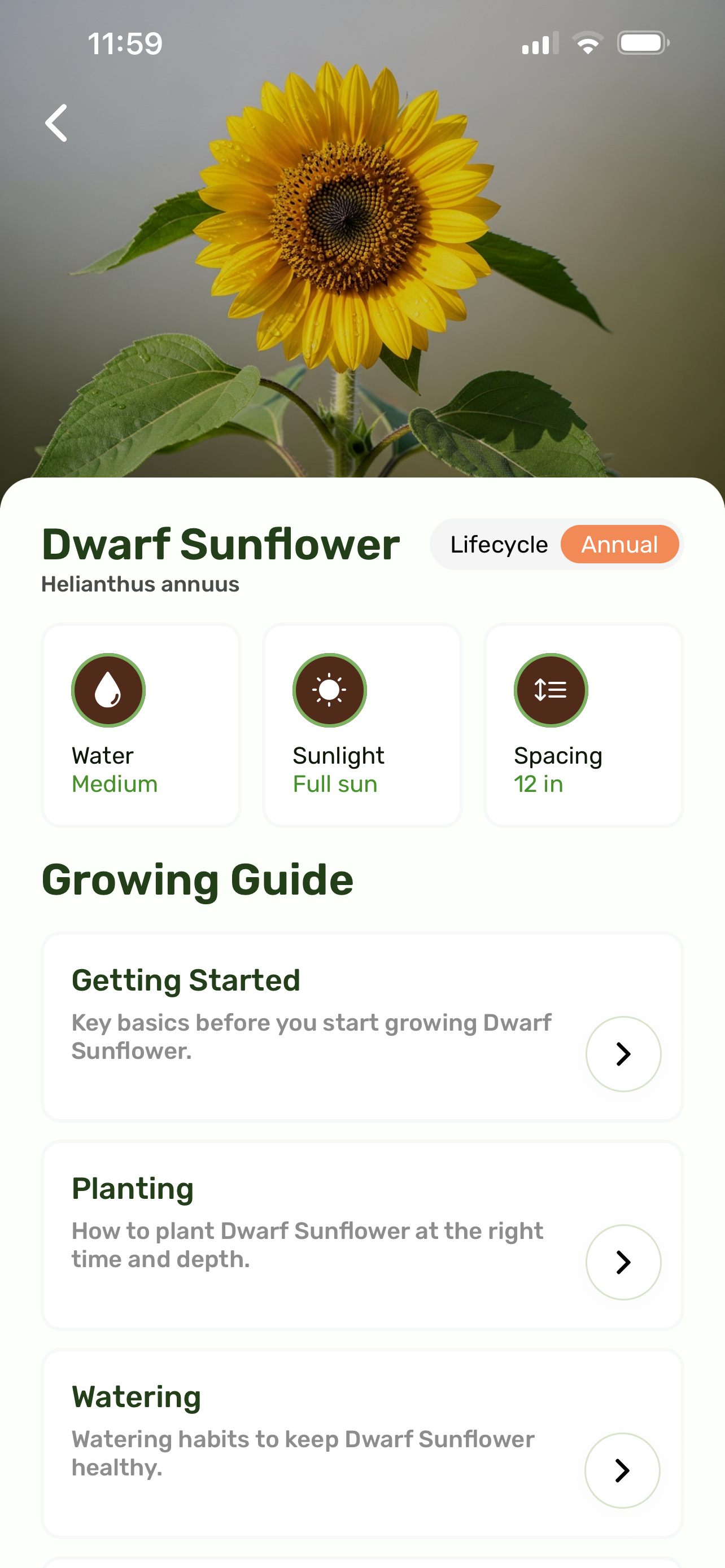
Discover and follow nearby growers Share garden updates and learn from others Find plants, seeds, produce, and locally made goods Create local marketplace listings Access growing guides and personalized garden insights Connect with farms, greenhouses, community gardens, and hobby growers
The long-term goal is to create a connected growing ecosystem—from discovering a seedling at a nearby farm, to caring for it with Viz, to sharing the eventual harvest with the community.
How we built it
Plantivision was built as a cross-platform mobile application using React Native and Expo, allowing us to create a shared experience for both iOS and Android.
The backend is written in TypeScript with Fastify and uses Prisma with PostgreSQL for data storage. The platform runs on Google Cloud infrastructure, including Cloud Run, API Gateway, and Cloud Storage.
Viz is powered by Gemini models and combines AI reasoning, photo analysis, and retrieval-based context from the user’s garden. Rather than treating every conversation as an isolated prompt, Plantivision gives Viz access to relevant information such as plant varieties, planting dates, growth stages, care history, journal entries, tasks, previous check-ins, location, and images.
RevenueCat powers Plantivision Premium and manages subscriptions across both app stores. Premium unlocks expanded access to Viz, personalized weekly plans, photo analysis, garden insights, and other advanced tools.
We also integrated authentication, notifications, analytics, email delivery, location-aware discovery, marketplace functionality, and automated deployment workflows to support a production-ready application rather than a temporary prototype.
Challenges we ran into
The greatest challenge was the size of the vision.
Plantivision is not only a plant tracker, an AI assistant, a social network, or a marketplace. It brings all four together. Each part introduces its own product, technical, safety, privacy, and user-experience challenges—and they all need to feel like one coherent platform.
Building this while working a full-time job also meant making progress during early mornings, evenings, weekends, and any spare moment available. As a largely self-taught engineer and founder, I had to move constantly between roles: developer, designer, product manager, marketer, tester, customer-support representative, and occasionally the person staring at one broken screen for far too long.
One of the hardest technical problems was making Viz genuinely personal. Producing a generic answer from an AI model is relatively straightforward. Giving useful advice based on a specific plant’s history, stage, environment, photos, and previous care required a much deeper contextual system.
We also had to carefully control AI and image-processing costs while keeping the experience approachable. This led us to design subscription limits, fair-use protections, and different access levels without making users feel as though every interaction was being reduced to a visible credit counter.
Finally, launching through both Apple and Google introduced another layer of complexity: store policies, subscriptions, privacy requirements, authentication, device testing, review delays, preview assets, and discoverability all became part of the development process.
Accomplishments that we're proud of
Our proudest accomplishment is that Plantivision became real.
What began as an ambitious idea is now an incorporated company and a working application available on iOS and Android. It has a production backend, cross-platform subscriptions, an AI garden companion, personalized weekly planning, photo-based insights, plant tracking, community features, and a local marketplace.
We are especially proud of Viz. Viz is more than a chatbot placed inside a gardening app. It can understand the context of a user’s garden, evaluate recent progress, help determine what needs attention, and turn recommendations into practical next steps.
We are also proud that the product stayed connected to its original mission as it grew. Even as we added more sophisticated technology, Plantivision remained focused on helping real people grow food, learn from one another, support nearby growers, and participate in their local food communities.
After two years of building, submitting the app to both major app stores—and seeing it become something other people could actually download—was a milestone that is difficult to put into words.
What we learned
We learned that building a meaningful product requires more than adding features. Every feature has to answer a real human question: What should I do next? Is my plant healthy? Who near me can help? Where can I find something locally grown? What can I contribute?
We learned that AI is most valuable when it has context. Gardeners do not need another tool that repeats general information found online. They need guidance that understands what they planted, where they live, what has already happened, and what they can realistically do next.
We also learned that community cannot simply be added as a tab. It has to be designed into the entire journey. A plant can begin at a local farm, be cared for at home, appear in someone’s garden updates, produce a harvest, and eventually be shared or sold to a neighbour. The strongest version of Plantivision connects all of those moments.
Most importantly, we learned that persistence is a genuine part of the technology stack. There were many moments when the project would have been easier to abandon than continue. Building through uncertainty taught us to simplify, listen, adapt, and keep moving one step at a time.
What's next for Plantivision
The next stage is about turning Plantivision from a newly launched application into a living local-growing network.
We plan to expand the plant catalogue, improve Viz’s garden memory and photo analysis, make weekly plans even more adaptive, and give users a clearer picture of how their gardens change over time.
We will also begin working directly with farms, greenhouses, community gardens, and local growers. Professional growers will eventually be able to share availability, promote events, educate their communities, and connect with customers who are actively looking for plants and locally grown food.
Over time, Plantivision will introduce richer farm tools, inventory and availability updates, local pricing insights, garden planning, stronger community discovery, and more ways for growers to exchange knowledge and resources.
The broader vision extends beyond the application. We see Plantivision growing across technology, community initiatives, events, and original educational entertainment that tells the stories of the people who grow our food.
Ultimately, we want Plantivision to help create a world where more people know how to grow something, know the growers around them, understand where their food comes from, and feel more connected to the earth and to one another.
We are growing plants—but the real goal has always been to grow communities.
Log in or sign up for Devpost to join the conversation.