-
-
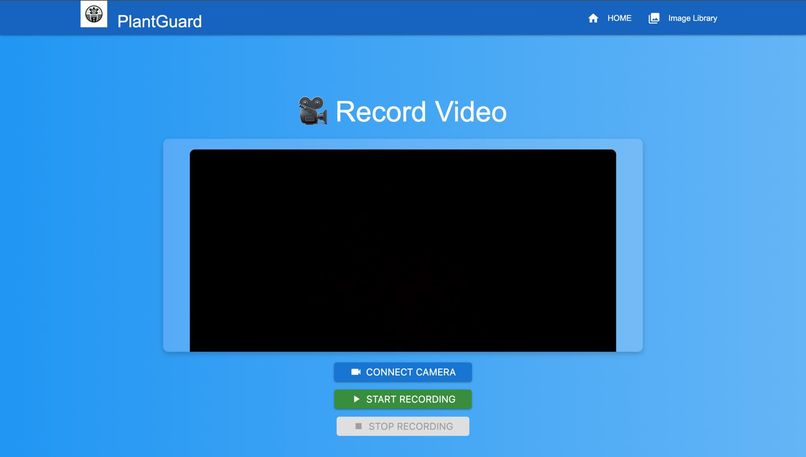
Live Record
-
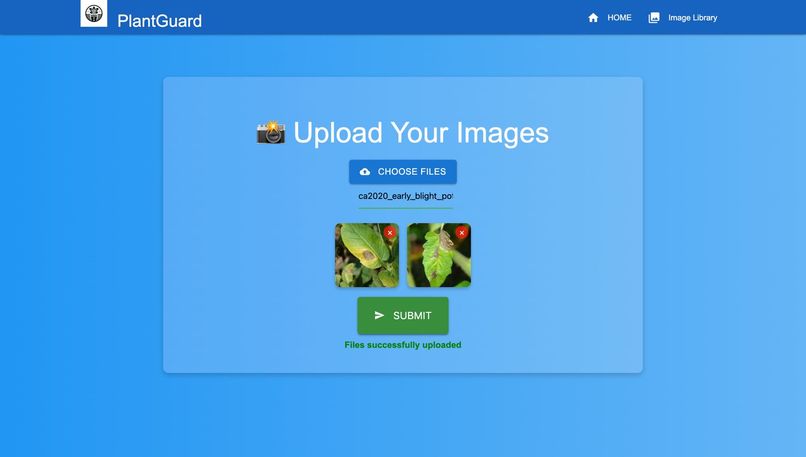
Upload Image
-
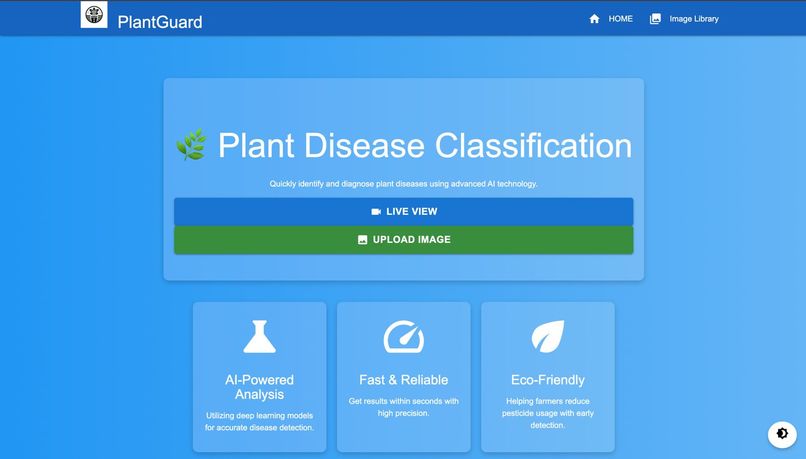
Home Page
-
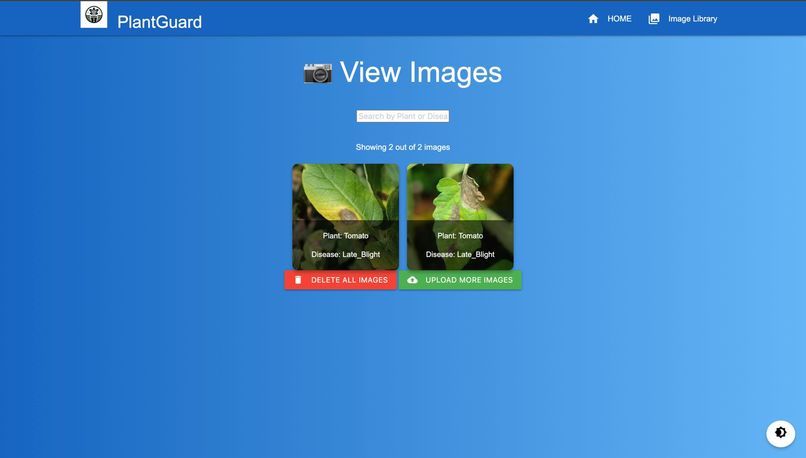
Image Gallery


Inspiration
At Krea University, located in Sullurpeta, we interacted with local farmers and vendors. One day, while speaking to a fruit vendor near campus, we noticed he seemed unusually distressed. When we asked what was wrong, he shared that his entire fruit crop had been affected by a disease, and he had no way to identify it in time.
Lacking access to agricultural experts or diagnostic tools, he had relied on guesswork, trying different treatments without knowing the actual problem. By the time he realized what had happened, the disease had already spread across his farm, leading to severe financial losses to him.
This conversation deeply resonated with us, reinforcing how many small-scale farmers and vendors struggle with the lack of accessible, affordable disease detection tools. We saw a clear need for a real-time, offline solution that could empower farmers to take preventative action before it's too late.
This project is more than just an AI model—it’s about bridging the gap between cutting-edge technology and real-world agricultural challenges, ensuring that farmers, regardless of their resources, have the tools to protect their crops and livelihoods.
What it does
- Captures an image of the plant leaf using a camera module.
- It runs it through two disease classification models, one for plant classification and the other for disease.
- Instantly identifies whether the plant is healthy or not.
- Works completely offline on Raspberry Pi, requiring no internet access.
How we built it
Machine Learning (AI Model)
- Trained a ResNet-50 transfer learning model on the PlantVillage dataset.
- Achieved 87%+ accuracy in plant disease classification.
- Optimized for Raspberry Pi using model quantization to reduce size and improve efficiency.
Hardware & IoT (Prospective)
- Implemented on Raspberry Pi 4 with a camera module, micro hdmi display, battery, multi-axis joystick, etc for real-time predictions.
- Designed a user-friendly interface to ensure ease of use for non-technical farmers.
Challenges we ran into
1️⃣ Computational Challenges in Model Training
- Initially, we trained raw deep learning models without pretraining, which turned out to be extremely computationally expensive.
- Despite using high-end architectures, we struggled to get desired accuracy, leading to multiple iterations and model refinements.
- To optimize, we later implemented transfer learning (ResNet-50) and quantization to make the model feasible for edge deployment.
2️⃣ Data Acquisition & Labeling Issues
- Acquiring a high-quality, well-labeled dataset was a major challenge.
- Many publicly available datasets had imbalanced classes or inconsistent labeling, requiring manual cleaning and augmentation.
- Real-world plant disease variations are diverse, making it difficult to generalize across different environments and lighting conditions.
4️⃣ Ensuring Offline Functionality
- Many AI-based plant disease classification systems rely on cloud computing, but our goal was edge AI (completely offline inference).
- This required careful balancing of model size, accuracy, and efficiency to ensure that the system could run without internet connectivity.
5️⃣ Fine-Tuning for Real-World Conditions
- The model needed to work in varying lighting, angles, and environmental conditions.
- We tested different preprocessing techniques and data augmentation methods to make the model more robust.
Accomplishments that we're proud of
- Developed an AI model that runs entirely offline with 87%+ accuracy.
- Successfully emulated our system on a Raspberry Pi emulator.
- Optimized the model to run on low-power devices while maintaining high accuracy.
- Created a scalable framework that can be expanded to detect more plant species and diseases.
What we learned
- The importance of model optimization for edge AI (entirely offline) applications.
- How to deploy machine learning models on low-power hardware like Raspberry Pi.
- Practical challenges of integrating AI with IoT for real-world applications.
- How to make AI accessible to non-technical users through simple UI/UX.
- The business potential of AI-powered agricultural solutions.
What's next for PlantGuard
🔹 Expand Crop & Disease Coverage
- Train the model on a wider dataset covering more crops and diseases.
🔹 Improve Model Efficiency
- Experiment with lighter models like MobileNetV3 to enhance inference speed.
🔹 Build a Mobile App
- Develop a companion app for farmers to access disease classification insights.
🔹 Integrate Multilingual Support
- Provide local language support for broader accessibility.
🔹 Partnerships & Deployment
- Collaborate with agriculture ministries, NGOs, and rural development programs to deploy the device at scale.

