Inspiration
I was inspired to create Planteria after observing how many people, especially urban dwellers and beginners, struggle with identifying and caring for plants. During the pandemic, indoor gardening became a popular hobby, but many faced challenges like not knowing a plant’s name, forgetting watering schedules, or dealing with plant health issues. I wanted to build a solution that not only helps users identify and care for their plants easily but also connects them with a community of plant enthusiasts, making plant care more engaging, educational, and enjoyable. The idea came from my own experience of wanting to care for plants effectively and share the joy of gardening with others.
What it does
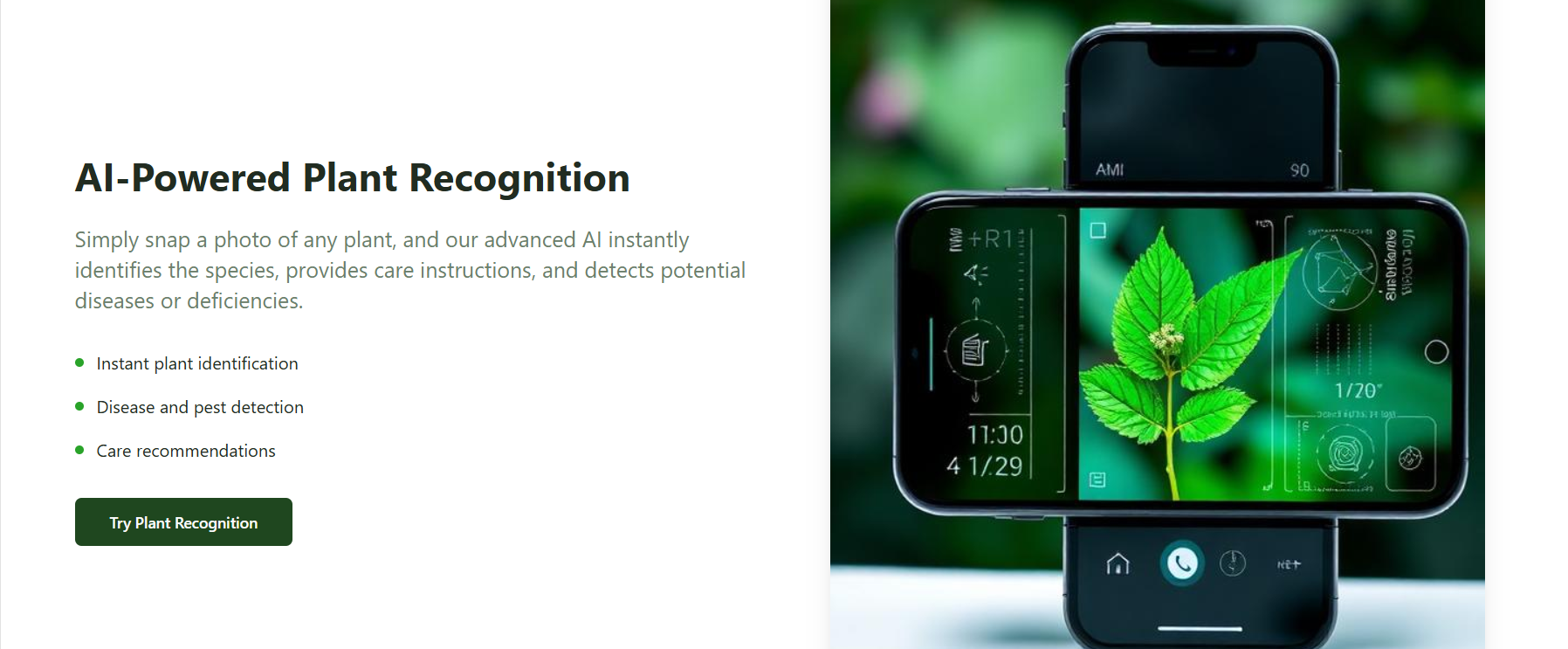
Planteria is a plant care and community app that helps users identify, track, and nurture their plants. Users can take a photo of any plant, and the app recognizes its species, providing detailed care instructions such as watering, sunlight, and fertilization schedules. It also allows users to set reminders for plant care and track growth over time. Additionally, the app includes a community feature where plant enthusiasts can share progress, ask questions, and exchange tips, creating a collaborative and engaging environment for both beginners and experienced gardeners.
How we built it
I built Planteria by first conducting user research to understand the common challenges people face in plant care, such as identifying species, remembering watering schedules, and staying motivated. I then sketched low-fidelity wireframes for the main flows: plant recognition, care tracking, and community interaction. Using Figma, I developed high-fidelity prototypes with interactive screens, consistent visual elements, and intuitive navigation. For the plant recognition feature, I designed a flow where users can upload or capture a photo, and the app provides possible species matches along with care tips. I also included reminder and tracking systems for watering and fertilization, and a community feed for sharing posts and tips. Finally, I conducted usability testing to refine the interface, ensuring simplicity, clarity, and engagement throughout the app.
Challenges we ran into
While building Planteria, we faced several challenges. Ensuring accurate plant recognition was difficult because similar-looking species could be misidentified, so we designed the UI to show multiple possible matches and allow manual confirmation. Balancing feature richness with simplicity was another challenge, as users can easily get overwhelmed with reminders, notifications, and community interactions; we addressed this by prioritizing essential features and offering customization options. Maintaining a consistent visual identity across screens also required creating a reusable design system in Figma. Lastly, simulating a real, active community in a prototype was tricky, so we used sample content and designed engagement elements like badges and featured posts to illustrate how the community would work.
Accomplishments that we're proud of
We are proud that Planteria successfully combines plant recognition, care tracking, and community engagement into a single, intuitive app, making plant care accessible to both beginners and enthusiasts. Through this project, we created a visually appealing and consistent UI in Figma that users found easy to navigate. We also designed a scalable prototype that demonstrates how users can identify plants, set reminders, track growth, and interact with a community, reflecting real-world usability. Most importantly, the project helped us develop strong skills in user research, UX design, prototyping, and problem-solving, while creating a product that encourages sustainable and mindful plant care.
What we learned
Through building Planteria, we learned the importance of user-centered design and how empathy drives better product decisions. We discovered how to translate complex information, like plant species and care instructions, into simple, actionable guidance for users. The project also taught us how to balance functionality with simplicity, ensuring the app is feature-rich yet easy to navigate. Additionally, we gained hands-on experience in prototyping, designing consistent UI systems, and conducting usability testing, which reinforced the value of iteration based on real user feedback. Overall, this project enhanced our problem-solving, design thinking, and collaboration skills, preparing us to create meaningful digital experiences.
What's next for planteria
The next step for Planteria is to turn the prototype into a fully functional app with real-time plant recognition powered by AI or a third-party API. We plan to enhance the community feature by enabling user-generated content, discussions, and expert Q&A to make it more engaging. Integrating personalized care schedules, notifications, and gamification will help users stay motivated and consistent in plant care. Additionally, we aim to expand the plant database to cover more species and provide advanced tips, while optimizing performance for mobile devices. Ultimately, the goal is to create a comprehensive, user-friendly platform that empowers people to connect with nature, care for plants effectively, and join a thriving plant enthusiast community.
Built With
- figma

Log in or sign up for Devpost to join the conversation.