Over 25 million Americans live with asthma, and environmental swings can trigger attacks.
Indoor plants boost air quality but often die from neglect, losing their wellness benefits.
We wanted a single, affordable system that cares for plants and protects people with respiratory issues.
What it does
Continuously reads ambient temperature, humidity, light level, and air pressure
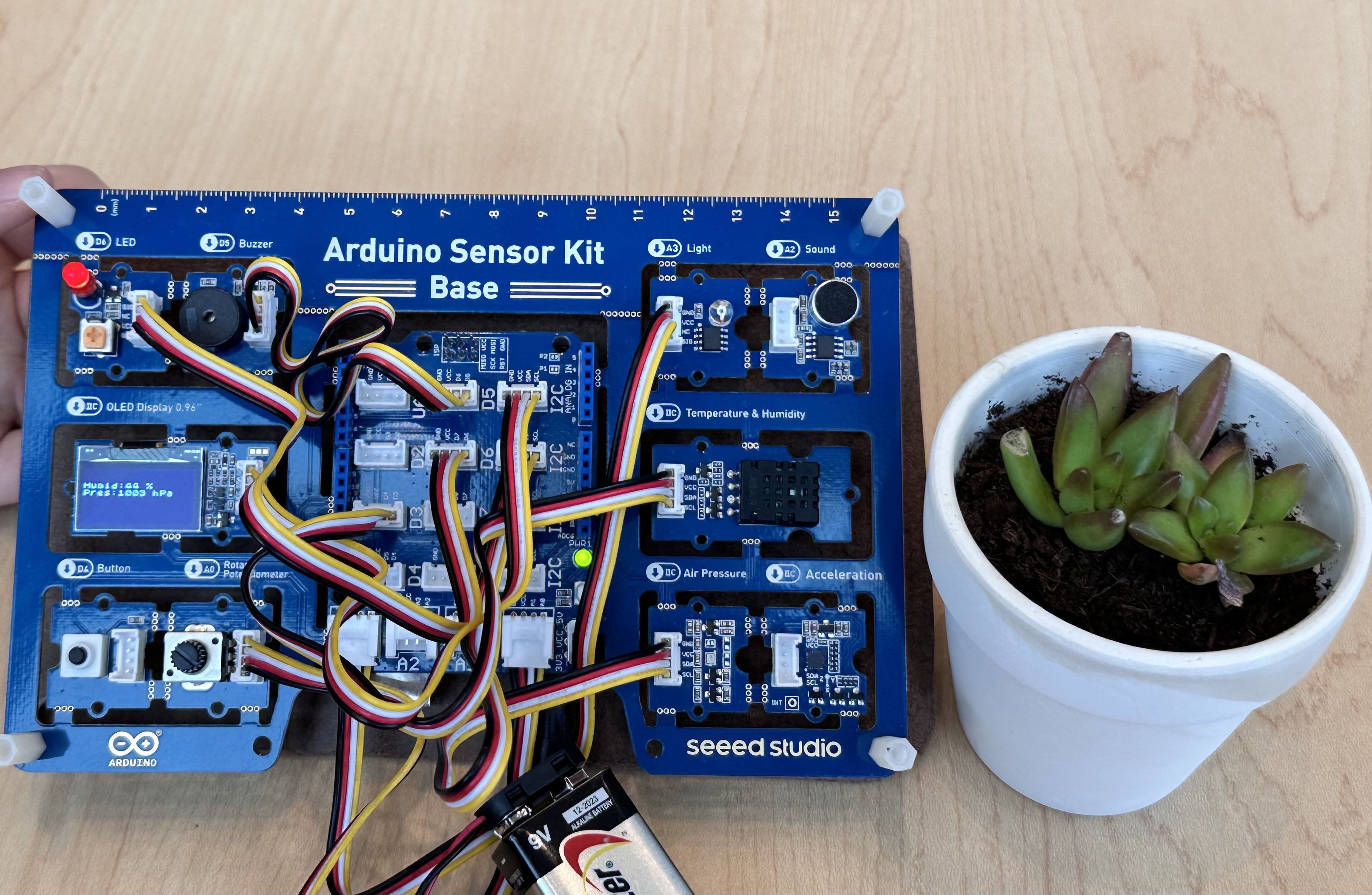
Displays live sensor data on a built‑in LCD screen
Triggers a buzzer and lights a red LED when conditions (e.g., low humidity or sudden pressure drop) threaten asthma sufferers
Provides clear visual and audible alerts so users can take immediate action
How we built it
Hardware assembly
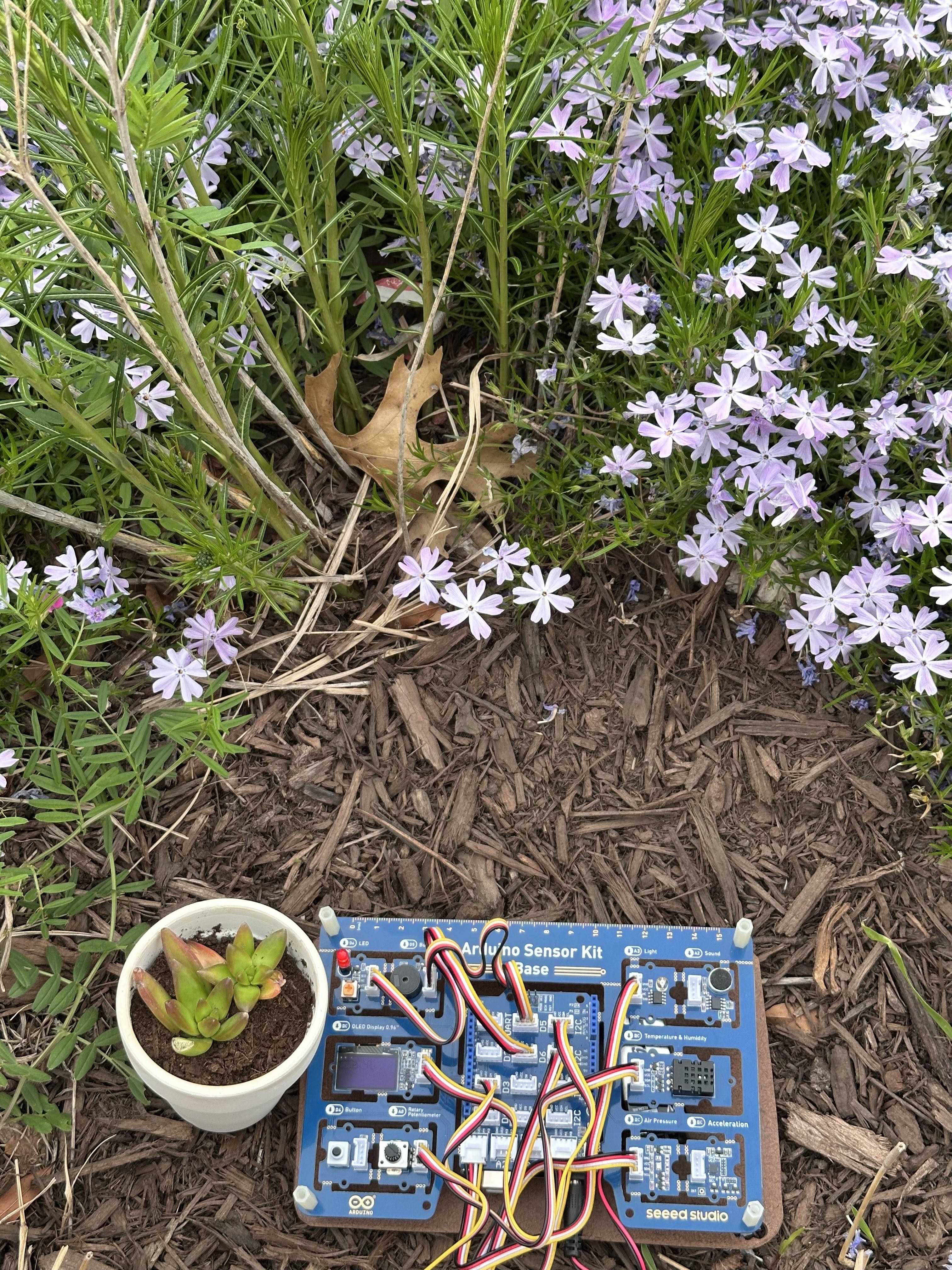
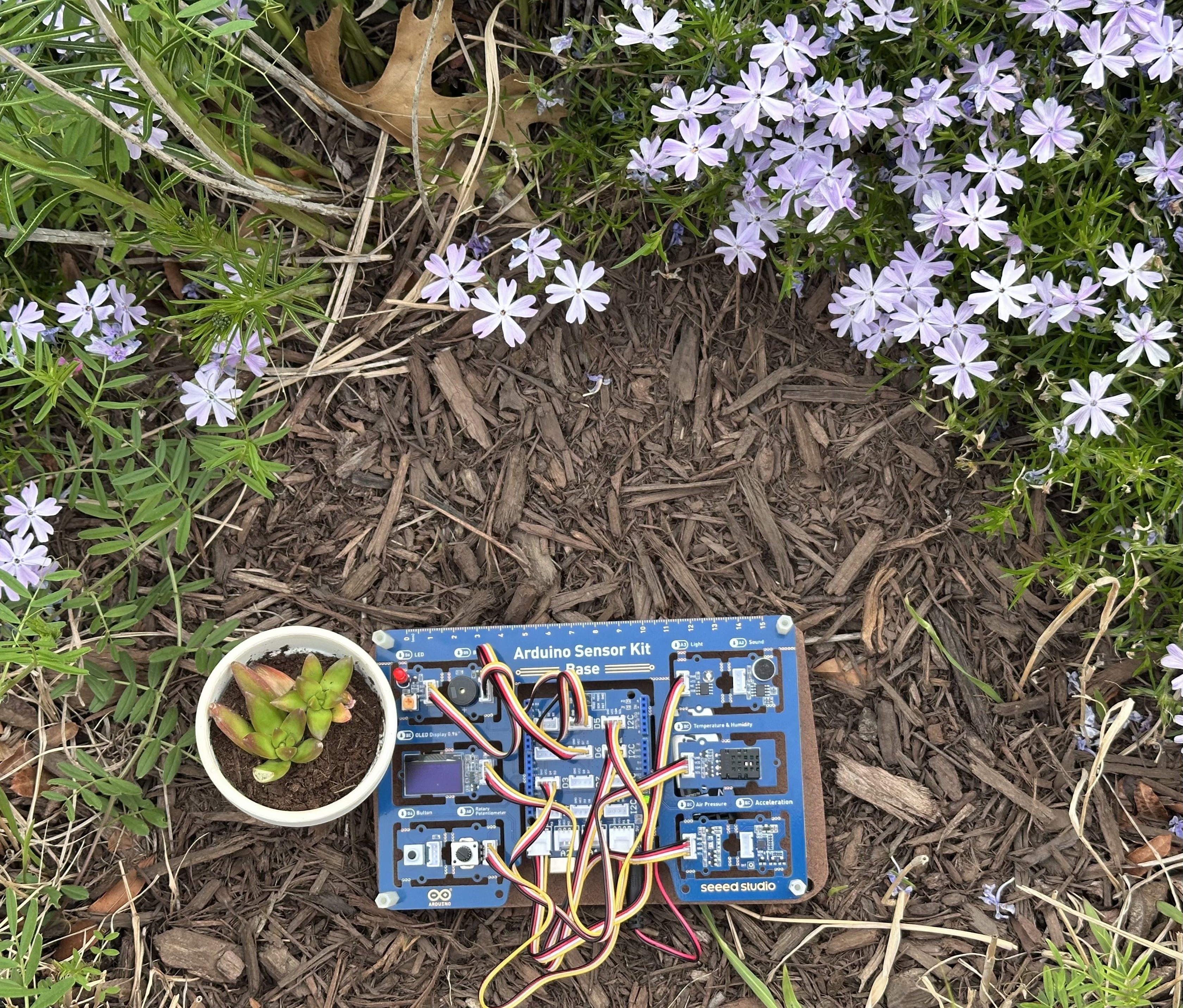
Wired up a DHT22 (temp & humidity), BMP280 (air pressure), and light sensor to an Arduino Uno.
Added an LCD module, buzzer, and red LED for real‑time feedback
Firmware development
Wrote C scripts to poll sensors, apply smoothing filters, and compare readings against safe thresholds
Implemented alert routines to drive the buzzer and LED only when truly “extreme” events occur
Prototype testing
Bench‑tested in variable humidity/temperature chambers
Iterated threshold values to balance sensitivity with false‑alarm reduction
Challenges we ran into
Sensor calibration drift: Soil‑moisture readings varied with temperature, so we built in dynamic offset adjustment.
False positives: Humidity spikes from watering the plant could trigger unnecessary alarms—solved by adding a brief “grace period” after each irrigation.
Power vs. responsiveness: Frequent polling gave smoother data but drained power faster; we optimized sleep cycles in firmware.
Accomplishments that we’re proud of
A fully functional proof‑of‑concept that ties plant‑care data to human health alerts
Seamless LCD display integration with live updates
Reliable buzzer/LED alert system that users find noticeable but not annoying
A modular design that can be extended to new sensors or actuators
What we learned
Best practices for reading and filtering noisy analog sensors
Balancing real‑time responsiveness with low power consumption in embedded systems
The importance of clear, unambiguous alerts in health‑related devices
Rapid prototyping techniques for hardware–software co‑design
What’s next for PlantCare
Auto‑watering upgrade: Add a servo‑controlled valve to deliver precise irrigation based on moisture levels
Expanded sensing: Integrate pollen and dust sensors to capture more asthma triggers
Cloud connectivity: Migrate to ESP32 to log data to a Google Sheet or database, enabling historical trend analysis
User interface: Build a simple web/mobile dashboard for visualization, pattern detection, and push notifications


Log in or sign up for Devpost to join the conversation.