-
-
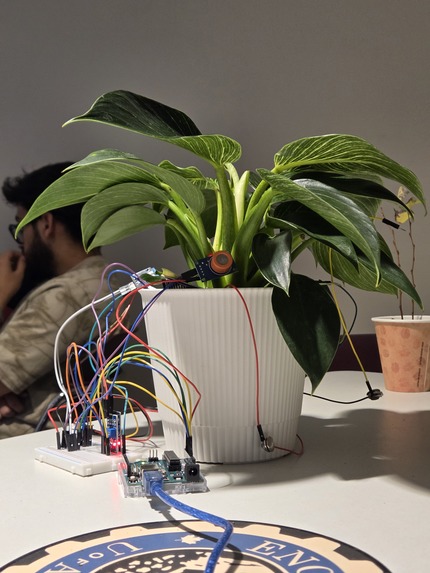
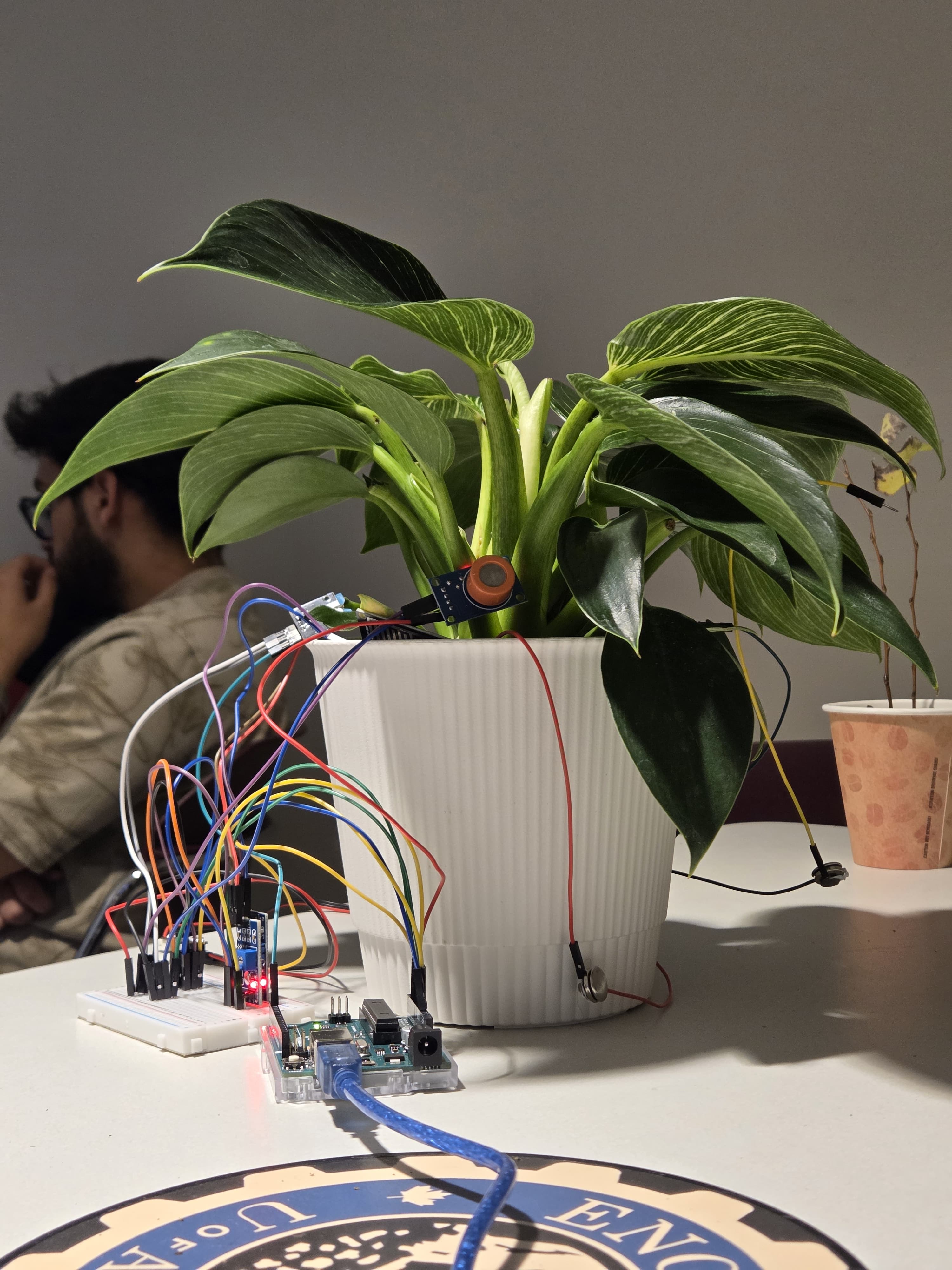
Plant with hardware
-
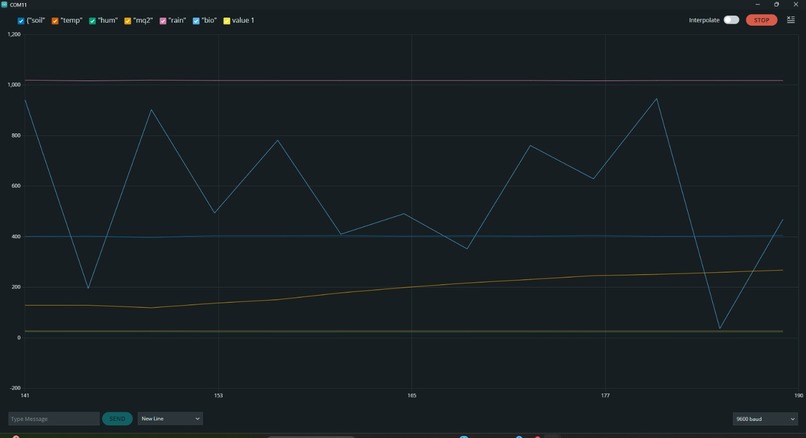
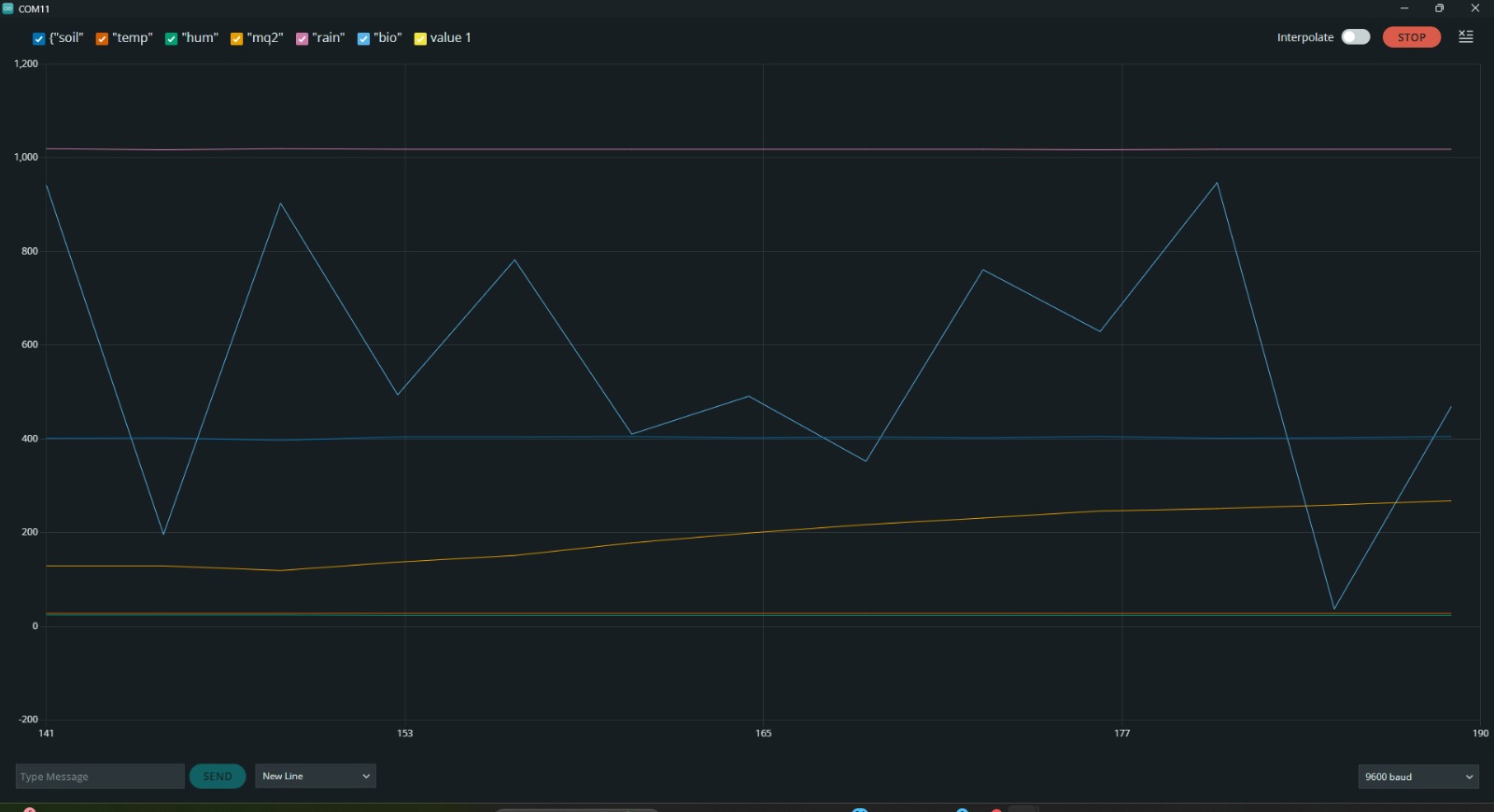
Arduino graph
-
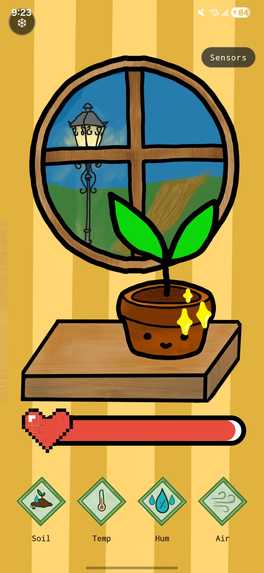
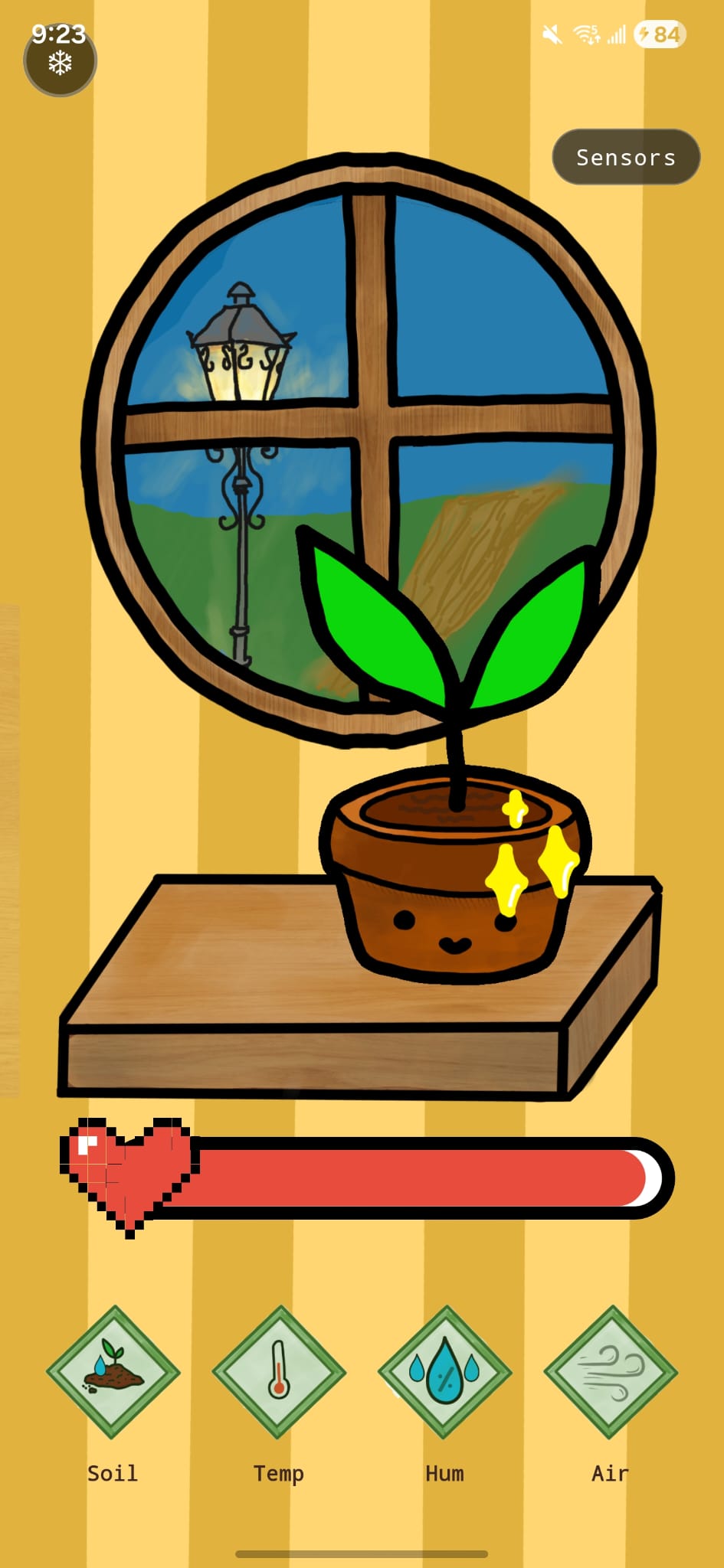
Healthy Plant
-
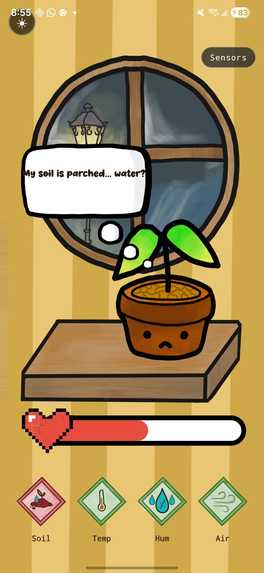
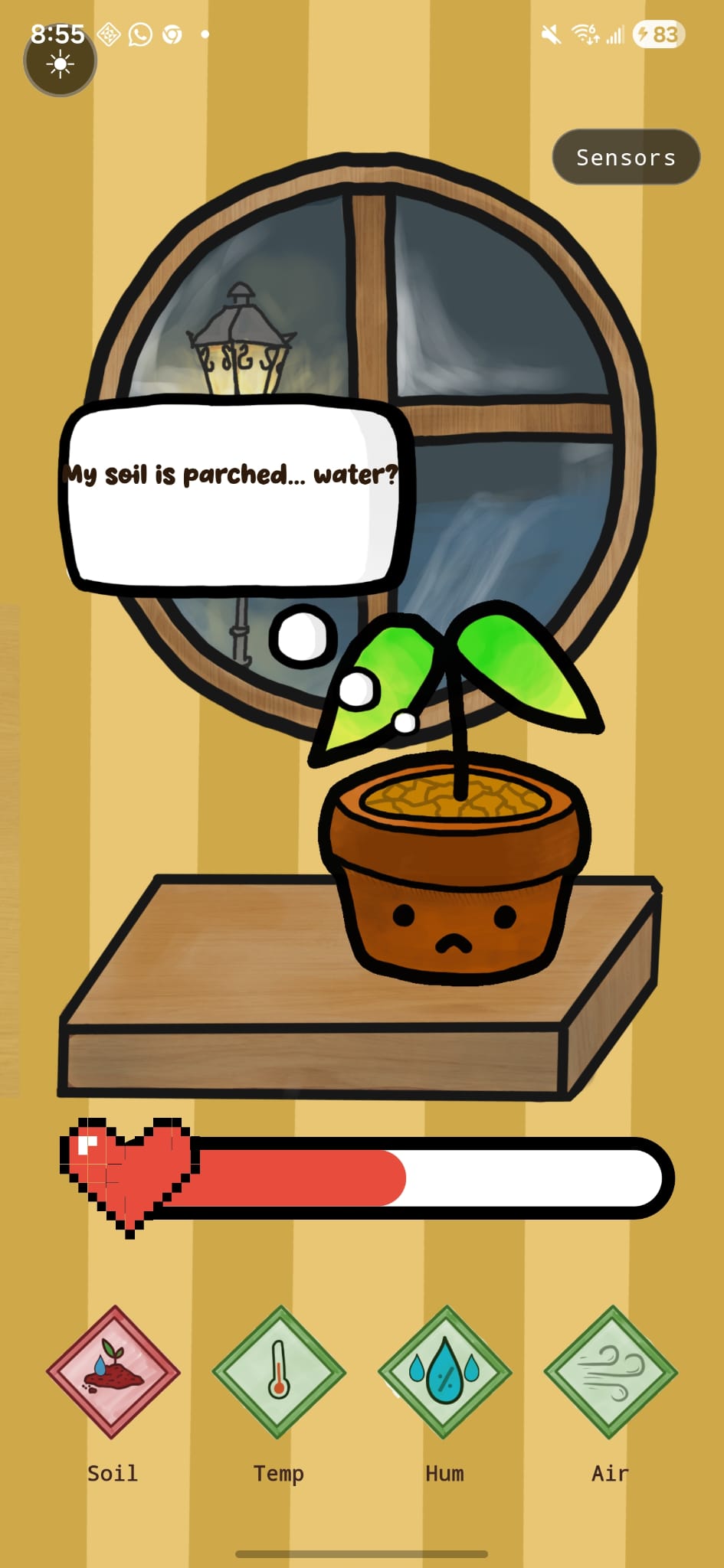
Thirsty Plant
-
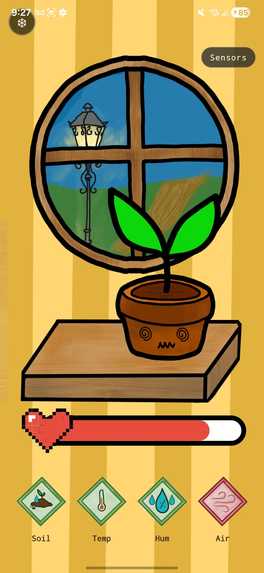
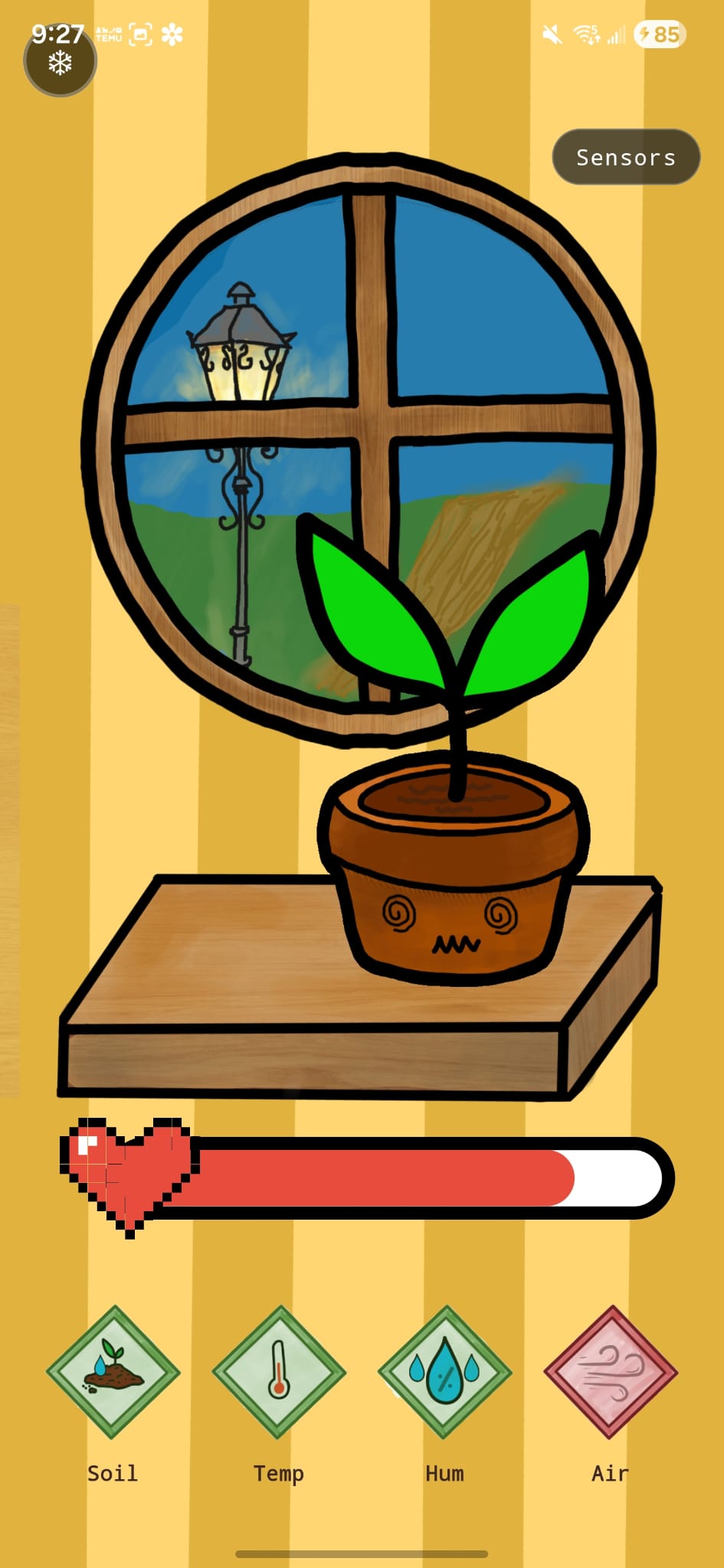
Dizzy Plant
Inspiration
We grow up learning how to care for pets or humans around us but rarely about how to care for the life quietly thriving around us. Plantogatchi reimagines that connection by turning plant care into an interactive experience , one where nature finally speaks back. It’s not just about keeping a plant alive; it’s about learning to listen, bond, and grow alongside it.
What it does
Plantogatchi gives your plant a voice. Using bioelectrical sensors, it listens to the tiny signals plants naturally produce. Changes caused by water levels, humidity, temperature, and gas levels and translates them into emotions and visuals you can understand.
It turns plant care into an interactive experience: your plant reacts when you water it, temperature changes affect its mood, and you can track its overall “well-being” through an intuitive app or display.
How We Built It
We built Plantogatchi around an Arduino UNO R3 microcontroller connected to multiple environmental and bio-signal sensors:
- MQ-3 – Detects air quality and gas concentration
- HL-83 – Detects presence of liquid water
- YL-69 – Monitors soil moisture levels
- DHT11 – Captures ambient temperature and humidity
- BioAmp EXG Pill – Senses subtle wind-induced bioelectrical variations from the plant
All sensors interface through the Arduino and stream real-time data to a Processing-based backend via WebSockets.
There, data cleaning and optimization algorithms process incoming signals for stability and interpretability.
The processed results are then transmitted to our React Native mobile app,
where we visualize the plant’s emotions and responses using Krita-based hand-drawn animations.
This full pipeline from sensors to backend to animated interface allows Plantogatchi to turn raw plant signals into an expressive, interactive digital experience.
Challenges we ran into
One of the biggest challenges we faced was dealing with signal noise from the BioAmp EXG Pill.
The raw bioelectrical data was extremely noisy, so we had to perform multiple calibration tests to determine reliable value ranges for consistent readings.
Another major challenge was finding suitable APIs for plant care requirements. Most publicly available APIs were either paid, incomplete, or designed for unrelated use cases, which made integrating real-time plant insights into our system more difficult than expected.
Accomplishments that we're proud of
- Designed visually appealing, hand-drawn animations that are charming, expressive, and engaging for all age groups.
- Achieved smooth integration between live sensor readings and animations, ensuring the visuals react consistently with real-time data.
- Delivered a convincing and well-structured business pitch, clearly communicating the vision and potential of Plantogatchi as an interactive, educational, and eco-conscious platform.
What we learned
- How to make multiple sensors work in coherence, ensuring stable and synchronized data flow across different environmental and bioelectrical inputs.
- The process of ntegrating real-time sensor data with interactive animations in a web or mobile app to create a seamless, responsive experience.
- That building a reliable and sellable business pitch takes much more than just a good idea, it requires clear communication, strategy, and market understanding.
What's next for Plantagotchi
- Enhanced UI/UX: Expanding the app with more interactive animations, additional plant types, and virtual companions to boost user engagement.
- Gamified Experience: Introducing a point-based streak system inspired by Snapchat to reward consistent plant care and learning progress.
- Improved Hardware: Developing a more compact, sustainable, and higher-precision sensor module capable of capturing richer environmental and bioelectrical data.
- Educational Integration: Adapting Plantogatchi for classroom use, making plant care and bio-interaction an accessible, hands-on learning experience for students of all ages.
Built With
- arduino
- bioamp
- dht-11
- hl-83
- krita
- ldr
- mq3
- [email protected]
- react-native
- typescript


Log in or sign up for Devpost to join the conversation.