-
-
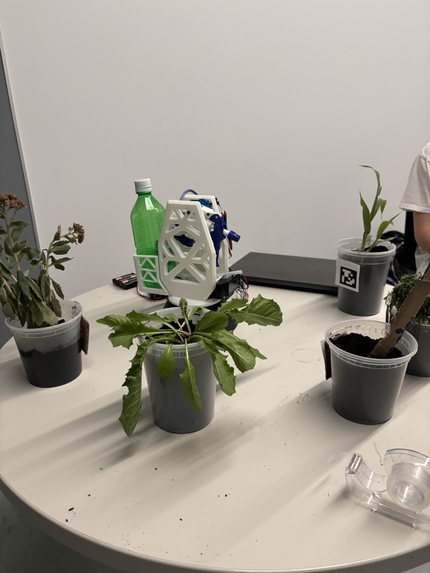
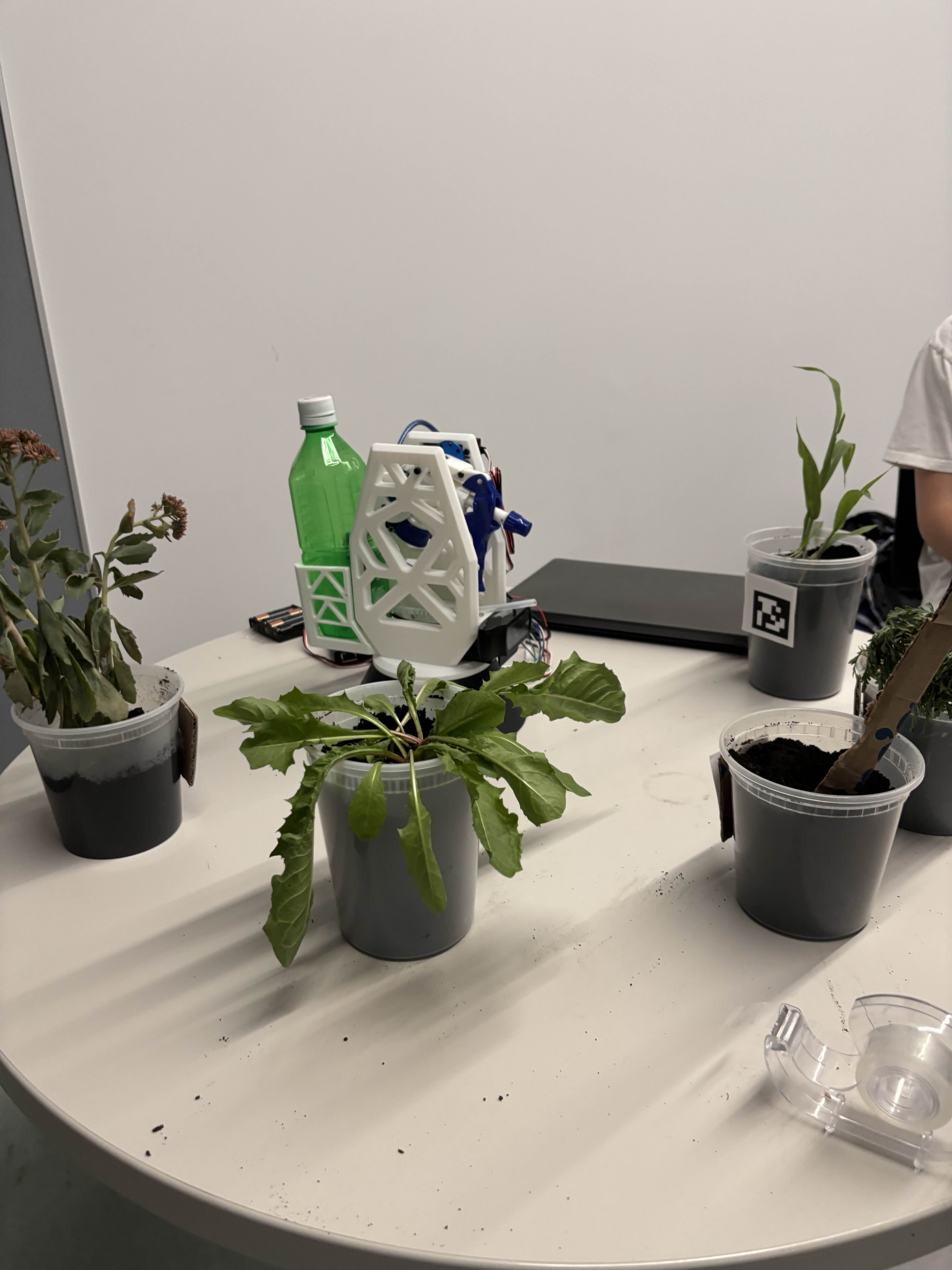
Our 5 plant setup
💡 Inspiration
Traditional watering methods like sprinklers waste up to 50% of the water they use. They treat every plant the same, ignoring that some need more or less water, or operate on different schedules. We wanted a setup that’s smarter, healthier for plants, and massively more efficient.
Plant Hopper solves this by individually targeting plants using computer vision, optimized schedules, and soil moisture readings. The system scales across multiple plants using a database-driven model instead of fixed hardware zones.
⚙️ What We Built
✅ Hardware + Firmware
Custom CAD turret with 2 DOF (pitch + base rotation)
AprilTag detection to locate each plant and calculate distance and offset
PID alignment + trigonometry to compute optimal shooting angle
Servo-controlled custom, tunable, water gun for precision watering
✅ Cloud + Web App
Firebase backended, Next.js + Vercel webapp
Robot publishes soil moisture sensor data and CV images for analysis to the database
Web app sends commands (e.g., water now, do plant scan, get current moisture health)
Commands are executed in real-time through a Python threaded controller
This lets users monitor and control their plants from any device, anywhere, with no local setup.
✅ Python Control Layer
A multithreaded Python script ties everything together:
Runs computer vision
Manages serial communication with the Arduino
Handles Firebase reads/writes
Oversees timing, alignment, and command execution
🧠 What We Learned
Building Plant Hopper forced us to combine multiple disciplines at once:
Systems Integration: Hardware + web app + database + serial communication
Hardware control: PID and apriltag calculations to accurately track plant movements.
Real-Time Syncing: Keeping commands and sensor data properly timed
Firebase Architecture: Structuring live robot–app communication
Camera Calibration: Fixing lens distortion using a YAML calibration file for AprilTag accuracy
Multithreading Parallelism: Utilized the CPU's multithreaded architecture to communicate between many sources of information.
Cross-System Debugging: Managing both hardware constraints and web-side logic
🚀 Next Steps
There’s lots of room for growth:
📱 Add new UI features (analytics, reminders, plant profiles)
📦 Create DIY kits for scalable deployment
💧 Upgrade to a high-pressure water system for range and accuracy
🌿 Expand to greenhouse or multi-plant environments
🤖 Development towards wheeled turrets


Log in or sign up for Devpost to join the conversation.