-
page 1
-
page 2
Inspiration: I could not keep an accurate eye on my sister's plants.
What it does: It tracks the moisture and humidity present in the soil of the plant. Additionally, it also has a light sensor tracking the amount of light a plant has received. Visual cues are also synced with each of the sensors to indicate if the there is too much or too less of one thing in particular.
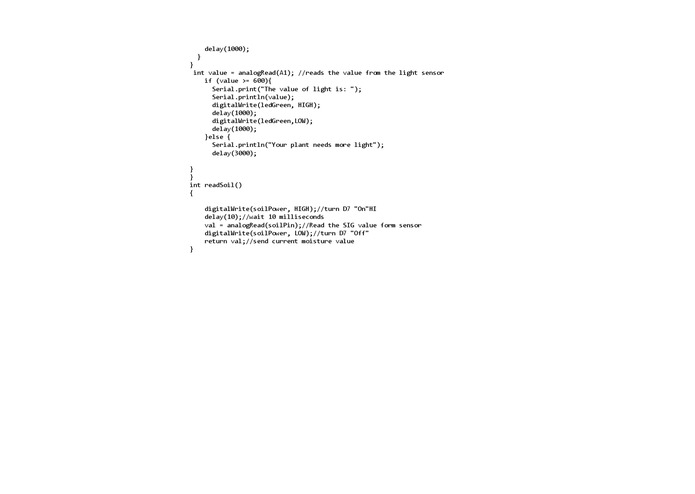
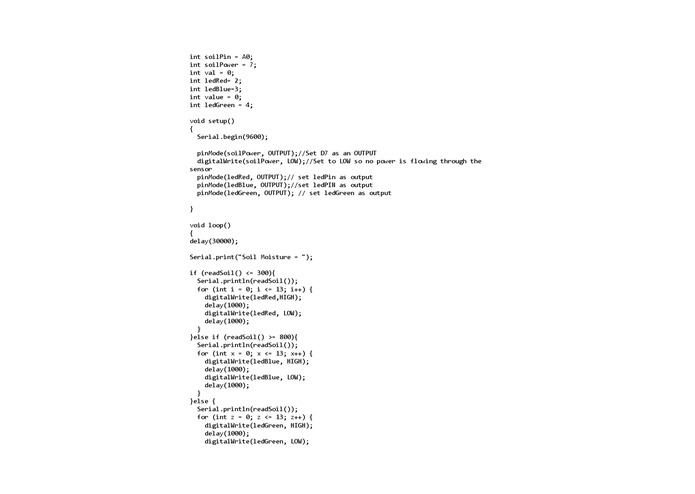
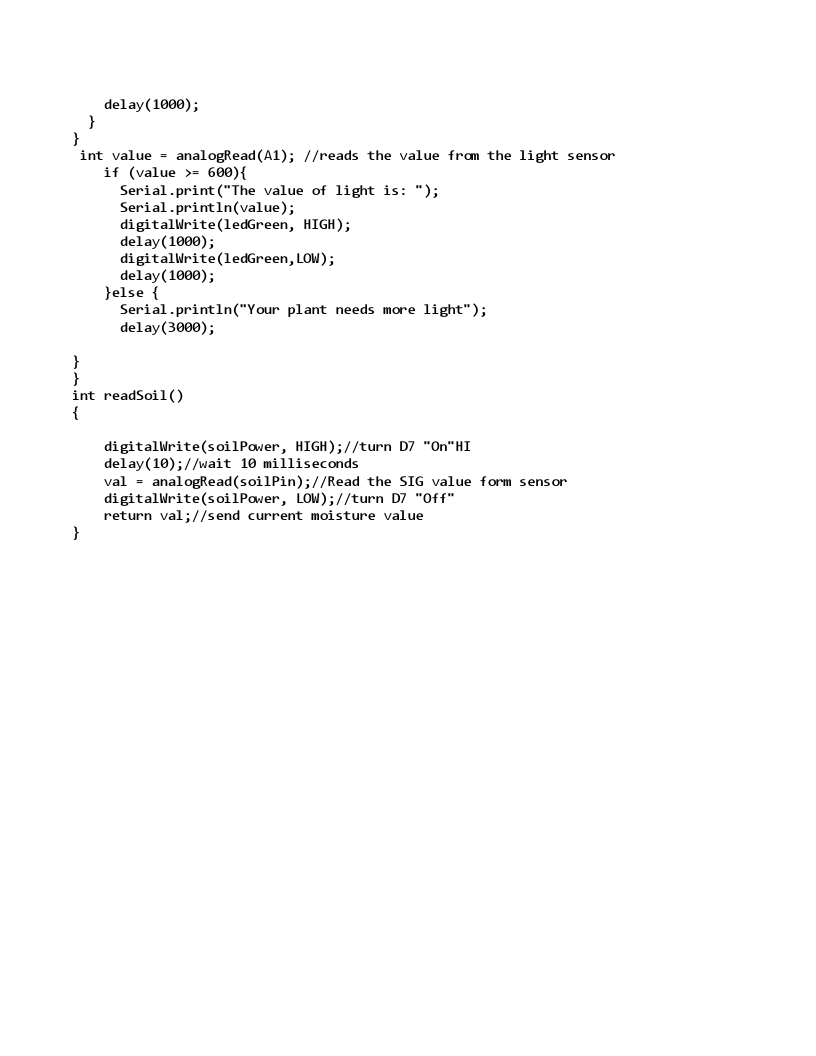
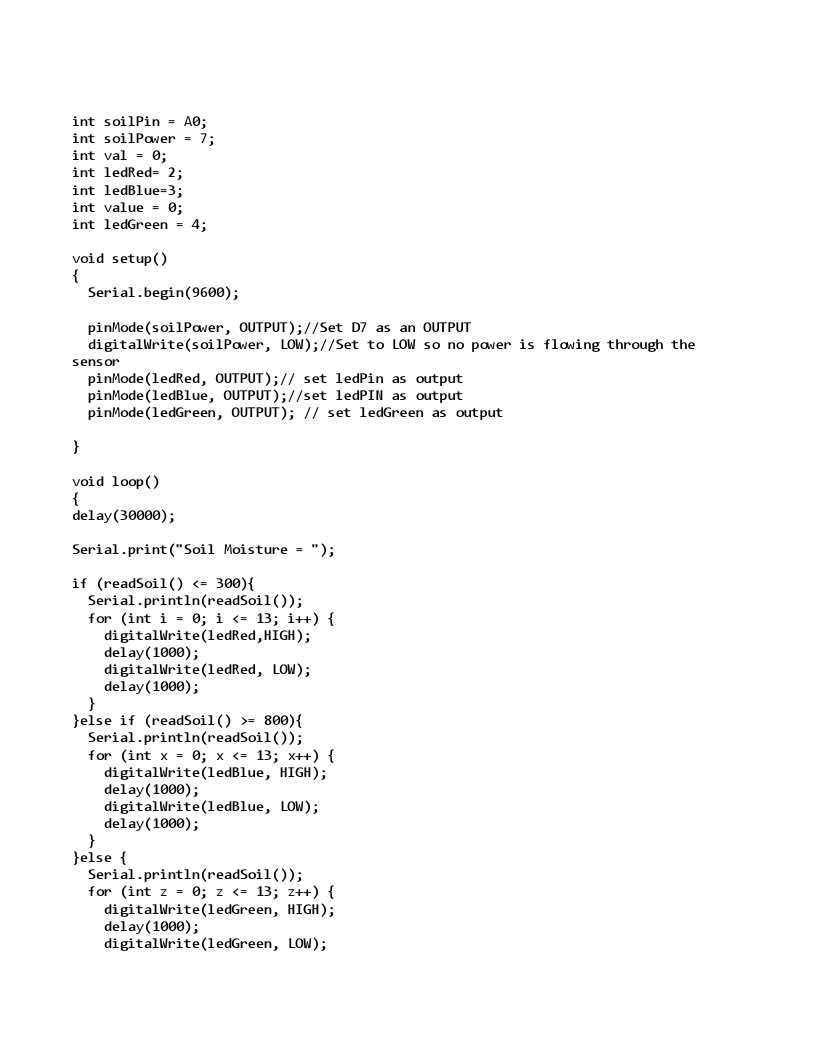
How we built it: We used Arduino Uno to build it with a soil moisturizer sensor and light sensor, which were both connected to analog pins. The LEDs were connected to the digital pins of the Arduino. The program was finished on Arduino using a language extremely similar to C++.
Challenges we ran into: Originally we planned to also monitor the air quality around the plant. In order to use this sensor, we had to download and upload its own library. Thus the objects that were called were from the library. But we ended up with error messages and had to go back to define our object. However, we ran out of time to accomplish such a task. Furthermore, we did not have soil to test the soil moisturizer sensor. Thus, we had borrow a minute amount from the OU landscaping. As a result, our final sample consisted of multiple pieces of mulch, which may affect our end result.
Accomplishments that we're proud of: We managed to make the light and the soil moisturizer sensor to work.
What we learned: We learned about arduino and the structure of it, most notably the use of the CSS811 air quality sensor function, though we did not have time to add a complete working one to our program..
What's next for Plant Environment Monitor: Adding the air sensor function in order to document the statistical data regarding air quality and favorable plant conditions to find perhaps if there is a correlation between the conditions a plant grows in and its affect on the the environment (amount of eCO2) as a result to determine if there is a specific condition under which plants will improve air quality the most.

Log in or sign up for Devpost to join the conversation.