-
-
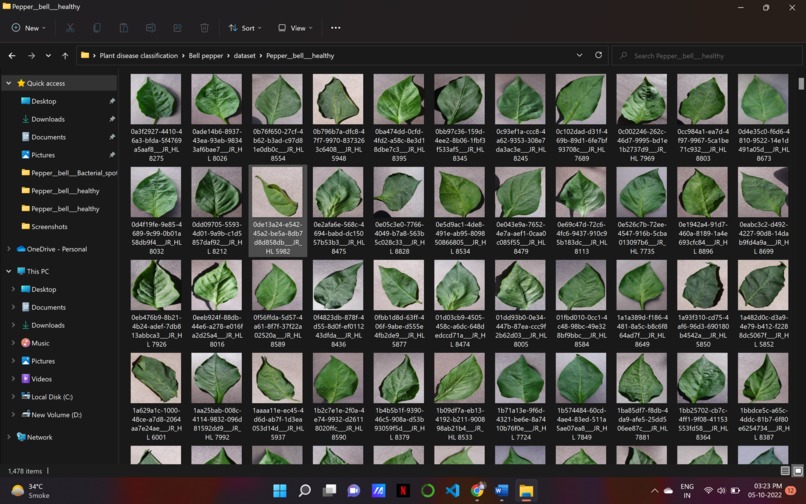
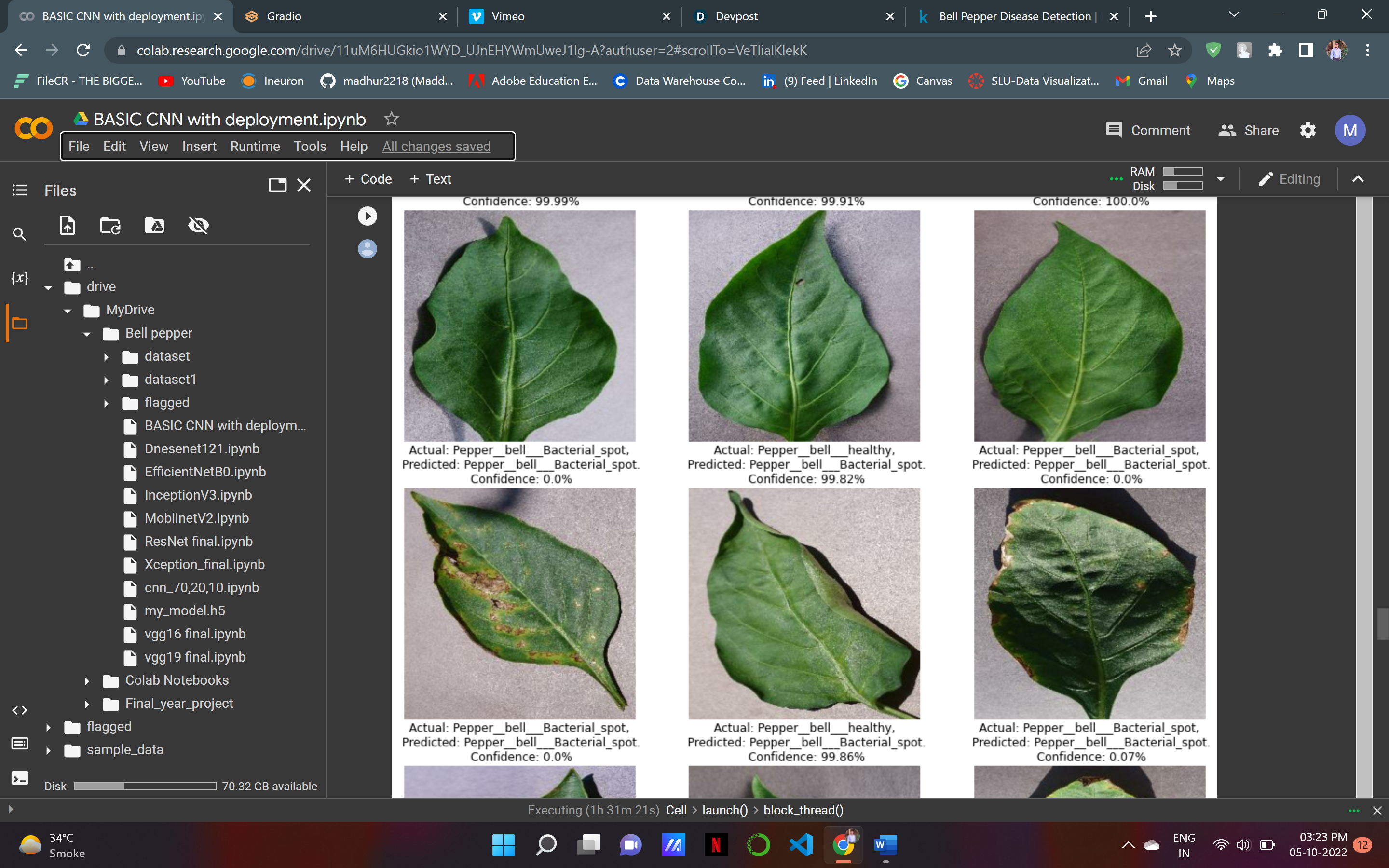
Healthy leaf images
-
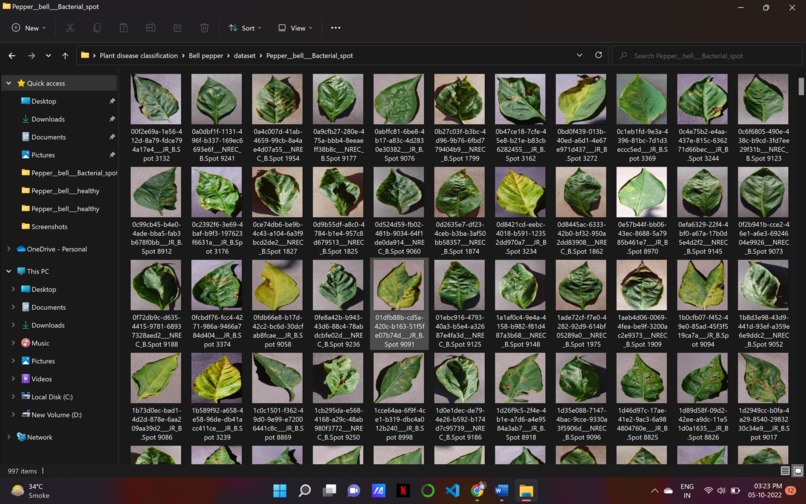
Diseased Leaf
-
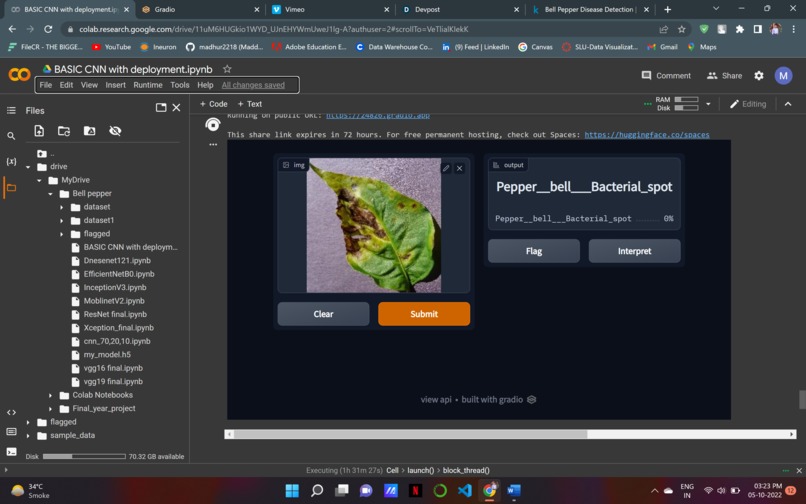
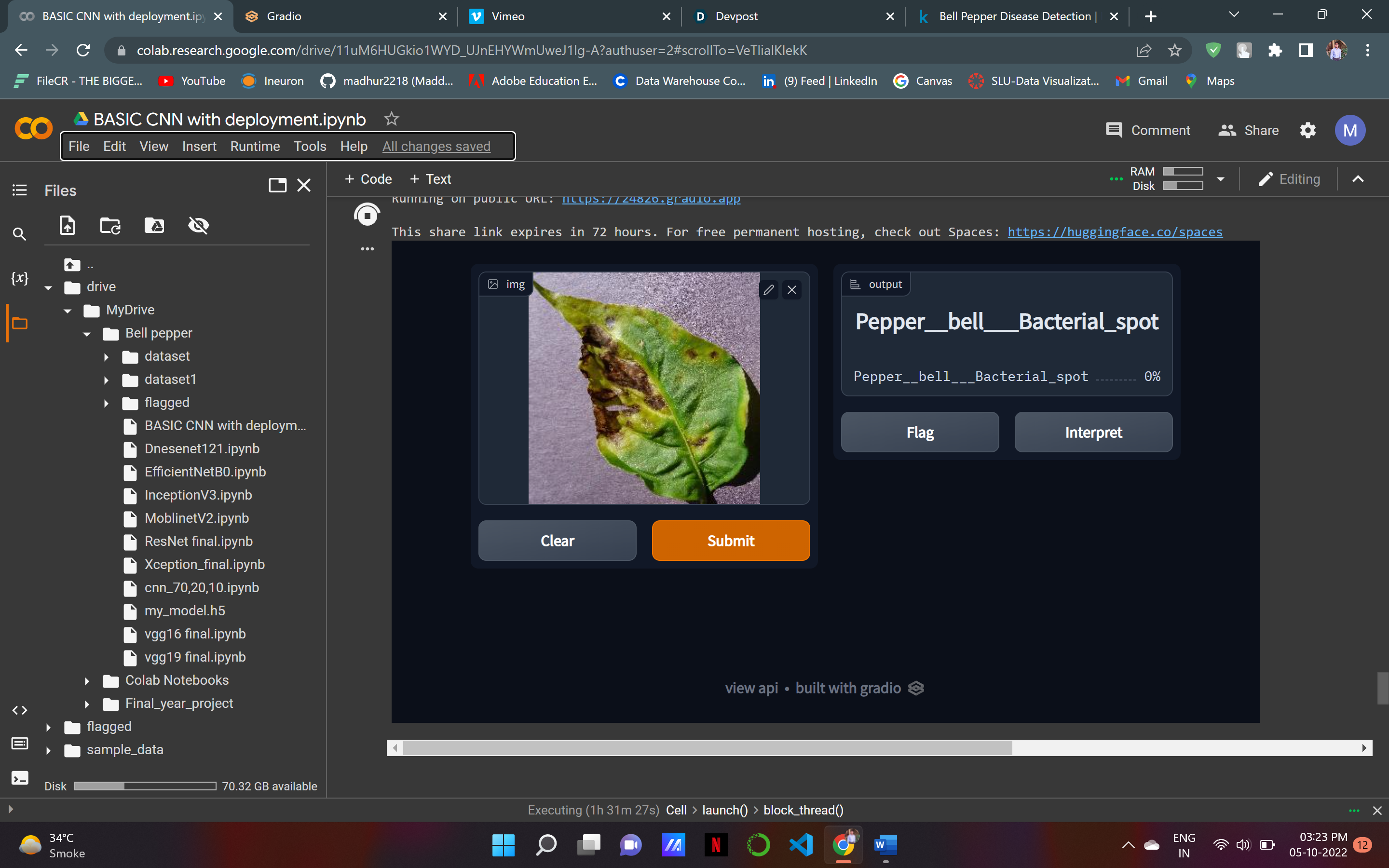
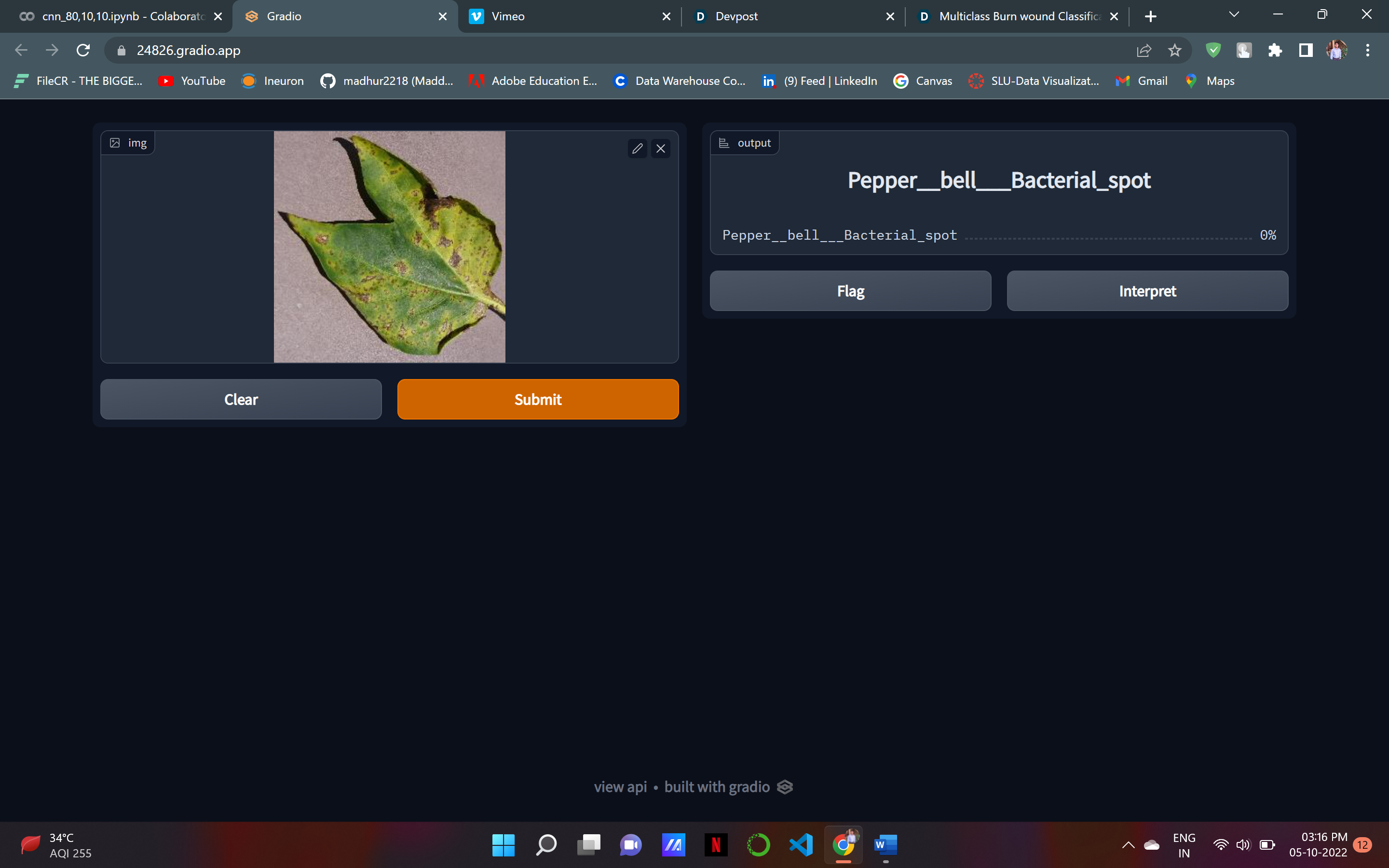
Predictions using Gradio
-
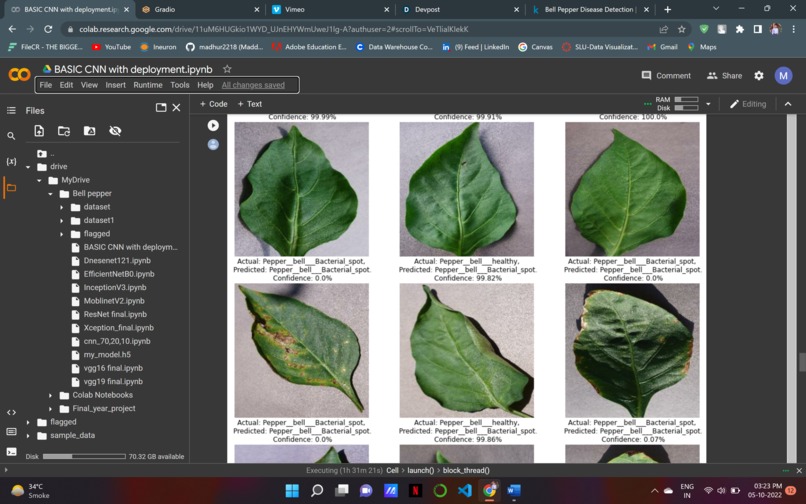
Predictions with Confidence level
-
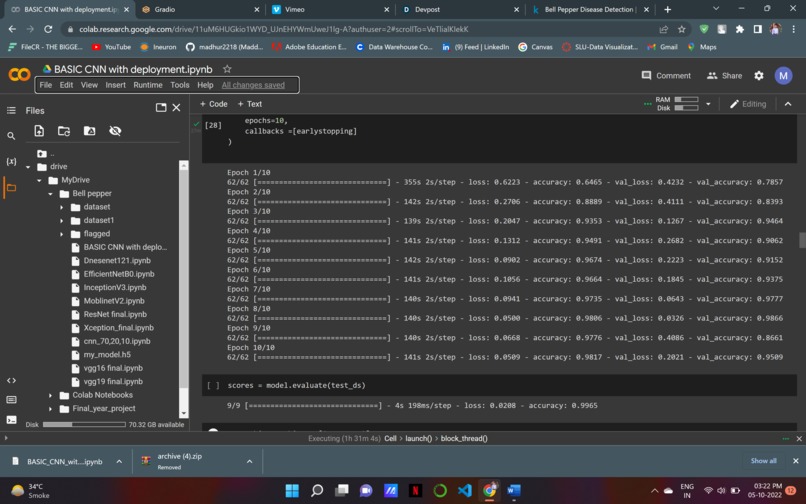
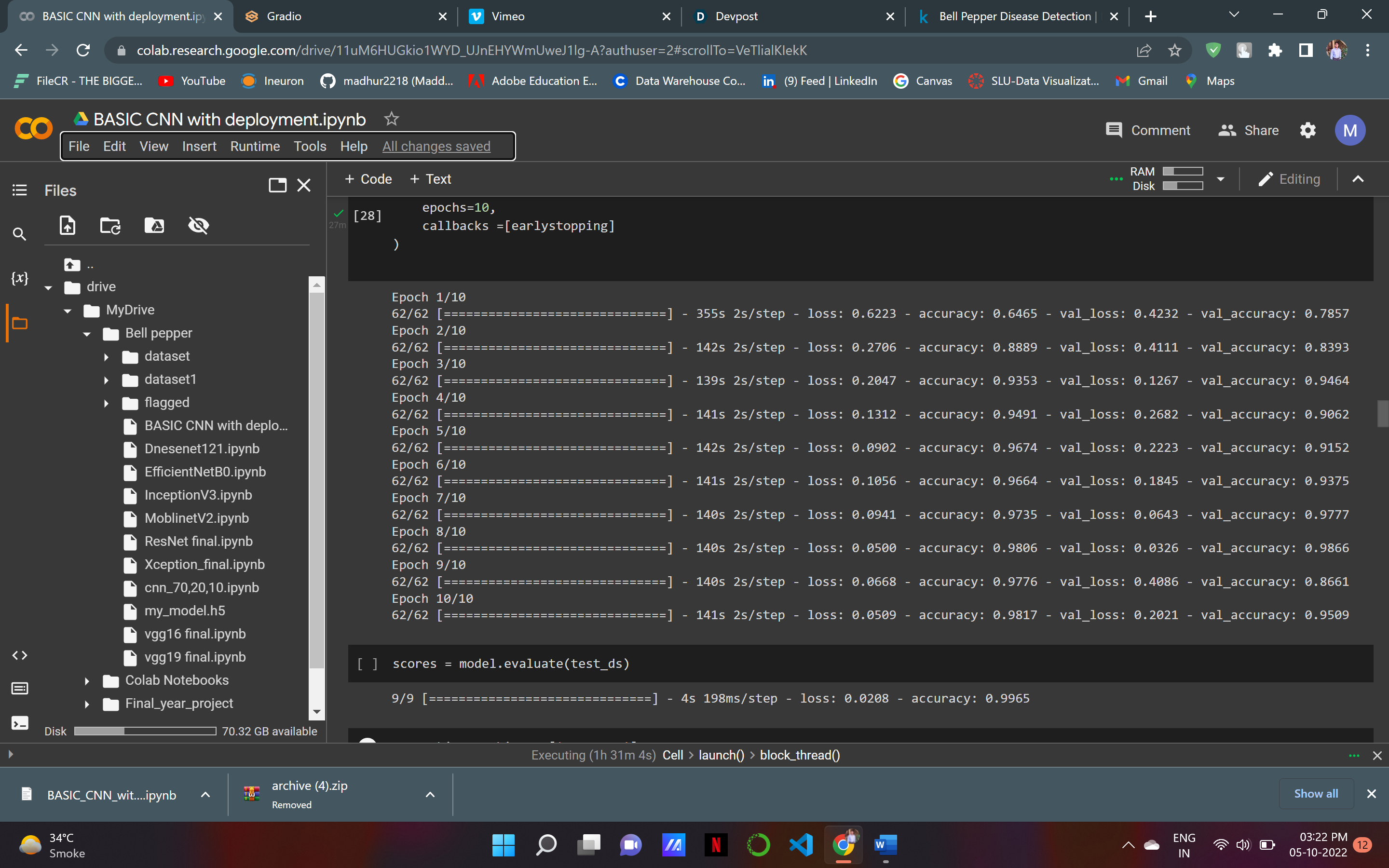
Epochs
-
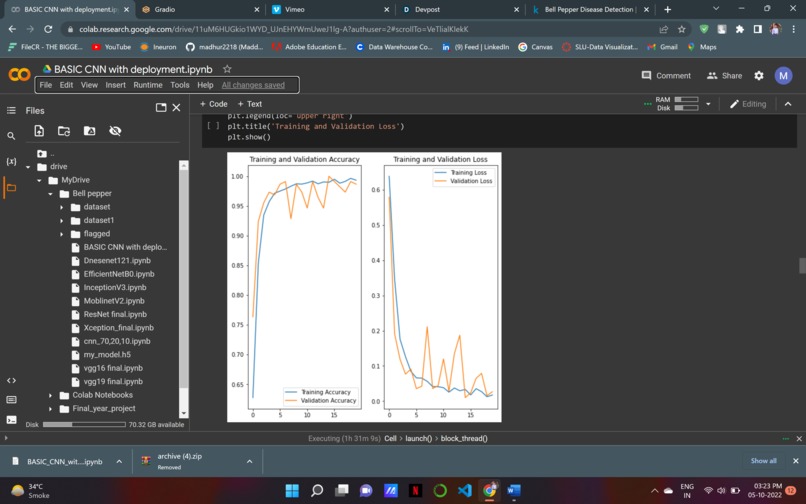
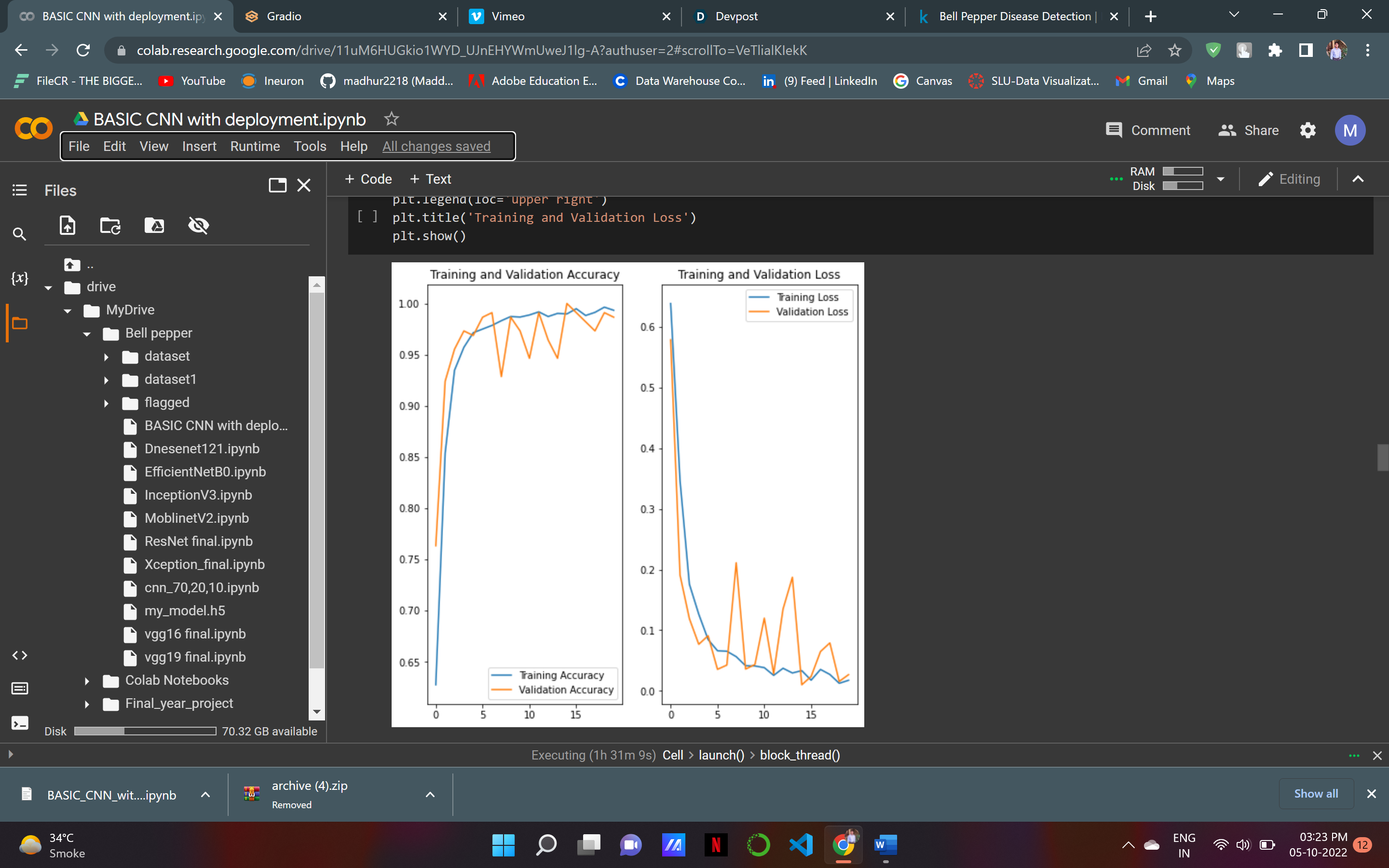
Training / Validation accuracy and loss
-
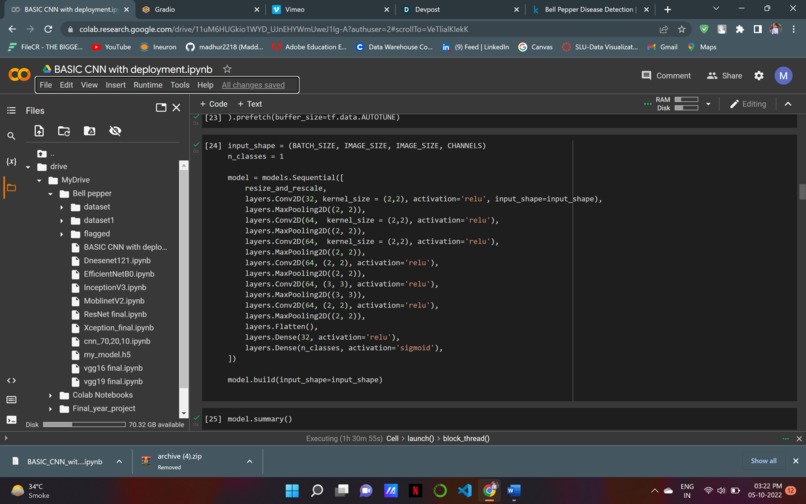
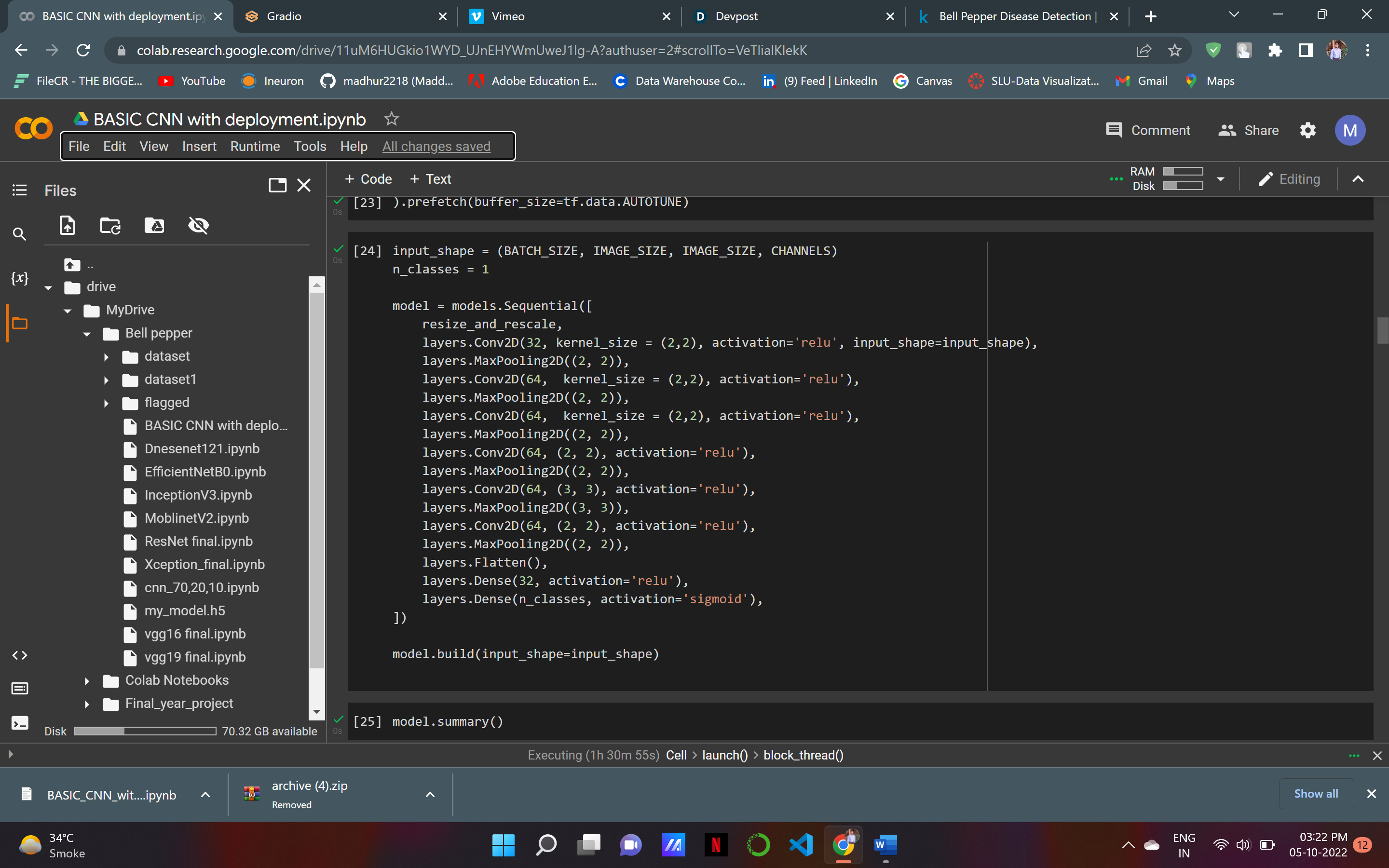
Basic CNN model
-
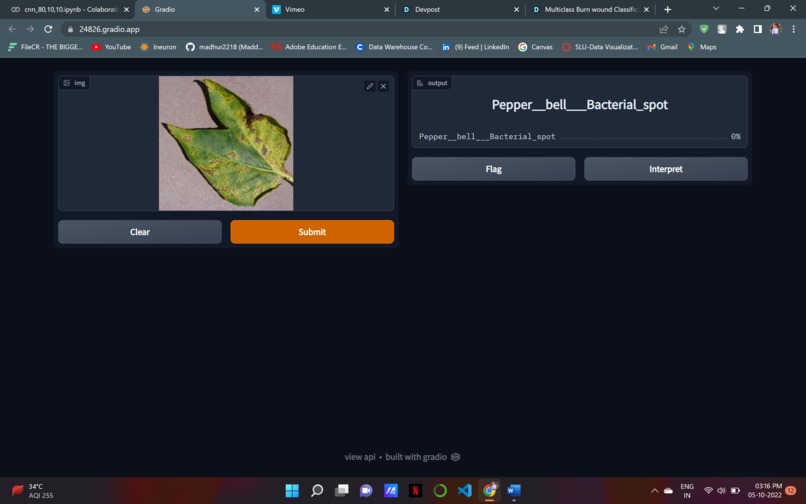
Basic Deployment


Inspiration
In India about 70% of the population relies on agriculture. Identification of the plant diseases is important in order to prevent the losses within the yield. It's terribly troublesome to observe the plant diseases manually. It needs tremendous quantity of labor, expertize within the plant diseases, and conjointly need the excessive time interval. Hence, image processing and machine learning models can be employed for the detection of plant diseases. In this project, we have described the technique for the detection of plant diseases with the help of their leaves pictures.
What it does
The early detection of diseases is important in agriculture for an efficient crop yield. The bacterial spot, late blight, septoria leaf spot and yellow curved leaf diseases affect the crop quality of tomatoes. Automatic methods for classification of plant diseases also help taking action after detecting the symptoms of leaf diseases. This project presents a Convolutional Neural Network (CNN) model and Transfer learning technqiues based method for bell pepper disease detection and classification. The dataset contains 1,000 images of bell pepper leaves with two symptoms of diseases. We have modeled a CNN for automatic feature extraction and classification. In the model, the filters are applied to three channels based on RGB components.
How we built it
Accurate assessment of Bell pepper leaf disease is increasingly sought due to challenges faced with traditional visual assessment methods. There are several existing pre-trained models that we will be using for transfer learning for example, XceptionNet, MobileNet, Densenet family, InceptionV3 etc. and machine learning technique like SVM for image classification purpose For the problem domain, we will be utilised a basic CNN model and various transfer learning techniques i.e- pre-trained model for classification purpose. Our methodology will also use a fine-tuning approach in which initial layers of these models will be frozen to extract useful features, and subsequently, top-most substituted layers will be trained using those features from the initial layers.
In the end we will build a simple web application using Gradio in which the user would choose a bell pepper leaf image (Healthy leaf or Bacterial infection leaf) and the model would give accurate prediction regarding the same.
Challenges we ran into
Dataset is small, about a 1k image samples (difficult to get data in the field of AI in Agriculture) Difficulty in getting patients confidential data fom various hospitals. Scraping of images for every body part Model is extremely inefficient Only works on burns located on the skin. Proper Data processing was to be preformed. Can use image segmentation/object detection to improve results .
Accomplishments that we're proud of
- This project can do have a major impact in the world of Artificial Intelligence in Agriculture Sector of India.
- Solved a problem which can solve a problem on a larger scale.
- Was able to increase the accuracy of the model to minimum loss value on the testing dataset. ## What we learned This project can do have a major impact in the world of Artificial Intelligence in Agriculture Sector. Solved a problem which can solve a problem on a larger scale. Was able to increase the accuracy of the model to minimum loss value on the testing dataset using CNN and various transfer learning techniques. ## What's next for Plant leaf disease detection
- Mobile application: Develop a mobile application specific for a plant type that can be used by farmers to get instant results of the crop.
- Research Paper implementation.
- Business idea: Can be made proprietary and provide access to only agricultural institutes.
- A complex web interface where the user can upload the images of the plant leaves, the platform would results from the model. Bulding a DALl-E model which would differentiate between different plant leaf diseases.
Built With
- gradio
- keras
- python
- tensorflow

Log in or sign up for Devpost to join the conversation.