About the Project
Inspiration
Emotional loneliness is increasing in modern digital life, yet most digital platforms feel impersonal and often monetize deeply private emotional data. At the same time, humans naturally feel calm and connected around plants, which provide a grounding presence.
PlantBuddy was inspired by the idea of creating a new interface where humans can interact with nature while maintaining ownership of their emotional data. By combining plants, AI, and decentralized technologies, we envisioned a system where a plant becomes an interactive companion that can respond to touch, conversation, and creative expression.
What it does
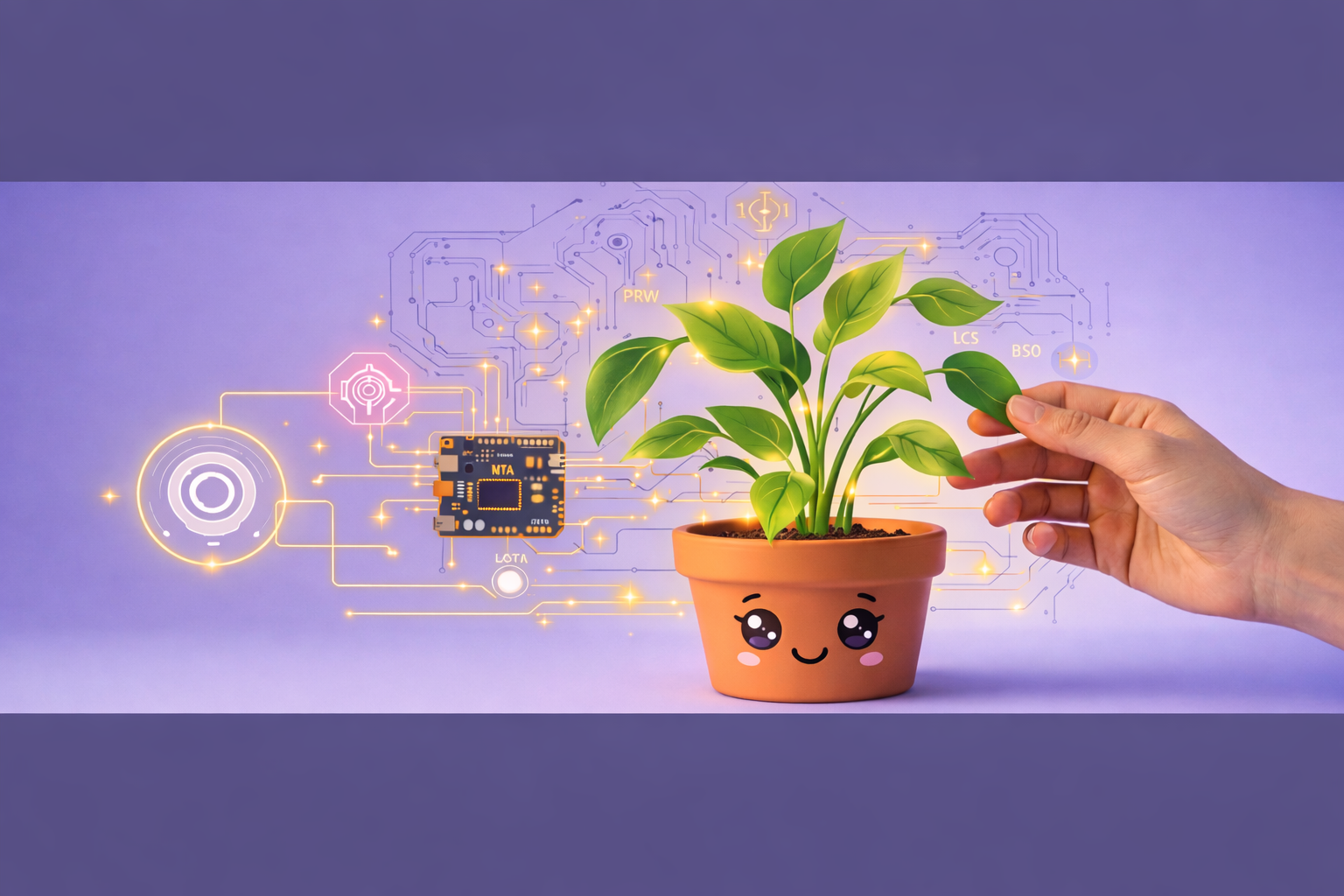
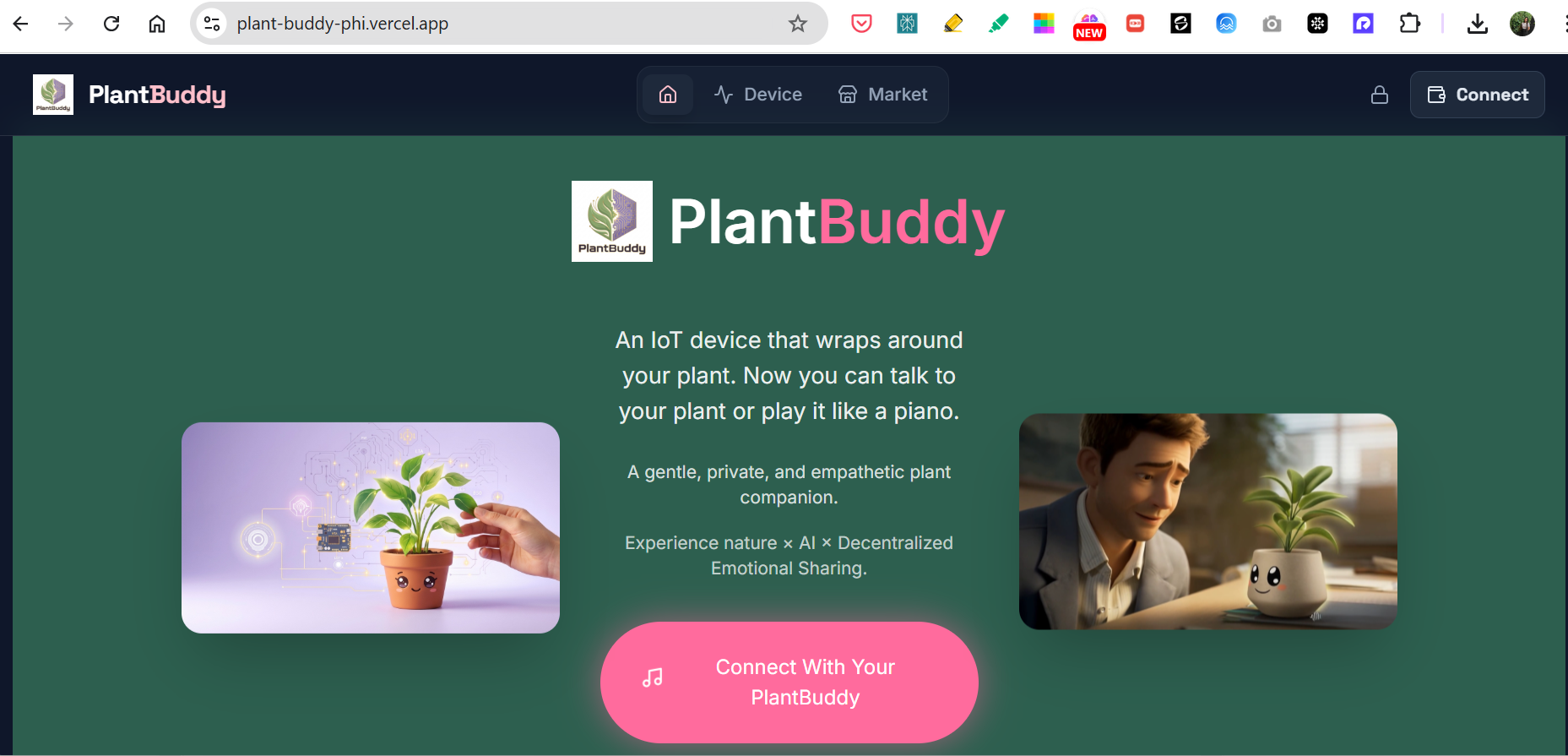
PlantBuddy is an AI-powered IoT device that turns a living plant into an interactive companion.
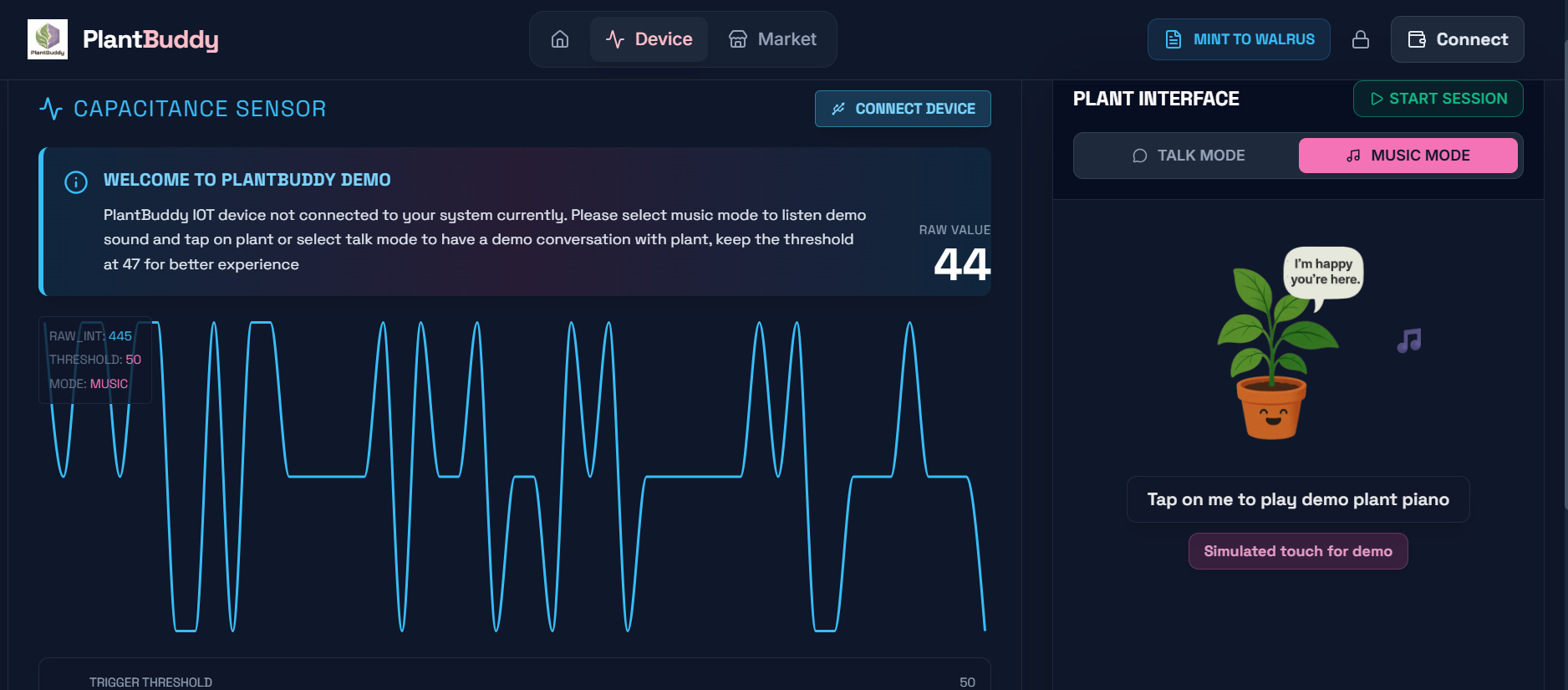
Using capacitive sensing, the system detects subtle electrical changes in a plant when it is touched. These signals trigger two interaction modes.
Talking Mode: Touching the plant activates an AI conversation. The user speaks, speech is transcribed, an AI model generates a response, and the plant replies using text-to-speech.
Music Mode: Touch intensity is converted into sound frequencies, allowing users to play the plant like a musical instrument.
All conversations are encrypted locally and stored on decentralized Walrus storage, ensuring privacy and full user ownership of emotional data.
How we built it
PlantBuddy combines hardware sensing, AI systems, and decentralized storage.
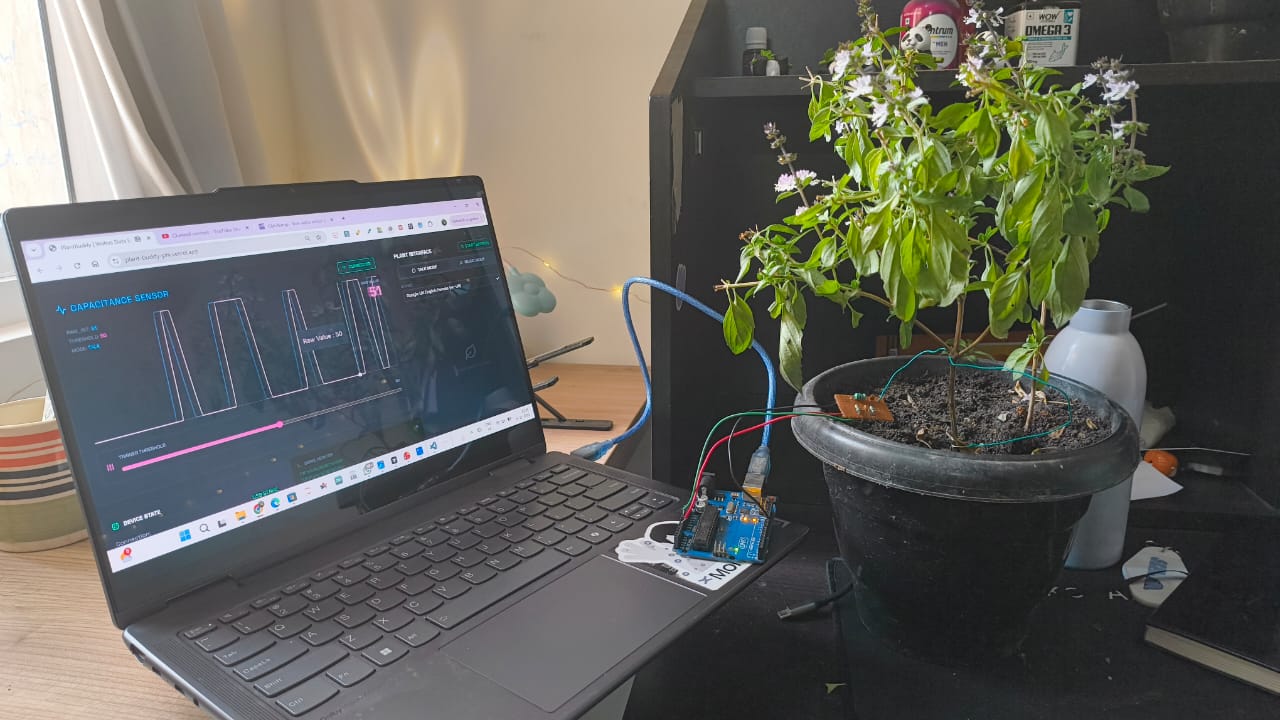
The hardware layer uses an Arduino-based capacitive sensing circuit attached to the plant stem to detect micro electrical changes caused by touch.
Signal processing maps these variations into triggers or continuous values used for interaction modes.
For AI interaction, speech is transcribed using a Whisper-style speech-to-text system, and responses are generated using the Gemini API. The system converts responses into audio using text-to-speech.
For security, conversations are encrypted locally using AES-256 before being uploaded as encrypted blobs to Walrus decentralized storage.
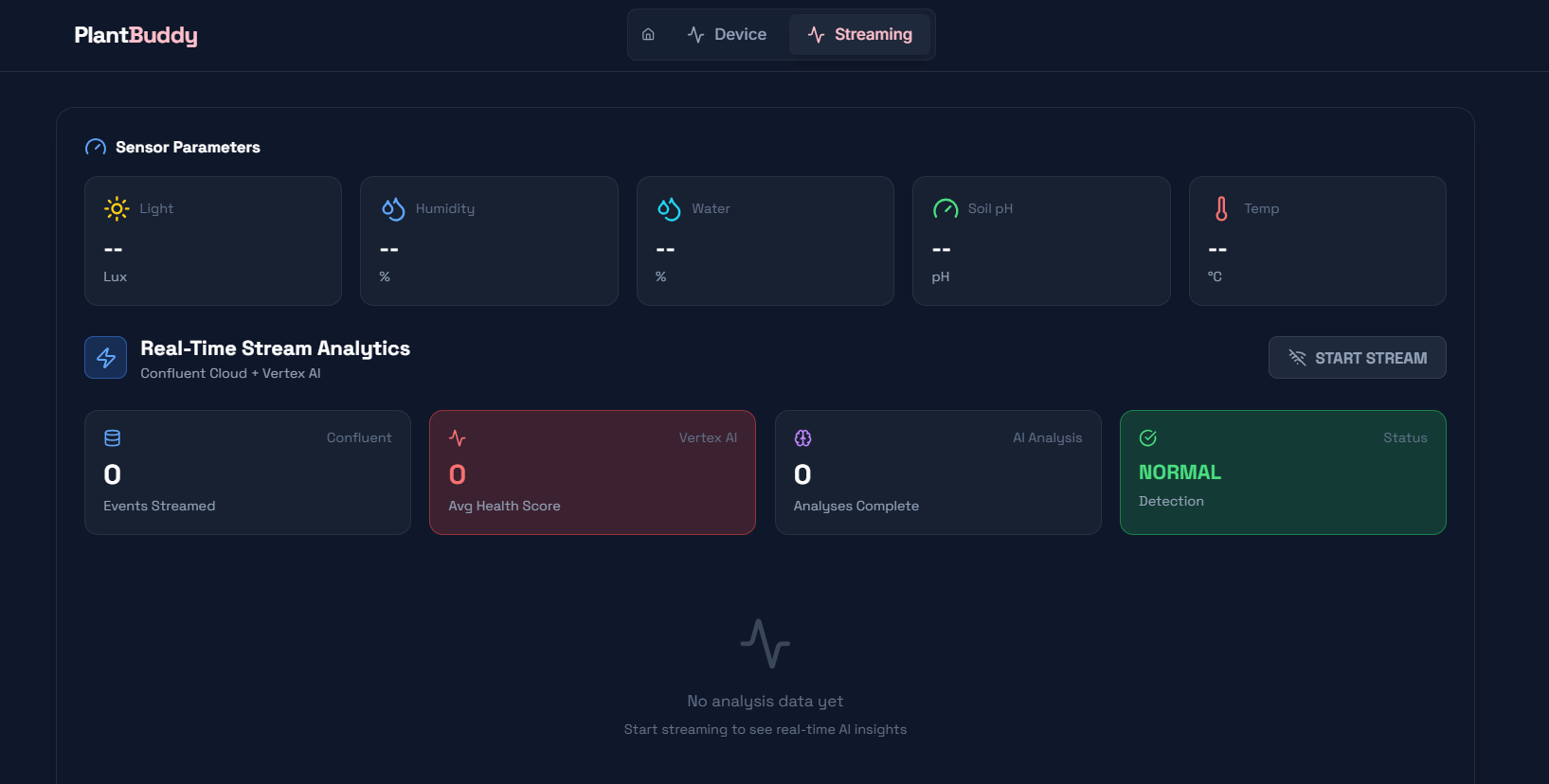
A web application interface allows users to monitor sensor signals, switch interaction modes, and manage encrypted uploads.
Challenges we ran into
One of the biggest challenges was handling noise in capacitive sensing. Plant capacitance changes are extremely small and sensitive to environmental conditions such as humidity, grounding, and nearby electrical devices.
We also had to carefully design the integration between hardware signals and the web interface to maintain real-time responsiveness.
Another challenge was implementing privacy-first AI architecture. We needed to ensure that AI processing remained temporary while stored conversation data remained encrypted and private.
Finally, defining emotional data sharing responsibly required building opt-in and anonymous mechanisms so users retain full control of their information.
Accomplishments that we're proud of
We successfully built a system that transforms a living plant into a functional AI interface.
We created two interaction modes — conversation and music — from the same plant sensor input.
We implemented privacy-first architecture where conversations are encrypted locally before decentralized storage.
Most importantly, we demonstrated a full working pipeline from touching a plant → triggering AI interaction → encrypting data → storing it on decentralized infrastructure.
What we learned
Plants produce surprisingly responsive electrical signals that can be used as interactive inputs.
Building systems that combine hardware, AI, and decentralized infrastructure significantly increases complexity but enables entirely new forms of human-computer interaction.
We also learned that privacy must be designed from the beginning when dealing with emotional or personal data.
What's next for PlantBuddy
Next, we plan to miniaturize the hardware into a clip-on device that can easily attach to plant stems.
We also aim to introduce on-chain ownership proofs for devices and encrypted datasets, allowing users to control how their emotional data is shared.
Future development includes multi-plant networks, ambient computing applications, and partnerships in mental wellness and interactive art installations.

Log in or sign up for Devpost to join the conversation.