-
-
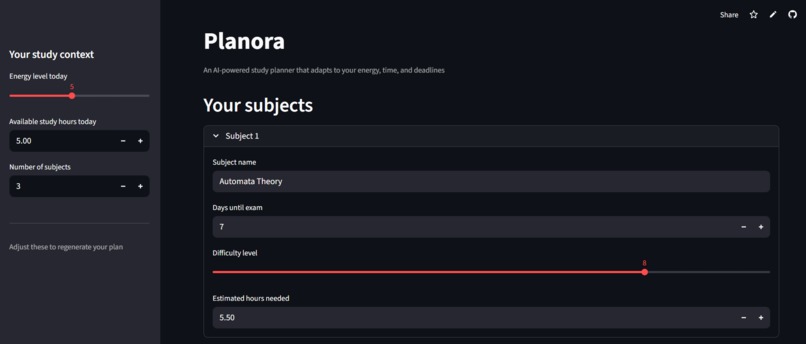
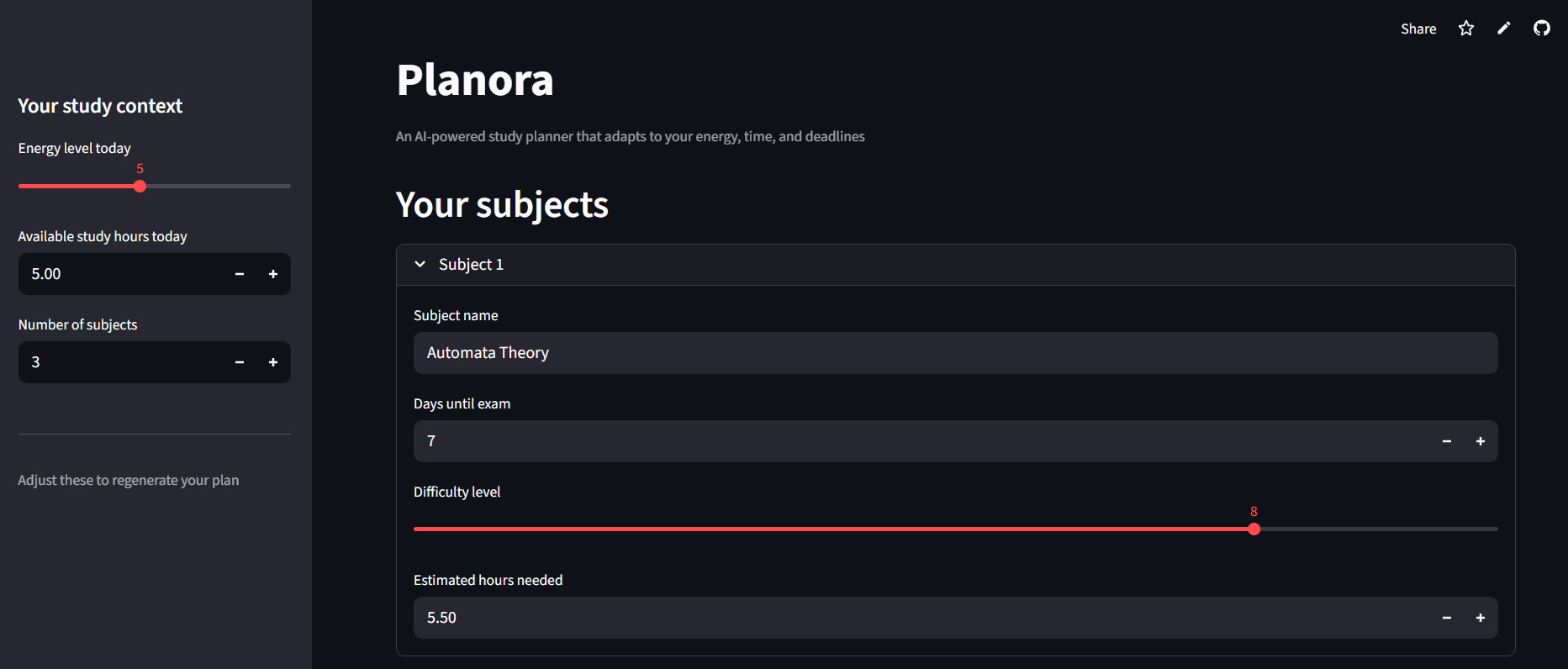
the streamlit landing page
Inspiration
Planora was inspired by the everyday reality of college students. Students manage academics, attendance pressure, career preparation, financial limits, commute time, and mental fatigue simultaneously. Most existing productivity tools assume ideal schedules, constant motivation, and abundant resources, which makes them unrealistic and stressful to use. Planora was built for the imperfect days, fluctuating energy, and practical constraints and offer adaptive, scalable and customizable solutions
What it does
Planora is an AI-powered student planning assistant that helps students manage academics, career preparation, and well-being together. It: -Generates realistic daily study plans based on exams, deadlines, and attendance risk -Adjusts workload based on self-reported energy or mood
How I built it
Student data (subjects, exams, energy levels, available hours) is modeled using Pandas and NumPy. -Rank tasks by urgency and importance -Allocate time dynamically -Adapt schedules to real-life constraints This approach avoids heavy black-box models and keeps the system transparent, affordable, and student-friendly.
Challenges I ran into
The biggest challenge was controlling scope. It was tempting to add many features, but I focused on building a system that works reliably. Designing logic that adapts to low-energy days without becoming too rigid was another key challenge.
Accomplishments that I'm proud of
-Built an AI system that is practical, explainable, and India-first -Covered learning, productivity, career prep, and well-being in one tool -Designed for real constraints instead of ideal assumptions
What I learned
-Good problem framing simplifies development -Student-centric design matters more than advanced models
What's next for Planora
-Multi-language support for Indian students -Voice-based input for accessibility -Calendar integration

Log in or sign up for Devpost to join the conversation.