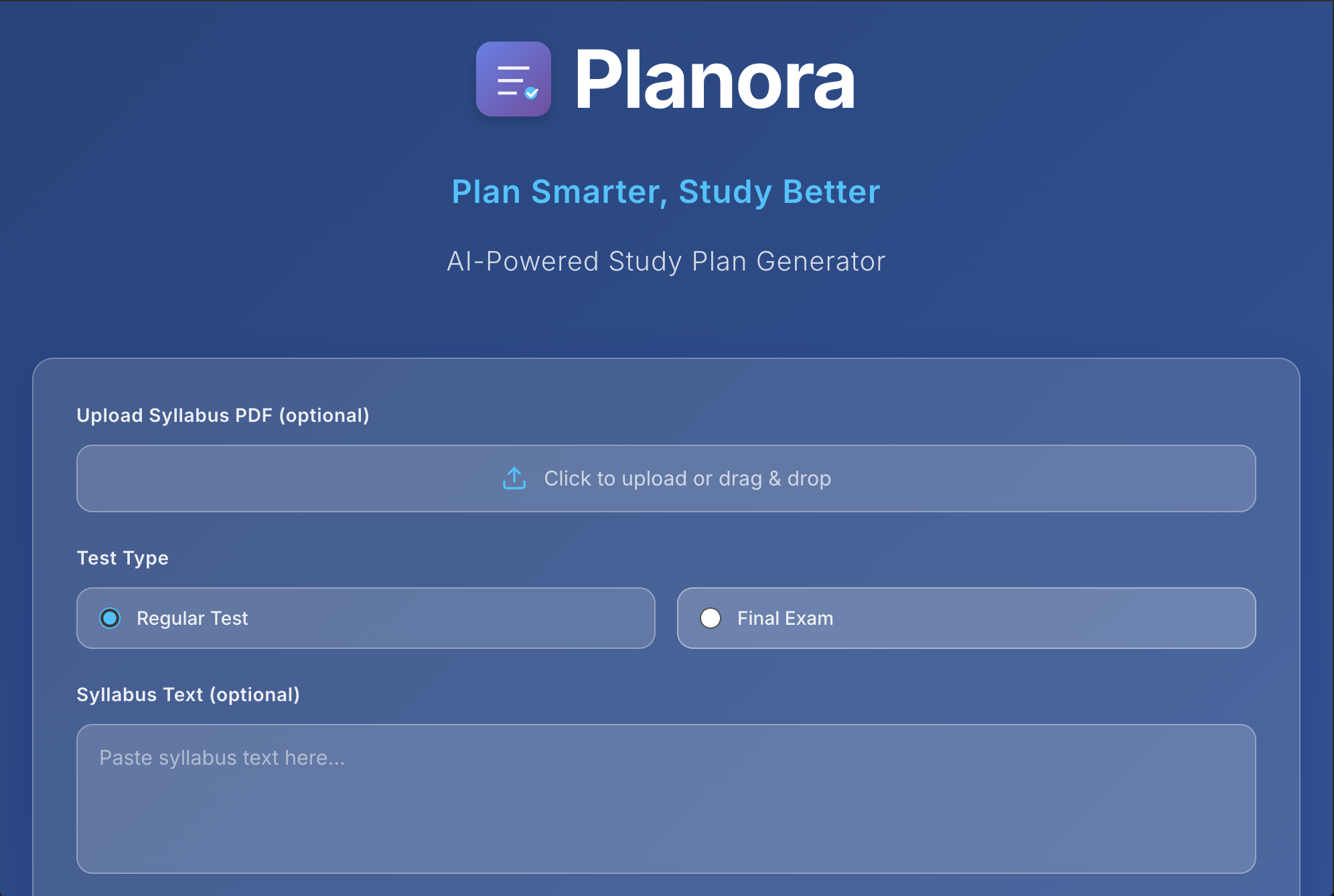
Inspiration: Planora was inspired by how overwhelming it can be for students to balance classes, exams, and daily responsibilities without a clear plan. Traditional planners don’t adapt to difficulty, workload, or schedule changes, and many students struggle to stay consistent. We wanted to build an intelligent tool that transforms scattered assignments into a structured, personalized study plan—something that actually reduces stress instead of adding to it.
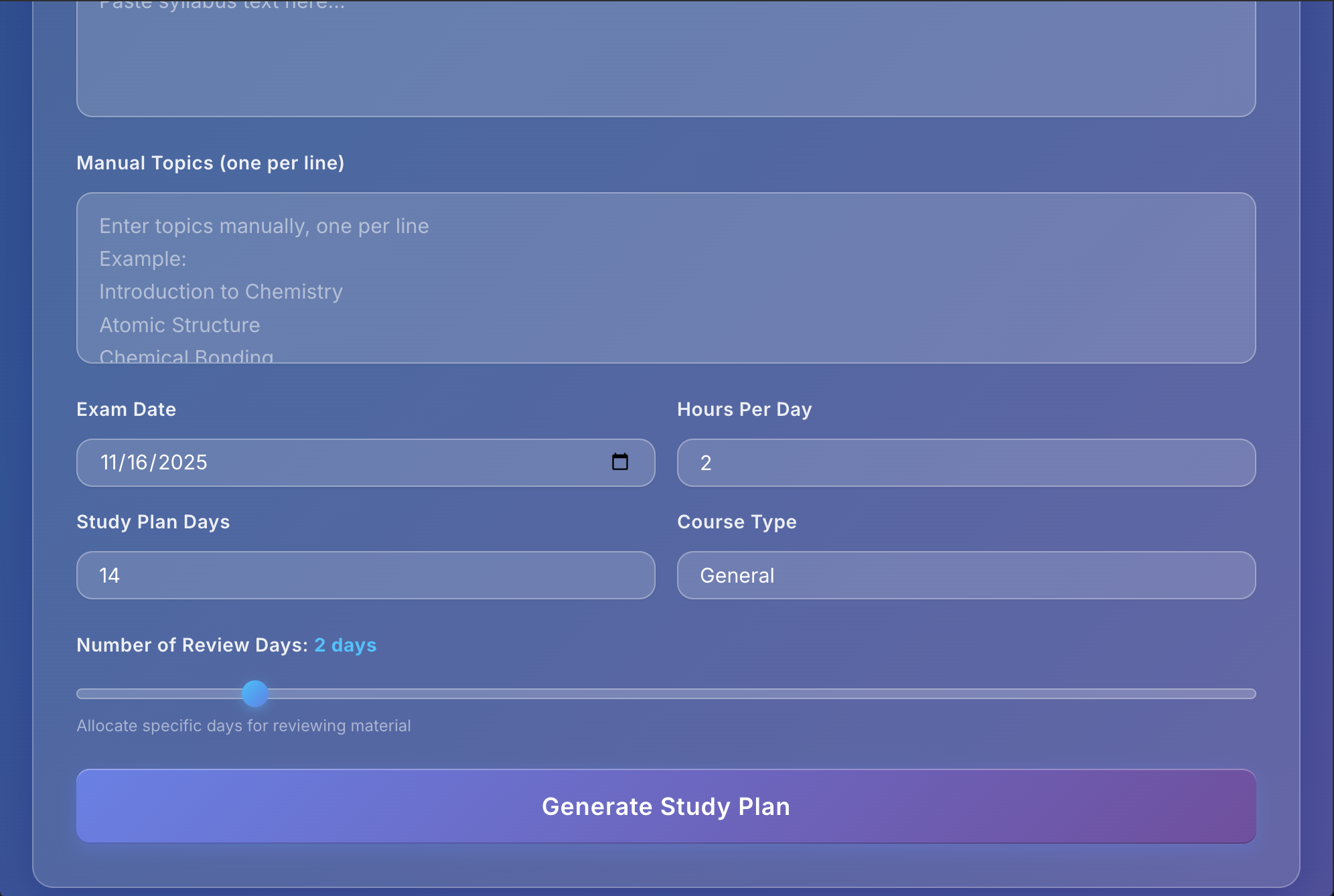
What it does: Planora is an AI-powered study planning tool that transforms a student’s syllabus/ study topics into a personalized, beautifully designed study calendar. It analyzes topics, difficulty, deadlines, and the student’s weekly availability to generate a day-by-day schedule that tells them what to study, for how long, and how hard each day should be.
Students constantly feel overwhelmed by scattered syllabi, inconsistent deadlines, and the pressure to “figure out” how much to study. Most planners are either too generic or require too much manual setup. Planora helps students study smarter through AI-driven planning, intuitive design, and tools that reduce stress, increase productivity, and make academic success more accessible for every learner.
How we built it: We built Planora using a combination of Python, Streamlit, and v0. The core logic runs in Python, where the AI processes course topics, difficulty levels, and deadlines to generate a structured study plan. Streamlit allowed us to quickly prototype an interactive interface for testing and iteration. All code was version-controlled through GitHub to keep the project organized and transparent. For the final user experience, we uploaded the design and front-end components to v0, giving Planora a polished, modern interface that pairs clean visuals with smart scheduling functionality.Challenges we ran into:
Accomplishments that we're proud of: I am proud that Planora can already turn a list of classes and topics into a structured, day-by-day study plan within seconds. Even in its early version, the system delivers practical, personalized guidance that students can follow immediately. We’re also proud of designing a polished brand identity(logo, aesthetic, and user experience), that makes the tool feel friendly, modern, and truly helpful.
What we learned: Throughout this project, I learned how to combine AI reasoning with scheduling logic to create something genuinely useful. We also gained experience in designing a clean UI, structuring a Node.js backend, and working quickly under time pressure. Most importantly, we learned how much students benefit from tools that simplify planning—reinforcing the value of building tech that solves real problems.
What's next for Planora: Next, we plan to improve the UI, introduce a downloadable calendar export, and connect Planora to Notion, Apple Calendar, and Google Calendar. We also want to integrate credible practice resources, letting students instantly access problem sets and study materials based on their schedule. Longer term, we aim to refine the AI model, add adaptive difficulty, and transform Planora into a complete smart study ecosystem.


Log in or sign up for Devpost to join the conversation.