-
-
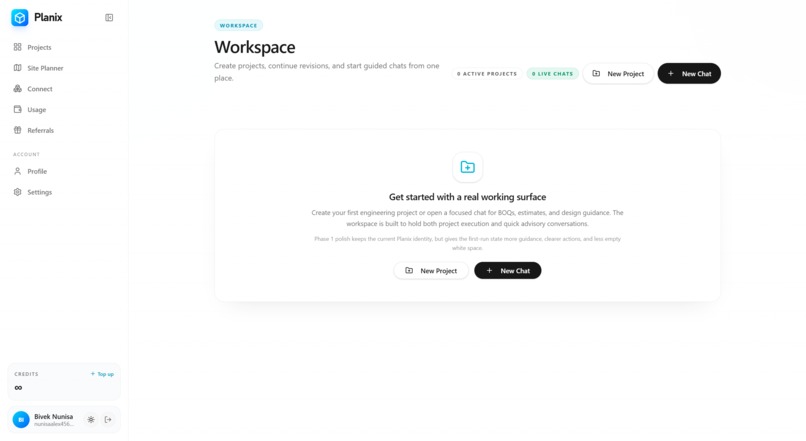
homepage
-
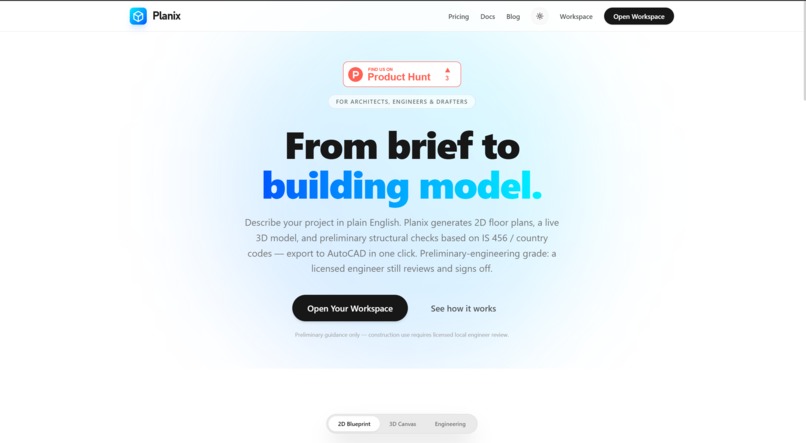
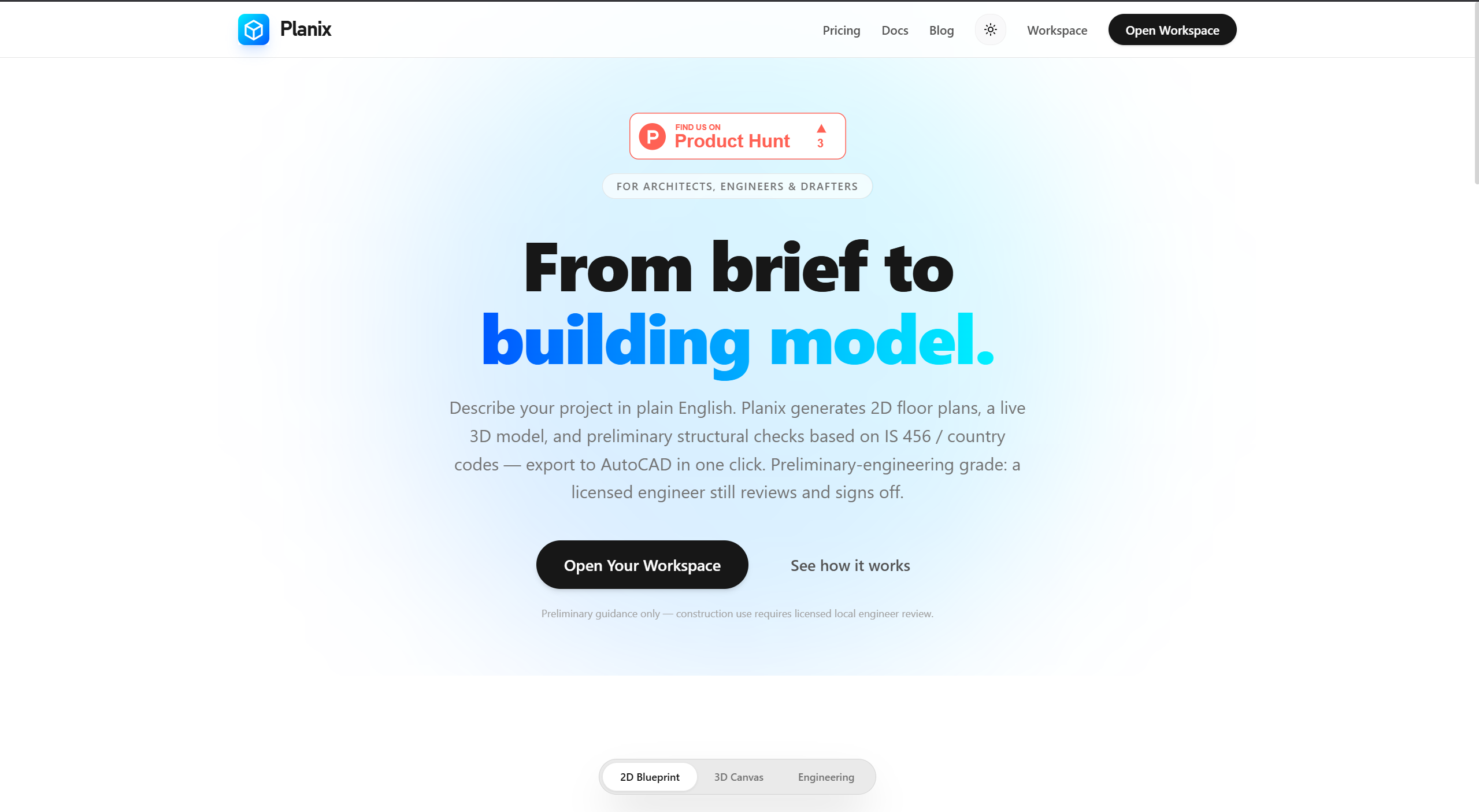
landing page
-
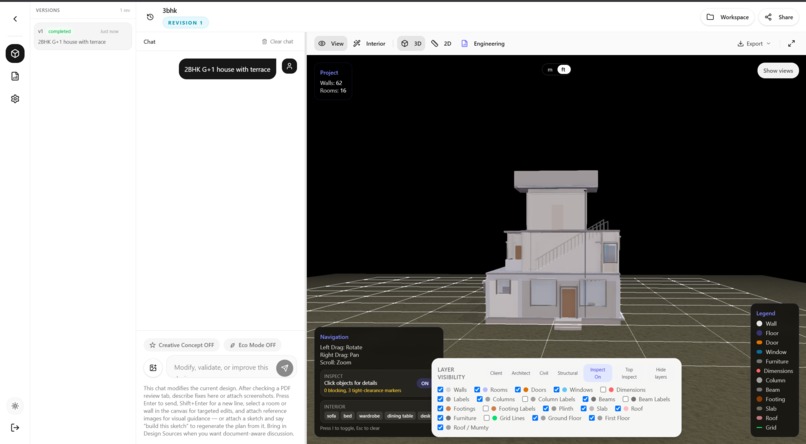
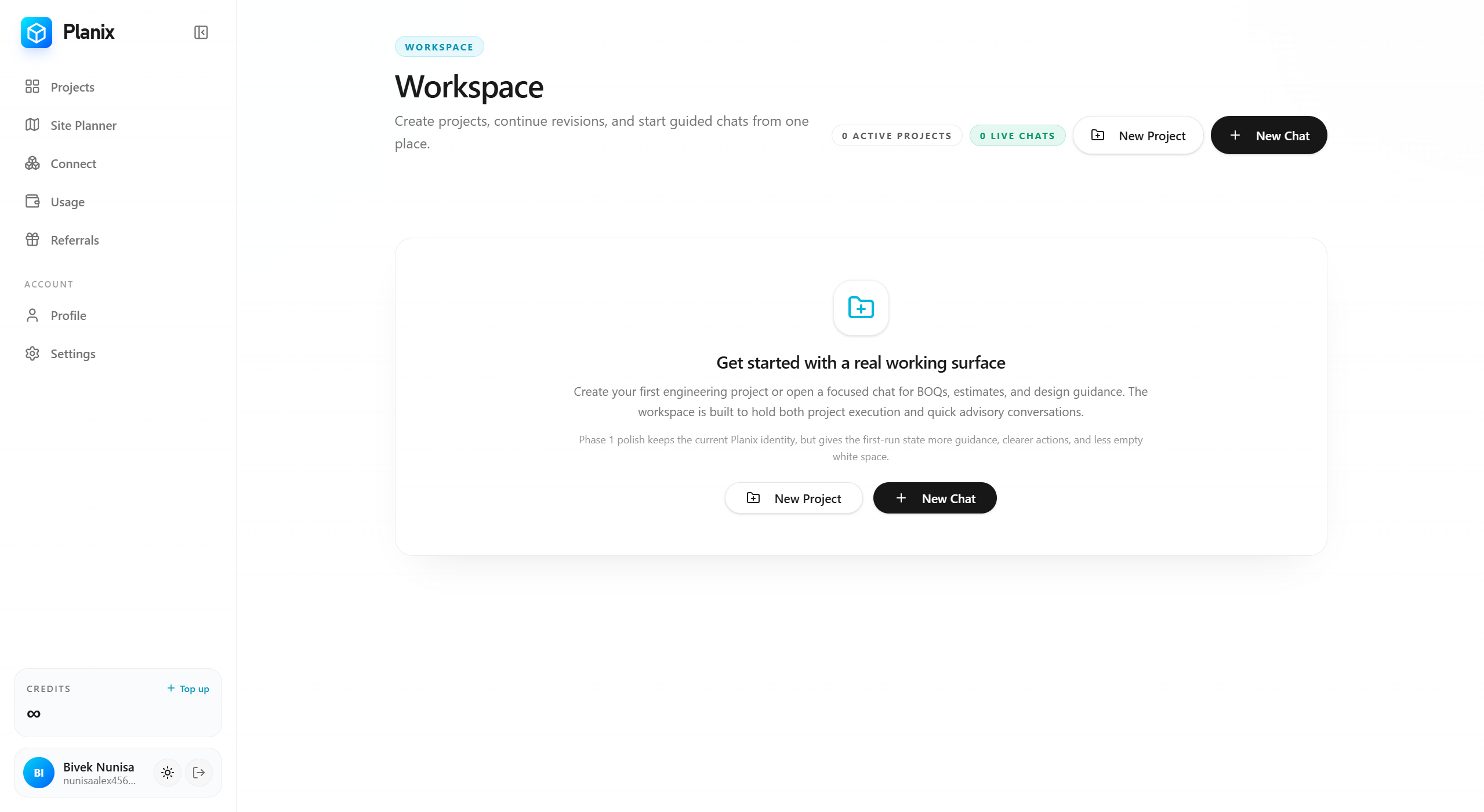
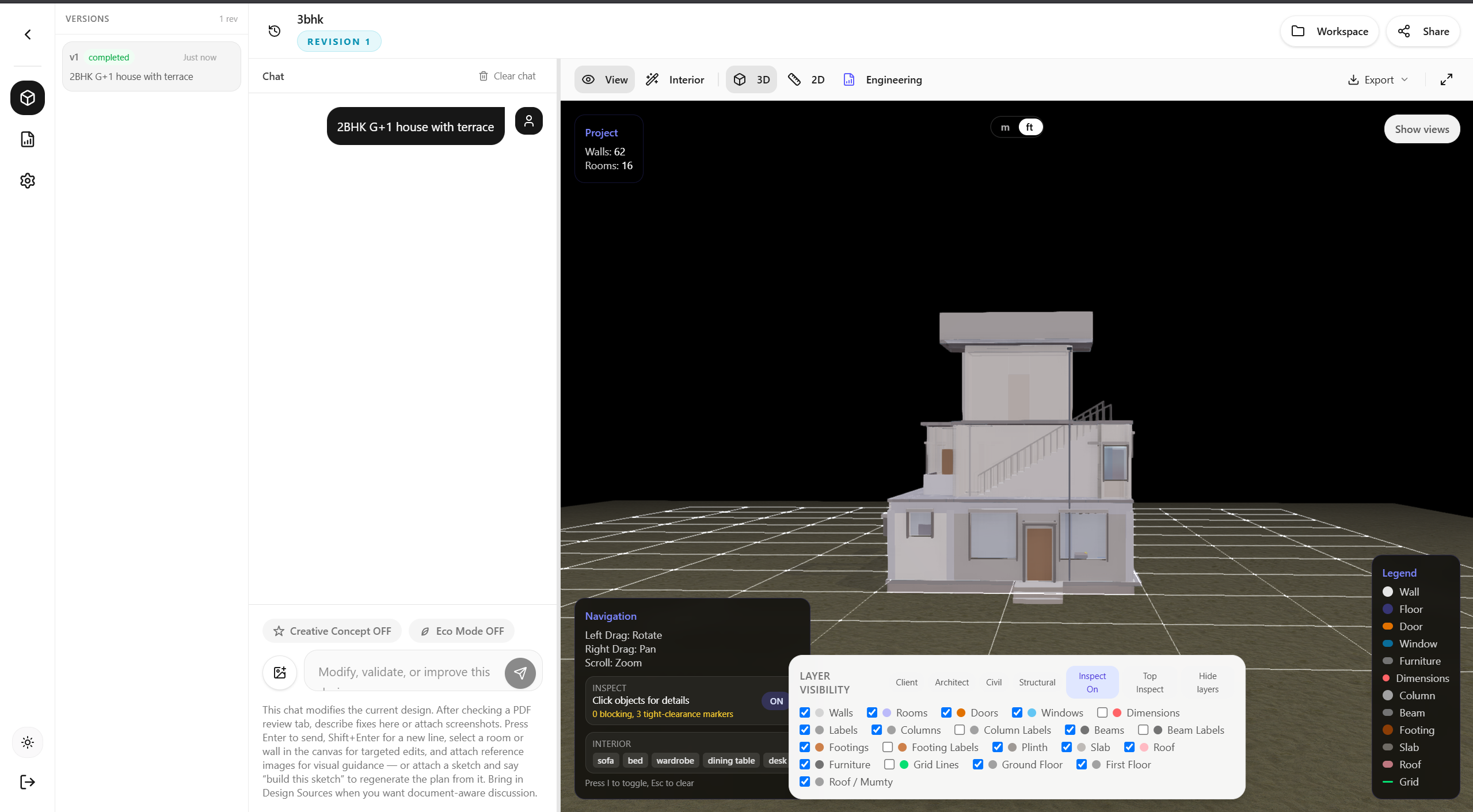
workspace where there are tabs of 2d, 3d, and engineering
-
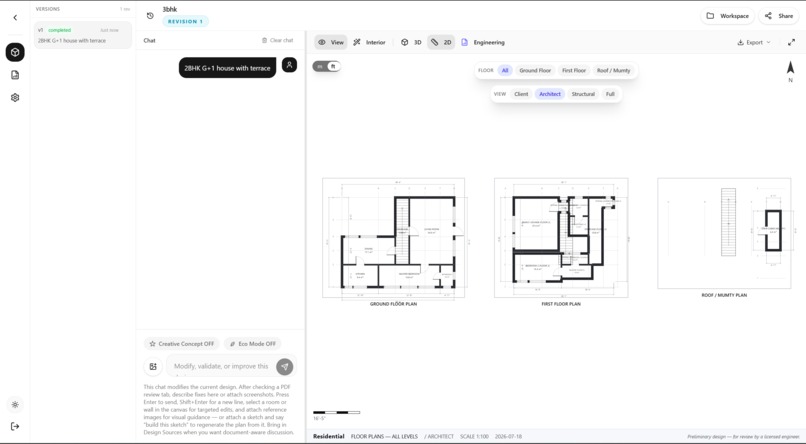
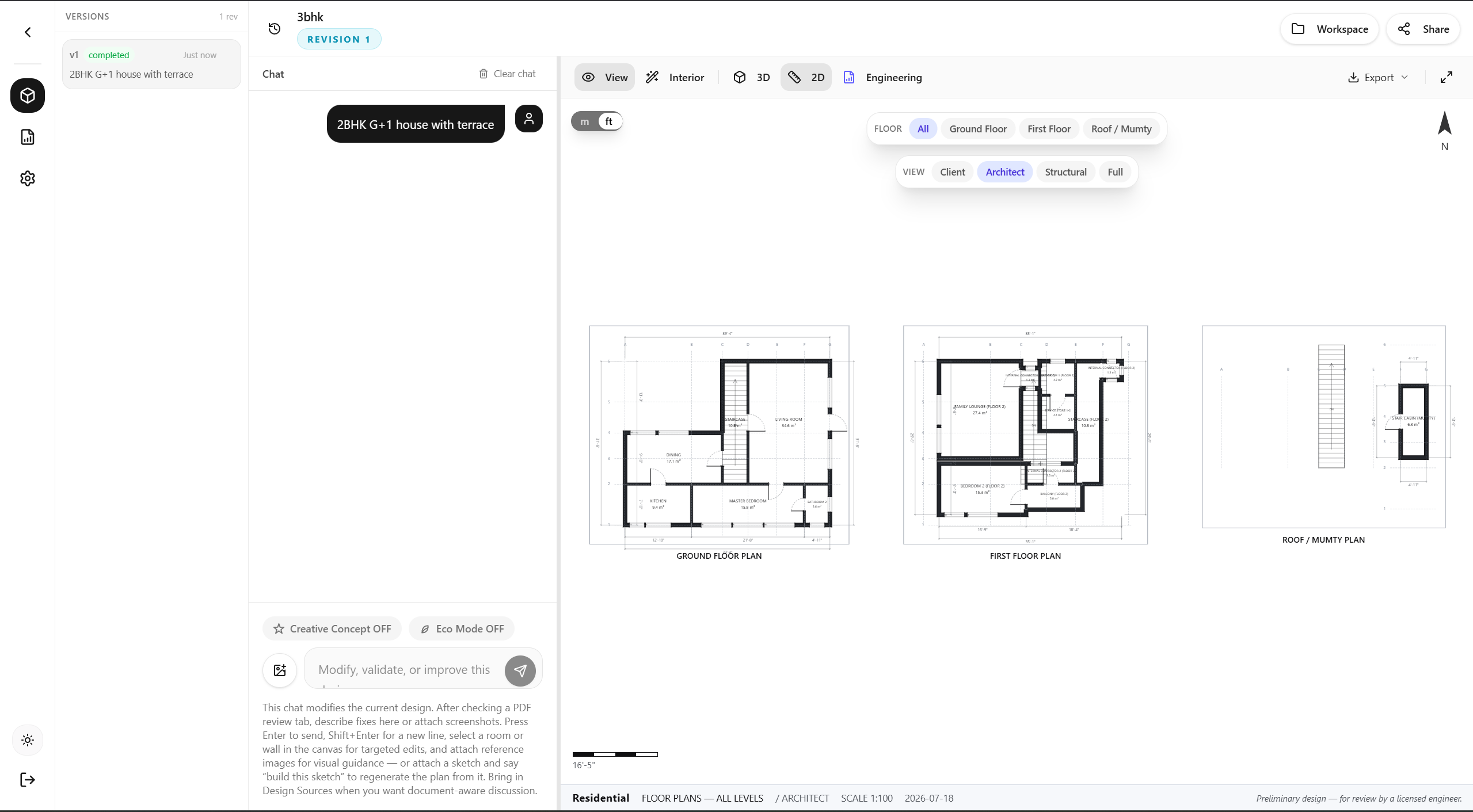
2d view
-
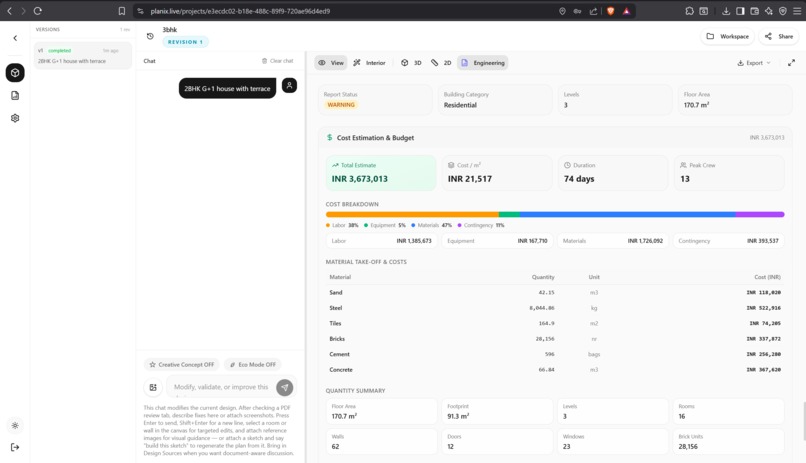
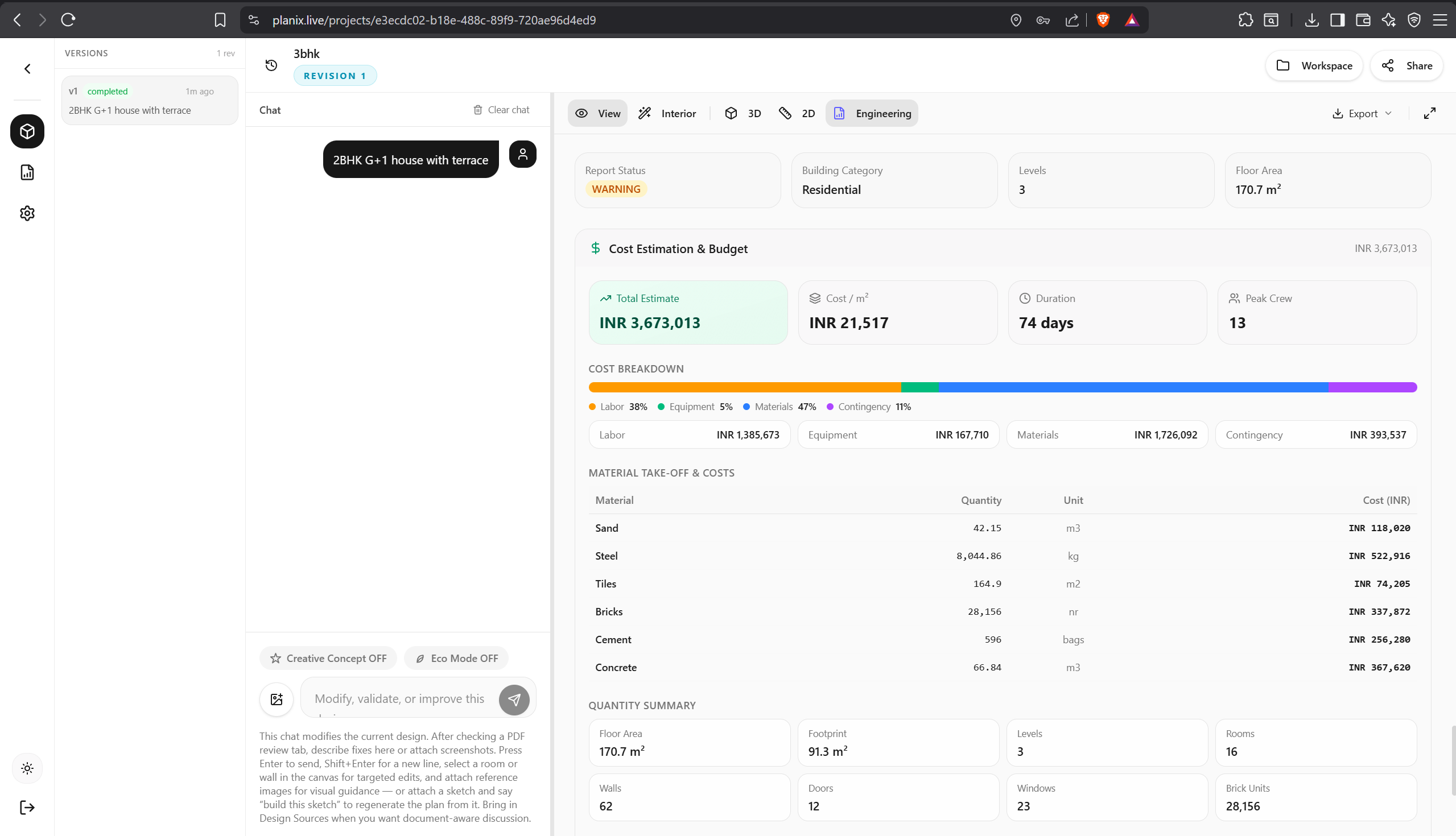
engineering tab
-
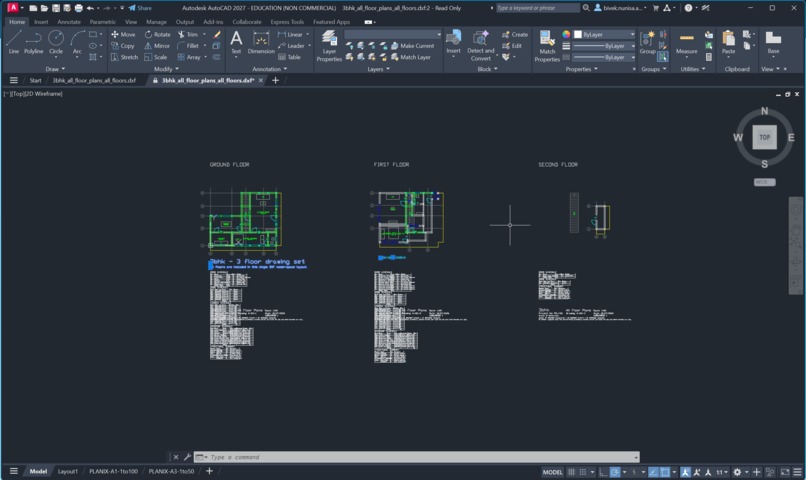
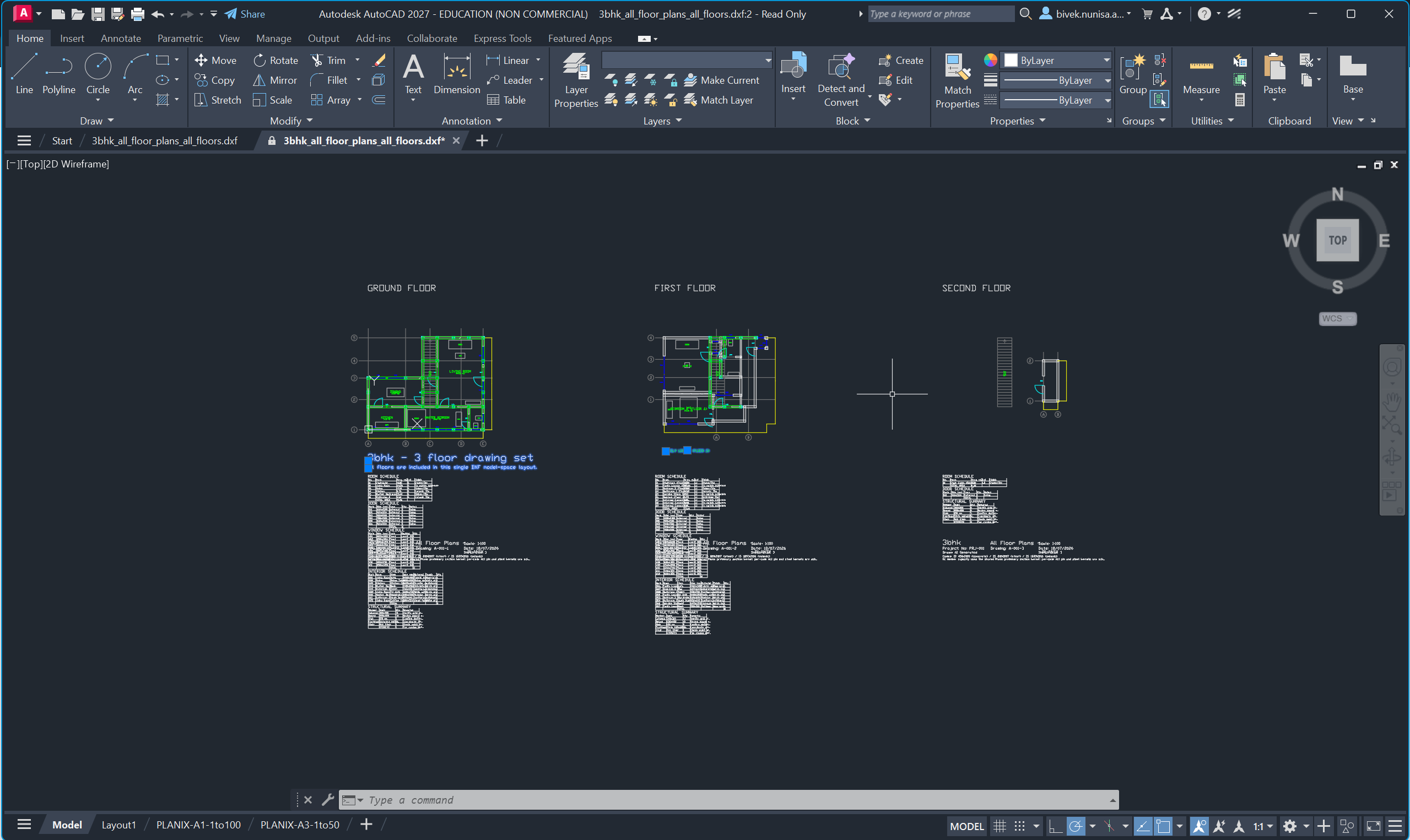
export to dxf in autocad
Inspiration
I'm a Civil Engineering graduate, not a software engineer. During college, I became curious about programming and automation and started teaching myself Python. While learning, I kept wondering why architects and engineers still had to jump between so many different software just to complete a single project.
That question eventually became Planix.
At my final year, I received a placement offer but decided not to take it. Instead, I wanted to spend my time building something that could genuinely help the architecture and engineering industry. I moved to Guwahati and have been working on Planix full-time as a solo founder ever since.
What it does
Planix is an AI-powered workspace for architects and engineers. Users can describe a project in plain English, and Planix helps generate floor plans, engineering reports, BOQs, and CAD-ready exports.
I also built Planix Connect, a desktop companion that connects AI with professional CAD software to automate engineering workflows and reduce repetitive work.
My goal isn't to replace engineers. It's to help them spend less time on repetitive tasks and more time solving engineering problems.
How I built it
I built Planix as a solo founder using Next.js, FastAPI, Python, TypeScript, Supabase, Railway, and Vercel.
During OpenAI Build Week, GPT-5.6 and Codex became an important part of my workflow. I used them to brainstorm solutions, debug issues, refactor code, improve features, and move much faster than I could on my own.
The biggest improvement during Build Week was continuing to refine the AI workflow and making the overall experience smoother while improving the quality of the engineering outputs.
Challenges
The hardest part wasn't writing code.
The difficult part was making AI useful for engineering. Unlike normal AI applications, engineering requires consistency, structured outputs, and files that people can actually continue working with in professional software.
Building everything alone also meant learning many different skills beyond programming, from backend development and frontend design to deployment, APIs, and product design.
What I learned
Building Planix taught me that creating software is only one part of building a product.
AI has made development much faster, but understanding users, improving the product through constant iteration, and solving real problems are what matter most.
Working with GPT-5.6 and Codex also showed me how much more productive development becomes when AI is treated as a collaborator rather than just a tool for generating code.
What's next
This is only the beginning for Planix.
I want to continue improving the quality of the generated engineering outputs, expand Planix Connect, support more engineering workflows, and keep building a product that architects and engineers can rely on every day.
Built With
- autocad
- codex
- css
- dxf
- fastapi
- gpt-5.6
- next.js
- openrouter
- python
- railway
- react
- revit
- supabase
- tailwind
- typescript
- vercel

Log in or sign up for Devpost to join the conversation.