-
-
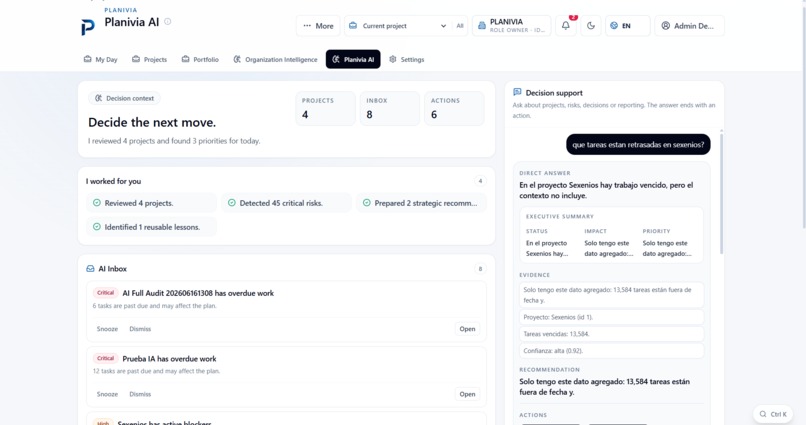
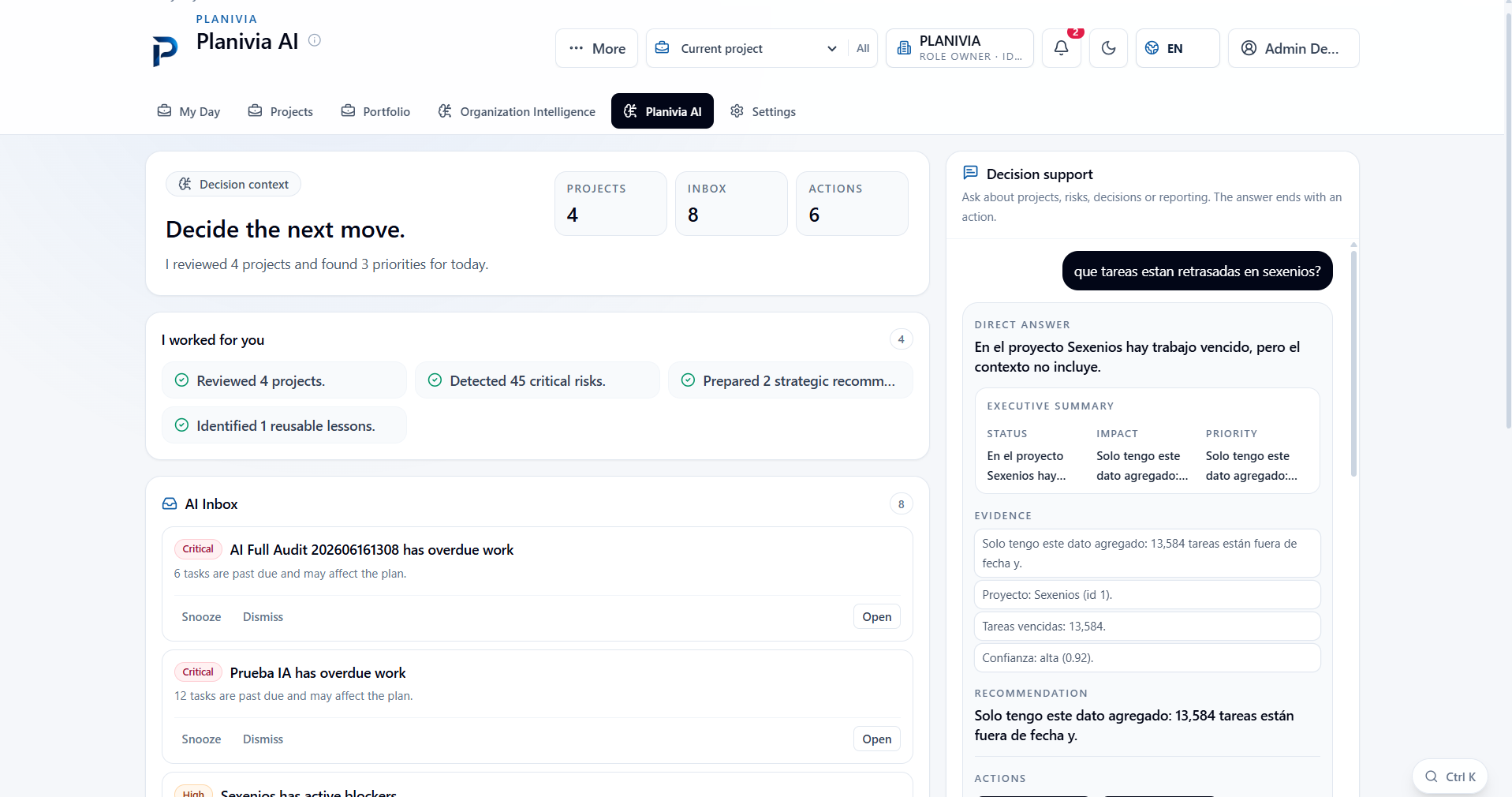
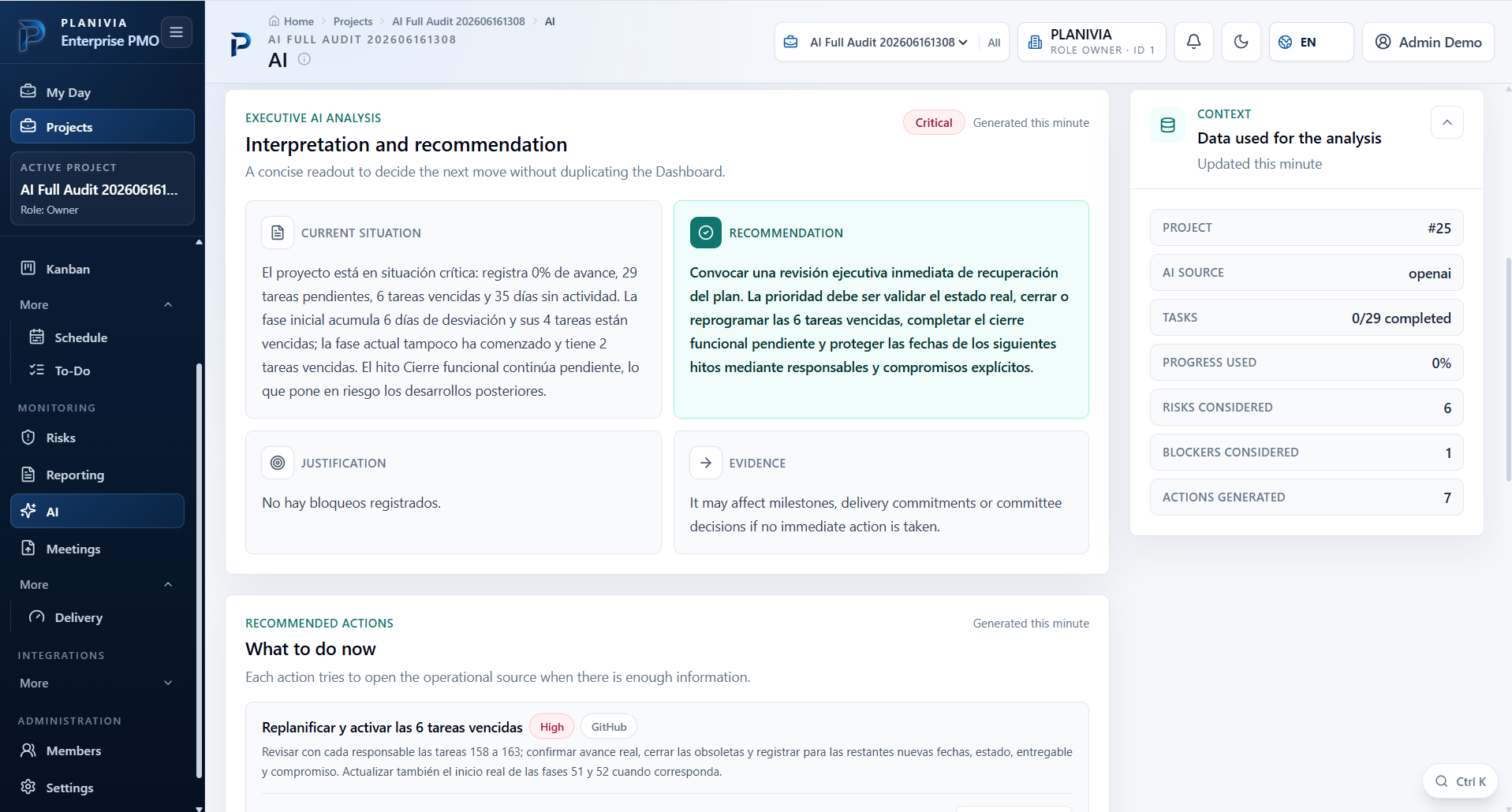
Ask strategic questions about your projects, portfolio and organization. Every answer includes evidence, impact and recommended actions.
-
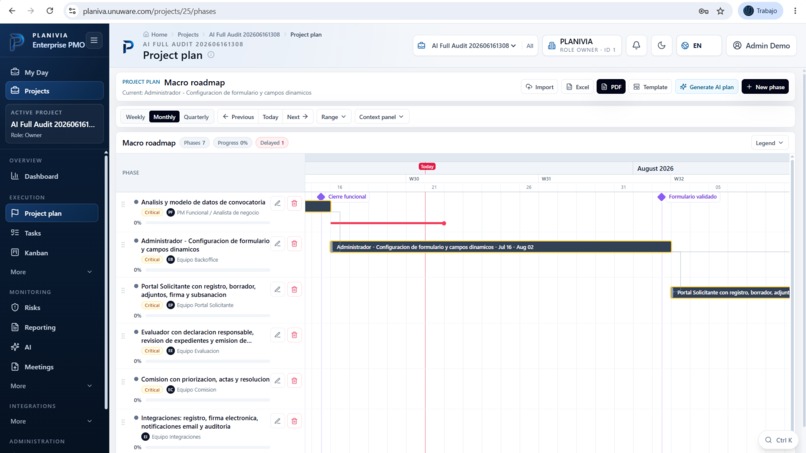
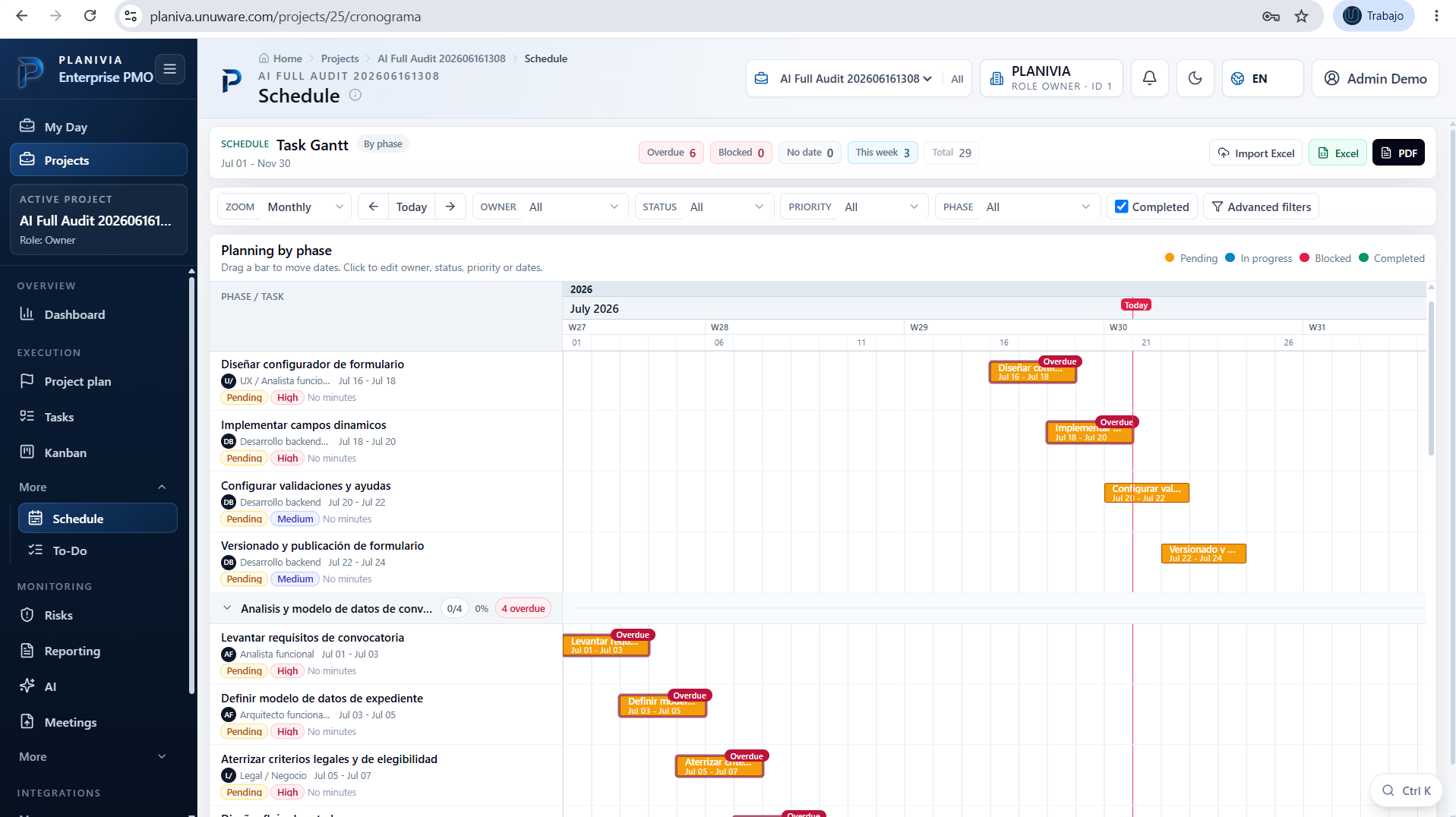
Manage execution through an interactive Gantt chart with dependencies, deadlines, critical tasks and real-time schedule tracking
-
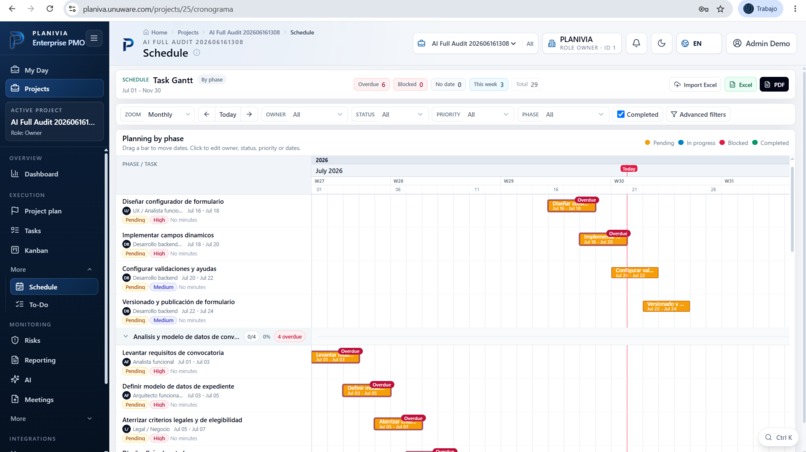
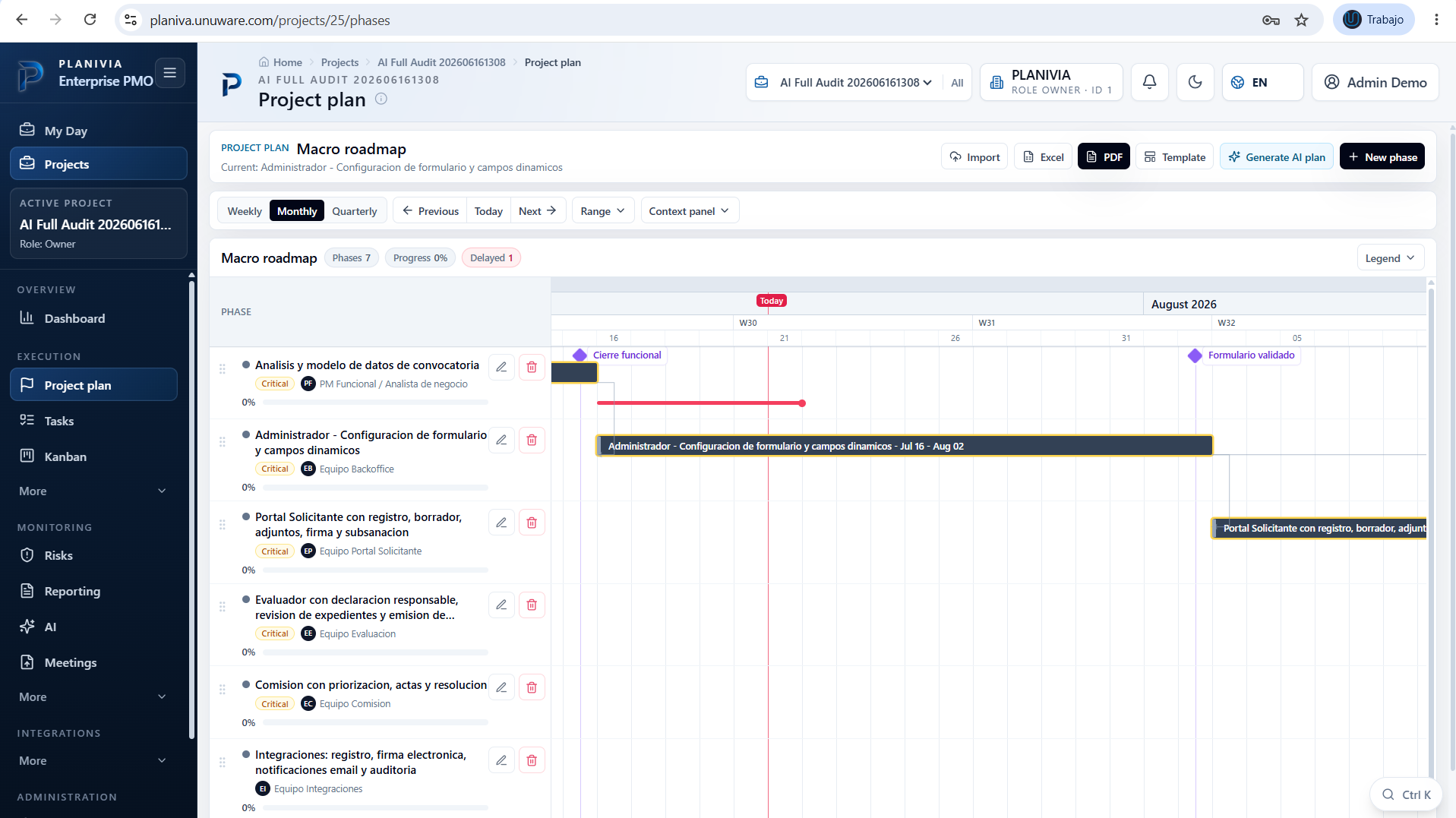
Plan project phases, milestones and strategic timelines with an executive roadmap that keeps delivery aligned with business objectives
-
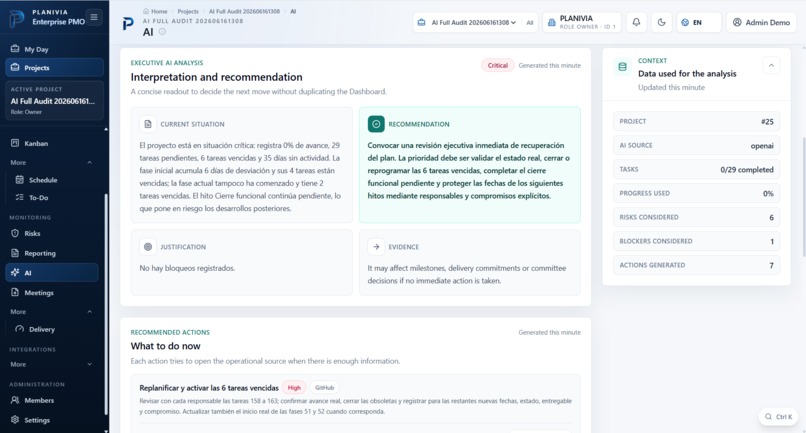
Analyze project health, understand the current situation and receive evidence-based recommendations to support executive decision-making
-
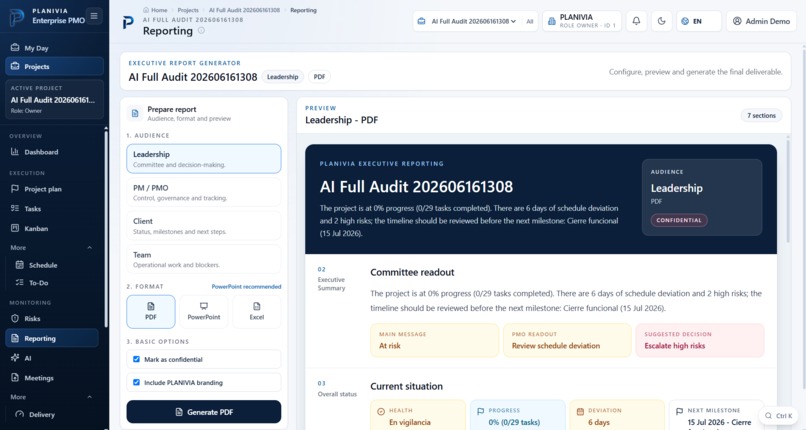
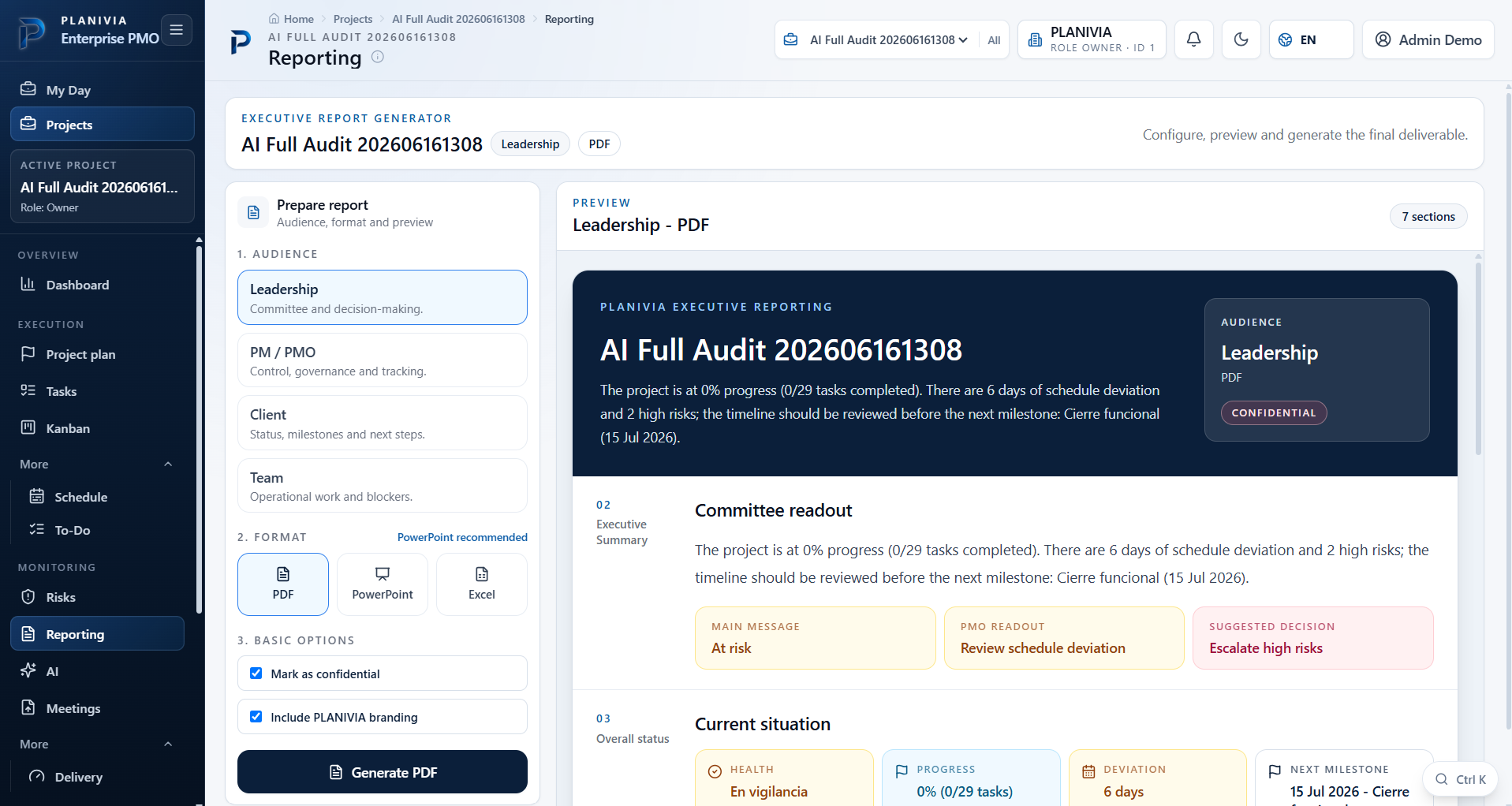
Generate executive-ready reports in PDF, PowerPoint or Excel, tailored to different audiences with AI-powered summaries and recommendations
Inspiration
Project teams often lose time translating documents, meeting notes, emails, and decisions into plans that can actually be executed. Information becomes fragmented, tasks are missed, risks are discovered too late, and reports quickly become outdated.
We built Planivia to connect project understanding with project execution.
What it does
Planivia is an AI-powered, multi-tenant project management platform that turns unstructured information into actionable work.
With Planivia, teams can:
- Upload a project brief and generate phases, milestones, tasks, dependencies, risks, and a roadmap.
- Use an AI Copilot that understands the active project and recommends next actions.
- Upload meeting notes or write what was discussed, then automatically generate structured minutes, decisions, risks, blockers, action items, and proposed tasks.
- Review AI-generated tasks before adding them to the project or synchronizing them with Jira.
- Manage execution through dashboards, task lists, Kanban boards, timelines, risk management, and reporting.
- Generate and export executive reports.
- Manage multiple organizations with tenant isolation, roles, permissions, invitations, and organization-level subscriptions.
- Work consistently in English, Spanish, or French.
How we built it
Planivia uses React and Vite for the frontend, Node.js and Express for the backend, SQLite for persistence, and GPT-5.6 for planning, document analysis, project assistance, risk analysis, meeting intelligence, and reporting.
We designed the AI workflows around structured project context rather than isolated prompts. The selected project language, organization, permissions, project state, and relevant records are propagated through the complete request pipeline.
Codex was our engineering collaborator throughout the project. It accelerated repository-wide audits, implementation, debugging, test creation, internationalization, multi-tenant authorization, prompt refinement, production hardening, and deployment verification. We made the key product and architecture decisions, while Codex helped us implement and validate them quickly across the complete codebase.
Challenges we faced
One major challenge was making AI output reliable enough to become real project data. We introduced validation, structured responses, review steps, duplicate prevention, and language guards before generated content can enter the execution workflow.
Another challenge was maintaining strict multi-tenant isolation while allowing one user to belong to multiple organizations with different roles.
Internationalization was also particularly demanding. The interface could be in English while hidden prompts or stored project context still produced Spanish responses. We corrected the architecture so project language remains the source of truth for generated content and added automated language-consistency tests.
Accomplishments
We are proud that Planivia is not just an AI demonstration. It is a working production application covering the full journey from organization signup and project creation to planning, daily execution, meetings, risks, AI assistance, and executive reporting.
The meeting-to-execution workflow is especially valuable: a team can record what happened in a meeting and turn it into reviewed, traceable project tasks within minutes.
What we learned
AI creates the most value when it is embedded in a complete workflow. Generating an answer is not enough: users need to understand it, review it, approve it, execute it, and measure the result.
We also learned that Codex is most effective as an engineering collaborator when it has clear product constraints, access to the complete repository, and objective tests for validating its work.
What's next
The next stage is a real customer pilot. We will measure adoption, time saved, completion rates, accepted AI recommendations, and workflow friction so that future development is driven by real usage rather than assumptions.
Built With
- codex
- express.js
- github
- gpt-5.6
- javascript
- jenkins
- linux
- lucide
- nginx
- node.js
- openai
- react
- restapi
- saas
- sqlite
- tailwind
- vite


Log in or sign up for Devpost to join the conversation.