-
-
-
-
-
-
-
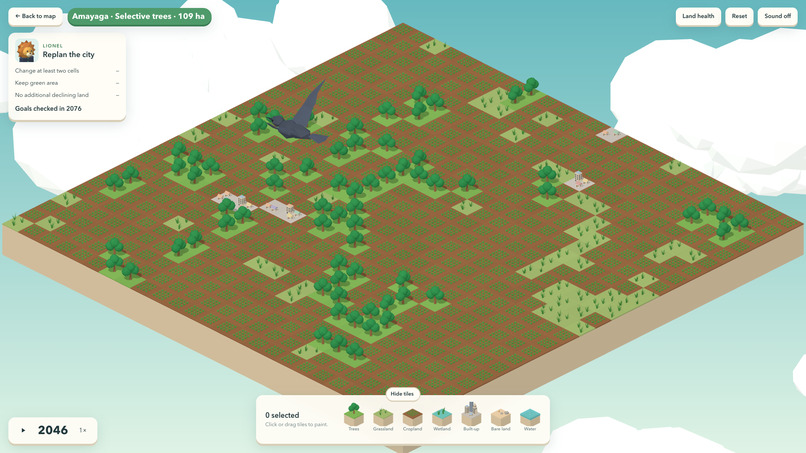
Interactive map
-
-
-
-
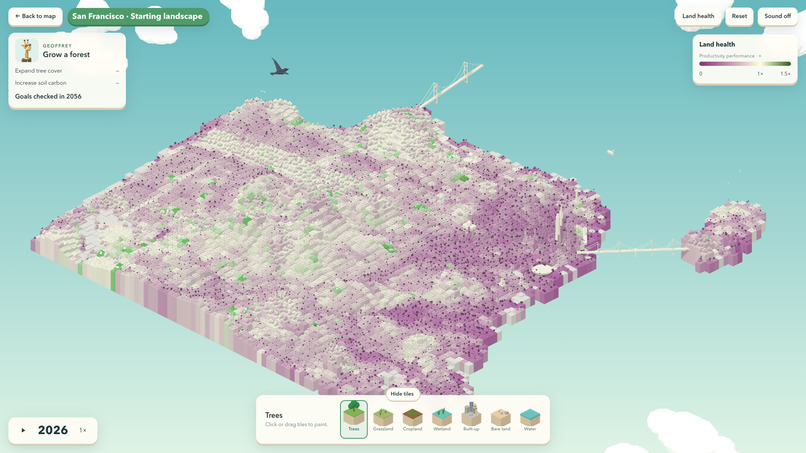
Land health in interactive map
-
-
-
Inspiration
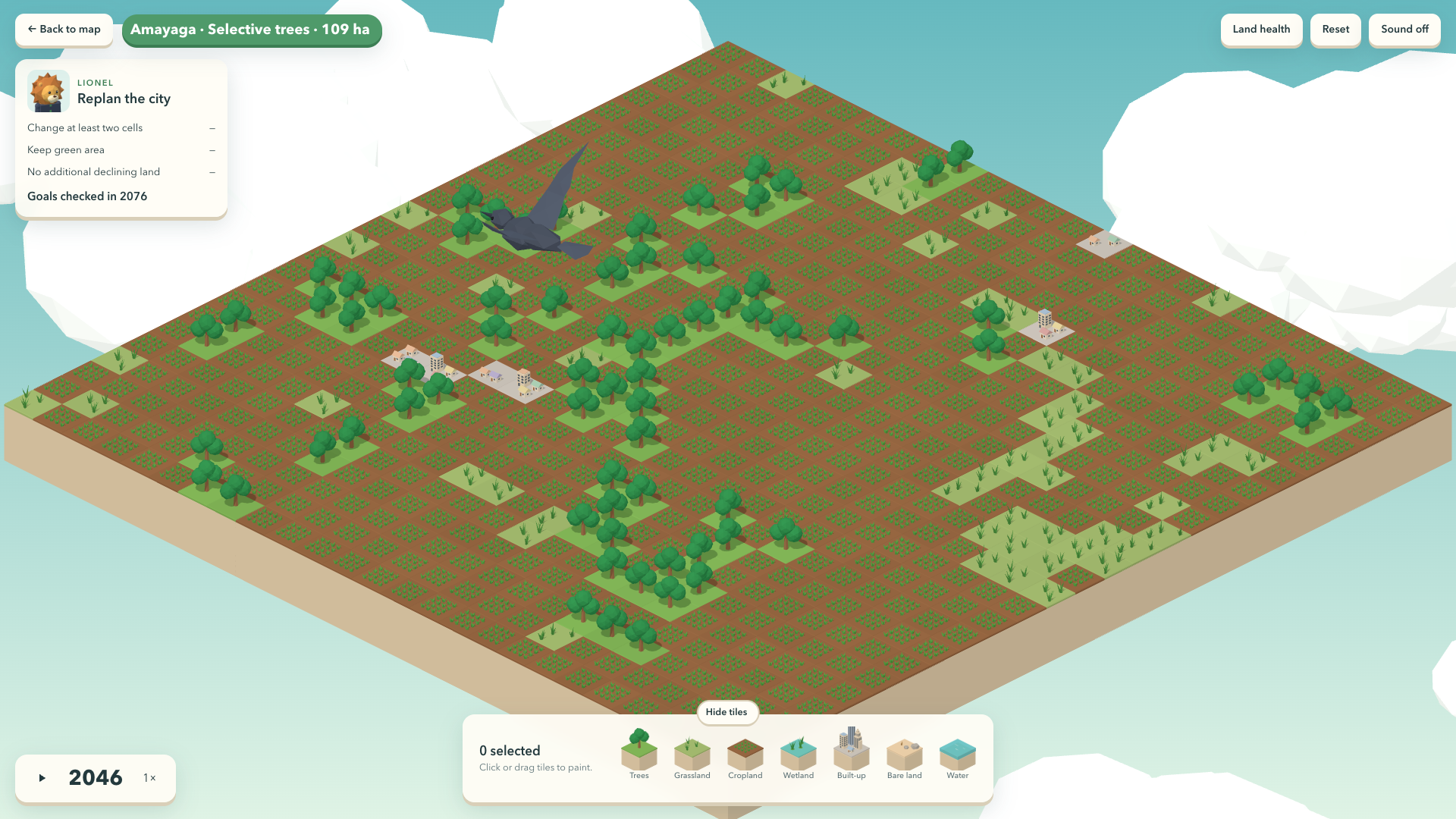
PlanIt was inspired by some of our favorite games, like Monument Valley, Animal Crossing, and Polytopia. They pair calm, scenic art with simple objectives, and they turn complex 3D terrain into something fun to explore. We wanted a game where a 15 to 24 year old can make a planning choice in their own city and get the same feeling.
What it does
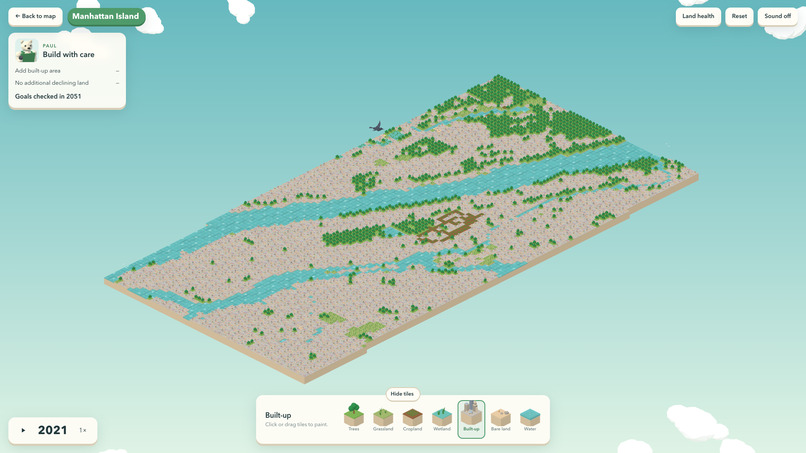
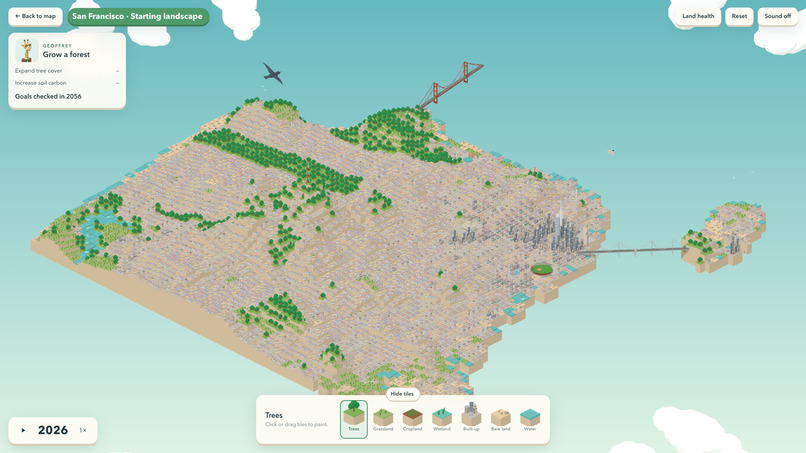
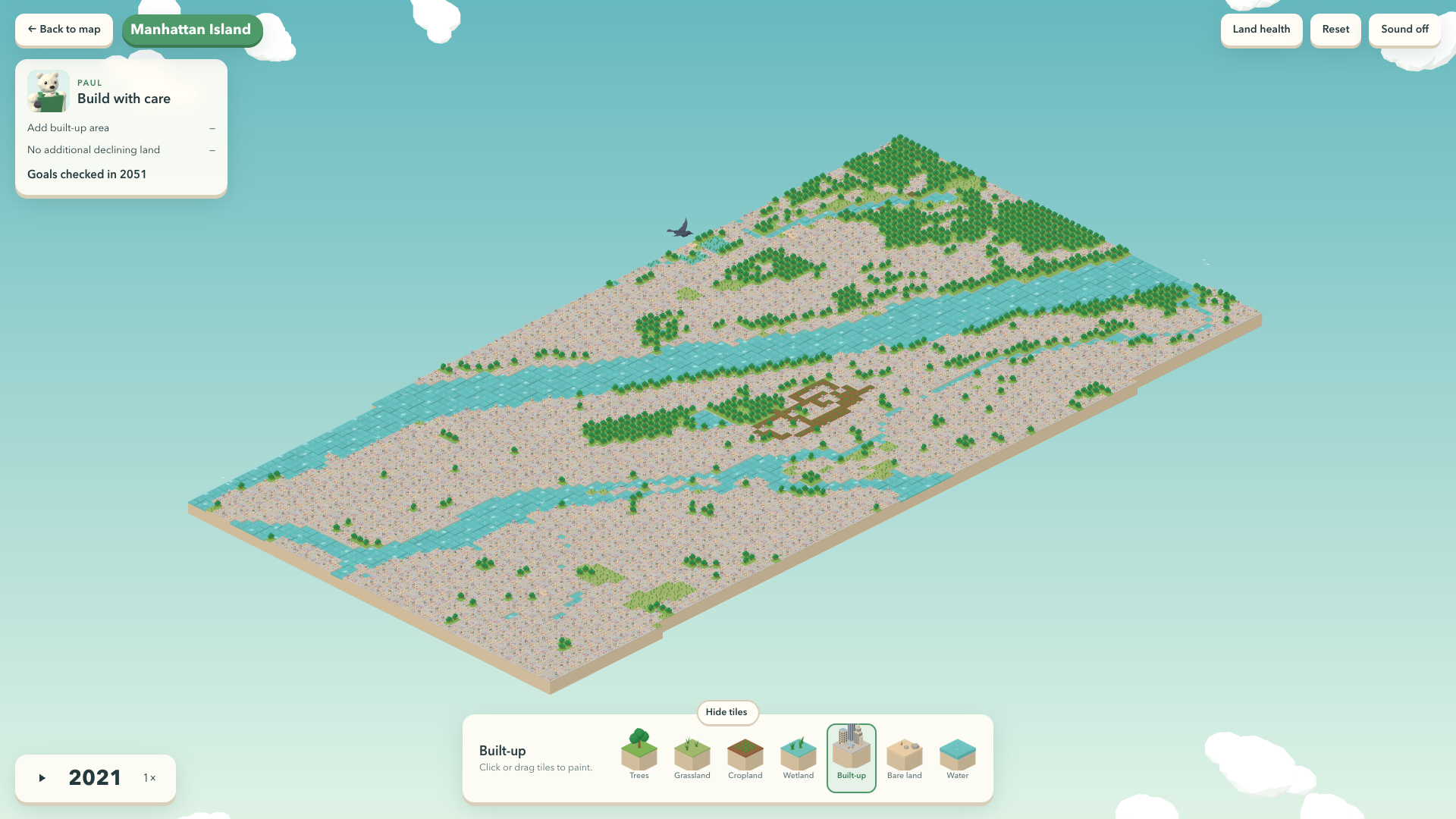
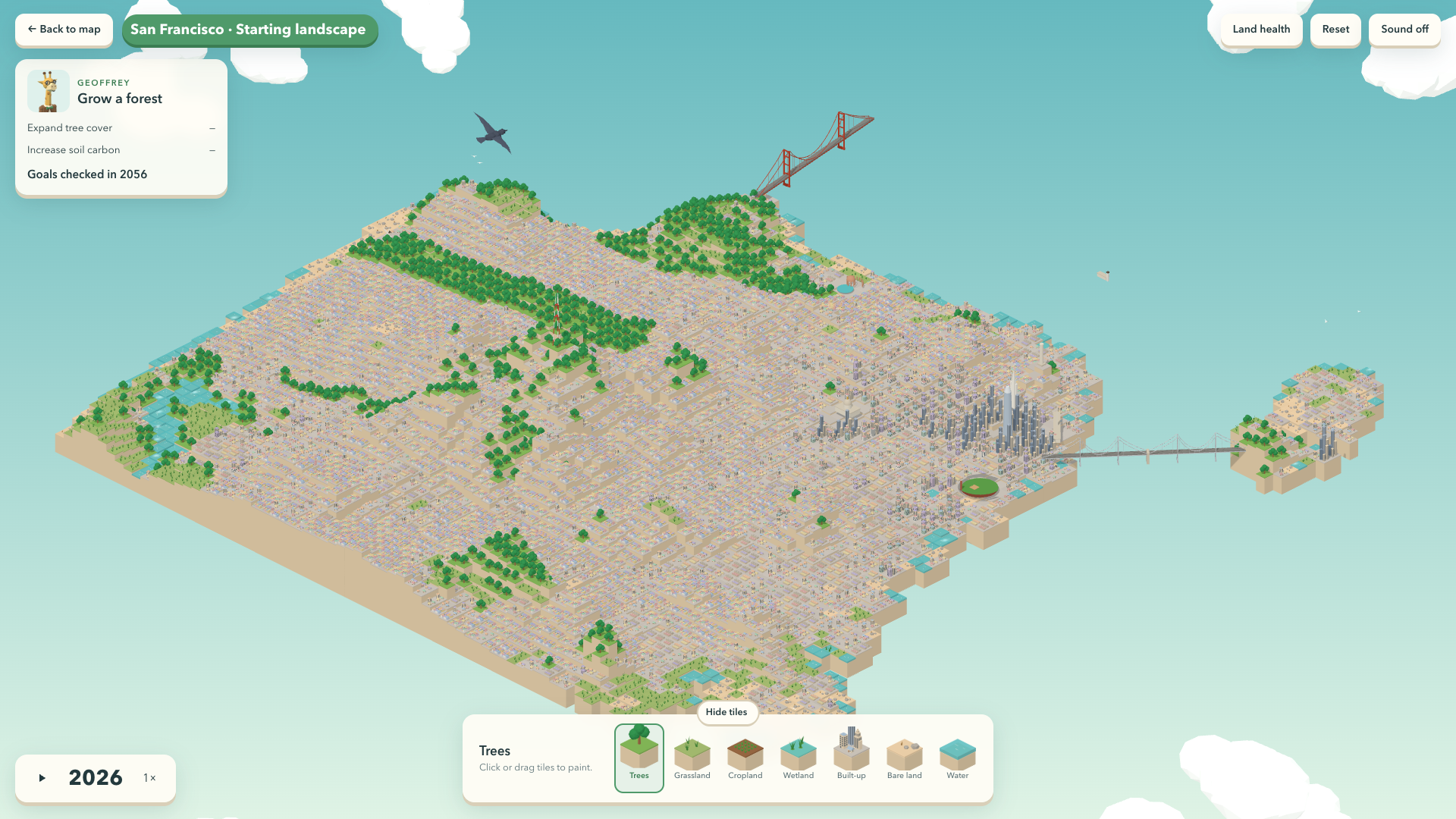
PlanIt lets young people redesign their own city as a low-poly 3D diorama and see how each choice affects land health over time.
- Any city. Search for a city and pick a radius, and planIt builds a 3D map of it from open data: land cover, terrain, and buildings.
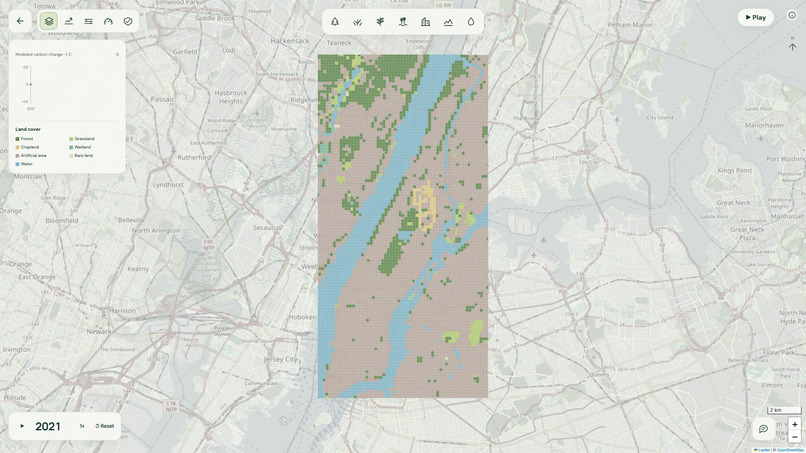
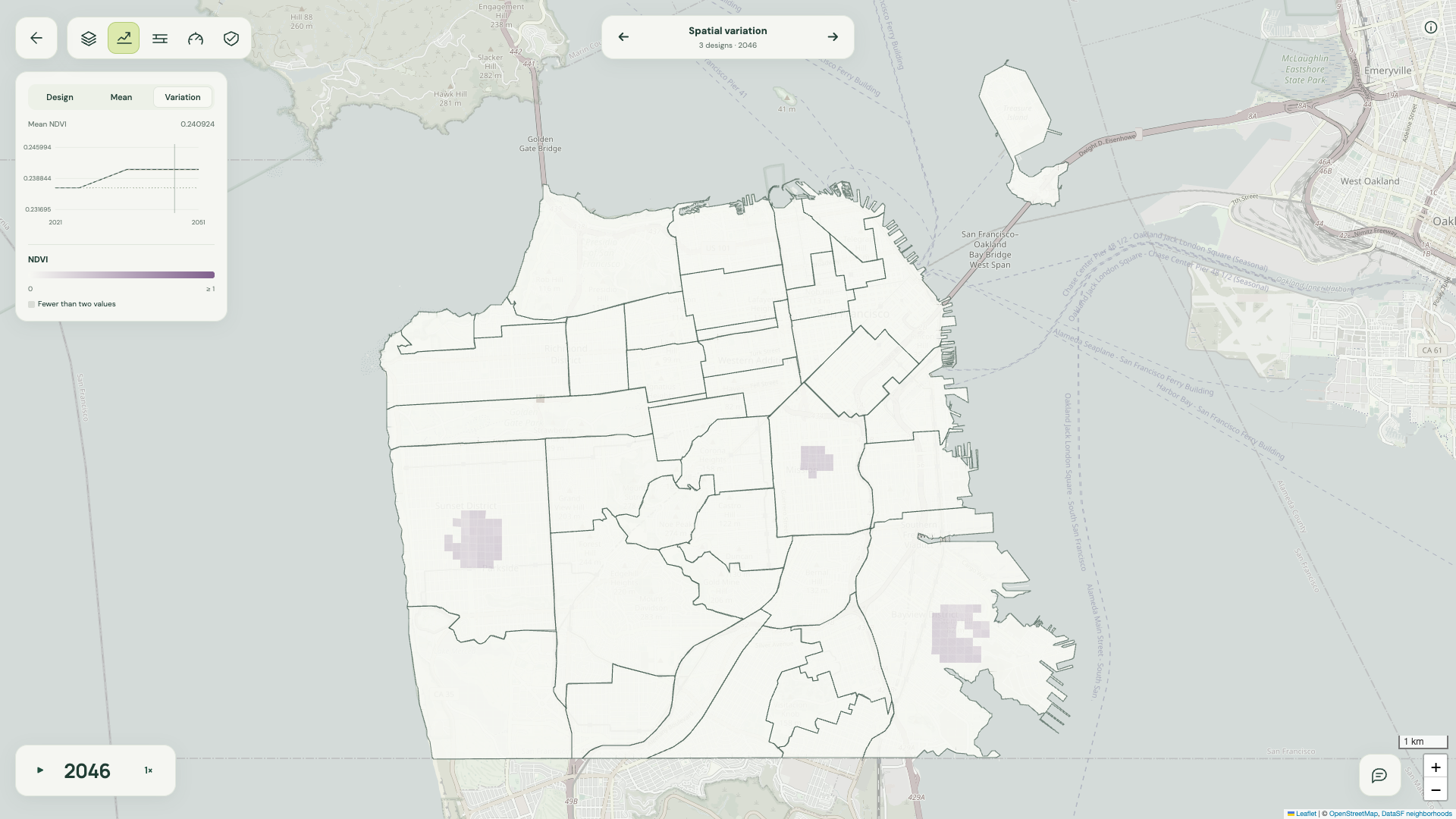
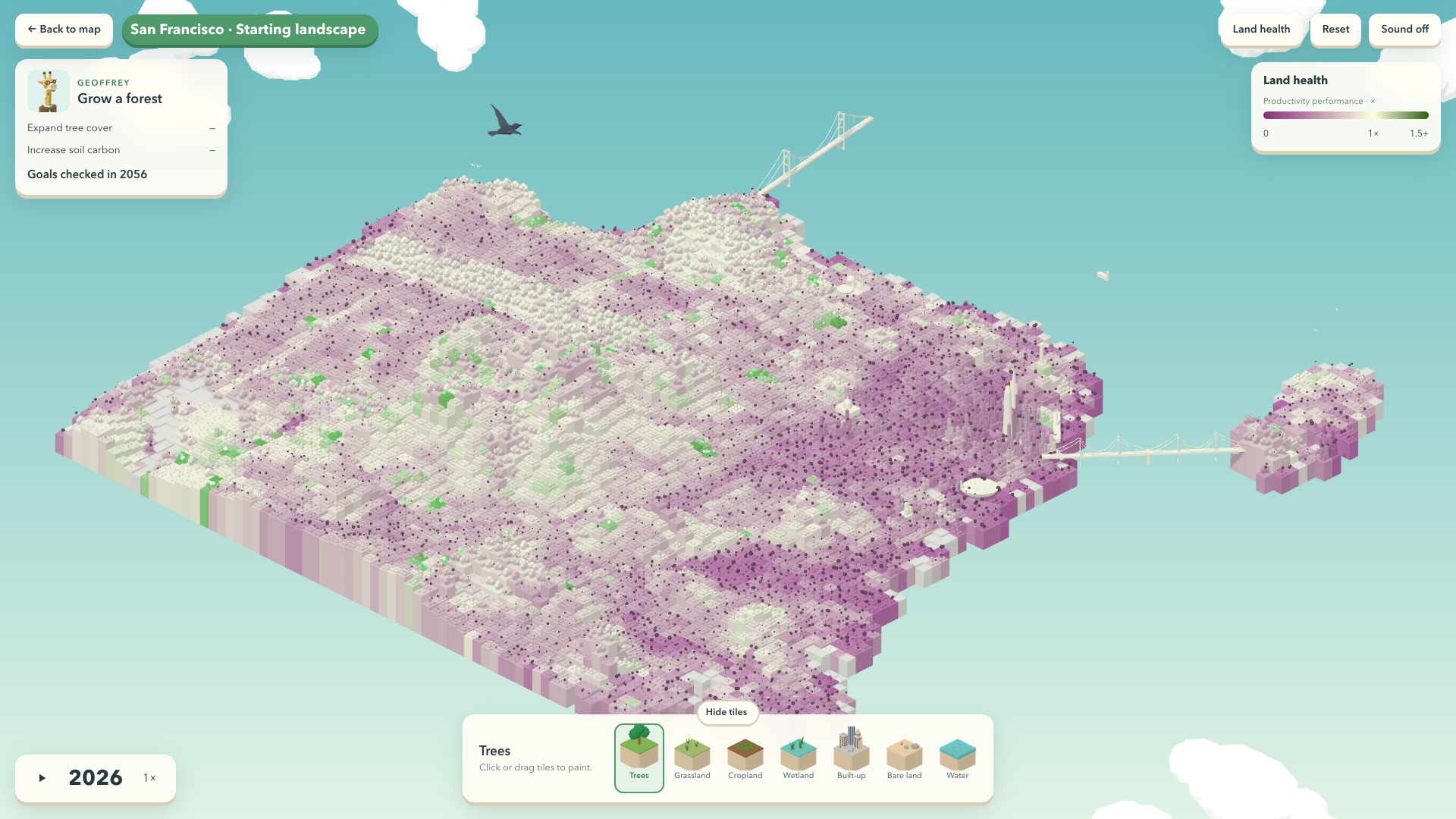
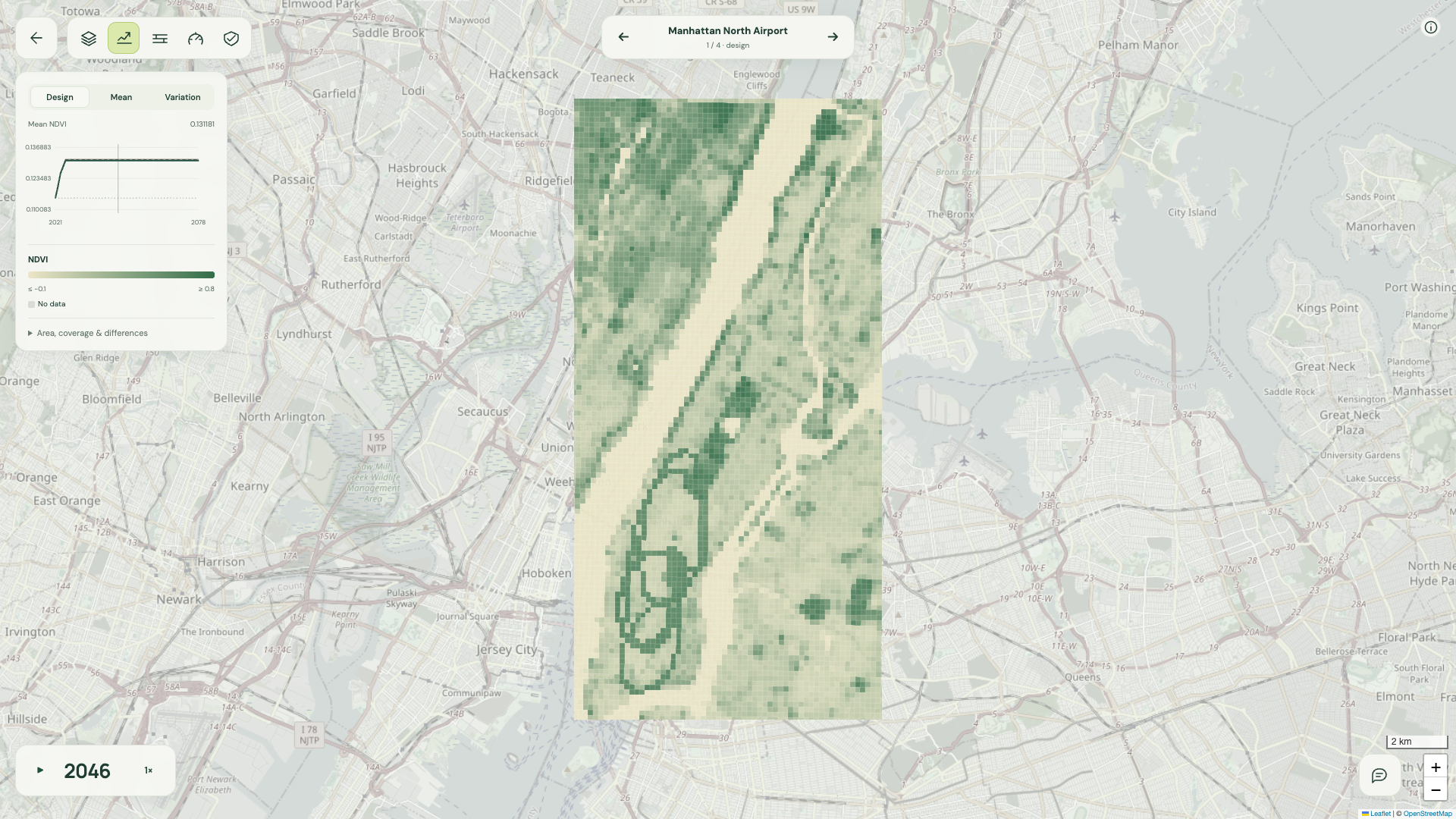
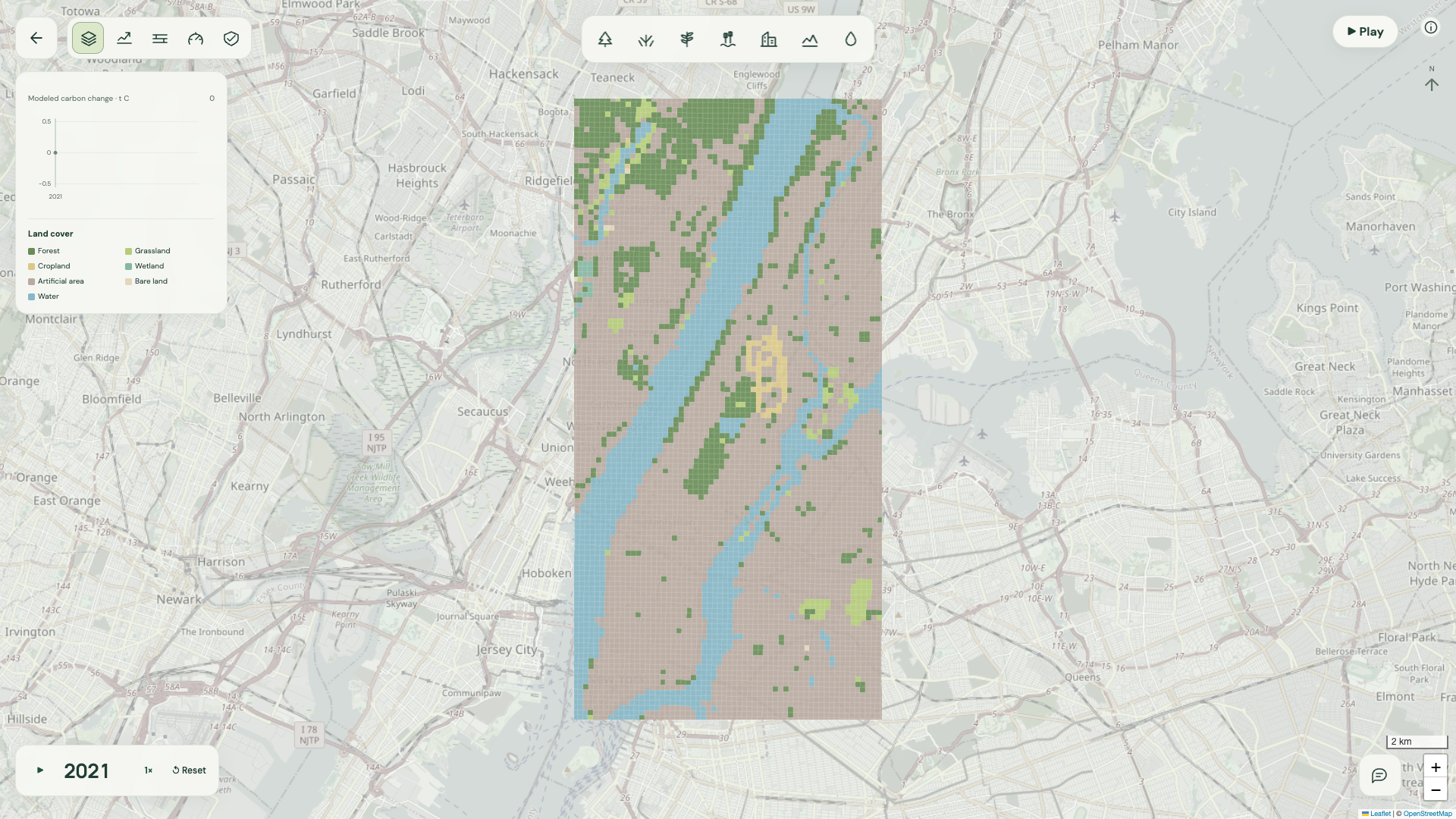
- Plan and see the consequences. Paint tiles (forest, grassland, wetland, city, and more), then submit your plan. A time-lapse runs from 2021 to 2056, and the map shows which land is degrading, stable, or regenerating, with vegetation and soil carbon layers too.
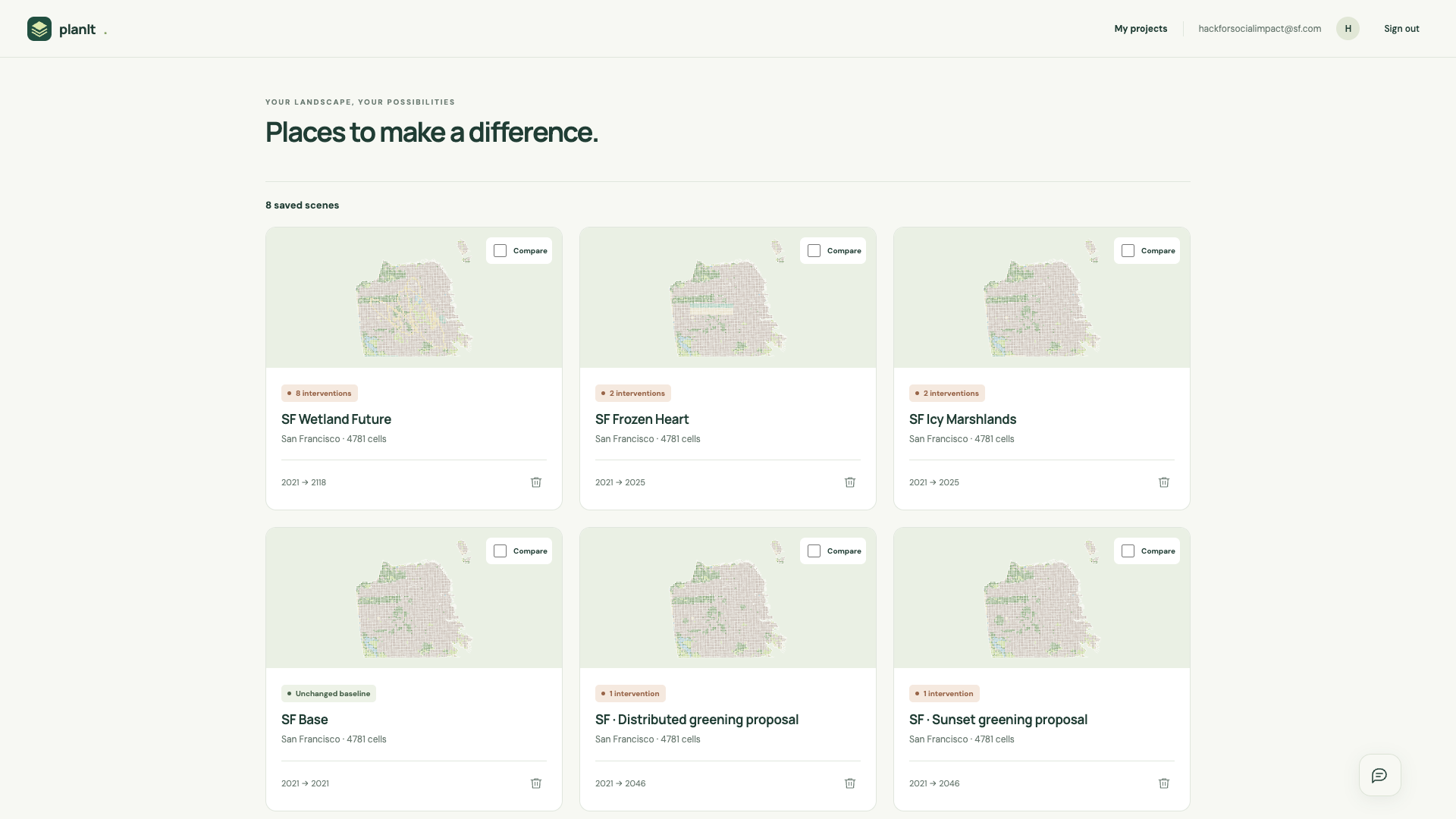
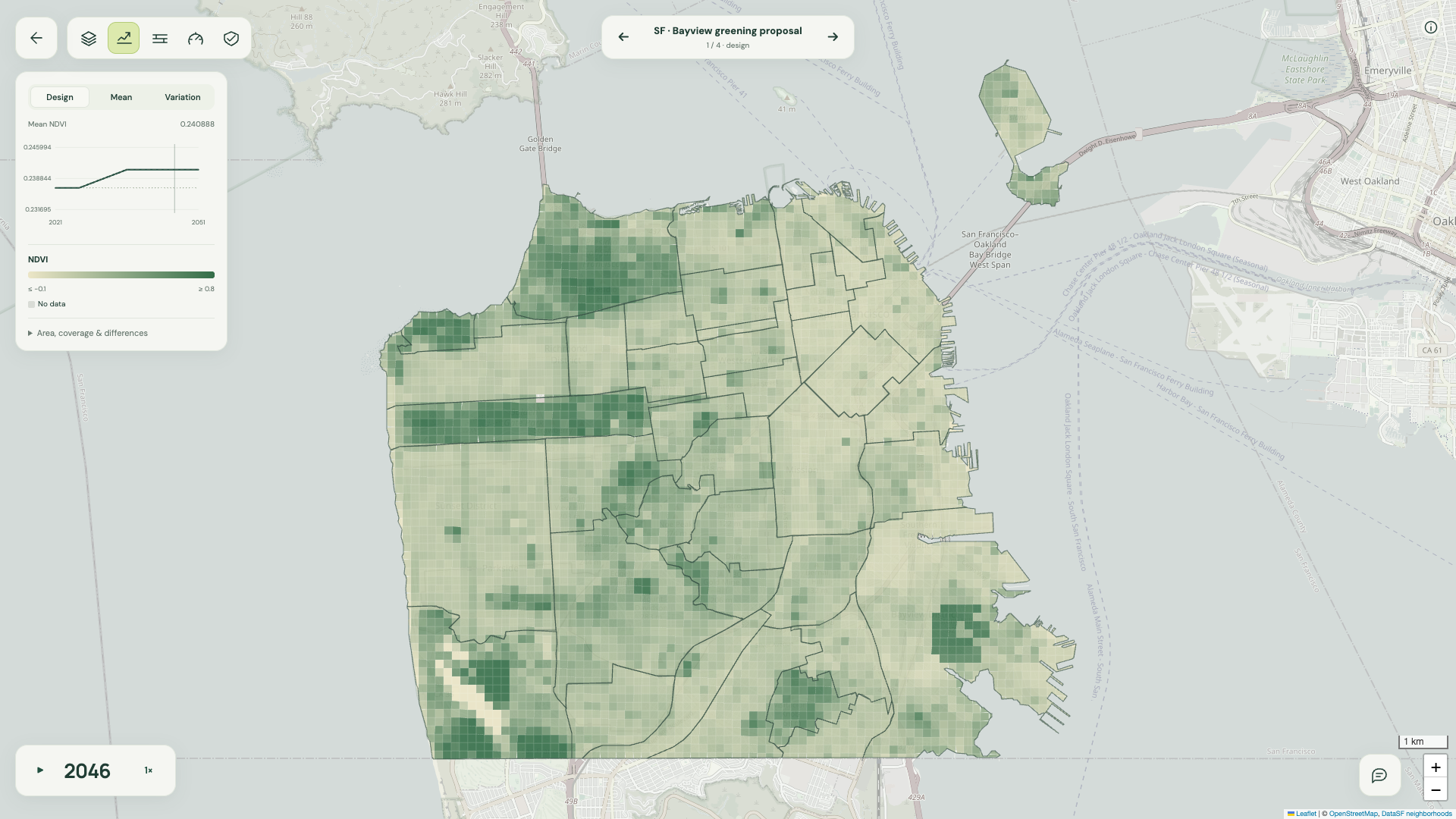
- Agentic interface to control the map + create and contrast different designs. You can also use the agent to do analysis on the output of your simulations.
- Challenges with characters. Kaw the crow, our city planner, guides the game. Three challenges each teach one idea.
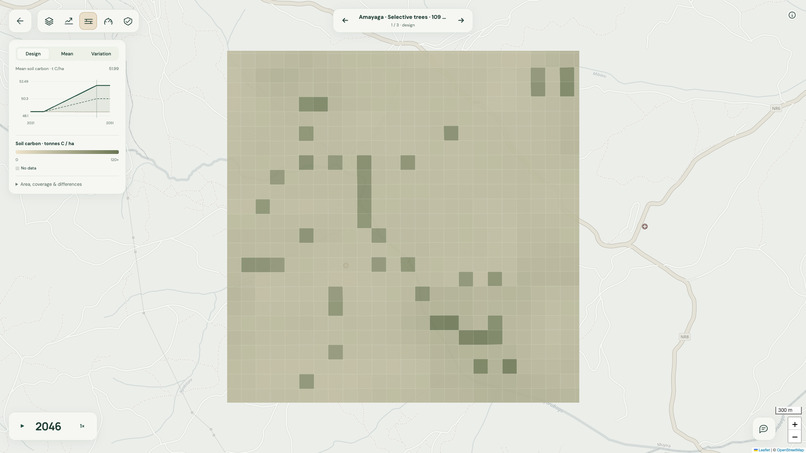
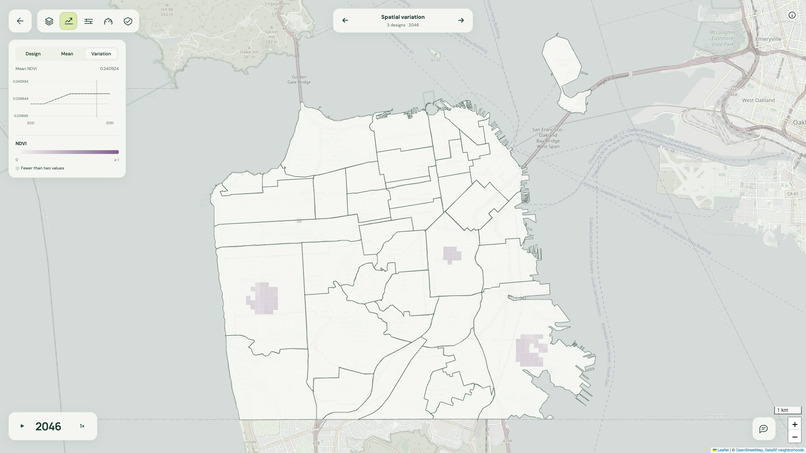
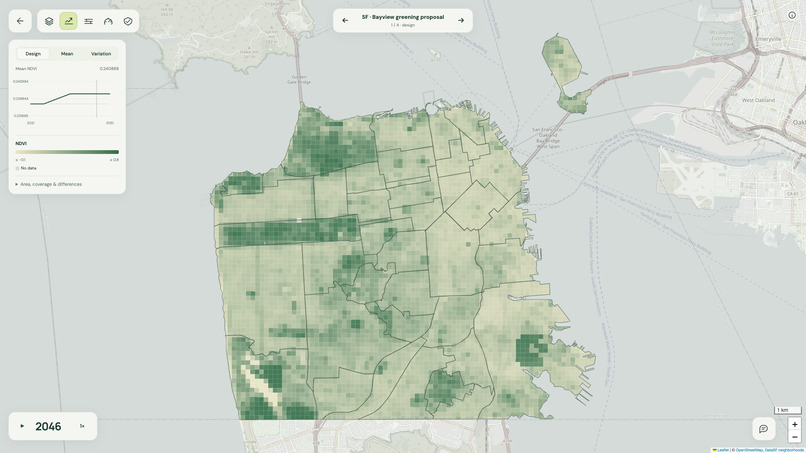
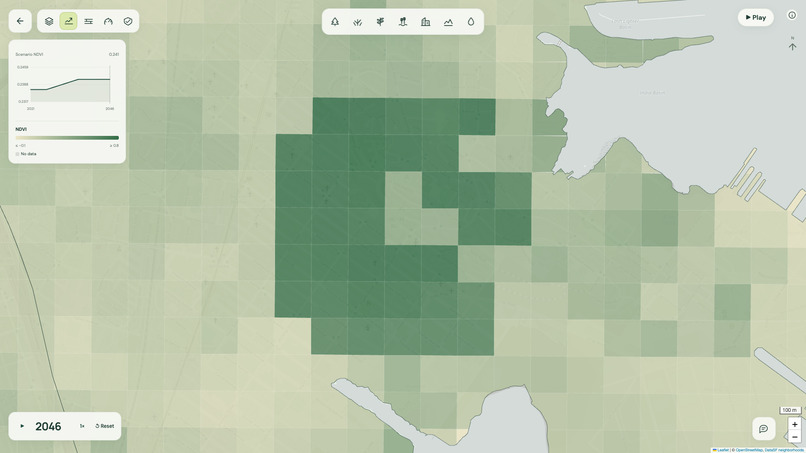
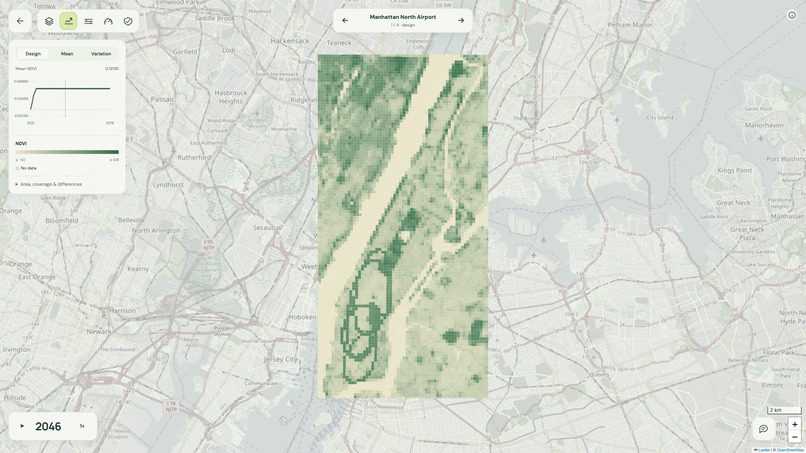
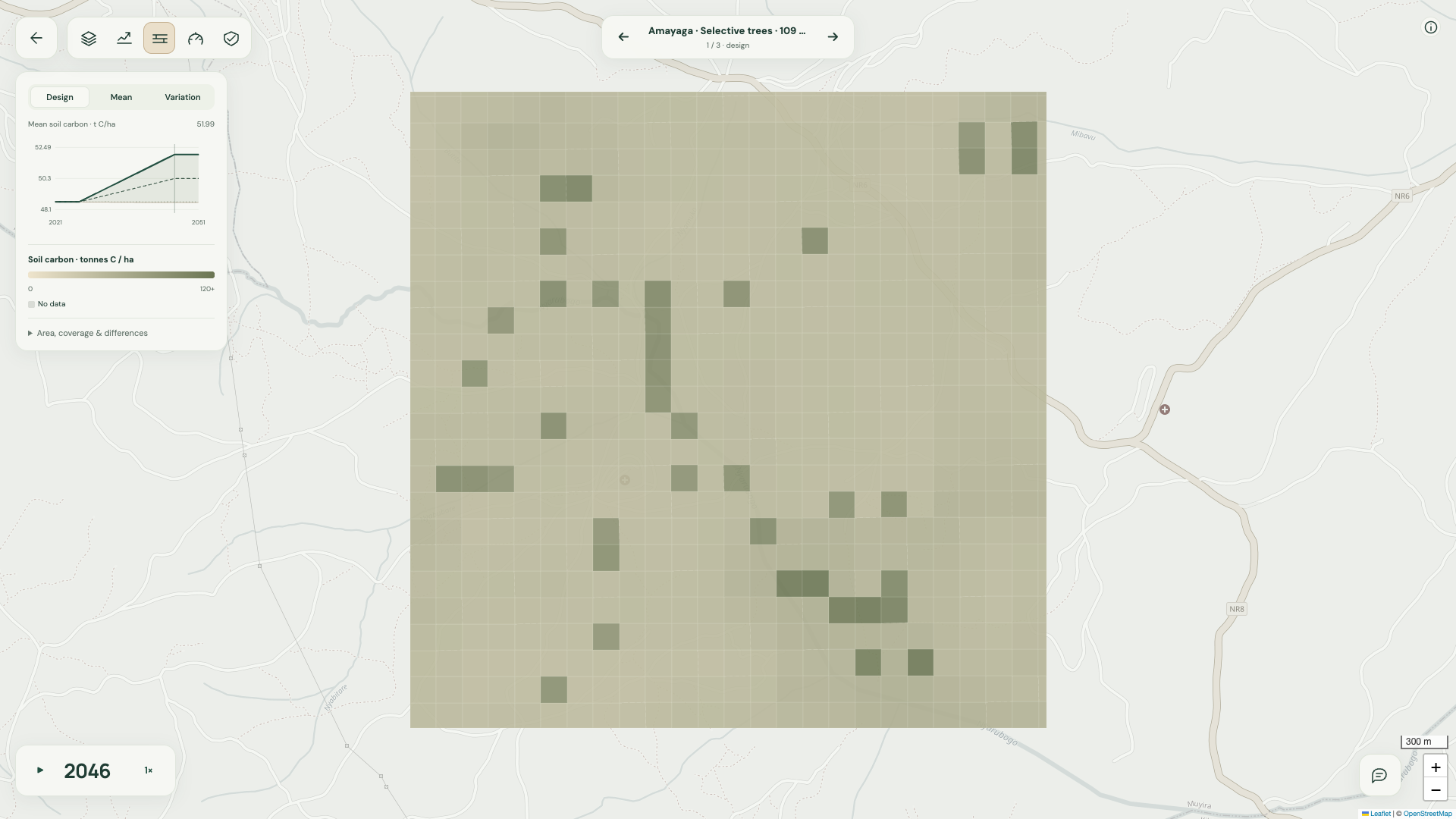
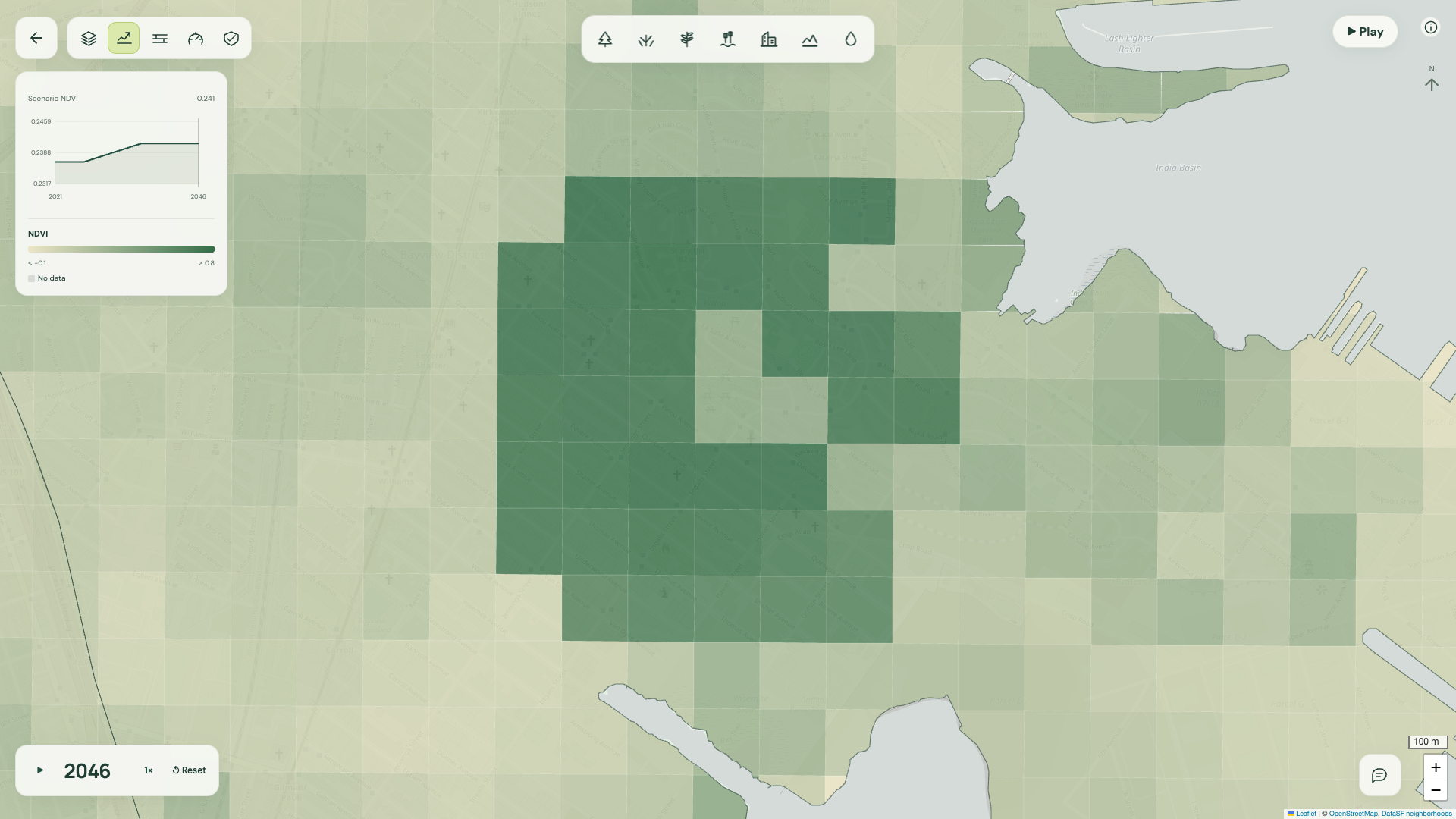
- Science mode. For players who want to go deeper, a 2D map shows the underlying data, with tile-by-tile detail on vegetation, soil carbon, and degradation.
How we built it
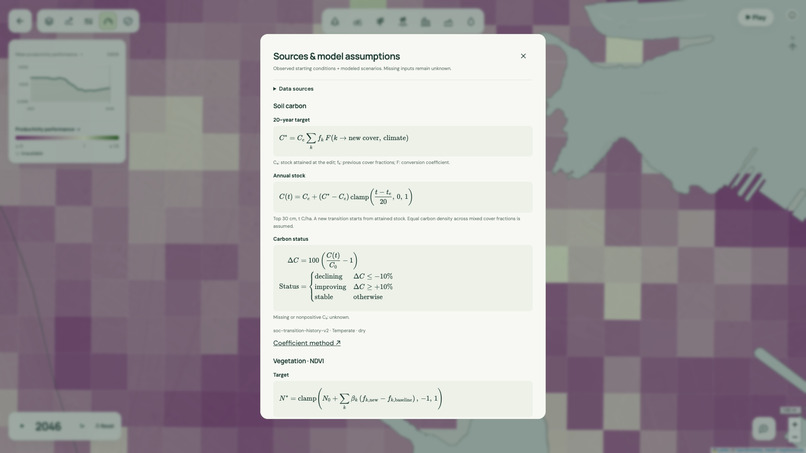
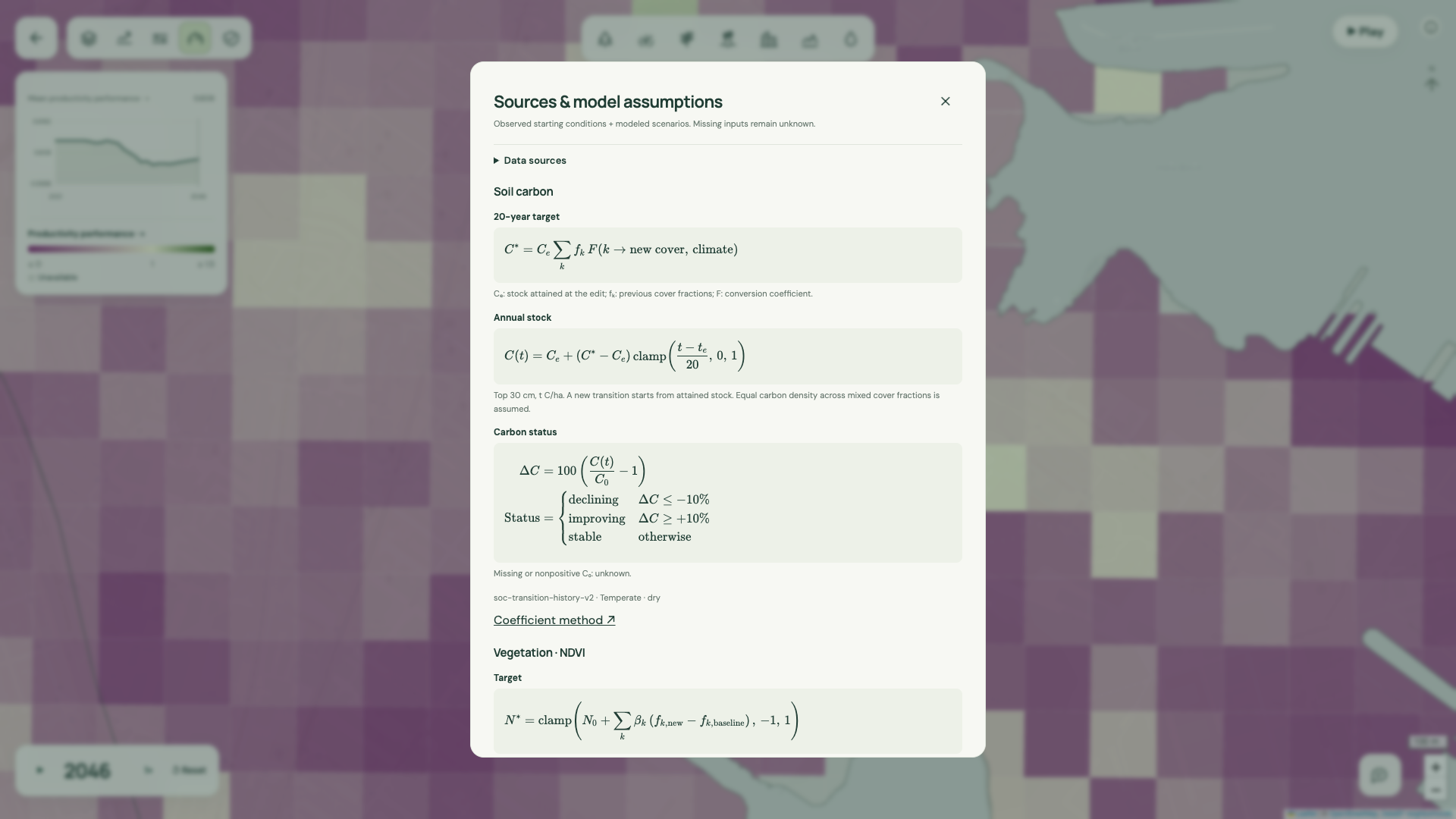
- Build baseline for any area on a 165 m grid from ESA WorldCover land cover, Sentinel-2 vegetation (NDVI), and SoilGrids soil carbon. Each year it simulates how vegetation and soil carbon respond to a change in land cover. It then scores degradation the way UNCCD's Trends.Earth method does, across three indicators (land cover change, productivity, and soil carbon) using the "one out, all out" rule.
- The game runs in the browser with Three.js. Terrain comes from the Copernicus DEM and buildings from Overture Maps, so every city gets its own diorama. We designed the characters, wrote the challenge stories, and synthesized all the music and sound effects in the browser.
Challenges we ran into
Running the infrastructure and the front end as separate tracks meant we had to check in regularly to stay pointed in the same direction. We also severely underestimated how much work it would take to fit real map data into a simple, playful map. Squeezing satellite grids, terrain, and building footprints into tiles that still read clearly and run smoothly took far more iteration than we expected.
Modeling complex processes using good proxy approximations
Accomplishments that we're proud of
Our simulation is grounded in established science. It uses recent land cover, soil carbon, and vegetation data and follows UNCCD's own method for measuring land degradation, so the change a player sees over time comes from a documented model, not made-up numbers. The results are meant to be illustrative, not precise predictions.
We're also proud of the art style, which is simple but inviting, and that planIt can generate a 3D map for any city. That means a student can plan the place they actually live.
What we learned
- How land cover, vegetation, and soil carbon together shape land productivity, and why some changes show up right away while others take a decade or more.
- The infrastructure it takes to update and maintain a map with complex inputs.
- The design and animation it takes to make a map feel fun and interactive.
What's next for planIt
We want to keep adding map detail and fresh challenges so that players have a reason to come back.
- Map detail. We're looking to make the action set more complex, like allow for multiple options for city land cover (like airports, schools, mixed materials, etc.), building height variation, and seasonal impact.
- Fresh challenges. New problem statements from new characters. Adding more constraints and requirements can allow for levels and measured progress over a period of time. Additionally, we'd like to create a simplified puzzle (similar to Geoguesser) that can refresh daily and encourage learning on local planning.

Log in or sign up for Devpost to join the conversation.