-
-
Planetrics
-
Discover Methods for Exoplanets
-
Graphing for Exoplanets
-
Names of Exoplanets
-
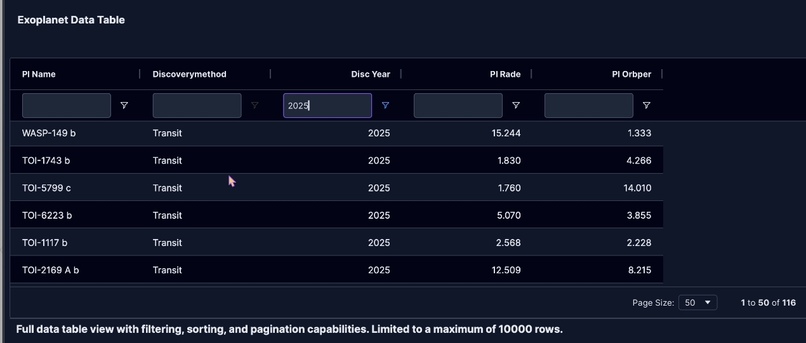
Exoplanet Data Table
Inspiration
It was to bridge the gap between complex astronomical data and public curiosity. With NASA confirming its 6,000th exoplanet, we saw an opportunity to create a tool that celebrates this milestone by making the data behind it beautiful, interactive, and accessible to everyone, not just scientists.
What it does
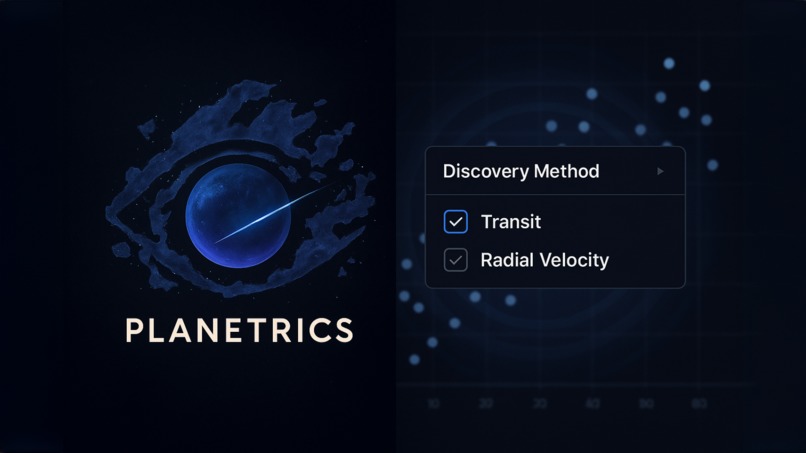
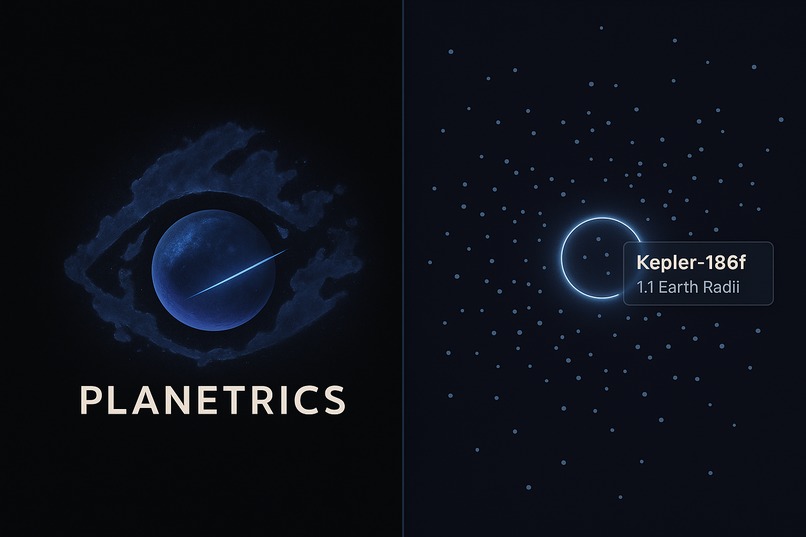
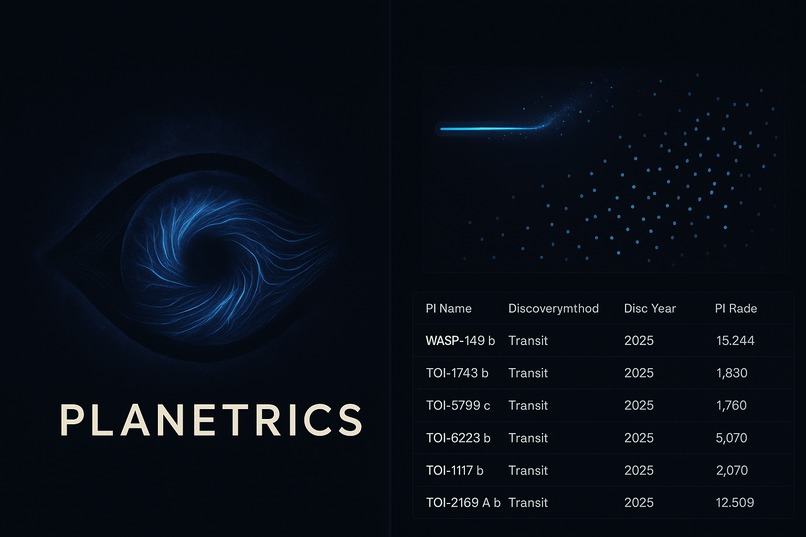
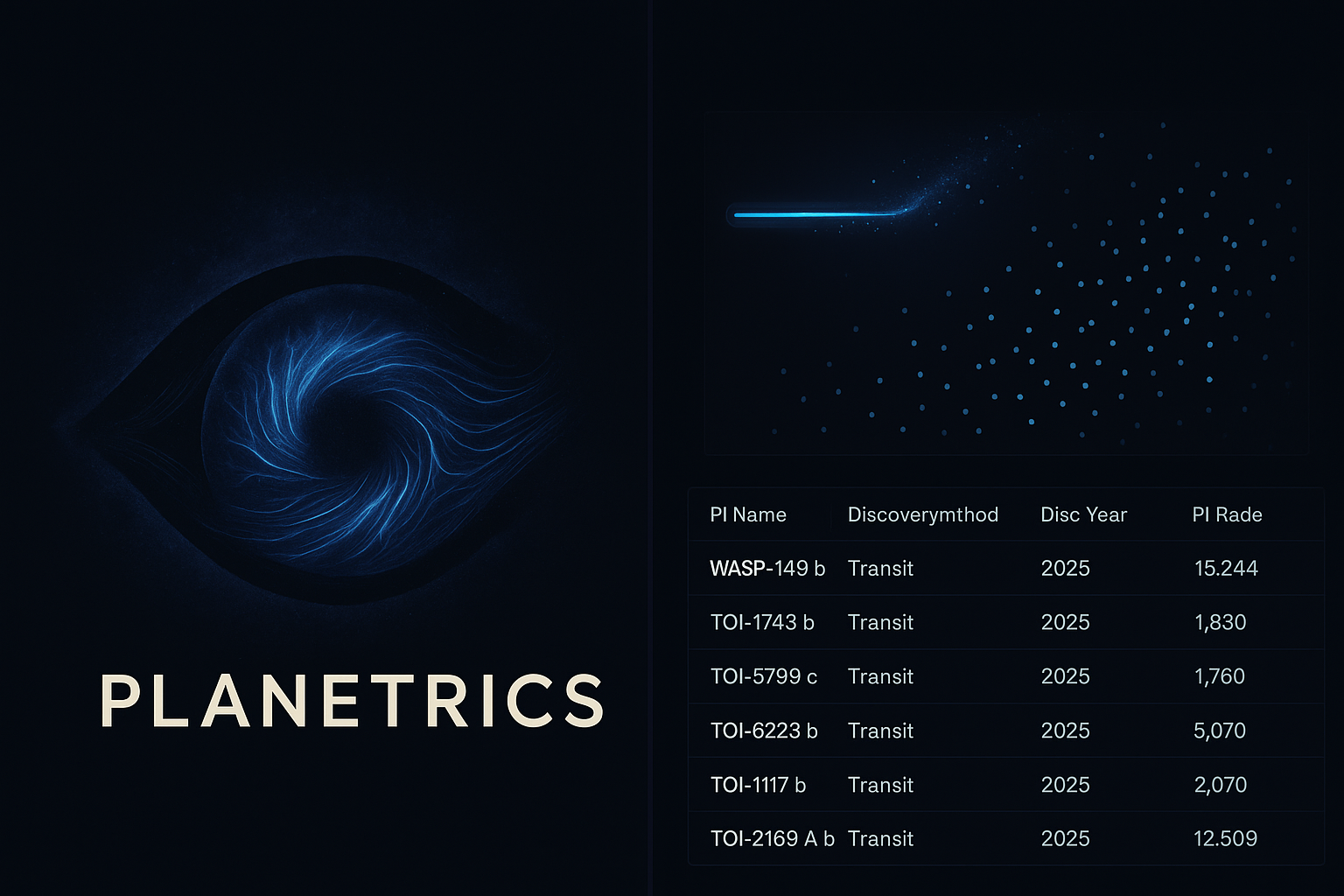
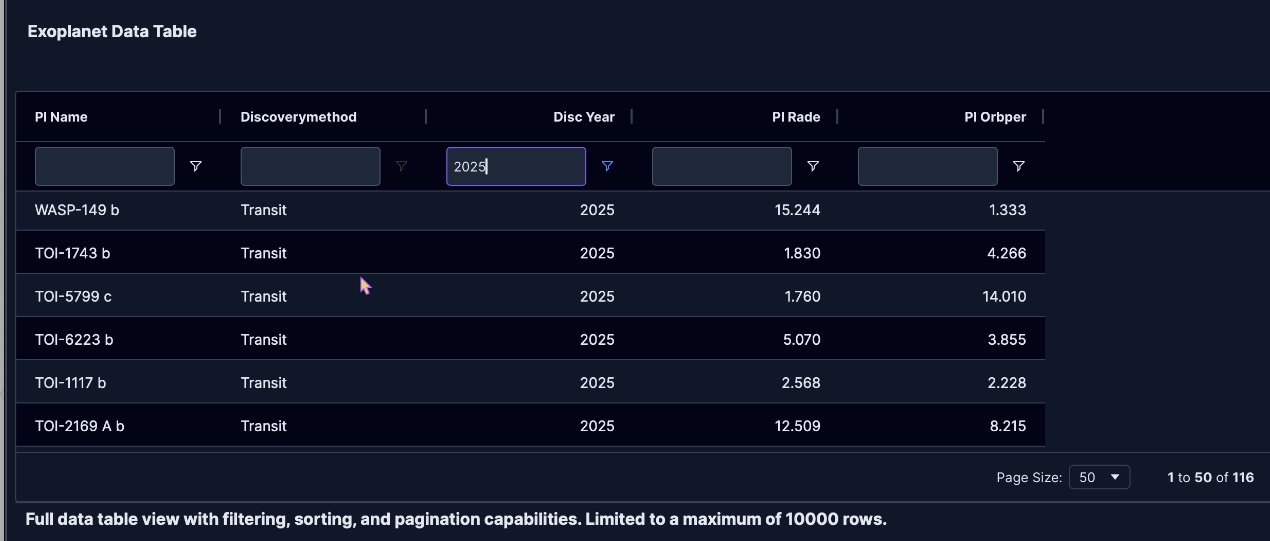
Planetrics is an interactive web dashboard that brings NASA's official exoplanet catalog to life. It allows users to visualize discovery trends, filter thousands of planets by various parameters, and explore curated content on milestone discoveries. It transforms raw data into a compelling story of cosmic exploration.
How we built it
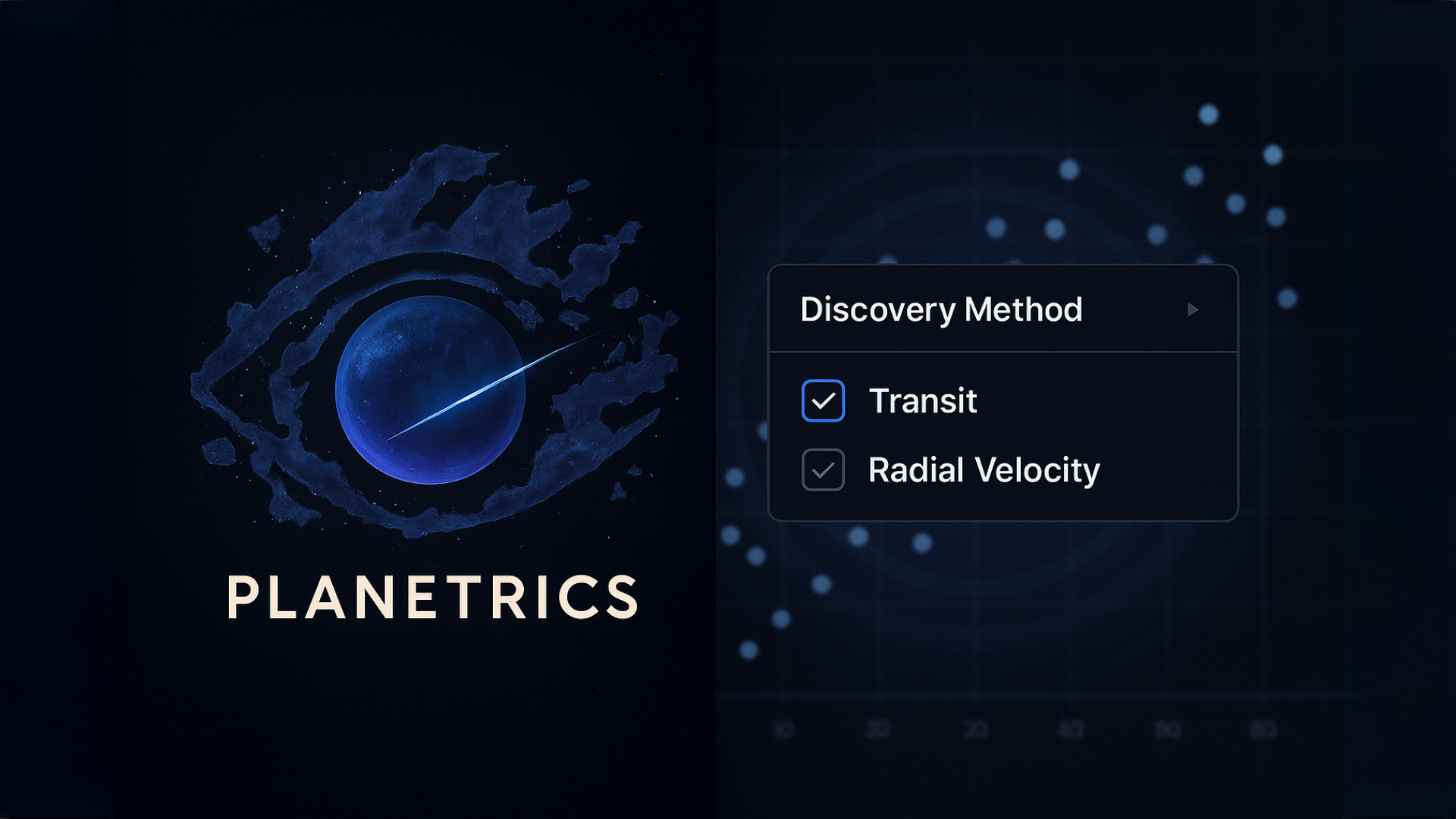
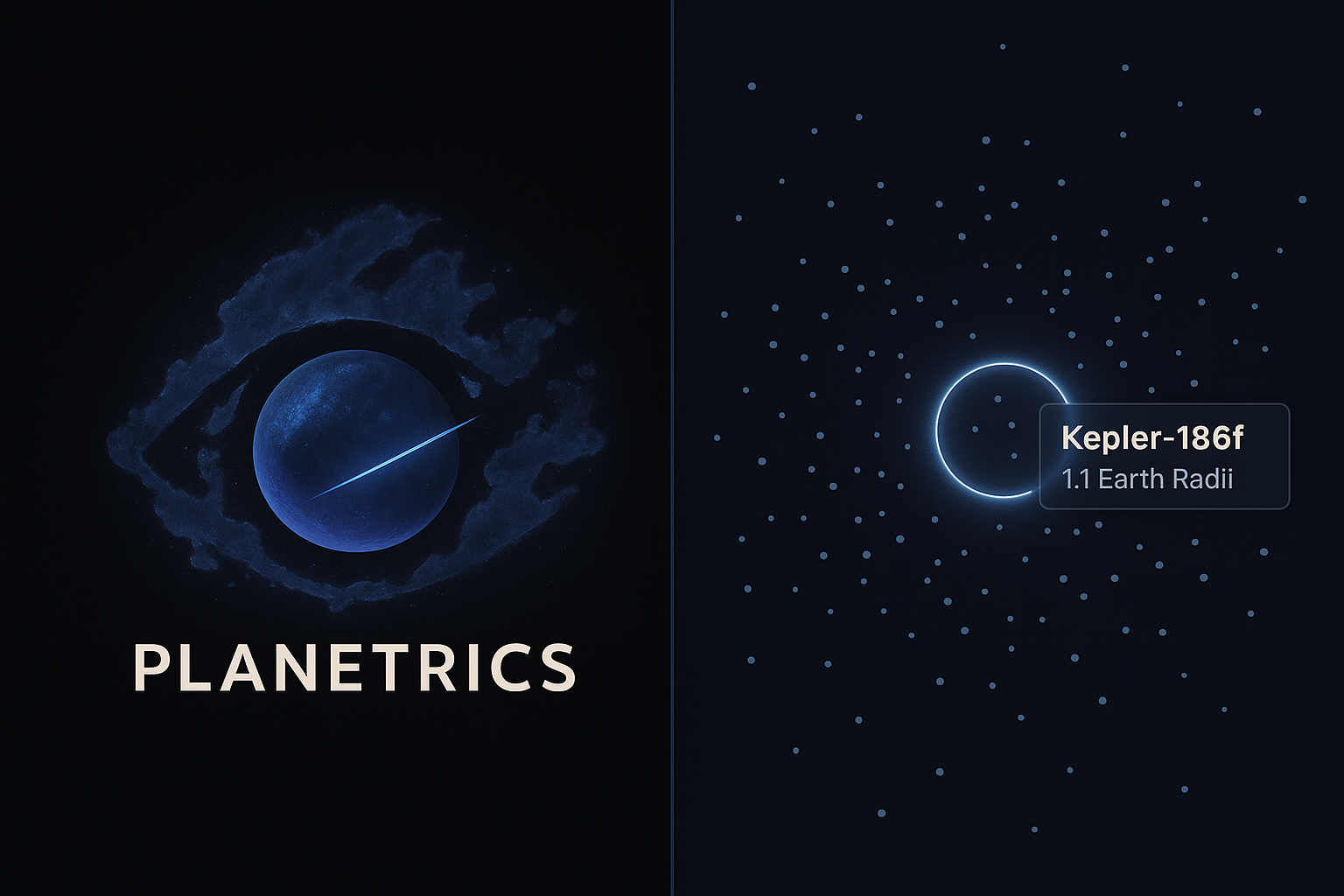
Built Planetrics using Plotly Studio as our rapid-development platform. The core data is fetched live from the NASA Exoplanet Archive API using a Python script with the Pandas library. We then used Plotly Studio's AI to generate a baseline dashboard, which we customized with curated text cards, key statistics, and a unique brand identity featuring our "Galactic Iris" logo.
Challenges we ran into
The primary challenge was a persistent internal bug in Plotly Studio that failed to parse our initial CSV file. After several attempts, we engineered a solution by refining our Python script to create a simplified, ultra-clean dataset. This experience reinforced the importance of robust data preprocessing, even when using low-code platforms.
Accomplishments that we're proud of
Proud of creating a fully functional, data-driven dashboard that is both visually appealing and scientifically sound. A major accomplishment was turning a technical bug into a feature. By deeply understanding the data to fix the issue, we uncovered key insights about observational bias, which we then added to the app to provide a richer, more educational experience.
What we learned
Learned how to rapidly prototype a sophisticated data application and the importance of a clean, well-structured dataset. Most importantly learned to communicate complex scientific concepts, like the limitations of exoplanet detection methods in a simple and engaging way for a general audience, and learning the data that was gathered at exoplanet archive(https://exoplanetarchive.ipac.caltech.edu).
What's next for Planetrics
The next step for Planetrics is to move beyond the constraints of Plotly Studio(Or even wait for future updates from Plotly Studios) and build a fully custom application using Plotly Dash. This would allow us to implement our original vision of an interactive 3D star map that serves as a gateway to the dashboard, providing an even more immersive and exploratory experience.


Log in or sign up for Devpost to join the conversation.