-
-

Planeru: one shared Trip Room for group travel coordination.
-

Plan together. Travel together. Remember together.
-
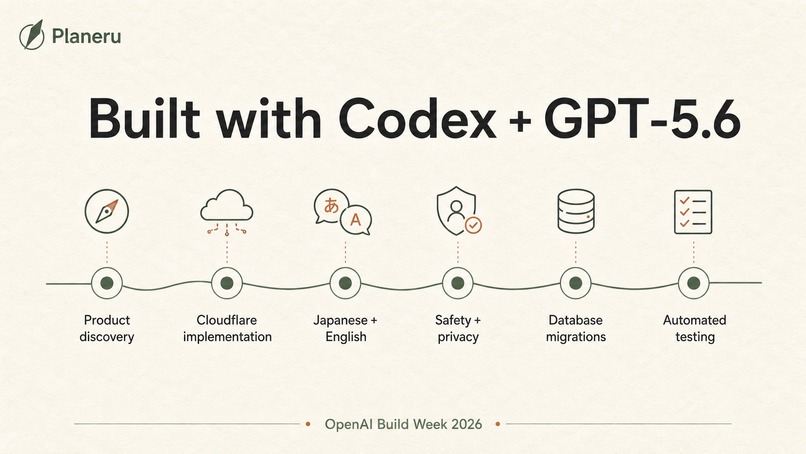
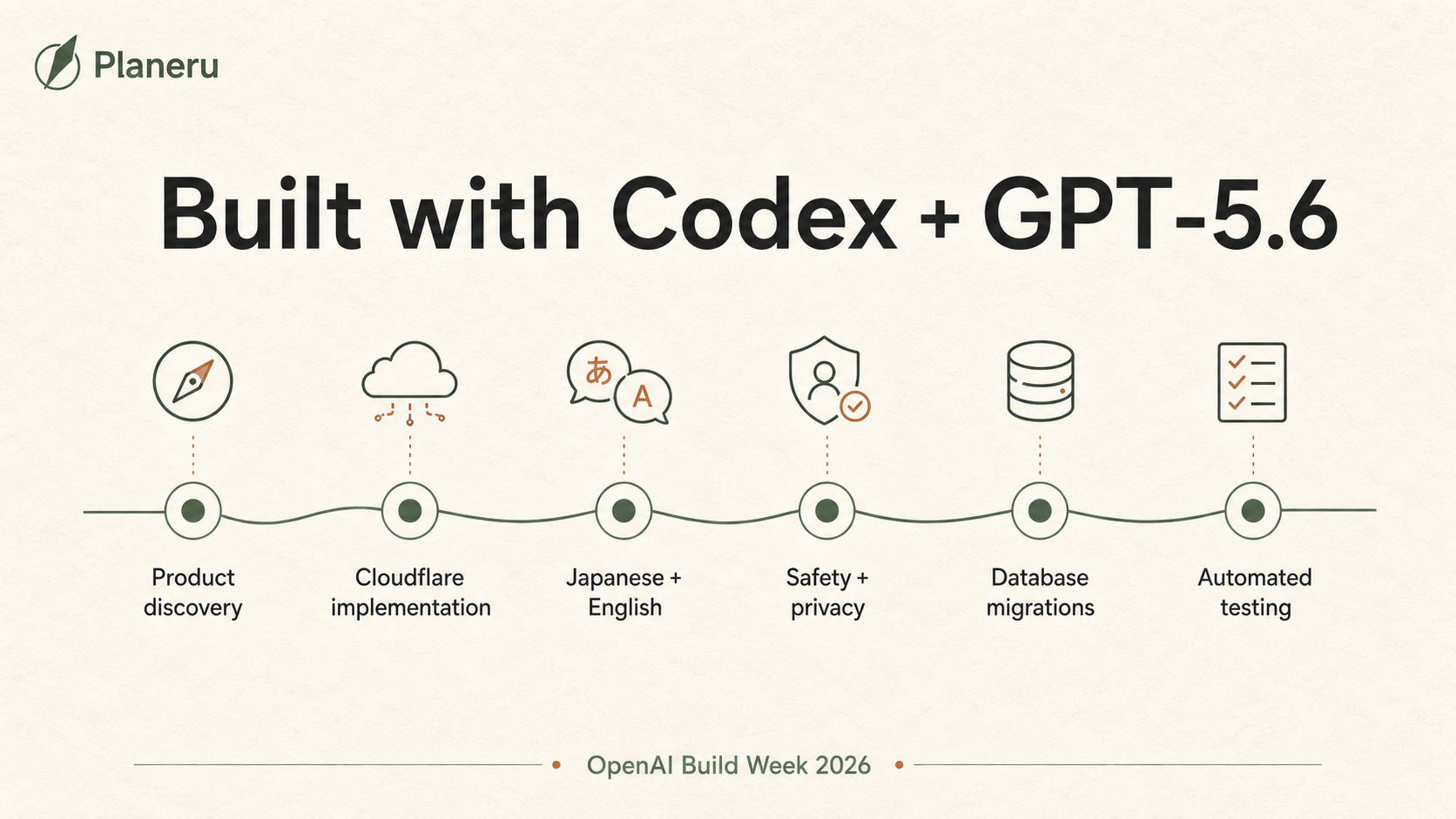
Built collaboratively with Codex powered by GPT-5.6.


Inspiration
What it does
How we built it
Challenges we ran into
Accomplishments that we're proud of
What we learned
What's next for Planeru
Inspiration
Group trips often begin in a chat thread, then spread across maps, itinerary documents, packing lists, screenshots, and last-minute messages. Organizers repeat the same information, while invited travelers may not want another account. We wanted the smallest useful shared space for the moments before and during a trip.
What it does
Planeru is a mobile-first shared Trip Room. An organizer creates a room and shares an invitation link. Participants can join without registration and see the meeting point, trip purpose, itinerary, and packing checklist. On the trip day, travelers share a concise status such as departed, ten minutes away, arrived, or running late. The organizer can appoint a Trip Recorder and record actual arrival and departure times.
The interface supports Japanese and English. Organizer controls are separated from participant access, and invitation links can be revoked and reissued. The MVP deliberately avoids unrestricted chat, continuous location tracking, and photo storage.
How we built it
Planeru runs on Cloudflare Workers with Static Assets and D1. It includes a mobile-first interface, a small API, database migrations, organizer recovery controls, internationalization, and automated smoke and localization tests.
Codex powered by GPT-5.6 was used throughout product discovery, implementation, review, testing, and submission preparation. It helped turn an initial worldwide travel-plan social-network idea into a focused, testable product: first coordinate a real group trip, then let the resulting journey become a reusable memory or public plan. Codex helped implement the Cloudflare architecture, UI flows, D1 migrations, bilingual copy, safeguards, tests, documentation, and demo-video pipeline.
The human product owner directed the core decisions: guest participation without registration, organizer and participant authority boundaries, the Trip Recorder role, privacy constraints, and postponing photos, GPS tracking, and open chat.
Challenges we ran into
Travel can quickly expand into maps, booking, discovery, media storage, live tracking, notifications, and messaging. The central challenge was finding the smallest interaction that creates immediate value. That led to the Trip Room: meeting, preparation, itinerary, and arrival status.
We also treated safety as a product constraint. Invitation links must be hard to guess and revocable, organizer privileges must not leak to guests, and private travel information must remain distinct from future public plans.
Accomplishments that we're proud of
- A working mobile-first product deployed during Build Week
- Guest participation without forced account creation
- Shared arrival status that reduces repetitive chat messages
- Editable itineraries with actual arrival and departure recording
- Japanese and English UI support from the MVP stage
- Revocable invitation links and recoverable organizer access
- Automated smoke and internationalization checks
- A constrained data model that avoids unnecessary location and photo collection
What we learned
The strongest entry point is not asking travelers to publish a polished plan. It is helping a real group coordinate a trip they are already taking. If that moment is useful, the itinerary and actual-time record can later become a travel memory, family history, or reusable public plan with much less extra work.
What's next
We will test Planeru with three to five real travel groups, improve current and next-itinerary highlighting, and add account-linked reminders. After validation, we plan trip reflection pages, Markdown export, and conversion of private trip records into searchable public plans. Longer term, optional place-based stories, family memories, photo metadata, and GPX can be added with privacy and consent safeguards.
Built With
- gpt-5.6

Log in or sign up for Devpost to join the conversation.