-
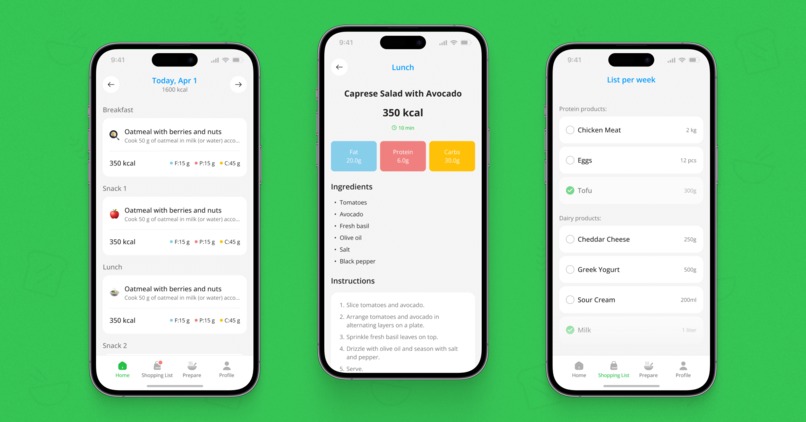
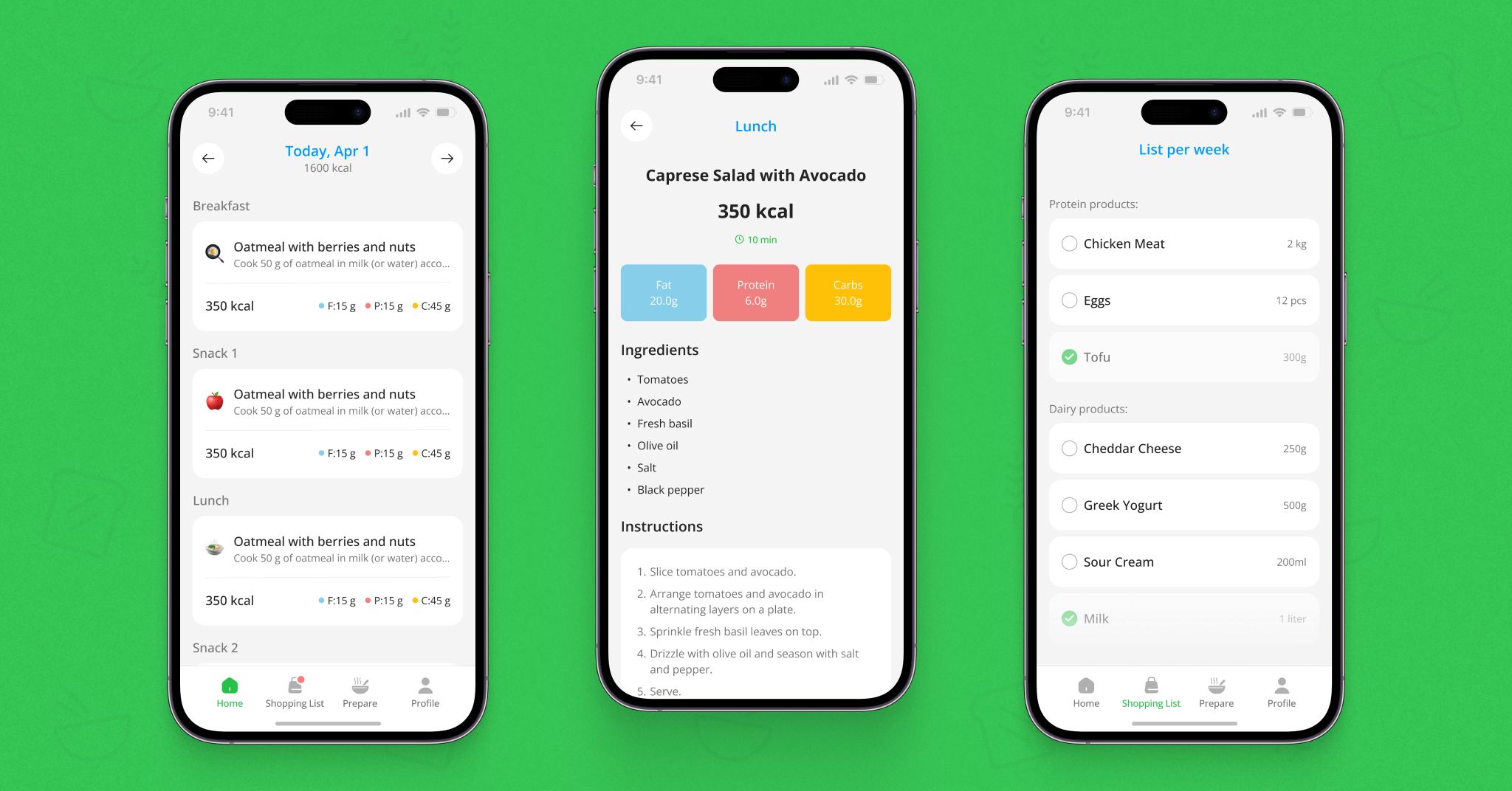
PlanEat Al on iPhone: 7-day meal plan, macro targets, and smart grocery list-everything generated in under a minute with easy swaps.
Inspiration
Meal planning is hard: counting calories, picking recipes, and writing grocery lists takes time. I wanted a 1-minute flow that outputs a realistic week of meals tailored to personal goals and tastes.
What it does
• Onboarding collects goal (lose/maintain/gain), cuisine & dislikes, time/budget. • AI generates a 7-day plan with portions and nutrition per meal. • Calories & macros are auto-calculated for the user profile. • A smart grocery list groups items by store section, handles leftovers and substitutions. • “Health Score” and small habits help users stay on track.
How I built it
• Flutter for iOS UI and fast iteration. • Supabase (Postgres + Row-Level Security) for user data, plans, and recipe store; Auth for Apple sign-in; Storage for images. • Supabase Edge Functions + Cloudflare Workers orchestrate AI prompts and post-processing (portion scaling, macro balancing, list aggregation). • OpenAI API to draft menus and perform nutrition-aware substitutions. • RevenueCat for subscriptions, Mixpanel for analytics. • Marketing site on Webflow.
Challenges I ran into
• Making AI output “cookable”: constrained prompts + validator that checks ingredients, unit consistency, prep time. • Macro targets differ per user; wrote a balancer to scale portions without breaking recipes. • Grocery list deduplication (e.g., “tomato” vs “cherry tomatoes”) with fuzzy merge.
Accomplishments that I'm proud of
• 60-second onboarding → immediately usable 7-day plan. • Grocery list reduces shopping time and waste. • Privacy-first: no selling of personal data.
What I learned
• Guardrails around LLMs are essential for consistency. • Users value swap actions more than huge recipe libraries—speed wins.
What's next for PlanEat AI
• Local creators’ video-recipes by cuisine. • Family profiles & shared lists.
Built With
- dart
- flutter
- openai
- revenuecat
- supabase


Log in or sign up for Devpost to join the conversation.