-
-

Logo
-
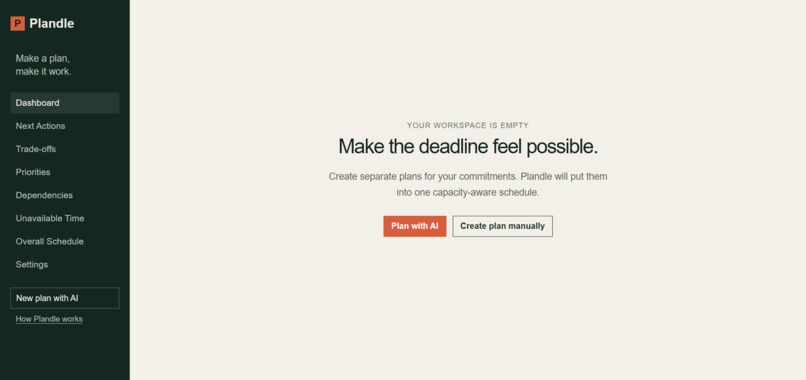
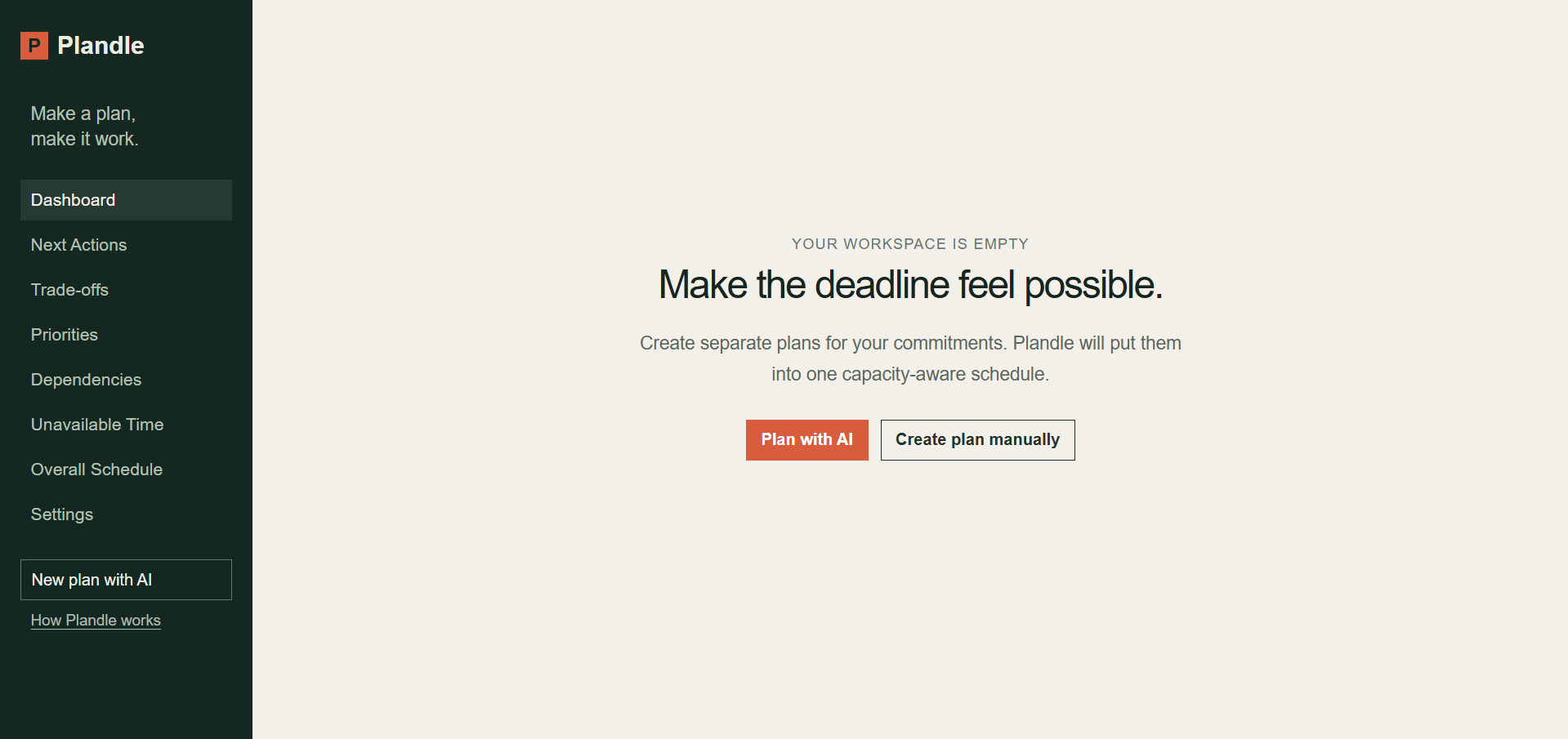
Starting Screen
-
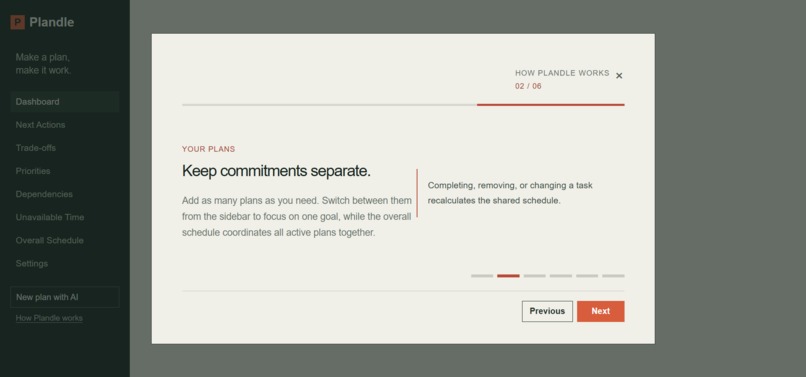
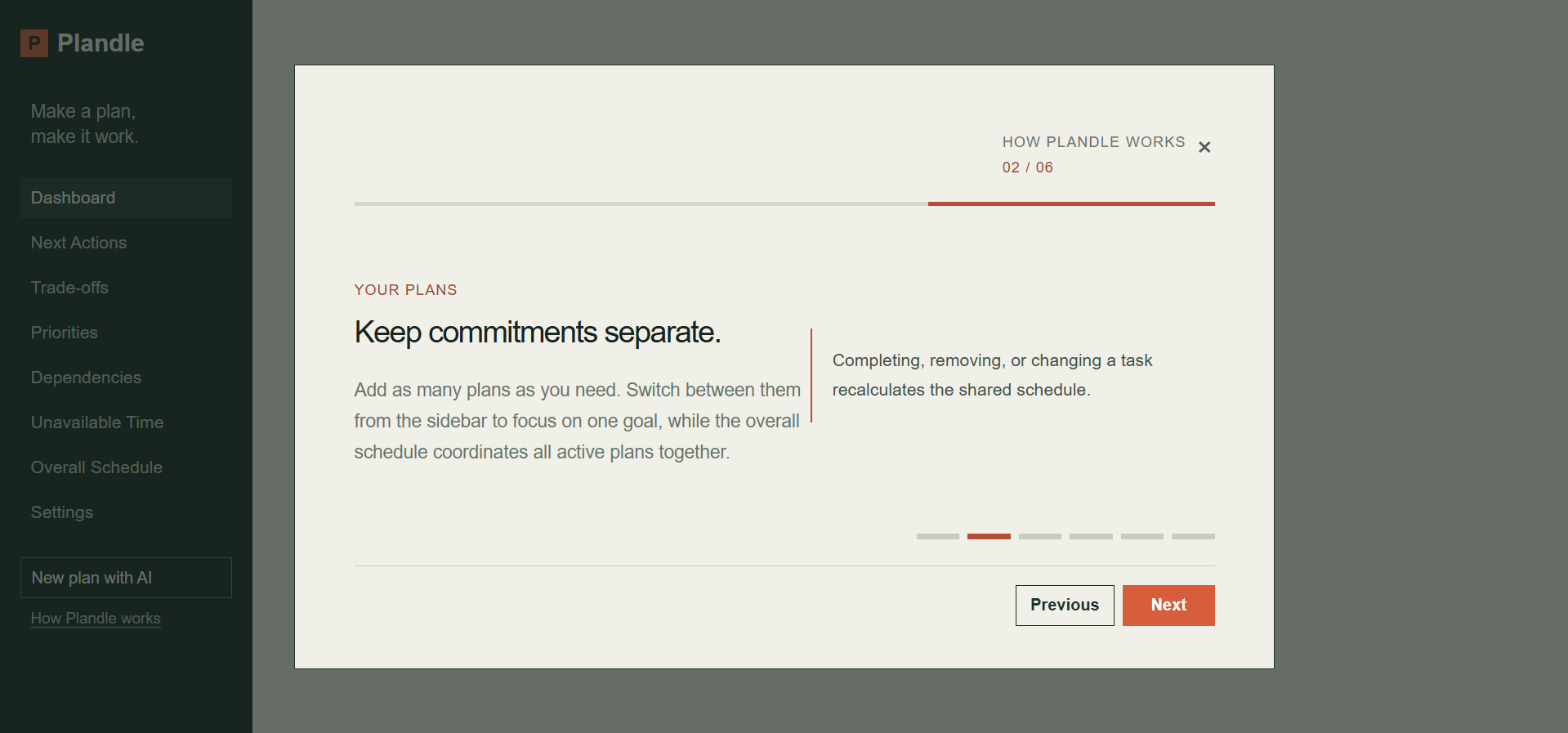
How to Guide
-
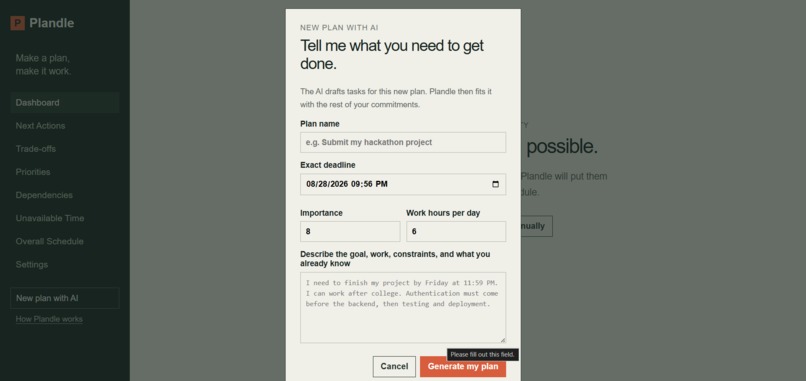
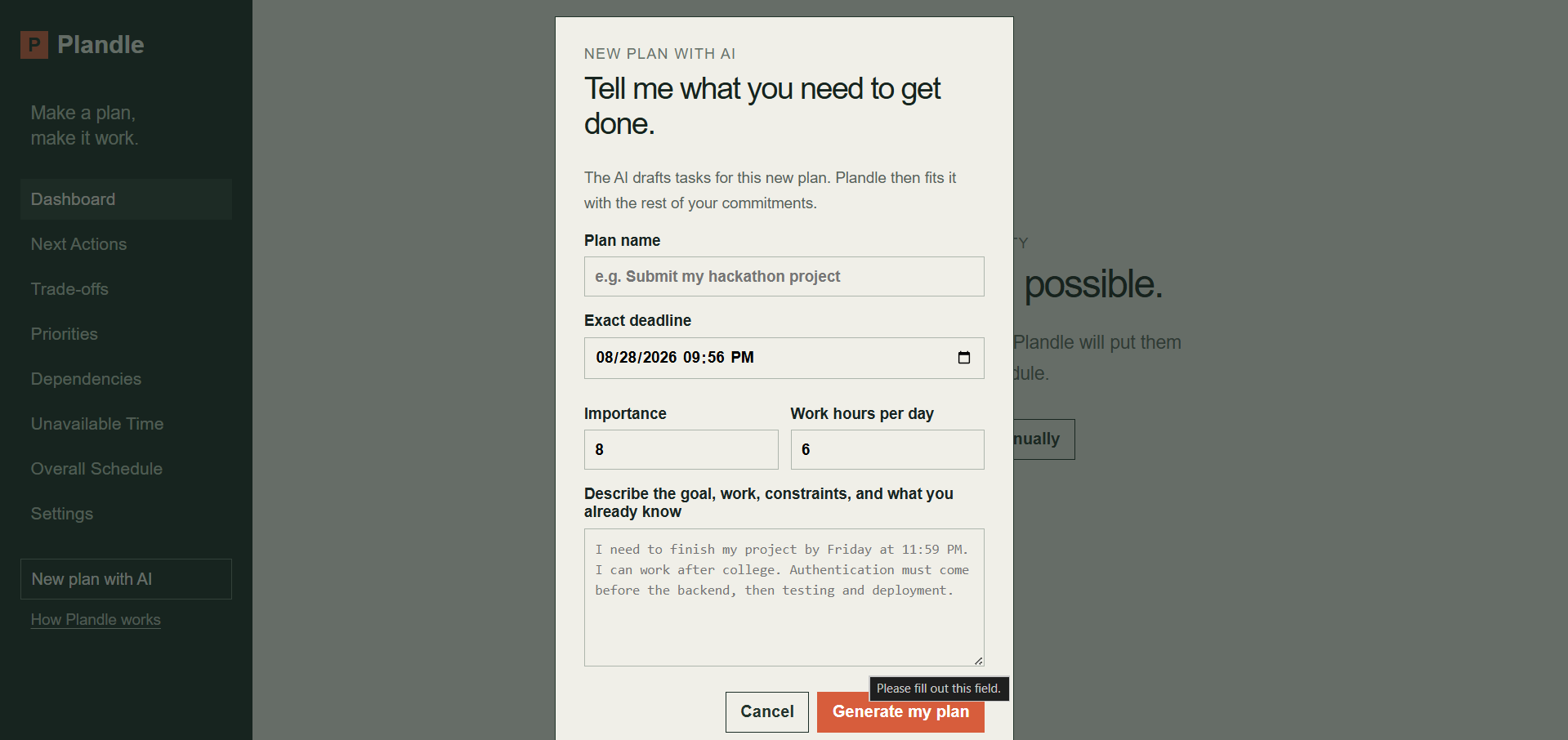
Plan Creation Screen
-
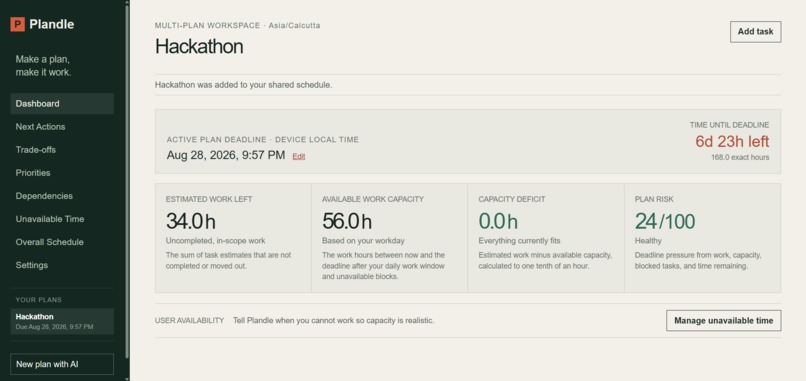
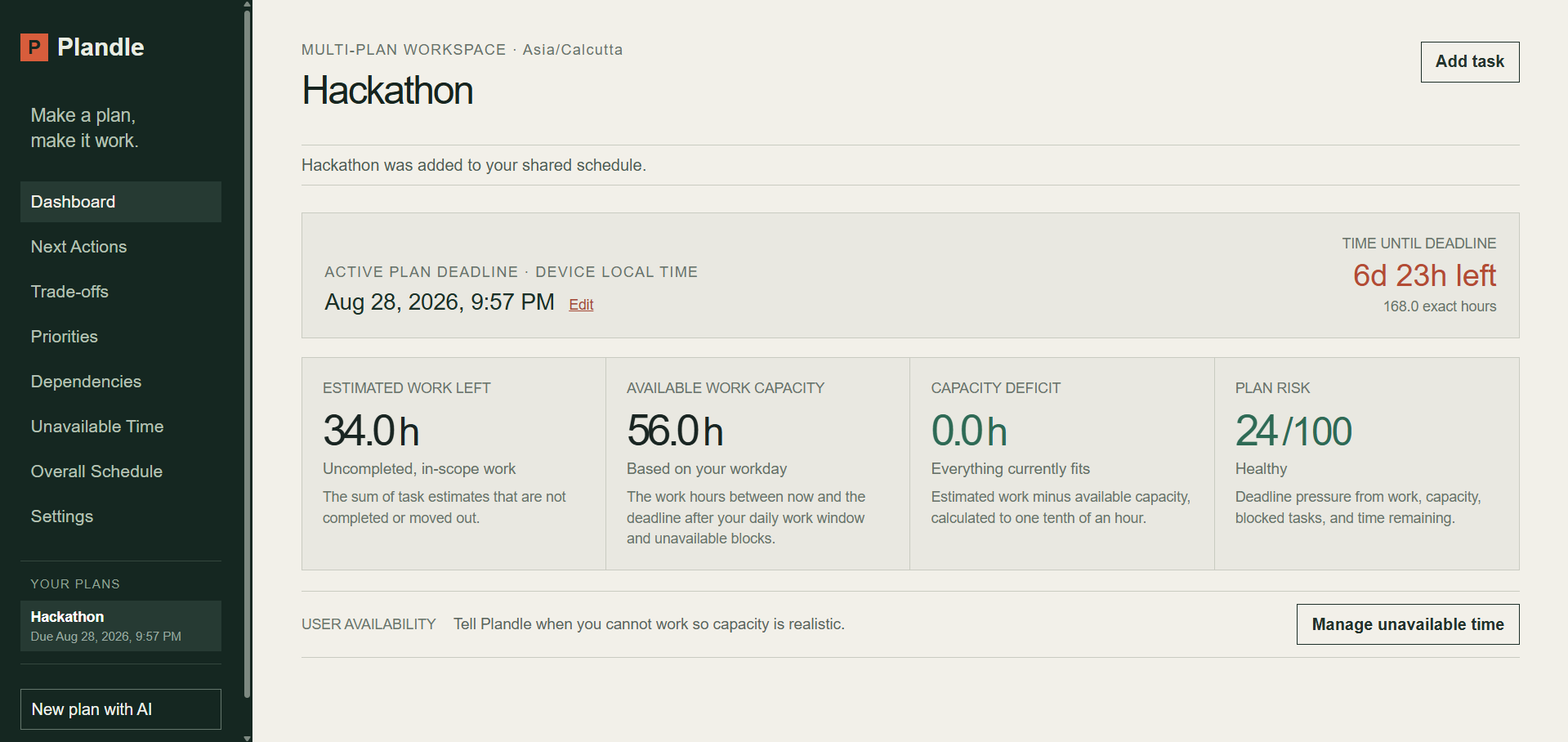
Sample Dashboard
-
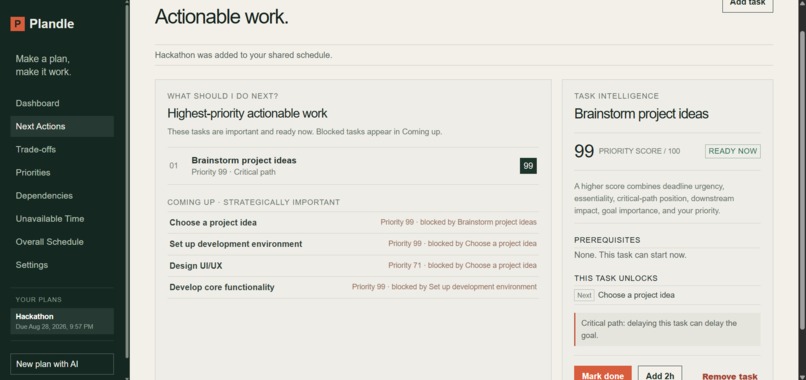
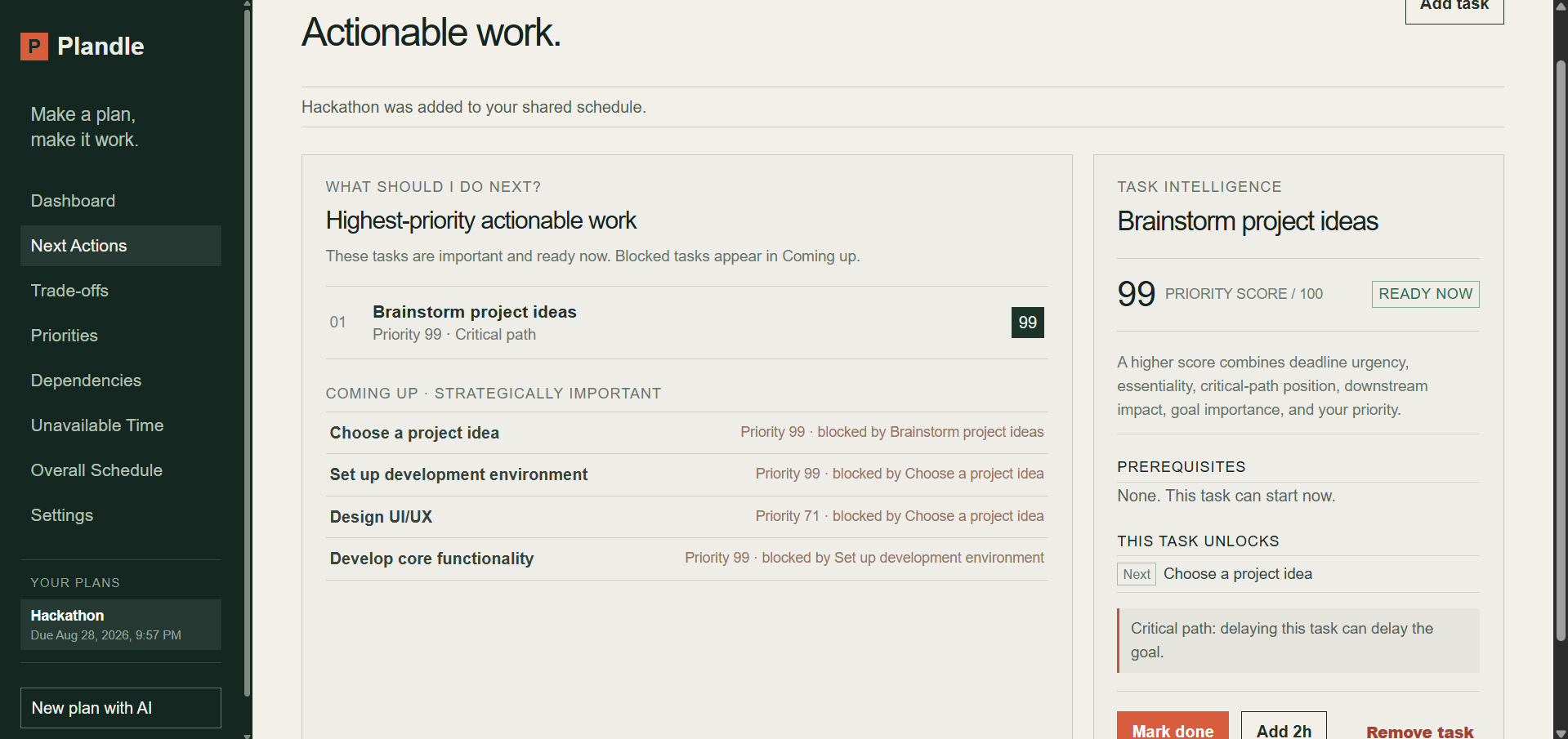
Task List (Next Steps)
-
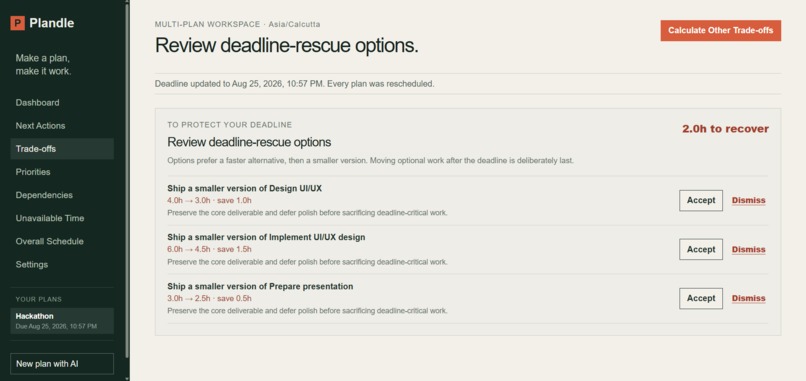
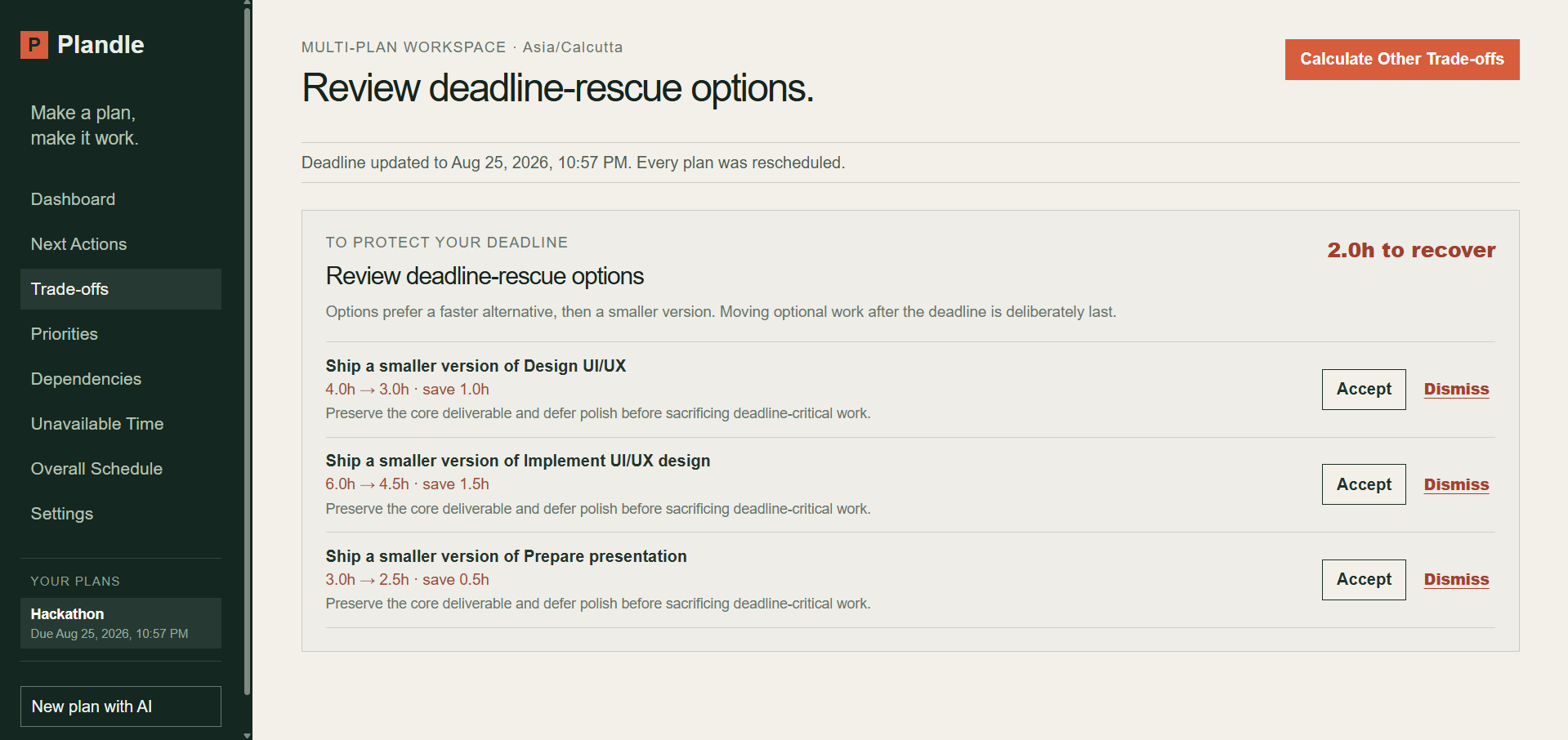
Trade-Offs Page During Capacity Deficit
-
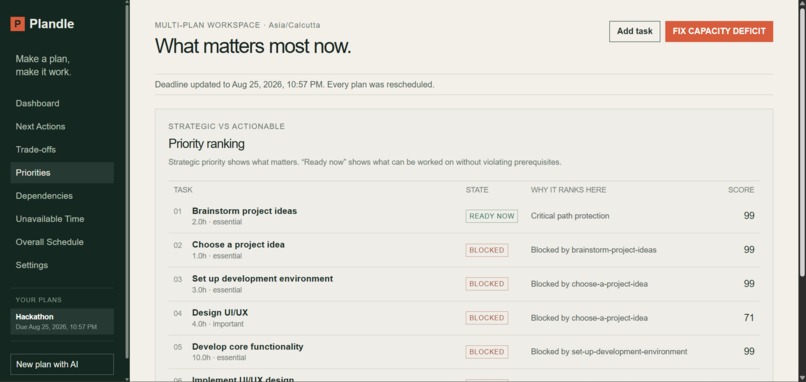
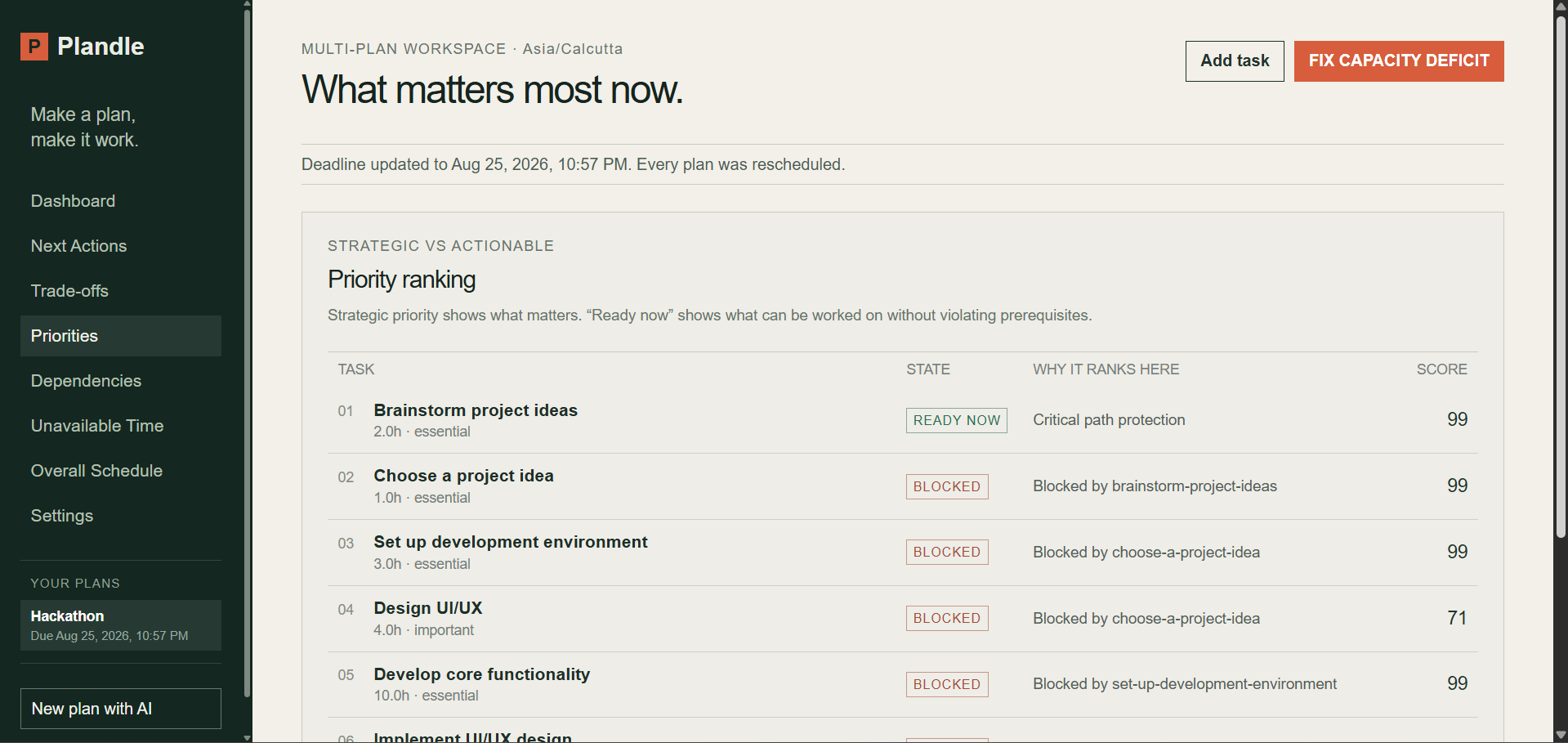
Priority List/Ranking
-
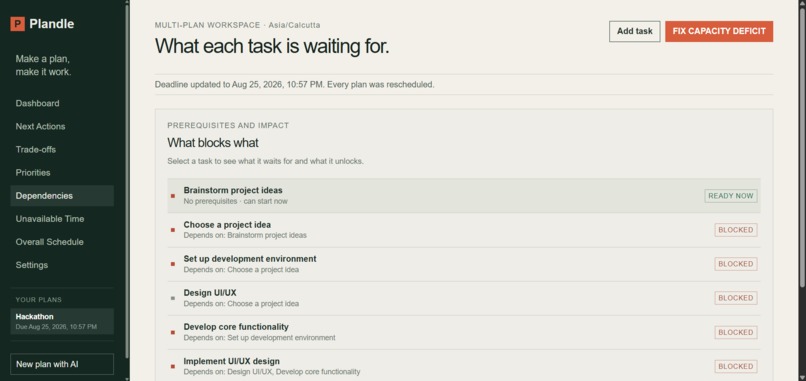
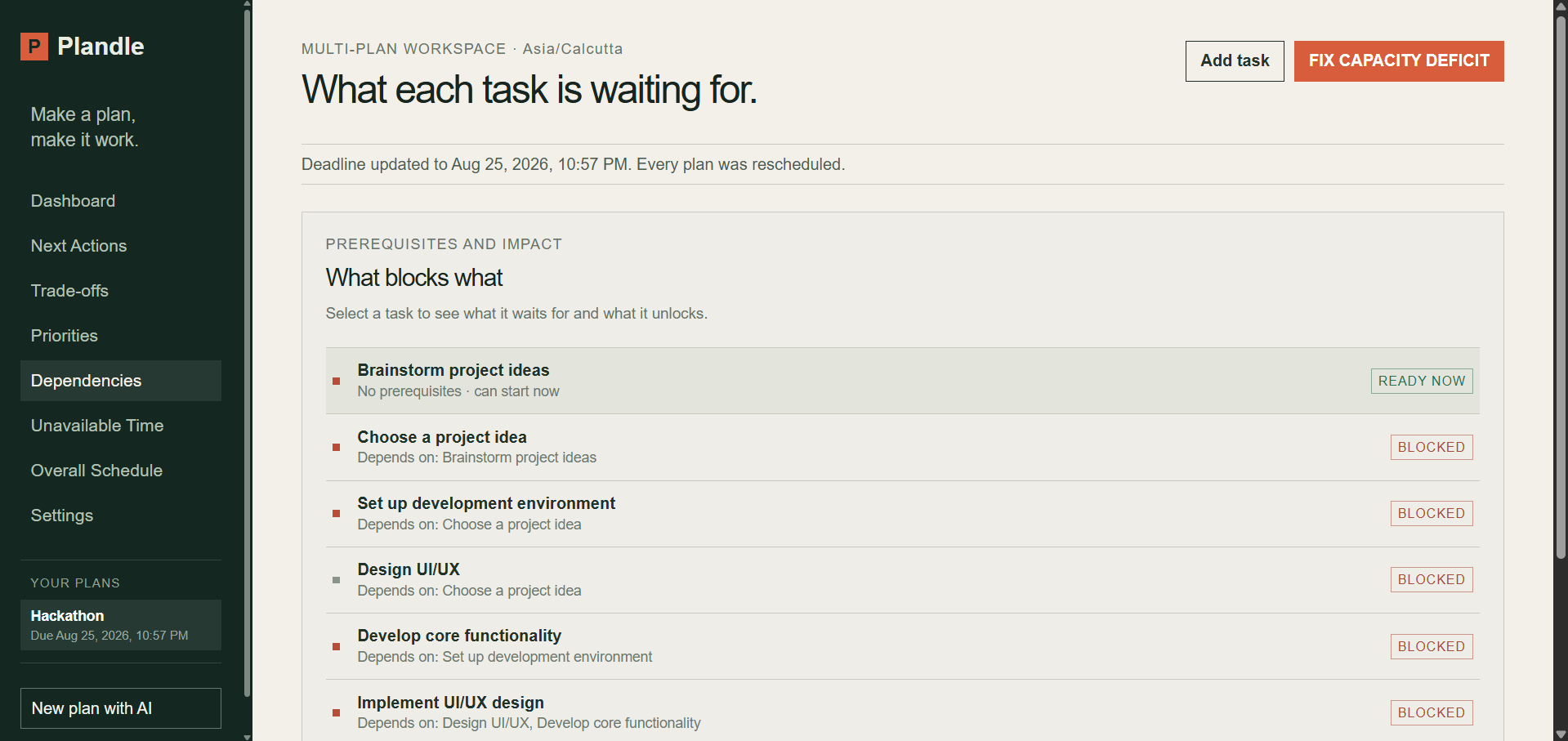
Prerequisite List
-
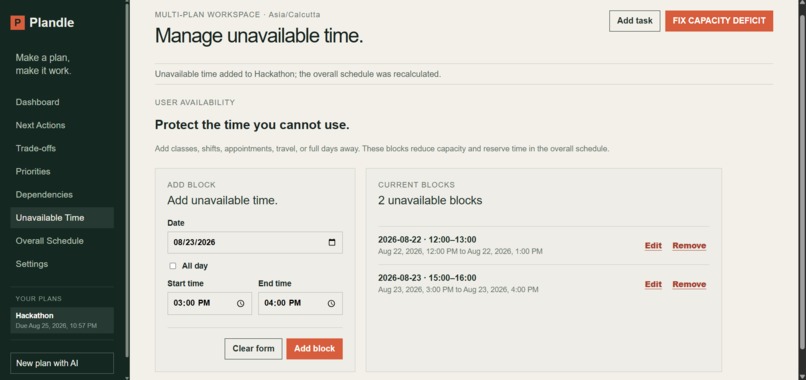
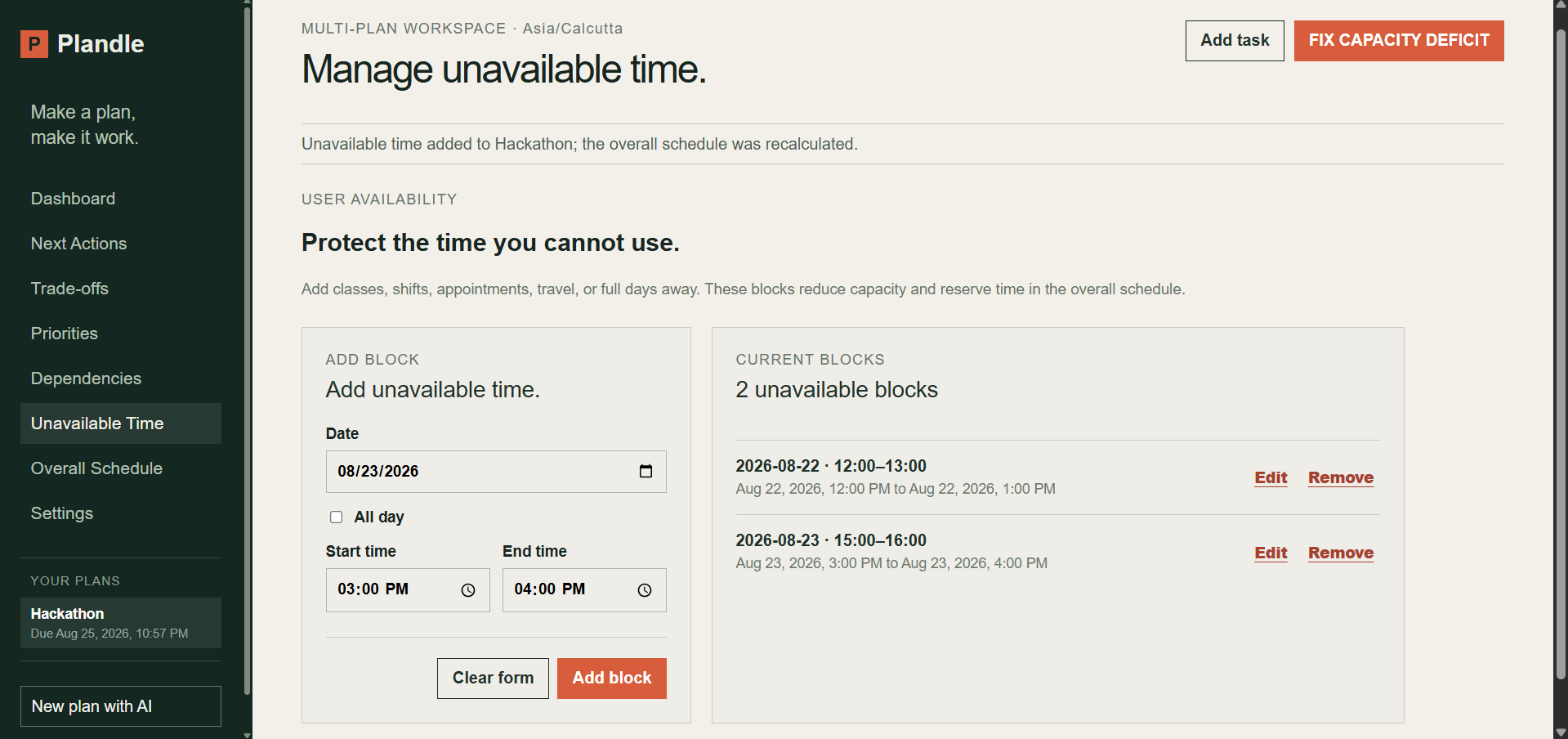
Unavailable Time Management
-
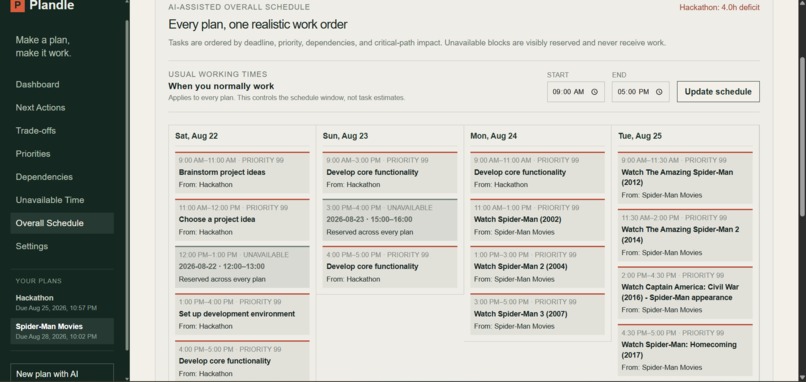
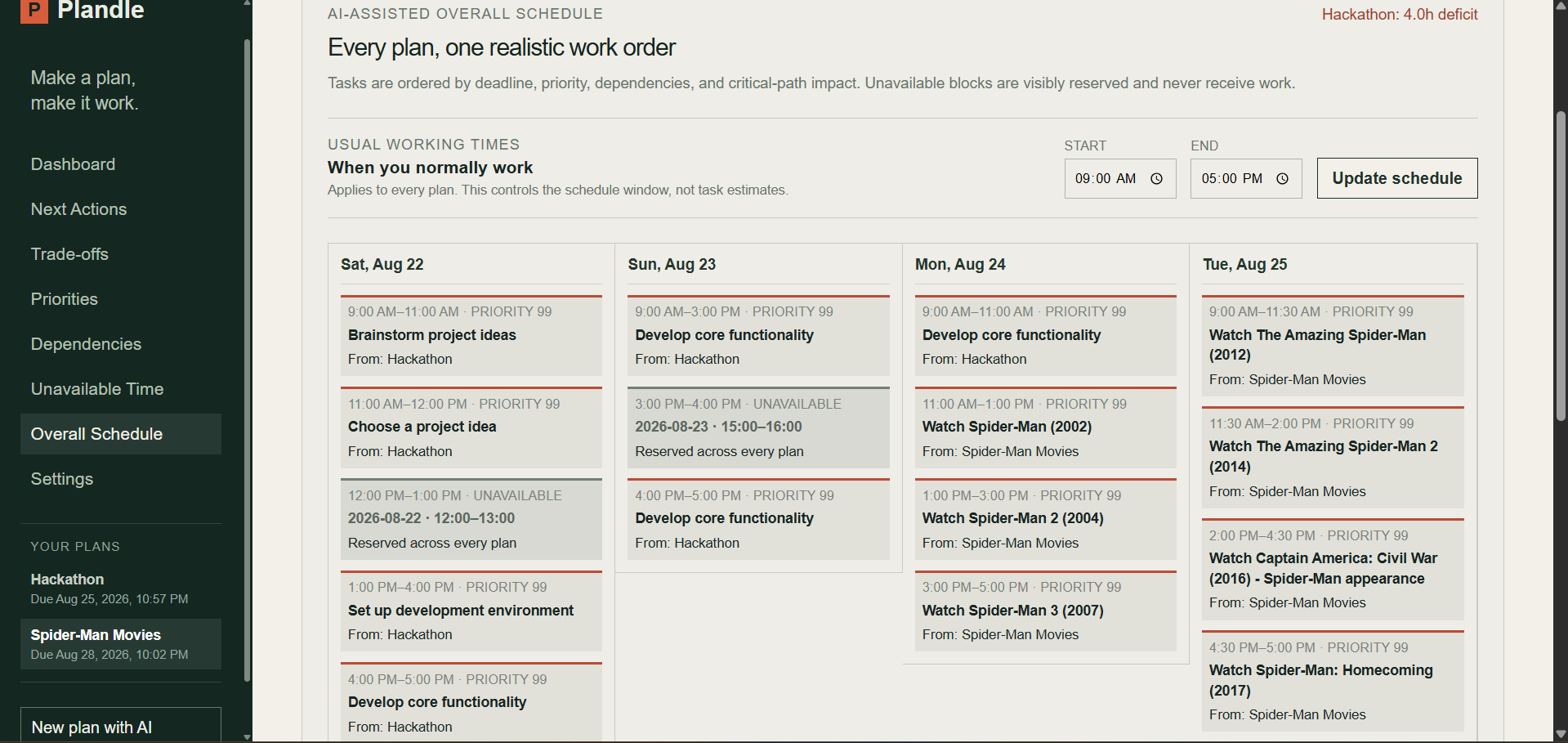
Overall Schedule with Multi-Plan Scheduling

Inspiration
Planning is one of the most important skills in life, but it is also surprisingly difficult. I have always struggled to plan things properly and finish them on time. Whether it is work, studying, personal goals, or everyday responsibilities, planning can quickly become overwhelming. Not because I'm bad at the task, but because I plan to do so many things all at once, and consequently have no idea how to prioritize certain tasks, compromise efficiently, and ensure deadlines are met. Most people, including me, use a simple task list on excel or notepad. However, this simple tool does not tell me where I should start, how to meet my deadline without fail, or how one delayed task affects everything else and my next steps to get back on track.
I wanted to build something that could make planning much, much easier: a smart calendar that understands deadlines, priorities, dependencies, available time, unexpected changes, overlapping, and combines these complex considerations to create the most optimal schedule.
The perfect plan for the not-so-perfect me. That idea became Plandle.
What I Built
Plandle is an adaptive planning workspace for individuals and employees. Users can create multiple plans, add tasks, set deadlines and priorities, define prerequisites, and receive a realistic schedule based on their actual availability.
Plans can be created manually or drafted with AI from a simple description. The application then calculates:
- How to create thorough plans
- What tasks these plans should have
- What task should be completed in succession, aka prerequisites
- Which tasks are blocked by said prerequisites
- How different plans can be juggled to work together
- How much work remains
- Whether there is enough capacity before the deadline
- Which tasks are most important
- What trade-offs are available if the schedule becomes overloaded
- How to juggle times the user is not available to work in their usual working hours
Users can also add unavailable periods such as appointments, shifts, classes, travel, or full days away. These periods are automatically reserved in the Overall Schedule.
The Overall Schedule combines every plan into one shared calendar. Users can also set their usual working timespan, such as the standard 9:00 AM to 5:00 PM, and apply it across all plans.
How I Built It
I built the interface with React and TypeScript, supported by a TypeScript backend. The application stores workspace data locally and includes backup and restore functionality so users can download their data as JSON and restore it later.
AI is used for tasks that benefit from natural-language understanding, such as turning a brain dump into structured tasks and suggesting possible trade-offs. However, the final scheduling logic is deterministic. This ensures that deadlines, capacity, dependencies, and unavailable time are validated consistently instead of relying entirely on AI-generated decisions.
At the center of the application is a scheduling and capacity engine. A simplified version of the planning problem is:
$$ \text{Available Capacity} = \text{Working Capacity} - \text{Unavailable Time} $$
The scheduler compares that capacity with the estimated effort of all tasks, while also respecting prerequisites and deadlines.
And just as importantly, PRIORITY. Without priority, Plandle wouldn't work. One of the most complex AI models available on Featherless calculates the priority of the tasks in each plan. The calculation has multiple factors such as importance to the next tasks, deadline of the plan, capacity, etc.
What I Learned
One of the biggest things I learned is that a useful planner needs more than tasks and due dates. It needs to really understand the reality surrounding those tasks.
I also learned that AI works best as an assistant rather than the sole source of truth. AI is excellent at interpreting natural language and suggesting possibilities, but deterministic logic paired with its capabilities is better for enforcing hard constraints such as deadlines, dependencies, and available capacity.
Challenges
One challenge was making the scheduler behave correctly when plans contained dependencies, unavailable periods, multiple deadlines, and tasks that took longer than expected. A plan could appear realistic until one task was delayed or a prerequisite was added. I had to make sure every change triggered a full recalculation.
Another challenge was coordinating multiple plans. Each plan needs to remain independent, but all plans compete for the same available time. This required creating a shared schedule without losing the structure of individual plans.
The user interface also required several iterations. I encountered issues with preventing clutter while keeping the essentials, sidebar scrolling, page scrolling, responsive layouts, small screens, and keeping navigation controls visually aligned. These problems taught me that usability is not separate from functionality; if the interface feels confusing, the planning system becomes harder to use and trust.
Finally, because planning data can be important, I added settings for deleting individual plans, restoring backups, and clearing all data. The clear-data action includes an explicit confirmation step because destructive operations should never happen accidentally.
What's Next
The next step for Plandle is to make it even more useful as an everyday calendar for both individuals and employees.
I plan to add integrations with Google Calendar, Outlook, and Apple Calendar so existing events can automatically affect the schedule. Notifications and reminders would also help users stay on track without constantly checking the application.
Other improvements would include recurring tasks, mobile and progressive web app support, account-based synchronization across devices, and more detailed calendar views.
I also want Plandle to become more adaptive over time. By learning from completed tasks, delays, and user behavior, it could improve its time estimates and suggest schedules that better match each person’s working style. Basically, implementing a self-improving feature to the AI agent at the heart of the application.
For employees and teams, future versions could include shared plans, collaboration, role-based responsibilities, and team capacity planning. The long-term goal is for Plandle to become a reliable personal and professional planning assistant that continuously adjusts as priorities, availability, and real-life circumstances change.
Plandle started from a personal difficulty with planning, but it grew into a tool designed to help anyone organize work and life more realistically, adapt when circumstances change, and finish important things on time and with care.
Built With
- featherless
- json
- qwen
- react
- typescript
- vite


Log in or sign up for Devpost to join the conversation.