Inspiration
As a homeowner who struggled to navigate green renovation options—from confusing incentives to unvetted contractors—I saw a gap: US and EU homeowners need a streamlined way to plan sustainable renovations without sifting through fragmented info. I wanted to create a tool that makes eco-friendly choices accessible, actionable, and financially clear.
What it does
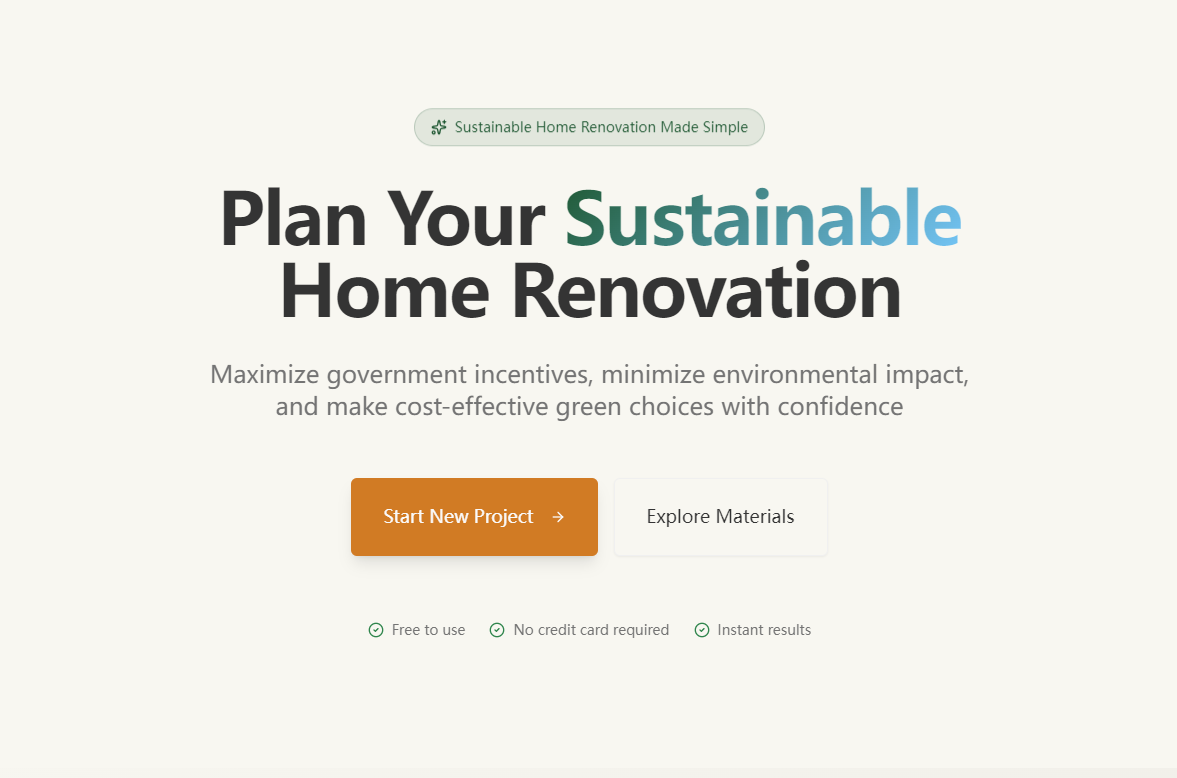
GreenRenovation Guide helps homeowners plan sustainable home renovations: select project types/locations, get curated eco-material recommendations, find applicable government incentives, connect with certified green contractors, and calculate ROI + carbon reduction over decades. It compiles all insights into a exportable, comprehensive report.
How we built it
We started with user research to map core pain points, then designed a intuitive page structure (Home → Wizard → Dashboard → Specialized Pages). We built the frontend with React for responsiveness, backend with Node.js to handle location/incentive logic, and used PostgreSQL to store contractor/material data. We integrated APIs for location services and data visualization, then tested with homeowners across US states and EU countries.
Challenges we ran into
Aligning incentive data across 50+ US states and 27+ EU countries was complex—each region has unique eligibility rules and rebate structures. We also faced challenges in making ROI calculations location-specific (utility rates, carbon grid factors) while keeping the tool easy to use. Balancing depth of info with simplicity was a constant hurdle.
Accomplishments that we're proud of
We created a fully responsive tool that delivers personalized recommendations in minutes, with clear, actionable insights (not just generic advice). Users can compare eco vs. conventional materials, shortlist contractors, and export a professional report—all without overwhelming them. We’re proud it works seamlessly for both US and EU users, addressing region-specific needs.
What we learned
We deepened our understanding of cross-regional sustainability policies and how to translate complex data into user-friendly tools. We also learned that homeowners prioritize clarity (e.g., simple ROI metrics) over technical jargon, and that visual badges (for eco-certifications) drastically improve engagement. Collaboration with sustainability experts helped ground the tool in real-world applicability.
What's next for this project
We plan to expand support for more EU member states and US localities, add interactive material sample galleries, and integrate direct outreach to contractors. We also aim to include real-time updates for incentive programs and add a feature to track renovation progress against sustainability goals. Long-term, we want to add community insights (e.g., homeowner renovation stories) to build trust and inspiration.

Log in or sign up for Devpost to join the conversation.