
Inspiration
Our inspiration for the product was based on our shared experiences planning trips with families, friends, and loved ones. We have all wondered how to spend our limited vacation days in unique and beautiful places. Additionally, planning vacations without a solid grasp of a new environment can be stressful and time-consuming.
What it does
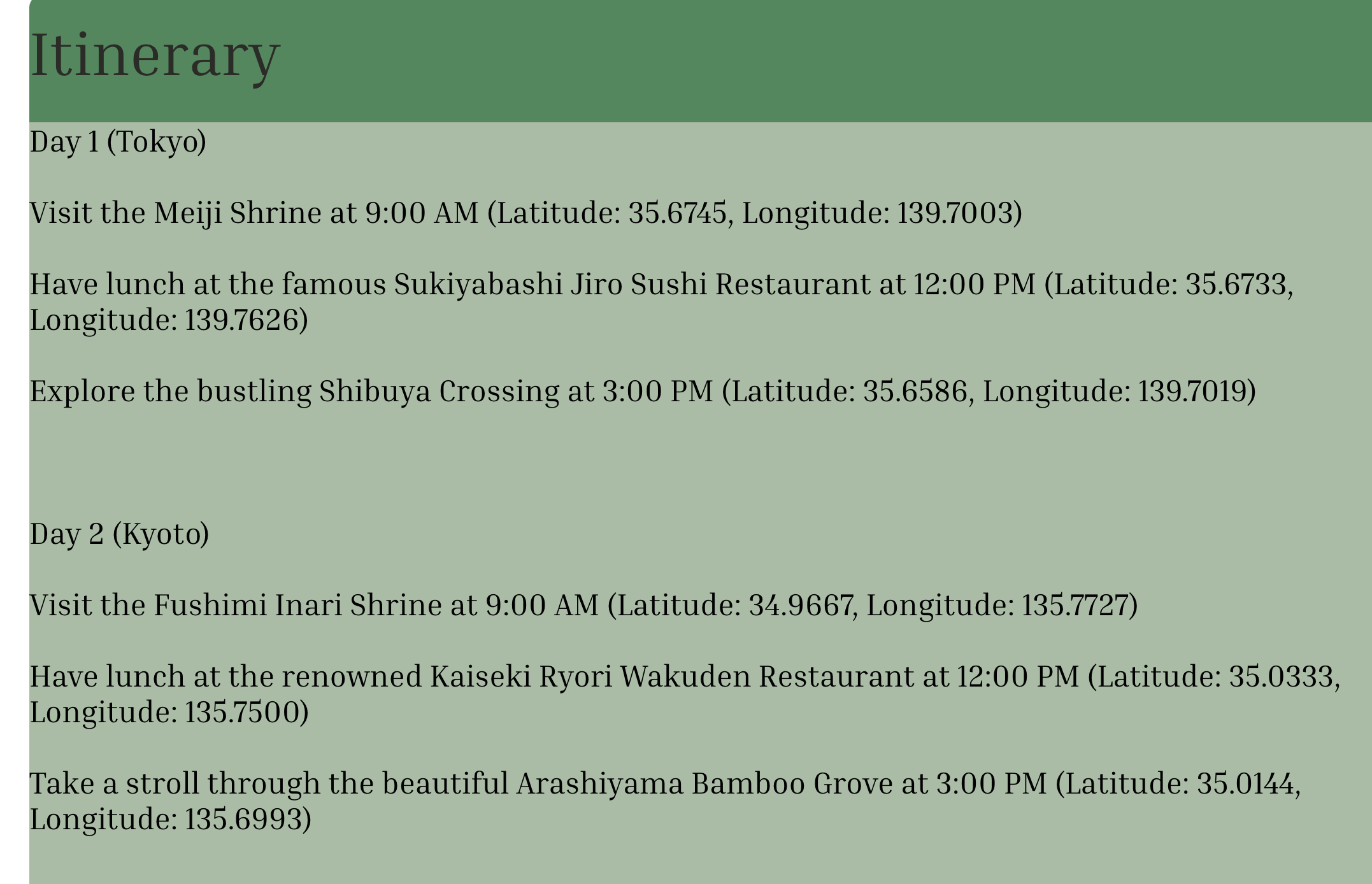
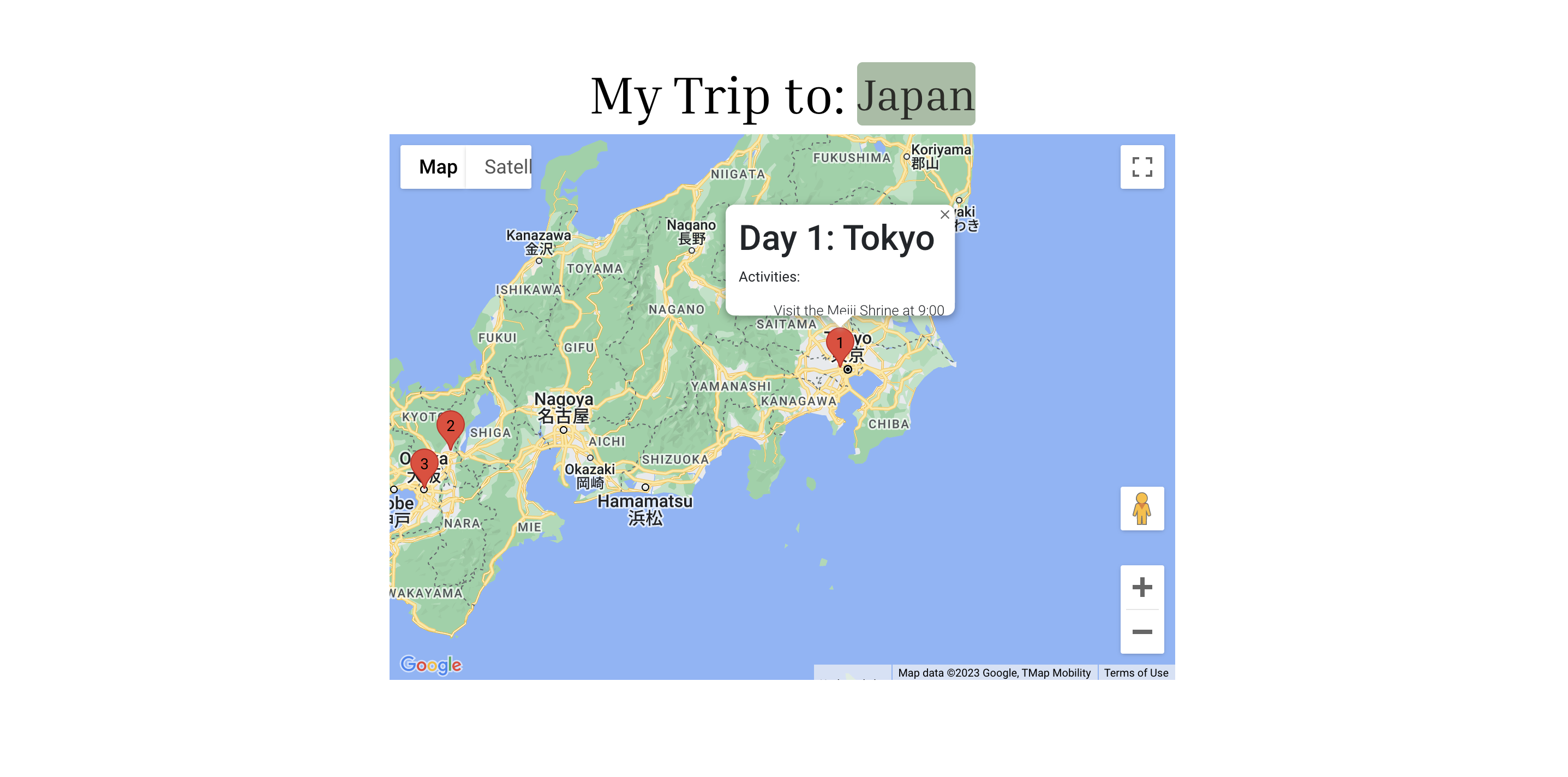
Our application takes in a couple of parameters (location & length of stay). It returns a detailed itinerary paired with Google maps showing all the trip's stops and locations. It is all generated by an advanced AI which we have trained to return accurate information.
How we built it
Our Frontend was built with a design-first philosophy, with our prototype made in Figma and eventually built using React, CSS, HTML, and Javascript. Our backend consisted of a simple yet effective python flask API communicated between our machine learning model and our frontend. The backend consisted of a single endpoint, which took in the parameters: location of vacation & length of vacation; to return fun facts, a detailed itinerary, and accurate vacation locations.
Challenges we ran into
One of the biggest challenges we faced came from our front-end app. None of us had much experience in frontend development, much less a full-blown React app created with HTML, CSS, and Javascript. We struggled for many hours trying to squash as many bugs as possible while wrestling with the complications of CSS and HTML. Additionally, a huge challenge we face is the amount of time it takes to generate a detailed itinerary to provide back to the user. Since this model was implemented in less than a few days, our goal was to focus on accuracy rather than speed at first, which we leveraged with OpenAI's Text Completion API (Not the same as the popular ChatGPT, which has no public API).
Accomplishments that we're proud of
We built this project from the ground up. Starting from a simple figma design Friday night, we developed a fully functional React frontend & a python flask backend. We paired it with a highly sophisticated AI, all within two days.
What we learned
We learned that even the most daunting tasks could be overcome through hard work and dedication. Most of the team (myself included) were introduced to new technologies and quickly adapted to ensure the project would be completed in time.
What's next for Plan My Trip
Although we came up with this idea for UGAHacks, we believe this project could significantly benefit anyone who travels. We plan to continue working on this project and open-sourcing the software to anyone who needs it.


Log in or sign up for Devpost to join the conversation.