-
-

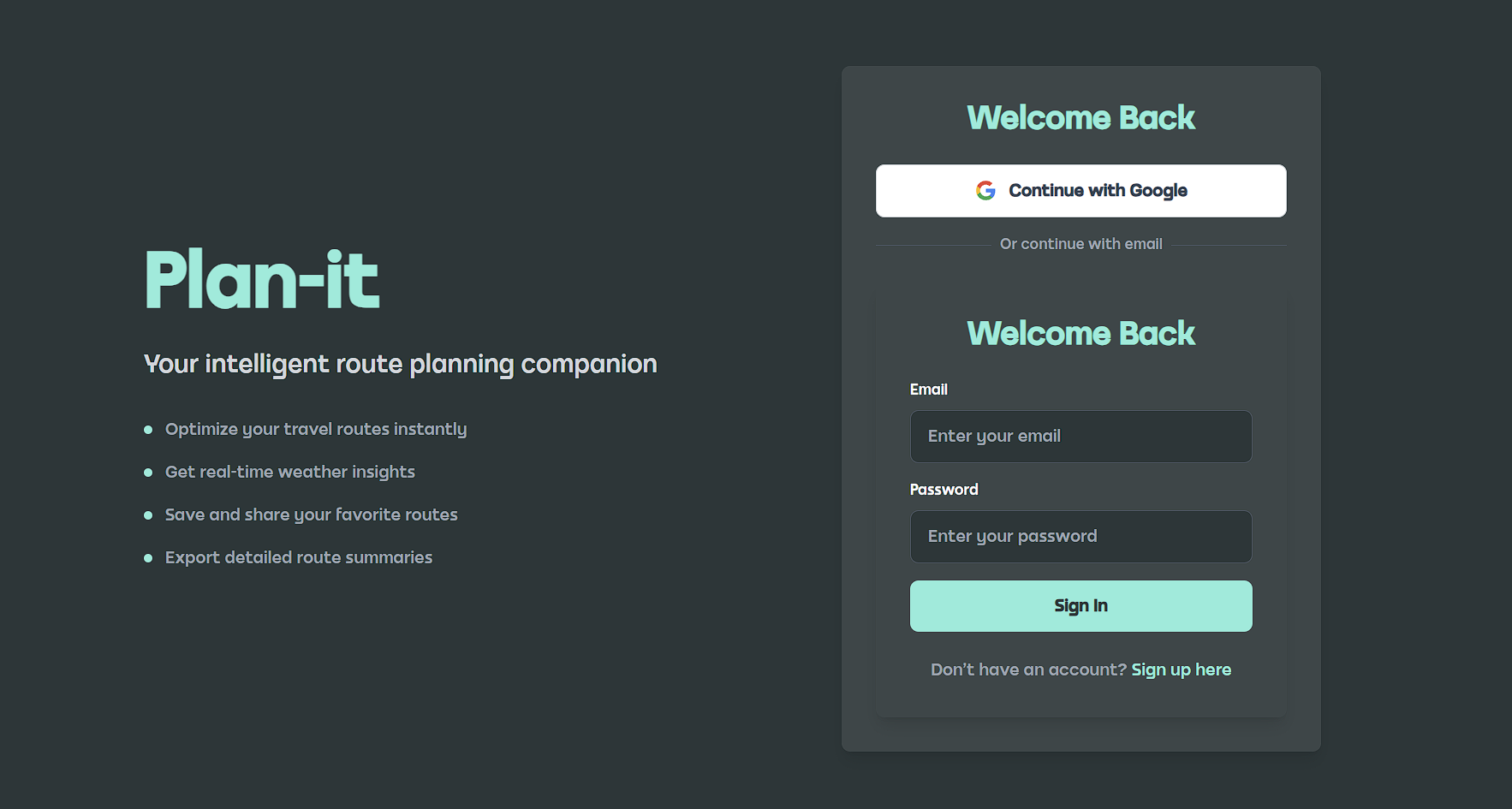
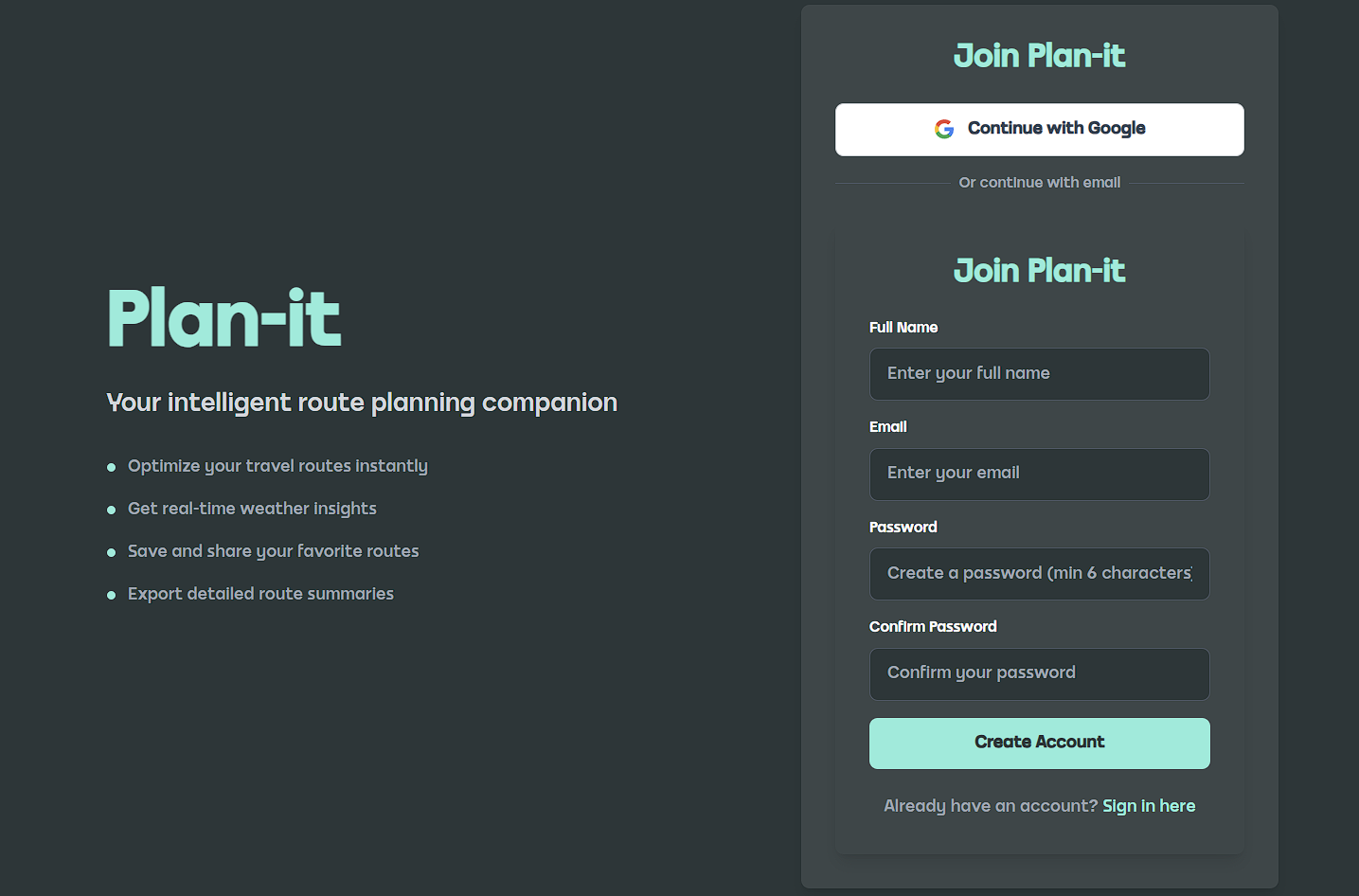
Login Page
-
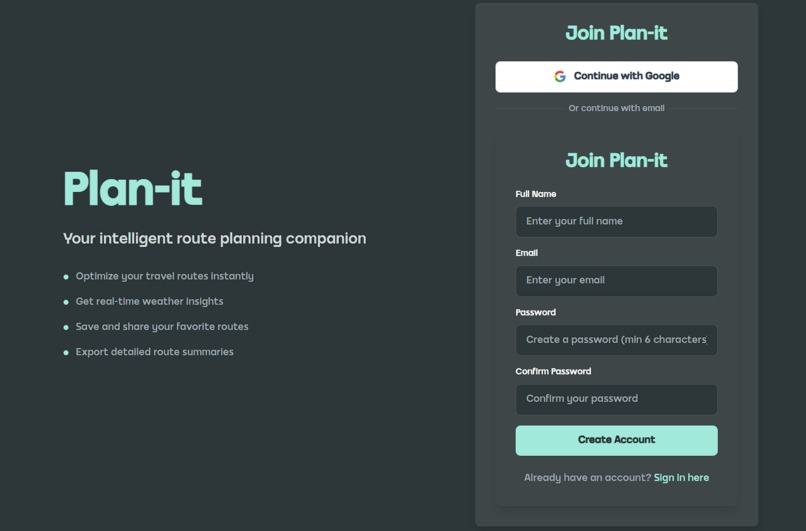
Landing Page | Authentication
-
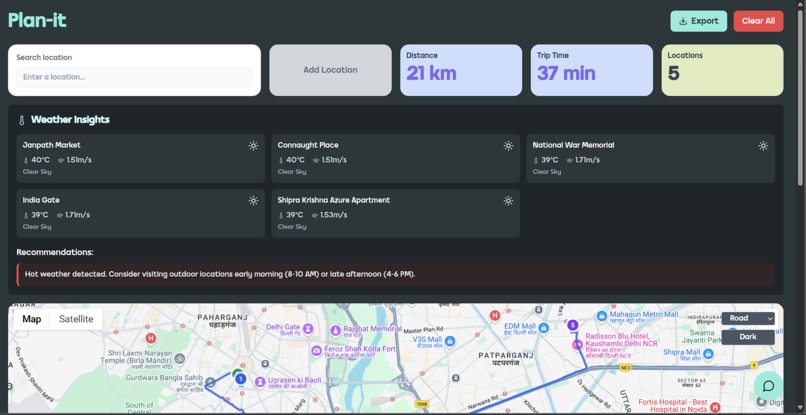
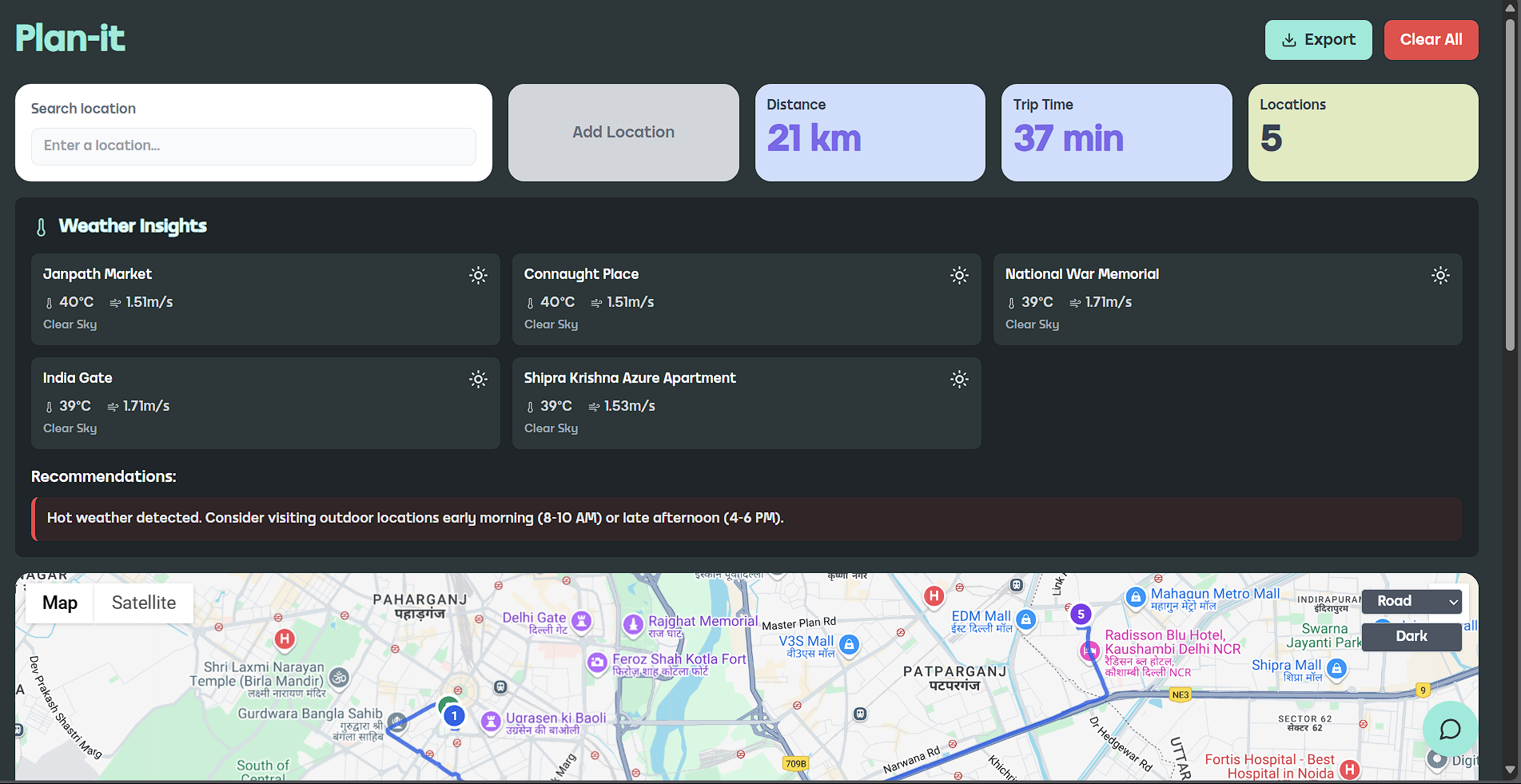
User-friendly dashboard designed and developed from scratch ...
-
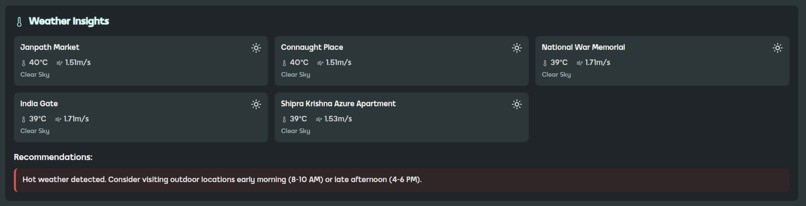
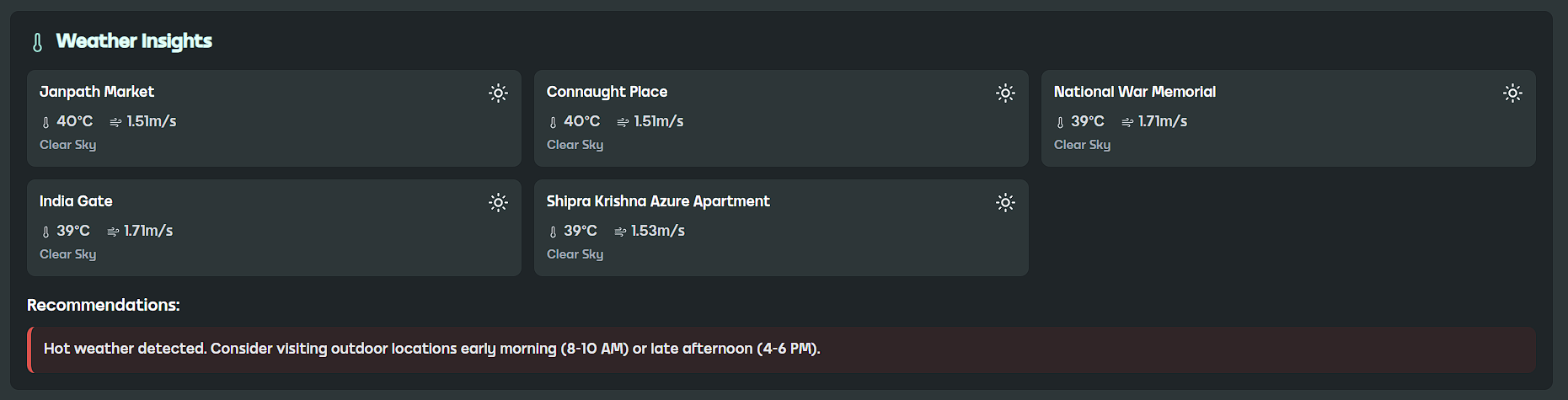
Weather Insights
-
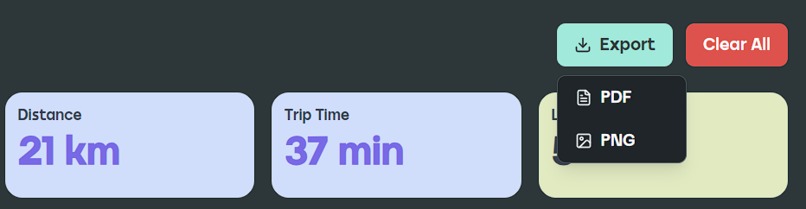
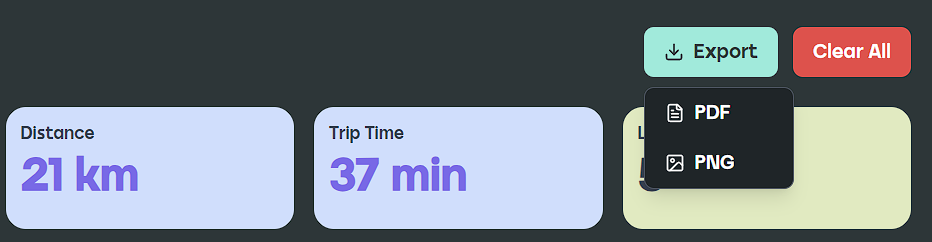
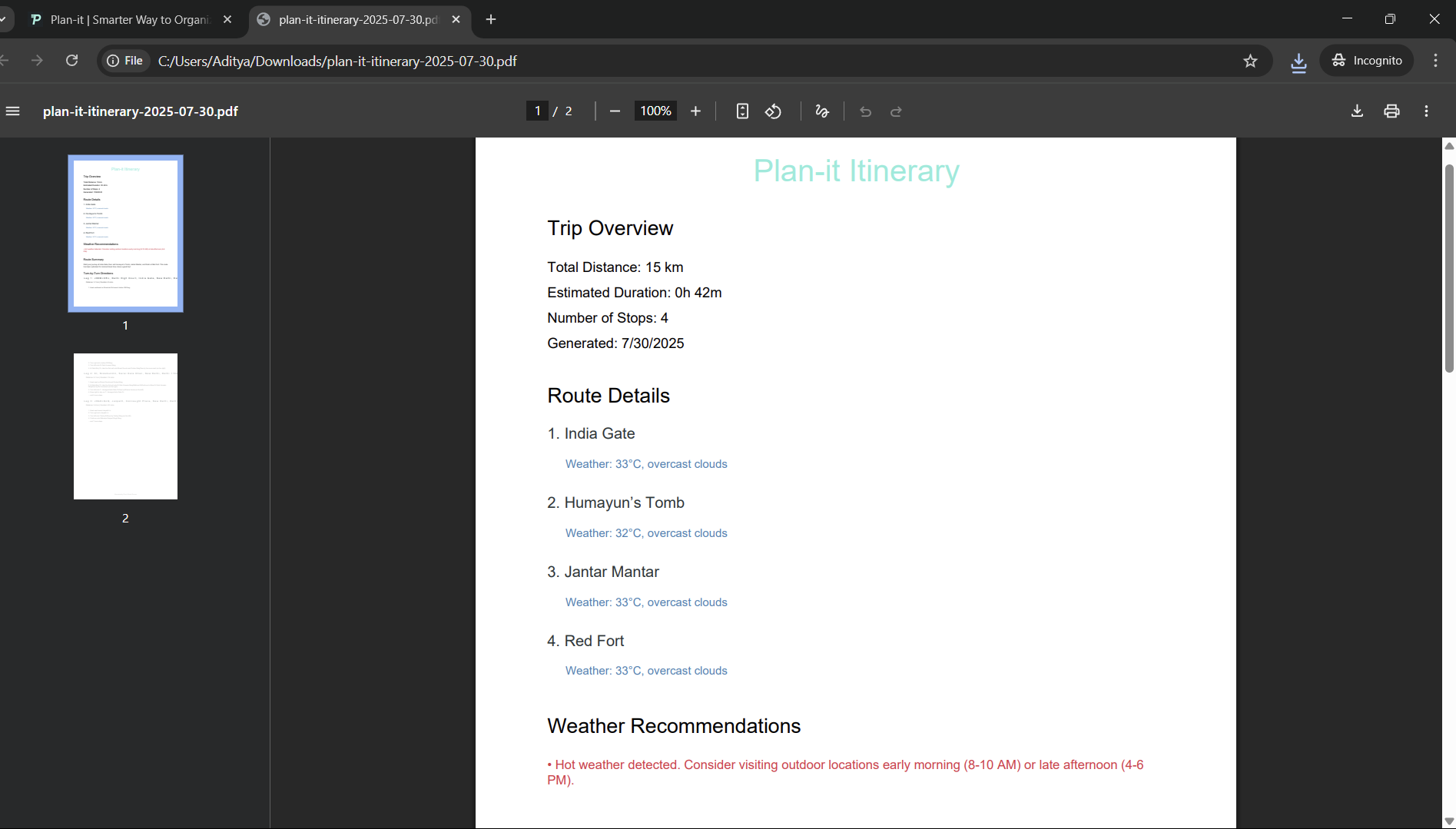
export options for itinerary
-
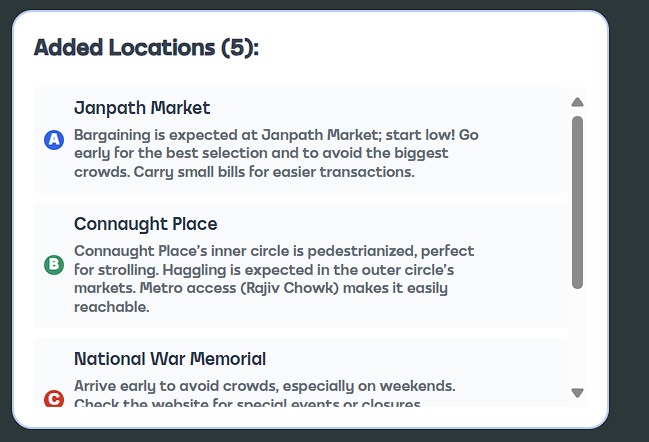
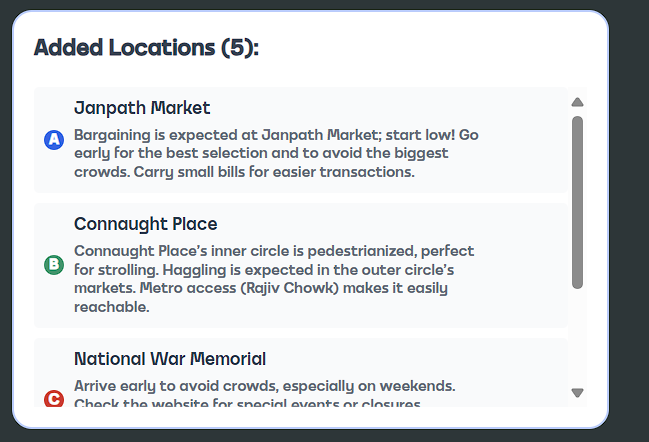
AI-powered quick-insights
-

Route Summary - Standard || Detailed
-
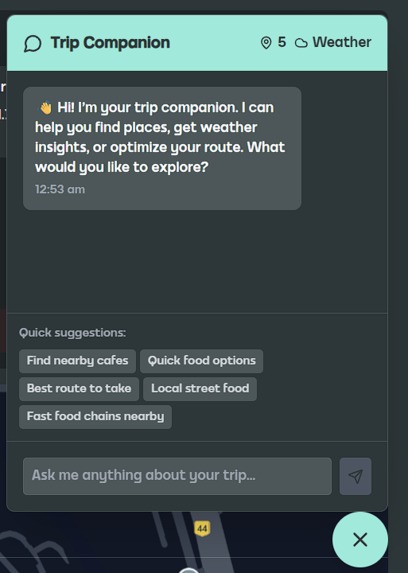
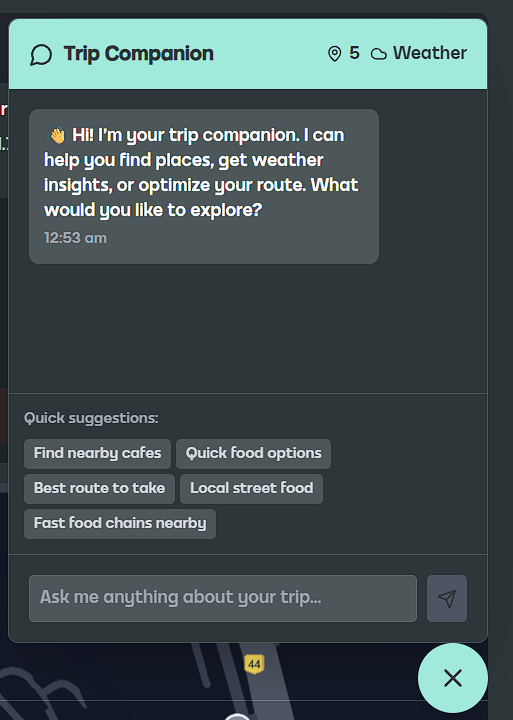
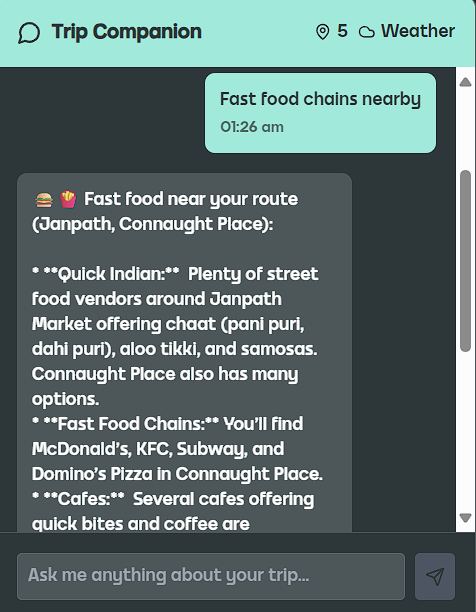
CHAT BOT
-
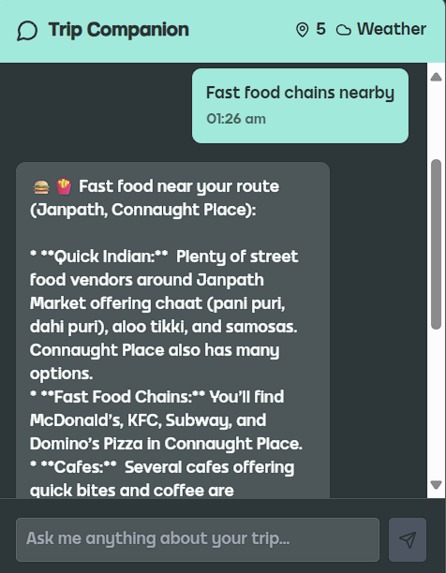
Chat bot made with GEMINI API
-
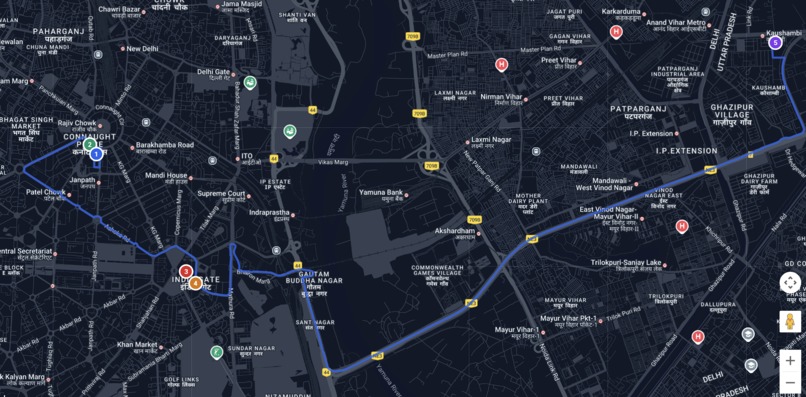
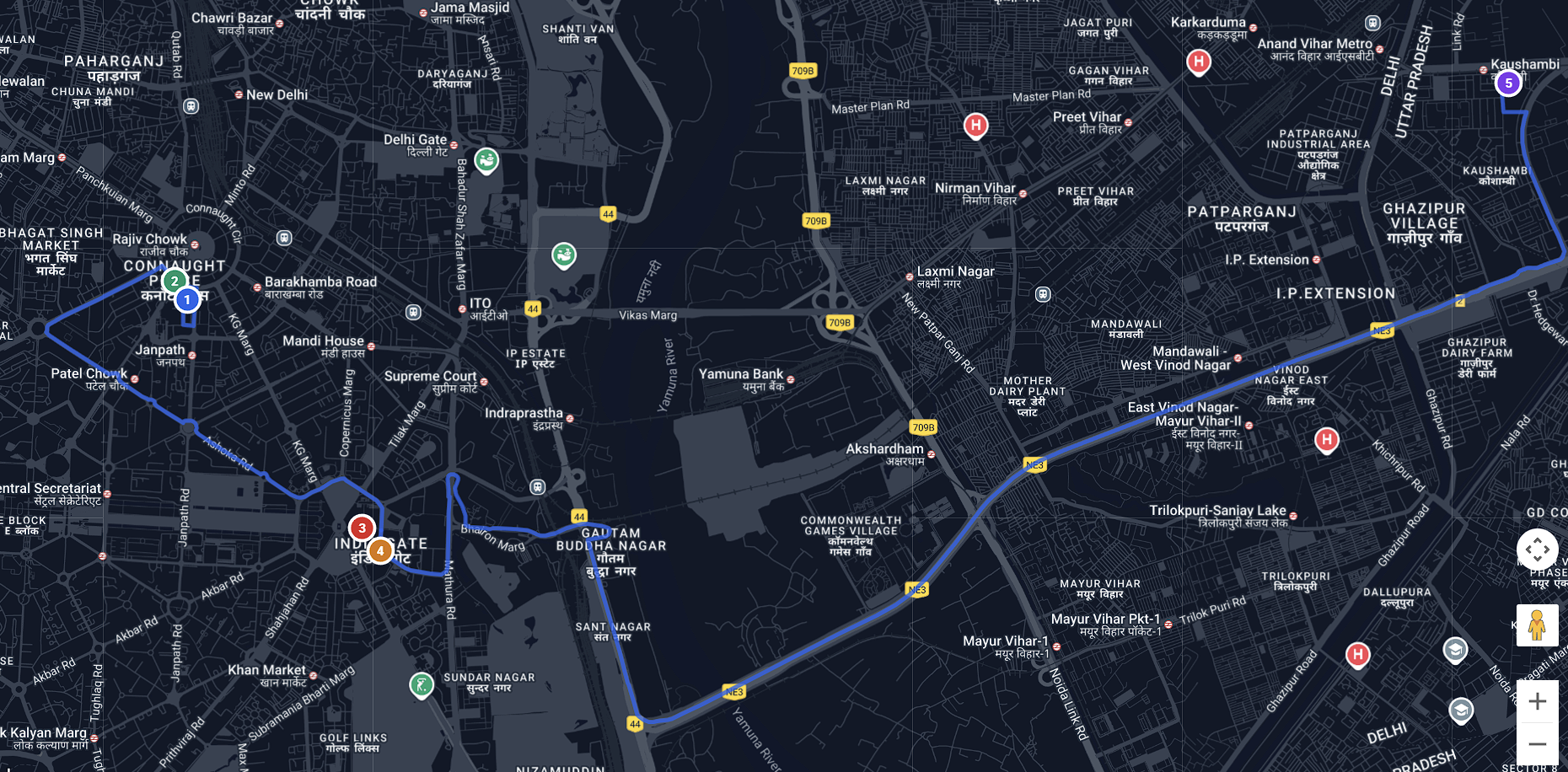
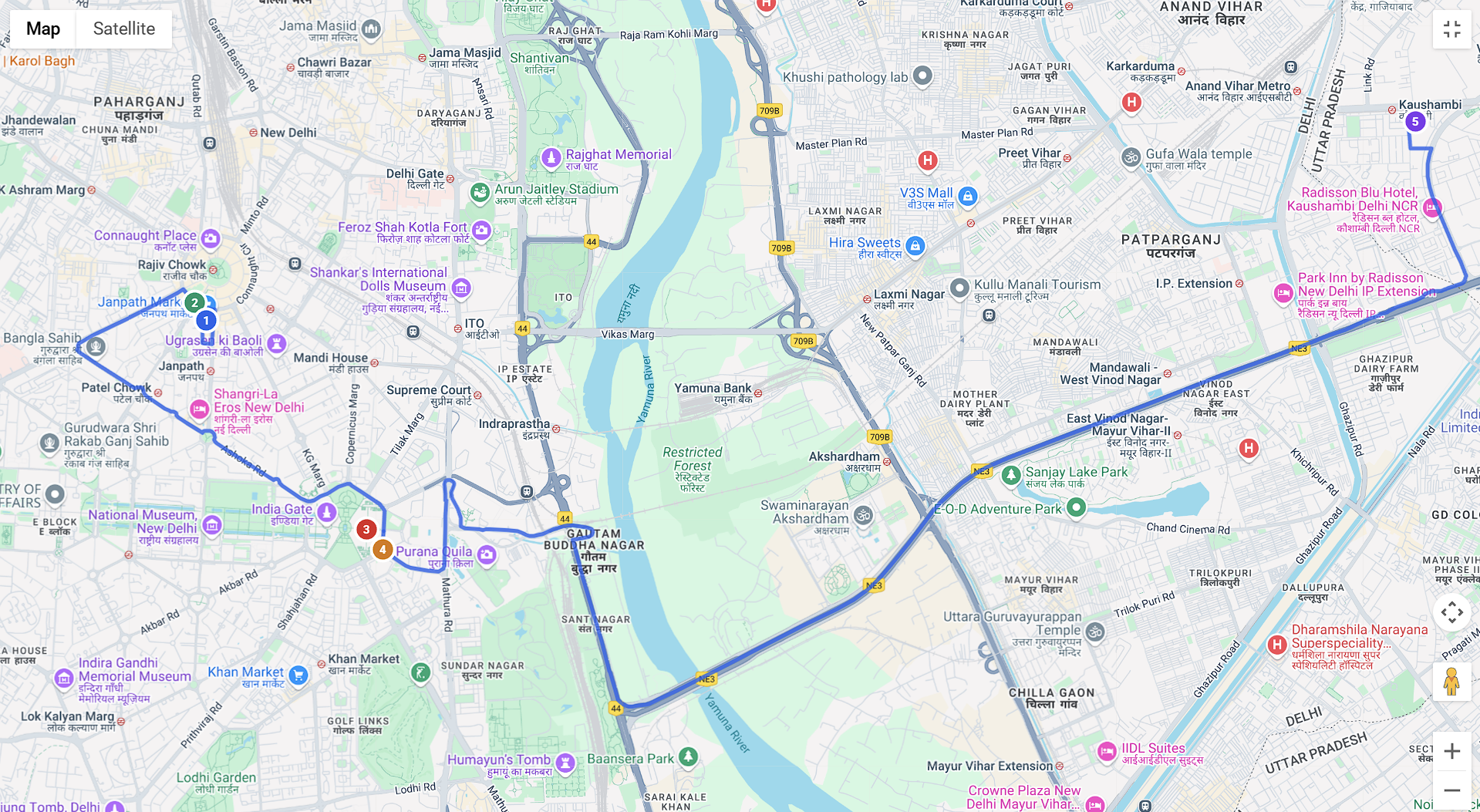
Advanced Marker Pins added => Dark Mode
-
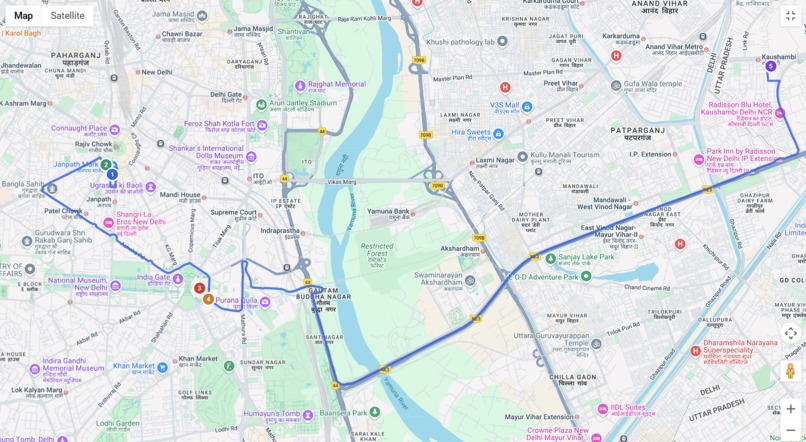
Advanced Marker Pins added => Light Mode
-
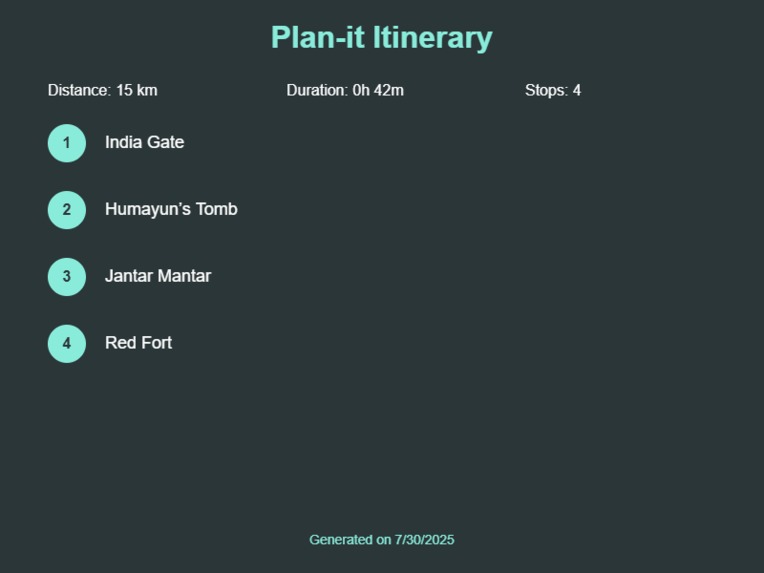
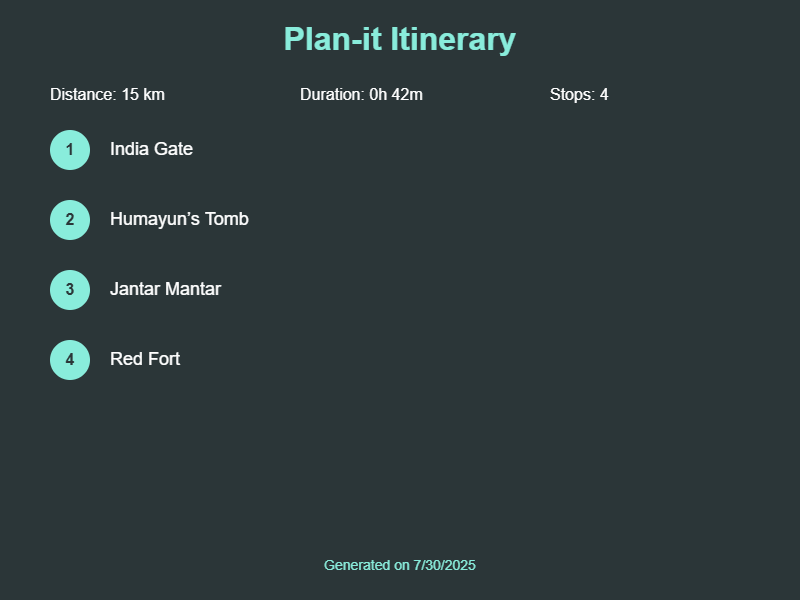
itineray_in_form_of_png
-
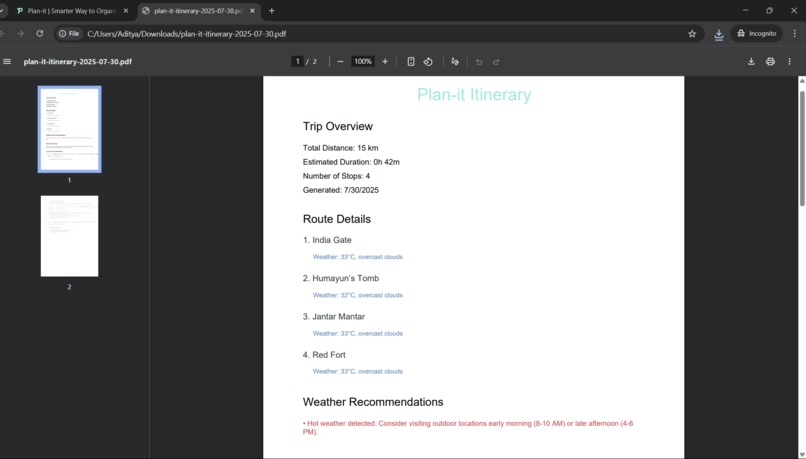
itinerary_exported_in_form_of_pdf

Plan-it: Revolutionizing Travel Planning with Smart Route Optimization
The Spark of Inspiration 🌟
Picture this: late May, my friends and I are planning a trip to Dharamshala. We've got our must-visit spots researched, itinerary mapped out, everything's perfect. Then that one friend drops the bomb – "Oh, I also want to go here... and here... and this place too!"
Suddenly we're back to square one, frantically checking distances from our hotel, recalculating routes, and trying to figure out the most efficient way to hit all these scattered locations without spending half our vacation stuck in traffic.
This wasn't an isolated incident. During a recent family trip to Goa, we found ourselves overwhelmed trying to decide which beach to visit first and how to plan our route efficiently. With limited time and budget constraints, the experience became frustrating as we tried to organize everything while manually juggling multiple factors.
The reality hit me: no one enjoys spending hours on Google Maps manually planning routes anymore – it feels like labor work (मजदूरी). There was a clear need for a dedicated solution that could handle this intelligently, something simple, focused, and user-friendly, without being overwhelming or filled with unnecessary features.
The Problem We're Solving 🎯
Travel planning involves a deceptively complex mathematical challenge. When you need to visit multiple destinations, the question becomes: What's the optimal sequence to minimize travel time and expenses?
The complexity grows exponentially:
- 3 locations = 6 possible routes
- 5 locations = 120 possible routes
- 10 locations = over 3.6 million possible routes
This is essentially the famous Traveling Salesperson Problem (TSP), one of the most well-studied problems in computer science and operations research.
Building the Solution: Technical Deep Dive 🛠️
Architecture & Technology Stack
I built Plan-it using a modern full-stack approach:
- Frontend: React.js with Tailwind CSS for a clean, responsive interface
- Backend: Node.js with Express and MongoDB (via Mongoose)
- Authentication: Google OAuth 2.0 and JWT session management
- APIs: Google Maps API (Advanced Markers, Directions, Distance Matrix), OpenWeatherMap API, Gemini API
- Export Features: jsPDF for generating downloadable itineraries
The Core Algorithm: Adaptive TSP Solving
The heart of Plan-it lies in its intelligent route optimization system. I implemented multiple algorithmic approaches based on the problem size:
For Small Route Sets (≤4 locations):
// Brute Force Algorithm - Guarantees optimal solution
if (locations <= 4) {
    use bruteForceTSP(); // Evaluates all permutations
}
For Medium Route Sets (5-10 locations):
elif (locations <= 10) {
    // Multi-Start Nearest Neighbor + Or-Opt Local Search
    use multiStartTSP() + orOpt();
}
The Or-Opt improvement works by relocating sequences of 1-3 consecutive locations – think of it as asking "What if we visit the canteen after the lecture hall instead of before?"
For Large Route Sets (>10 locations):
else {
    // Nearest Neighbor + 2-Opt Improvement
    use nearestNeighborTour() + twoOpt();
}
The 2-Opt algorithm systematically swaps route segments to eliminate crossing paths – like taking two paths, cutting them, and reconnecting them differently to avoid zig-zag patterns.
Performance Optimization Challenges
One of the biggest technical challenges was handling the Google Maps Distance Matrix API efficiently:
const service = new window.google.maps.DistanceMatrixService();
const CHUNK_SIZE = 10;

// Split large requests into chunks to avoid API limits
if (locations.length > CHUNK_SIZE) {
    // Process in batches and cache results
    service.getDistanceMatrix(/* chunked requests */);
}
I implemented:
- Distance Matrix Caching to avoid redundant API calls
- Chunked API Requests to handle large location sets within rate limits
- Error Handling for unreachable destinations and API failures
- Time-Limited Optimization to prevent excessive computation
Innovation: Weather-Aware Route Optimization ☔
Traditional TSP solvers optimize for distance and time, but real-world travel involves another critical factor: weather conditions. I developed an enhanced system that creates intelligent, weather-conscious itineraries.
The Weather Intelligence System
The system analyzes weather patterns using key metrics:
// Weather variation detection algorithm
const weatherAnalysis = {
    hasVariedTemperatures: tempRange > 5, // °C
    hasVariedConditions: uniqueConditions > 1,
    avgTemp: calculateAverage(allLocations),
    dominantCondition: getMostFrequentPattern()
};
Adaptive Recommendation Engine
Scenario A: Uniform Weather Conditions
- Hot Weather Strategy (>25°C): Prioritizes outdoor locations for early morning (8-10 AM) or late afternoon (4-6 PM)
- Cold Weather Strategy (<10°C): Schedules outdoor activities during warmer midday hours (11 AM - 3 PM)
Scenario B: Varied Weather Conditions
- Rainy Location Handling: Groups locations with precipitation forecasts and suggests weather protection strategies
- Clear Weather Optimization: Identifies optimal conditions and recommends prioritizing outdoor activities
Key Features That Make Plan-it Special ✨
1. Smart Route Optimization
Automatically calculates the most efficient travel route using Google Maps and Distance Matrix APIs, minimizing travel time between multiple destinations.
2. Interactive Map with Advanced Markers
Users can pin locations on Google Map, visualize routes, and see custom, color-coded markers for each stop.
3. Real-Time Weather Integration
Displays weather data for each location using OpenWeatherMap API, enabling weather-aware planning decisions.
4. AI-Powered Itinerary Generation
Built-in chatbot with Gemini API integration generates human-like itinerary summaries, tips, and contextual insights.
5. Export Capabilities
Users can export their final travel plan and map as downloadable PDF or PNG for offline use.
6. Travel Companion Features
Quick suggestions for restaurants, fast food, and local attractions along the route.
Challenges Faced and Lessons Learned 🚧
Technical Challenges
API Rate Limiting: Managing Google Maps API quotas while maintaining real-time performance required implementing sophisticated caching and chunking strategies.
Algorithm Complexity: Balancing computational efficiency with solution quality across different problem sizes demanded multiple algorithmic approaches.
Weather Data Integration: Synchronizing weather forecasts with route optimization required building a complex pattern analysis engine.
User Experience Challenges
Interface Simplicity: Creating an interface that's powerful yet not overwhelming took multiple iterations. As I noted in my documentation: "It took me 3 hours just to select the color theme!"
Authentication Flow: Implementing both Google OAuth and traditional email/password registration as fallback options required careful session management.
Mathematical Complexity
The core challenge was implementing efficient TSP algorithms. The mathematical foundation involves:
$$\min \sum_{i=0}^{n-1} d(v_{\pi(i)}, v_{\pi(i+1)})$$
Where $\pi$ represents a permutation of vertices, and $d(v_i, v_j)$ is the distance between vertices $i$ and $j$.
For the 2-Opt improvement, we systematically evaluate edge swaps:
$$\text{Improvement} = d(v_i, v_j) + d(v_k, v_l) - d(v_i, v_k) - d(v_j, v_l)$$
Impact and Future Vision 🚀
Plan-it transforms the tedious manual process of route planning into an intelligent, automated experience. By combining classical optimization algorithms with modern web technologies and real-world data (weather, traffic), it bridges the gap between algorithmic perfection and practical usability.
What I Learned
Algorithm Selection Matters: Different problem sizes require different approaches – there's no one-size-fits-all solution.
Real-World Constraints: Pure mathematical optimization isn't enough; factors like weather, traffic, and user preferences are equally important.
Performance vs. Accuracy Trade-offs: Sometimes a good solution delivered quickly is better than a perfect solution that takes too long to compute.
User-Centric Design: The most sophisticated algorithm is useless if the interface isn't intuitive and accessible.
Future Enhancements
- Zomato API Integration for restaurant recommendations along routes
- Multi-day Trip Planning with accommodation optimization
- Group Planning Features for collaborative trip organization
- Carbon Footprint Tracking for eco-conscious travelers
Conclusion 🎯
Plan-it represents more than just a route optimization tool – it's a solution born from real frustration with existing travel planning methods. By combining the mathematical elegance of the Traveling Salesperson Problem with practical considerations like weather and user experience, it demonstrates how computer science can solve everyday problems in meaningful ways.
The journey from that frustrating Dharamshala trip planning session to a fully functional web application taught me that the best technical solutions are those that genuinely address human needs. Sometimes the most complex algorithms are hidden behind the simplest interfaces, and that's exactly where the magic happens.
"No nonsense, just solutions that work." That's the Plan-it philosophy, and it's what drives every line of code in this project.


Log in or sign up for Devpost to join the conversation.