-
-
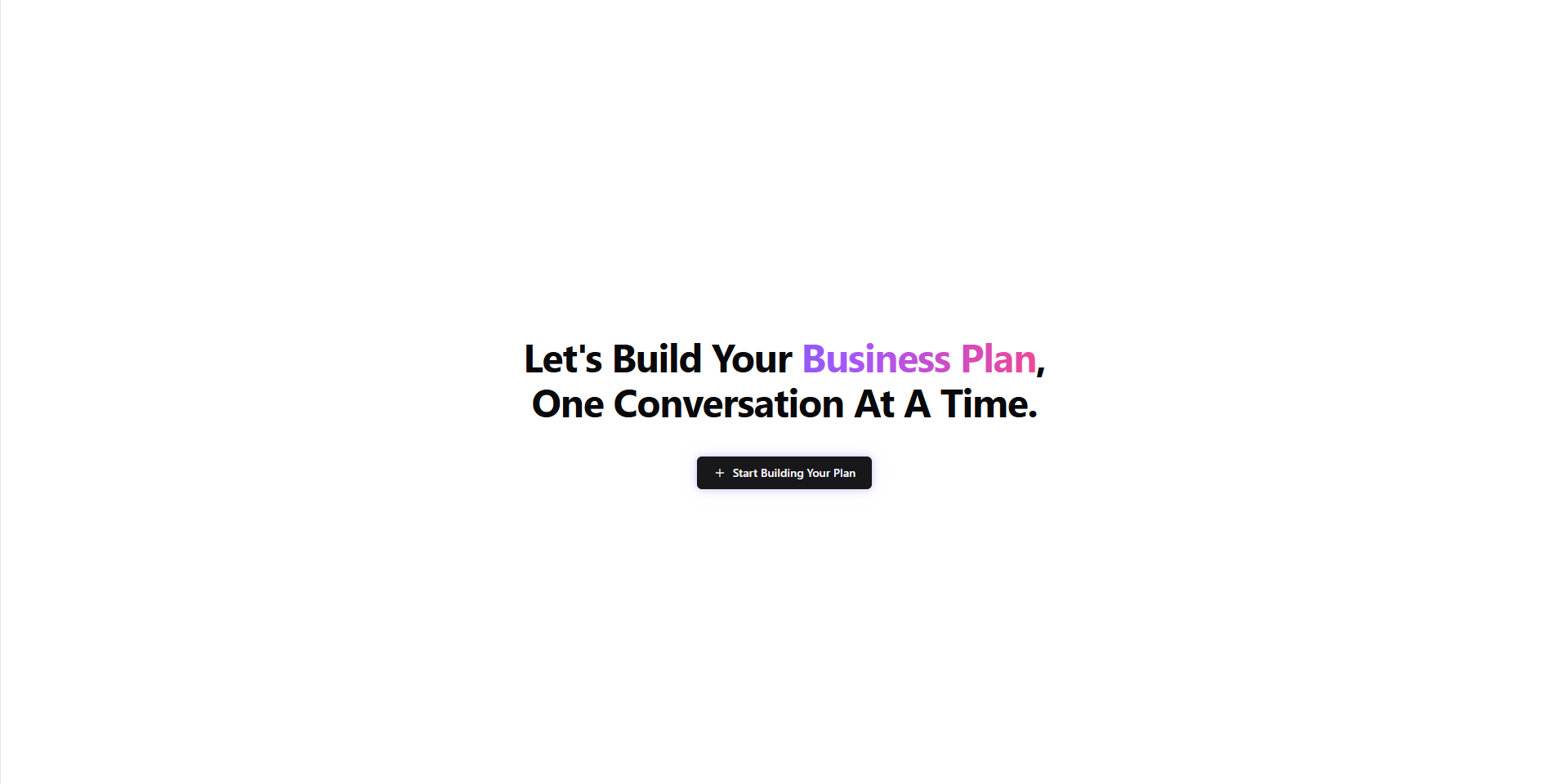
Slogen
-
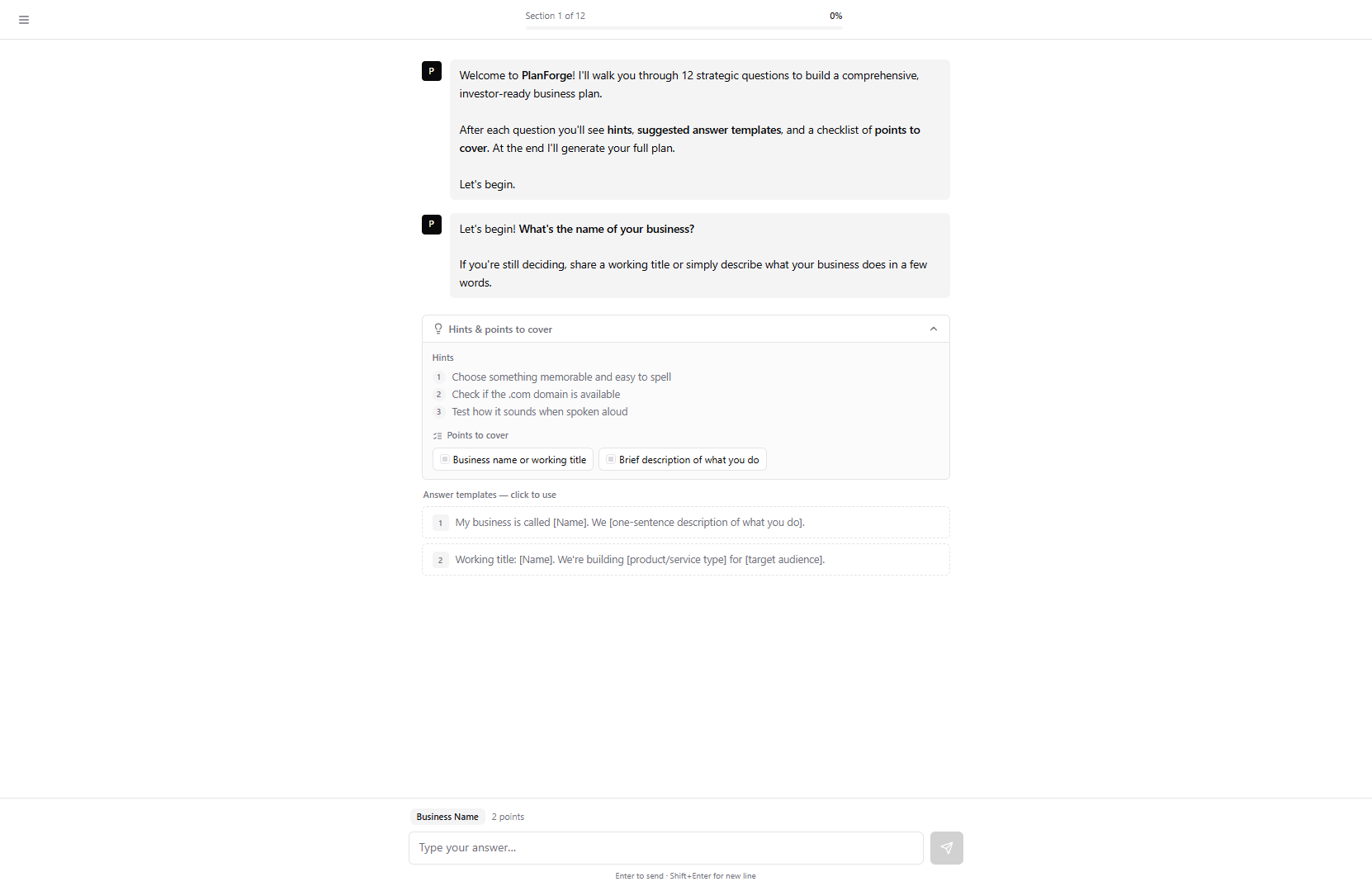
Question Format & Style
-
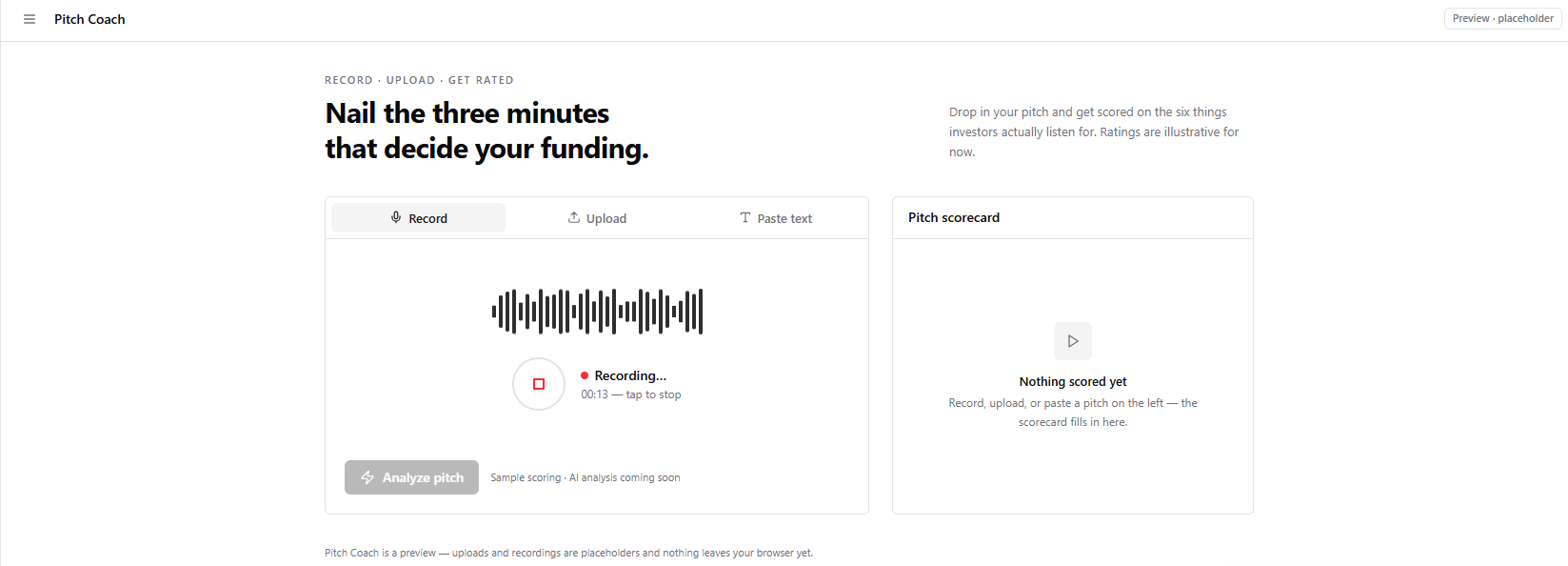
Pitch Coach
-
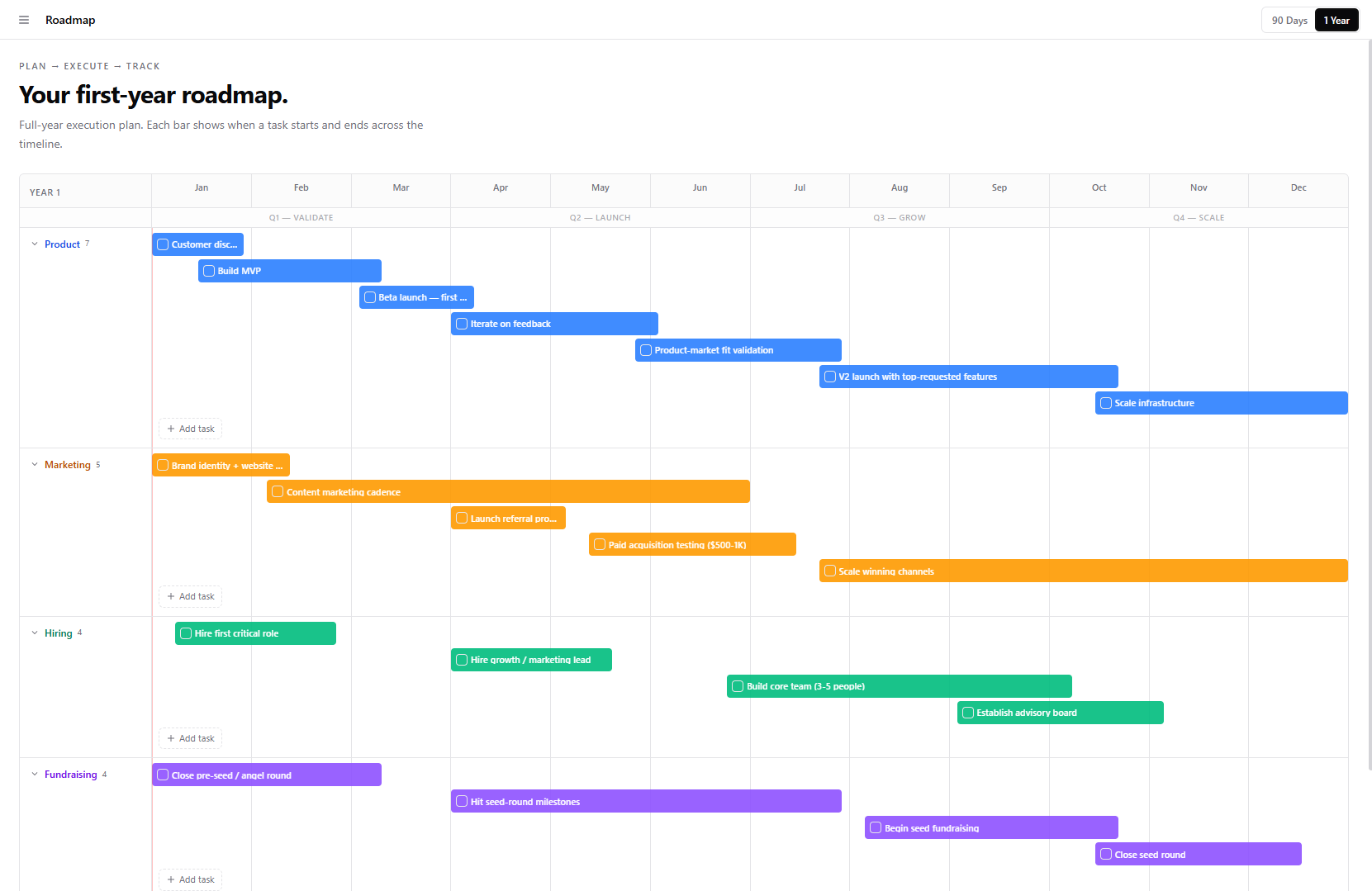
Roadmap (Gantt Chart Style)
Inspiration
As a student currently developing my own business, the inspiration for Plan Forge was born out of immediate, personal frustration. The founder's journey usually begins with a massive surge of passion and a genuinely innovative idea, but it quickly crashes into a wall of operational reality. Staring at a blank .docx file, trying to manually format theoretical balance sheets and income statements for a business concept a student can actually run, is incredibly daunting.
The initial spark is entirely focused on the product, but the reality of building a startup requires a completely different, highly technical skill set. The cognitive load required to understand financial formatting, figure out what investors want to hear, and map out a timeline often stalls the actual validation of the business. You end up spending 80% of your time figuring out how to write a business plan rather than actually building the business. Countless great ideas quietly die at this stage. Plan Forge is the exact tool I wish I had on day one: an accessible, infinitely patient AI co-founder that removes the friction of technical documentation so founders can focus on execution.
What it does
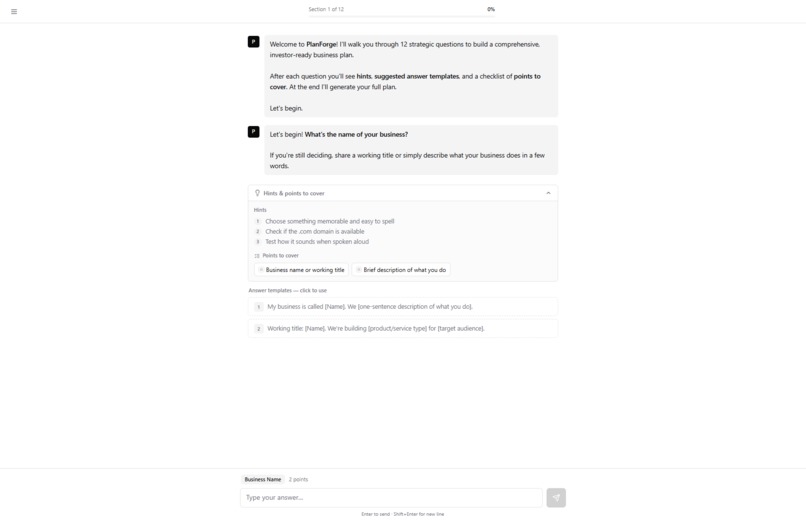
Plan Forge is an AI-powered startup mentor that transforms raw ideas into execution-ready businesses. Through a familiar, conversational chat interface, it conducts a guided, dynamic interview to extract your vision. Instead of forcing you to fill out static forms, it naturally asks the right questions about your target audience, revenue streams, and long-term goals.
From that conversation, it powers three core pillars of startup execution:
- The Business Plan Maker: It seamlessly translates your chat inputs into a highly structured, formally formatted business plan, complete with industry-standard sections and tailored recommendations.
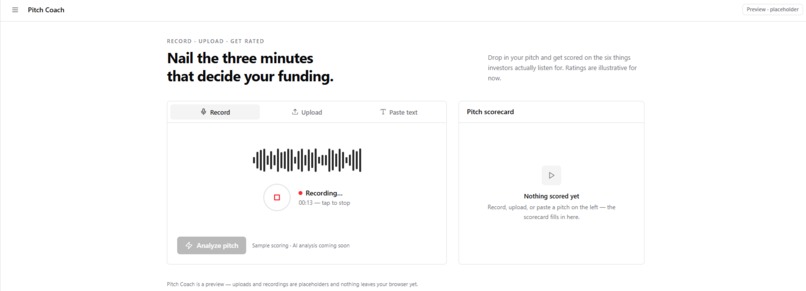
- The Pitch Coach: A dedicated mentor that analyzes your newly formed strategy and works with you to refine your elevator pitch, anticipating investor questions and tightening your delivery.
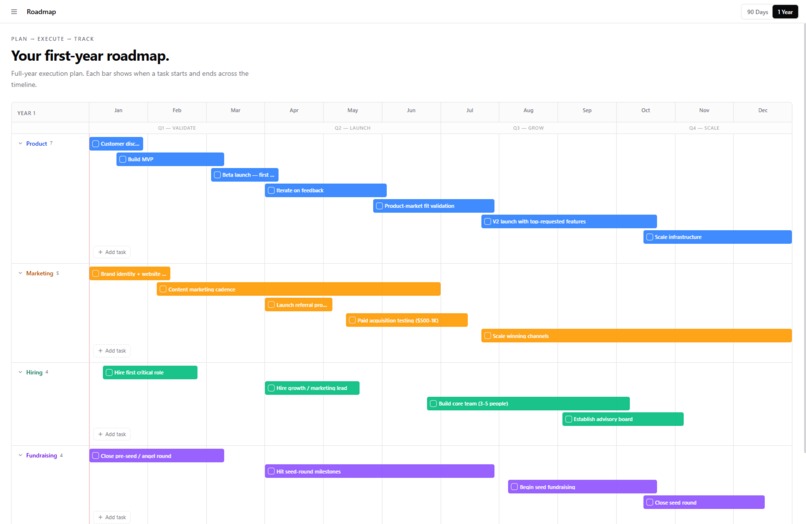
- The Actionable Roadmap: It takes the strategic goals from your business plan and automatically breaks them down into a tangible, chronological timeline, ensuring you always know exactly what to do next.
How we built it
We designed Plan Forge with a focus on conversational UX and complex prompt chaining. We utilized the OpenAI ChatGPT as the core reasoning engine, wrapping it in a responsive web interface.
The architecture relies on an orchestrator that manages the state of the conversation. First, a "Gathering Agent" runs the guided interview, ensuring all necessary data points are collected without overwhelming the user. Once the context is rich enough, we trigger specialized prompt chains: one formatted to generate the extensive business document, another optimized for concise pitch critique, and a final structured data extraction to generate the roadmap steps.
Challenges we ran into
Our biggest challenge wasn't just technical, it was the clock. We found out about the hackathon extremely late, registering on July 21, which left us with a severely compressed timeline to bring our vision to life. Building an AI tool that handles complex conversational state, multi-step document generation, and structured feedback usually takes weeks of iteration and polish. Trying to condense that entire development cycle into a high-pressure sprint meant ruthless scope prioritization, late nights, and focusing entirely on core functionality over aesthetic polish.
Accomplishments that we're proud of
We are incredibly proud of the seamless transition from a casual chat to a highly professional output. Watching a few sentences of a raw idea blossom into a comprehensive, multi-page business strategy and a concrete timeline feels like magic. We successfully bridged the gap between ideation and execution, creating an ecosystem that genuinely empowers inexperienced founders to take their first steps with confidence.
What we learned
We learned that when building AI tools for complex tasks, constraints are just as important as capabilities. By guiding the user through a structured interview rather than offering an empty prompt box, we drastically improved the quality of the final output. We also learned a lot about prompt chaining, specifically how taking the output of one AI module (the business plan) and feeding it as the system context for another (the pitch coach) creates a deeply unified and personalized user experience.
What's next for Plan Forge
This is just the beginning. In the future, we plan to implement direct export capabilities (seamlessly porting the plan to polished PDF or Word formats). We also want to introduce real-time web search integration to pull live market research and competitor analysis directly into the chat. Ultimately, we envision adding multi-user support so co-founders can jump into the same Plan Forge session and collaborate with their AI mentor together.
Built With
- next
- shadcn
- typescript

Log in or sign up for Devpost to join the conversation.