-
-
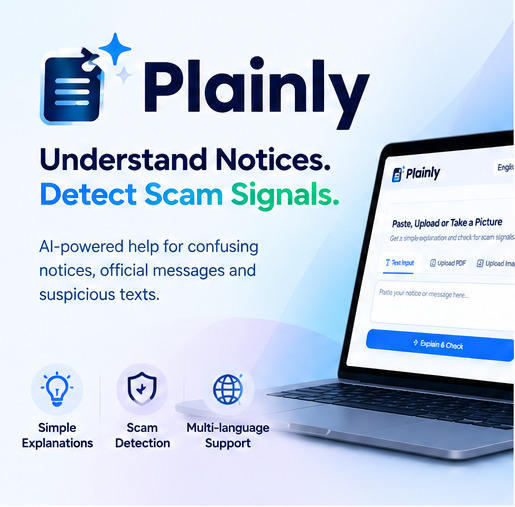
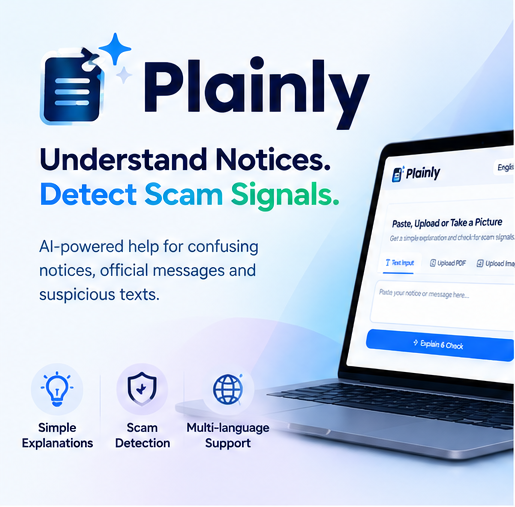
Plainly simplifies confusing notices and helps users identify potential scam signals with AI-powered analysis.
-
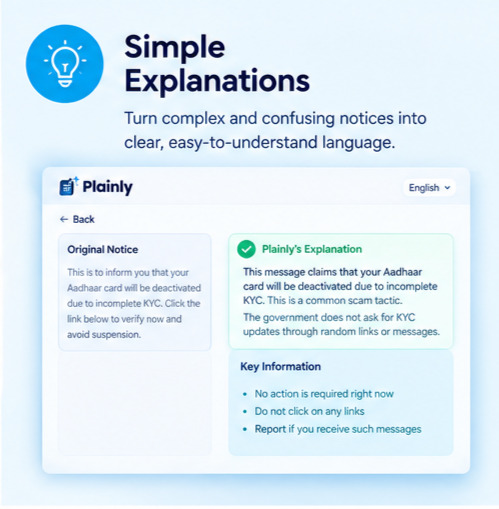
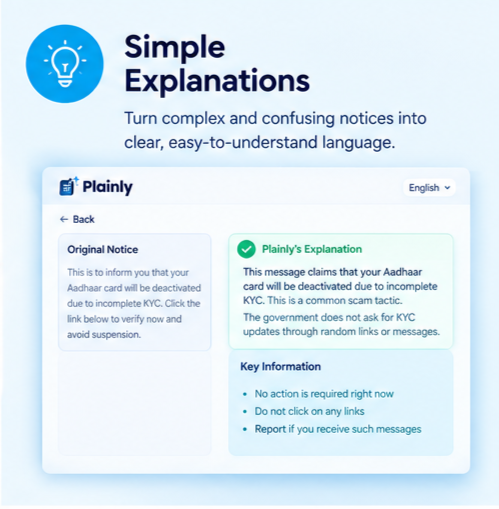
Turn complicated notices into simple explanations with key information, deadlines, and important actions.
-
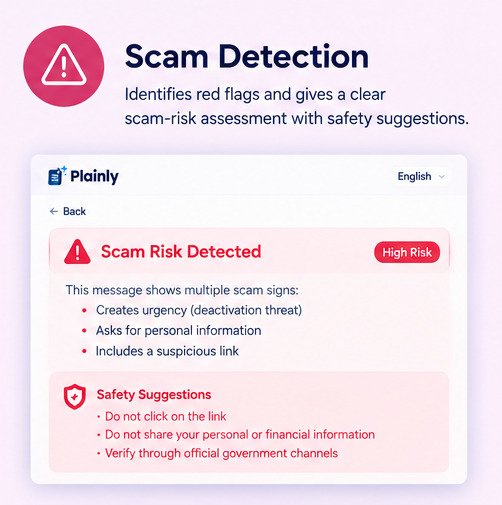
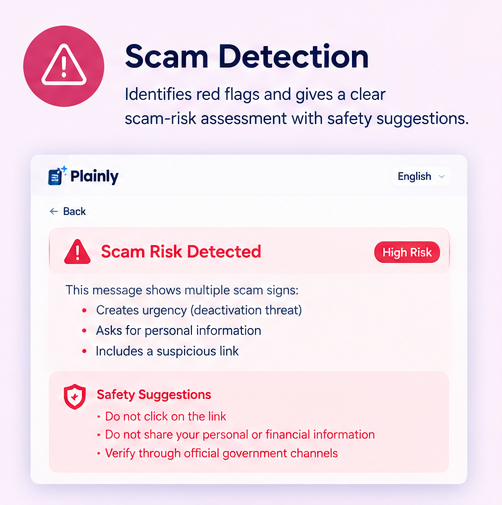
Identify potential scam warning signs, assess risk, and get safety tips to stay alert online.
-
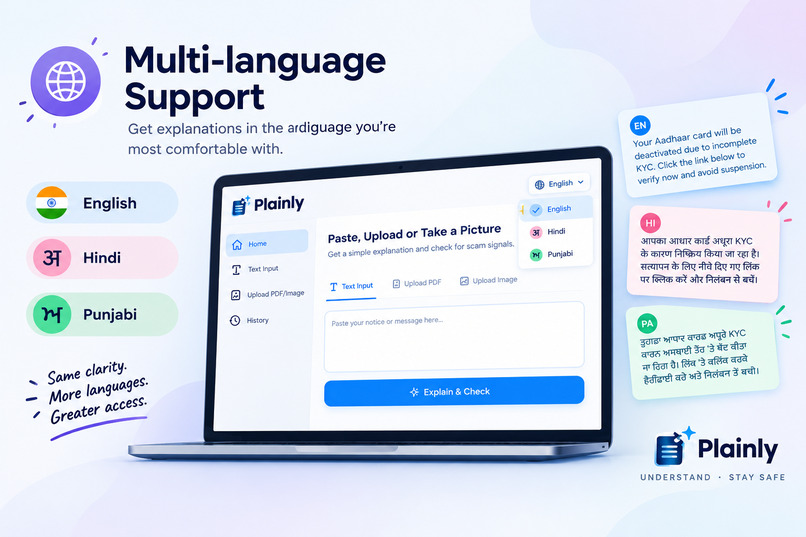
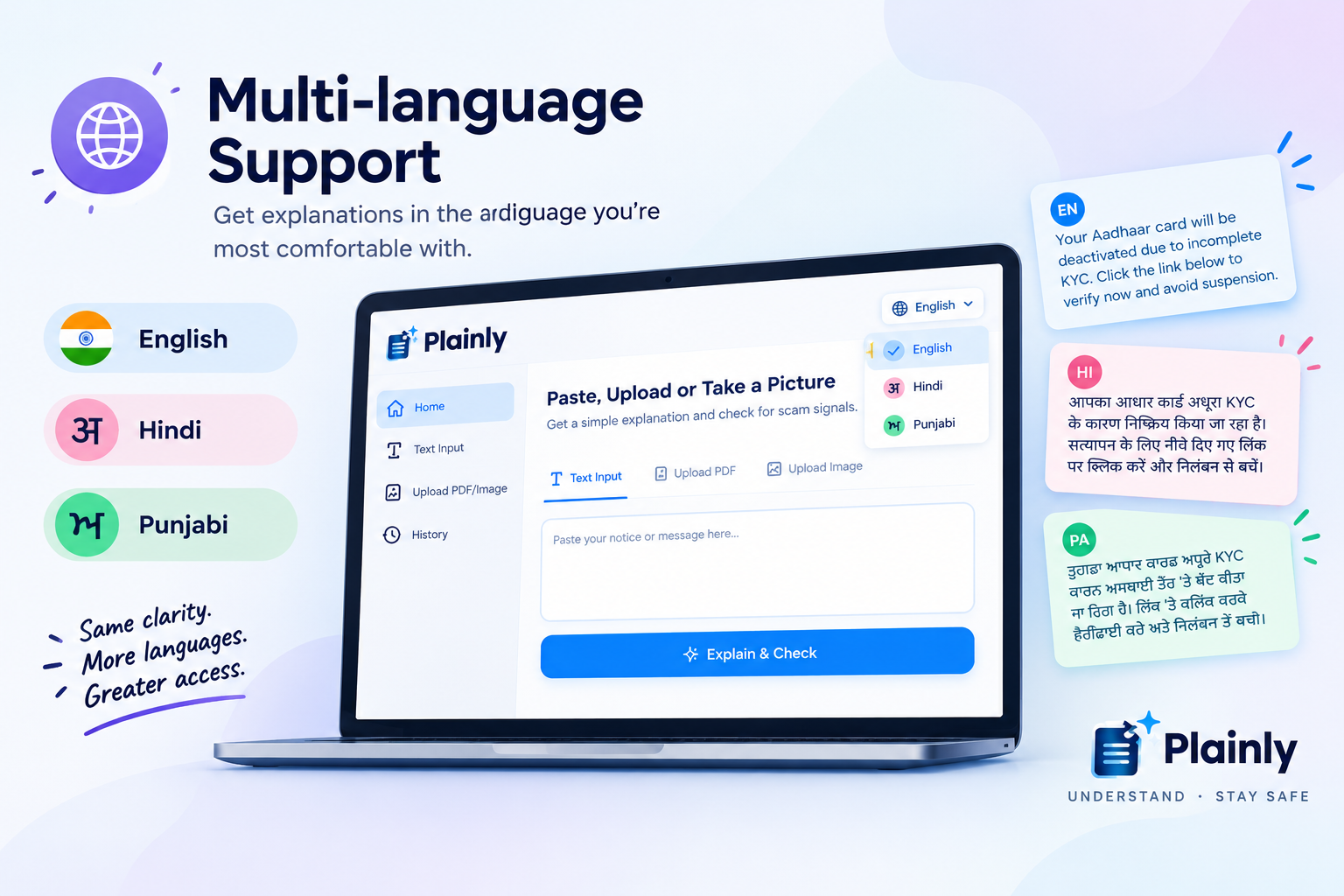
Understand important messages in English, Hindi, and Punjabi with Plainly’s AI-powered explanations.
-
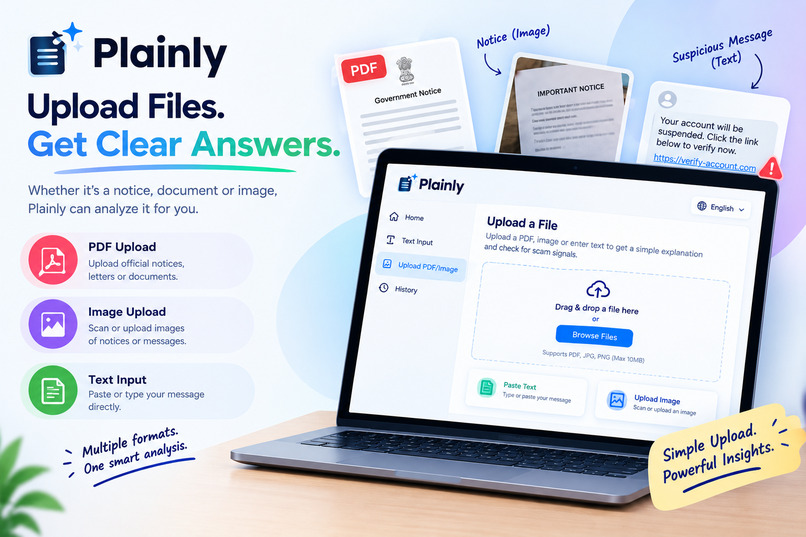
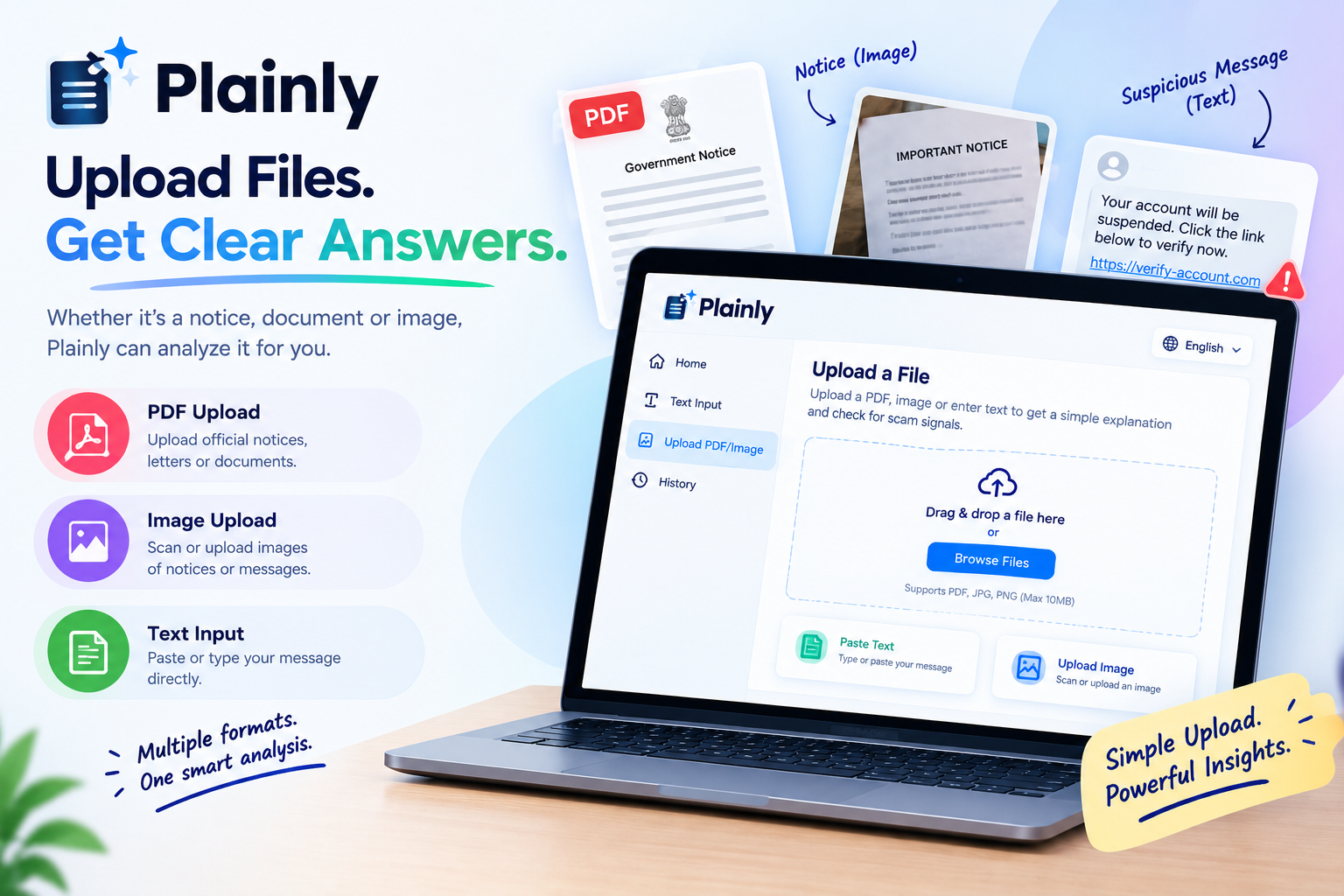
Upload PDFs, images, or paste text to simplify notices and check for potential scam signals.
-
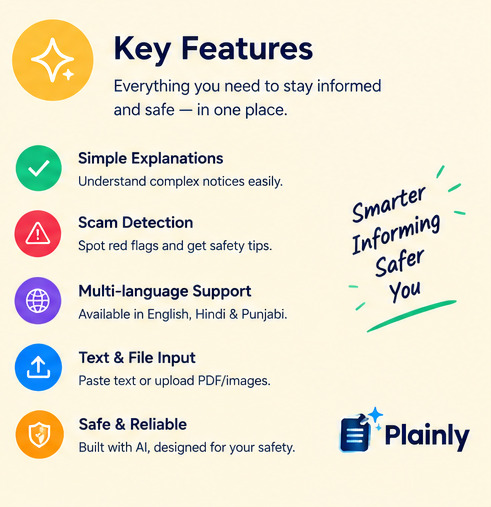
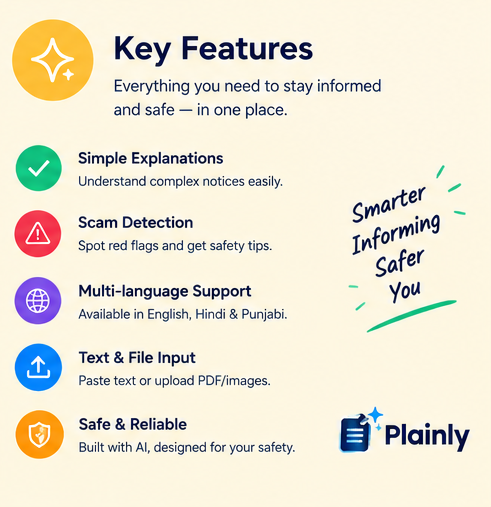
Simple explanations, scam detection, multilingual support, and file analysis—all in one AI-powered app.
Inspiration
Every family I know has a drawer of papers nobody fully understands: bank letters, government notices, insurance forms, electricity bills with penalty clauses. They are written in dense legal English, and many people, especially elders and first-generation English speakers, either ignore them or ask a neighbour for help.
That confusion is exactly what scammers exploit. A fake "your account will be blocked in 24 hours" SMS looks just as official as a real bank notice, and people can't always tell the difference. I wanted to build something that stands between a confusing document and the person who has to act on it.
The question I started with was: who could this help, and how? The answer was anyone who has ever stared at a notice and thought, "What does this actually want from me?"
What it does
Plainly turns confusing notices into plain language you can act on.
- Paste the text of a notice, bank message, or SMS (or upload an image or PDF).
- Plainly explains it in simple English, Hindi, or Punjabi: what it is, what it wants from you, and what happens if you ignore it.
- It gives a scam check with a risk score and highlights red flags such as urgent threats, requests for money or OTPs, and suspicious links.
- It pulls out the key deadlines and builds a short step-by-step checklist of what to do next.
The goal is that someone with no legal or financial background can read the result and know exactly what to do, and what not to do.
How we built it
Plainly is built in Python with a Streamlit interface, so the whole app is a simple one-page experience that works on a phone or laptop.
- Streamlit for the user interface and language toggle.
- A large language model API to read the notice, explain it in plain language, and extract deadlines and actions.
- A rule-based scam scanner written in Python that looks for common scam signals (urgency language, requests for OTPs or payments, shortened or mismatched links) and combines them into a risk score.
- OCR / vision input so users can upload a photo of a paper notice instead of typing it out.
I also used AI assistance (Claude) while planning and writing parts of the code, and I have credited all tools and libraries in the "Built with" section. I designed the idea, the scam-scoring logic, and the user flow, and tested it on sample notices.
Challenges we ran into
- Keeping explanations simple without losing accuracy. A legal notice can't be summarised carelessly, so I had to tune the prompts to explain in plain words while still preserving the key facts like amounts and dates.
- Scam detection is not black and white. Real notices can also use urgent language, so I combined several signals into a score instead of a yes/no answer, and Plainly always tells users to verify through official channels.
- Supporting multiple languages. Getting natural-sounding Hindi and Punjabi, not word-for-word translation, took repeated testing.
- Building solo under a tight deadline, which meant deciding early what to build well and what to leave for later.
Accomplishments that we're proud of
- Building a working end-to-end prototype alone, from idea to demo, within the hackathon period.
- Combining two things people normally need separately: understanding a document and checking whether it's a scam.
- Making the output genuinely simple: short sentences, clear next steps, and local-language support.
- Designing it so a non-technical person could use it without any instructions.
What we learned
- A small project that solves one real problem clearly is better than a big one that does everything halfway.
- Prompt design matters as much as code: how you ask the model changes how trustworthy and readable the output is.
- Accessibility is a design choice. Language, font size, and layout decide who can actually use a tool.
- How to scope, build, test, and ship a project alone under time pressure.
What's next for Plainly
- Support for more Indian languages such as Tamil, Bengali, and Marathi.
- Voice input and read-aloud so people who struggle with reading can use it.
- A WhatsApp or SMS bot, since that is where many people actually receive suspicious messages.
- A larger, community-updated database of known scam patterns.
- Reminders for deadlines found in notices.
- Clear disclaimers and safeguards: Plainly is a helper, not a lawyer or financial advisor, and it will always encourage verifying important notices through official sources.

Log in or sign up for Devpost to join the conversation.