Inspiration
Many important documents are written in language that ordinary people struggle to understand: rental contracts, university policies, insurance terms, government notices, and legal forms. The problem is not that people do not care about their rights and responsibilities. The problem is that the information is often buried in long, formal, and confusing text. We wanted to build a tool that makes essential information more accessible. Our project helps people understand complicated documents by turning them into clear summaries, highlighting possible risks, and explaining what the document may mean in everyday language.
What it does
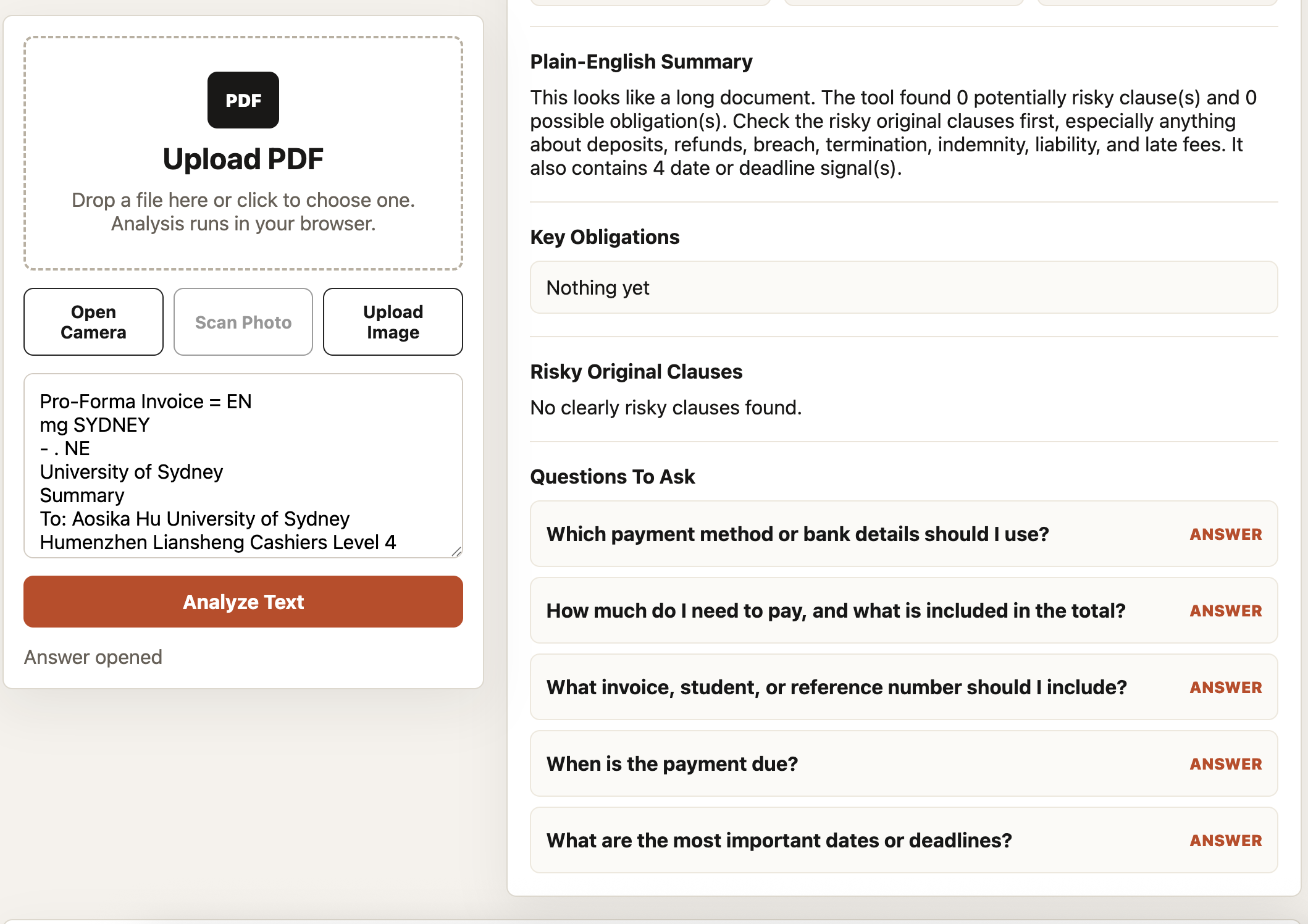
Our web app allows users to paste long text or upload a PDF. The system analyzes the document and returns:
- A simple summary of the most important points
- Key obligations and responsibilities
- High-risk clauses or sentences
- Plain-language explanations of confusing sections
- A saved analysis history so users can come back to previous documents For example, a student could upload a university policy, a tenant could upload a rental agreement, or a citizen could upload an official notice. Instead of reading pages of dense wording, they can quickly understand what they need to pay attention to. ## How we built it We built a web prototype with a simple front end and an AI-powered document analysis flow. Users can enter text or upload a PDF, and the app extracts the content, sends it to a language model, and displays the result in a clear, readable interface. We focused on making the demo intuitive: upload, analyze, read, and act. ## Challenges we ran into One challenge was deciding how to summarize complex documents without oversimplifying important details. We also had to think carefully about how to present risk: the tool should help users notice important clauses, but it should not pretend to replace a lawyer or official advisor. Another challenge was designing the interface so that the result felt useful instead of overwhelming. Long documents can produce a lot of information, so we organized the output into summaries, risks, and action points. ## Accomplishments that we're proud of We are proud that our project addresses a real problem many people face. Understanding contracts, policies, and official documents should not require expert knowledge. Our prototype shows how AI can make essential information easier to access, especially for students, renters, immigrants, older adults, and people with lower digital or legal literacy. ## What we learned We learned that accessibility is not only about screen size, colors, or buttons. It is also about language. If people cannot understand the information that affects their lives, then the service is not truly accessible. We also learned how important it is to design AI tools with clear boundaries, especially when dealing with legal or official documents. ## What's next for plain_Docs AI Next, we would like to add multilingual support, document comparison, stronger privacy protections, and more specific risk categories for rental contracts, university policies, insurance documents, and government forms. We also want to improve the tool so it can suggest questions users should ask before signing or accepting a document.
Built With
- ccs
- github
- html
- javascript
- ocr
- pdf.js
- tesseract

Log in or sign up for Devpost to join the conversation.