-
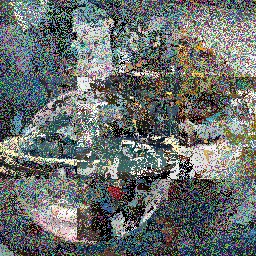
Product image generated by 4 Agents
-
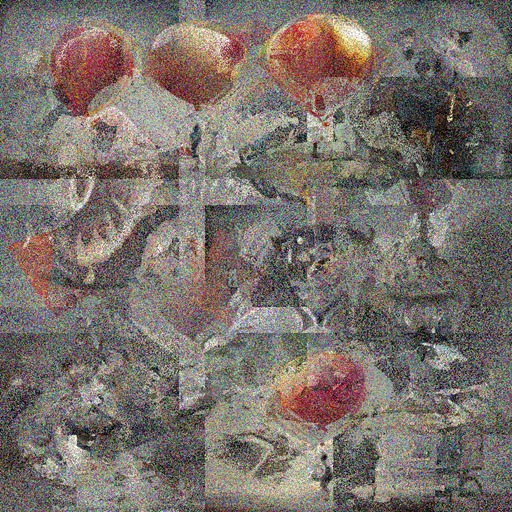
Produce image generated by 16 Agents
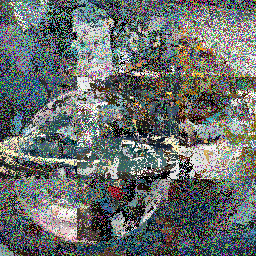
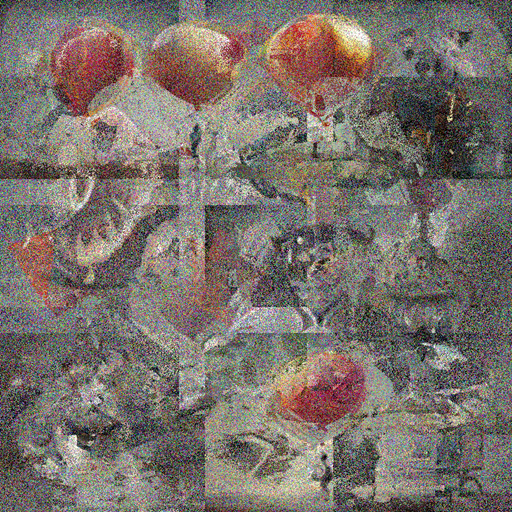
Inspiration
PLAiCE was inspired by Reddit’s r/place, where millions of users independently modify a shared canvas, yet collectively produce large-scale structure. This phenomenon sparked our interest in emergent behaviour, how complex patterns can arise from many simple, local decisions without central coordination.
What it does
PLAiCE is a fully autonomous, agent-based system that generates images starting from random noise.
Each agent:
- observes only a small local region of the canvas,
- proposes minimal pixel-level changes, and
- never has access to the global image.
Through iterative updates, the system produces:
- a live evolving canvas,
- a final generated image, and
- a visual timelapse showing how global structure emerges from decentralised actions.
The project investigates how autonomous systems can cooperate to create outcomes greater than the sum of their parts.
How we built it
We modelled each pixel region as an independent agent. The pipeline for each agent is:
- Local classification of its region
- Reimagination using a diffusion-based model
- Proposal of minimal pixel-level changes
A synchronisation step then:
- aggregates all agent proposals,
- resolves conflicts,
- and applies updates to the canvas in batches.
This process repeats until the canvas reaches a stable state.
Challenges we ran into
Designing a synchronised multi-agent system was a major challenge, especially as this was our first time working with diffusion models.
Key difficulties included:
- resolving conflicts between agents modifying the same pixels,
- tuning the “picker” mechanism to prioritise meaningful changes,
- ensuring convergence rather than endless oscillation.
Early attempts using large language models as agents proved too slow, expensive, and poorly suited for spatial reasoning, leading us to redesign the system around lightweight, perception-driven agents.
Accomplishments that we’re proud of
- Building a complete end-to-end agent pipeline within the hackathon timeframe
- Designing a working synchronisation and conflict-resolution system
- Demonstrating that random noise can evolve into coherent, interpretable images purely through decentralised agent interactions
Most importantly, the system works without any global controller or target image.
What we learned
Technically, we gained hands-on experience with:
- synchronised multi-agent architectures,
- diffusion model integration,
- and large-scale iterative systems.
Conceptually, we learned that emergent behaviour depends more on interaction rules and feedback loops than on the intelligence of any single agent.
What’s next for PLAiCE
Next, we plan to:
- integrate Stable Diffusion for higher-quality generation,
- improve the picker algorithm using feature extraction,
- scale up the number of agents,
- and optimise model performance.
We see PLAiCE as both a research exploration of emergent systems and a visual experiment in decentralised creativity.
Built With
- huggingface
- python
- vit


Log in or sign up for Devpost to join the conversation.