-
-
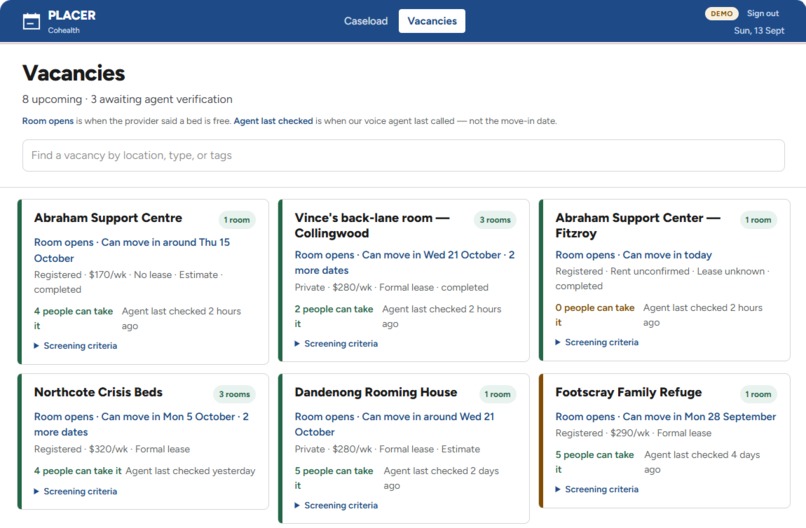
User interface
-
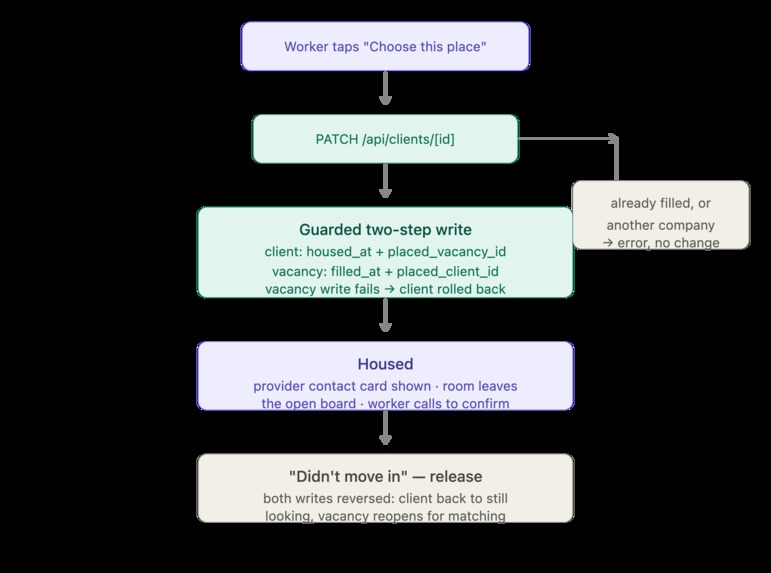
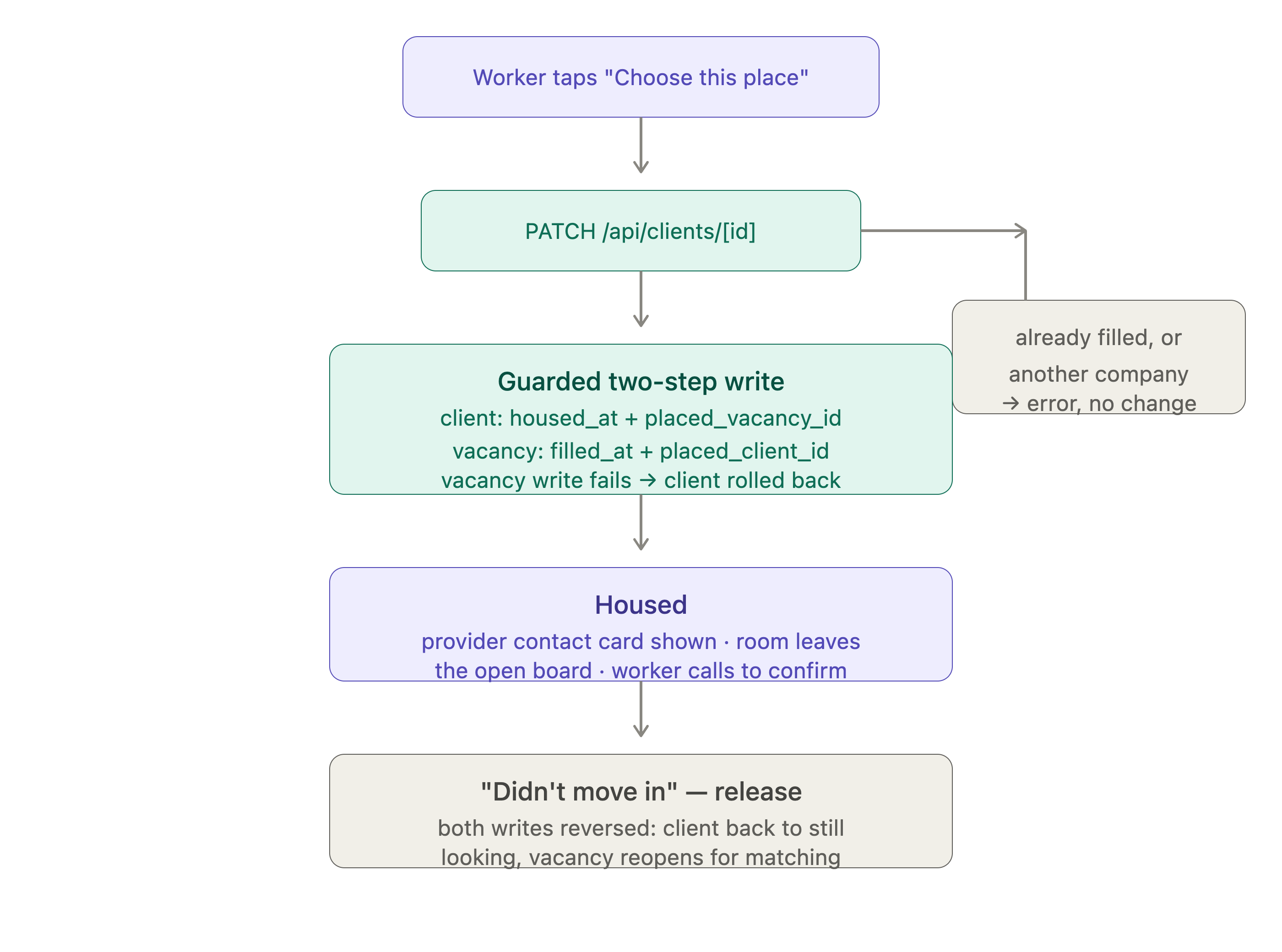
placement lifestyle and undo
-
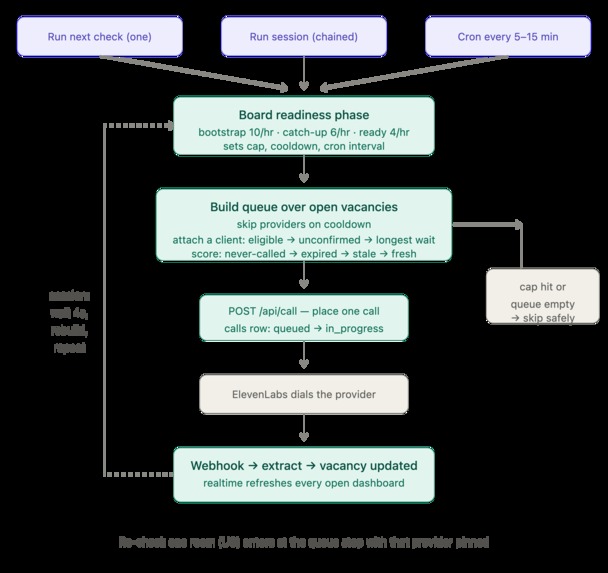
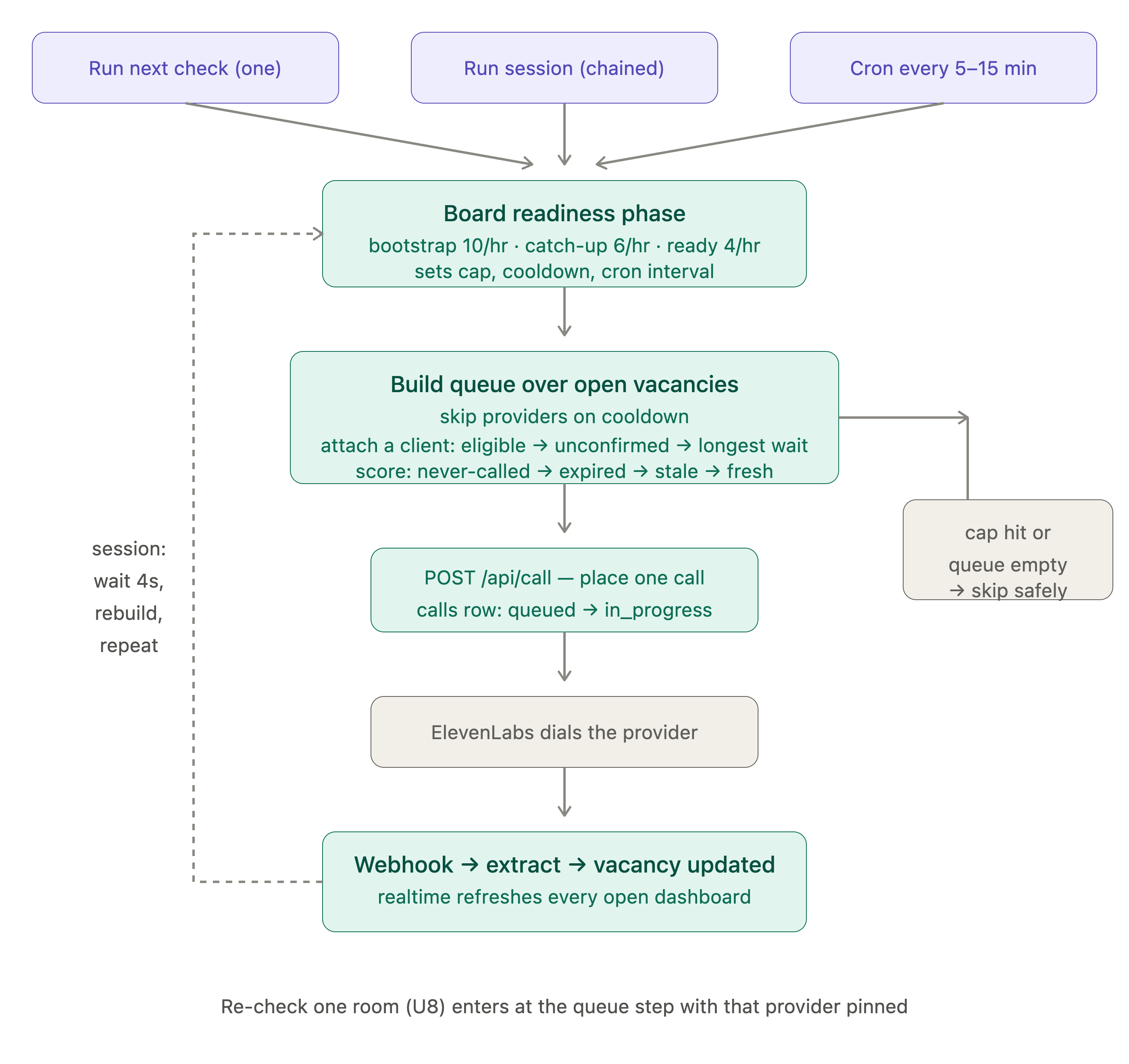
product calling queue and cron
-
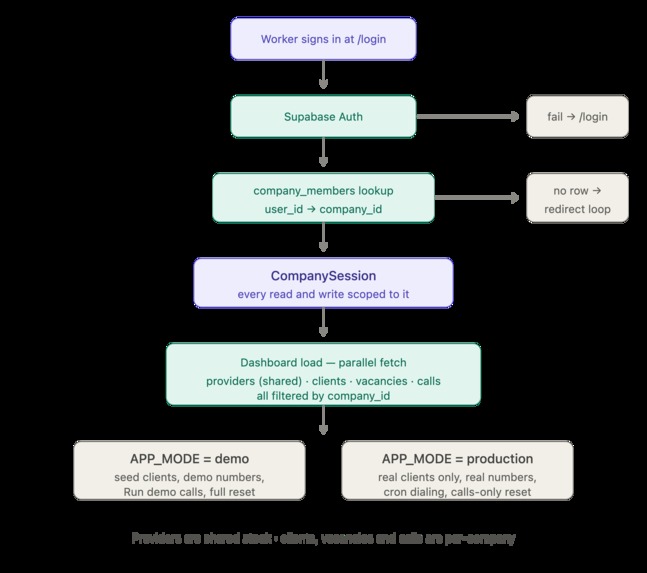
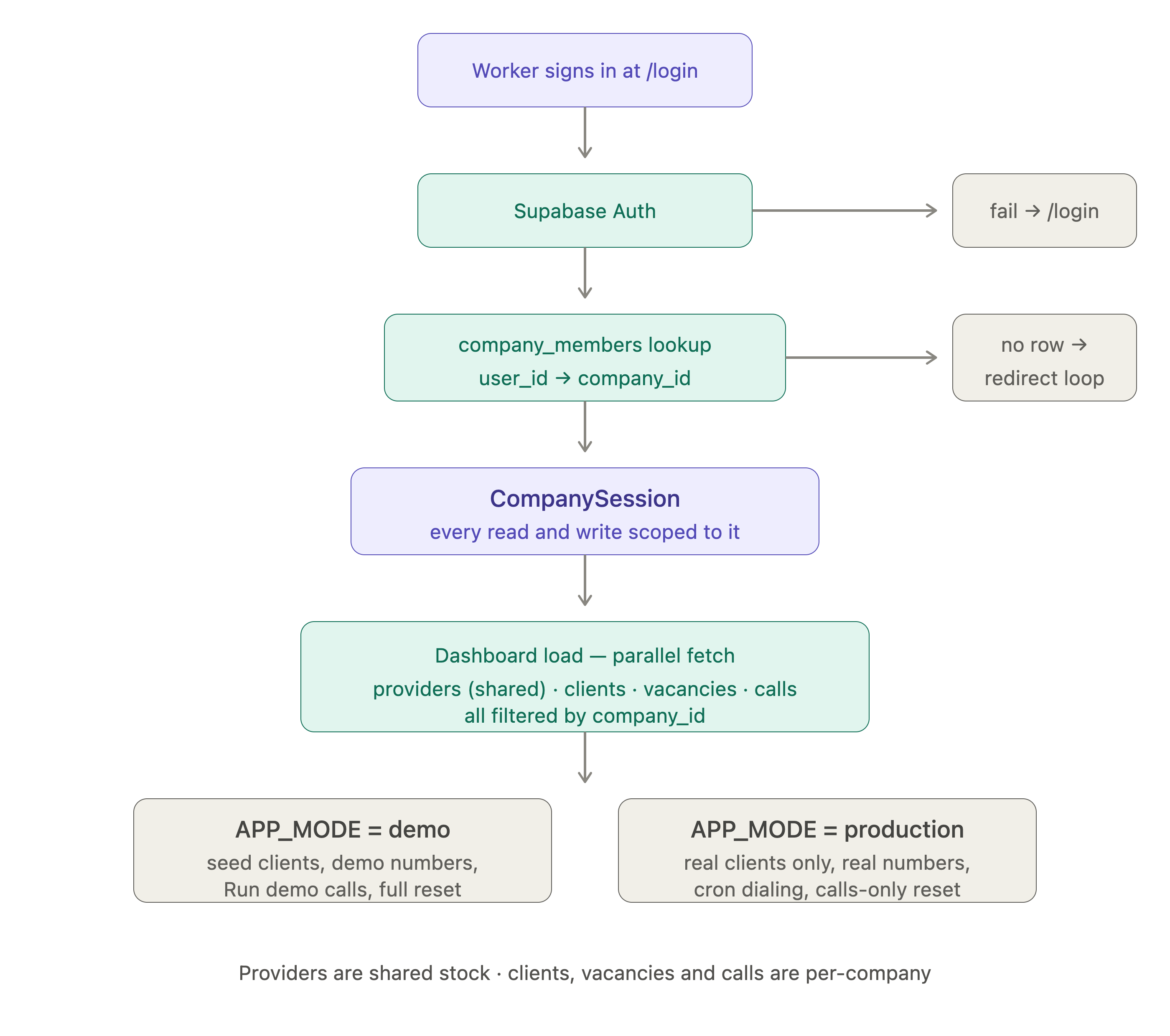
auth tenacy and mode flow
-
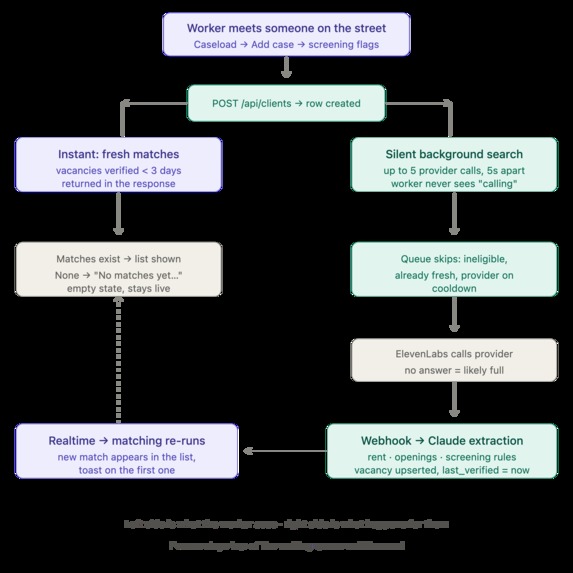
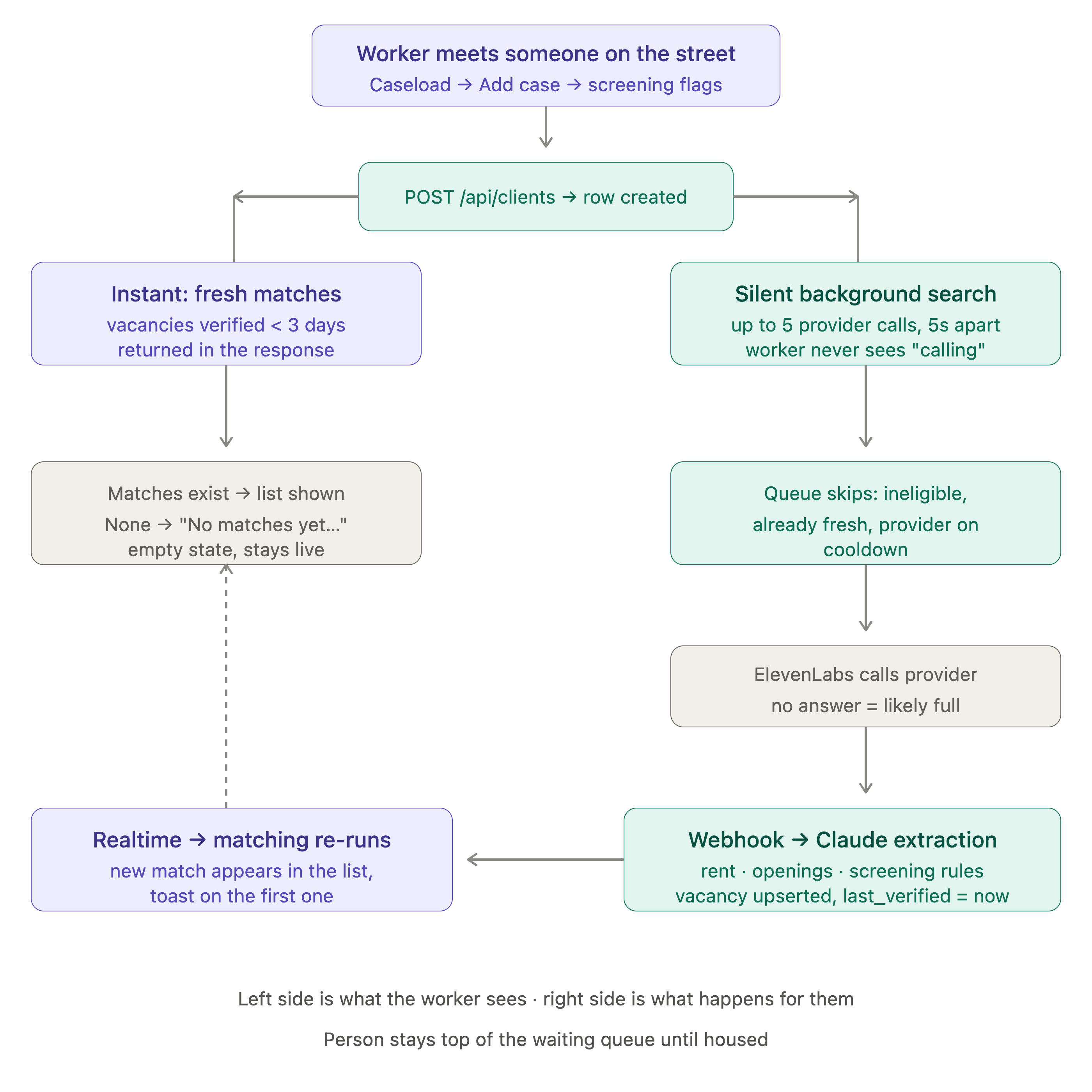
ground intake end to end
-
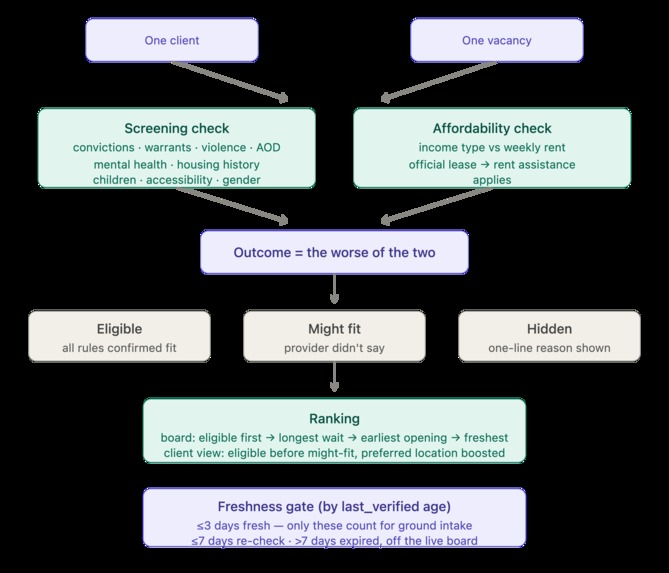
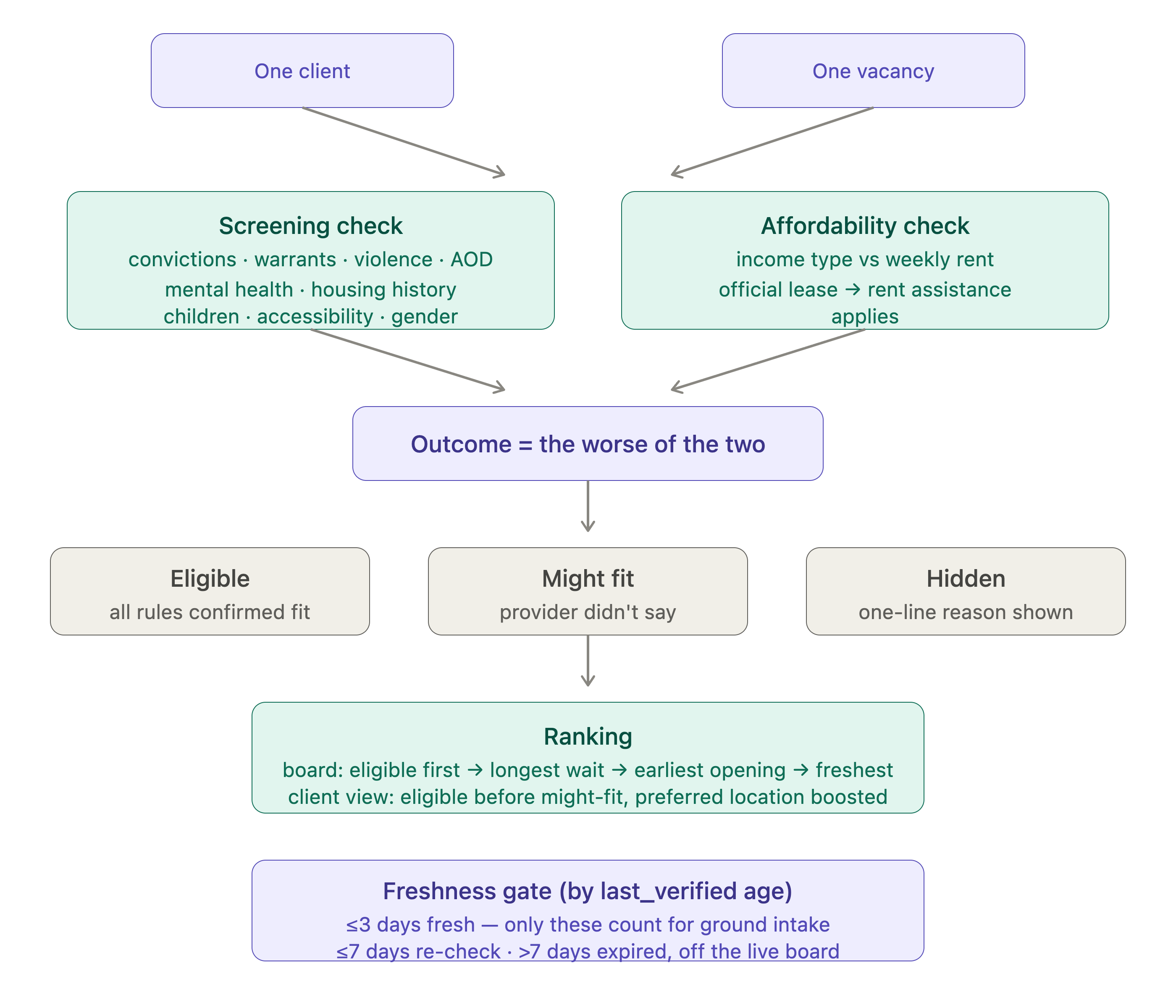
matching and freshness logic
VIDEO LINK: https://drive.google.com/drive/folders/1zGzj28Ofy8k3avjgUnwHepCNd6GWCkm9?usp=sharing
YOUTUBE LINK: https://www.youtube.com/watch?v=Inv6SnFbBhQ
LANDING PAGE: https://aae-ashen.vercel.app/
LIVE APP: https://aae-ashen.vercel.app/dashboard
LOG IN USING USERNAME: [email protected] PASSWORD: cohealth-demo
GITHUB: https://github.com/edward70/aae/blob/main/README.md
Inspiration
PLACER was inspired by a real workflow we observed in Victoria’s homelessness sector. A frontline housing worker we spoke to receives a list of clients needing accommodation and a separate list of housing providers, then manually calls providers one by one to check availability, eligibility and service requirements.
He estimated that he spends around half of his working day making these calls. We saw an opportunity to automate this repetitive process so workers could spend more time assessing and supporting clients instead of repeatedly checking vacancies.
What it does
PLACER is a centralised accommodation-matching system that keeps provider availability up to date through automated AI phone calls.
The system:
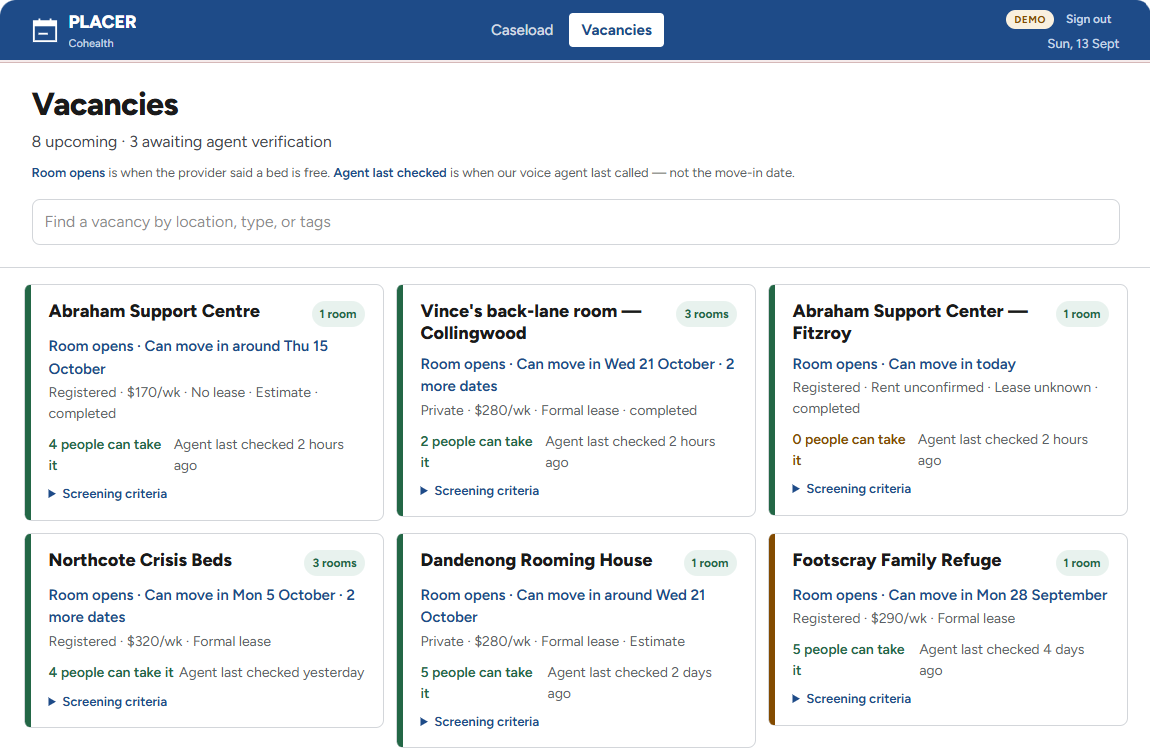
Displays a worker’s caseload and relevant screening information. Uses an ElevenLabs voice agent to call accommodation providers and ask about upcoming vacancies, rent and eligibility requirements. Sends the transcript to our backend, where Claude extracts the information into structured vacancy data. Displays those vacancies with freshness indicators. Automatically ranks clients against each vacancy and shows why they are eligible or ineligible.
The key idea is that the phone call itself becomes the data source, meaning providers do not need to constantly update another portal.
How we built it
PLACER was built in 48 hours for the Forward Hackathon in Melbourne.
We built the frontend using Next.js, TypeScript and Tailwind, with Supabase Postgres and realtime for our database and live updates.
When a provider is called, the ElevenLabs voice agent collects vacancy information. The call transcript is sent to our webhook, where Anthropic Claude converts the conversation into structured vacancy data. That data is stored in Supabase and immediately appears on the vacancy board, where our matching logic ranks suitable clients.
Our stack includes:
Next.js App Router TypeScript Tailwind Supabase Postgres + Realtime ElevenLabs Agents Anthropic Claude Vercel
Challenges we ran into
One of the biggest challenges was turning an unstructured phone conversation into reliable, structured vacancy information that could actually be used for matching.
We also had to connect several moving parts into one real-time workflow: automated calling, transcript processing, AI extraction, database updates and client-to-vacancy matching.
Privacy and safety were also important considerations. Our demo uses no real client data, shares only de-identified eligibility criteria, discloses that calls are automated and clearly flags demo provider numbers.
Another important limitation we recognised is that PLACER can improve the efficiency of accommodation matching, but it cannot create additional housing supply where no suitable beds exist.
Accomplishments that we're proud of
We are proud that we built an end to end working system in only 48 hours.
We are also proud that the project addresses a measurable operational problem. In our base case model, if 500 relevant workers save 1.5 hours per day, PLACER could release approximately $10.8 million of labour capacity per year across Victorian specialist homelessness services.
What we learned
we learned the importance of being realistic about the value of automation.
What's next for PLACER
PLACER can scale to multiple subcontractor providers of the Victorian homelessness services.
Additionally, the same model could also be applied to accommodation matching across Australia, including domestic violence services, foster care, crisis housing and other shelter services.
The data generated by the platform could also help governments and service providers understand vacancy patterns, demand and rejection reasons, helping identify where additional accommodation capacity is most needed.
Built With
- claude
- cursor
- elevenlabs
- supabase
- twilio
- vercel


Log in or sign up for Devpost to join the conversation.