-
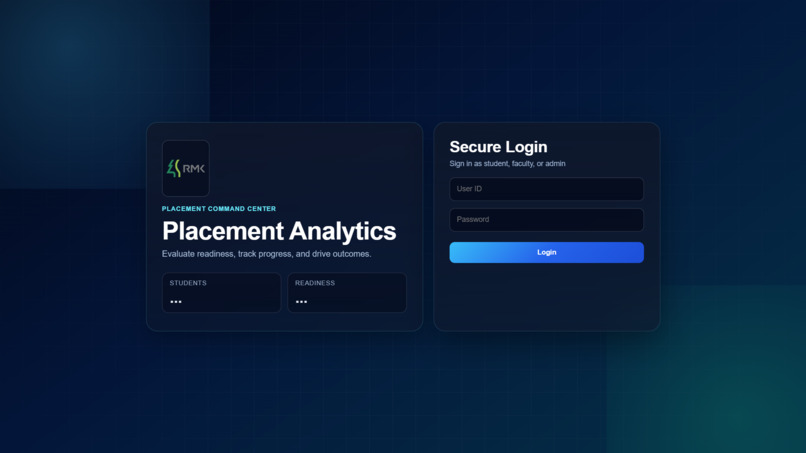
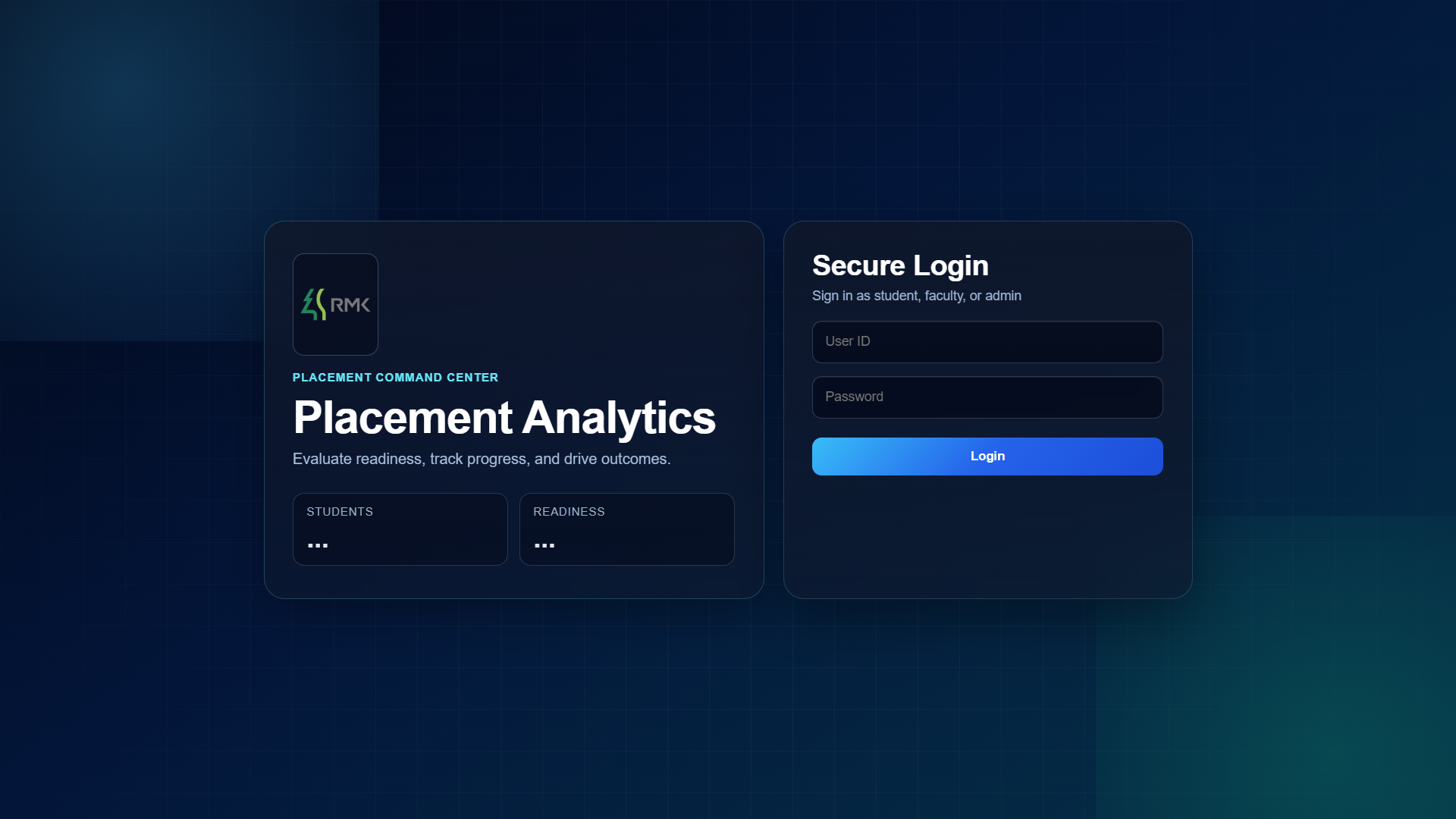
Login Page
Inspiration
Placement processes often involve large amounts of student data, changing placement statuses, and multiple stages that are difficult to track efficiently. We wanted to build a platform that could turn this scattered information into a clear, actionable view of placement progress. This inspired us to create an AI-native Placement Analytics Platform that combines placement management with analytics and intelligent insights.
What it does
The platform provides a centralized system for managing and analyzing student placement progress. It includes secure authentication, role-based dashboards, and an editable placement-status pipeline. Students can be tracked across different stages, while placement teams can use stage-wise analytics to understand progress, identify bottlenecks, and make better decisions.
The platform is designed as a foundation for AI-powered recommendations and insights rather than simply functioning as a data management system.
How we built it
We built the application using the MERN stack — React, Node.js, Express, and MongoDB. We implemented secure authentication, role-based access, placement workflow management, and analytics around student placement stages. The application was designed around real-world placement workflows to keep the system practical and scalable.
Challenges we ran into
One of the main challenges was designing a flexible placement pipeline where students could move between different stages while keeping the analytics accurate. We also had to carefully handle authentication, authorization, data relationships, and different dashboard requirements for different roles.
Accomplishments that we're proud of
We are proud of building a complete full-stack placement platform rather than just a prototype interface. The combination of role-based access, an editable workflow, and stage-wise analytics provides a strong foundation for making placement management more data-driven.
What we learned
This project strengthened our understanding of full-stack development, database design, authentication, role-based authorization, and analytics. We also learned that building an AI-native application requires a reliable data and workflow foundation before adding intelligent features.
What's next for Placement Analytics Platform
Next, we plan to introduce deeper AI capabilities such as AI-generated placement insights, student readiness analysis, personalized skill recommendations, placement probability prediction, resume analysis, and natural-language analytics. We also aim to add predictive dashboards that can help placement teams identify at-risk students and recommend targeted interventions.

Log in or sign up for Devpost to join the conversation.