Inspiration
A small difference between an order, an invoice, and a warehouse receipt can create hours of investigation. We wanted to help retail and supplier teams understand these discrepancies faster, especially smaller teams without dedicated EDI specialists.
What it does
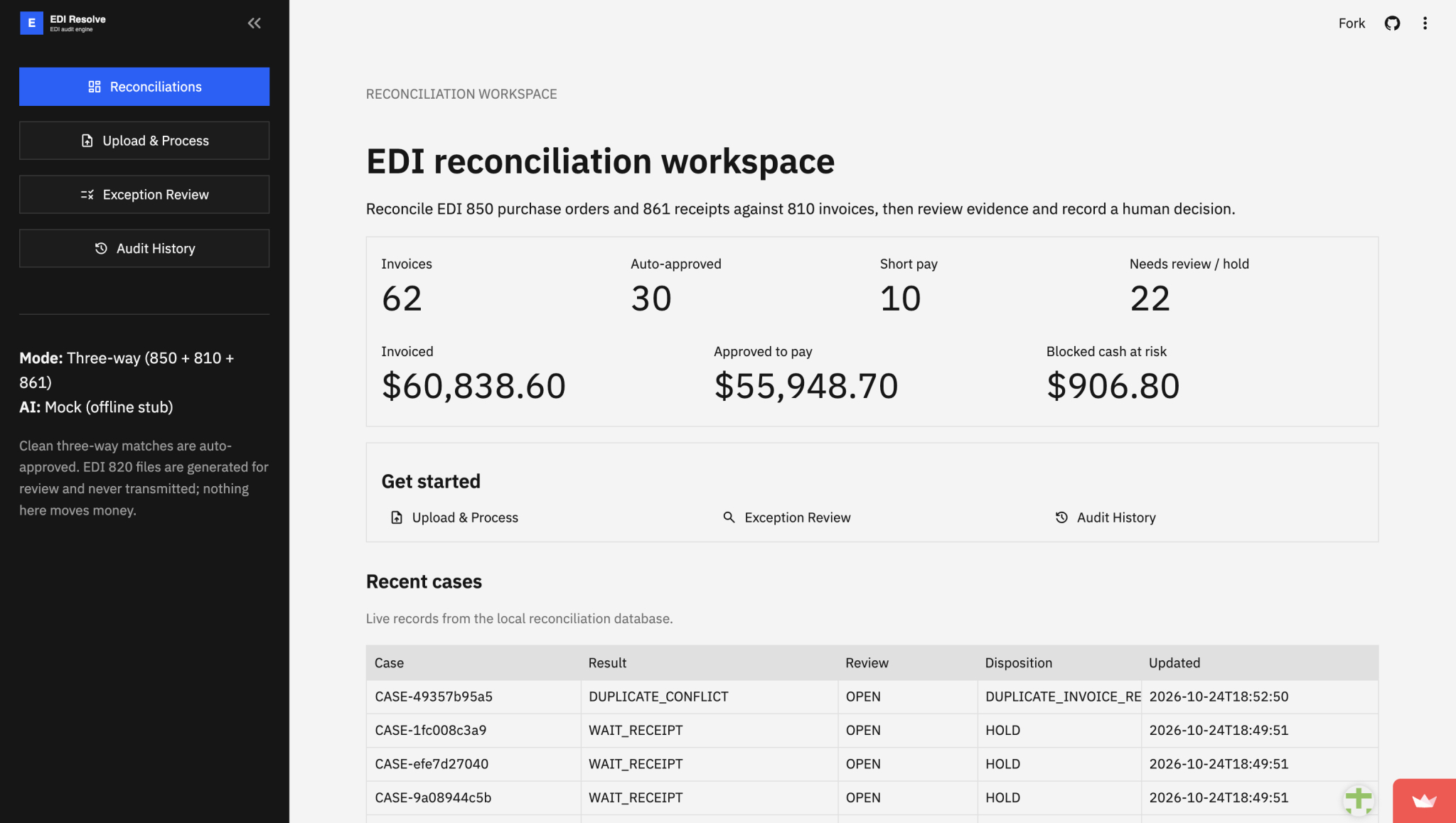
EDIResolve AI compares EDI 850 purchase orders, EDI 810 invoices, and EDI 861 receiving advice to identify pricing, quantity, and product discrepancies. A Master Catalogue helps standardize product information and units of measure. Deterministic rules calculate differences, while AI provides evidence-backed explanations and suggested next steps. The dashboard supports human review and tracks decisions through an audit history.
How we built it
We organized the solution into document ingestion, normalization, reconciliation, AI explanation, and human review. We created synthetic JSON datasets covering clean matches and discrepancy scenarios. We also developed reusable Python code to combine records, remove duplicates, and generate a synthetic Master Catalogue. Conflicting catalogue values are selected using a reproducible random process for MVP testing. The reconciliation design separates financial calculations from AI-generated explanations and includes an EDI 820 remittance preview without sending payments.
Challenges we ran into
The datasets used different field names and units, making consistent comparisons difficult. We also needed to distinguish physical receipt from accepted quantity, handle missing evidence, and prevent duplicate records from affecting results. Another challenge was defining which discrepancies could be handled automatically and which required human review.
Accomplishments that we're proud of
We created a connected testing foundation spanning purchase orders, invoices, receipts, and master data. Our catalogue builder processed 178 documents containing 500 line observations into 67 unique catalog entries scoped by buyer and supplier. It records conflict-resolution choices and passed 28 automated tests.
What we learned
Different units do not always mean different quantities: cases and individual items may represent the same order. We learned that trustworthy reconciliation depends on consistent identifiers, clear business rules, and reliable reference data. AI is most useful when it explains verified calculations and acknowledges missing evidence.
Built With
- bob
- ibm-watson
- python
- sqlite
- streamlit


Log in or sign up for Devpost to join the conversation.