-
-
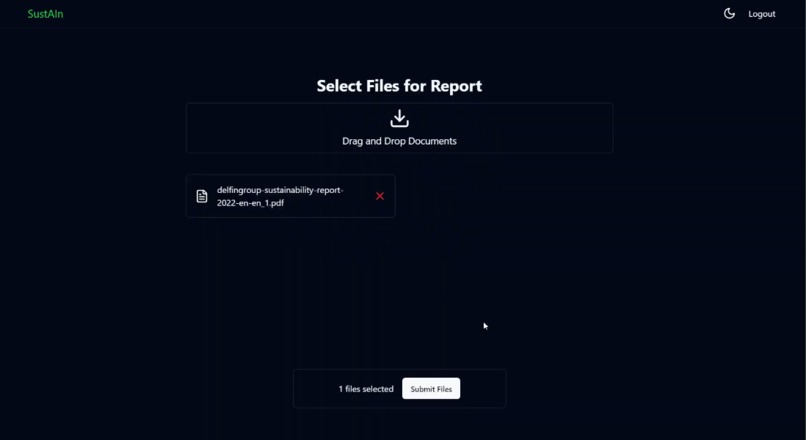
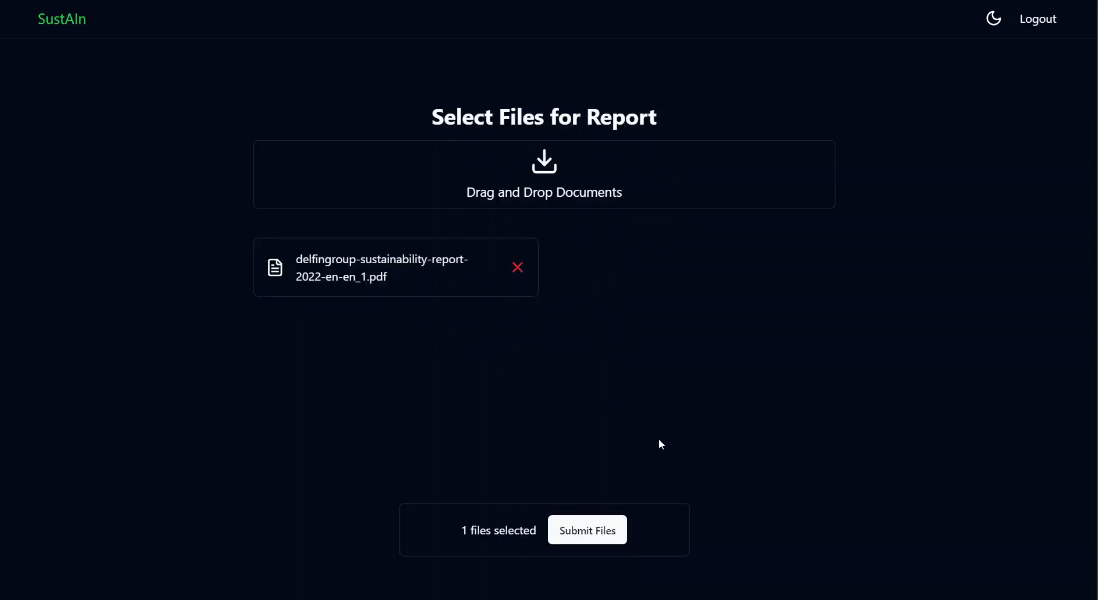
Adds company documents, reports
-
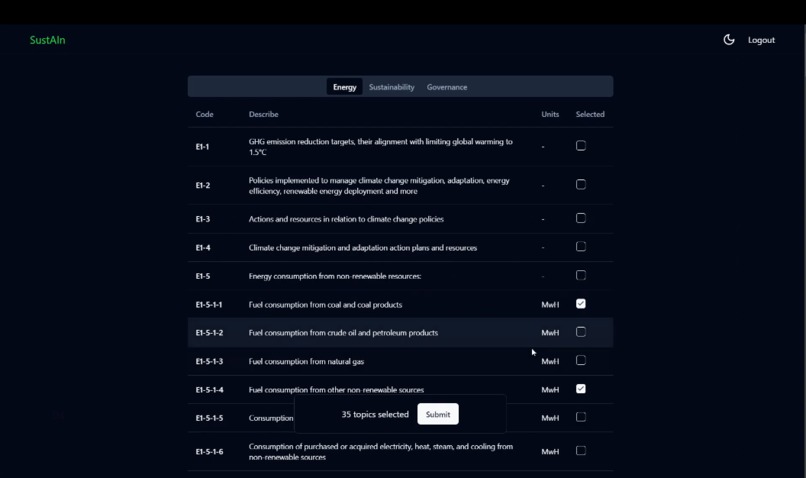
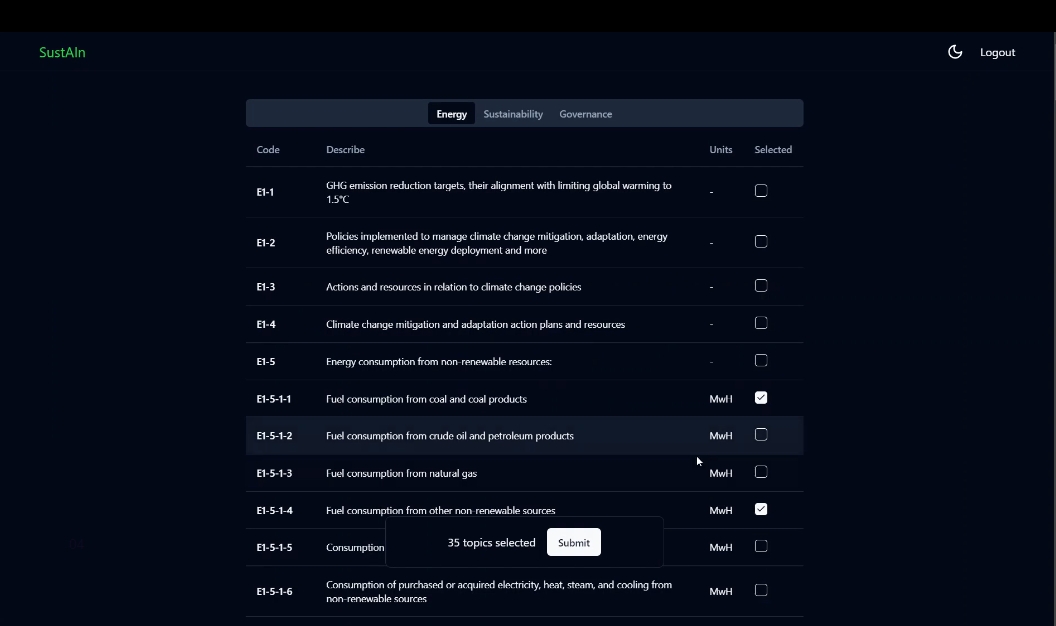
User chooses relevant questions for ESG report
-
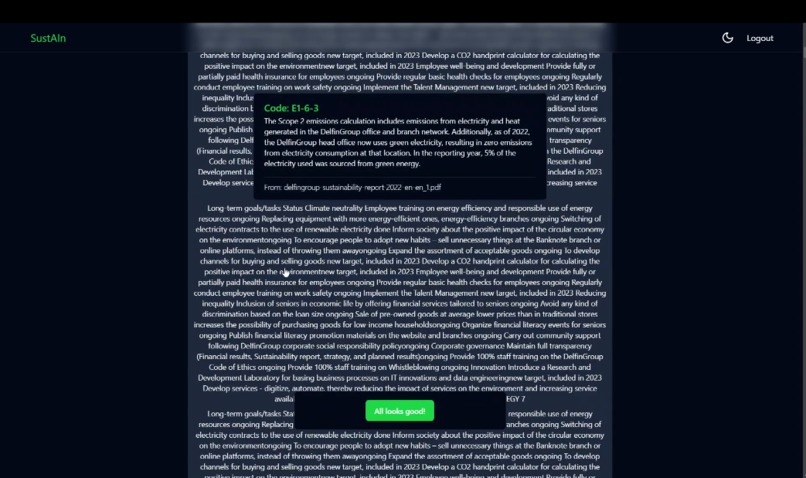
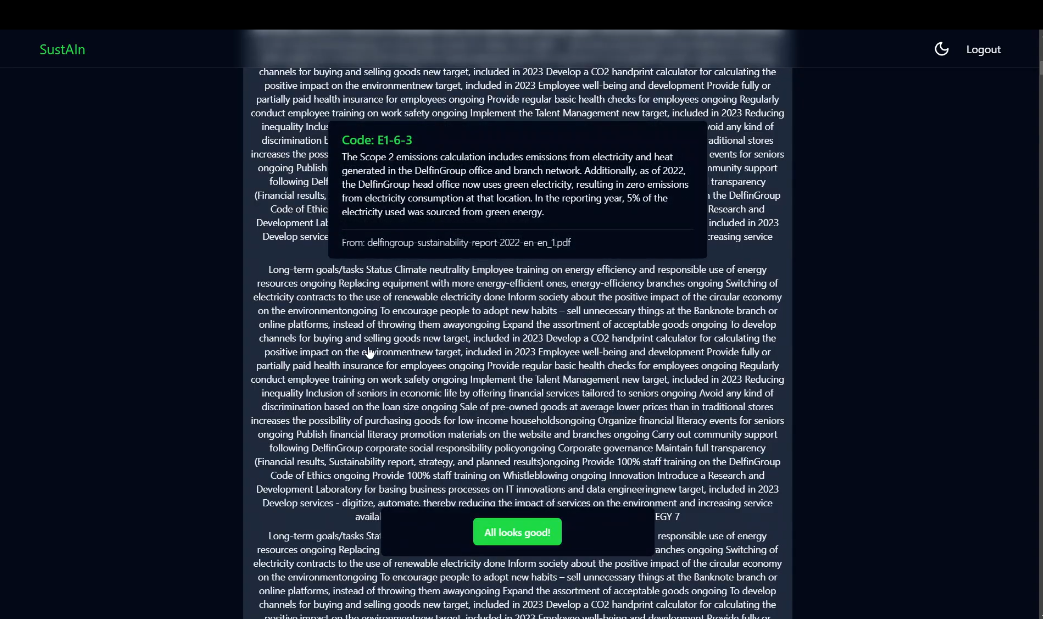
AI creates ESG report using specific standards and tags as needed.
https://docs.google.com/presentation/d/15agQ2sFdt4MsMdMLYm_qcPGJZwmwf0H8TMLitvrbN7E/edit?usp=sharing
TL:DR
- ESG report is similar to a financial report which companies have to create each quarter but this report focuses on three businiess contexts : Environment, Social Responsibility, Governance impact of the company.
- Our tool reduces the time of creating a ESG report to just minutes, instead of weeks and months of manual work!
- The app was created from 0 to functional system in less than 48h, during this hackathon!!!
- We used Python with LlamaIndex for AI backend, and SvelteKit, Typescript and Supabase for powering or UI and storage
Inspiration
In short, we all know that there is a trend for "Sustainability" right now. Many hackathons feature something related to creating more sustainable future. We as well participated in several hackathons where we tried to come up with certain ideas which will directly help the environment in which we live in.
However, one of us found an article that the new ESG regulation will take place in 2025, forcing first companies to create and send these reports in specific format and standards. After further research we validated that the reporting itself will be a huge problem for companies because the ESG reporting involves huge amounts of different data - text reports, tables, etc. Which might be even thousands and tens of thousands of documents which the ESG team of the company will have to read and find the exact information for each question ESG reporting asks.
Therefore we thought of a way how to automate this reporting as much as possible and validated the concept of the idea with several large companies, which also validated that the problem exists - Swedbank, KPMG ESG department head, SEB bank, LTV, DelfinGroup.
What it does
We offer a solution which offers a convenient way on how to create this report in minutes. The person just has to upload company's documents on self-hosted system, then choose what question he wants to be answered in the report and then AI takes the lead by answering all the questions instead of the user. And ultimately generates a complete ESG report which can be handed to the EU. Main functionality:
- Easy-to-Modify system which allows to modify the contents of the ESG report in a few clicks!
- AI integration - AI will read the uploaded company files, reports, and generate a fully machine-readable and xbrl tagged report - ready-to-go for submission to EU.
How we built it
Our dedicated star engineers chose a tech stack we could move fast with - for interacting with AI in the backend, we used Python with LlamaIndex. For web, we believed a full-stack JS framework was key for simplicity, so we chose SvelteKit and Typescript. Another star in our kit was using open-source Supabase for our PostgresSQL database, authentication, file storage, realtime functionality and much, much more.
Challenges we ran into
One of the challenges we ran into was dealing with AI vector indexing and semantic search to fit our projects requirements.
Getting down both all the requirements, what we needed to do, the overall architecture of the system so multiple people could work productively on it at the same time, and building it out this quickly was a fun obstacle to overcome too.
Keeping our local and remote (development and production, respectively) environments in sync and working using Supabase was more difficult than expected, especially as unexpectedly the real-time part stopped working when using the local Supabase CLI deployment, forcing us to move into using production as our dev environment (don't do this at a company!)
We also had to switch from Cloudflare Pages to Vercel as our host, due to using Bun as our Typescript runtime locally, but Cloudflare Pages used workerd, and the incompatibilities between them were too much to debug during these 2 days, so we moved to a platform that natively supported Bun.
Accomplishments that we're proud of
Our team managed to go from 0 to a full-working prototype in 48 hours even with all the difficulties we faced, and we truly believe in the value of automatizing ESG reporting.
What we learned
We learned that our chosen tech stack is very powerful for creating prototypes quickly and having many rich functionalities already available to us, without compromising anything on limiting our development experience or having unnecessary complexity.
During our problems with local and remote environments, it was a great reminder that building quality workflows and software takes many hours and effort, teaching us when to compromise those in order to get out a working prototype out during these limiting 48 hours.
What's next for SustAIn
Built With
- llamaindex
- python
- railway
- supabase
- sveltekit
- typescript
- vercel

Log in or sign up for Devpost to join the conversation.