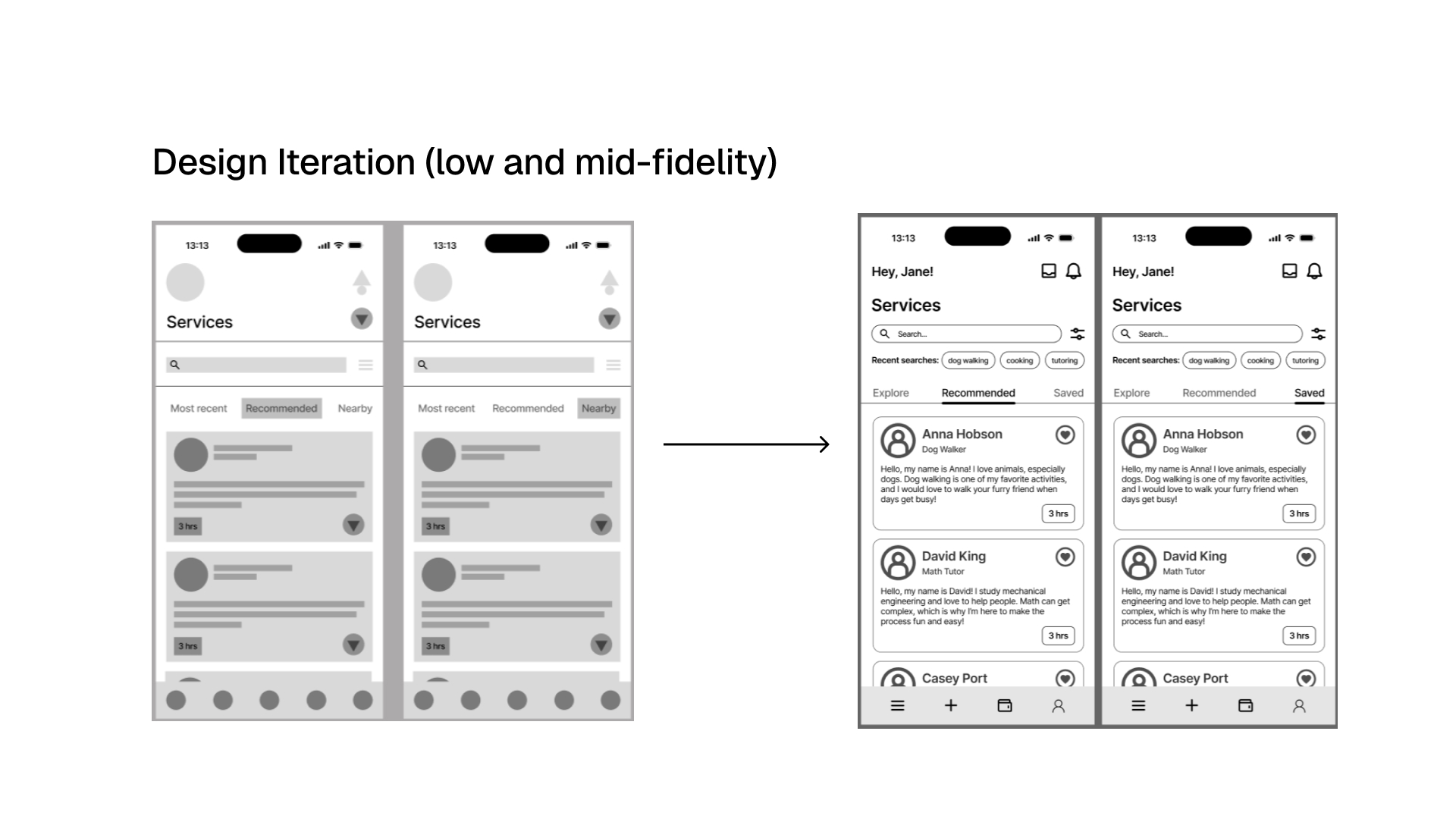
1. Prototype link
2. Describe your project
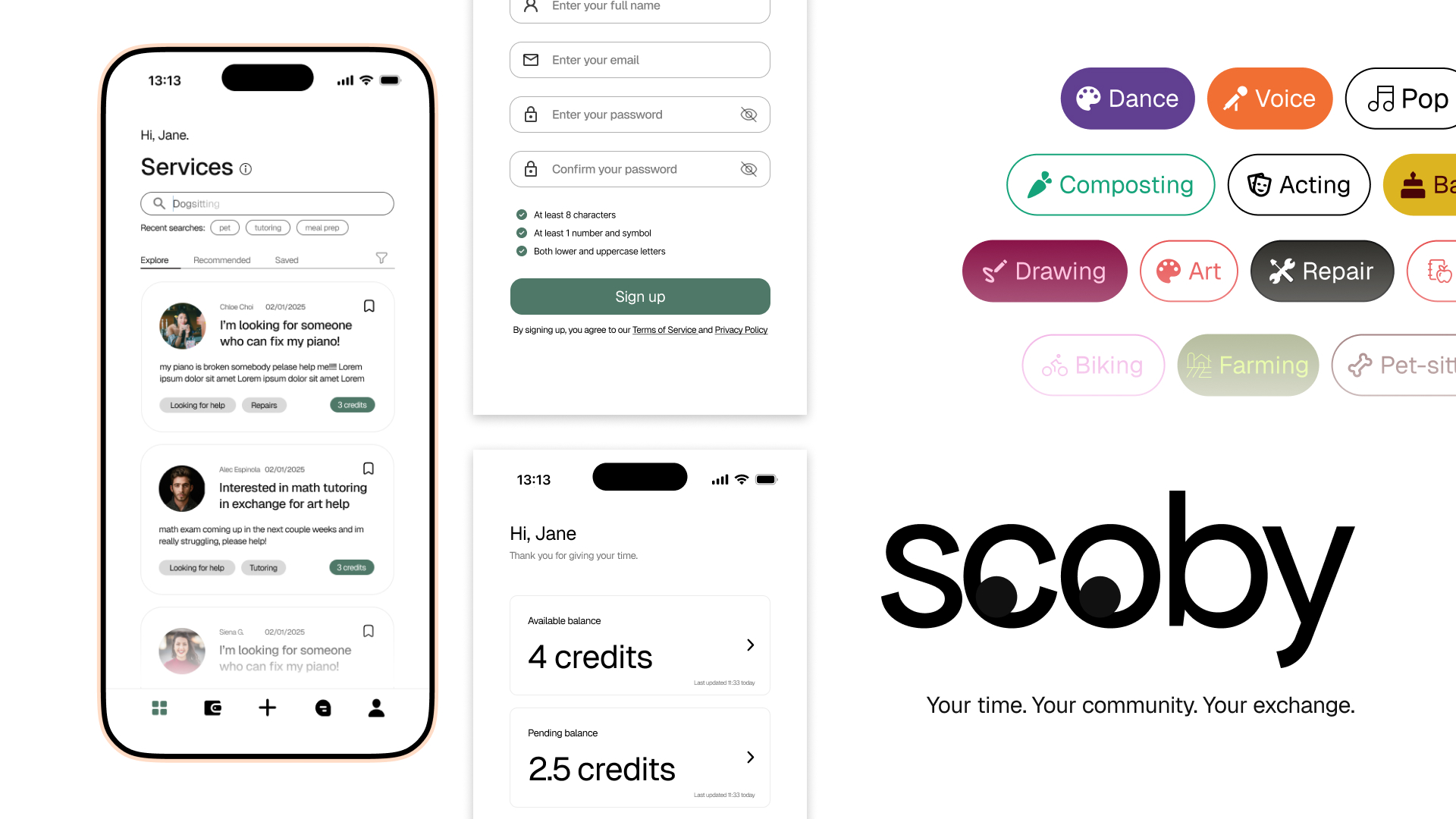
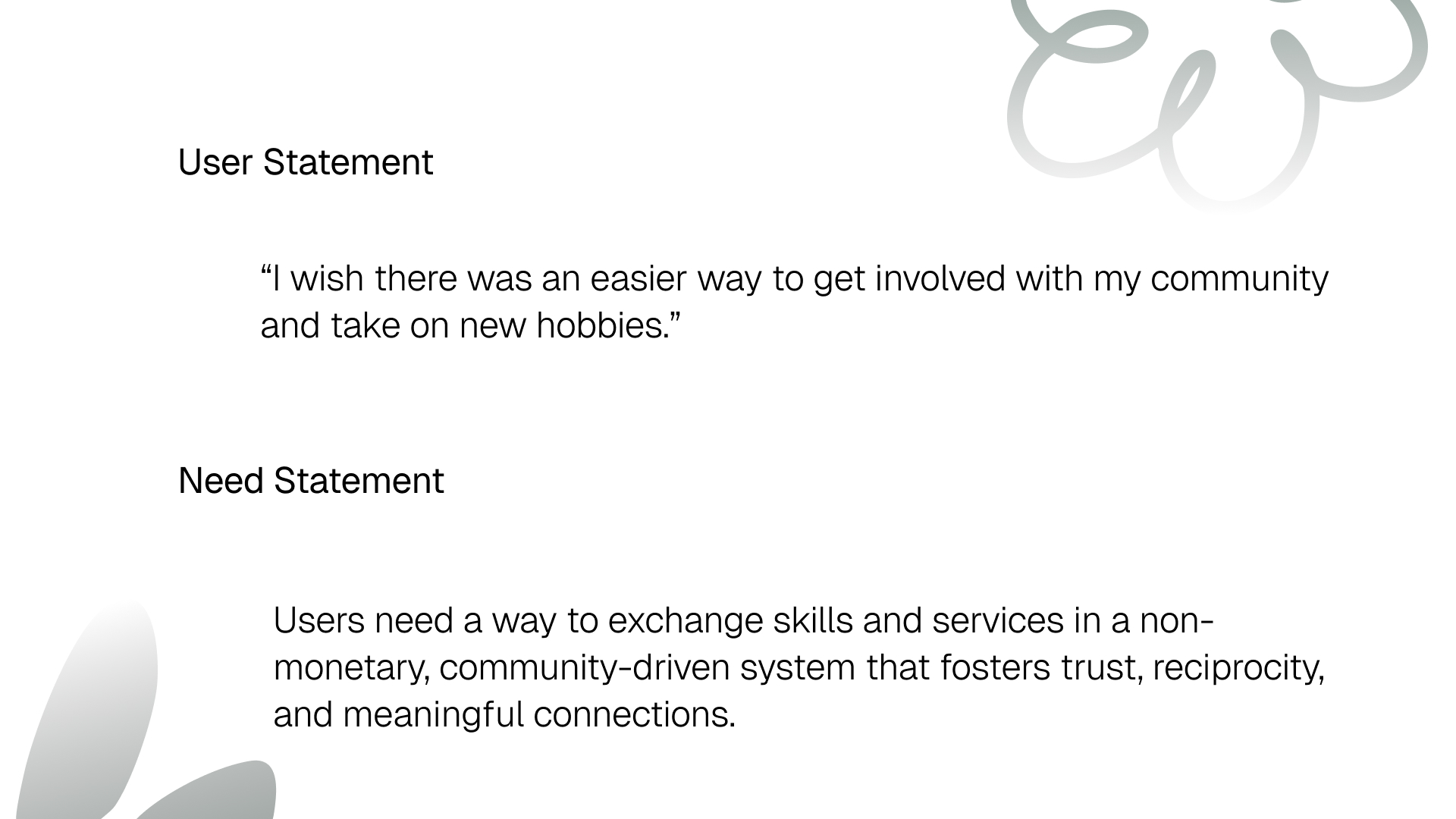
Scoby ferments community growth by exchanging skills and services with time and kindness- the currency of human connection- rather than monetary compensation. Whether you need tutoring, dog walking, or simply a helping hand with errands, Scoby makes it easy to trade services and/or receive time credits to be redeemed another time.
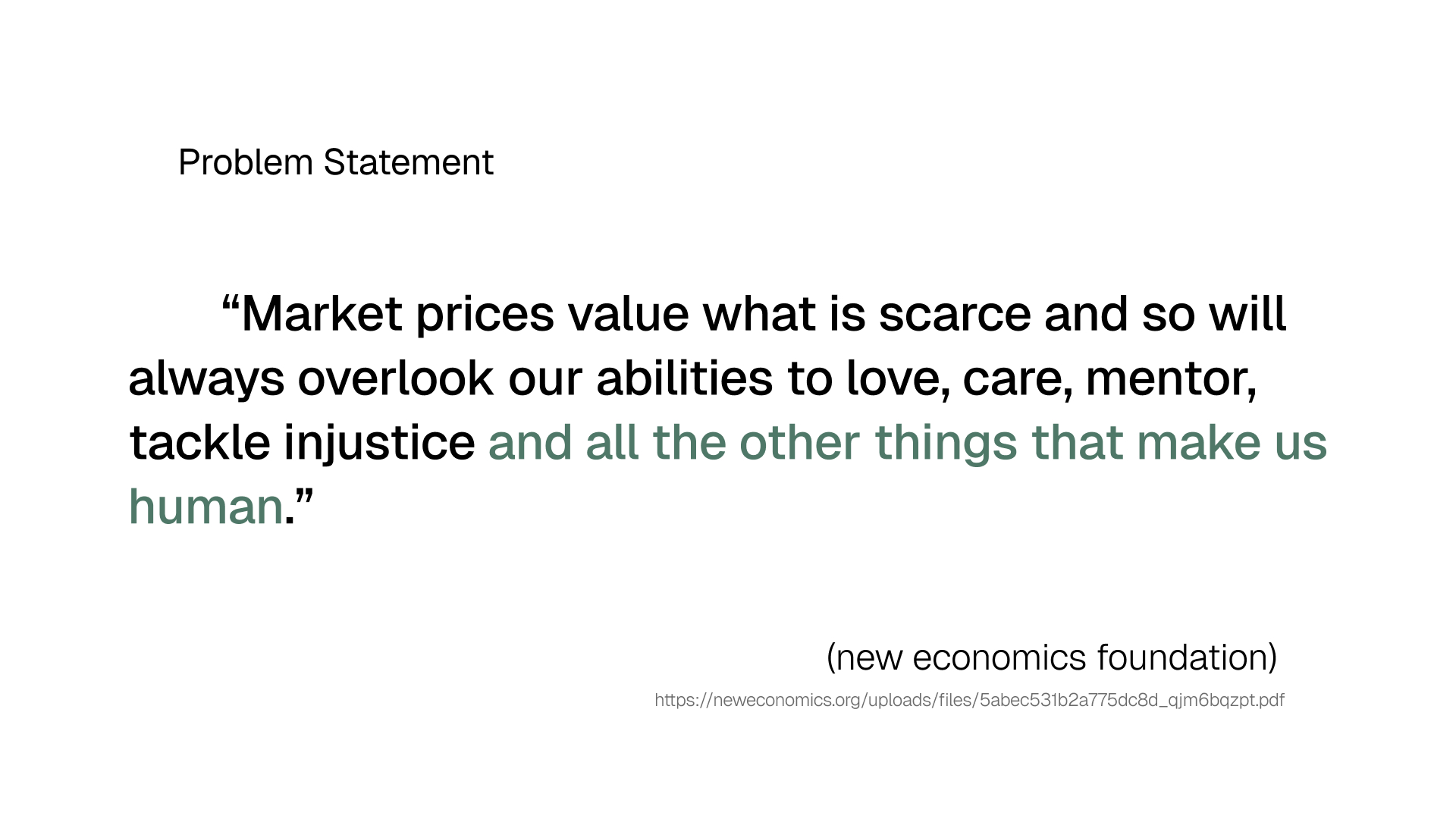
Scoby promotes mutual ethos- a shared set of principles centered around mutual respect, reciprocity, and cooperation- to help users culture values that make us human- empathy, collaboration, and shared purpose [1].
Scoby. Your time. Your community. Your exchange.
3. Describe your research process and findings. If you conducted any surveys or interviews, please include the survey form and/or interview questions here. If you conducted secondary research by pulling from online sources, please include a link to your sources.
Interviews - link
Goals/Process: To understand impressions of online marketplaces and what evokes such impressions.
Findings:
- There is fear of distrust in online marketplaces, with many users concerned about security and reliability.
- Users believe that factors such as verified reviews, transparent policies, and user verification contribute to the reputability of online marketplace interactions.
Secondary Research - link link to our references
Goals/Process: We broke down our secondary research goals into areas by primary research questions.
Primary Research Questions:
- How can trust be fostered in online purchases and marketplaces?
- How can communities create a sense of belongingness?
- How do communities exchange enhance individual wellbeing?
- How does time banking provide individuals with underutilized skills opportunities for meaningful contributions?
- What are the benefits of community building and how can its authenticity be promoted.
- How does time banking improve civic engagement and volunteerism?
- What is the concept of a “core economy,” and why is it important?
Findings:
- Principles of authentic community engagement include working with communities, agreeing on processes, understanding interests, and allocating resources.
- Factors that influence time bank participation include helping older adults, value judgement, and social support.
Survey - link
Goals: To gauge how people define "community" and to understand more impressions of online marketplaces.
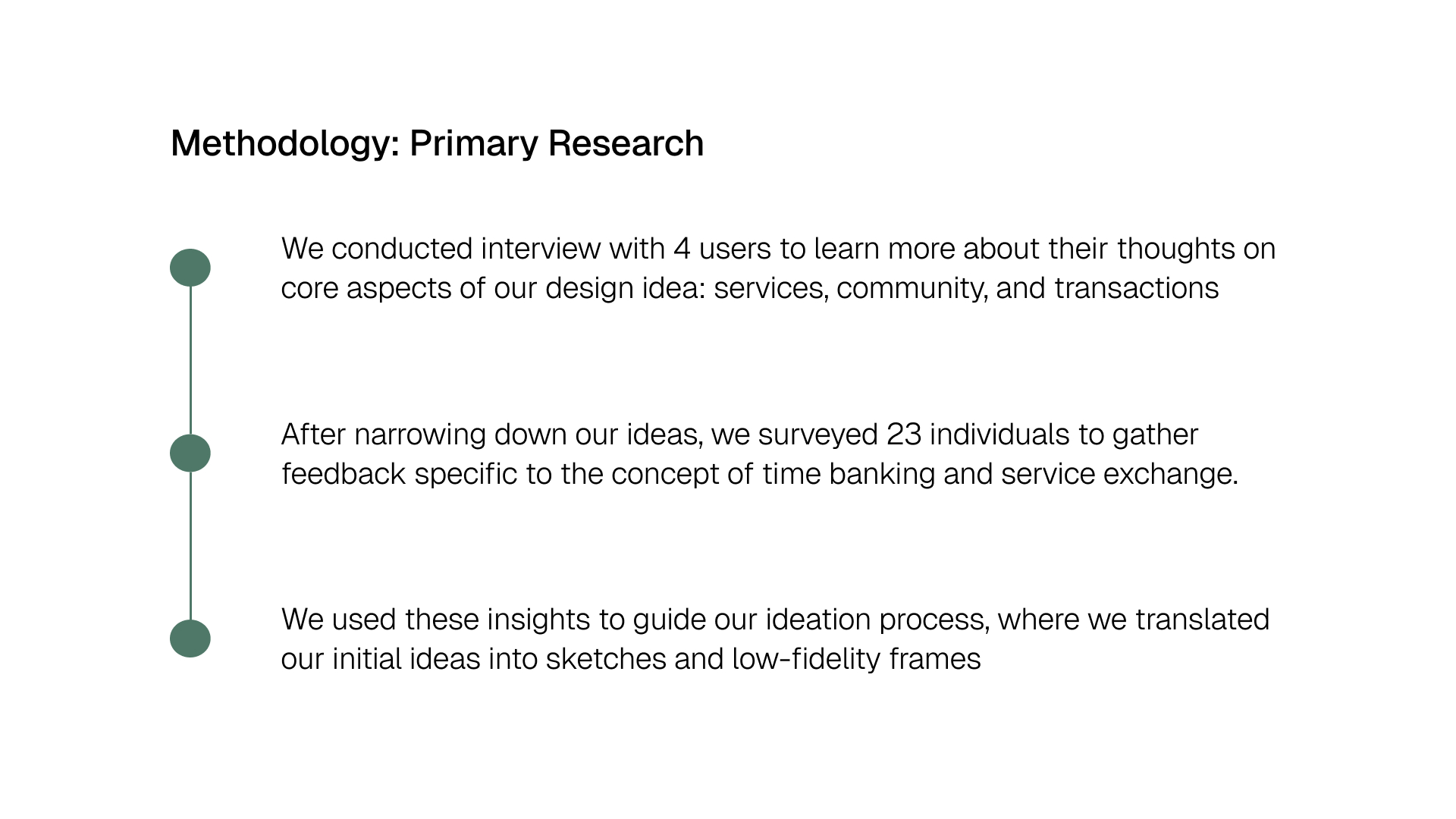
Process: We collected 23 survey results and translated the data onto a sheet for later analysis.
Findings:
- Validation for interview insights.
- The most familiar online marketplaces were Facebook Marketplace and Mercari.
- Community contribution is largely equated to service.
- Biggest community needs are reciprocation, interpersonal bonds with neighbors, togetherness, and excitement.
Comparative Analysis
Goal: To understand what online marketplace competitors are doing well and what standardized elements they share.
Process: Comparative analyzed: Facebook Marketplace, Mecari, Upwork, Fiverr, Chase Bank, Craigslist Comparative features analyzed: Verification features, profile features, information hierarchy, type of listing, listing detail page features
Findings:
- Standard information hierarchy
- PDP features
- Listing categories and tags
- How to incorporate branding throughout flows
A/B & A/B/C Testing
Goals: To compare and gain insight on iterations of ideated features on our design.
Process: Comparative features: design consistency, intuitiveness, heuristics Finding outcome: Final design
4. Describe your most important design decisions. What research findings and/or user testing results led you to make these decisions? (Max 500 words)
Reputability & Personalization
Our interview insights showed...
- distrust in online marketplaces,
- believed reputability increasing factors,
- a rich variety of skill seets regardless of demographic.
In response, our primary design questions were: how might we...
- foster more trust in online marketplaces,
- maximize reputability of interactions and exchanges, and
- cater to skill set varieties.
We approached this with...
- badges, verification, reviews, profile photos, and listing photos to boost trustworthiness
- user communication channel
- high tag personalization
We accessed these decisions with presence checks and, though we cannot confirm this without more research (next steps), the expected impact is more trust and personalization.
Authentic Community Engagement
Our secondary research insights showed...
- principles of authentic community engagement include working with communities, agreeing on processes, understanding interests, and allocating resources.
- factors that influence time bank participation include helping older adults, value judgement, and social support.
In response, our primary design questions were: how might we...
- facilitate user-to-user agreement, understanding, and transparency,
- how can we help users allocate resources easily, and
- how can we design scoby to work WITH users and not FOR users.
We approached this with...
- have users make the final committing decision to a listing
- user-user communication channels for negotiations, clarifications, and other questions
- differentiating “looking for” vs. “offering” listings
- organizing resources through filters and search functions
- high listing customization when searching and creating.
We accessed these decisions with presence checks, A/B, and A/B/C testing. Though we cannot confirm without more research (next steps), the expected impact is more authentic community engagement and participation.
Intuitiveness, Management, Excitement, and Friendliness
Our secondary research insights showed...
- Validation to our interview insight that there is fear in trust in online marketplace experiences
- Many are experienced/familiar with online marketplaces, the most popular being Facebook marketplace and Mercari.
- Community contribution was largely equated to service
- The biggest needs in a community are reciprocation, interpersonal bonds with neighbors, togetherness, and excitement.
- Users expectations include direct communication with others, ability to negotiate, history of listings, and PDP elements.
In response, our primary design questions were: how might we...
- utilize what users are consistently praising from online marketplace competitors like Facebook Marketplace and Mercari
- make users neighbors
- meet and also exceed user expectations
We approached this with...
- mirrored standard information hierarchy in listings found across competitors
- incorporating agreements in the form of checkbox acknowledgements
- require user profile photos to put forth more friendly faces
- including all features expected by users
- implementing a way to manage and view time credits
- a scoby brand identity that evokes excitement
We assessed these decisions with presence checks, A/B, and A/B/C testing. Though we cannot confirm without more research (next steps), the expected impact is more intuitive navigation, neighborly associations, management, and excitement.
5. References
[1] https://nonprofitquarterly.org/time-banking-a-community-path-to-addressing-social-exclusion/
Built With
- figma



Log in or sign up for Devpost to join the conversation.