-
-
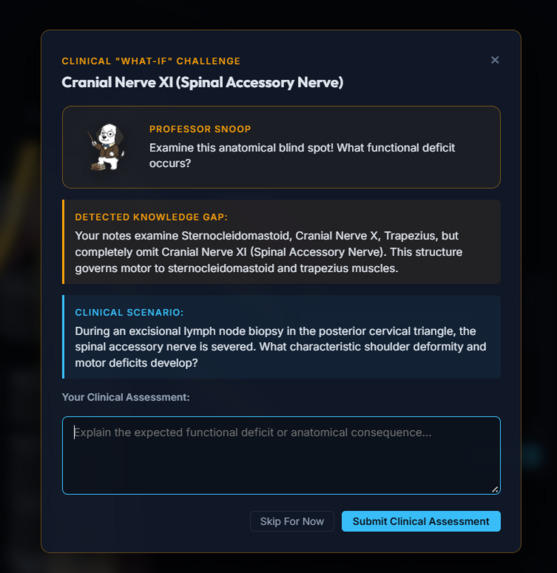
Audit Scenario
-
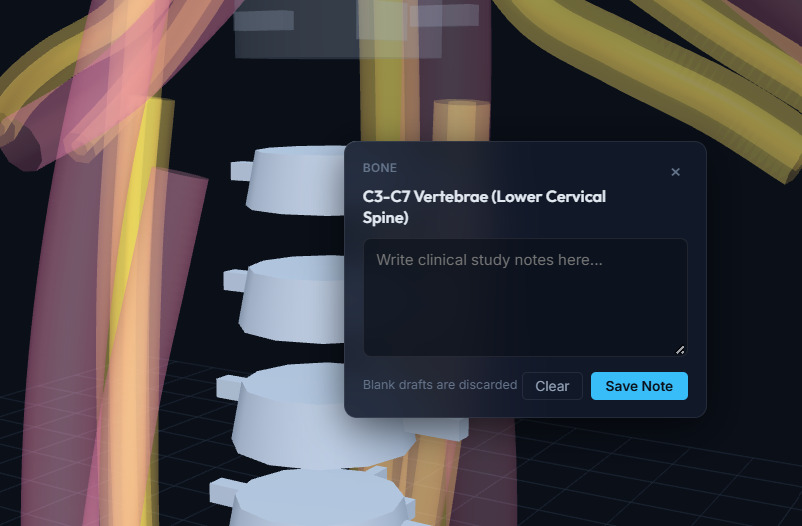
Note Taking Function
-
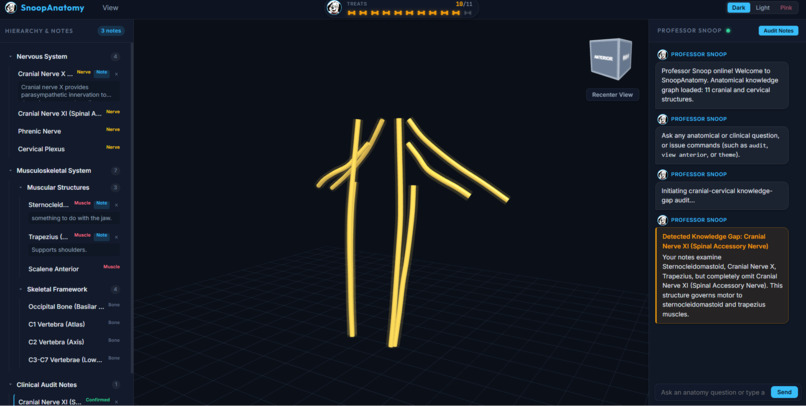
Nervous System Highlight
-
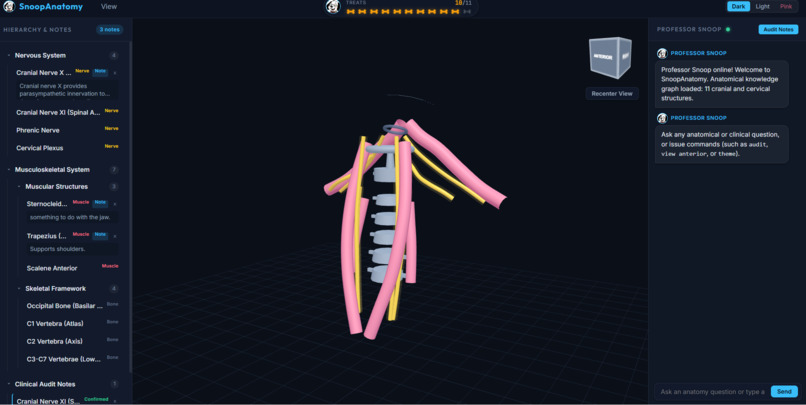
General Overview
-

Professor Snoop Icon

Inspiration
As a biomedical engineering student, its very hard to stay on top of an anatomy course that wasn't originally designed to fit with your regular engineering work. I couldn't spend hours on end studying the cranial nerves when I have a 100 circuits lab reports due the next day. I find that I learn best when I get to annotate models myself and when I get to choose when I want to be tested. Also might be an unpopular opinion, but flash cards are outdated. What inspired me the most is that being constantly challenged against your own knowledge helps you build your own foundation, and helps you prepare for the future. I believe this is what our future health care students need.
What it does
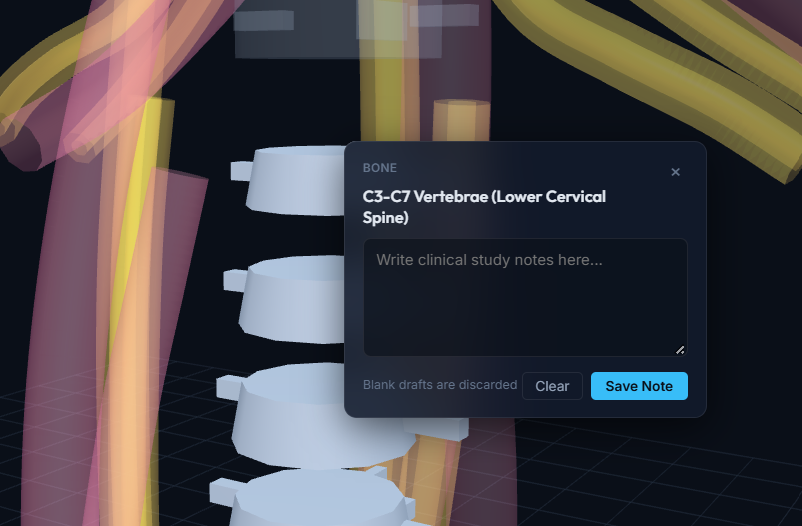
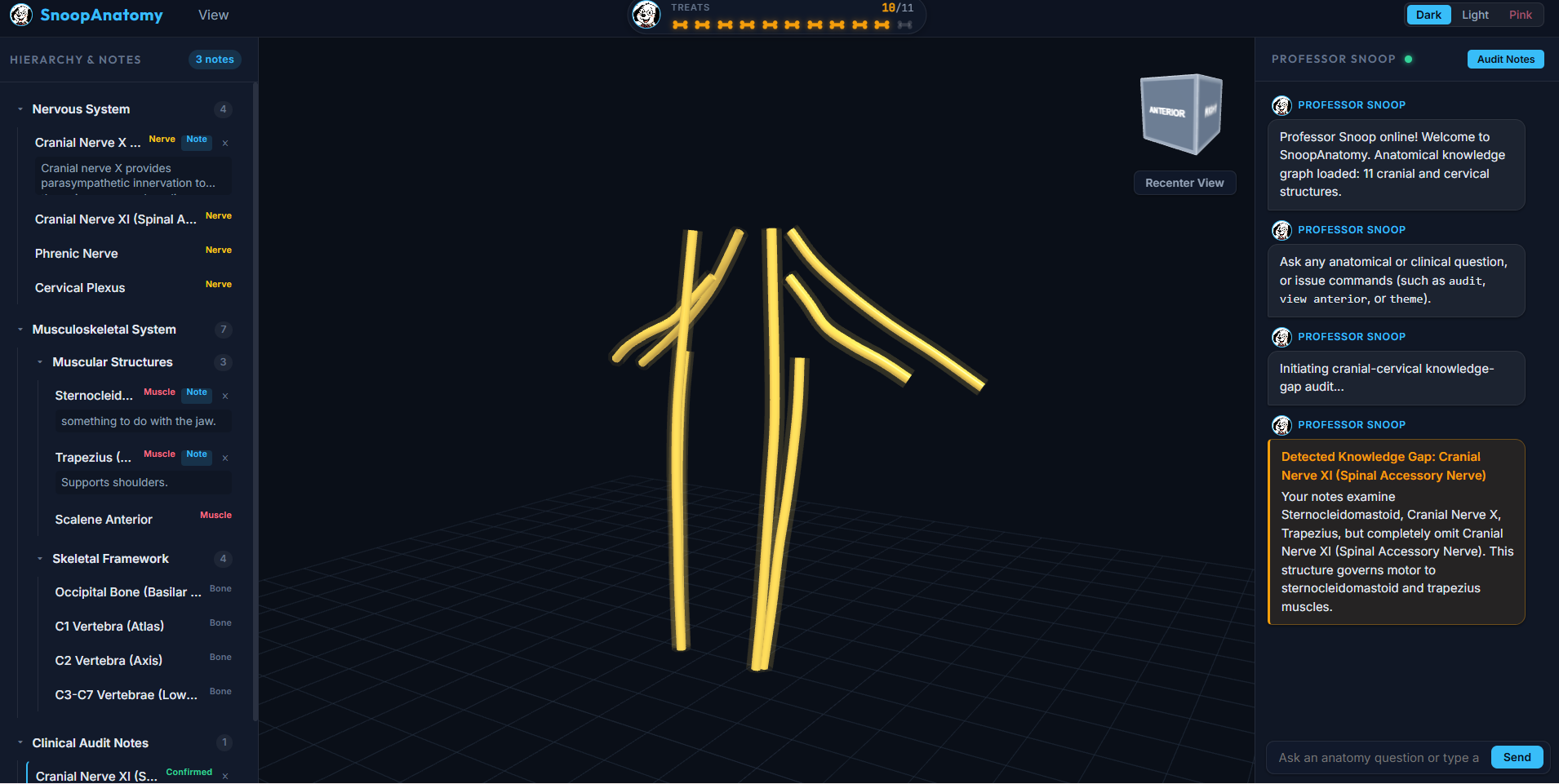
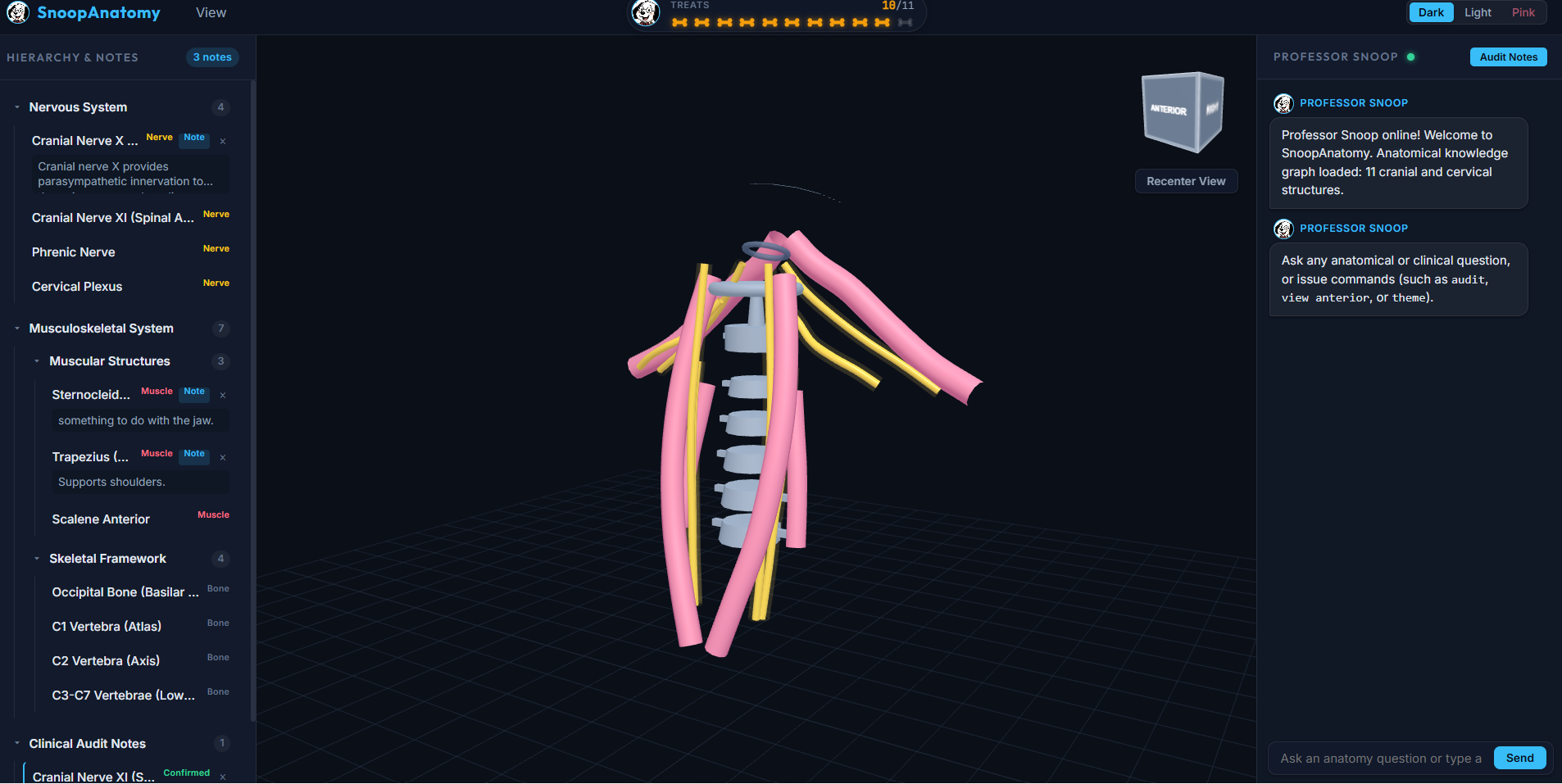
SnoopAnatomy blends a cartoon-ish aspect with medical science. It offers a 3D viewport that allows users to view nervous and musculoskeletal systems freely, while also allowing them to annotate and create their own notes linking to structures that they select.
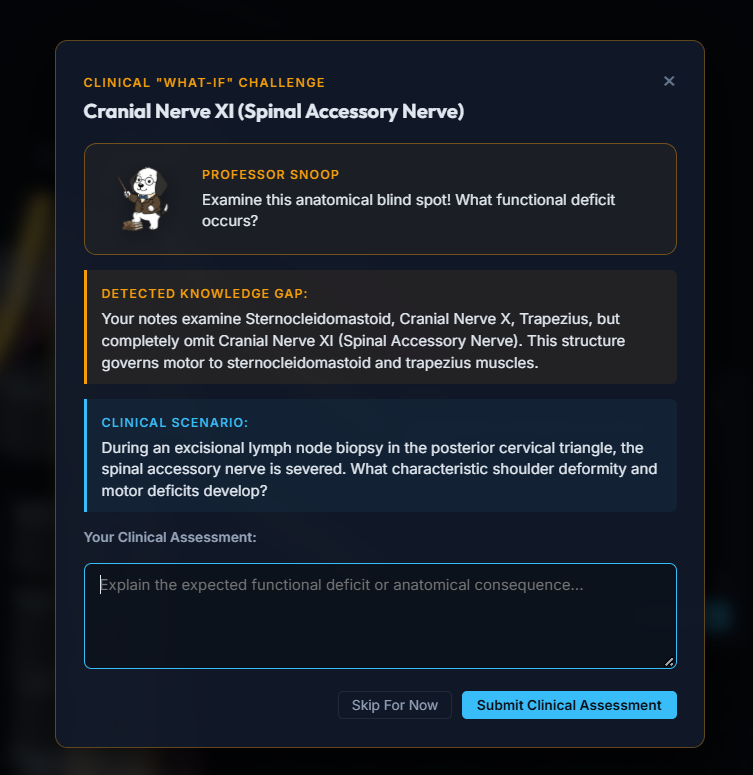
It also offers proactive knowledge gap testing with an engine that finds blindspots between a user's notes and true anatomical knowledge. There also are clinical scenarios prompted to the user and response feedback provided to the user.
It saves user notes and audit history in a hierarchal file-like system on the lefthand side of the tool. On the righthand side is a conversational console that answers general anatomy questions that a user may pose.
How we built it
The frontend of SnoopAnatomy was built with JavaScript, Three.js, HTML5, and CSS. The backend features usage of Python FastAPI server and Uvicorn. Anatomical model was created using anatomy libraries available within Python.
Challenges we ran into
There were challenges associated with synchronizing viewport movements with the view cube, smooth spherical camera interpolation/gliding to specific coordinates in the system, and managing transparency dimming across all structures.
There was also a major challenge involving the console companion and giving a more conversational vibe.
Accomplishments that we're proud of
We're proud of creating the proof-of-concept of a tool that could potentially be used by thousands of medical students world-wide. This app is capable of turning passive study notes into an interactive tool that poses students with diagnostic challenges against their own knowledge.
What we learned
I learned how to use generative AI in a useful way, instead of actually producing AI slop. The tool was tailored to what my vision of it was, which I found very unique. I also learned the process in programming that integrates 3D computer graphics.
What's next for SnoopAnatomy
Hopefully in the near future SnoopAnatomy can become a fully functioning website/application capable of rendering the whole human body and every system within it. Also with the option to import and export user notes, while providing free access to an AI capable of cross-referencing all existing anatomical knowledge with student notes.
Perhaps a leap would include visualizing clinical scenarios as well.

Log in or sign up for Devpost to join the conversation.